Why Three Sausages Are Enough for a Strong Oktoberfest Menu
The official Munich Oktoberfest1 runs from 19 September to 4 October in 2026, giving UK operators a clear seasonal window for promotions, events and limited menus. That does not mean recreating the enormous choice of a Munich beer tent.
For most pubs, caterers and street food traders, three sausages provide enough variety when each one offers a recognisably different experience. Customers are choosing between a classic option, something richer and a smaller-format alternative—not studying a catalogue of subtly different meat products.
A tight range also reduces hidden complexity. Every additional SKU creates another line to forecast, store, defrost, prepare, explain and monitor. Slow-selling varieties can take up freezer or refrigerator space while increasing the chance of staff selecting the wrong product during busy service.
Three sausages can still support a menu that appears substantially broader through different portions and serving formats:
- A straightforward sausage in a roll
- A loaded premium hotdog
- A plated Oktoberfest meal
- A three-sausage snack
- A mixed tasting board
- A smaller or family-friendly portion
This approach is equally practical for a home celebration. Three distinctive products, a few shared sides and two or three good mustards create more useful choice than buying numerous sausages that compete for space on the grill.
The commercial advantage comes from discipline rather than the number three itself. The products must be different enough to justify their places, and the surrounding menu must reuse ingredients intelligently.
The Three-Sausage Line-Up: Bratwurst, Cheese Frankfurter and Nuremberger Bratwurst
The strongest three-SKU range covers three different buying occasions: the recognisable classic, the premium alternative and the flexible small-format option.
1. Pork Bratwurst: the dependable centre of the range
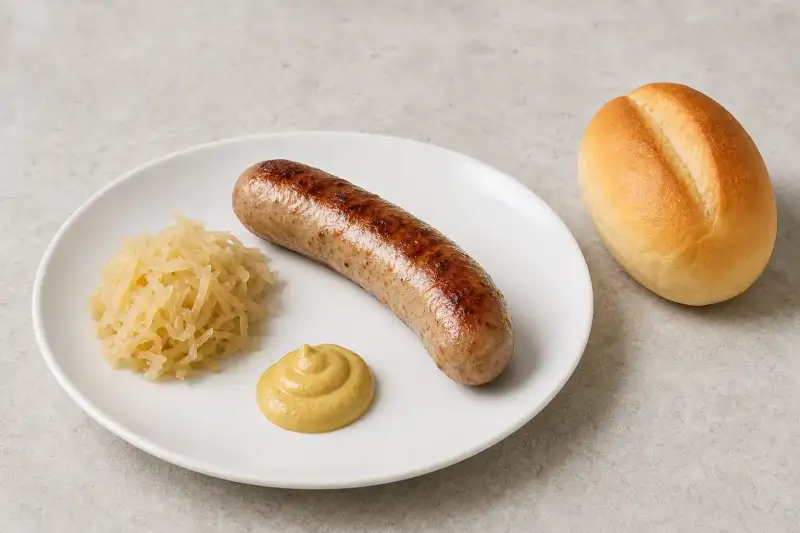
A Pork Bratwurst should be the menu’s reference point. Its pale appearance, savoury pork flavour and traditional seasoning give customers the German sausage experience they are most likely to recognise.
It works in a roll, with sauerkraut and mustard, or as the centre of a plated meal. Different available weights can suit different operations, but the chosen size should match the roll, plate and intended selling price rather than simply being the largest available.
2. Cheese Frankfurter: the premium alternative
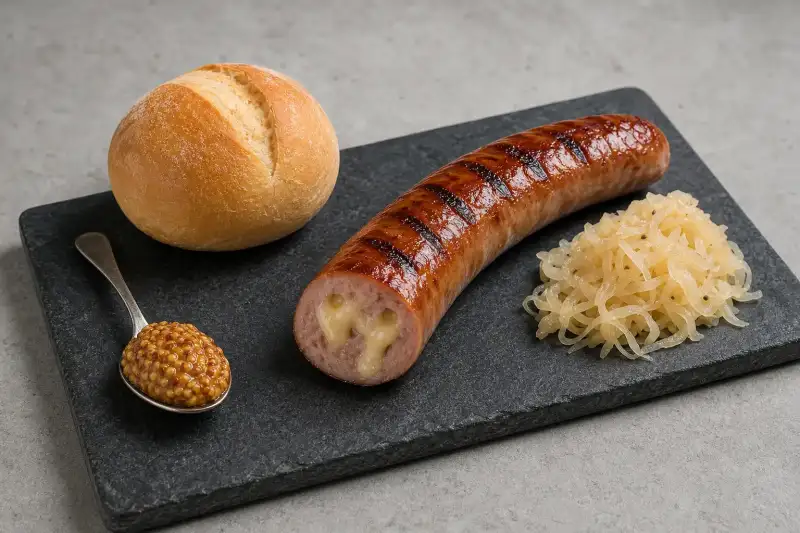
The Cheese Frankfurter provides a richer, smokier choice with visible Emmental cheese and bacon pieces. It gives customers a clear reason to trade up without requiring an entirely separate menu concept.
Keep its toppings relatively restrained. The sausage already brings considerable flavour, so it does not need to disappear under several heavy sauces.
3. Nuremberger Bratwurst: the flexible format
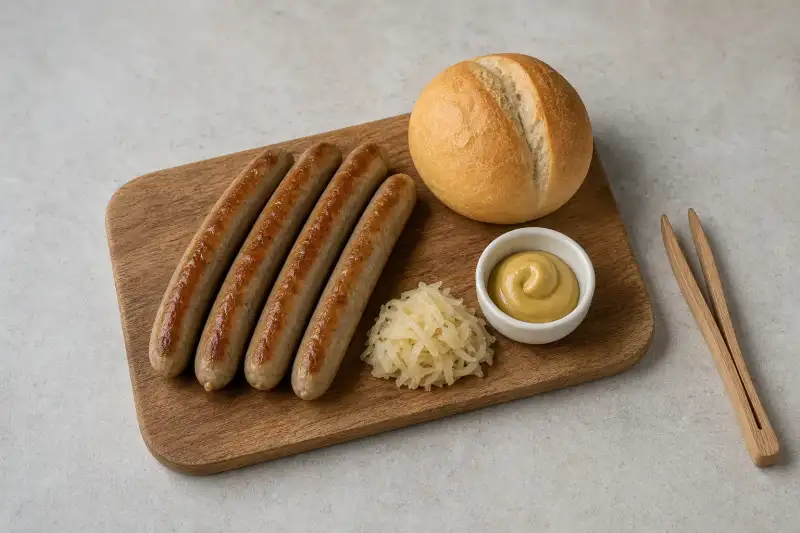
At approximately 25g each, Nuremberger Bratwurst can be served in three-, four- or six-piece portions. That makes it useful for snacks, rolls, children’s portions, buffets and sharing boards.
The official Nuremberg tourism guide2 shows the traditional logic: three sausages in a roll or larger even-numbered portions on a plate. Customers may also search for Nurnberger, Nürnberger or Nuernberger Bratwurst, but the printed menu should choose one clear spelling and use it consistently.
Give Each Sausage a Clear Job on the Menu
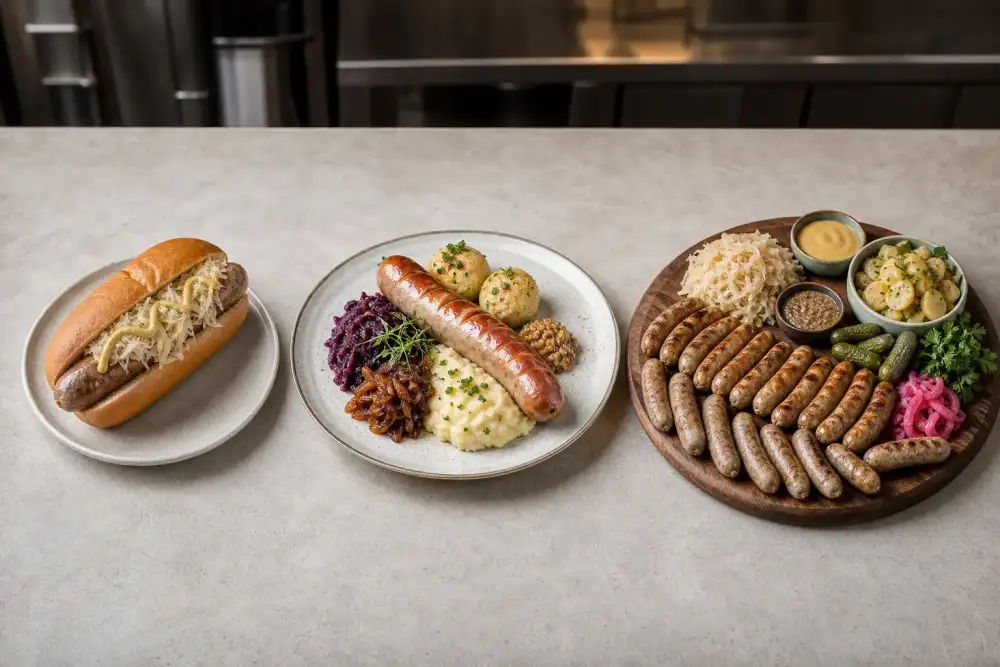
A focused range only works when customers can immediately understand why the three options are different. If every sausage is placed in the same roll with the same toppings and sold at a similar price, the menu has three products but only one real idea.
The Pork Bratwurst should be presented as the classic choice. It is the safest starting point for customers who want a recognisable German sausage with mustard, sauerkraut or a straightforward plated meal.
The Cheese Frankfurter becomes the premium or indulgent choice. Its richer filling and smoky character support a higher-value loaded roll or upgraded meal, provided the presentation makes that difference visible.
Nuremberger Bratwurst fills the flexible and shareable role. Three sausages can form a compact handheld portion, while a larger serving can become a main meal or part of a mixed board.
That division should be visible in the menu names and descriptions:
- Classic Bratwurst: one substantial sausage with mustard and sauerkraut
- Cheese Frankfurter: a richer sausage in a premium roll with crisp pickles and mustard
- Nuremberg Trio: three small bratwursts in a crusty roll
- German Sharing Board: a controlled selection drawn from all three products
Clear roles also help staff. The person taking an order can explain the range in one sentence: classic, cheese-filled or three smaller sausages. That is much easier during a queue than describing several products whose differences are only apparent after they have been tasted.
Build More Dishes Without Adding More Stock
Menu variety does not have to come from buying more sausages. It can come from changing the portion, presentation and eating occasion around the same three products.
The Pork Bratwurst can appear as a simple roll for fast lunch service and as a plated main with warm potato salad and sauerkraut. The can be sold as a premium hotdog or cut carefully into a sharing dish where the cheese filling remains visible. Nuremberger Bratwurst can move between a three-piece roll, a six-piece main and a mixed tasting board.
That already creates several distinct dishes:
- Three handheld options, each with a different sausage
- A traditional Bratwurst plate
- A Nuremberger sausage plate
- A mixed sausage board for sharing
- A smaller three- or four-piece portion
- A buffet or grazing option using compact sausages
The important distinction is between useful variety and decorative variety. Adding another menu name does not help if the finished dish looks and eats almost exactly like an existing one. Each format should serve a genuine purpose: faster eating, a more substantial meal, a premium treat or an option designed for sharing.
Set a sensible ceiling for the visible menu. Five or six clearly differentiated dishes may feel more generous than ten confusing variations. Specials can then be created from the existing stock—for example, a weekend sharing board or lunchtime Bratwurst roll—without permanently increasing the number of products being purchased.
For home celebrations, the same principle turns three packs into rolls, plated portions and a central sharing platter without an excessive amount of preparation.
Create Entry, Main and Premium Price Points
A useful Oktoberfest sausage menu gives customers more than one spending level without making the cheapest option feel inadequate. The three sausages naturally support this structure, but prices should be based on the complete dish rather than the sausage cost alone.
A three-piece Nuremberger roll or compact snack portion can provide the entry point. The classic Pork Bratwurst in a substantial roll or with one side becomes the central offer. A Cheese Frankfurter in a premium bread with carefully chosen toppings can occupy the higher position.
For seated service, the same ladder might look different:
- Entry: three or four Nuremberger Bratwursts with mustard and bread
- Main: Pork Bratwurst with potato salad and sauerkraut
- Premium: Cheese Frankfurter meal or mixed sausage board
Cost every format using the actual portion, bread, sauces, sides, packaging, expected waste and any applicable VAT. Labour and service time also matter. A heavily loaded roll may look profitable from its ingredient cost but become less attractive if it takes too long to assemble during the busiest trading period.
The gaps between price points should be clear enough to make the upgrade meaningful. If the premium item costs only slightly more, it may pull customers away from the main seller without contributing enough additional cash margin. If the difference is too large, customers may ignore it.
The objective is not to force everyone towards the highest price. It is to give different customers an appropriate choice while ensuring every option earns its place after all direct costs are considered.
Keep Buns, Sides and Toppings Focused
Three sausages can support a varied menu without requiring a separate set of accompaniments for each one. Start with a small component list and make every ingredient work in more than one dish.
One dependable crusty roll may be sufficient for most handheld options. A pretzel-style or other premium roll can be added for the Cheese Frankfurter if the likely sales volume justifies holding a second bread. The sausage should fit the bread properly; an oversized roll makes the portion look mean, while a short roll becomes difficult to carry and eat.
A practical supporting range might include:
- German mustard and one milder alternative
- Sauerkraut that works in rolls and on plates
- Pickles for acidity and visual contrast
- Potato salad or chips as the principal side
- One fresh garnish, such as chives or parsley
Avoid giving each menu item a unique sauce, slaw and garnish. Those small additions quickly create extra containers, prep jobs and partially used ingredients. They can also blur the difference between the sausages when everything receives the same oversized topping pile.
Allergen control must be designed into this simplified menu. Cheese Frankfurter requires particular attention to the confirmed milk declaration, while breads, mustard and prepared sauces may introduce other regulated allergens. Always check current product specifications and recipes rather than making assumptions from the dish name.
The Food Standards Agency’s allergen guidance for food businesses3 explains the operator’s responsibilities. Its best-practice guidance for non-prepacked food4 recommends written information supported by a conversation, which is particularly relevant to pubs, cafés, market stalls and event traders.
Plan Faster Prep, Cooking and Service
A short menu should produce a short, repeatable service sequence. Before trading, map how each product moves from storage to preparation, heating, finishing, assembly and handover. The process should still work when several different orders arrive together.
Begin with realistic forecasting and controlled defrosting. Move only the expected quantity into refrigeration and follow the product packaging, technical specification and your documented food-safety system. The Food Standards Agency provides practical guidance on chilling, freezing and defrosting food safely.
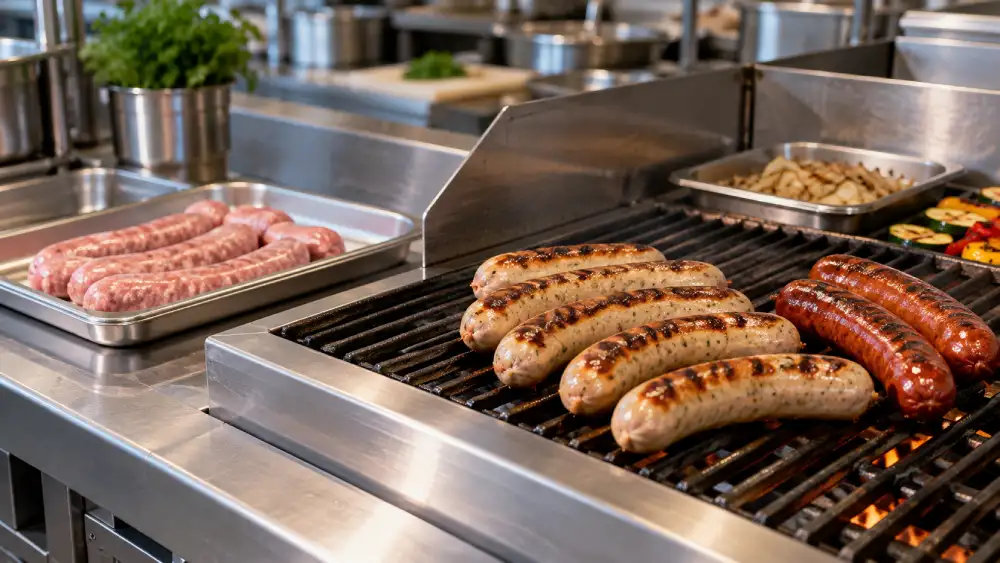
During service, cook or finish manageable batches rather than covering the grill with every sausage available. The smaller Nuremberger Bratwurst can lose moisture if held too long, while excessive heat may split a Cheese Frankfurter and allow cheese to escape. Equipment, starting temperature and batch load all affect the result, so establish timings on the actual appliance before the event.
Organise the station around three zones:
- Heating and finishing
- Bread, plates and packaging
- Toppings, sides and handover
Keep frequently used components in the same position and use simple order calls or till modifiers that distinguish the three sausages clearly.
Every food business needs an appropriate safety-management system; the FSA’s Safer Food, Better Business guidance for caterers5 is a useful starting point. Where food is hot-held, monitor it within the site’s documented procedure. UK local-authority hot-holding guidance6 explains the usual requirement to keep hot food at 63°C or above, while also noting the risk of quality deteriorating during extended holding.
Adapt the Range for Pubs, Events, Buffets and Home Celebrations
The same three sausages can work across very different settings, but the menu format and service plan should change with the occasion.
Pubs can use a small seasonal insert rather than altering the entire core menu. One Bratwurst main, one premium Cheese Frankfurter roll and one Nuremberger sharing dish provide clear choice without creating a second kitchen operation. Existing chips, salad or crockery may be reused where they suit the German dishes naturally.
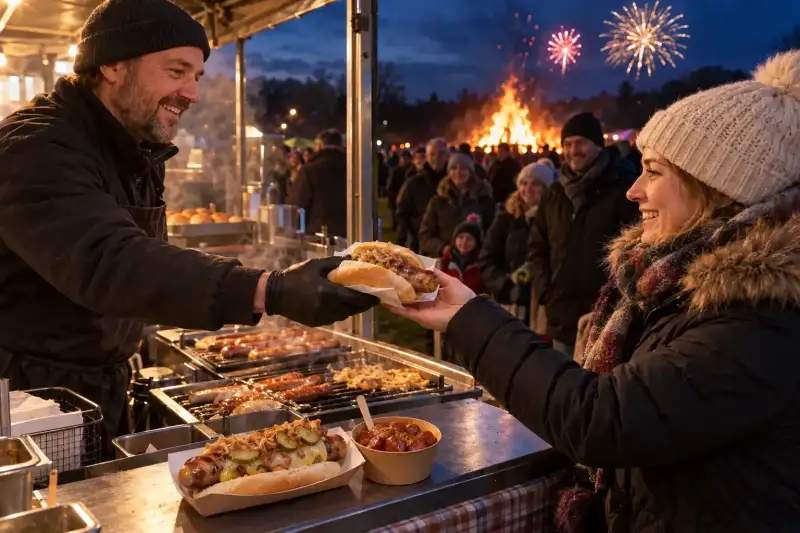
Street food and festival traders need the fastest version of the range. Three prominently displayed choices, a shared roll and tightly controlled toppings make ordering easier to see from a queue. Test whether the available grill, electrical load, refrigeration, water supply and service counter can support the planned volume. Confirm organiser rules, trading permissions and site-specific safety requirements before committing to the menu.
Buffets and catered functions benefit from the compact Nuremberger format because portions can be adjusted without cutting a larger sausage. Use smaller replenishment trays rather than displaying the full quantity at once, and provide clear dish and allergen information. Shared utensils, holding times and customer handling must form part of the plan.
Farm shops, cafés and garden centres can use a daytime version: a Bratwurst roll, a plated special and packaged products for customers who want to recreate the meal at home.
Home celebrations need even less complexity. Grill the three sausages, provide good bread, mustard, sauerkraut and one substantial side, then let guests assemble their preferred combination.
Anyone supplying food at a public or community event should also consult the FSA’s food-safety and allergen guidance for community events7 and check requirements with the relevant local authority.
Frequently Asked Questions
Work backwards from the first trading date rather than relying on a fixed number of weeks. Allow time to confirm product availability, delivery schedules, pack sizes, menu prices and any event requirements. The kitchen should also complete at least one full cooking and assembly test before menus or promotional materials are finalised.
For a larger event, confirm expected attendance, power, refrigeration, water, waste arrangements and permitted equipment with the organiser early. Supplier lead times and site deadlines may be more important than the official Oktoberfest dates.
Choose the size according to the complete dish and selling occasion. A 100g sausage can work well in a standard roll, lunchtime offer or meal with substantial sides. A 150g version creates a stronger visual centrepiece and may suit a premium hotdog or event menu where the sausage is the main attraction.
Test the sausage inside the actual bread before ordering. A poor size match can make an otherwise generous portion look disappointing or awkward to eat. Compare the additional product cost with the price customers are realistically likely to pay.
Base the quantity on the serving format rather than ordering one of every sausage for each guest. A handheld portion might contain one 100g or 150g Bratwurst or Frankfurter, while three 25g Nuremberger Bratwursts provide a lighter roll. A plated Nuremberger main may require four to six sausages.
Buffets need more cautious planning because guests choose different combinations and may return for seconds. Consider the number of substantial sides, the length of the event and whether the sausages are the main meal. Keep part of the forecasted stock chilled and unprepared so it can be cooked if demand requires it.
It can be. Pork is appropriate for a traditional sausage-led Oktoberfest menu, but an all-pork range excludes customers who avoid it for religious, dietary or personal reasons.
Review the likely audience before finalising the range. In some settings, replacing one of the three products with a suitable beef or plant-based option may be commercially stronger than adding a fourth permanent line. Check the product specification, cooking arrangements and cross-contact controls before making vegetarian, vegan, allergen or dietary suitability claims.
Use the recognisable German name followed by a short explanation. “Nuremberger Bratwurst—three small, mildly seasoned pork sausages” is more helpful than either a long history lesson or an unfamiliar name on its own.
Nuremberger, Nurnberger, Nürnberger and Nuernberger may all appear in customer searches, but the printed menu should use one spelling consistently. Staff should also have a simple description for each product so customers can choose without holding up the queue.
Do not assume that they can. Follow the instructions on the final packaging, current technical specification and your documented food-safety procedure. Different products, pack formats and appliances may require different defrosting and heating methods.
Trying to accelerate service by placing unsuitable frozen products directly onto a hot grill can produce uneven results, damaged casings and unreliable heating. Complete a timed test using the actual equipment, batch size and starting condition planned for service.
No. The food can work as a seasonal German menu without alcohol, particularly in cafés, garden centres, farm shops, family events and home celebrations. German-style breads, mustard, potato salad, sauerkraut and clear menu presentation can establish the theme.
Potentially, but only if the menu and workstation are designed around that staffing level. One person may handle heating and batch control while the other assembles, takes payment and hands over orders. That becomes difficult if every dish has different bread, toppings and packaging.
Run a timed trial with a realistic mixture of orders rather than preparing one dish repeatedly. Identify the point at which the queue begins to grow, then remove unnecessary assembly steps or reduce the visible menu before the event.
Treat it as useful trading information rather than immediately expanding stock across the whole range. Record sales by SKU and format, note when products sold out and check whether menu position, price or staff recommendations influenced the result.
void silently substituting one sausage for another because the flavour, allergens and customer expectation may differ. If an item becomes unavailable, update the menu board and tell customers clearly. After the promotion, adjust the next order using actual sales rather than spreading stock equally across all three products.
Run a limited service using the proposed products, portions, breads, toppings and packaging. Record ingredient cost, preparation time, assembly time, waste, customer choices and the cash contribution from each dish.
tasting session alone will not reveal whether the menu works under pressure. The useful test is whether staff can produce the dishes consistently when several different orders arrive together. Use those results to simplify the menu, revise prices and alter the expected sales mix before committing to a longer Oktoberfest promotion.
Conclusion
A strong Oktoberfest sausage menu does not need to offer every German sausage customers may have heard of. Three well-chosen products can provide enough contrast to create a convincing menu while keeping purchasing, storage, preparation and staff training manageable.
A classic Pork Bratwurst gives the range an accessible centrepiece. A Cheese Frankfurter introduces a richer premium option, while compact Nuremberger Bratwurst—also written as Nürnberger or Nuernberger Bratwurst—supports flexible portions, sharing dishes and smaller plates. Each SKU has a distinct purpose rather than competing for the same sale.
The wider menu can then be built through format rather than extra stock. Rolls, plated meals, tasting portions and sharing boards can all draw from the same focused sausage range. A restrained selection of potato salad, sauerkraut, pickles, mustard and suitable breads creates further choice without turning the preparation area into a collection of rarely used ingredients.
For pubs, caterers and event traders, that means a cleaner operation with clearer price points and fewer service decisions. For home celebrations, it provides variety without requiring an unrealistic shopping list. The practical next step is to match the three products to your expected customers, equipment and service volume, then test the complete dishes before Oktoberfest trading begins.
The Sausage Haüs
The Sausage Haus brings authentic German-style sausages to the UK market through a partnership between Hardy Remagen and Baird Foods.
Hardy Remagen is a long-established German producer with deep experience in traditional sausage making, continental meat products and modern food manufacturing. The range reflects the kind of products German shoppers already understand and enjoy: Bratwurst, Frankfurters, smoked hotdogs, cheese-filled sausages, Bockwurst, Weisswurst and other classic German-style lines.
In the UK, the range is represented and distributed by Baird Foods, giving retailers, wholesalers, caterers and foodservice operators access to German sausage products with a practical UK supply route. This combination is important: German manufacturing knowledge on one side, UK market understanding and distribution on the other.
For retail buyers, The Sausage Haus range offers a clear way to add something different to both chilled and frozen sausage fixtures. The products are built around real eating occasions: BBQs, premium hotdog nights, family meals, German street food, Oktoberfest promotions, Christmas market food and quick comfort meals at home.
The result is a range that gives shoppers something more distinctive than ordinary sausages and standard hotdogs, while giving buyers a compact, commercially useful product story with strong fresh and frozen potential.
References
oktoberfest.de. Welcome to the Munich Oktoberfest.
Congress- und Tourismus-Zentrale Nürnberg. Nuremberg Sausages.
allergen guidance for food businesses.
Safer Food, Better Business guidance for caterers.
UK Government. Temperature control: hot food – London Borough of Bromley.