German sausages for beginners can sound broader and more confusing than they really are. Once you strip away the unfamiliar names, most products fit into clear menu roles. This guide is for UK operators who want a practical view of the German sausage types we sell, how they differ, and where each one makes sense in catering, street food, pubs, and foodservice.
Introduction
German sausages for beginners should not feel like a language test. For most UK operators, the real question is much simpler: what is this sausage, how does it eat, and where does it fit on a menu people will actually buy from?
That is why a practical guide matters. In a catering trailer, festival stand, pub kitchen, or foodservice setting, you do not need a long history lesson before service starts. You need to know whether a sausage works best in a bun, on a plate, on a roller grill, or as part of a faster hot-hold setup. You also need to know whether the product feels mild, smoky, premium, familiar, or more niche for your customer base.
German sausages for beginners also helps avoid a common mistake: assuming all German sausages are basically the same. They are not. Some are built for speed and broad customer appeal. Some work better as a stronger German cue. Some suit showmen and festival traders who need quick assembly and clear visual selling. Others make more sense for pubs, delis, buffet service, or branded German-themed menus.
For UK buyers, the value is not just authenticity. It is menu fit. A good German sausage range gives you options across different service models without forcing you into a complicated operation. That means fewer wrong product choices, clearer menu planning, and a better chance of building something that feels both distinctive and commercially sensible.
Key Takeaways
- German sausages for beginners is mainly about understanding menu role, not memorising German names.
- Different sausage types suit different formats such as buns, plated meals, buffets, roller grills, and grab-and-go service.
- Products that feel easy and familiar often sell best first, especially in UK street food and event trading.
- More distinctive German sausage types can work well when the menu already has a clear German identity.
- The best product choice depends on service speed, holding method, expected volume, and customer confidence.
- Operators should match sausage type to setup and verify any site-specific requirements such as gas safety, electrical load, and local event rules where relevant.
German Sausages for Beginners: Start with the Main Categories
German sausages for beginners makes far more sense once you start with the actual German sausage families rather than with menu shorthand. In the traditional German system, sausages are first grouped by production method: Brühwurst, Kochwurst, and Rohwurst. That is the proper starting point, because names like Frankfurter, Weisswurst, Fleischwurst, Leberwurst, and salami are not all doing the same job, even if they may all appear under the broad idea of “German sausage” in everyday speech.
Brühwurst is the family that matters most to many UK operators first. This is the large cooked-and-set category that includes Frankfurter and Wiener types, but also Weisswurst and Fleischwurst or Lyoner. That alone shows why a practical guide has to be more precise. Frankfurters are not a separate master category. Weisswurst is not floating in its own Bavarian universe. Fleischwurst is not just random sliced cold meat. They all sit inside the broader Brühwurst family, even though they may be served in very different ways.
Kochwurst is different again. Here, the ingredients are largely cooked before they are made into sausage. That is the family where you find products such as Leberwurst and Blutwurst. Rohwurst is the cured or raw-preserved family, which covers products such as salami, Mettwurst, and similar sausages that are stabilised by curing, drying, fermentation, smoking, or a combination of those methods rather than by the normal Brühwurst-style heat setting.
Bratwurst is where German sausages for beginners often gets muddled. Bratwurst is hugely important, but it is better understood as a cooking and menu category than as one of the three top-level production families. In simple terms, Bratwurst refers to sausages intended for frying or grilling. Some Bratwürste sit within Brühwurst-style production, while others are sold raw and cooked by the operator. That is why a bratwurst guide UK readers can actually use should treat Bratwurst as commercially vital, but not as a replacement for the proper overall taxonomy.
A practical way to map the landscape is this:
- Brühwurst – Frankfurter, Wiener, Weisswurst, Fleischwurst, Bockwurst and related lines
- Kochwurst – Leberwurst, Blutwurst, Sülzwurst and other cooked specialities
- Rohwurst – salami, Mettwurst, Teewurst and related cured sausages
- Bratwurst – an important cooking and selling category that overlaps with the production families rather than replacing them
For this article, though, we will concentrate mainly on the sausage types that are genuinely relevant to UK catering, German sausages for street food, foodservice, and home use. That means the focus will sit mostly on Bratwurst and the Brühwurst lines that make commercial sense in buns, on grills, in hot water, on plates, and in practical service formats.
What Makes German Sausages Different from Standard UK Sausage Lines?
German sausages for beginners becomes much easier once you realise that German sausage names usually point to a more specific style, method, or tradition than a generic catch-all sausage line. A Frankfurter is not simply “a hotdog”. It is a smoked Brühwurst with a defined identity and a typical reheating method in hot water, while still working well on the grill. Weisswurst, Fleischwurst, and Bratwurst are equally distinct in style and expectation. That gives German sausage types UK buyers a clearer internal logic than many broad standard sausage offers.
That difference matters commercially. In a standard UK sausage line, one product may be expected to cover breakfast, plated meals, bar snacks, and a bun offer all at once. German sausages often come with a more defined role. Frankfurter-style sausages are naturally strong in fast hotdog service and can also be grilled. Bratwurst is a more obvious fit for grilling and plated builds. Fleischwurst belongs more naturally to slicing, cold service, deli use, or dishes such as sausage salad than to a grill-first setup. German sausages explained properly therefore gives operators a clearer match between product and service model.
Another difference is that the wider German sausage map includes more cold-service and deli-oriented sausages as an ordinary part of the category. In the UK, many people hear “sausage” and think mainly of grilling or frying. In Germany, the category naturally stretches across hot sausages, poached sausages, sliced sausages, spreadable sausages, blood sausages, liver sausages, and cured sausages. That does not mean every line belongs in a UK street food trailer, but it does explain why German sausages for beginners should not reduce the whole subject to “Bratwurst versus Frankfurter”.
For operators, the practical distinction is this:
- German sausage names usually signal a more specific product type
- service method often follows from that type more clearly
- some lines are grill-led, some hot-water-led, some cold-sliced, and some deli-led
- the category is broader than most UK buyers assume at first
That broader structure is useful, not academic. It helps you choose products that fit the actual job. For German sausages for catering, that may mean selecting only the grill and fast-service lines. For home use, it may mean understanding why Weisswurst, Fleischwurst, and Frankfurter are not interchangeable even though they can all sit under the German sausage umbrella. That is where a practical beginner’s guide becomes genuinely useful instead of just decorative.
A Practical Overview of Every Type We Sell
German sausages for beginners becomes much more useful once the guide stops speaking in broad sausage theory and starts speaking about the actual products in the Sausage Haus range. That is where the subject becomes practical. Instead of trying to cover every regional German sausage ever made, this section focuses on the sausages you really sell and the ones a UK buyer, caterer, trader, pub, or home cook is most likely to use. Across the range, the key lines are Pork Bratwurst, Bacon Frankfurter, Cheese Frankfurter, Chilli Beef Frankfurter, Vienna Beef Frankfurter, Beef Hotdog, Pork Hotdog, Bockwurst, and Munich Weisswurst.
Another practical point matters before looking at each sausage in turn. The range is flexible. The site states that sausages can be produced in different weights and lengths, in different packaging formats, and with different numbers of sausages per pack. In most real-world cases, the sizes most commonly selected are 100 g, 120 g, and 150 g. The wholesale guidance also makes clear that the sausages are fully cooked, so preparation is mainly about reheating and finishing properly rather than cooking from raw.
Pork Bratwurst
Pork Bratwurst is the clearest starting point in German sausages for beginners because it is the product that most naturally matches the British customer’s picture of a German sausage. It looks like it belongs on a grill. It feels substantial. It works just as well in a bun as it does on a plate. For many operators, it is the sausage that makes the whole category easier to understand because it connects German identity with a format people already trust.
Commercially, Pork Bratwurst is strong because it is broad rather than narrow. A trader can sell it as a straightforward sausage in a crusty roll with fried onions and mustard. A pub can plate it with chips, potato salad, or sauerkraut. A caterer can build it into a simple German-themed menu without needing to over-explain the concept. For home users, it is equally friendly because it feels like an obvious grill or frying sausage rather than something delicate or specialist.
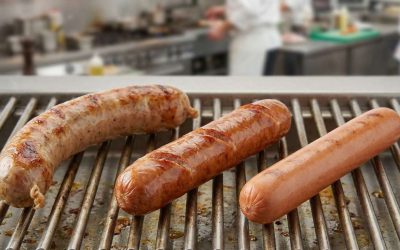
Preparation should lean into those strengths. Because the range is fully cooked, the aim is to reheat gently and then develop colour and surface character. A grill, hotplate, or flat top is usually the most convincing method, especially if you want a proper browned exterior. An oven can work well for batch reheating, particularly in catering. A bain-marie is less likely to be the first choice here because Bratwurst usually benefits from a more visibly grilled finish. Where service speed matters, it also makes sense to preheat gently and then finish briefly on the grill so the sausage looks fresh off the fire without slowing the line.
Bacon Frankfurter
Bacon Frankfurter sits in the faster-service end of the range, but it has more personality than a plain Frankfurter. The bacon cue makes it easier to sell because the customer immediately understands that this is not just a generic hotdog sausage. It sounds richer, smokier, and slightly more indulgent, which is exactly what many operators want when they need something easy to explain but still distinctive enough to justify a stronger menu position.
That makes Bacon Frankfurter especially useful for event trading, pub hotdog menus, and street food builds where the menu has to work quickly. It is familiar enough not to scare anyone off, but specific enough not to disappear into the background. In a practical sense, it gives you a more flavour-led hotdog option without forcing you to redesign your whole operation. That is often the sweet spot in German sausages for beginners: a product that sounds special while still running fast.
Preparation is where Frankfurters really earn their place. The wholesale page explains that the sausages are fully cooked and can be thawed, heated, and served using gentle methods such as hot water, grill, hotplate, bain-marie, or oven. For Bacon Frankfurter, hot water or bain-marie heating is usually the easiest way to keep the sausage plump and service-ready. A light grill or hotplate finish then adds visual appeal and a bit of outer bite. That combination works well when you want speed, consistency, and a more appetising appearance than a purely water-heated sausage on its own.
Cheese Frankfurter
Cheese Frankfurter is one of the clearest premium-feeling products in the range because it takes the already familiar Frankfurter format and makes it richer and more indulgent. It has the advantage of being instantly understandable. Nobody needs a lecture to grasp what a Cheese Frankfurter is supposed to offer. That matters in fast service, because menu items that explain themselves tend to sell better than menu items that need a small cultural introduction and a map.
For operators, Cheese Frankfurter gives the range a more comfort-food direction. It works well for loaded buns, pub specials, event menus, and any setup where customers are looking for something a bit more satisfying than a plain hotdog. It also helps create a clear menu ladder. You can have a simpler base sausage, a bolder sausage, and then a richer cheese-led option without moving away from the same general service model.
Preparation should be slightly more careful than with a plainer sausage, not because it is difficult, but because aggressive heat is usually pointless. Since the sausages are already fully cooked, the priority is to warm them through properly while keeping the casing intact and the interior pleasant. Bain-marie, hot water, oven reheating, and gentle hotplate work all make sense. A light grill finish can improve appearance, but there is no great prize for brutal heat here. The goal is a sausage that looks inviting and eats properly, not one that has been punished for existing.
Chilli Beef Frankfurter
Chilli Beef Frankfurter gives the range a stronger and more assertive flavour profile. In German sausages for beginners, this is the line that shows how the range can move beyond the classic and into something with more attitude without becoming strange or difficult to place. The name does the work for you. Customers can immediately understand that this will be beef-based, likely darker in flavour, and noticeably more lively than a milder sausage.
That makes it useful as a second or third sausage option on a menu. If Pork Bratwurst is the broad all-rounder and a milder Frankfurter is the easy fast-service line, Chilli Beef Frankfurter is the product that gives the menu some edge. It helps traders and pubs avoid the common problem of offering several sausages that are technically different but feel almost identical to the customer. Here, the distinction is obvious.
Preparation is flexible, which is one reason this sausage works well commercially. The site’s heating guidance applies here too: hot water, grill, hotplate, bain-marie, and oven are all practical routes for a fully cooked sausage. In a busy line, hot water or bain-marie heating gives the easiest holding and the best speed. A quick grill or hotplate finish works well when you want stronger visual appeal or a more street-food look. In home use, grill or oven reheating often makes the most sense because it gives a more finished appearance. The main thing is even heating rather than aggressive cooking, because the sausage itself is already done.
Vienna Beef Frankfurter
Vienna Beef Frankfurter broadens the Frankfurter side of the range without changing the overall service logic. That is commercially valuable. It means operators can offer variety without needing more equipment, more staff training, or a completely different preparation method. The product feels more specific than a generic beef hotdog, but it still sits inside a format that customers understand very quickly.
For German sausages for beginners, Vienna Beef Frankfurter also helps make an important point: not all Frankfurter-style sausages are interchangeable. Even when the service method is similar, the flavour identity and customer expectation can be different. A beef-led Frankfurter will appeal to a different preference from a pork-based or cheese-based line. That gives operators room to build a more thoughtful menu instead of treating the sausage offer as one long row of near-duplicates.
Preparation is straightforward and should stay that way. The site’s guidance supports reheating by hot water, hotplate, grill, bain-marie, or oven. In practical use, gentle hot water is one of the cleanest ways to warm a Frankfurter evenly and keep the skin neat. Bain-marie service also works well where holding matters. If you want extra colour or a firmer outer texture, a brief finish on a grill or hotplate is helpful. The real advantage of this sausage is that it gives you a more distinctive beef profile without demanding a more difficult prep method.
Beef Hotdog
Beef Hotdog has a different job from Vienna Beef Frankfurter even though both are beef-led and both may sit in similar service formats. The key difference is language and positioning. “Beef Hotdog” is direct. It does not ask the customer to know anything about German sausage culture before ordering. That may sound simple, but it is often commercially very smart. In some venues, especially family events, fast-grab service points, or broad public festivals, direct menu language can outperform more specialist naming.
That does not make Beef Hotdog less useful within a German sausage range. In fact, it can make it more useful in the right setting. It gives operators a simpler entry point and allows the range to meet customers where they are. A menu can still carry German identity overall while using one or two product names that feel easier for a broader public to order without hesitation.
Preparation should be chosen for speed and consistency. Because the sausage is fully cooked, gentle hot water and bain-marie service are obvious fits for fast-moving hotdog lines. Oven reheating can work in batch situations, and a hotplate or light grill finish can improve appearance where that matters. This is a sausage that rewards tidy systems rather than culinary drama. It should come out hot, juicy, and consistent, not treated like a steak trying to prove something.
Pork Hotdog
Pork Hotdog plays a similar commercial role to Beef Hotdog, but the flavour direction is different and the menu possibilities are slightly broader. Pork often feels a little more familiar and versatile in this kind of format, which can make Pork Hotdog a very useful all-rounder for operators who want a straightforward hotdog line without moving fully into Bratwurst territory. It can also make sense where the rest of the menu already leans pork-heavy and the operator wants a cleaner fit.
In German sausages for beginners, Pork Hotdog is useful because it prevents the category from becoming artificially narrow. Not every buyer wants the most traditional-sounding German option first. Some want the easiest line to sell, the easiest line to explain, and the easiest line to serve at speed. Pork Hotdog can fulfil that role very effectively while still sitting inside a broader German-made sausage offer.
Preparation again should stay practical. Hot water, bain-marie, oven, hotplate, and light grill all fit the wholesale guidance for the range. For volume service, bain-marie and hot water are especially useful because they allow consistent holding and quick assembly. For a stronger finish, a short contact with grill or hotplate can add colour. This product is at its best when the service system is tight and the menu language is clear. It is not meant to be overthought; it is meant to be dependable.
Bockwurst
Bockwurst brings a more traditional German note into the range. It is not as instantly familiar to every UK customer as Bratwurst or Hotdog, but that is exactly why it has value. Once a buyer or operator wants the offer to feel a bit more specifically German rather than simply German-inspired, Bockwurst becomes more interesting. It gives the range depth and signals that the portfolio can go beyond the most obvious commercial crowd-pleasers.
For German sausages for beginners, Bockwurst is worth explaining because it sits in that useful middle zone: more traditional than a plain hotdog, but still accessible enough to work commercially when presented properly. It can help a menu feel more authentic without becoming difficult. For some operators, especially those with a clearer German theme, that makes it a very sensible second-step product after Bratwurst or Frankfurter.
Preparation should be gentle. The site’s general guidance for the range supports heating by hot water, bain-marie, oven, grill, or hotplate, but Bockwurst is one of those sausages where softer reheating usually suits the style better. Hot water or bain-marie tends to preserve the tidy look and juicy bite more naturally. A very light finish on a hotplate can work, but heavy grilling is less likely to play to its strengths. This is a sausage that benefits from restraint rather than theatrics.
Munich Weisswurst
Munich Weisswurst is the most specialist and most distinctly traditional sausage in the range. It is important because it signals that the offer is not limited to obvious festival sausages and loaded hotdog lines. There is a real Bavarian note here. For beginners, Weisswurst also helps correct a common misunderstanding: German sausage culture is not just about grill sausages. Some styles are gentler, paler, more specific in character, and more rooted in particular regional serving traditions.
That makes Munich Weisswurst less of a universal first choice, but no less important. For a buyer who wants the range to feel genuinely broad and properly German, Weisswurst matters. For home use, it can also be one of the more interesting products because it gives people something clearly different from the usual barbecue pattern. It is a good reminder that German sausages for beginners should widen understanding, not just repeat the same few familiar ideas.
Preparation should stay gentle and respectful to the style. Since the range is fully cooked, the practical task is reheating rather than cooking. Hot water is the natural fit here, and bain-marie-style warming can also work well. A grill is usually not the most suitable route for Weisswurst because the sausage’s character is not really about browned exterior and aggressive surface colour. If Bratwurst is the sausage that wants to meet the grill, Weisswurst is the sausage that wants a calmer life.
This is the point where German sausages for beginners starts becoming genuinely useful rather than just descriptive. Once each sausage is understood in its own right, the range stops looking like a blur of similar names and starts looking like a set of distinct tools. Some products are broad all-rounders. Some are faster-service specialists. Some add richness, spice, or stronger identity. Some bring in a more traditional German note. That is exactly how a practical sausage range should work.
For UK operators, the value is not simply that there are several sausages available. The value is that each line can serve a different menu need without forcing the business into unnecessary complexity. For home users, the same logic applies on a smaller scale. Different sausages suit different moods, different meals, and different preparation methods. That is why this section matters. It turns German sausages for beginners from a vague topic into a usable buying and menu-planning guide.
Which German Sausage Types Work Best for Street Food and Festivals?
German sausages for beginners becomes much more practical when the question is not “Which sausage is most traditional?” but “Which sausage helps me trade quickly, clearly, and profitably on a busy pitch?” For street food and festivals, the best performers in your range are usually the lines that are easy to explain, quick to heat, and flexible across grill, hotplate, hot water, or bain-marie service. That is exactly the strength of the Sausage Haus range: the wholesale page positions it for events such as Christmas markets, music festivals, street food events, country shows, and funfairs, and the sausages are fully cooked for quick reheating and service.
Pork Bratwurst is one of the strongest street-food products because it gives the clearest visual and emotional signal of “German sausage” without needing much explanation. On a grill, it looks the part immediately. It suits a roll, handles simple toppings well, and works for traders who want a product that feels authentic and substantial. In a practical bratwurst guide UK operators can actually use, that combination matters more than romantic sausage history. It is the line that naturally supports a classic German market-stall feel.
The Frankfurter family is the other major festival-friendly group. Bacon Frankfurter, Cheese Frankfurter, Chilli Beef Frankfurter, and Vienna Beef Frankfurter all give you the same basic operational advantage: they fit fast service. The wholesale page states that the sausages are fully cooked and can be gently warmed in hot water, lightly grilled, or cooked on a hotplate, which makes them especially useful where speed and consistency matter. This is why German sausages for street food often leans so heavily on Frankfurter-style products. They are easy to hold, easy to finish, and easy to serve without slowing the queue.
Beef Hotdog and Pork Hotdog are also very strong in this environment. They are not there to sound more German than everything else. They are there because event trading often rewards clarity. “Hotdog” is immediate menu language. For some festival audiences, that makes these lines even easier to sell than a more specialist sausage name. They also fit the same quick-service heating logic as the rest of the range, which keeps the operation tidy.
Bockwurst and Munich Weisswurst are more specialist in festival terms. They can still have a place, especially where the offer is explicitly German-themed or more food-led, but they are less likely to be the first-volume sellers on a broad public pitch. German sausages for beginners should still mention them, but they are usually better seen as range-extending options rather than core street-food starters.
A sensible event-first view of the range is this:
- Pork Bratwurst for the clearest German grill product
- Bacon, Cheese, Chilli Beef, and Vienna Beef Frankfurters for fast hotdog-style service
- Beef Hotdog and Pork Hotdog for the easiest broad-public menu language
- Bockwurst and Munich Weisswurst for more specialist or themed extensions
So for German sausages for beginners, the best street food and festival choices are usually the sausages that combine three things at once: instant customer understanding, fast reheating, and a strong visual result on the pass. In your range, that usually points first to Pork Bratwurst, the Frankfurter variants, and the hotdog lines, with the more specialist sausages coming in once the core sellers are already doing their job.
The Best Options for Pubs, Caterers, and Foodservice Buyers
German sausages for beginners should also separate different commercial environments, because a sausage that works brilliantly on a festival pitch is not always the one that makes the most sense in a pub or catering setup. Pubs often need products that plate well and justify a stronger menu presence. Caterers need reliability, holding ease, and speed. Foodservice buyers usually need a range that can adapt to several service formats without becoming awkward. Your range suits that well because the sausages are fully cooked and designed for quick reheating across grill, hotplate, bain-marie, oven, and hot-water methods.
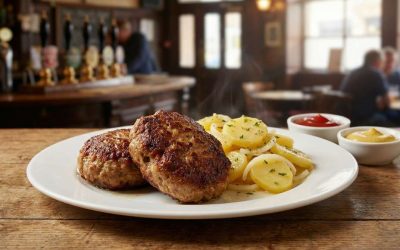
For pubs, Pork Bratwurst is one of the best anchors in the range. It has enough presence to sit confidently as a plated main, not just as a bun product. It can be served with chips, mash, fried potatoes, or sauerkraut-style sides and still feel like a complete dish rather than a bar snack pretending to have ambitions. Cheese Frankfurter and Bacon Frankfurter also make sense in pubs because they help build stronger premium hotdog or sausage-in-roll offers that feel a little more substantial than a standard generic line.
For caterers, the Frankfurter family and the hotdog lines are especially useful because they simplify service. A frankfurter guide UK caterers can genuinely use should be less about nostalgia and more about holding, consistency, and speed. Bacon Frankfurter, Chilli Beef Frankfurter, Vienna Beef Frankfurter, Beef Hotdog, and Pork Hotdog all fit that logic well. They can be heated in volume, held sensibly, and finished when needed, which makes them suitable for events, buffets, contract catering, and larger service windows.
Foodservice buyers often need a broader answer. They may want one obvious seller, one more premium or flavour-led option, and one line that adds a more traditional German note. In that context, Pork Bratwurst, a selected Frankfurter variant, and Bockwurst can make a sensible trio. Munich Weisswurst is more specialist, but for the right venue or themed foodservice offer it helps the range feel more complete and less generic. German sausages for catering often becomes stronger when the buyer chooses a small, well-matched group rather than trying to offer every possible sausage at once.
A practical buyer view looks like this:
- pubs: Pork Bratwurst, Cheese Frankfurter, Bacon Frankfurter
- caterers: Frankfurter variants, Beef Hotdog, Pork Hotdog
- broader foodservice: Pork Bratwurst plus a Frankfurter plus Bockwurst or Weisswurst where the concept suits it
That is the useful commercial lesson inside German sausages for beginners. The best option depends less on which sausage has the most impressive backstory and more on which one fits the service style in front of you. Your products already give the buyer that flexibility. The real skill is choosing the lines that match the venue, the customer, and the pace of service instead of assuming one sausage has to do every job.
How to Choose the Right Sausage for Buns, Plates, and Grab-and-Go Menus
German sausages for beginners becomes genuinely useful once the buyer understands that format should lead the decision. The question is not only which sausage sounds best. It is which sausage makes sense in the way the food will actually be sold. A sausage in a bun needs slightly different strengths from a sausage on a plated menu, and a grab-and-go line needs different strengths again. Because your sausages are fully cooked and flexible in reheating method, the same range can support several formats, but the products are still better suited to some jobs than others.
For buns, Pork Bratwurst is often the strongest “German street food” choice because it gives the clearest identity and the most obvious grill appeal. It suits a crusty roll, holds up well with onions and mustard, and still feels substantial when served simply. The Frankfurter lines also work very well in buns, especially when the menu is more hotdog-led. Bacon Frankfurter and Cheese Frankfurter are particularly useful here because the flavour story is clear before the customer even reaches the till. Beef Hotdog and Pork Hotdog obviously belong in this part of the conversation too, especially where the menu language needs to stay very direct.
For plates, Pork Bratwurst is again one of the strongest lines because it feels most natural as the centre of a plated meal. It has enough visual presence and enough classic sausage character to work with chips, mash, potato salad, slaws, or sauerkraut-led sides. Bockwurst can also work in plated or more traditional food-led settings where the operator wants a milder and slightly more specifically German direction. Munich Weisswurst is more specialist, but in the right context it clearly belongs more to a plated or traditional presentation than to a loaded grab-and-go build.
For grab-and-go menus, ease and speed become more important. This is where the Frankfurter family and the hotdog lines are especially useful. The wholesale page’s reheating guidance – hot water, grill, and hotplate – fits exactly the sort of quick-serve formats that need consistent output and short assembly times. Chilli Beef Frankfurter, Vienna Beef Frankfurter, Beef Hotdog, and Pork Hotdog all make particular sense when the aim is fast turnover with a familiar eating format. German sausage types UK buyers choose for grab-and-go usually do best when the name is easy, the prep is tidy, and the product is simple to hold and serve.
A simple way to match product to format is this:
- buns: Pork Bratwurst, Bacon Frankfurter, Cheese Frankfurter, Beef Hotdog, Pork Hotdog
- plates: Pork Bratwurst, Bockwurst, Munich Weisswurst in the right setting
- grab-and-go: Frankfurter variants and the hotdog lines first, Bratwurst where the service model supports it
So German sausages for beginners should not treat all formats as interchangeable. A sausage can sometimes cross between them, but that does not mean every sausage performs equally well everywhere. Buyers usually get the best result when they let the format lead the product choice. That keeps the menu clearer, the prep easier, and the final offer much more coherent.
Which Products Feel Most Familiar to UK Customers?
German sausages for beginners should also ask a more human question: which products will customers in the UK understand fastest? That matters because a familiar product does not need as much selling effort. The range pages themselves already point toward that answer by repeatedly linking the products to German festivals, Christmas markets, music festivals, street food events, and convenient home cooking. In other words, the range is designed to feel both authentic and usable, not obscure for the sake of being obscure.
The most familiar products are usually the ones whose names already do most of the communication. Pork Hotdog and Beef Hotdog are the most obvious examples. Customers know immediately what they are getting. Bacon Frankfurter and Cheese Frankfurter are also highly accessible because the flavour cue is built into the name. Even Chilli Beef Frankfurter is easy to decode. These are all very useful products in German sausages for beginners because they reduce friction at the point of sale.
Pork Bratwurst is also familiar, though in a slightly different way. Not every customer will know exactly what makes a Bratwurst different from another sausage, but many in the UK now recognise the word from Christmas markets, food festivals, and German-style stalls. That makes it one of the strongest crossover products in the range. It still sounds German, but not so unfamiliar that people hesitate. That balance is commercially valuable.
The less immediately familiar products are usually Bockwurst and Munich Weisswurst. That does not make them weak products. It simply means they often need a bit more explanation or a more clearly German setting around them. Vienna Beef Frankfurter sits somewhere in the middle. It is still recognisable because “Frankfurter” gives the customer a clue, but it feels a little more specific than a plain hotdog. In a good frankfurter guide UK readers can use, that middle ground is often where the menu starts to feel interesting without becoming confusing.
A practical familiarity ladder looks like this:
- most immediate: Beef Hotdog, Pork Hotdog, Bacon Frankfurter, Cheese Frankfurter
- strong crossover: Pork Bratwurst, Chilli Beef Frankfurter
- slightly more specific: Vienna Beef Frankfurter
- more specialist: Bockwurst, Munich Weisswurst
That is why German sausages for beginners should not assume the most traditional-sounding sausage is always the best starting point. Often the smartest move is to begin with the lines that feel easiest for UK customers to understand, then widen the offer once the menu has earned their confidence. In your range, that usually means starting with Bratwurst, the Frankfurter variants, and the hotdog lines, then bringing in Bockwurst or Munich Weisswurst where the concept, venue, or audience is ready for something more specifically German.
Where Stronger German Menu Identity Makes Sense
German sausages for beginners should not assume that every menu needs to look fully German from day one. In many UK settings, the smarter approach is to start with the products that feel easy and familiar, then increase the German character where the venue, audience, and concept can support it. In the Sausage Haus range, that usually means the stronger German identity sits first with Pork Bratwurst, then with Frankfurter lines, and then more specifically with Bockwurst and Munich Weisswurst. The live range pages show that the main commercial lines are Pork Bratwurst, Bacon Frankfurter, Cheese Frankfurter, Chilli Beef Frankfurter, Vienna Beef Frankfurter, Beef Hotdog, Pork Hotdog, plus Bockwurst and Munich Weisswurst as specialist additions.
Pork Bratwurst is usually the best place to build that identity because it gives the clearest German signal while still feeling accessible to UK customers. It looks right on a grill, suits a roll or a plated meal, and does not need a long explanation at the counter. For a pub special, a Christmas-market-style stall, or a German-themed event menu, Bratwurst is often the product that makes the whole offer feel more authentic without making it feel risky. The Sausage Haus product pages also position Bratwurst as a core line across wholesale and retail, which fits that role well.
The Frankfurter family is where menu identity can become more layered. Bacon Frankfurter, Cheese Frankfurter, Chilli Beef Frankfurter, and Vienna Beef Frankfurter all keep the service model simple while giving the menu more character than a single generic sausage line. In a practical frankfurter guide UK operators can use, that matters a lot. You can keep the equipment and workflow almost unchanged, but still create a menu that looks more considered and more distinct.
Bockwurst and Munich Weisswurst are where the offer starts to feel more deliberately German rather than simply German-inspired. They are less likely to be the first-volume sellers for a broad public audience, but they make sense where the concept is more food-led, more traditional, or more obviously themed. German sausages for beginners should include them for exactly that reason. They show where the range deepens once the operator wants more than the safest mainstream choices.
A practical way to think about stronger menu identity is this:
- Pork Bratwurst for the clearest all-round German cue
- Frankfurter variants for an easy step into a broader German-style menu
- Bockwurst and Munich Weisswurst for more traditional or specialist positioning
- Hotdog lines when the menu needs to stay broader and more direct
So German sausages for beginners should not force a venue into maximum German theatre before the menu is ready for it. A stronger German identity makes most sense where the surroundings, the naming, and the customer expectation all support it. When that happens, Bratwurst and the more traditional lines can do more than fill a bun. They can make the whole offer feel clearer and more memorable.
How to Build a Cleaner, Faster Service System Around the Right Sausage Range
German sausages for beginners becomes commercially useful when it connects product choice to service flow. The Sausage Haus wholesale page repeatedly frames the range around quick preparation, flexible stockholding, and event-friendly service. The sausages are supplied frozen for wholesale, fully cooked, vacuum packed, and designed to be thawed, heated, and served with minimal preparation. The site also states that they can be gently warmed in hot water, lightly grilled, or cooked on a hotplate, and elsewhere mentions grill, bain-marie, and oven use. That flexibility is the basis of a cleaner, faster system.
The first step is to avoid asking one sausage to do every job. Pork Bratwurst is strongest when the visual grill finish matters. Frankfurter lines and hotdog lines are strongest when speed, holding, and fast assembly matter. Bockwurst and Munich Weisswurst are better for gentler reheating and more traditional presentation. German sausages explained in operational terms means matching the sausage to the service method instead of forcing every line through the same workflow because the grill happens to be hot already.
The second step is to keep the menu tight. For German sausages for street food, a smaller range usually runs better than a long list. One clear Bratwurst line, one or two Frankfurter variants, and perhaps one broad-appeal hotdog line is often enough to create choice without creating unnecessary drag on service. Because the Sausage Haus range already includes distinct flavour-led Frankfurter options such as Bacon, Cheese, Chilli Beef, and Vienna Beef, operators can widen the menu without adding totally different preparation demands.
The third step is to build prep around reheating and finishing, not around raw cooking complexity. Since the sausages are fully cooked, the job is mainly to heat evenly, hold safely, and finish attractively where needed. That naturally supports a cleaner system. Hot water or bain-marie can handle the background work. Grill or hotplate can handle the final colour and last-minute finish. Oven reheating can support batch periods. That is a much calmer service model than trying to manage a menu full of raw products with different cook times.
A sensible fast-service setup usually follows this pattern:
- Bratwurst on grill or hotplate for the visible hero line
- Frankfurter and hotdog lines preheated and held for fast assembly
- one specialist sausage only if the concept really supports it
- simple topping combinations so the sausage stays the focus
That is why German sausages for beginners should never be treated as a naming exercise only. The right sausage range is also a workflow decision. When the products are chosen well, service gets faster, waste control gets easier, and the menu stops fighting the operation. In your range, that usually means letting Pork Bratwurst carry the grill-led identity while Frankfurters and hotdogs carry the speed.
Common Mistakes Beginners Make When Choosing German Sausages
German sausages for beginners often goes wrong when buyers choose with their eyes only. A sausage may sound beautifully German, but that does not mean it suits the actual venue, customer, or service model. One common mistake is picking the most specialist product first, then discovering it needs more explanation and sells more slowly than the simpler lines. In the Sausage Haus range, that usually means starting too far toward Bockwurst or Munich Weisswurst when Pork Bratwurst or a Frankfurter variant would have been the more practical first step.
Another mistake is treating all Frankfurter-style products as interchangeable. They are not. The live range includes Bacon Frankfurter, Cheese Frankfurter, Chilli Beef Frankfurter, and Vienna Beef Frankfurter, plus separate Beef Hotdog and Pork Hotdog lines. Those names are doing real commercial work. They help shape expectation, flavour choice, and menu position. A better frankfurter guide UK buyers can use should recognise that those distinctions matter even when the heating methods are similar.
A third mistake is ignoring preparation logic. The wholesale page is clear that the sausages are fully cooked and meant to be gently reheated by methods such as hot water, grill, hotplate, bain-marie, or oven. Beginners sometimes overcomplicate this and behave as though every sausage needs a dramatic full-cook treatment. Usually it does not. German sausages for beginners becomes much easier once the operator accepts that reheating method, finish, and service speed matter more than culinary theatrics.
Another common error is offering too many sausages too early. A long list can look impressive on paper but become messy in real service. German sausage types UK buyers choose usually perform better when the first range is small and coherent. One strong Bratwurst, one or two Frankfurter options, and perhaps one hotdog line will often do more for sales and speed than a menu that tries to prove its seriousness by listing every possible sausage name at once.
The mistakes that usually matter most are these:
- choosing by name alone instead of by service fit
- starting with specialist sausages before the core sellers are established
- assuming all Frankfurter or hotdog lines are basically the same
- making the menu too wide before the operation is ready
So German sausages for beginners is not really about memorising more names. It is about avoiding predictable buying errors. When the first choices are matched to venue, service style, and customer confidence, the range becomes much easier to grow later. That is the practical lesson behind the whole guide: start with the sausages that fit the job, not the sausages that merely sound impressive.
Frequently Asked Questions
Conclusion
German sausages for beginners becomes much easier once you stop treating the whole category as one single thing. In practice, each sausage type has a job. Some are broad crowd-pleasers that work well in fast service. Some bring a more obvious German identity. Some are especially useful for pubs, event traders, and caterers who want a product that looks distinctive without slowing the line down.
That is the real point of this guide. It is not about sounding more German than the next trader on the pitch. It is about choosing the right product for the right format, so your menu feels clearer, your operation runs more smoothly, and your customers understand what they are buying without needing a seminar at the counter.
For UK operators, that matters. A sausage may be authentic, but if it does not suit your service model, pricing, holding method, or customer base, it is not the right choice yet. German sausages for beginners should therefore be approached as a practical menu decision first and a branding decision second.
If you are reviewing your range, tightening your menu, or building a more recognisable German offer, this guide should give you a cleaner starting point. From there, the next step is simple: choose the sausage types that fit your customers, your setup, and the speed you actually need to run.
About The Sausage Haus
The Sausage Haus helps UK operators serve authentic German sausages in a way that works commercially in the real world. We focus on caterers, showmen, festival traders, street food operators, pubs, and foodservice buyers who want products with real German identity but also need a faster, cleaner, and more reliable service system.
Our sausages are produced by Remagen in Germany, a business with over 300 years of sausage-making tradition behind it. In the UK, distribution is handled by Baird Foods, bringing over 40 years of experience in supply and service. That combination matters because operators do not just need a good sausage on paper. They need dependable products, sensible support, and a range that fits different trading environments.
Whether you are planning a simple hotdog line, a fuller German street food menu, or a stronger pub and catering offer, The Sausage Haus is built around practical use, not decorative storytelling. The aim is straightforward: help UK operators serve authentic German sausages with less friction and a more dependable workflow.