German sausages can do much more at a food festival than sit in a roll with mustard. With the right toppings, sides and presentation, they become faster to serve, easier to upsell and more memorable for customers who have dozens of other food stalls competing for their attention.
From Simple Sausage to Festival Favourite

Build a Shorter Menu
Use Toppings With Purpose

Present It Like a Meal
Overview
German sausages can be more than a standard roll-and-mustard offer. This guide looks at how chefs, caterers, showmen and food buyers can make them work harder at festivals and events through sharper menu design, practical toppings, simple sides and stronger presentation.
The focus is commercial as well as culinary: keeping menus short, making choices easy for customers, supporting faster service and creating dishes that feel generous without adding unnecessary complexity.
It also covers how to avoid common stall mistakes, from overlong menus and uncontrolled toppings to weak bread, messy builds and sides that slow the queue.
Key Takeaways
- Build a compact menu around clear roles such as classic, smoky, spicy, cheese-led or currywurst-style options.
- Use toppings to add colour, texture and contrast, but group them into set combinations to protect service speed.
- Choose sides that are quick to portion, stable during service and easy to offer as an upgrade.
- Improve perceived value with better rolls, tray or bowl formats, colour contrast and consistent presentation.
- Design the stall setup around busy-service reality: clear stations, repeatable builds, portion control and fewer moving parts.
Why German Sausages Work So Well at Food Festivals
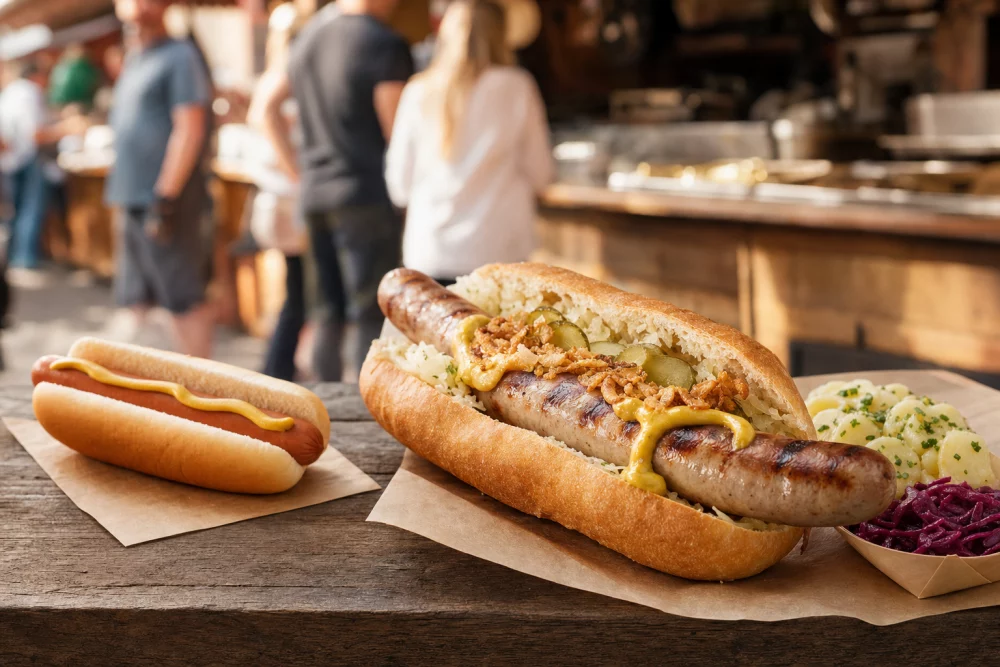
Food festivals reward products that are easy to understand, quick to serve and appealing from a distance. German sausages fit that environment extremely well because they give the customer a clear promise: a generous sausage, proper flavour, hot service and a dish that feels satisfying without needing a complicated explanation.
That clarity matters. At a busy event, many customers do not want to study a long menu. They want to see what looks good, understand the choice quickly and feel confident that the portion is worth the price. A well-presented German sausage offer can do that in seconds.
German sausages also have strong visual value. A long bratwurst in a quality roll, a smoky frankfurter with glossy , or a grilled krakauer with crisp onions and mustard immediately looks more distinctive than a standard sausage bap. It gives the trader something with height, length, colour and theatre, even before any extras are added.
Commercially, they are useful because the core product can stay simple while the menu around it feels varied. The same service setup can support classic, smoky, cheesy, spicy or premium versions without turning the stall into a full kitchen. That makes German sausages especially attractive for operators who need speed, consistency and a strong-looking offer during short, intense trading windows.
What Makes a German Sausage Feel Different from a Standard Hot Dog
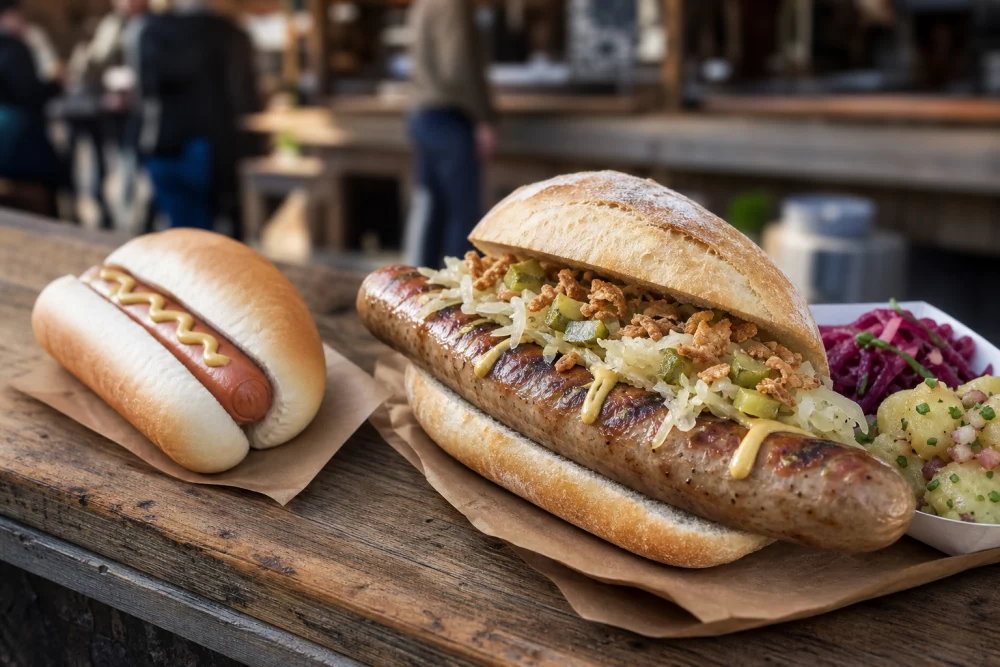
A standard hot dog often competes on convenience. A German sausage can compete on character. That difference is important at food festivals, where customers are surrounded by colourful, aromatic and often premium-looking food. The product has to feel like a choice, not just a fallback.
This Munich tourism guide to German sausage styles helps you compare regional varieties and serving ideas that can give a festival menu more character.
The first difference is usually the bite. German sausages tend to have more presence: a firmer structure, a more satisfying texture and a stronger sense of meat, seasoning and smoke, depending on the variety. A bratwurst has a different appeal from a frankfurter, and a smoky pork hot dog feels different again from a cheese-filled or chilli-led option. That gives the menu more range without losing focus.
The second difference is expectation. “German sausage” suggests a recognisable food tradition, not just a generic event snack. It connects naturally with mustard, sauerkraut, onions, potato salad, currywurst sauce
The third difference is perceived value. A large, well-cooked sausage in a good roll looks like a proper meal. Add one or two carefully chosen toppings and it can feel more substantial without requiring a complicated plate. That is exactly the kind of upgrade that works well in a festival setting: visible, understandable and easy to serve at pace.
Building a Festival Menu Around Fewer, Stronger Sausage Choices
A common mistake at food festivals is trying to make the menu look impressive by adding too many options. In reality, a shorter menu often sells better. It is easier for customers to choose, easier for staff to explain and much easier to deliver consistently when the queue builds.
For German sausages, the sweet spot is usually a compact menu built around clear product roles. Instead of offering ten similar sausages, a trader might choose three or four distinct options:
- a classic bratwurst for the traditional customer
- a smoked pork hot dog or frankfurter for the familiar crowd-pleaser
- a cheese or chilli sausage for the indulgent upgrade
- a currywurst-style option for a more recognisably German street food dish
This keeps the offer broad enough to feel interesting, but narrow enough to operate cleanly. It also helps with signage. Customers should be able to understand the difference between options at a glance: classic, smoky, cheesy, spicy, or currywurst.
A focused menu is also better for stock control. Fewer lines mean less waste, easier forecasting and a simpler cooking rhythm. Staff can learn the products properly, keep service moving and upsell with confidence. At a festival, that matters more than theoretical menu variety. The best menu is not the longest one. It is the one that customers understand quickly and staff can execute beautifully under pressure.
Toppings That Add Theatre Without Slowing the Queue
Toppings can make German sausages look exciting, but they need to earn their place. At a food festival, every extra ingredient has to pass a practical test: does it improve the dish enough to justify the handling time, storage space and service complexity?
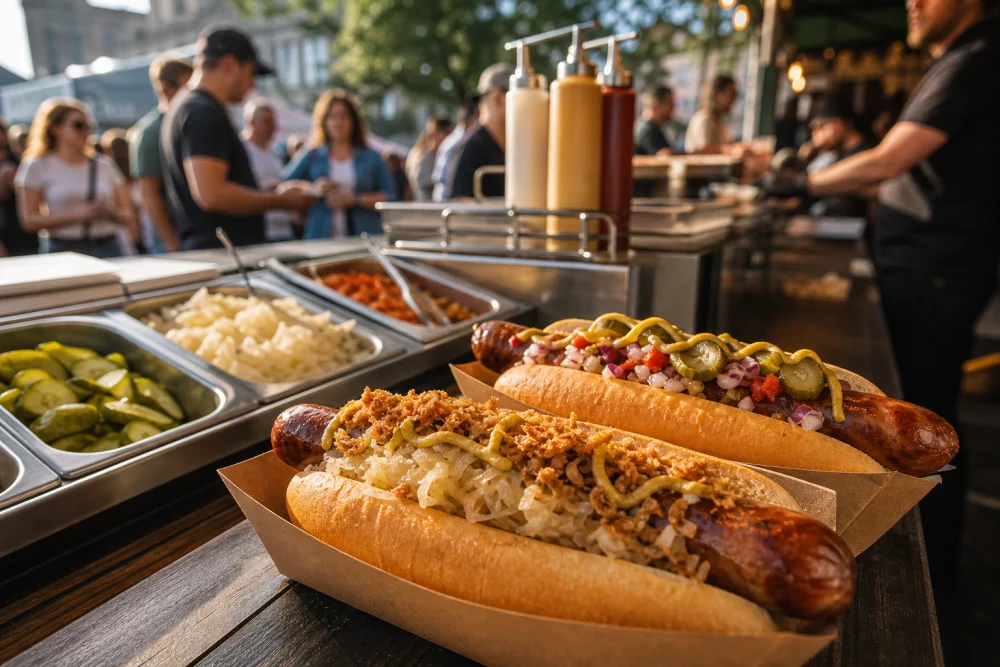
The best toppings add colour, aroma, texture or contrast without needing last-minute preparation. Crispy onions, pickled red onions, sauerkraut, gherkins, currywurst sauce, mustards, cheese sauce, chilli relish and herb garnishes can all work well because they are quick to portion and easy for customers to understand. They also make the product look more generous in photographs and from the front of the stall.
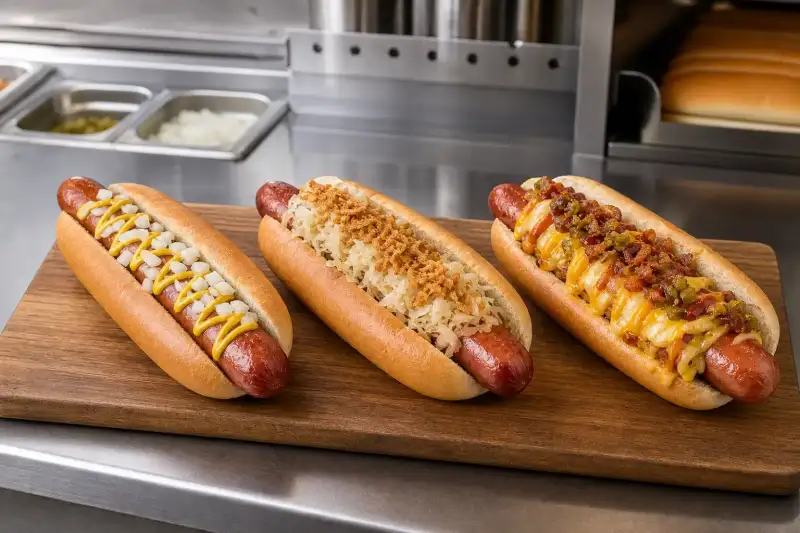
The trick is to create combinations rather than an uncontrolled topping bar. A “Bavarian” version with sauerkraut, mustard and crispy onions is easier to sell than a long list of loose extras. A smoky frankfurter with pickles, onions and a sharp mustard gives balance. A chilli cheese sausage with jalapeños and a controlled cheese topping gives indulgence without becoming a messy eating challenge.
For speed, toppings should be set up in the order staff use them. Sauces need bottles or pumps that work cleanly. Wet toppings need proper draining. Garnishes need portion discipline. Done well, toppings add theatre at the final handover point. Done badly, they turn the queue into a decoration workshop. The goal is a dish that looks crafted, but can still be served in seconds.
Sides That Make the Plate Feel Complete and Worth More
A sausage in a roll can be an excellent festival product, but a sausage with the right side can feel like a fuller meal. That matters when customers are choosing between burgers, loaded fries, noodles, pizza, tacos and barbecue. The side should make the plate look more generous without making the operation heavy or slow.
This tourism page highlights a classic Hamburg sausage stand where you can see currywurst served with potato salad, which is a useful real-world side idea for lighter festival plates.
For German sausages, the best sides are usually simple, recognisable and easy to portion. Fries are the obvious choice, but there are more interesting ways to use them: seasoned fries, skin-on chips, currywurst chips, paprika fries, or chips with a small pot of curry sauce. These keep the dish familiar while adding a stronger German street food angle.
Lighter sides can also work well, especially for spring and summer events. A small potato salad, cucumber salad, red cabbage slaw, pickles, dressed leaves or a crisp apple-and-cabbage slaw can make the dish feel fresher and more balanced. That can help operators appeal to customers who want something satisfying but not too heavy.
The side should also fit the service model. Anything that needs careful plating, delicate timing or lots of separate ingredients can become a problem when the queue grows. A good festival side should be:
- quick to portion
- stable during service
- visually clear
- easy to price as an upgrade
- compatible with several sausage choices
The commercial purpose is not just to add food. It is to increase perceived value, improve customer satisfaction and create an easy upsell without slowing the stall.
Presentation Ideas That Turn a Simple Sausage into a Festival Dish
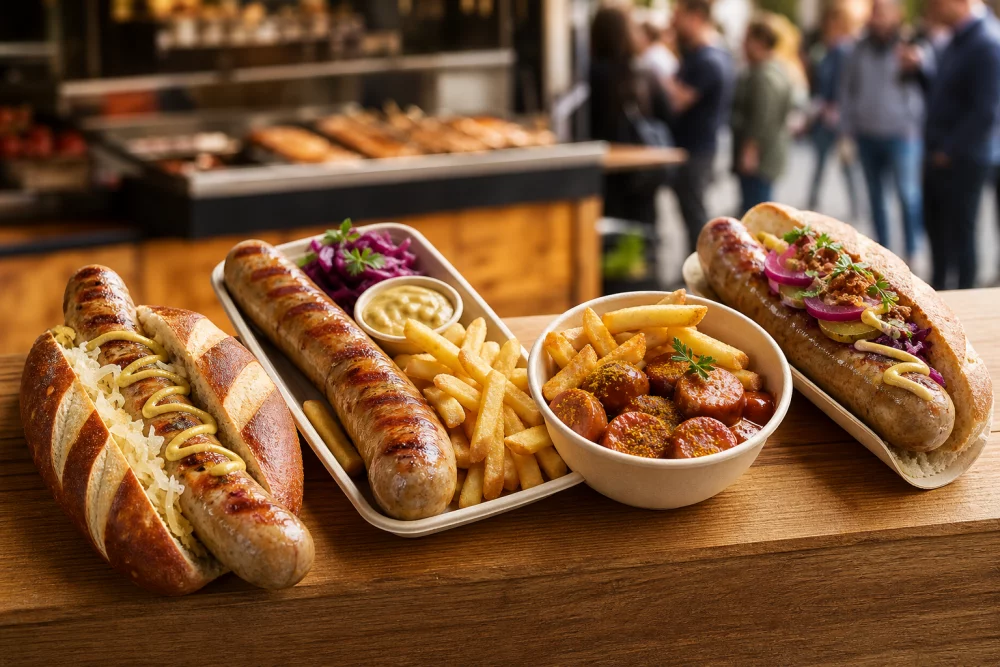
Presentation does not need to mean fussy plating. At a food festival, good presentation means the customer instantly sees quality, generosity and flavour. The dish should look good from the queue, at the handover point and in a customer’s photo, while still being robust enough to eat standing up.
The easiest upgrade is the roll. A good-quality roll, ciabatta-style bread, pretzel-style roll or rustic baguette section can change the entire feel of the product. It frames the sausage better, supports toppings more cleanly and makes the dish feel more premium than a standard soft hot dog bun.
Colour is the next tool. Pale sausage, pale bread and pale onions can look flat. Add red cabbage, green herbs, pickled onions, mustard, curry sauce, gherkins, chilli relish or crisp salad and the dish becomes much more attractive. This is not decoration for its own sake. Colour helps customers understand flavour before they taste it.
A few presentation formats can work especially well:
- Classic roll format for fast handover and easy eating
- Tray format with sausage, chips and sauce for a fuller meal
- Currywurst bowl with sliced sausage, sauce and fries
- Premium loaded sausage with a named topping combination
The key is consistency. Staff should be able to build the dish the same way every time. A German sausage that is presented neatly, with height, colour and contrast, can feel like a festival dish without becoming difficult to serve.
If You Want to Present Something Really Special: 3 Festival Sausage Experiences
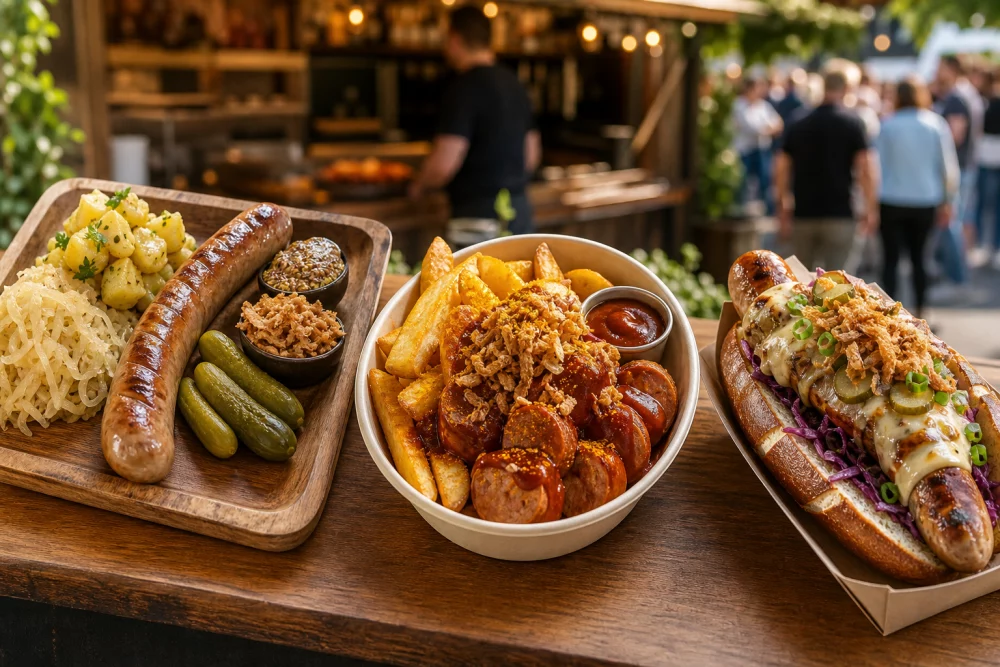
For most festival trading, speed and simplicity should stay at the centre of the offer. But there is also room for one or two “showpiece” dishes that give customers something more memorable. These are the items that people photograph, talk about, and use to justify choosing your stall over the many other options around them.
The key is to make them feel special without making them impossible to serve. A premium sausage experience should still be built from repeatable parts: one strong sausage, one clear serving format, two or three well-matched toppings, and a presentation style that staff can recreate quickly.
1. The Bavarian Festival Board
This is the most traditional-looking premium option, and it works especially well for customers who want a more complete German food experience. Instead of serving the sausage only in a roll, present it in a tray or board-style format with a large German sausage, warm potato salad or fries, sauerkraut, gherkins, mustard and crispy onions.
This recipe guide shows how a mustard-led warm potato salad can work as a sharper side for bratwurst boards and festival sausage trays.
The dish feels generous, but the components remain simple. A classic bratwurst, smoked frankfurter or pork hot dog can all work here, depending on the audience and price point. The important part is the presentation: each element should have its own place, so the tray looks deliberate rather than crowded.
This is a good option for food festivals, beer festivals, Christmas markets and premium outdoor events where customers are willing to spend a little more for a fuller meal. It also gives the operator a higher-value menu item without needing to expand the whole menu.
2. The Currywurst Street Food Bowl
Currywurst is one of the easiest German sausage ideas to turn into a proper festival dish. Slice the sausage into bite-sized pieces, serve it over fries or alongside crisp potato wedges, then finish it with a rich currywurst sauce, curry powder, crispy onions and perhaps a small pot of extra sauce.
This cultural overview explains the background and street-food appeal of currywurst, which is useful if you want to shape a more authentic festival-style currywurst offering.
This format has two big advantages. First, it is easy to eat while walking around a festival. Second, it creates a strong visual and aromatic impact. The customer can see the sauce, smell the spice and understand the dish immediately.
A currywurst bowl can also be offered in different levels: classic, smoky, spicy, or loaded with cheese sauce and onions. That gives the operator room for upselling without creating a completely new dish each time. It feels more exciting than a standard sausage in a roll, but it can still be assembled quickly if the sauce and fries are already set up properly.
3. The Alpine Cheese Sausage Melt
This is the indulgent option: a German sausage served in a quality roll or tray with melted cheese, crisp onions, pickles and a sharp mustard or herb sauce to cut through the richness. It works especially well with a smoky sausage, a cheese frankfurter, or a chilli cheese-style option where the filling already gives the dish a more luxurious feel.
This recipe guide shows how a frankfurter roll with potato salad can be built into a more premium festival-style sausage serve.
The danger with cheese-led dishes is that they can become heavy or messy. The solution is contrast. Pickles, mustard, red cabbage, spring onions, herbs or a small dressed slaw help stop the dish feeling flat. The cheese should make the dish feel warm and generous, not swamp the sausage.
This type of special works well as a named premium item: something like an Alpine Melt, Bavarian Cheese Dog, or German Smokehouse Melt. It gives the menu a clear “treat” option and works particularly well for colder days, evening trade and events where customers are looking for comfort food with a bit more theatre.
How to Keep the Offer Practical for Staff, Stock and Service Speed
A festival sausage offer only works commercially if it can survive the busy hour. The menu may look excellent at 11am, but the real test comes when customers are queuing, staff are under pressure and every extra movement slows the line. Practical design protects the margin as much as the flavour does.
Start with the menu. Fewer sausage choices, fewer topping combinations and fewer side formats usually create a stronger operation. Staff should not need a long explanation for every order. A customer should be able to say “classic”, “smoky”, “cheese”, “spicy”, or “currywurst” and the team should know exactly what to build.
The physical setup matters just as much. Products, rolls, trays, sauces, toppings and sides should sit in the order they are used. If staff are crossing each other, reaching behind equipment, opening containers repeatedly or waiting for one person to finish a task, the stall loses rhythm.
Stock also needs discipline. Premium toppings are useful only if they are forecast sensibly and portioned consistently. A generous-looking dish does not mean uncontrolled serving. It means the customer sees value while the operator still knows what each portion costs.
The best German sausage festival setups feel almost boring behind the counter: simple stations, repeated movements, clear roles and predictable builds. That is exactly what makes them look smooth from the front. The customer sees confidence; the operator gets speed, consistency and fewer service mistakes.
Common Mistakes That Make Sausage Stalls Look Ordinary
The biggest mistake is treating the sausage as a commodity. If the product is served in a weak roll, with poor signage, uneven toppings and no clear menu idea, it becomes “just another hot dog” in the customer’s mind. That is a waste, especially when German sausages have enough character to carry a much stronger offer.
Another common problem is adding variety without structure. A long list of toppings, sauces and sausage types can look flexible, but it often makes the menu harder to read and the queue slower to serve. Customers do not always want unlimited choice. They often want a few clear, appetising options that feel easy to order.
Poor topping control can also damage the product. Too much wet topping makes the roll collapse. Too many strong flavours hide the sausage. Dry onions with no sauce can feel mean, while excessive sauce can look messy and cheap. The best toppings support the sausage rather than bury it.
Operators should also avoid these traps:
- using bread that is too small, too soft or unable to hold the sausage properly
- making the menu sound generic instead of giving each item a clear identity
- offering sides that are too slow or awkward to portion
- relying on toppings to fix an underwhelming core product
- building dishes that look good online but fail during real service
A good sausage stall does not need gimmicks. It needs a strong product, a clear menu, clean presentation and a service system that keeps its quality when the pressure rises.
Frequently Asked Questions
For most festival setups, three to five strong options are usually enough. More than that can make the menu harder to read, slow down ordering and create unnecessary stock pressure.
good structure is one classic option, one smoky or familiar hot dog-style option, one more indulgent choice such as cheese or chilli, and one signature dish such as currywurst. That gives customers a clear choice without making staff manage a complicated range during peak service.
Both can work, but they serve different purposes. Rolls are best for speed, handover and customers who want to walk around while eating. Trays are better for higher-value dishes, sausage-and-chips formats, currywurst bowls and more complete festival meals.
practical approach is to keep the roll format as the fast core offer, then add one or two tray-based specials for customers who want something more substantial. That gives the stall a premium route without making every order slower.
good topping should add flavour, colour or texture without becoming awkward to serve. It should hold well, portion cleanly and make the dish look better at the handover point.
Crispy onions, pickles, sauerkraut, red cabbage, currywurst sauce, mustard, cheese sauce and chilli relish can all work well if they are set up properly. The important point is control. Wet toppings should be drained where needed, sauces should dispense cleanly, and staff should know the portion size for each build.
The best way is to improve perceived value visibly. Customers need to see what makes the dish worth more: a larger or better sausage, a stronger roll, a named topping combination, a proper side, or a more generous tray format.
Simply adding a higher price to a plain sausage rarely works well. A “Bavarian tray” with sausage, fries, sauerkraut, pickles and mustard is easier to justify than a basic roll at a premium price. The customer can see the upgrade before tasting it.
They can be, but only when they are used with discipline. Premium toppings should either help sell a higher-priced item, create a clear signature dish, or improve the customer’s impression enough to support repeat trade and photographs.
The danger is adding expensive ingredients casually across the whole menu. It is often better to reserve stronger toppings for one or two named specials. That keeps the core offer profitable while giving customers a clear reason to trade up.
They should check whether the dish fits the real service environment. A dish that looks excellent in a quiet test kitchen may become too slow, messy or inconsistent during a busy event.
Before committing, operators should consider staffing, storage space, hot-holding, chilled holding, allergen management, handover speed, waste risk, site rules and local authority requirements. The best special dish is not the most complicated one. It is the one that still works properly when the queue is twenty people deep.
lighter feel often comes from the serving style, not from making the product less satisfying. Fresh toppings, sharper sauces and cleaner sides can change the impression of the dish.
Pickles, cucumber salad, red cabbage slaw, herbs, dressed leaves, apple slaw or a small potato salad can make a German sausage feel fresher and more seasonal. This can be useful at spring and summer events where not every customer wants a heavy loaded roll or a full chips-based tray.
German names can add character, but they should not make the menu harder to understand. If a customer has to ask what every item means, the queue slows down.
The safest approach is to use clear descriptive names with a German cue where useful. For example, “Currywurst Bowl”, “Bavarian Bratwurst Roll” or “Alpine Cheese Melt” gives the dish identity while still explaining what the customer is buying. Clarity sells better than authenticity that needs translation.
The quickest improvement is a tighter menu with better visual consistency. Clear signage, named dishes, good rolls, controlled toppings and neat handover trays can make the whole operation look more premium without changing the basic service model.
Customers notice confidence. If the menu is easy to read, the food looks consistent and staff build each dish cleanly, the stall feels more professional. That often matters as much as adding another topping or another sausage variety.
Yes. The same thinking can work for pubs, cafés, farm shops, garden centres, Christmas markets, brewery events, private catering and weekend food pitches. The scale may change, but the principles are similar: clear menu, strong product, quick service and presentation that makes the sausage feel like a proper dish.
Smaller venues may even benefit more from a focused German sausage offer because it gives them a distinctive food concept without needing a large kitchen team. The important part is adapting the menu to the site, customer base and service capacity rather than copying a festival setup exactly.
Conclusion
A strong German sausage offer at a food festival does not need to be complicated. In fact, the best versions are usually built around the opposite idea: a small number of excellent sausages, served quickly, presented well and supported by toppings and sides that make the dish feel more generous, distinctive and worth choosing.
For operators, the balance matters. Fancy presentation is useful only if it survives a busy service. Toppings should add colour, contrast and value, but they should not create a slow, messy production line. Sides should make the portion feel complete, but not turn the menu into a kitchen-management problem. The goal is to make the sausage shine while keeping the operation clean, repeatable and profitable.
German sausages have a natural advantage here. They already offer flavour, structure, visual appeal and a clear point of difference from generic event food. With sharper menu design, better garnish choices and a little more care in presentation, they can move from “good sausage in a roll” to a proper festival food concept.
For UK caterers, traders, pubs, cafés and event operators, that is where the opportunity sits: simple enough to serve at speed, distinctive enough to stand out, and flexible enough to fit different seasons, venues and customer expectations.
The Sausage Haüs
The Sausage Haüs helps UK operators serve authentic German sausages in a way that is practical for real foodservice, not just attractive on paper. The range is designed for caterers, street food traders, event businesses, pubs, cafés, farm shops, garden centres and wholesale buyers who want a stronger sausage offer without making service unnecessarily complicated.
The sausages are produced by Remagen, a German specialist with deep experience in traditional sausage production, and distributed in the UK by Baird Foods. That combination gives operators access to genuine German-style products with UK distribution support, making the range suitable for events, catering menus, retail counters and hospitality settings.
For food festivals in particular, The Sausage Haus offer fits the realities of fast service: strong product identity, clear menu appeal, good portion value and straightforward execution. Whether served simply in a quality roll or elevated with premium toppings, sides and presentation, German sausages can give operators a cleaner, faster and more distinctive alternative to generic sausage or hot dog options.