The cheese frankfurter still earns attention in 2026 for a simple reason: it helps operators make a menu feel more premium without making service more complicated. For pubs, event traders, cafés and caterers, it sits in a useful middle ground between familiar comfort food and something that feels more distinctive than a standard hot dog.
Last updated: April 2026
Premium Feel, Simple Service

Best For Fast Casual Menus

Keep The Build Tight
Introduction
A lot of menu planning in 2026 comes down to one question: how do you give customers something that feels a bit better without slowing the line, overcomplicating prep, or ending up with a menu that only works when your best staff are on shift?
That is where the cheese frankfurter becomes interesting again.
As a product, it does an unusual job rather well. It gives you the comfort and speed of a frankfurter, but with a richer, more indulgent edge that helps justify a stronger selling price and a more premium description. It looks like a small upgrade on paper, but on the menu it can create a noticeably different offer.
This hospitality trade article explains the UK consumer behaviour trends shaping premium value, which is useful when positioning cheese frankfurters as an easy menu upgrade.
That matters in real trading conditions. Pubs want dishes that sit comfortably between snack food and a proper meal. Street food operators want items that photograph well, sell quickly, and do not need too many moving parts. Cafés, garden centres and farm shops want hot food that feels special enough to pull people away from generic lunch options. Caterers want products that are simple to execute but do not feel bland or forgettable.
The current Sausage Haus product page presents the Cheese Frankfurter as a German-style trade product aimed at wholesale buyers, caterers, pubs and event operators, with serving flexibility across hot dogs and plated dishes.
Key Takeaways
- The cheese frankfurter helps a menu feel more premium without demanding an elaborate build or complicated staff training.
- It works best where speed, broad customer appeal, and visible indulgence all matter at the same time.
- It gives operators a stronger alternative to a generic hot dog while still fitting fast service formats.
- The product is especially useful when you want one menu item to work across lunch, events, casual evening trade, or seasonal promotions.
- Its best commercial value usually comes from disciplined menu design, not from piling on too many toppings.
- For many operators, the strongest angle is not novelty but easy premium positioning that customers understand immediately.
What the Cheese Frankfurter Really Is and Why It Feels Different
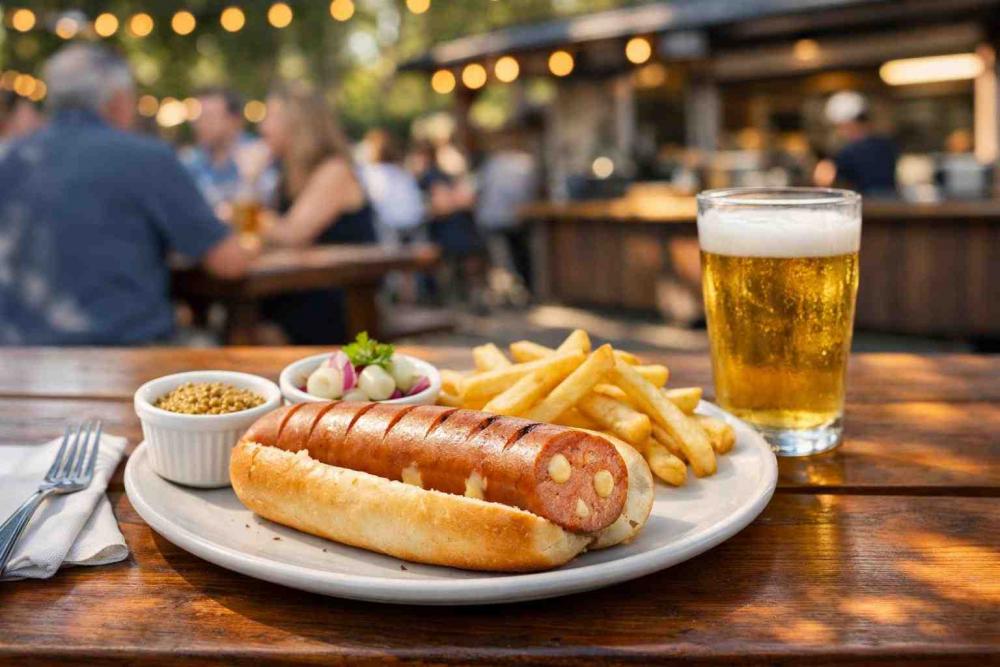
A cheese frankfurter is not just a standard sausage with a more indulgent name. It sits in a very specific place on the menu. In practical terms, it takes the familiar appeal of a frankfurter-style sausage and adds a richer, softer, more indulgent edge through the cheese element. That changes the eating experience in a way customers notice quickly, even if they could not explain it in technical terms.
What makes it feel different is not only flavour. It is also the overall impression. A plain hot dog or basic frankfurter can sell well when price and speed are the main priorities, but it often feels interchangeable. A cheese frankfurter usually lands differently. It feels more considered, a bit more substantial, and closer to a treat than a default purchase. For operators, that matters because it gives you a clear point of difference without needing to invent an entirely new menu concept.
That distinction becomes even more useful when menus are crowded with similar offers. Many customers already know what a hot dog is and what to expect from it. A cheese frankfurter gives them something that still feels accessible, but more interesting. It is familiar enough to order without hesitation and different enough to justify the attention.
From a trade point of view, the product also works because the premium cue is built into the sausage itself. You are not relying only on toppings, loaded language, or overcomplicated presentation to create value. The sausage already carries part of the story. That gives you more room to keep the rest of the build clean and commercially sensible.
It often feels different for three main reasons:
- It has a stronger built-in indulgence than a standard frankfurter
- It needs less menu dressing-up to sound appealing
- It helps a dish feel premium earlier in the customer decision process
That last point is easy to underestimate. Customers often decide very quickly whether something feels cheap, standard, or worth a bit more. A cheese frankfurter tends to move the offer into the more rewarding category without asking them to decode a complicated description.
So when operators talk about this product working differently, that is usually what they mean. It gives you a sausage-led menu item that already feels a step up before the bun, sauce, garnish, or side dish even enters the picture.
Why the Cheese Frankfurter Still Makes Commercial Sense in 2026
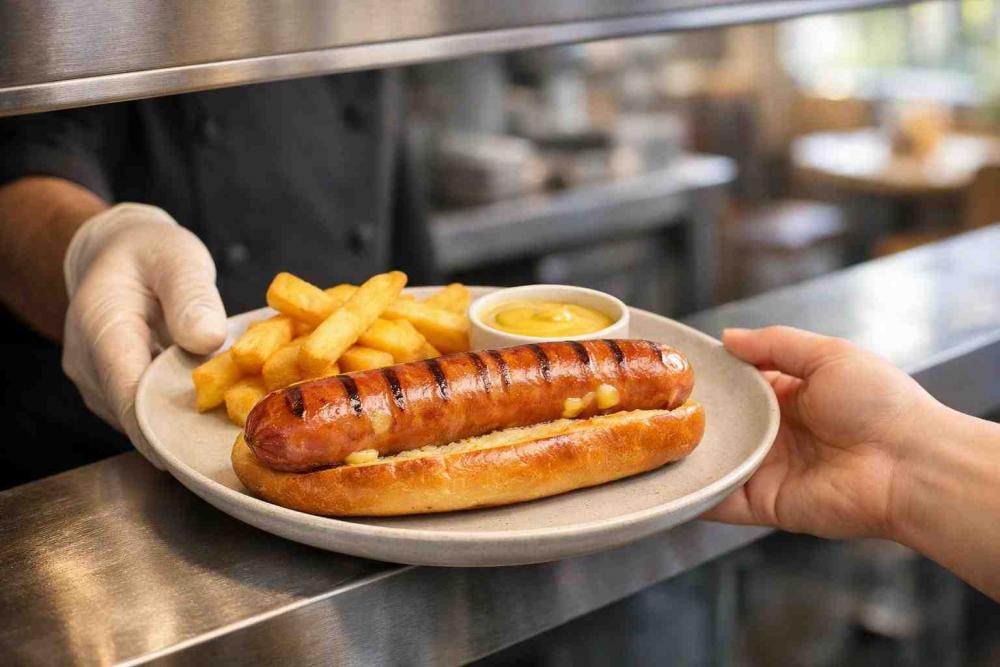
In 2026, the menus that tend to perform best are not necessarily the most inventive ones. They are usually the ones that balance speed, familiarity, margin control, and a clear sense of value. That is exactly why the cheese frankfurter still makes commercial sense.
This hospitality trade article looks at why premium ready meals are gaining ground, which is useful context for positioning cheese frankfurters around convenience, quality, and value.
Customers still want comfort food, but many also want that comfort food to feel a bit better than average. They are often willing to pay more when the upgrade is obvious, easy to understand, and enjoyable enough to feel justified. The cheese frankfurter fits that pattern rather well. It gives operators a product that feels more premium than a standard frankfurter, but does not usually require a slower, more fragile, or more chef-dependent service model.
That matters across a wide range of settings. Pubs need food that can sit comfortably between bar snack territory and a proper casual meal. Street food traders need products that are quick to build, easy to explain, and strong enough visually to earn attention. Cafés, garden centres and farm shops need lunch offers that feel warmer, more generous, and less generic than the usual fallback options. In each of those environments, the cheese frankfurter can help close the gap between everyday service and perceived premium value.
It also suits the broader commercial mood. A lot of operators are trimming unnecessary complexity. Fewer ingredients, fewer prep stages, fewer things that go wrong in a rush. The cheese frankfurter works well in that sort of system because part of the premium feel is already built in. You do not need to rescue it with ten toppings or a long prep list.
The commercial appeal in 2026 usually comes down to this:
- It helps justify a better selling price than a basic sausage offer
- It keeps the menu approachable rather than overly niche
- It can work in both grab-and-go and plated formats
- It supports a more premium menu tone without making staff execution harder
There is also a branding point here. Generic sausage offers can disappear into the background, especially in busy locations where customers are choosing quickly. A cheese frankfurter is easier to position as something specific, memorable, and worth trying. That can help with both first-time purchase and repeat trade.
So the commercial case is not based on trend-chasing. It is based on operational logic. In a market where menus need to feel a touch more special without becoming harder to run, the cheese frankfurter still solves a very practical problem.
Where the Cheese Frankfurter Fits Best on UK Menus
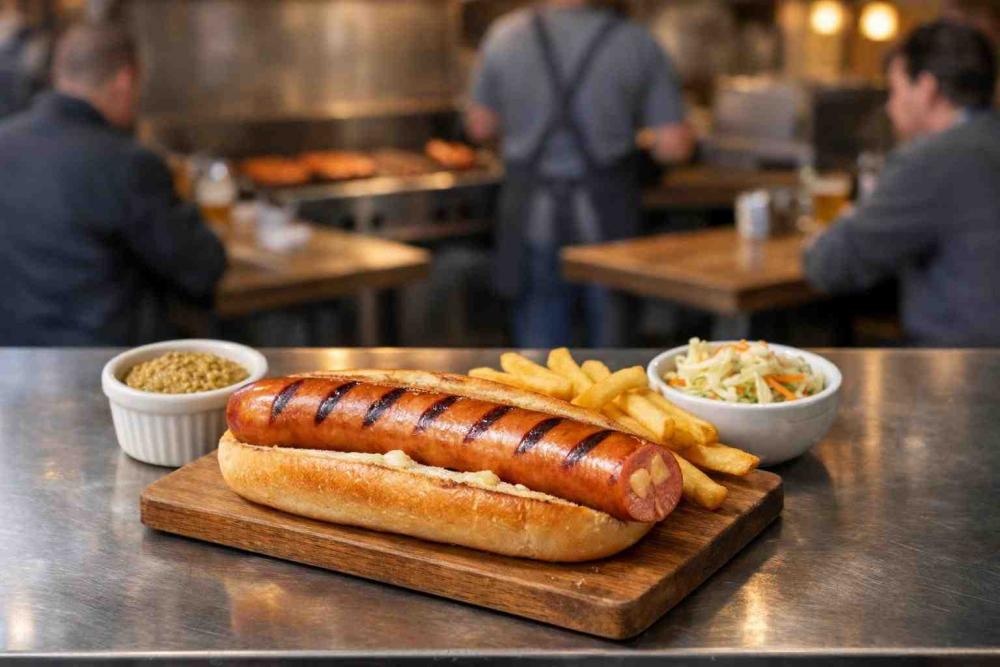
The cheese frankfurter is at its best on menus that want to feel a bit more premium without becoming fussy. It is not the answer to every format, but in the right setting it can be a very useful bridge between fast comfort food and something that feels more considered.
One of its strongest homes is the pub menu. Pubs often need dishes that are easy to recognise, satisfying to eat, and capable of sitting alongside burgers, loaded fries, sandwiches, and casual mains without looking like an afterthought. A cheese frankfurter works well here because it can be served simply in a bun, dressed up as a house hot dog, or plated with fries and slaw as a more substantial offer. It feels relaxed enough for casual trade but still distinct enough to avoid the “generic hot dog” problem.
This pub listing from CAMRA gives a useful real-world look at pub food positioning, including the kind of pub menu context where an easy premium frankfurter offer can fit naturally.
It also fits naturally into street food and event trading. In those environments, products need to sell quickly from a short description and be easy to assemble under pressure. A cheese frankfurter helps because the point of difference is obvious straight away. The name itself does some of the selling. That gives traders a strong menu line without needing a long explanation or too many ingredients on the pass.
Cafés, farm shops and garden centres can also use it well, especially where the aim is to offer a hotter, more indulgent lunch option that still feels manageable in a compact service setup. It can break up a menu full of toasties, jacket potatoes and standard sandwiches by offering something warmer and more memorable without straying into overly complex kitchen territory.
The product tends to fit best in menus such as:
- premium hot dog or sausage bun sections
- casual pub specials
- lunch dishes with fries or dressed salad
- event menus where speed and visual appeal both matter
- mixed sausage platters or themed German-style offers
Where it tends to fit less well is on menus built around very delicate, health-led, or highly minimalist positioning. That is not a criticism of the product. It is simply a reminder that it sells best when customers are in the mood for warmth, flavour, and a little indulgence.
In practical terms, the cheese frankfurter is strongest where the operator wants one item to do several jobs at once: feel familiar, stand out enough to earn attention, support a premium price point, and still move cleanly through service. That combination is exactly why it suits so many UK menus when used in the right context.
How to Use It Without Slowing Down Service
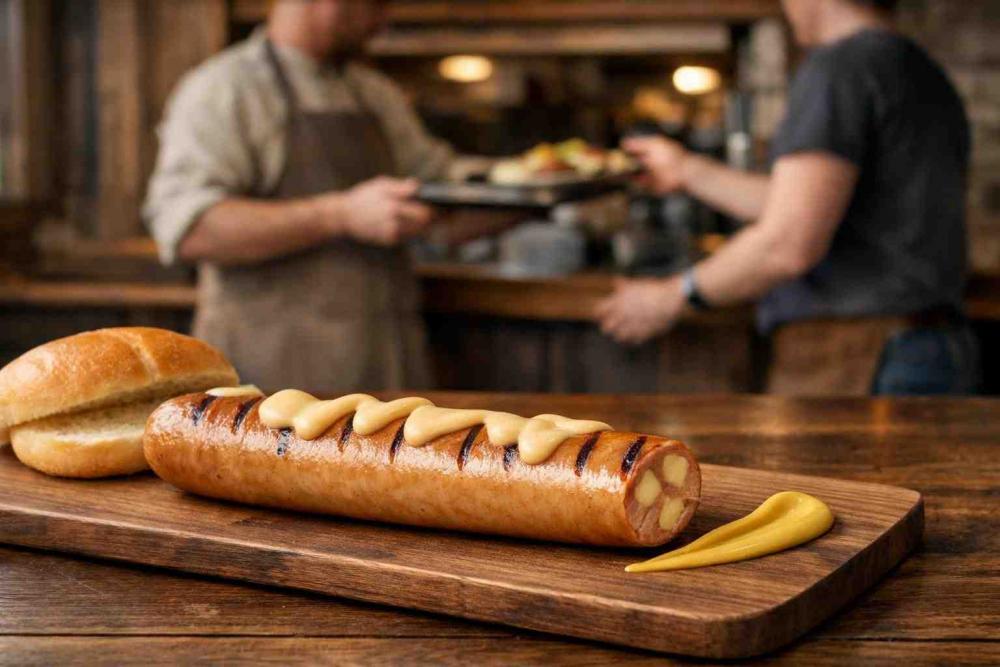
The cheese frankfurter works best when it is treated as a strong core product, not as an excuse to build an overcomplicated menu item around it. That sounds obvious, but it is where many operators go wrong. They start with a sausage that already has built-in appeal, then bury it under too many toppings, extra prep steps, and awkward plating decisions that slow the line and make consistency harder.
This chef recipe shows how a well-made American mustard can work as a single strong topping for frankfurters without overcomplicating the build.
A better approach is to let the sausage do more of the work.
In most service formats, the simplest route is also the strongest one: one bun choice, one or two house builds, and a small set of toppings that can already be used elsewhere on the menu. That makes the cheese frankfurter easier to train, easier to prep, and easier to sell. Staff do not need to remember six versions, and customers are not forced to decode an overdesigned menu description while others queue behind them.
This matters especially in pubs, kiosks, trailers, events, and café counters where the line can go from calm to busy very quickly. In those environments, the product should move through service with as few friction points as possible.
A sensible setup usually looks like this:
- one reliable bun format
- one standard garnish build
- one premium or loaded option
- sides and sauces shared with other menu items where possible
That approach keeps stock more manageable and protects speed of service. It also reduces the chance that the cheese element becomes messy or visually lost under everything else. A cheese frankfurter should feel generous, but still easy to handle.
Holding and finishing also matter. The more last-second assembly steps you create, the more risk you add when trade picks up. If the product is going to be used in a fast-moving setup, think carefully about where the time actually goes. It is usually not the sausage itself that causes delay. It is the extra onions, relishes, side garnishes, separate sauce pots, fiddly wrapping, or plated extras that turn a simple item into a slow one.
The best operators tend to ask a very practical question: can this item still be built cleanly when two staff are under pressure and the queue is getting impatient? If the answer is no, the menu design needs tightening.
The real strength of the cheese frankfurter is that it can feel like an upgrade without needing a slower service model. That advantage should be protected, not designed away.
Which Buns, Sides and Sauces Help It Sell Better
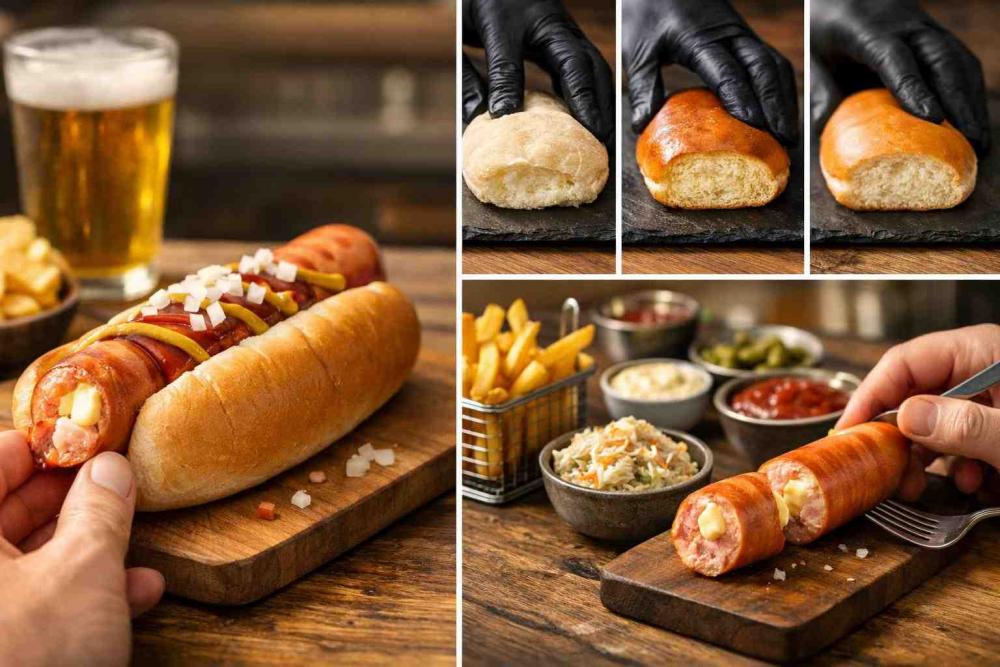
A cheese frankfurter usually sells better when the supporting elements make the offer feel complete, not crowded. The sausage already brings richness and comfort, so the job of the bun, sides and sauces is to support that character in a way that feels balanced and easy to understand.
The bun matters more than many operators think. If it is too flimsy, the product can feel messy and cheap. If it is too large, dense, or overly styled, the sausage loses presence and the whole thing starts to feel clumsy. In most cases, a soft but structured hot dog bun works best. It should hold the sausage properly, cope with sauce, and still be comfortable to eat on the move or at a casual table. The bun should make the product easier to enjoy, not harder to manage.
This recipe guide shows how to make homemade pretzel buns for hot dogs and bratwurst if you want a sturdier, more German-style alternative to a standard hot dog bun.
Sides are where you can start shaping the menu position more clearly. Fries are the obvious choice and remain one of the strongest, especially for pubs, street food, and event trading. But not every menu needs to stop there. Slaw, potato salad, skin-on fries, or a small dressed salad can all change the feel of the offer. The right side helps define whether the cheese frankfurter is being sold as a quick lunch, a premium casual meal, or a more indulgent event item.
Sauces should bring contrast and clarity. Because the sausage already has richness, a sauce choice that adds sharpness, sweetness, heat, or acidity is usually more effective than piling on even more heaviness. A good mustard, onion relish, curry-style sauce, or a balanced chilli sauce can all work well depending on the menu context.
The combinations that usually make the most commercial sense are:
- classic and easy: soft bun, mustard, crispy onions
- pub-friendly: bun or plated serve, skin-on fries, slaw, house mustard
- street food: onion relish, pickles, fries, one bold sauce
- lighter lunch offer: smaller serve with dressed salad or potato salad
The key is not to make the build too clever. Customers should understand the appeal quickly. A cheese frankfurter sells best when the menu reads clearly and the plate or tray confirms exactly what they were hoping for.
That is why the best combinations are usually the ones that make the sausage feel more complete, more tempting, and more worth ordering, without distracting from the product itself.
How to Price a Cheese Frankfurter So It Feels Worth It
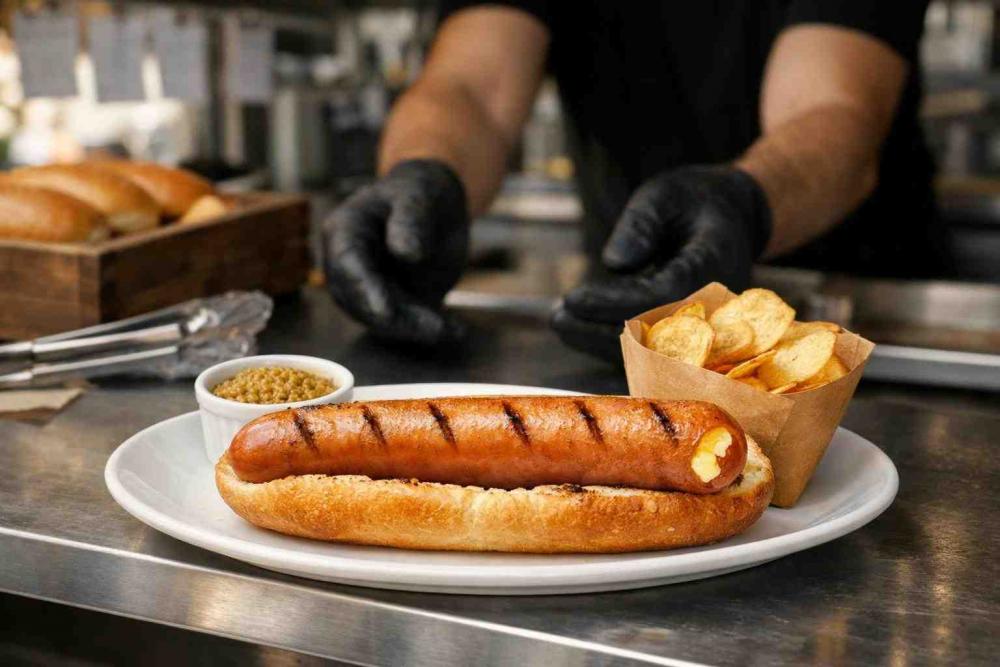
Pricing a cheese frankfurter well is not just about food cost. It is about perceived value. Customers do not judge price in isolation. They judge whether the item looks, sounds, and feels worth what you are asking. That is especially important with a product like this, because it often sits between a standard sausage offer and a more deliberate premium menu item.
If the price is too close to a basic hot dog, you may leave money on the table and weaken the premium message. If it is too ambitious without the right menu framing, customers may hesitate or default to something they understand more easily. The sweet spot is usually where the cheese frankfurter clearly reads as an upgrade, but not as a risky purchase.
That means the full offer matters. A cheese frankfurter in a bun with a clear build, decent garnish, and a sensible side can comfortably support a higher price than a plain sausage in bread. But the item has to look coherent. Customers will pay more for something that feels complete. They are less enthusiastic about paying more for something that feels like a standard product with a fancier label.
Menu wording has a role here as well. The name should communicate the upgrade naturally. You do not need a theatrical description, but you do need enough context to signal why the item costs more than the simplest alternative. Whether that comes from the sausage itself, the bun, the toppings, the side, or the overall presentation depends on the style of the venue.
A useful pricing mindset is to ask:
- what is the nearest cheaper comparison on the menu?
- what makes this item visibly or clearly better?
- does the presentation support the asking price?
- would a first-time customer understand the value in five seconds?
That last point matters more than spreadsheets sometimes suggest. In real service settings, customers often make fast decisions. If they cannot see the value quickly, the price feels harder.
It also helps to think in tiers. The cheese frankfurter can work as a simple premium sausage offer, or as the base for a more substantial meal. That gives operators room to build a sensible step-up path. A straightforward version attracts broad appeal. A fuller plated or loaded version can serve customers who want a more complete and higher-value meal.
In other words, pricing works best when the product is not just more expensive, but more clearly worth it.
Common Mistakes That Make a Cheese Frankfurter Offer Less Effective
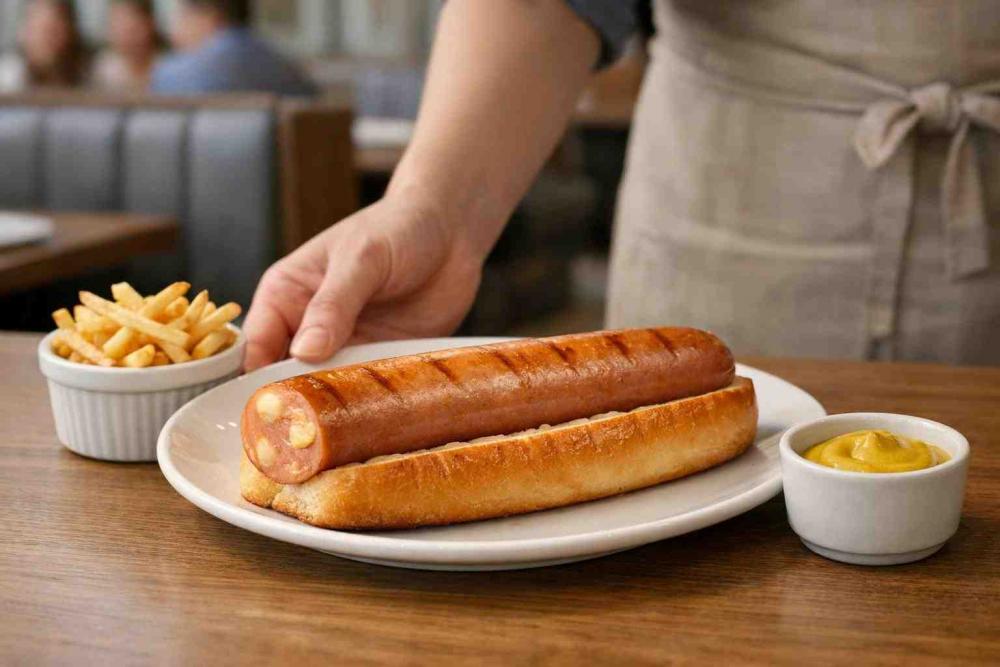
A cheese frankfurter is usually a strong product, but it can still underperform if the menu design around it is weak. Most problems do not come from the idea itself. They come from how the offer is positioned, built, or executed.
One common mistake is trying to make it too clever. Operators sometimes assume that because the sausage feels more premium, the rest of the dish has to become more elaborate as well. The result is often too many toppings, too many prep stages, and a final build that is harder to serve and harder to eat. In trying to make the offer feel special, they strip away the very convenience that made it commercially attractive in the first place.
Another problem is failing to create enough contrast with a basic hot dog or sausage offer. If the cheese frankfurter sits on the menu without a clear upgrade story, customers may not see why they should choose it. That story does not need to be dramatic, but it does need to be visible. The build, description, side choice, and overall presentation should all help explain why this is the more appealing option.
A third mistake is getting the balance wrong. Because the sausage already brings richness, heavy toppings on a heavy bun with heavy sides can make the whole item feel excessive rather than satisfying. A more balanced combination usually sells better and creates a stronger eating experience.
Other weak points often include:
- overloading the menu with too many versions
- using toppings that hide the product rather than support it
- pricing it above its presentation level
- choosing a bun that collapses or feels cheap
- making service too dependent on one staff member doing things perfectly
There is also the problem of poor fit. Not every menu needs a cheese frankfurter. If the venue is built around very light daytime dishes or a stripped-back health-led offer, it may feel out of place. That does not make the product wrong. It simply means the menu needs the right environment for it to work.
The best cheese frankfurter offers are usually the least confused. They know what they are trying to be: a premium but accessible sausage item that feels indulgent, practical, and easy to order. Once that gets blurred by cluttered design or weak positioning, the product loses much of its advantage.
Frequently Asked Questions
It can work very well at lunch, but the build needs a bit more discipline than it might need in evening or event trade.
The mistake is assuming every cheese frankfurter has to become a loaded, heavy, late-day item. For lunch, it often works better with a cleaner bun build, a sharper sauce, and a side that keeps the plate from feeling overdone. A small slaw, dressed salad, or a lighter fries portion can make a big difference.
So the answer is not really about the sausage alone. It is about whether the final offer feels like a satisfying lunch rather than a challenge.
That depends on how clearly it fits the rest of your menu.
If you already sell hot dogs, sausages, casual pub food, or quick premium lunch items, it can sit comfortably as a permanent line. Customers understand it quickly, and staff can learn it easily. If your menu is tighter, more seasonal, or less sausage-led, it may work better as a recurring special that gives people a reason to notice it.
useful test is this: if you removed the words “special” or “limited”, would the item still make sense on your board or printed menu? If yes, it may deserve a permanent place. If not, it may be better used as a tactical seller.
Different enough to be obvious, but not so different that it becomes awkward to order.
Customers do not need a lecture on sausage formats. They just need a clear sense that this is a more rewarding option. That usually comes from the overall package: the name, the menu description, the bun quality, the garnish, and whether the finished item looks more deliberate than a basic hot dog.
If the only difference is the wording on the menu, the higher price can feel flimsy. If the item looks and eats like a proper step up, most customers understand the value quickly.
It can suit both, but the presentation should shift with the audience.
In family-friendly sites, simpler builds usually work better. Keep the offer clear, approachable, and easy to eat. Too many toppings or strong sauces can make the item less attractive to mixed-age groups. In pubs, events, and more adult-led casual food settings, you can usually push the flavour profile further with mustard, onions, pickles, relishes, or a more distinctive side.
So it is not one or the other. The product is flexible, but the menu styling should match who is actually standing at the counter or reading the menu.
Usually, it is not poor flavour or weak customer reaction. It is poor menu fit.
If the rest of the offer is very light, highly health-led, or built around a completely different eating occasion, the product can feel dropped in rather than properly placed. The same applies if the service setup cannot support a hot premium item cleanly and consistently.
strong sign of mismatch is when the team has to overexplain the item, overbuild it to make it seem relevant, or keep defending the price. When that happens, the problem is often the fit, not the sausage.
Yes, and in some settings it may work better that way.
bun is the most obvious route because it supports speed and familiarity, but it is not the only useful format. In pubs, cafés, and some catered environments, a plated serve with fries, potato salad, slaw, or another simple side can make the item feel more meal-like and help support a stronger selling price.
The key question is how customers in that setting prefer to buy. If they want grab-and-go ease, a bun will usually be the better choice. If they expect a plated lunch or casual main, the product can shift formats quite comfortably.
Usually fewer than they first think.
One standard version and one more premium or more distinctive version is often enough. That gives customers a choice without turning the sausage section into a small project. Once the options start multiplying, service slows down, stock becomes less tidy, and the product loses some of its clarity.
If you are unsure, start with one build that is easy to execute well. It is better to have one version that sells cleanly than three that create confusion during a rush.
It can absolutely keep selling, as long as the buying experience holds up after the first try.
Novelty may get the first order, but repeat sales usually come from three things: the product tastes satisfying, the portion feels fair, and the item is easy enough to order again without feeling messy or overcomplicated. If customers enjoy it and it fits naturally into the setting, it does not need to behave like a gimmick.
That is one reason it often performs better than more theatrical menu ideas. It feels distinctive, but still grounded.
They should check the real service conditions, not just whether the product sounds right on paper.
That includes space on the pass, holding practicality, how sauces and garnishes will be managed, whether the bun choice stays usable in live service, and whether the item can be assembled cleanly when queues build. If the site has specific rules around equipment, gas, power, waste, or service layout, those need checking as well.
menu item can look commercially strong in theory and still become awkward in practice if the setup is too tight. The right question is not just “will people buy it?” but also “can we serve it properly under pressure?”
Conclusion
The case for the cheese frankfurter in 2026 is not built on novelty alone. It is built on practicality.
Operators across pubs, events, casual foodservice and retail-led hot food counters still need the same basic things: fast service, simple prep, reliable customer appeal, and a clear reason why one menu item deserves a better price than another. The cheese frankfurter answers that rather neatly. It feels more generous than a standard sausage, more distinctive than a generic hot dog, and easier to position as a premium choice without turning the kitchen or trailer into a juggling act.
That is really the point of this spotlight. Not every menu needs something clever. Many menus need something dependable that looks stronger, eats better, and gives customers a clear upgrade they are willing to pay for. In that kind of environment, the cheese frankfurter is not just an indulgent extra. It is a commercially useful tool.
Used well, it can anchor a loaded dog, lift a pub special, strengthen an event line, or give a café or farm shop a hotter, more memorable lunch option. If you want a product that helps create easy premium menus without unnecessary drama, it deserves a serious look.
About The Sausage Haus
The Sausage Haus is built for UK operators who want authentic German sausage products with a more practical route into day-to-day service. The focus is not just on flavour, but on making menus easier to run, quicker to serve, and more commercially useful across pubs, caterers, event traders, cafés, farm shops and other foodservice settings.
This producer guide explains how authentic German sausage products can fit UK wholesale and day-to-day foodservice needs without overcomplicating service.
The range is produced by Hardy Remagen, a German manufacturer whose roots go back to 1718, and The Sausage Haus works with Baird Foods in the UK, where Sausage Haus is presented as a specialist division within the wider Baird Foods business.
That combination matters because trade buyers usually need more than a good-looking product list. They need sausages that feel authentic, but also fit real UK trading conditions such as speed of service, menu simplicity, holding practicality and broad customer appeal. The Sausage Haus is positioned around exactly that idea: proper German sausage character, backed by a supply setup that makes sense for commercial operators.