The 150g smoked pork hotdog from Costco - by The Sausage Haüs - can be a useful add-on for fish and chip shops, but only if it fits the line. The real question is not whether customers like a proper hotdog. It is whether the product can be cooked, held, dressed and served without slowing chips, fish, queues or staff.
Premium Hotdog, Faster Service

Keep the Menu Tight
Check the Station First
Introduction
Hotdogs are not a strange addition to British fish and chip shops. In many shops, they are already there: a simple side option, a children’s choice, a late-night snack, or an alternative for customers who do not fancy fish. The problem is that they are often treated as a minor menu item, and the quality usually shows.
That creates an opportunity. The Costco smoked pork hotdog, supplied by The Sausage Haus and originally listed as the Jumbo Pork Hotdog 150g, gives fish and chip shops a more substantial, better-tasting option that can still fit a fast takeaway operation. Instead of offering a basic hotdog as an afterthought, shops can present a premium version with stronger perceived value and better menu appeal.
For operators, the commercial case is straightforward: a higher-quality hotdog can command a better selling price while still offering good gross profit potential, provided the portioning, bun, toppings and service setup are kept under control. It can work as an impulse purchase, a lunch item, a children’s meal, a late-night add-on, or a simple alternative for customers who want something different from fish and chips.
The key is not to turn the counter into a complicated hotdog bar. The strongest opportunity comes when the product is treated as a disciplined station item: easy to heat, easy to hold, quick to dress, and simple for staff to serve without slowing the fryer, chip station or payment flow.
Done properly, a premium 150g smoked pork hotdog can add revenue, improve the quality of an existing menu line, and give customers a better reason to buy. Done badly, it becomes just another item blocking the pass.
For private customers, a similar retail product is available from Farmfoods: Jumbo Smoked Pork Hot Dog, 4 × 120g.
Key Takeaways
- A 150g smoked pork hotdog suits fish and chip shops best when it is treated as a fast, controlled menu item, not a build-your-own distraction.
- The strongest commercial fit is usually lunchtime, early evening, children’s meals, late-night trade, and customers who want something different from fish.
- Layout matters more than the product idea. The hotdog station must not interrupt fryer work, chip portioning, wrapping, or payment.
- Gas, electricity, extraction, holding and counter space all need checking before adding another hot food line.
- A short toppings list is usually better than a “loaded hotdog” menu that slows staff and confuses customers.
- Staff roles should be obvious: who heats, who dresses, who wraps, who hands over, and who keeps the station stocked.
- The product can feel premium, but the operation still needs to behave like fish and chips: quick, clean, repeatable, and easy to understand.
Why a 150g Hotdog Can Work very well in a Fish and Chip Shop
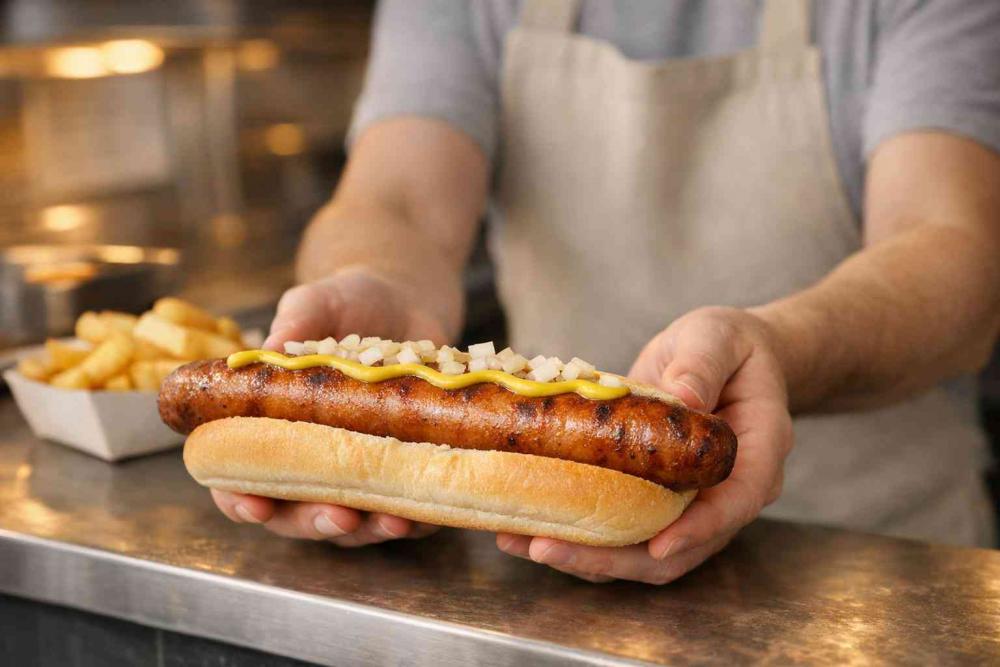
Hotdogs already belong in many British fish and chip shops. They are familiar, easy to understand, and do not need much explanation at the counter. The issue is not customer acceptance. The issue is that many hotdogs sold in chip shops are treated as a low-priority item, often with a basic sausage, basic bun, and little sense of value.
This hospitality trade article explains how British operators have broadened American-style menus, including the rise of hotdogs in many UK fish and chip shops.
A 150g smoked pork hotdog changes the offer. It is large enough to feel like a proper meal item, not just a snack added to the side of the menu. That matters because customers are usually willing to pay more for something that looks and eats like a premium product. The shop is not trying to reinvent itself. It is upgrading a menu item that many customers already recognise.
For fish and chip shops, the commercial appeal is clear. A premium hotdog can work as a lunchtime option, an after-school item, a late-night choice, or an alternative for customers who want something quicker or lighter than fish and chips. It can also help mixed groups, where one person wants fish and another wants something different.
The key is to keep the offer sharp. A good smoked pork hotdog in the right roll, with a small choice of sensible toppings, can feel much more valuable than a standard chip shop hotdog without making the menu harder to run.
The Real Test: Will It Slow the Line?
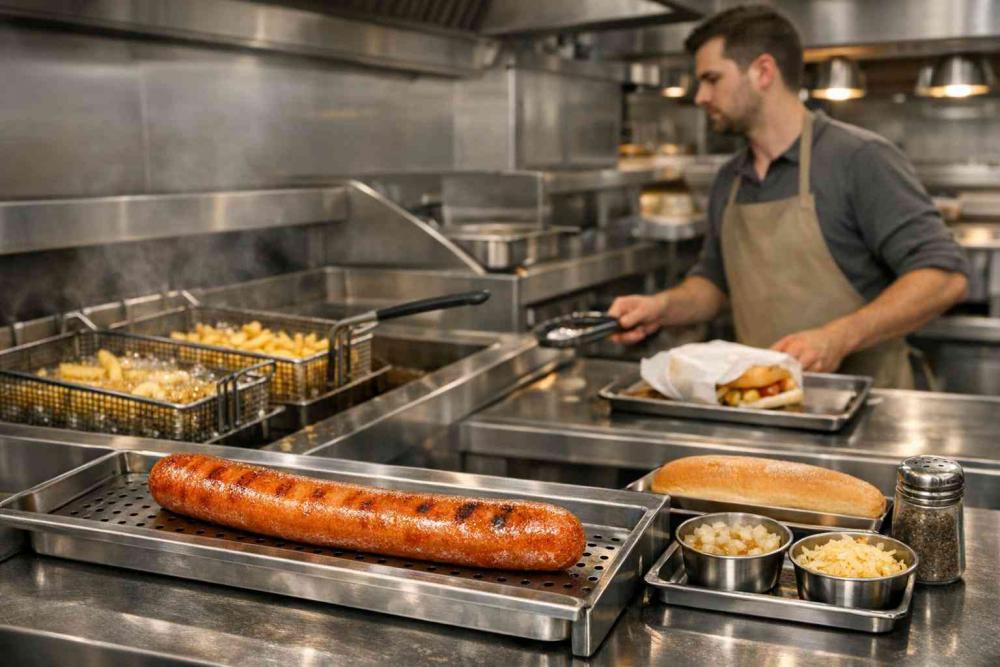
The most important question is not “Will people buy it?” They probably will, especially if the product looks substantial and the price feels fair. The real question is whether the hotdog can be served without slowing the fish and chip operation.
Fish and chip shops work because the main system is already understood: fry, drain, portion, wrap, serve, repeat. Anything added to that system needs to behave. If the hotdog takes staff away from the fryer at the wrong moment, blocks the pass, creates extra topping decisions, or needs too much conversation with the customer, it becomes a problem even if the margin looks good on paper.
A premium 150g hotdog should be designed as a fast station item. Ideally, staff know exactly how it is heated, where it is held, which roll it goes into, which toppings are available, and how it is wrapped. There should be no debate during a rush.
A sensible setup might offer:
- plain hotdog
- hotdog with onions
- hotdog with cheese
- hotdog meal with chips and drink
That is usually stronger than offering ten toppings and three sauce styles. Fish and chip customers are often buying quickly. The easier the choice, the faster the handover. The margin only matters if the line keeps moving.
Where the Hotdog Station Should Sit in the Shop
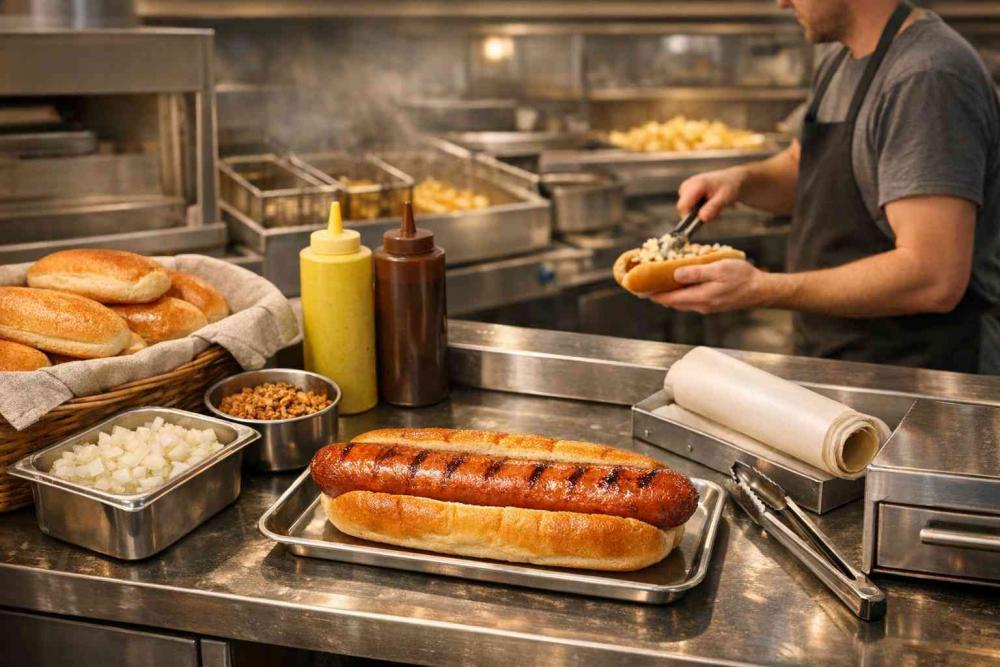
The hotdog station should sit where it supports service, not where there happens to be a gap on the counter. In a fish and chip shop, the main working areas are already under pressure: fryer, chip station, wrapping area, till, delivery collection, and customer handover. A hotdog offer that interrupts any of these will quickly become annoying.
One advantage for fish and chip shops is that the hotdog can fit naturally into the existing cooking setup. The 150g smoked pork hotdog can be cooked in the same fryer system as the fish and chips, either from chilled/fresh or frozen, depending on the shop’s chosen process, timing and food handling routine. That makes it easier to add than a product that requires a completely separate cooking method.
The station itself should still be planned carefully. The cooked hotdog needs to move quickly from fryer to roll, topping, wrapping and handover. The best position is usually close enough to the pass for fast service, but separate enough that one member of staff can assemble the hotdog without standing in the fryer operator’s way.
Think of it as a compact assembly line. Rolls, onions, cheese, sauces, wrapping and serving trays should all be within easy reach. Staff should not need to cross behind the fryer, turn around repeatedly, or leave the counter during a busy period just to finish one order.
For shops with limited space, the offer may need to be even more disciplined. A small roll area, prepared toppings, clear wrapping space and a simple handover point can be enough.
The aim is simple: the hotdog should move through the shop like a normal takeaway item, not like a special order that disrupts everyone else.
Power, Gas and Holding: What to Check Before You Add It
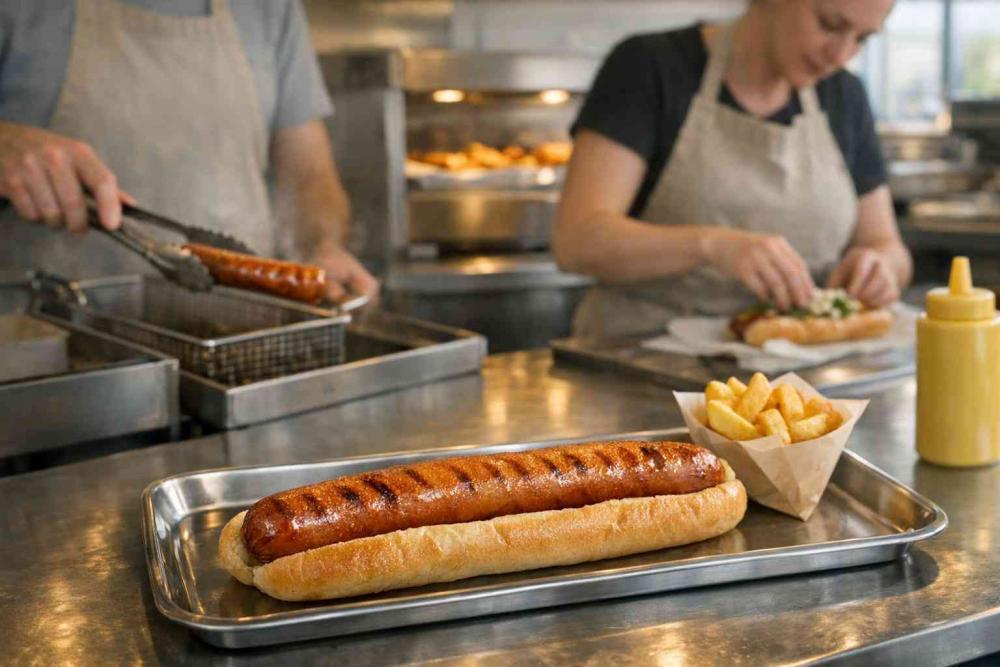
Before adding a 150g smoked pork hotdog to the menu, operators still need to think through the practical setup. The product may be simple to serve, but the cooking method, counter flow and holding routine have to fit the shop’s existing workload.
For many fish and chip shops, the biggest advantage is that no complicated extra cooking system is necessarily required. The hotdog can be cooked in the same fryer setup used for fish and chips, either from fresh/chilled or frozen, depending on the shop’s process, cooking times and food handling routine. That makes it a natural fit for operators who already have the fryer space and staff discipline to manage it.
This can avoid the need for an additional roller grill, contact grill, steamer or gas appliance. That matters because many shops already have enough equipment behind the counter. Every extra machine adds another cleaning job, another power demand, another space problem and another thing for staff to work around during peak service.
The key question is whether the fryer can absorb the extra item without disrupting the main trade. If the hotdog is cooked to order, staff need a clear timing routine. If it is cooked ahead and held, the holding method needs to protect quality as well as food safety. A premium hotdog should not be left in a way that dries it out, splits the casing or makes it look tired by the time it reaches the customer.
Before launch, it is worth checking:
- fryer capacity during peak and quieter periods
- cooking times from fresh/chilled and frozen
- whether the product will be cooked to order or held
- safe handling, storage and allergen procedures
- counter space for rolls, toppings and wrapping
- holding time and eating quality
- staff training for busy periods
The fryer option makes the hotdog easier to introduce, but it still needs a proper system. A good hotdog offer starts with the product, but it succeeds because the shop can cook, hold, finish and serve it reliably under real trading conditions.
Staff Roles That Keep the Hotdog Simple
A hotdog offer works best when staff know exactly who does what. In a busy fish and chip shop, confusion costs time. If one person takes the order, another starts the hotdog, someone else looks for the roll, and nobody knows who adds the onions, the item quickly becomes slower than it should be.
The simplest system is to make the hotdog a clear station product. During quiet periods, one person may handle the whole order. During busier service, the roles should be more defined: the till operator takes the order clearly, the station person assembles the hotdog, and the handover point stays clean and obvious.
It helps to keep the language short. Staff should not need to explain a complicated menu. A customer asks for the premium smoked pork hotdog, chooses plain, onions, cheese or meal, and the order moves.
For stronger service, decide these points before launch:
- who heats or checks the hotdogs
- who prepares and restocks rolls
- who adds toppings and sauces
- who wraps or boxes the order
- who watches holding levels during quieter periods
- who cleans and resets the station
This is especially important when the shop is running fish, chips, pies, sausages, delivery orders and walk-in customers at the same time. A 150g hotdog can be a good margin item, but only if it behaves like part of the system rather than a favour someone squeezes in between fryer jobs.
Menu Discipline: Why Fewer Toppings Usually Sell Better
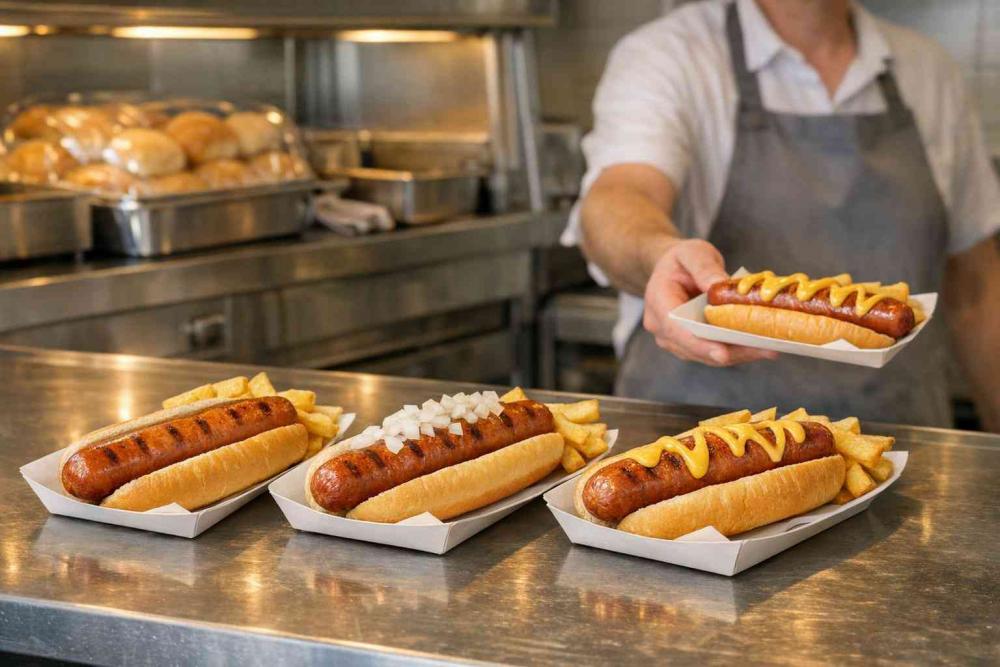
It is tempting to turn a premium hotdog into a long toppings menu. On paper, it sounds appealing: crispy onions, fried onions, cheese, chilli, curry sauce, barbecue sauce, jalapeños, pickles, slaw, mustard, ketchup and three “signature” versions. In practice, that can slow service and weaken the offer.
This hospitality trade article shows how a long toppings menu can become part of a more indulgent drinks-led offer, which is a useful contrast when planning a faster hotdog menu.
Fish and chip shops usually sell best when the customer can decide quickly. Too many choices create hesitation at the counter, more questions for staff, more stock to manage, more waste, and more ways for the finished product to become messy. That is not ideal when the main appeal of a hotdog should be speed, flavour and convenience.
A tighter menu often feels more confident. It also makes the premium quality of the sausage easier to notice. If the 150g smoked pork hotdog has good flavour, it does not need to be buried under a mountain of toppings.
A practical chip shop menu might be as simple as:
- premium smoked pork hotdog
- hotdog with onions
- cheese hotdog
- hotdog meal with chips and a drink
That gives customers enough choice without turning the item into a production line headache. Shops can always test one seasonal or special version later, but the base menu should be easy to train, easy to price and easy to repeat. The goal is not to offer everything. The goal is to sell the right thing quickly and profitably.
The Best Times to Sell It Without Distracting from Fish and Chips
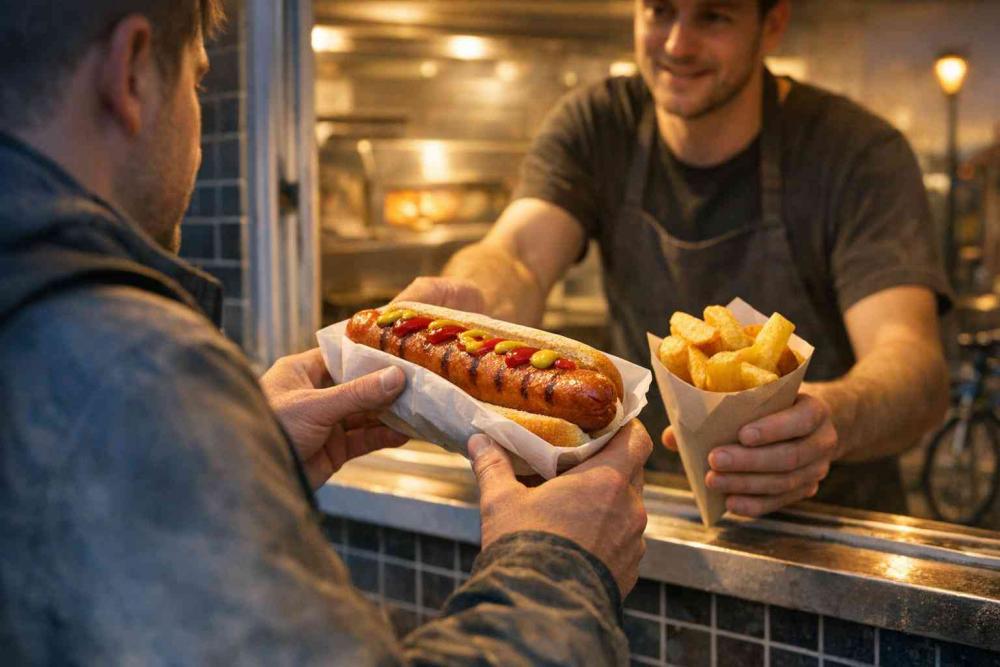
A premium hotdog does not need to compete with fish and chips all day. It can be strongest when it fills the gaps around the core trade. That is where it becomes commercially useful rather than operationally irritating.
This hospitality trade article explains how hotdogs can fill quieter dayparts and add profitable menu trade without disrupting a fish and chip shop’s core offer.
Lunchtime is one obvious opportunity. Some customers want something quick, handheld and filling, but not a full fish supper. A 150g hotdog can work well for workers, students, delivery riders, parents, or anyone who wants a fast meal without waiting for freshly fried fish.
Early evening can also work, especially for families. A premium hotdog gives another option for children and teenagers, or for one person in the group who does not want fish. In late-night trade, the appeal is even clearer: hot, simple, familiar food that can be served quickly and eaten easily.
The important point is to protect peak fish and chip service. If Friday evening is already stretched, the hotdog offer should be designed so it does not steal attention from the fryer. That might mean prepped rolls, limited toppings, clear menu boards, and a staff member assigned to the station only when volume justifies it.
For some shops, the hotdog may be promoted more heavily at lunch, on delivery apps, at quieter trading times, or as a meal deal. It does not have to be the star of the shop. It has to earn its space without disturbing the main act.
How to Present a Premium Hotdog Without Overcomplicating the Offer
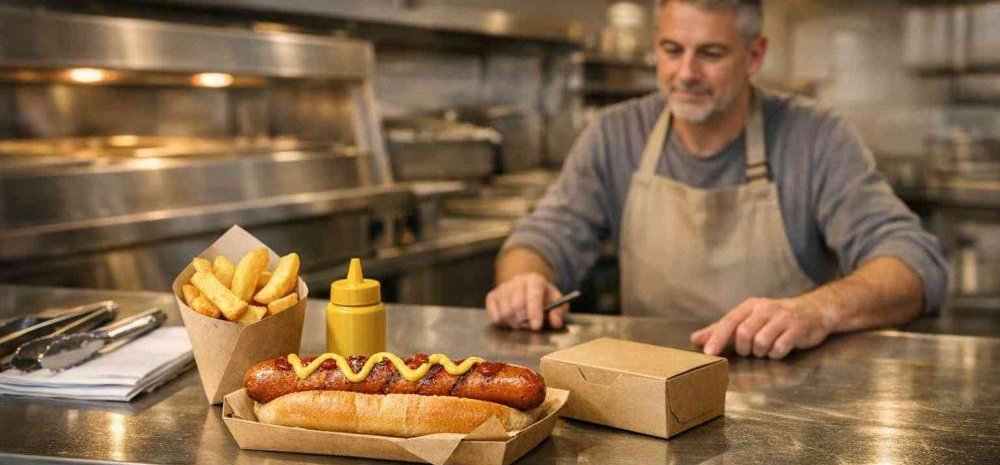
Presentation matters because customers need to understand why this hotdog costs more than the basic one they may expect from a chip shop. The answer should be clear before staff have to explain it: bigger sausage, better quality, smoked pork flavour, good roll, tidy toppings, and a proper meal feel.
This hospitality trade article looks at why a premium hotdog needs the right bun, from a top-loading hot dog roll to cleaner presentation in service.
That does not mean the menu board needs fancy language. In fact, simpler wording often works better. “Premium 150g Smoked Pork Hotdog” is clearer than a long description full of claims. Customers can immediately see that this is not a small economy hotdog hidden at the bottom of the menu.
The roll should support the product. A weak bun makes even a good hotdog feel ordinary. A roll with enough structure helps the hotdog look substantial, hold toppings properly, and survive wrapping or takeaway delivery. The same applies to sauces and onions: they should improve the eating experience, not drown the sausage.
The strongest presentation is usually built around restraint:
- clear menu name
- clean photo or counter display where suitable
- one or two sensible topping choices
- proper wrapping or tray presentation
- meal deal option for easy upsell
This keeps the offer premium without making it fussy. A fish and chip shop does not need to pretend to be a specialist hotdog bar. It simply needs to show that this is a better hotdog, served quickly, at a price that makes sense for both customer and operator.
Frequently Asked Questions
Yes, if the current hotdog is treated as a low-value side item and there is room to improve the offer. Many fish and chip shops already have hotdogs on the menu, but they are often basic, lightly promoted, and not especially memorable.
150g smoked pork hotdog gives the shop a stronger product to price and present properly. The point is not just to “add a hotdog”; it is to upgrade an existing familiar menu item into something with better customer appeal, better perceived value, and stronger gross profit potential.
That depends on the local area, portion size, roll quality, toppings, labour, packaging and whether it is sold as a single item or meal deal. The important thing is not to price it like a basic economy hotdog if the product is clearly better.
premium 150g smoked pork hotdog should be costed as a proper menu item. Operators should calculate the sausage, roll, toppings, sauce, packaging, waste allowance and VAT position where relevant, then decide a selling price that gives a sensible gross profit while still feeling fair to customers.
Both can work, but the meal deal is often the easier commercial route. A hotdog with chips and a drink is simple for customers to understand and can increase average spend without making the menu complicated.
The single hotdog still has a role, especially at lunchtime, after school, or late at night when customers want something quick and handheld. A good approach is to offer the hotdog clearly as a standalone item, then make the meal version visible as the easy upgrade.
The roll needs enough structure to hold the sausage properly. A weak, soft bun can make a premium hotdog feel cheaper than it is, especially once onions, cheese or sauce are added.
better roll should feel substantial without being too bready. It should hold its shape, suit takeaway wrapping, and make the finished product look like a proper meal. The sausage should be the main feature, but the roll has to support the eating experience.
It can work across all three, but each format needs slightly different thinking. For takeaway, speed and clean wrapping matter most. For delivery, the hotdog must travel well without becoming soggy, squashed or messy. For eat-in or outside seating, presentation can be a little more open, especially with trays.
If delivery is important, avoid overloaded toppings and test the packaging before adding the item to the platform. A hotdog that looks good at the counter can be much less appealing after 20 minutes in a delivery bag if the build is too wet or unstable.
For customer-facing menus, “premium 150g smoked pork hotdog” will usually be clearer and more useful. It tells the customer what they are buying and why it is different from a basic hotdog.
The Costco angle may matter more for operators sourcing the product. On the shop menu, the stronger message is size, quality, flavour and value. Customers do not need a supply-chain explanation at the counter; they need a simple reason to choose it.
Start conservatively and build from real sales data. The right number depends on footfall, trading time, weather, local demand, and whether staff actively mention the product.
sensible launch period should track how many are sold by daypart: lunch, early evening, late evening, weekends and delivery. That helps avoid overholding, waste, and tired-looking product. The aim is to have enough ready for speed without holding so many that quality drops.
Yes, that is one of the more useful reasons to offer it. Fish and chip shops often serve groups, families and mixed preferences. One person may want cod and chips, while someone else wants something simpler, cheaper, quicker or easier to eat on the go.
strong hotdog gives the shop another route to the same group order. It can also help at times when customers want hot takeaway food but not necessarily a full fish supper. That makes it useful as an addition, not a replacement for the core fish and chip offer.
The biggest mistake is adding the product without designing the system. A better sausage will not fix a poor layout, unclear staff roles, weak packaging, slow toppings, or a confusing menu board.
premium hotdog should be easy to order, quick to assemble, simple to price, and consistent during busy periods. If staff see it as an awkward extra job, it will not be pushed properly. If it is built into the normal service rhythm, it has a much better chance of becoming a reliable revenue line.
Conclusion
A 150g Costco smoked pork hotdog can make sense for fish and chip shops, but only when the operation is designed around speed and simplicity. The product itself is not the difficult part. The difficult part is making sure it fits the service rhythm of a shop that already depends on timing, hot holding, queue control and fast handover.
The best version is not a complicated gourmet hotdog bar squeezed into a fish and chip counter. It is a focused premium hotdog offer with clear preparation, tight station discipline, and toppings that staff can execute quickly during busy periods.
For some shops, it may become a strong lunchtime or evening add-on. For others, it may work better as a weekend, children’s, event, delivery or late-night option. The right answer depends on layout, equipment, labour, customer base and the space available around the pass.
The sensible approach is to start with a small, disciplined menu and test the service flow properly. If the hotdog can be served quickly without disturbing fish, chips and payment, it has a genuine place. If it creates bottlenecks, it needs a better system before it needs more toppings.
About The Sausage Haus
The Sausage Haus helps UK operators serve authentic German sausages in a way that is practical for real foodservice environments. The range is built for businesses that need more than a generic sausage: caterers, street food traders, pubs, cafés, garden centres, farm shops, event operators and foodservice buyers who care about flavour, consistency and speed of service.
The sausages are produced by Remagen, a German sausage specialist, and distributed in the UK by Baird Foods. That combination gives operators access to a premium German-style range with UK supply support and a clear foodservice focus.
For fish and chip shops, the point is not simply to add another product. It is to add a product that can work inside a busy trading system. The Sausage Haus range is especially relevant for operators who want a more distinctive hotdog or sausage offer without making service slower, messier or harder for staff to control.