German sausages already feel at home at autumn festivals. The smell of bratwurst cooking, the warmth of a filled roll and the association with Oktoberfest all suit the season. What changes as the temperature falls is how the food needs to be presented.
A plain sausage in a roll can still sell, but colder weather creates an opportunity to offer something warmer, more substantial and visibly seasonal. Braised cabbage, mustard sauce, curry sauce, fried potatoes and rich autumn colours can increase perceived value without requiring an enormous menu.
The challenge is to add that sense of comfort without adding slow service, excessive preparation or a collection of toppings that spend most of the day looking lonely.
For festival traders and outdoor caterers, the strongest autumn sausage offer is usually a focused one. Choose sausages with distinct roles, build a small number of recognisable dishes and make sure every addition works during a busy service, not just in a styled photograph.
Why Colder Weather Changes What Customers Want
A customer walking around a festival on a cool October afternoon is making a different decision from someone ordering lunch on a warm summer day. Warmth, aroma and substance become more important. A hot sausage roll can feel less like a snack and more like a small refuge from the weather.
That does not mean every portion needs to become enormous. A dish can feel more suitable for autumn through its temperature, colour and presentation rather than sheer weight. Warm red cabbage, glossy onions, curry sauce or a spoonful of well-drained sauerkraut can change how customers perceive the same core sausage.
Portability also matters more. Customers may be carrying umbrellas, wearing gloves or trying to eat while standing on damp ground. Deep trays, sturdy pots and rolls that hold their filling neatly are generally more useful than wide, shallow plates.
Autumn weather is not reliably cold from morning until evening. September can still produce warm afternoons, while later events may bring rain, wind and sharp temperature changes. Reviewing the Met Office UK weather and climate summaries1 can help operators plan around seasonal conditions, but the immediate event forecast remains more important.
A flexible menu therefore works better than an exclusively heavy one. Keep a straightforward bratwurst roll for customers who want simplicity, then add one or two warmer formats for those looking for a fuller meal.
Choosing Sausages That Suit an Autumn Menu
A festival menu does not need six similar sausages competing for attention. A smaller range with clearly different flavours is easier for customers to understand and easier for staff to execute.
A classic pork bratwurst is the natural starting point. It is recognisable, works in a roll or meal tray and accepts traditional or modern toppings without losing its identity. It can remain the accessible core product around which the rest of the menu is built.
A smoked sausage creates useful contrast. A Bacon Frankfurter or Krakauer-style sausage has a deeper flavour that suits fried potatoes, braised cabbage, smoky sauces and more substantial cold-weather dishes. A Cheese Frankfurter can fill the richer, more indulgent position, particularly for evening events or loaded formats.
Smaller Nuremberger sausages offer another presentation option. Several compact sausages can be served in a tray, used in a sampler or paired with mash and gravy. The official Munich Oktoberfest site shows how bratwurst remains central to traditional festival food2, alongside other substantial Bavarian dishes.
The strongest range is often based on three distinct jobs:
- The familiar option: classic bratwurst in a roll
- The stronger option: smoked sausage with robust toppings
- The indulgent option: cheese-filled sausage or loaded dish
This gives customers a real choice without turning the menu board into required reading.
Four Practical Serving Formats for Autumn Festivals
The best serving format depends on whether customers are eating while walking, sitting in a covered area or buying a meal to take home. One sausage can work across several formats, provided the preparation remains controlled.
1. The Autumn Bratwurst Roll
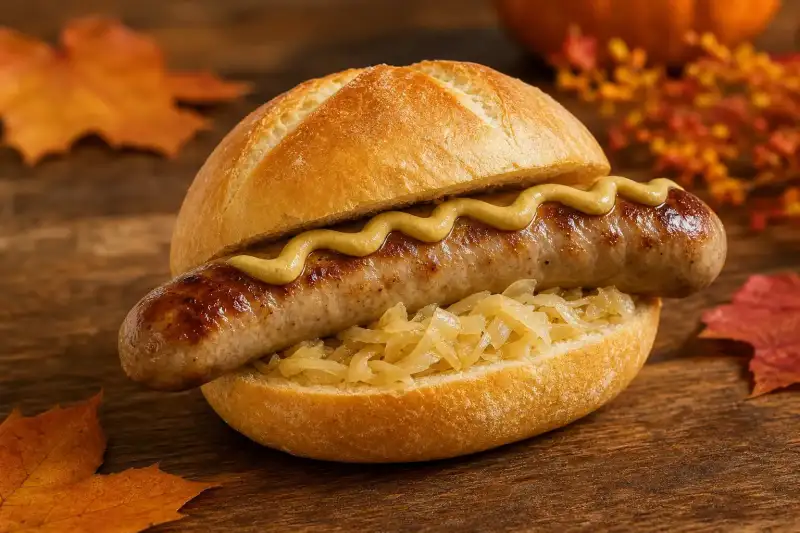
Start with a properly sized roll and a sausage that remains clearly visible. Add a restrained portion of warm sauerkraut or red cabbage, then finish with mustard.
The topping should support the sausage rather than bury it. Drain cabbage properly and position it beneath or alongside the sausage so the bread does not become wet before the customer reaches the first bite.
2. The Currywurst and Chips Pot
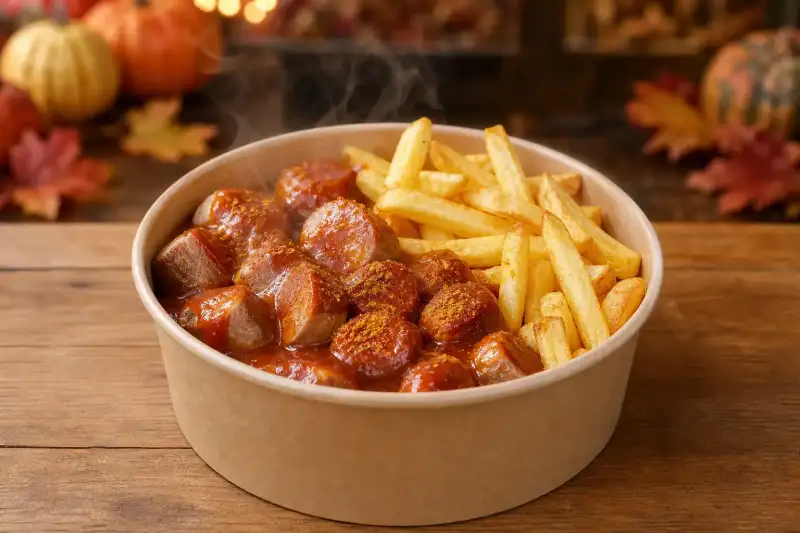
Sliced bratwurst, hot curry sauce and chips create a familiar, filling festival meal. A deep paper pot holds heat better than a flat tray and is easier to eat while standing.
Keep the sauce quantity consistent. Too little makes the dish appear dry, while too much softens the chips and increases cost without necessarily improving the meal.
3. The Sausage, Mash and Cabbage Tray
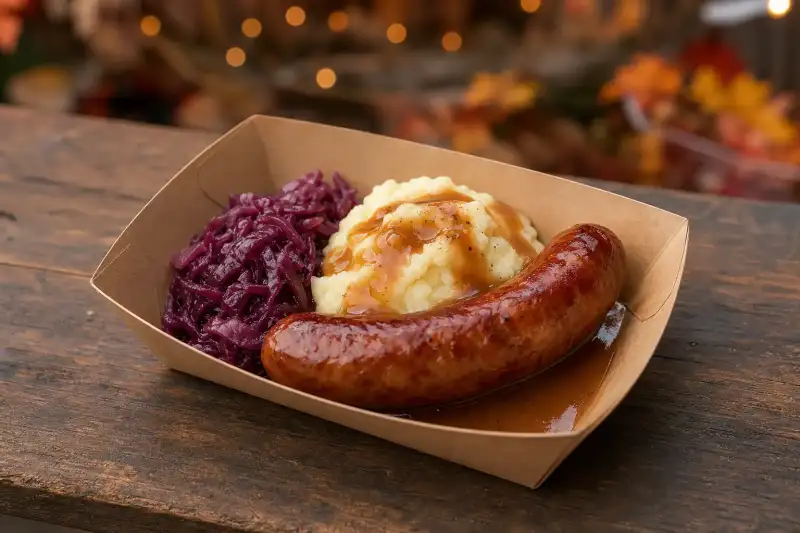
This format suits events with seating, evening service or a strong cold-weather theme. A bratwurst or smoked sausage can be paired with mash, braised cabbage and a measured amount of gravy or mustard sauce.
The portion should still be manageable. A festival tray does not need to imitate a Sunday lunch plate.
4. The German Sausage Sampler
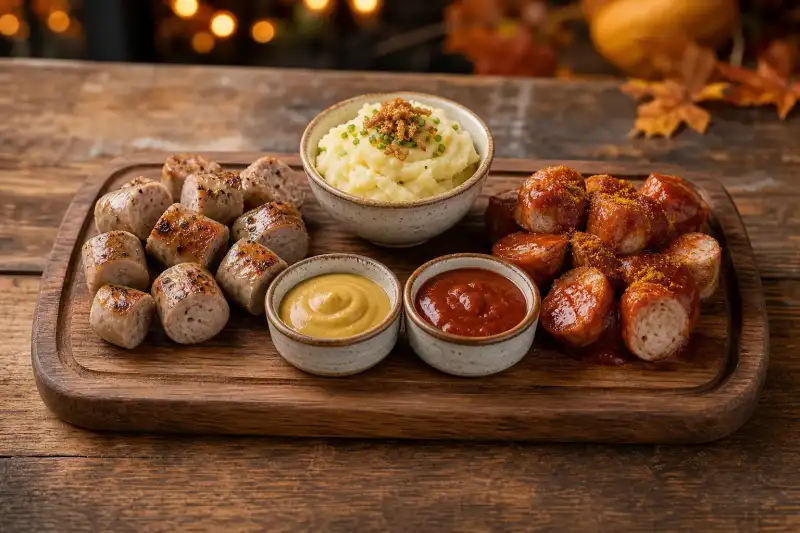
A sampler can combine smaller sausages or cut portions of contrasting varieties. Serve them with one warm side and two clearly different condiments.
This works particularly well as a premium option or a dish for sharing. However, it should use the same sausages, sides and sauces already present elsewhere on the menu. A sampler that requires its own separate preparation system soon becomes an expensive hobby.
Making Hearty Sausage Dishes Look More Appealing
Autumn food is naturally rich in brown, beige and dark red tones. Those colours can look comforting, but without contrast they can also make a tray appear heavy and indistinct.
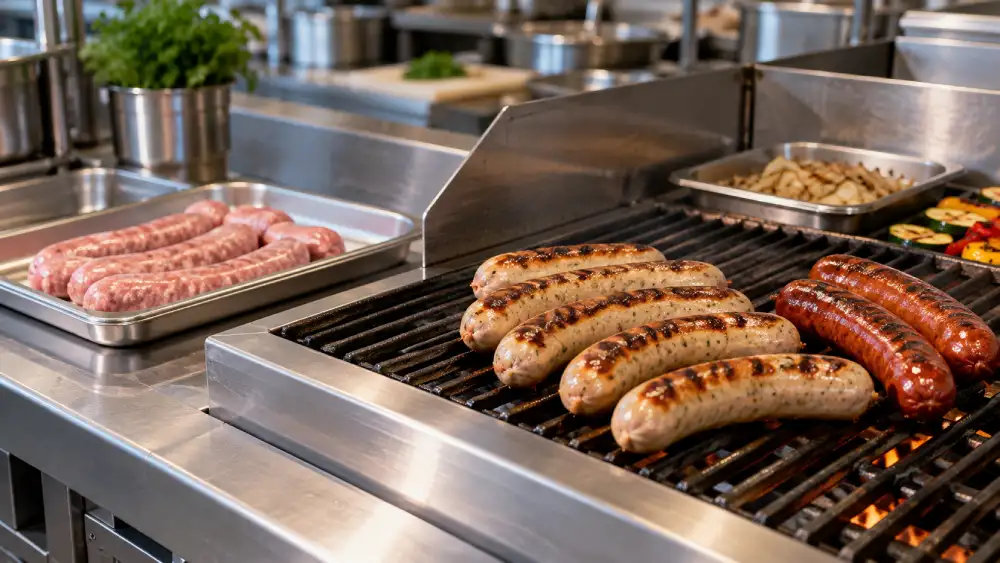
Begin by keeping the sausage visible. Good browning and clear grill marks help customers understand what they are buying. If the sausage disappears beneath sauce, onions and cabbage, its quality becomes difficult to see.
Use contrast deliberately. Red cabbage brings colour, sauerkraut adds pale brightness, mustard creates a clean yellow accent and chopped parsley or chives can provide a small fresh finish. Garnishes should have a purpose and be practical enough for repeated service. A forest of decorative herbs is rarely the answer.
Texture matters just as much as colour. Crisp fried potatoes, toasted bread and fried onions can balance soft cabbage, mash or sauce. Combining several wet components produces a dish that may taste good initially but quickly becomes difficult to carry and eat.
Serving containers also shape perception. Kraft trays suit rustic festival food, while deep pots are useful for currywurst and chips. Black or dark trays can create strong colour contrast, but the material must be appropriate for hot food and sturdy enough for the portion.
Finally, show customers what the dish looks like. A clear menu photograph or a well-presented display portion can explain a loaded sausage tray faster than three lines of decorative menu language.
Choosing Toppings and Sides That Work in Real Service
A good autumn topping must pass three tests. It should improve the sausage, hold reasonably well and be simple enough for staff to portion during a queue.
Warm sauerkraut and braised red cabbage are natural choices because they add acidity and colour as well as warmth. Both need moisture control. Excess liquid softens rolls, dilutes sauces and makes takeaway packaging messier.
Fried onions are popular but require realistic batch planning. Freshly cooked onions bring aroma and texture, while onions held for too long can collapse into an oily layer. Smaller batches usually produce a better result.
Mustard, curry sauce and cheese sauce each perform a different role. Mustard keeps a dish sharp and traditional. Curry sauce creates a complete street food format. Cheese sauce can support an indulgent loaded option, but it should not be added automatically to every sausage simply because the weather has turned grey.
A practical autumn menu might use:
- one cabbage-based topping
- one fried topping
- one familiar sauce
- two contrasting mustards
- one potato-based side
Keep recipes, ladles and serving sizes consistent. This protects margin and helps the dish look the same regardless of which team member prepares it.
Operators must also maintain accurate ingredient and allergen information for sausages, bread, sauces, condiments and toppings. The current Food Standards Agency allergen guidance for businesses3 explains the requirements and recommended practices for communicating and managing allergens.
Keeping Sausages Hot Without Sacrificing Quality
Cold-weather trading does not remove the risk of poor temperature control. A chilly day may make the front of the stall feel cold while holding equipment, sauces and cooked products still need the same disciplined checks as they would at any other event.
The simplest system is usually to heat or finish sausages in manageable batches based on the likely rate of sale. A large pile may look reassuring before the rush, but sausages held for too long can dry out, split or lose their fresh-off-the-grill appearance.
Separate cooking or reheating from hot holding. Holding equipment is designed to maintain temperature, not rescue food that was never heated properly. Use an appropriate probe, follow the product’s preparation instructions and keep records required by your food safety management system.
Hot food intended for service generally needs to be held at 63°C or above. The official temperature-control guidance for hot food4 also explains the limited circumstances in which food may be kept outside hot temperature control. Operators should apply the rules through their own documented food safety procedures.
Sides require planning too. Mash, sauces and braised cabbage may hold differently from sausages. Use separate equipment where necessary and avoid topping up an older container with a new batch.
A sensible flow is:
- Heat a small batch properly.
- Move it into preheated holding equipment.
- Check and record temperatures as required.
- Finish sausages on the grill in line with demand.
- Replace smaller batches instead of building a large reserve.
This protects quality while still allowing the team to respond quickly when a queue appears.
Building a Clear Menu and Sensible Price Ladder
A customer should be able to understand the offer before reaching the counter. Long descriptions and unfamiliar German terms can slow decisions, particularly when the menu is viewed from several metres away.
Use familiar product names first, then add the German term where it helps. “Smoked Bacon Frankfurter, Krakauer-style” is clearer to many UK customers than presenting “Krakauer” without explanation.
A practical three-level menu might include:
- Core: Bratwurst in a roll with mustard
- Loaded: Bratwurst with warm cabbage and fried onions
- Meal: Smoked sausage with chips or mash, sauce and cabbage
A sampler or sharing tray can sit above these as a premium option if the event attracts groups. The additional price should reflect a genuine increase in product, preparation or experience, not simply a more enthusiastic name.
Keep paid extras limited and obvious. Customers understand an upgrade for cheese sauce, extra sausage or a larger side. Charging separately for several tiny toppings can make ordering feel complicated and slow the till.
Portion control matters commercially as well as visually. WRAP has identified over-portioning as a significant contributor to food left on plates, as outlined in its research on portion size and hospitality food waste5. Standard scoops, ladles and serving counts help protect margin while giving customers consistent value.
The best price ladder makes the middle option appealing without making the entry-level dish feel inadequate.
Preparing the Stall for Darker, Wetter Trading Days
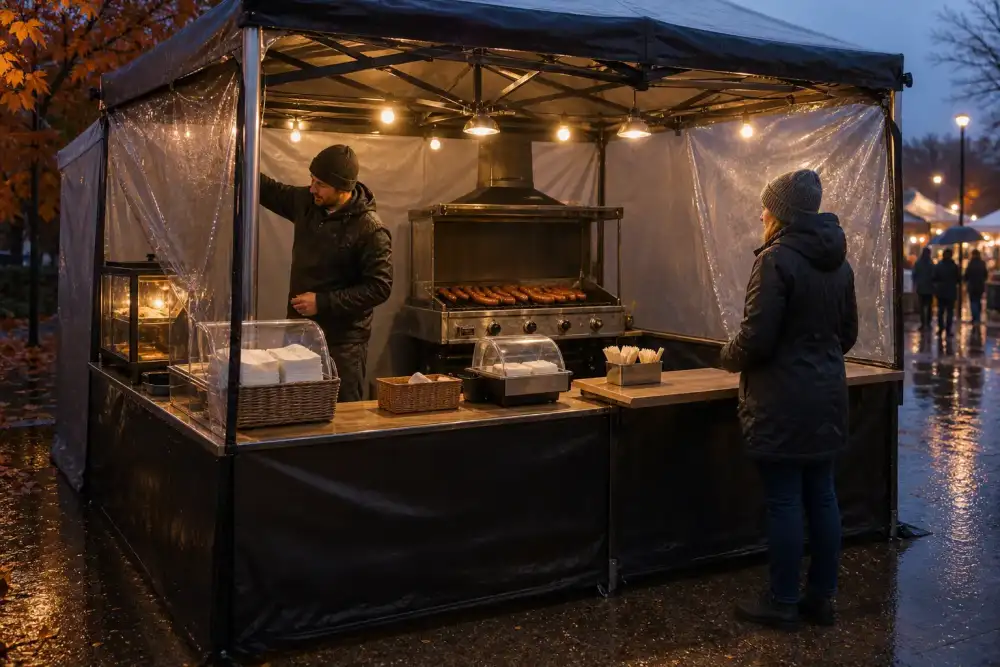
Autumn presentation begins before the food reaches the tray. Shorter days, rain and wind change how easily customers can see the menu, watch the cooking and carry their purchase away.
Lighting should make the cooking area and menu readable without giving the food an oddly coloured appearance. Warm, neutral lighting usually shows browned sausages and red cabbage more effectively than harsh blue-white lamps.
Canopies, side panels and equipment layouts must be appropriate for the conditions and permitted by the organiser. Any gas-fired catering equipment should be installed, maintained and used safely. The Health and Safety Executive’s catering gas guidance6 provides a useful starting point, but operators must also check equipment instructions, competent-person requirements and event-specific rules.
Wind protection should never obstruct ventilation or create unsafe conditions around heat-producing equipment. Confirm the permitted setup with the organiser before arrival rather than redesigning the stall with cable ties during a downpour.
Packaging needs equal attention. Choose trays and pots that hold their shape in damp conditions, and keep napkins, cutlery and dry packaging protected. Lids can help with takeaway meals, but fully enclosing freshly cooked fried food may soften it quickly.
Prepare the customer-facing area for wet-weather traffic. Place sauces where customers can reach them without leaning across the collection point, and avoid signs or freestanding displays that become unstable in wind. A clear ordering point and separate collection point can reduce crowding under the driest part of the canopy.
Food businesses operating from stalls, vans or temporary premises may need to register relevant sites and satisfy local requirements. The current government food business registration guidance7 explains how registration applies to mobile units and temporary premises. Traders should also confirm licensing, power, water, waste, fire-safety and site-specific requirements with the organiser and appropriate authorities.
Frequently Asked Questions
Use customer behaviour and event conditions rather than a fixed calendar date. Once customers begin favouring hot, substantial dishes over lighter options, introduce one autumn special while keeping the standard sausage roll available. This allows you to respond to the season without changing the entire menu too early.
Create one fixed special using ingredients that can also support existing dishes. For example, braised cabbage could top a bratwurst roll, accompany a meal tray and appear in a sausage sampler. Test the dish at one or two events, recording sales, preparation time and leftover stock before expanding the range.
Limited choice usually works better than complete customisation during busy service. Offer two or three finished combinations, then allow simple extras such as additional mustard, cheese sauce or another sausage. Too many topping decisions slow ordering, complicate allergen communication and make portion control less consistent.
Not necessarily. Customers often respond to warmth and substance rather than sheer quantity. A standard sausage can feel more satisfying when served with a hot topping, sauce or modest side. Increasing every portion may raise costs and waste without producing a corresponding increase in what customers will pay.
Separate total stock from the amount prepared for immediate service. Bring sufficient product for the expected trade, but heat sausages and prepare perishable toppings in smaller batches. Keep notes on attendance, weather, hourly sales and leftovers, as these records become more useful than general event estimates over time.
Storage, defrosting and reuse decisions must follow the supplier’s instructions and your documented food safety procedures.
They can make service more predictable because the operator is reheating and finishing an already cooked product rather than cooking raw sausage from the centre outwards. This can support faster batch preparation and more consistent results.
They still require correct storage, handling, reheating and temperature control. Follow the product instructions and make sure the chosen equipment can manage the expected volume.
Keep at least one mild, recognisable option with sauce available separately. A plain bratwurst or frankfurter in a roll is often easier for families to order than a heavily loaded seasonal dish.
smaller sausage portion or simple sausage-and-chips option may also work, provided it fits the event audience and remains commercially sensible. Avoid calling something a children’s portion merely because it is smaller if the price and presentation do not offer clear value.
That depends on the event audience and organiser requirements, but one credible alternative can help groups order from the same trader. Choose something that works with the existing sides and service system rather than adding an entirely separate mini-menu.
Check ingredients carefully, describe the dish accurately and consider how cross-contact will be controlled. Do not make vegetarian, vegan or allergen-related claims unless the product and handling setup support them.
Yes, although the presentation may need changing. Festival customers prioritise portability and speed, while café and garden-centre customers may accept plated versions with mash, cabbage or potatoes. Farm shops can translate the idea into retail bundles containing sausages, suitable accompaniments and simple serving suggestions.
The ingredients can remain similar while portion size, packaging and finish reflect how long customers expect to sit and eat.
Calculate the complete portion cost, including the sausage, bread or potatoes, toppings, sauce, garnish, packaging and likely waste. Then consider preparation time and whether the dish slows service at peak periods.
loaded option can command a higher price, but the extra selling price must cover more than its visible ingredients. If it needs several slow steps or produces frequent leftovers, a simpler dish may generate the better return.
Conclusion
German sausages are naturally suited to autumn festivals, but colder weather alone does not make a menu seasonal. The difference comes from how the sausages are selected, presented and supported.
A focused range of two or three clearly different sausages provides enough variety for most events. From there, warm cabbage, fried onions, mustard, curry sauce, potatoes or mash can create more substantial dishes without requiring an oversized ingredient list.
Presentation should keep the sausage visible, add colour and make the food easy to carry. Operationally, smaller batches, controlled portions and a simple menu structure help protect product quality, margin and service speed.
It is also worth designing the menu around the actual event. A daytime farm shop festival may favour rolls and manageable meal trays, while an evening beer festival can support richer loaded options and sharing portions. Weather, seating, customer profile and expected trading pattern all affect the right balance.
The aim is not to turn every stall into a Bavarian banquet hall. It is to make a strong German sausage offer feel warm, generous and appropriate for the season while remaining practical for the people serving it. The Sausage Haus range gives operators several useful starting points for building that kind of focused autumn menu.
The Sausage Haüs
The Sausage Haus brings authentic German-style sausages to the UK market through a partnership between Hardy Remagen and Baird Foods.
Hardy Remagen is a long-established German producer with deep experience in traditional sausage making, continental meat products and modern food manufacturing. The range reflects the kind of products German shoppers already understand and enjoy: Bratwurst, Frankfurters, smoked hotdogs, cheese-filled sausages, Bockwurst, Weisswurst and other classic German-style lines.
In the UK, the range is represented and distributed by Baird Foods, giving retailers, wholesalers, caterers and foodservice operators access to German sausage products with a practical UK supply route. This combination is important: German manufacturing knowledge on one side, UK market understanding and distribution on the other.
For retail buyers, The Sausage Haus range offers a clear way to add something different to both chilled and frozen sausage fixtures. The products are built around real eating occasions: BBQs, premium hotdog nights, family meals, German street food, Oktoberfest promotions, Christmas market food and quick comfort meals at home.
The result is a range that gives shoppers something more distinctive than ordinary sausages and standard hotdogs, while giving buyers a compact, commercially useful product story with strong fresh and frozen potential.
References
UK Government. Weather and Climate summaries. Met Office.
bratwurst remains central to traditional festival food.
Food Standards Agency allergen guidance for businesses.
UK Government. Temperature control: hot food – London Borough of Bromley.
UK Government. Gas safety in catering and hospitality - HSE. GOV.UK. Updated March 9, 2021.
UK Government. Food business registration. GOV.UK. Updated June 25, 2026.