A Bacon Frankfurter only earns its keep if it performs under pressure – busy service, tight margins, and customers who notice when a sausage is “just okay”. This 2026 spotlight covers The Sausage Haüs Bacon Krakauer: what it is, how it eats, where it sells best, and what to check when you’re specifying a smoked German sausage for pub menus, catering, wholesale, or retail. Clear, practical, buyer-facing.
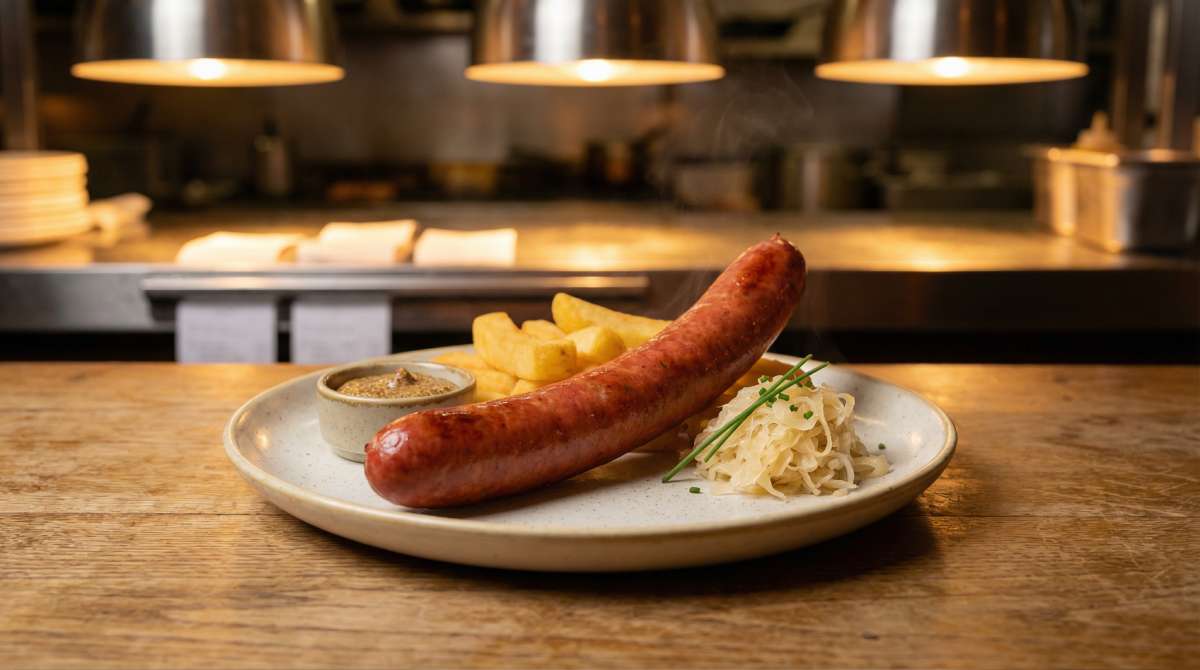
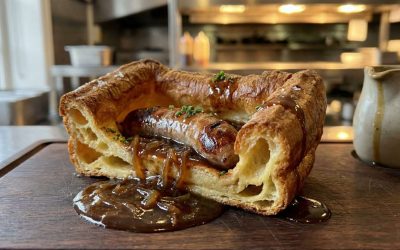
Sausage Haus Bacon Frankfurter (Bacon Krakauer style) served pub-ready under the pass – simple build, strong flavour, reliable service performance.
Introduction
In the UK trade, “Bacon Frankfurter” can mean anything from a mild hotdog-style sausage to a punchy, smoked, garlic-forward Krakauer with visible bacon pieces. That’s why buyers often struggle to compare like-for-like – especially when the same product is being used across different settings: a pub kitchen doing 120 covers, an event caterer feeding 2,000 people, or a wholesaler trying to keep a range tight but credible.
The Sausage Haüs Bacon Krakauer sits in the “proper sausage” end of the Frankfurter world. It’s made by Remagen in Germany and distributed in the UK by Baird Foods as part of The Sausage Haüs range. The commercial question isn’t whether it’s authentic enough to impress someone from Berlin; it’s whether it gives you something you can sell confidently: a distinct flavour profile, consistent cooking behaviour, and a menu story that’s easy for staff to repeat without inventing folklore.
This article is written for chefs, caterers, wholesalers, and buyers who want clear answers: what it is, how it differs from a standard frank, where it shines on a menu, and what to verify with your supplier before you commit volume.
Key Takeaways
- Clear positioning: This Bacon Frankfurter sits closer to a smoky Krakauer than a neutral hotdog – useful when you want a “signature” sausage, not a filler line.
- Flavour does the work: Smoky, savoury profile can carry simple builds (roll + onions + mustard) without needing expensive toppings.
- Operationally friendly: Typically works across grill, flat-top, and hot-hold service – good for pubs, festivals, and fast-lunch trade.
- Menu flexibility: Fits multiple formats: loaded roll, currywurst-style slice, breakfast add-on, sharer platters, or deli counter hot food.
- Buying confidence: Made by Remagen (Germany) and distributed in the UK by Baird Foods (The Sausage Haüs range) – a clear supply chain story.
- Spec it properly: Confirm pack format, size/weight, allergens, and handling instructions with your supplier so portion cost and yield stay predictable.
- Easy upsell: “German smoked Bacon Frankfurter” is a simple description that staff can say quickly – and customers understand instantly.
What This Bacon Frankfurter Is – and What It Isn’t
A Bacon Frankfurter is one of those labels that gets used loosely in the UK. Sometimes it means “a standard frank with a smoky note”. Sometimes it means a more characterful Krakauer-style sausage where bacon is part of the actual eating experience, not just marketing copy. The Sausage Haüs Bacon Krakauer sits firmly in the second camp.
This is a German-style smoked sausage made by Remagen (Germany) and distributed in the UK by Baird Foods as part of The Sausage Haüs range. In practical terms, it’s designed to be a trade-friendly line: predictable in service, easy to portion, and distinctive enough that customers can taste the difference even in a simple bun build.
What it isn’t: it’s not a bland “hotdog sausage” that relies on sauces to create flavour. It’s also not a fragile artisan fresh sausage that needs delicate handling, special equipment, or a chef on permanent babysitting duty. Think of it as a menu workhorse with a proper German accent: it shows up, does the job, and doesn’t ask for a motivational speech before service.
What to verify with your supplier (because specifics matter for cost and compliance): pack format, unit weight/length, allergens, and cooking guidance. Different kitchens need different answers.
In short:
- Is: smoked German-style Bacon Frankfurter with a clear flavour identity; suited to pubs, catering, wholesale, and retail hot-hold
- Isn’t: a neutral budget frank; a “bacon-wrapped” gimmick; an unpredictable fresh sausage that varies batch to batch
Flavour Profile and Eating Experience
If you’re buying for a pub or caterer, flavour isn’t about poetry – it’s about whether the sausage still tastes good when it’s served fast, held warm, and eaten with one hand while someone argues about football.
The Bacon Krakauer style typically delivers a smoky, savoury profile with a noticeable cured-meat richness that reads as “bacon” to customers without you having to put the word in 16-point font on the menu. The smoke note is usually the key: it gives you that “grill-adjacent” flavour even when you’re working a flat-top or hot-hold setup. Texture-wise, the aim is a firm bite with a clean snap, then a juicy interior – the kind of sausage that makes a simple bun feel like a proper product, not a placeholder.
For menu design, this matters because a stronger flavour profile lets you simplify the build. When the base product carries the experience, you can be more selective with toppings and still charge confidently. That’s not hype; it’s just how portion cost works when customers are happy with fewer extras.
Typical pairings that make commercial sense:
- Mustard + onions (classic, low food cost, fast to serve)
- Curry sauce + sliced sausage (high perceived value, easy to batch)
- Sauerkraut + mustard (adds acidity, helps balance richness)
If you want a “house signature” feel without extra labour:
- Keep toppings tight; let the sausage do the heavy lifting.
- Use one premium garnish (crispy onions or pickles) rather than five cheap distractions.
Formats, Portioning, and Portion Cost Logic
Portion cost isn’t only about the sausage price per kilo. It’s the full picture: sausage unit weight, yield, bun choice, toppings, wastage, and speed of service. A Bacon Frankfurter that holds quality in a simple build can reduce topping spend and labour, which is often where the real margin leaks happen.
In pubs and event catering, portioning usually falls into three commercial lanes:
1) “Grab-and-go” roll format (fastest throughput)
This is where a Bacon Frankfurter earns its keep. One sausage, one bun, one or two toppings, done. Your cost control comes from consistency – if every unit is the same size, your build stays consistent and your staff stop improvising “generous” portions.
2) Sliced/loaded formats (higher perceived value)
Slicing the sausage for currywurst-style service or loaded fries can increase perceived value because the plate looks abundant. It also lets you stretch a unit across multiple portions if you’re doing tasters, sharers, or buffet service – but only if you standardise the portion weight.
3) Retail hot-hold and counter service (repeatable and forgiving)
For delis, farm shops, and hot counters, the key is how the sausage behaves when held warm. The goal is to keep the eating quality good enough that the second customer of the hour gets the same experience as the first.
Because exact pack specs can vary, you should confirm the details you need (rather than guessing and rebuilding your GP later). Ask for the numbers that actually affect your spreadsheet.
Practical portion-cost checklist (verify with your supplier):
- Unit weight and length (to set your standard portion and bun size)
- Case size and units per case (for ordering rhythm and storage planning)
- Cooking method guidance (grill/flat-top/oven/hot-hold suitability)
- Allergen statement and ingredient summary (for menu compliance and FOH confidence)
- Shelf life and storage requirements (to reduce waste and avoid “end of week panic”)
If you do one thing for margin: lock in a standard build with a standard portion, then cost it properly. A sausage can be brilliant, but it can’t rescue a menu item where portioning is basically “vibes”.
Reason 1: A Bacon Frankfurter with a Clear Point of Difference
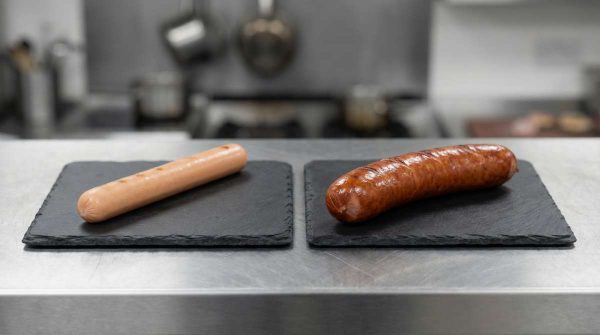
Not all “Frankfurter” lines are equal. This comparison shows the category difference: a thin, skinless generic frank versus Sausage Haus’s thicker smoked Bacon Frankfurter (Bacon Krakauer style).
In the UK trade, “Bacon Frankfurter” is often a vague category. Some lines are basically standard franks with a smoky note and a name that does the heavy lifting. A buyer can’t build confidence on that, because you can’t brief chefs, counter staff, and customers with a shrug.
The Sausage Haüs Bacon Krakauer is positioned to be easier to explain and easier to sell. It is produced by Remagen (Germany) and distributed in the UK by Baird Foods as part of The Sausage Haüs range. That gives you two useful things: a straightforward provenance story and a product identity that isn’t trying to be everything to everyone.
The practical point of difference is that this is meant to eat like a “proper smoked German sausage” rather than a neutral frank. That matters because it lets you place it in your range as a step up without needing a new service method, new equipment, or a kitchen re-train.
What it’s not trying to be: a novelty “bacon-wrapped” hotdog or a sauce delivery system. If you need a budget neutral frank for kids’ menus or maximum price compression, this probably isn’t the slot. If you want a signature sausage line that can sit on a pub menu, a festival pitch, or a retail counter with the same story, it’s a better fit.
A quick spec sanity check (worth doing before you price anything): confirm unit weight/length, pack format, and allergen statement with your supplier. “Bacon Frankfurter” is a style label; your portion cost spreadsheet needs numbers.
Reason 2: Flavour That Carries Simple Builds (and Protects Margin)
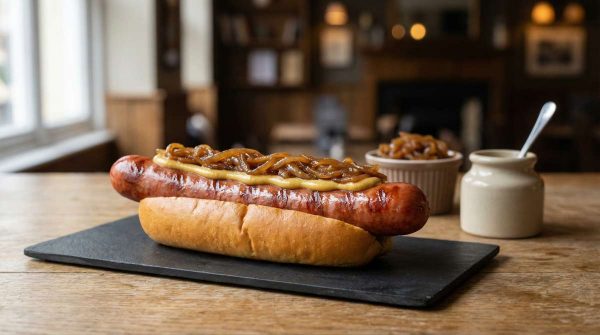
A disciplined build that sells: Sausage Haus Bacon Frankfurter with mustard and caramelised onions – strong flavour, low prep, fast service.
A good sausage should reduce complexity, not demand it. In a UK pub kitchen, the most profitable dishes are usually the ones with a tight build: low prep, repeatable plating, minimal waste, and fast pass times. If the core product has enough flavour, you don’t have to spend your margin on toppings, sauces, and “special” garnish that turns into bin weight by Sunday night.
This Bacon Frankfurter profile is typically smoky and savoury, with a cured-meat richness that reads as “bacon” on the first bite. That does two commercially useful things. First, it gives you a clear taste identity even when you keep the build simple. Second, it stays interesting across different service contexts – bun, platter, currywurst-style slice, or hot-hold.
Instead of making every build a theatre production, you can keep it disciplined and still charge properly.
Two ways it can protect margin:
- Lower topping spend: you can use one or two deliberate additions rather than four “filler” toppings to create flavour.
- Lower labour: simpler builds reduce prep, reduce ticket time, and reduce inconsistency when different staff are on shift.
Simple builds that tend to sell well in UK trade settings:
- Roll + mustard + onions (high throughput, low food cost, classic positioning)
- Curry sauce + sliced sausage (high perceived value, easy batching, good lunch trade)
- Sauerkraut + mustard (adds acidity, balances richness, makes it feel “proper German” without extra work)
None of that requires a new station, new kit, or a chef with free time. It just requires a sausage that doesn’t taste like background noise.
Reason 3: Reliable Kitchen Performance Across Grill, Flat-Top and Hot-Hold
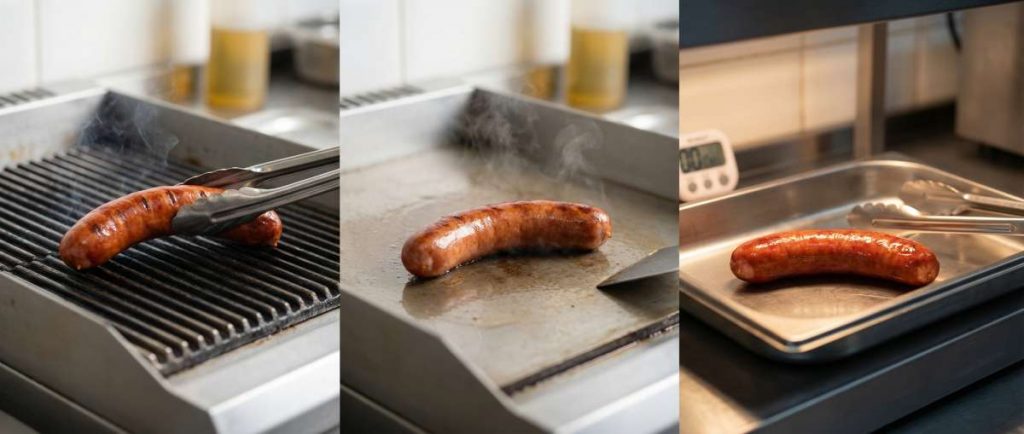
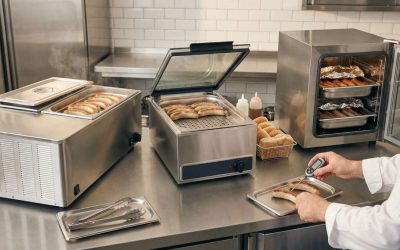
Reliable across grill, flat-top and hot-hold: Sausage Haus Bacon Frankfurter (Bacon Krakauer style) keeps shape, colour and bite in real service conditions.
For buyers, performance is as important as flavour. A sausage can taste great in a controlled demo and still be a headache in real service if it splits, dries, or behaves differently depending on who’s cooking it. You want something that is forgiving: it should deliver a consistent bite and appearance even when the kitchen is running hot and the pass is impatient.
A Bacon Frankfurter in this style is typically built for service flexibility. It should brown cleanly on a grill or flat-top, hold its shape, and cope with hot-hold without turning into a wrinkled apology. That makes it viable across pub service, event catering, and counter trade where holding time is part of reality, not a theoretical problem.
To get the best results, the “rules” are basic but worth stating because they prevent most avoidable issues:
- Grill: use medium heat and turn regularly; aggressive flames can split casings and push fat out too fast.
- Flat-top: moderate heat, a little oil if needed; aim for even colour rather than fast scorch.
- Hot-hold: hold at safe serving temperatures per your site’s food safety procedures; avoid drying by controlling hold time and not overcooking first.
What to verify with your supplier (because it affects operations, waste, and food safety compliance):
- Recommended cooking method(s) and internal temperature guidance for foodservice use
- Suitability for hot-hold and typical hold-time expectations
- Storage format and shelf life to match your ordering rhythm (pub vs event vs retail counter)
If the product behaves consistently, you get fewer remakes, fewer complaints, and less staff improvisation. In trade terms, that’s not “nice to have”; it’s where profit hides.
Reason 4: Flexible Formats for Pubs, Catering, and Retail Counters
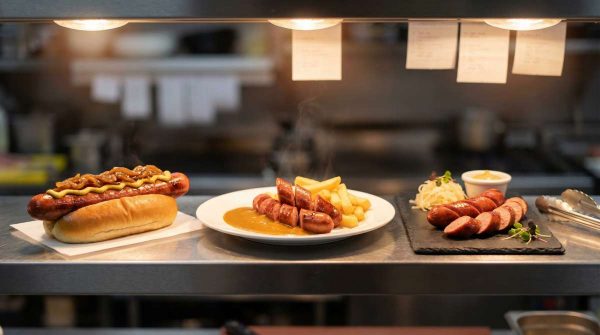
One Bacon Frankfurter, three trade-friendly formats: bun build, currywurst-style slices, and a platter option – all staged on the pub pass for real-service credibility.
The easiest way to justify a higher-value Bacon Frankfurter is to make it work in more than one format. If a line only sells as a single “hotdog in a bun”, it becomes a one-trick pony that you keep rationalising at every range review. The Sausage Haüs Bacon Krakauer is a Bacon Frankfurter that can flex across pub service, events, and counter trade without you reinventing your operation.
For bacon krakauer sausage UK buyers, the practical advantage is that the same core product can support different dayparts and channels. That is useful for pubs that want a lunchtime special, caterers who need speed and reliability, and retailers or deli counters who need a sausage that still eats well in hot-hold.
In a pub kitchen, the Bacon Frankfurter for pubs slot is often about throughput. One sausage, one bun, one topping system, repeatable all week. But it also works plated: sliced into curry sauce, served with chips and kraut, or built into a sharer board where it feels premium without adding prep.
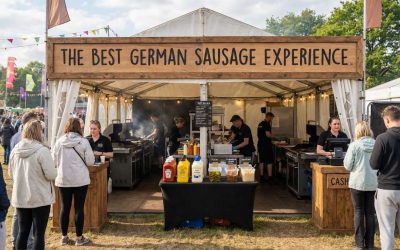
For events, this sits neatly in the catering sausages for events UK category because it can be served fast, held hot, and still keep a clear “German smoked sausage” identity. If you are specifying a German smoked sausage wholesale UK option, you want something that still tastes like itself when served at scale.
For retail counters, the same logic applies. A foodservice frankfurter supplier UK line needs to work when held warm and sold quickly, with minimal waste and minimal customer confusion. “Bacon Frankfurter” is instantly understandable, and “Krakauer” gives you a small step-up story for shoppers who want something a bit more “proper”.
Where it tends to fit best:
- Pub specials and lunch trade (roll or plate)
- Festivals and event catering (high throughput)
- Deli and farm shop hot counters (hot-hold)
- Cash & carry / wholesale ranges (clear category placement)
Reason 5: Menu Language That Sells Without Staff Training Drama
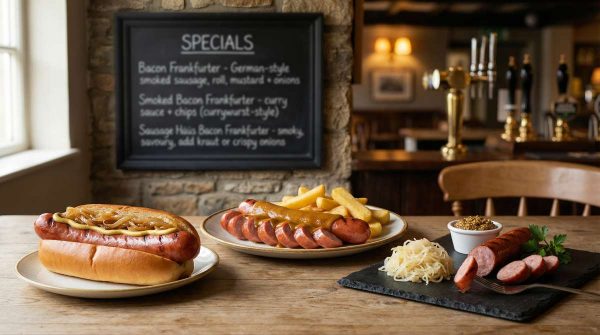
Clear menu language sells faster: three Sausage Haus Bacon Frankfurter formats with short, staff-friendly chalkboard descriptions.
If you need a six-minute explanation at pre-shift, the product is doing it wrong. The best menu descriptions are short, accurate, and repeatable by staff who are busy, new, or both. With a Bacon Frankfurter, you want language that tells customers what they are getting, without getting into a debate about German geography.
The trick is to keep the “German” story simple, and keep the “bacon” claim honest. Do not over-promise. Do not imply it is wrapped in bacon if it is not. Do not drift into fantasy details that your allergen file cannot support.
Commercially, good menu language reduces complaints, increases upgrades, and makes the item easier to sell as part of a deal. It also supports wholesale and retail because buyers can lift the copy straight onto shelf-edge labels or spec sheets, which is why German smoked sausage wholesale UK lines with clear copy tend to move faster.
Short, staff-friendly menu copy options:
- “Bacon Frankfurter – German-style smoked sausage, served in a roll with onions and mustard.”
- “Smoked Bacon Frankfurter with curry sauce and chips (currywurst-style).”
- “The Sausage Haüs Bacon Frankfurter – smoky, savoury, proper bite. Add kraut or crispy onions.”
If you want a slightly more premium line (for pubs and retailers):
- “German-style Bacon Frankfurter (Krakauer) – smoked, rich, and built for simple toppings.”
Quick staff script (one sentence, no drama):
- “It’s a smoked German-style Bacon Frankfurter – richer than a standard frank, great with mustard and onions.”
What to avoid (because it creates confusion or returns):
- Saying “bacon-wrapped” if it isn’t
- Claiming “artisan”, “award-winning”, or “authentic” unless you can back it up
- Overloading the description with niche detail that slows ordering
Reason 6: Buying Confidence – Clear Supply Chain (Remagen + Baird Foods)
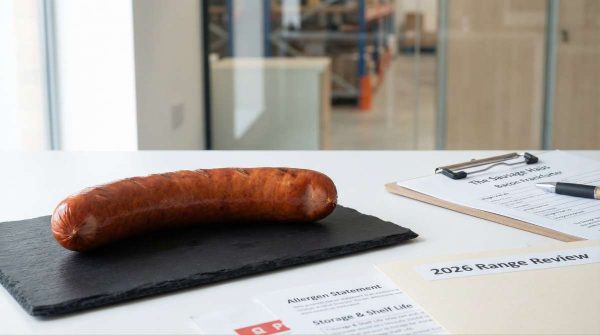
Buying confidence comes from clarity: Sausage Haus Bacon Frankfurter reviewed with the key documents trade buyers actually need – spec, allergens, and storage guidance.
Trade buyers do not just buy flavour. They buy consistency, supply reliability, and a story they can repeat without crossing their fingers. That is where supply chain clarity matters.
The Sausage Haüs Bacon Frankfurter is produced by Remagen (Germany) and distributed in the UK by Baird Foods as part of The Sausage Haüs range. For a buyer looking for a foodservice frankfurter supplier UK option, that is a straightforward chain: recognised production origin, and UK distribution that can support ordering, delivery cadence, and trade communication.
Why this matters in practice:
- Consistency: a defined producer reduces “mystery meat” product drift over time.
- Range logic: it is easier to place in a German smoked sausage wholesale UK range when provenance is clear.
- Buyer confidence: pubs, caterers, and retailers can describe it accurately without making unverifiable claims.
Before committing volume, the smart move is to treat this like any serious line review. Ask for (and keep on file) the basics that affect margin and compliance. This is especially important if you are listing it under “bacon krakauer sausage UK” terminology or making it a key item in your offer.
Buyer checklist to request from your supplier:
- Spec sheet with unit size/weight and case format
- Allergen statement and ingredient summary (for menus and counter signage)
- Storage and shelf life details (for ordering rhythm and waste control)
- Cooking and hot-hold guidance (for consistent service outcomes)
If those boxes are ticked, you are not just buying a Bacon Frankfurter. You are buying a product you can roll out across pubs, events, and retail counters with fewer surprises and fewer Monday morning “why is this different?” conversations.
Reason 7: Easy Spec and Consistency – What to Verify Before You Buy
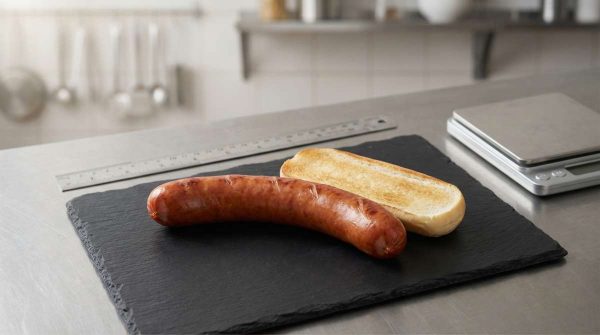
Spec before you price: Sausage Haus Bacon Frankfurter shown with bun fit and portioning cues, so unit size matches serving style and portion cost targets.
A Bacon Frankfurter can be a great seller, but only if you spec it like a trade product, not like a pub snack you order on a whim. Most buying problems come from one of two issues: the product wasn’t defined tightly enough, or the kitchen wasn’t given clear handling guidance. Both are easy to avoid if you ask for the right details up front.
For pubs, caterers, and wholesalers, the goal is boring in the best way: the sausage that turns up next month should be the same one you costed, photographed, and trained staff on. That is especially relevant if you are placing it within a German smoked sausage wholesale UK range, or listing it for events where you need repeatability across multiple sites.
Before you commit, make sure you can answer these questions without guesswork:
- Are you buying it primarily as a Bacon Frankfurter for pubs (bun and quick service), or for plated dishes, or for hot-hold counter trade?
- Does the unit size match your bun, your portion cost targets, and your serving style?
- Can your food safety and allergen information be supported with the supplier documentation?
A tight spec also helps your marketing. If you want to position it as a bacon krakauer sausage UK style line, you need the confidence that the product description is accurate and stable, not something that drifts depending on who packed the last pallet.
What to verify before you buy (the essentials):
- Pack format: chilled or frozen, units per case, case weight
- Unit details: average weight and length per sausage, tolerances if provided
- Ingredients and allergens: full allergen statement and any cross-contamination notes
- Cooking guidance: recommended methods and target internal temperature guidance for foodservice use
- Hot-hold suitability: whether it is intended for holding, and any typical hold-time advice
- Shelf life and storage: best-before, once-opened guidance, and how quickly you need to use it after defrosting (if frozen)
If any of those points are unclear, do not fill the gaps with assumptions. Ask the supplier to confirm in writing, then lock your recipe card and costings to that spec.
Storage, Handling, and What to Verify with Your Supplier
Storage and handling is where a good sausage can quietly lose money. Not because anything dramatic goes wrong, but because small inconsistencies add up: slight overcooking, sloppy hot-hold practice, or stock rotation that is more hopeful than real. The fix is a simple set of standards that match how your site actually operates.
In pubs, the main risk is uneven cooking during busy service. In catering, it is holding too long or re-heating inconsistently across batches. In retail counters, it is drying out and losing bite over time. The correct approach depends on your setup, but the principles are the same: follow the supplier guidance, avoid aggressive heat, and keep procedures consistent so results are consistent.
Practical handling pointers that usually hold true for smoked sausages in this category:
- Cook with moderate, steady heat to develop colour without splitting the casing
- Avoid boiling; gentle warming is typically better for keeping texture and reducing split risk
- If holding hot, control the temperature and time so you are not effectively “cooking it twice”
- Rotate stock properly; do not rely on “it probably got delivered last week” memory
What to request and keep on file (especially for wholesalers and multi-site operators):
- A current product spec sheet and allergen documentation (for menus, counter signage, audits)
- Storage requirements and shelf life in the format you are buying (chilled/frozen)
- Defrosting guidance if applicable, including whether re-freezing is permitted (often it is not)
- Cooking and hot-hold guidance suitable for UK foodservice practice
- Contact point at your foodservice frankfurter supplier UK side for quick answers when staff ask practical questions
Finally, align your internal documentation with reality. If the sausage is primarily for quick service, write a one-page kitchen method that matches your grill or flat-top. If it is for events, write a batch method and a hot-hold limit. If it is for a counter, write a hold-time standard and a “refresh” rule. The product can be versatile, but your procedures should be specific.
Frequently Asked Questions
Yes, that is often one of the strongest use cases, provided the product performs well in hot-hold. Retail success comes from clear labelling, consistent portioning, and controlled hold time to avoid drying.
Typically, yes. A smoked Bacon Frankfurter in this style is suited to high-throughput service because it can brown well, serve quickly in buns, and hold up in hot-hold setups. Always confirm hot-hold suitability and any hold-time guidance with your supplier.
Start with the unit spec: length and average weight per sausage. Choose a bun size that fits the product (or decide to present it intentionally long), then lock a standard build and cost it fully including toppings, packaging, and waste. If you slice it for currywurst-style portions, standardise the portion weight per serving.
Keep it short and accurate. Examples: “Bacon Frankfurter – German-style smoked sausage, served in a roll with mustard and onions” or “Smoked Bacon Frankfurter with curry sauce and chips (currywurst-style)”. Avoid claims you cannot verify (such as “award-winning”) and avoid calling it bacon-wrapped.
A Bacon Frankfurter in this category is usually flexible across grill and flat-top. The key is controlled heat: medium grill heat and regular turning; moderate flat-top heat for even browning. Avoid aggressive flames and avoid boiling unless supplier guidance specifically supports it.
No. This is a Bacon Krakauer-style sausage where the “bacon” character is part of the sausage profile, not a bacon wrap. Do not describe it as bacon-wrapped on menus unless your supplier spec explicitly says so.
The strongest sellers are usually the simple ones: bun build with mustard and onions (or caramelised onions), currywurst-style sliced with curry sauce, and a plated version with chips and a sharp side such as sauerkraut. These formats keep labour low and are easy for staff to repeat.
A Bacon Frankfurter is typically a smoked frankfurter-style sausage with a richer, more savoury profile that reads as “bacon” on the first bite. Compared with a standard neutral frank, it usually has more character, more smoke, and a more premium eating experience – but exact spec varies, so check unit size and ingredients with your supplier.
Request the product spec sheet with unit size/weight and case format, allergen statement and ingredient summary, storage and shelf life, and cooking/hot-hold guidance. If anything is unclear, ask for confirmation in writing and align your recipe cards and costings to that spec.
It is produced by Remagen in Germany and distributed in the UK by Baird Foods as part of The Sausage Haüs range.
Conclusion
If you are reviewing sausages for 2026 and you need something more distinctive than a standard frank, a Bacon Frankfurter in the Krakauer style is a sensible option. The key commercial advantages are straightforward: it offers a clear flavour identity, it supports simple builds that keep labour and topping costs under control, and it can work across multiple service contexts – pub kitchens, event catering, and retail counters.
The practical discipline is in the buying. Get the spec right (unit size, case format, allergens, cooking guidance, and hot-hold suitability), then lock your portioning and menu language to that reality. Done properly, you reduce waste, reduce “who cooked this?” inconsistency, and make it easier for staff to sell the item confidently.
If you would like, we can also help you place it properly in your offer: which menu builds suit your site, what bun size and topping set makes sense for your portion cost, and how to describe it accurately without turning your chalkboard into a German history lesson. Speak to your usual contact at Baird Foods to discuss availability and trade formats within The Sausage Haüs range.
Explore Our Other Sausage Haüs Product Spotlights
If you are building a pub menu, planning event catering, or simply want better sausages at home, our product spotlights help you choose the right format, flavour, and best-use scenarios. Each guide is written with practical cooking methods, serving ideas, and real-world use cases in mind – so you can confidently pick the best sausage for your customer base, your kitchen setup, or your next BBQ.
About Sausage Haüs
The Sausage Haüs is a UK-focused German sausage range built for pubs, caterers, wholesalers, and retailers who want products that work in real service conditions. We focus on clear product positioning, practical menu formats, and trade-friendly consistency – so kitchens can deliver a strong result without over-complicating prep or relying on gimmicks.
Our sausages are produced by Remagen in Germany, bringing traditional German-style recipes and manufacturing expertise into a range designed for the UK market. Distribution in the UK is handled by Baird Foods, supporting trade supply, product information, and availability as part of The Sausage Haüs range.
Whether you are planning a pub special, an event menu, or a retail hot counter line-up, The Sausage Haüs is built to help you serve German sausages with confidence: straightforward cooking methods, reliable performance, and flavour profiles customers understand quickly. If you need product specs, use-case suggestions, or menu copy that keeps things accurate and sellable, we can help you get it right.