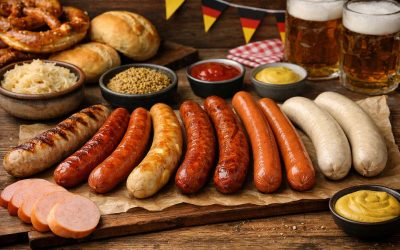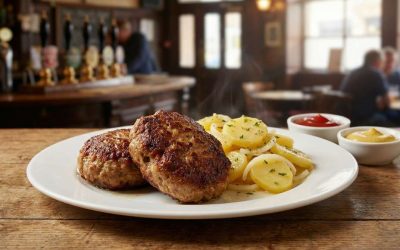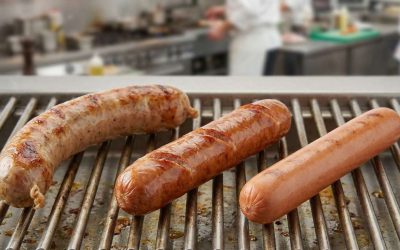
There’s something irresistible about crispy, golden-brown potatoes sizzling in a pan. Whether you call them Bratkartoffeln in Germany or roasted potatoes in the UK, both dishes capture the essence of simple, comforting food. But while they may look similar at first glance, Bratkartoffeln and roasted potatoes are not quite the same. The German version has its own technique, seasoning, and unmistakable flavour — and when paired with authentic German sausages, it transforms from a side dish into a meal worth celebrating. In this article, we’ll explore what makes Bratkartoffeln special, how they compare to roasted potatoes, and why every sausage lover should know the difference.
Last updated: January 2026
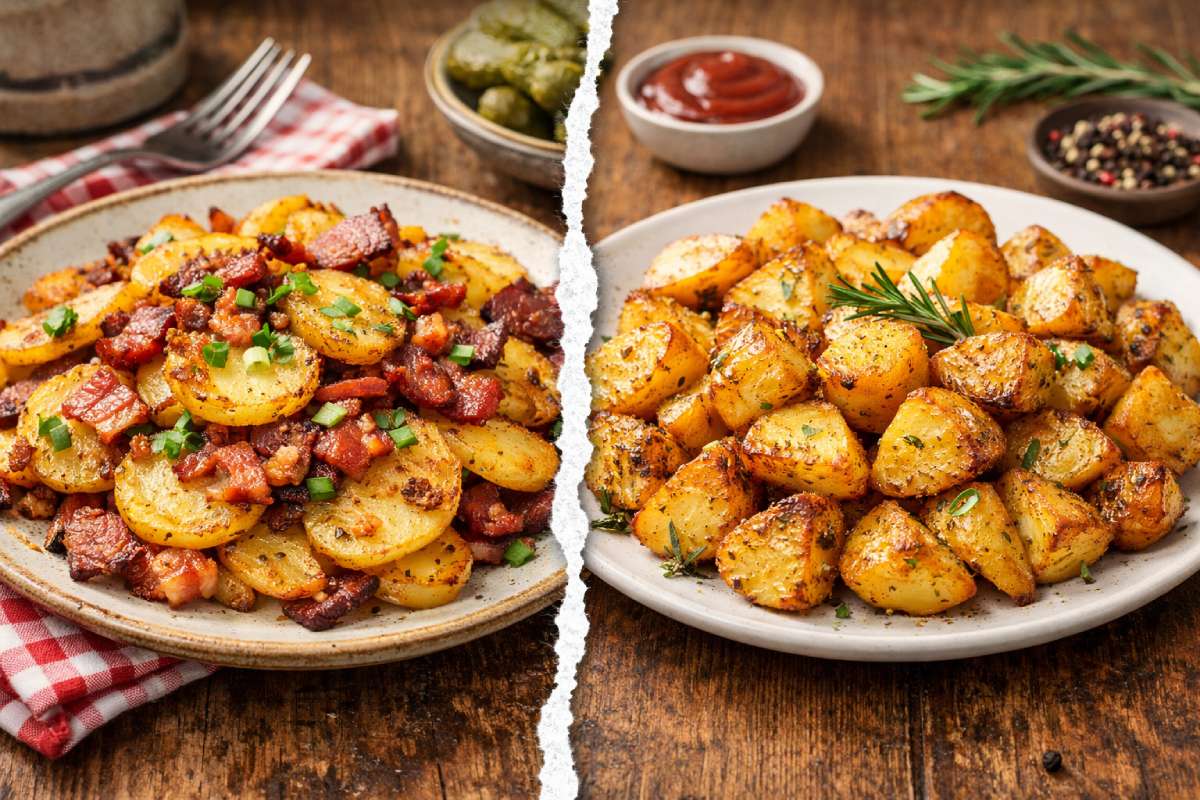
Bratkartoffeln with bacon on the left; roasted potatoes on the right – split by a torn photo effect.
Introduction
Bratkartoffeln and roasted potatoes look similar at first glance – both are golden, crisp, and built around simple ingredients. But they are not interchangeable. They behave differently in the pan or oven, they deliver different textures, and they suit different meals.
Bratkartoffeln are the classic German pan-fried potatoes: sliced (often pre-cooked), fried in a hot pan until crisp at the edges, then finished with onions and, very often, smoky bacon pieces. The flavour is deeper and more “buttery” from pan contact, and the texture is a mix of soft centres and crunchy, browned surfaces. Roasted potatoes, by contrast, are an oven dish: chunks or wedges tossed with oil (and usually herbs), then roasted until the outside is crisp and the inside stays fluffy. They are easier to scale for a crowd and tend to taste lighter and more herby than smoky.
In this guide, you will see the real differences – method, ingredients, texture, and the best use cases. If you want a German pub-style side for schnitzel or sausages, Bratkartoffeln are usually the answer. If you want a hands-off, reliable side for a roast dinner, roasted potatoes win.
In Germany, you’ll find Bratkartoffeln everywhere — from home kitchens to beer gardens, always served as a side with bratwurst, frankfurter, or schnitzel.
Key Takeaways
- Cooking method is the main difference – Bratkartoffeln are pan-fried; roasted potatoes are oven-roasted.
- Cut and prep are different – Bratkartoffeln are typically sliced (often pre-cooked first); roasted potatoes are usually chunks or wedges.
- Texture outcome – Bratkartoffeln give crisp edges with a softer, pan-silky bite; roasted potatoes give an all-over roast crust with fluffy centres.
- Flavour profile – Bratkartoffeln often lean savoury and smoky (especially with bacon and onions); roasted potatoes lean herby and “roasty.”
- Best pairings – Bratkartoffeln are ideal with bratwurst, schnitzel, and fried eggs; roasted potatoes are ideal with roast meats, chicken, and gravy.
- Batch cooking and convenience – roasted potatoes scale more easily and are more hands-off; Bratkartoffeln need attention in the pan for best crisping.
- When to choose which – choose Bratkartoffeln when you want a German, pan-fried side with bacon; choose roasted potatoes when you want a simple oven side with minimal monitoring.
Bratkartoffeln in English
In English, Bratkartoffeln translates to “fried potatoes,” but that translation doesn’t do justice to the dish. British or American fried potatoes tend to be thin-sliced or deep-fried, whereas Bratkartoffeln are a mix between sautéed and roasted — browned slowly in the pan until every slice has just the right crunch.
They’re not just “fried potatoes”; they’re German-style pan-roasted potatoes, rich with flavour and tradition.
So, when someone in the UK searches for “Bratkartoffeln in English”, the best answer is:
“Bratkartoffeln are German-style pan-fried potatoes — crispy on the outside, soft inside, often cooked with bacon and onions.”
Bratkartoffeln vs Roasted Potatoes: The Main Differences
At a glance, Bratkartoffeln and roasted potatoes can look like close cousins: golden, crisp, and built around simple ingredients. In practice, they are two very different side dishes. The difference is not only the cooking method, but also the prep, the type of fat, the texture you get on the plate, and the kind of meal they suit best.
The quick comparison
| Feature | Bratkartoffeln | Roasted Potatoes |
|---|---|---|
| Cooking method | Pan-fried on the stove | Roasted in the oven |
| Potato starting point | Usually boiled potatoes, cooled then sliced | Usually raw potatoes (often parboiled), then roasted |
| Fat used | Butter, oil, and very often bacon fat | Oil, beef dripping, duck/goose fat |
| Texture | Crisp edges with a soft, slightly “silky” interior | Crunchy exterior with a fluffy, steaming centre |
| Common additions | Bacon, onions, herbs | Salt, pepper, garlic, rosemary/thyme |
| Serving style | German comfort food side for sausages, schnitzel, eggs | Classic roast side, great with gravy and roast meats |
| Flavour profile | Deep savoury, sometimes smoky, more pan-caramelised | Clean “roasty” flavour, often herby |
Why the method matters most
The biggest difference is the heat source and contact. Bratkartoffeln get direct, high-heat contact with the pan, which creates strong browning on flat surfaces and builds a deeper, nuttier flavour. Roasted potatoes rely on oven heat and hot fat to crisp the outside more evenly, while the inside stays fluffy and light.
That is why Bratkartoffeln often feel heartier and more “pub-style”, while roasted potatoes feel lighter and more classic-roast in character.
Bratkartoffeln: What makes them unique
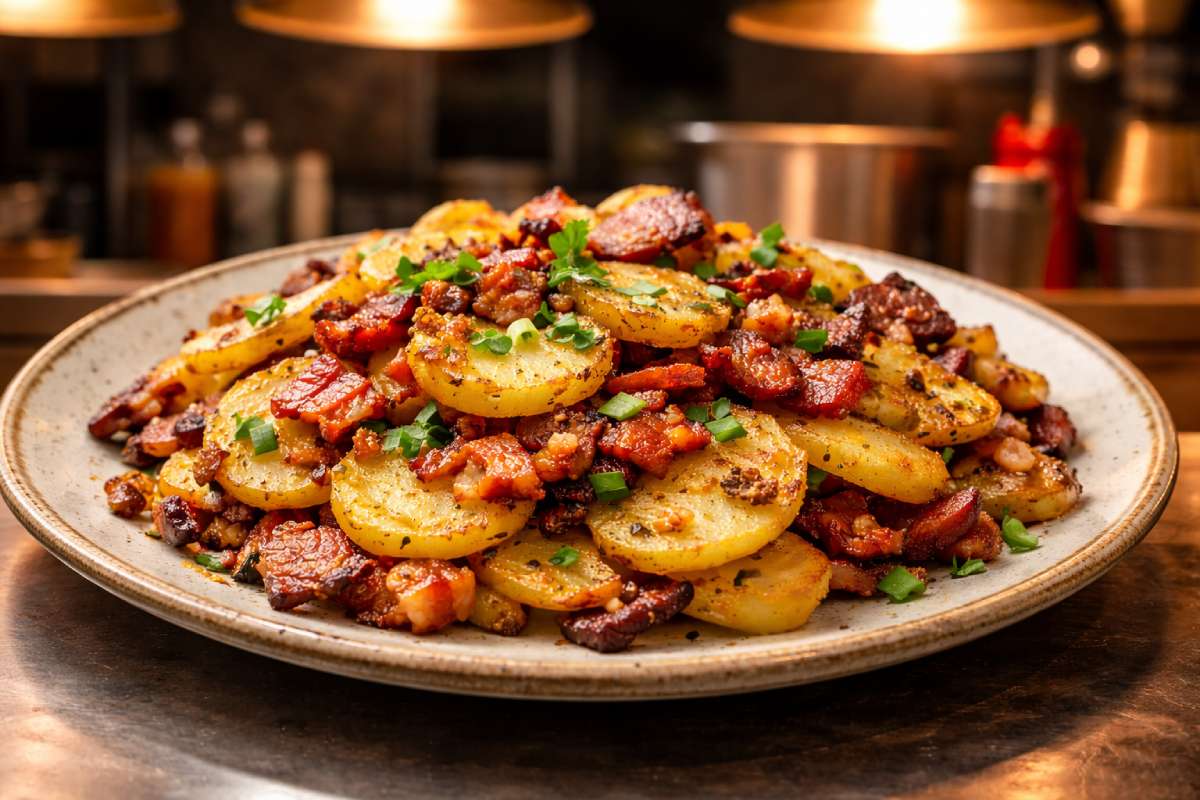
Classic German Bratkartoffeln with bacon and herbs, kept warm on the pub kitchen pass.
Bratkartoffeln are the German standard for pan-fried potatoes – and the detail that trips most people up is that they are typically made with pre-cooked potatoes. That step matters because it changes everything: cooled, boiled potatoes slice cleanly, hold their shape, and fry to a crisp surface without falling apart.
Typical ingredients and additions
What you will most often see in traditional Bratkartoffeln:
- Sliced, boiled potatoes (cooled; often from the day before)
- Bacon pieces (Speck) for fat and flavour
- Onions (softened and browned)
- Herbs (parsley is common), plus salt and pepper
Texture and flavour
Bratkartoffeln are about contrast:
- Crisp, browned edges from pan contact
- Soft centres that stay moist rather than fluffy
- Savoury depth from caramelisation, and often a smoky bacon note
This dish tastes “rounder” and more intensely seasoned because the pan browning and bacon fat do a lot of heavy lifting.
When Bratkartoffeln are the better choice
Choose Bratkartoffeln when you want a proper German plate, especially with:
- Bratwurst, frankfurters, or other sausages
- Schnitzel or pork chops
- Fried eggs (a classic combination)
- Anything you would eat in a German pub setting
If the meal revolves around sausages, Bratkartoffeln are usually the most authentic match.
Roasted Potatoes: What makes them different
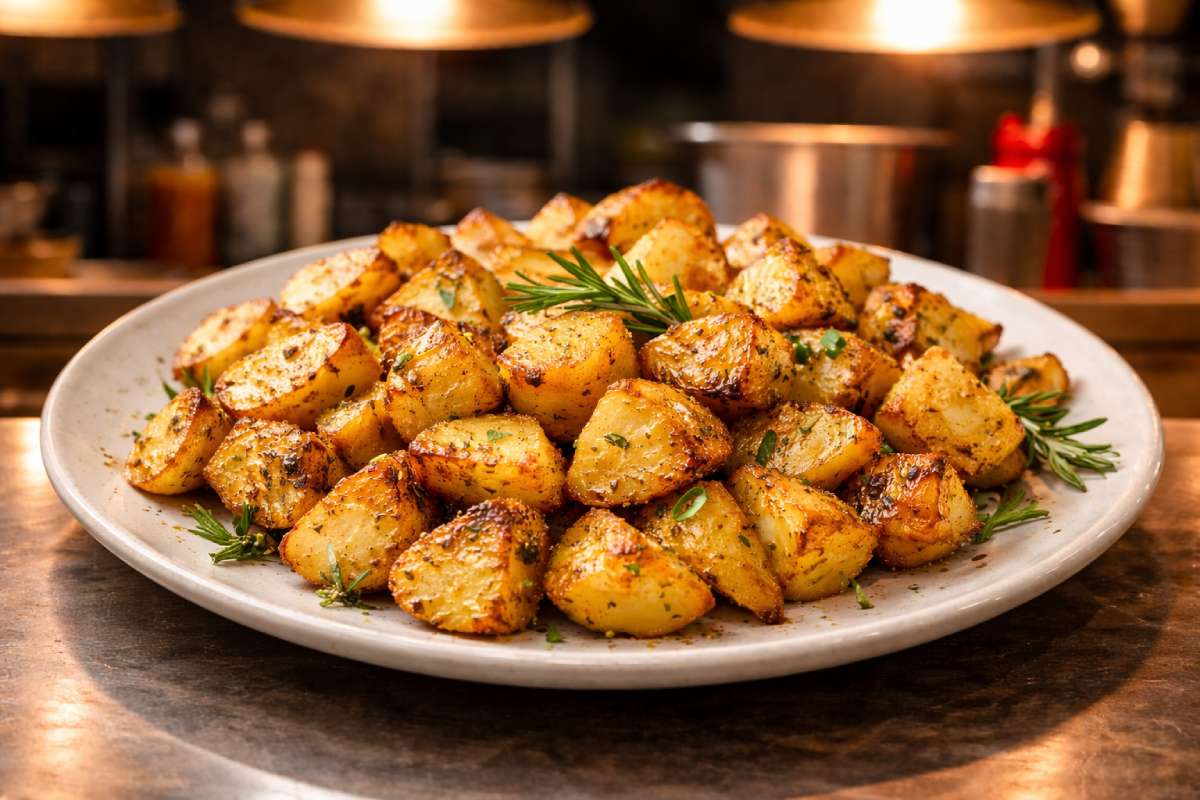
Crispy roasted potatoes with herbs, kept warm on the pub kitchen pass.
Roasted potatoes are an oven dish first and foremost. Even when you parboil them, they are still designed for the oven: coated in fat, spaced out, and roasted until the outside goes crisp. They are easier to cook in volume and easier to time alongside a main dish.
Typical ingredients and additions
The simplest version is just:
- Potatoes (usually chunks, wedges, or rough-edged pieces)
- Oil or roasting fat
- Salt and pepper
Many versions add:
- Garlic (fresh or granules)
- Rosemary or thyme
- Beef dripping / goose fat for a richer roast flavour
Texture and flavour
Roasted potatoes aim for:
- A crunchy shell (often all over the potato)
- A fluffy interior that steams inside the crust
- A cleaner roast taste that works well with herbs and gravy
They can be extremely crisp, but the flavour is typically less smoky and less “pan-caramelised” than Bratkartoffeln.
When roasted potatoes are the better choice
Choose roasted potatoes when you want:
- A hands-off side dish (the oven does the work)
- A side that scales easily for family meals
- A classic pairing for roast chicken, beef, lamb, and gravy
- A neutral, flexible potato side that works with many cuisines
They are ideal when the main event is a roast, or when you want a side that does not need constant attention.
In short
- Bratkartoffeln are heartier, more rustic, and often smoky from bacon, with deeper pan-browned flavour.
- Roasted potatoes are lighter in character, crisp all over, and shine with herbs and roast fats.
Both are excellent – but if you are cooking German sausages, Bratkartoffeln are the traditional side that feels like it was made for the job.
Classic Bratkartoffeln Recipe
Ingredients
Method
- Boil the potatoes in salted water until just tender (about 15 minutes). Drain and cool completely — best if left overnight in the fridge.
- Slice the cold potatoes into 0.5 cm slices.
- Heat butter or bacon fat in a heavy frying pan (cast iron works best).
- Add the potato slices in a single layer. Let them fry undisturbed for a few minutes before turning.
- Once golden, add onions and bacon. Continue frying until everything is crisp and aromatic.
- Season with salt, pepper, and fresh herbs before serving.
- Serve hot with bratwurst, frankfurters, or a fried egg — and you’ll have one of Germany’s most comforting meals.
Bratkartoffeln UK: Why It’s Becoming a Favourite
Across the UK, Bratkartoffeln are finding new fans — especially among those who’ve visited Germany or discovered authentic German food through events like Oktoberfest.
British diners love the balance of crispness, smokiness, and richness that Bratkartoffeln bring to a plate. They’re perfect for BBQs, pub menus, or weekend dinners, and they pair beautifully with:
- Smoked Pork Frankfurters
- Chilli Bacon Frankfurters
- Emmental Cheese Frankfurters
- Jumbo Hotdogs
- Traditional Bratwurst
It’s no surprise that caterers and food trucks are adding Bratkartoffeln UK-style to their offerings — often served in paper trays with a sausage and mustard.
Kartoffelpuffer & Bratkartoffeln – The Potato Duo of Germany
While Bratkartoffeln are Germany’s answer to pan-fried potatoes, Kartoffelpuffer (potato pancakes) show another side of German potato creativity.
Both dishes celebrate the humble spud, but they’re quite different:
- Kartoffelpuffer are grated potatoes mixed with egg and flour, then fried into golden pancakes — often served with apple sauce or sour cream.
- Bratkartoffeln are sliced and sautéed, usually with savoury accompaniments like bacon and onions.
Together, Kartoffelpuffer & Bratkartoffeln represent the two faces of German comfort food — one sweet, one savoury — both deeply rooted in tradition.
Serving Bratkartoffeln with German Sausages
The real magic happens when you pair Bratkartoffeln with authentic German sausages. The combination is iconic:
- The potatoes absorb the smoky drippings from grilled sausages.
- The bacon and onion base mirrors the savoury profile of bratwurst and krakauer.
- The soft interior of the potatoes balances the crisp sausage skin.
Here are some classic German pairings you can recreate at home or on your menu:
| Sausage | Perfect Match | Description |
|---|---|---|
| Bratwurst | Bratkartoffeln & Sauerkraut | The ultimate German trio. |
| Frankfurter | Bratkartoffeln & Mustard | Smoky, simple, and satisfying. |
| Krakauer | Bratkartoffeln & Pickles | Spicy, smoky, and hearty. |
| Cheese Frankfurter | Bratkartoffeln & Salad | Creamy, balanced meal. |
To add even more flavour, try the Berlin Currywurst.
For the best results, use The Sausage Haüs range of premium sausages — authentic recipes crafted in partnership with Hardy Remagen, who’ve perfected German sausage making since 1718.
Tips for the Perfect Bratkartoffeln
- Use waxy potatoes – they hold shape and crisp up beautifully.
- Cook your potatoes a day ahead – cold potatoes brown better.
- Don’t stir too much – let the surface caramelise.
- Use enough fat – butter or bacon fat gives that authentic taste.
- Add onions and bacon later – to prevent burning.
These small details make the difference between simple fried potatoes and true German Bratkartoffeln.
Why Bratkartoffeln Deserve a Place on UK Menus
As British food culture becomes more international, traditional German dishes like Bratkartoffeln are gaining recognition. They tick all the boxes:
- Comforting and familiar (everyone loves potatoes)
- Authentic and cultural (a taste of Germany)
- Flexible (works with sausages, schnitzel, or eggs)
- Efficient for catering (easy to prep in advance)
For pubs, caterers, and food trucks, offering Bratkartoffeln UK-style alongside German sausages can elevate a menu instantly — a simple side that feels premium and authentic.
Frequently Asked Questions About Bratkartoffeln
They’re common in both, though the dish originated in northern Germany and later spread across central Europe.
Absolutely! Use UK waxy potatoes and follow the traditional German method. It’s easy to prepare and pairs perfectly with German sausages.
It’s possible, but boiled and cooled potatoes give a better texture. Raw slices often break or stick to the pan.
Yes — skip the bacon and add mushrooms or peppers instead.
With sausages, sauerkraut, or fried eggs — often accompanied by a cold beer.
Kartoffelpuffer are grated potato pancakes, while Bratkartoffeln are sliced and fried potatoes. Both are beloved German dishes.
It means “fried potatoes.” In German cuisine, it refers to sliced, pan-fried potatoes cooked with onions and bacon.
Bratwurst, krakauer, and cheese frankfurters are ideal. Their smoky and rich flavours complement the savoury potatoes perfectly.
Butter or bacon fat provides authentic flavour, though sunflower or rapeseed oil works well too.
Roasted potatoes are oven-baked, while Bratkartoffeln are pan-fried. The German version has a smokier, more savoury taste.
Conclusion: Bratkartoffeln — The German Secret Behind Every Great Sausage
While roasted potatoes will always have a place in British hearts, Bratkartoffeln bring something extra — depth, texture, and tradition. They’re more than just a side dish; they’re a part of Germany’s culinary soul.
At The Sausage Haüs, we believe that authentic German food is about balance — smoky sausages, tangy sauerkraut, and golden Bratkartoffeln coming together in harmony.
So next time you crave roasted potatoes, try the German way.
Make Bratkartoffeln, serve them with our premium Bratwurst or Frankfurters, and experience what real comfort food tastes like.
About The Sausage Haüs
The Sausage Haüs is all about proper German flavour, made practical for modern kitchens in the UK. We focus on authentic sausage styles and the classic ways people actually eat them – from bratwurst and hotdogs to the sides that make the plate complete.
Our recipes are built to be reliable, repeatable, and realistic: clear methods, sensible ingredients, and results that feel like German street food and pub food at its best. If you are learning the difference between Bratkartoffeln and roasted potatoes, you are already thinking like a great cook – the details matter, and the right side dish can completely change the meal.
Explore more recipes and serving ideas across the site, and use The Sausage Haüs as your guide for German comfort food done properly.