Put a familiar British banger beside a 25cm German bratwurst and somebody will make a joke. Bring out a 30cm version and somebody else will ask whether you have planning permission.
We are, of course, talking about sausages.
For a caterer, pub or street food trader, jumbo German sausages offer more than material for the chalkboard. A substantial bratwurst or frankfurter can become the centre of a meal, make a simple roll look generous and give customers something visibly different from the usual hot dog.
But extra centimetres do not pay the pitch fee on their own. The useful question is how that bigger sausage fits your portion, price and service setup. Let us get the tape measure out.
How big is a British banger beside a German sausage?
There is no official size for a British banger. A chipolata, a breakfast sausage and a butcher’s hefty Cumberland link are different propositions before Germany even enters the conversation.
For a familiar reference point, Tesco’s eight-pack of British pork sausages weighs 454g1. Divide that by eight and each sausage averages approximately 57g as sold. That gives us a useful comparison, rather than a claim about every sausage in Britain.
| Sausage format | Weight per sausage | What the comparison shows |
|---|---|---|
| British pork sausage from the example eight-pack | Approximately 57g | A familiar individual banger portion |
| Jumbo German sausage | 150g | Approximately 2.6 times the example’s weight |
| Larger German sausage | 200g | Approximately 3.5 times the example’s weight |
Those are supplied weights, not a prediction of cooked yield. A raw British sausage and a pre-cooked German sausage do not necessarily lose the same weight during preparation.
Large German catering formats can measure around 25cm at 150g or around 30cm at 200g, depending on the product. Weight and length are separate specifications: a longer sausage is not automatically a heavier one.
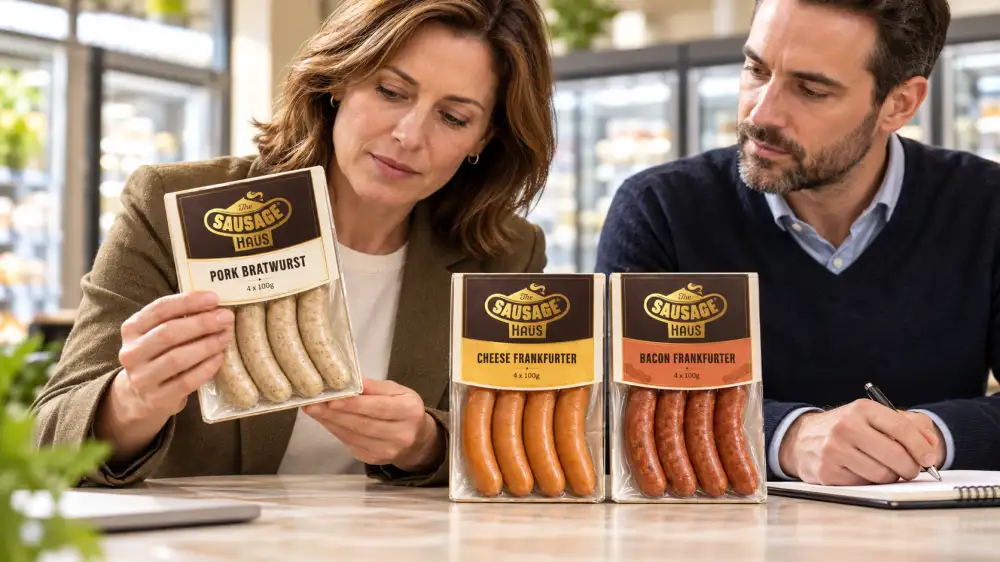
The Sausage Haus lists 100g and 150g pork bratwurst options. Treat the larger 200g example as a wider market comparison, and confirm current availability and dimensions before designing a menu around it.
Even with those qualifications, the difference is substantial. One jumbo can occupy the place on the plate usually taken by several smaller bangers.
Length gets the laugh. Flavour gets the repeat order.
A big sausage can attract attention at the counter. Once the customer takes a bite, its measurements become rather less interesting.
For a jumbo bratwurst, assess the seasoning, texture, juiciness and casing after preparation in your own kitchen. For a frankfurter, consider how its flavour works with the bread and toppings. A sausage should still taste of something when surrounded by onions, mustard and a roll.
Nor should the British comparison become an excuse to dismiss a good banger. A well-made British sausage can be excellent. The useful distinction is the eating experience and portion format, rather than a claim that one nationality has cornered the market in quality.
Germany itself provides the obvious exception to our headline. Nuremberg’s tourism office describes traditional Nuremberg bratwurst as just 7–9cm long and 20–25g in weight2. Apparently, not every German sausage received the memo.
That variety is useful commercially. Small sausages suit different dishes from a substantial bratwurst served as the main attraction. Buying German does not oblige you to buy the longest thing in the catalogue.
Taste samples with restrained toppings first, then as the finished dish. Finally, assess a sample after the holding period you actually expect during service. A first bite straight from the grill tells only part of the story.
The product that earns another order is the one customers enjoy finishing.
Your sausage needs a bun, not a sleeping bag
A little sausage overhang can look generous. A long roll with a small sausage hiding somewhere in the middle looks like a bread purchase with an optional meat attachment.
The reverse creates problems too. Put a substantial sausage into a flimsy, undersized bun, add wet onions and squeeze on two sauces, and the customer may need a plate before reaching the mustard.
Choose the bread alongside the sausage. Consider its length, width, softness and ability to hold together once filled. A 25cm sausage does not automatically need a 25cm roll, but the exposed ends should look deliberate and remain practical to eat.
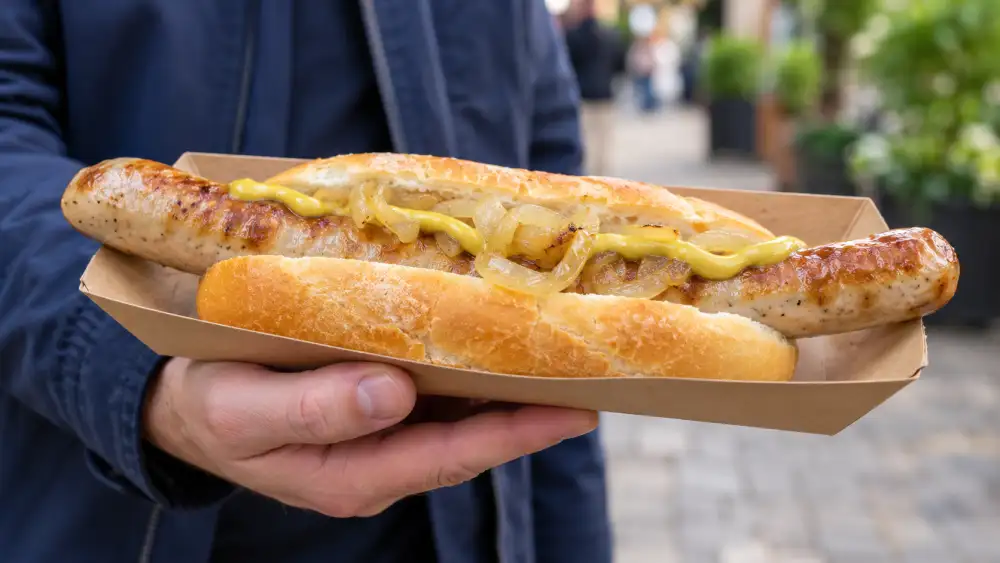
Test the complete serving while standing up. Hold a drink in the other hand if that reflects your customers’ situation. You learn more from that exercise than from an immaculate photograph taken before anyone picks the food up.
Packaging deserves the same attention. A tray should support the product without leaving the ends vulnerable, and a sleeve should allow a comfortable grip. Check the actual internal dimensions before buying a case.
Keep toppings controlled and well distributed. A measured line of mustard, a modest portion of onions and one contrasting texture can make a satisfying serving without burying the sausage.
Your customer should remember the size of lunch, rather than the size of the stain it left.
Does a bigger sausage mean a better margin?
Bigger can support a higher selling price, but the calculation must include more than the sausage. Bread, toppings, packaging and unsold prepared food all affect what the serving earns.
Consider this deliberately simple example. These are invented planning figures, not supplier prices or recommended menu prices. All figures exclude VAT.
| Per serving | Smaller sausage roll | Jumbo German sausage roll |
|---|---|---|
| Selling price | £5.00 | £7.00 |
| Sausage cost | £0.55 | £1.35 |
| Bread, toppings and packaging | £0.75 | £0.95 |
| Total listed serving cost | £1.30 | £2.30 |
| Amount left before other costs | £3.70 | £4.70 |
In this example, the jumbo leaves an extra £1 per sale before labour, energy, fees and other operating costs. Its listed serving cost is also a higher percentage of selling price. The larger portion earns more pounds per serving, despite the lower percentage margin on those listed costs.
Sales volume can change the result. Selling 100 smaller servings would leave £370 on this basis; selling only 75 jumbo servings would leave £352.50. A higher price is useful only when enough customers accept it.
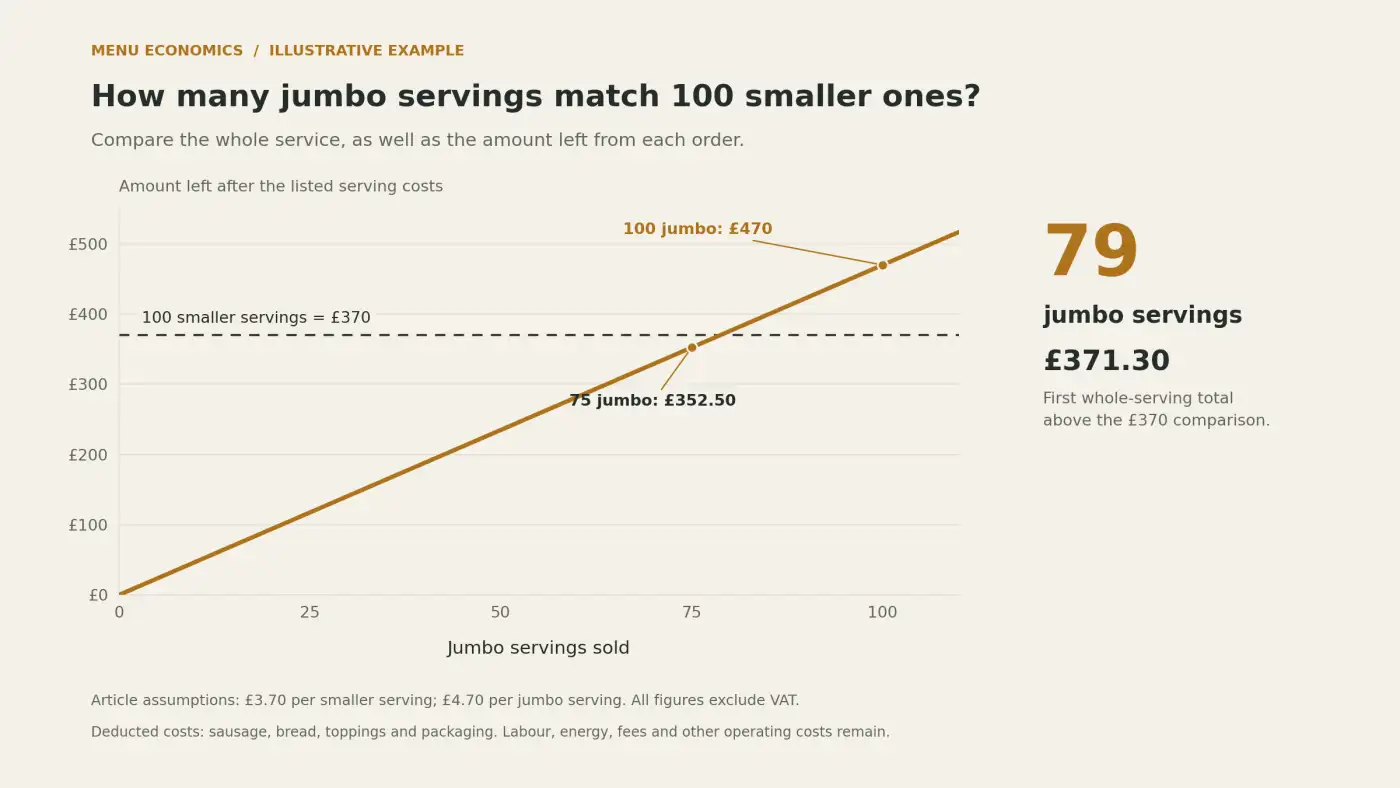
Compare the contribution across a realistic service period, using your own costs and likely demand. Include any extra assembly time or waste.
An impressive sausage is welcome. An impressive sausage that earns its place is considerably more welcome.
Give the extra inches a proper job on the menu
A large sausage needs a clear role in the dish. Start with a few formats your team can execute well, rather than offering every topping in the fridge.
The straightforward jumbo bratwurst roll
Serve a 150g bratwurst with a suitable roll, mustard and onions. Add sauerkraut if it suits your customers, with a defined portion so the bread remains manageable.
This is a useful starting point for markets, garden centre events and beer gardens: a recognisable meal with the sausage doing most of the work.
The frankfurter with one clear flavour direction
Pair a cheese frankfurter with pickled cucumber and mustard, or a chilli beef frankfurter with slaw and a restrained sauce. Choose toppings that complement the selected product rather than making every version taste identical.
Keep the sausage visible. If its size and character are part of the offer, there is little sense hiding it under a duvet of grated cheese.
The currywurst tray
A sliced sausage with curry sauce and chips offers a practical alternative to bread. VisitBerlin’s guide to currywurst describes the city’s familiar sausage, curry-flavoured sauce and chips combination3.
For an operator, the tray removes the need to source an unusually long bun, although slicing adds a preparation step. Serve sauce consistently and give customers a suitable fork.
The pub plate or seasonal special
Try bratwurst with mash, braised cabbage and onion gravy in colder months. For summer, consider potato salad, cucumber and mustard dressing instead of automatically adding chips.
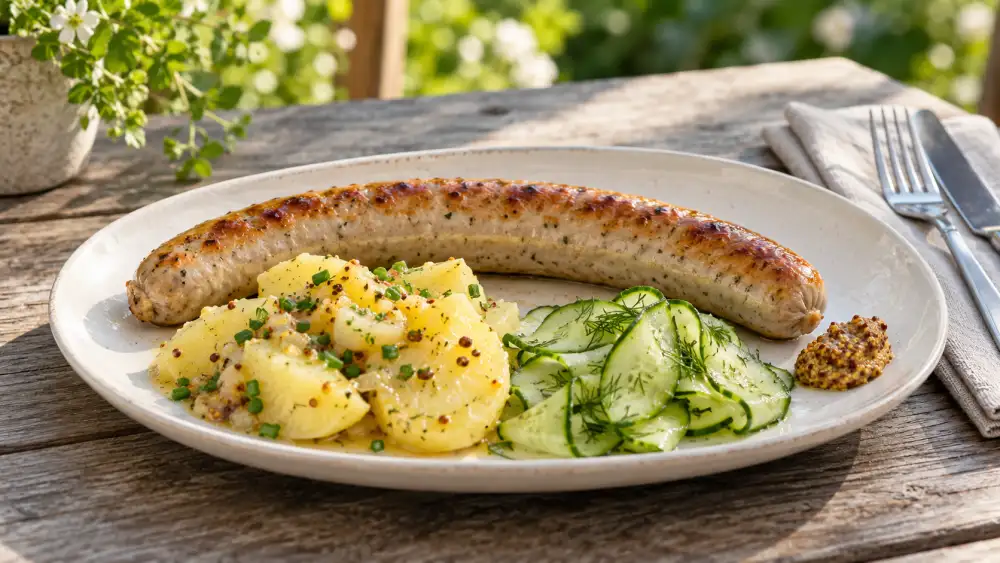
Those accompaniments can make the meal feel fresher and less heavy, without pretending that a jumbo sausage is a small lunch.
Can your service line handle the extra length?
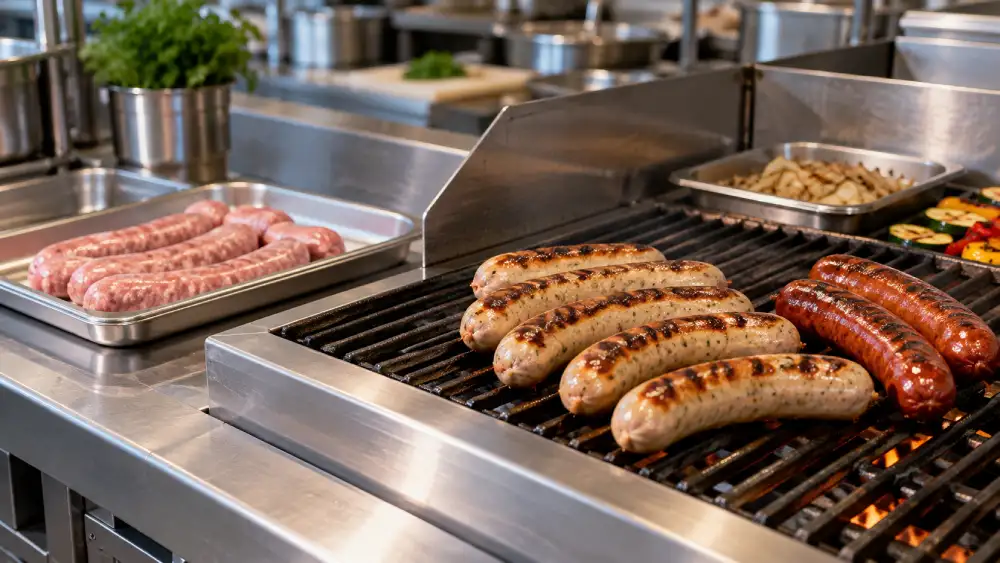
Before ordering a larger format, put it on the equipment you intend to use. A long sausage may fit your menu beautifully while fitting your grill rather badly.
Check usable cooking space, turning room, pan dimensions and the route from heating to assembly. Count how many portions you can prepare properly in a batch. Do not assume the same number will fit because both products are called sausages.
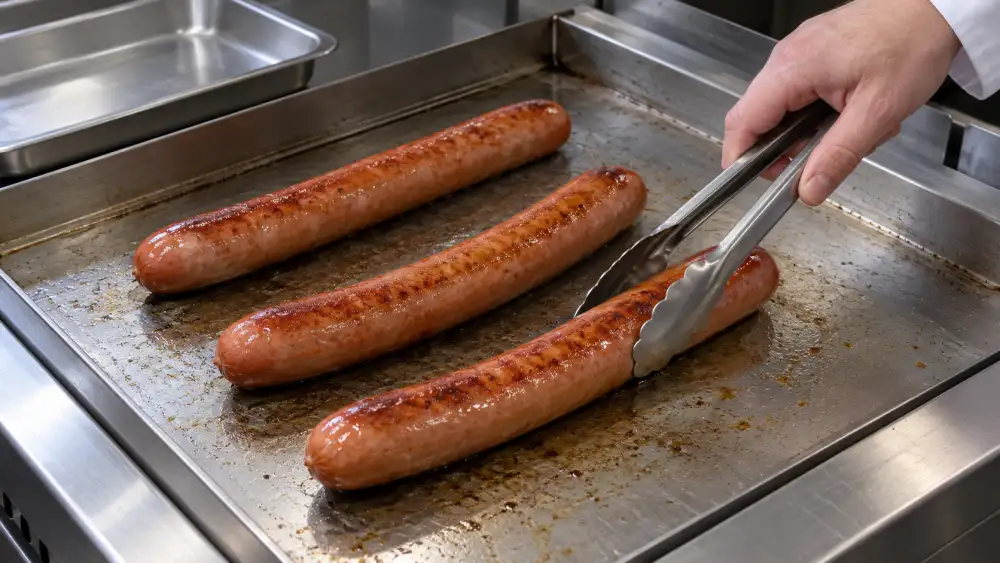
Preparation status matters as much as size. The Sausage Haus’s pork bratwurst is listed as pre-cooked, which changes the preparation task compared with a raw banger. It still needs the handling and heating process specified for that product; pre-cooked does not mean exempt from temperature control.
Follow the official guidance on cooking, reheating and keeping food hot4, alongside the product instructions and your food safety procedures. The guidance specifies hot holding at or above 63°C and reheating until steaming hot throughout.
Test the busiest part of assembly too. If one person heats sausages while another opens rolls, portions onions and takes payment, identify where orders actually accumulate. A change in bun or tray may matter more than another topping option.
Use manageable batches that match demand and preserve eating quality. Check texture during the service window, rather than judging only the first serving.
The queue can enjoy the joke on the menu board. It should not have time to develop a sequel.
When a smaller portion is the smarter choice
The 200g option may be the attention-grabber, but it does not need to be the answer to every order. Breakfast, a modest café lunch and a substantial evening meal call for different portions.
A 100g sausage may suit a smaller roll or a plate with several other components. A 150g version can be assessed as the main part of a roll or tray meal. A 200g format needs a customer and occasion willing to buy, and enjoy, the larger serving.
This also matters for farm shops and retail buyers. Compare the number of sausages in the pack, the weight per piece and the intended serving suggestion. Four large sausages and eight smaller ones need different explanations at the shelf, even if shoppers recognise both as a family purchase.
Watch what customers leave as well as what they order. WRAP’s guidance on measuring food waste in hospitality and food service5 provides a useful basis for understanding where food is being lost.
In your own trial, record unfinished portions where you can observe them, along with unsold prepared stock. A larger sausage may justify reducing the bread or side portion, rather than enlarging every part of the meal.
You can retain the headline jumbo serving while offering a smaller format elsewhere on the menu. Size can be the talking point without becoming a compulsory endurance event.
Try the sausage before you print the boast
Ask for the specifications that affect the finished serving: unit weight, approximate length and diameter, pack count, preparation status, storage requirements and instructions after opening or defrosting.
Check each product separately. Bratwurst, cheese frankfurter and beef frankfurter are not interchangeable descriptions, and neither are their ingredients. Confirm any origin, casing or dietary claims before putting them on the menu.
Build the allergen record around the whole serving, including bread, sauces and toppings. The Food Standards Agency’s guidance for food businesses explains how allergen information should be provided and managed6. Changing the roll or adding a cheese topping can change the information your staff need.
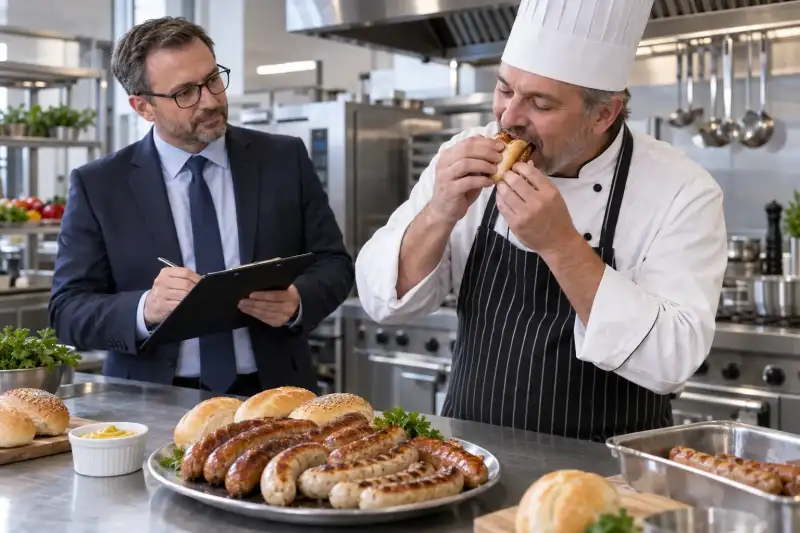
Then run a short trial with one core serving and one variation. Record the actual ingredient cost, assembly time, selling price, units sold and waste. Ask customers whether the portion felt right, rather than simply whether it looked big.
Write the menu description from the product you tested. “150g German bratwurst with mustard and onions” gives customers a concrete proposition. “Jumbo” alone leaves rather more to the imagination.
Use your own serving for the menu photograph, complete with the bread and packaging customers will receive. The cheeky headline can attract attention, while the description makes the purchase clear.
And if you promise 30cm, check the specification. It would be an unfortunate moment to discover that the marketing department has been exaggerating.
Frequently Asked Questions
No. “Jumbo” and “XXL” describe a supplier’s size category, while “footlong” refers to length. They do not tell you the weight, thickness or number of sausages in a pack.
Compare the actual specifications before comparing prices. Two products described as jumbo may deliver noticeably different portions.
No. The stated sausage weight includes the complete product, including its other ingredients and casing. Meat content is a separate specification.
For buying decisions, consider portion weight and recipe together. A heavier sausage provides a larger portion, but its weight alone tells you little about meat content, seasoning or eating quality.
Convert both quotes to a cost per usable serving. For example, at an illustrative £8 per kilogram, a 150g sausage costs £1.20 and a 200g sausage costs £1.60.
Then check delivery charges, minimum orders and the number of pieces supplied. If products have different preparation losses, compare the finished servings too. The cheapest kilogram does not necessarily produce the cheapest equivalent meal.
Use the product’s identity alongside a description customers immediately understand. “Jumbo German bratwurst in a roll with mustard and onions” explains both the sausage and the serving.
“Hot dog” can help describe the meal format, but it should not replace useful product information. Keep the wording clear enough that staff can explain the difference between your bratwurst and frankfurter options.
Yes. A straightforward mustard-and-onion serving and a more elaborate signature build can share the same sausage, reducing the number of products you need to stock.
Make the upgrade clear through named toppings or an included side. Cost the additional ingredients and assembly time separately. A premium version needs an identifiable benefit beyond a more ambitious name.
There is no need to replace a successful dish. British bangers and mash and a German bratwurst roll can serve different occasions on the same menu.
Start with a German sausage special and assess whether it attracts additional orders or mainly replaces an existing favourite. Keep both where each earns its place and the extra stock remains manageable.
It can, but test it after the journey your customers will actually make. A serving that holds together at the counter may arrive with softened bread, displaced toppings or sauce leaking into the packaging.
Try sauces separately where useful, check that the container supports the whole serving and assess the meal after a realistic delivery interval. Packaging cost belongs in the calculation from the start.
sk the organiser before committing to stock or equipment. An event may treat bratwurst and hot dogs as the same trading category, even when the products and presentation differ.
Provide your proposed menu and ask whether any category restrictions or exclusivity arrangements apply. Get the agreed scope in writing, including whether sausage-and-chips trays or other variations are covered.
Conclusion
Yes, size matters. A substantial German bratwurst or frankfurter can give a simple sausage serving more presence, make the portion clear to customers and create room for a different menu price. It also provides a perfectly respectable excuse for a slightly disreputable chalkboard joke.
The commercial result depends on the complete serving. Choose bread that fits, keep toppings purposeful and check that your equipment can prepare the product consistently. Compare what each sale leaves after its direct costs, then look at sales volume and service speed before deciding that bigger is better for your business.
There is no need to turn the entire menu into a competition. A 150g jumbo may be the right main attraction, while smaller formats serve breakfast or lighter lunch occasions more comfortably. The larger 200g option is worth considering where the appetite, price and practical setup support it.
Start with a sample, build the actual dish and test it through a real service. That gives you something more useful than an impressive measurement: evidence that customers want the portion and your team can serve it well.
To explore a suitable starting point, ask The Sausage Haus about its current bratwurst and frankfurter formats. Bring your menu idea. We can keep the tape measure professional.
The Sausage Haüs
The Sausage Haus brings authentic German-style sausages to the UK market through a partnership between Hardy Remagen and Baird Foods.
Hardy Remagen is a long-established German producer with deep experience in traditional sausage making, continental meat products and modern food manufacturing. The range reflects the kind of products German shoppers already understand and enjoy: Bratwurst, Frankfurters, smoked hotdogs, cheese-filled sausages, Bockwurst, Weisswurst and other classic German-style lines.
In the UK, the range is represented and distributed by Baird Foods, giving retailers, wholesalers, caterers and foodservice operators access to German sausage products with a practical UK supply route. This combination is important: German manufacturing knowledge on one side, UK market understanding and distribution on the other.
For retail buyers, The Sausage Haus range offers a clear way to add something different to both chilled and frozen sausage fixtures. The products are built around real eating occasions: BBQs, premium hotdog nights, family meals, German street food, Oktoberfest promotions, Christmas market food and quick comfort meals at home.
The result is a range that gives shoppers something more distinctive than ordinary sausages and standard hotdogs, while giving buyers a compact, commercially useful product story with strong fresh and frozen potential.
References
Tesco’s eight-pack of British pork sausages weighs 454g.
Congress- und Tourismus-Zentrale Nürnberg. Nuremberg Bratwurst Museum.
UK Government. Food hygiene for businesses. GOV.UK. Updated June 25, 2026.
WRAP - The Waste and Resources Action Programme. Hospitality and Food Service Sector.
UK Government. food businesses. GOV.UK. Updated July 17, 2026.