The Sausage Haus is developing two curry-led additions for operators who want a more distinctive currywurst offer: a Curry Pork Bratwurst and a Curry Frankfurter. Both are designed to bring curry flavour into the sausage itself, so the finished dish feels more complete, more memorable, and less dependent on sauce alone.
The Currywurst Idea in Brief

Curry in the sausage

Choose the right format

Simple service, stronger menu
Overview
The Sausage Haus is developing two curry-led sausage options for operators building currywurst menus: a Curry Pork Bratwurst and a Curry Frankfurter.
The idea is to put curry flavour into the sausage itself, rather than relying only on sauce and curry powder. This can make the finished dish feel more complete while keeping service simple.
The bratwurst is positioned for a heartier, grilled German-style offer, while the frankfurter is aimed at faster, neater service in rolls, kiosks, cafés, events and high-volume counters.
Key Takeaways
- Use the Curry Pork Bratwurst where a more rustic, grilled and substantial sausage is part of the appeal.
- Choose the Curry Frankfurter when speed, consistency and cleaner hot dog-style service matter most.
- Building curry flavour into the sausage can reduce reliance on heavy saucing and make the dish easier to explain.
- Currywurst can work in trays, rolls, sausage-and-chips plates and controlled loaded specials.
- The format suits busy service because the basic build is repeatable: sausage, sauce, curry seasoning and chips or bread.
- The menu opportunity is controlled difference: a distinctive hot food offer without adding unnecessary complexity.
Why Curry Belongs in the Sausage, Not Just the Sauce
A good currywurst is not only about the sauce. The sauce matters, of course, but if the sausage underneath is bland, thin or too generic, the whole dish starts to feel like curry ketchup doing all the heavy lifting.
This Berlin tourism page highlights currywurst as a local specialty, which is useful for understanding the dish’s cultural roots and menu appeal.
That is why a curry-led sausage makes sense. When curry flavour is built into the sausage itself, the dish becomes more joined-up. The customer gets curry warmth from the first bite, not just from the sauce on top. It gives the bratwurst or frankfurter more character and helps the finished plate feel more deliberate.
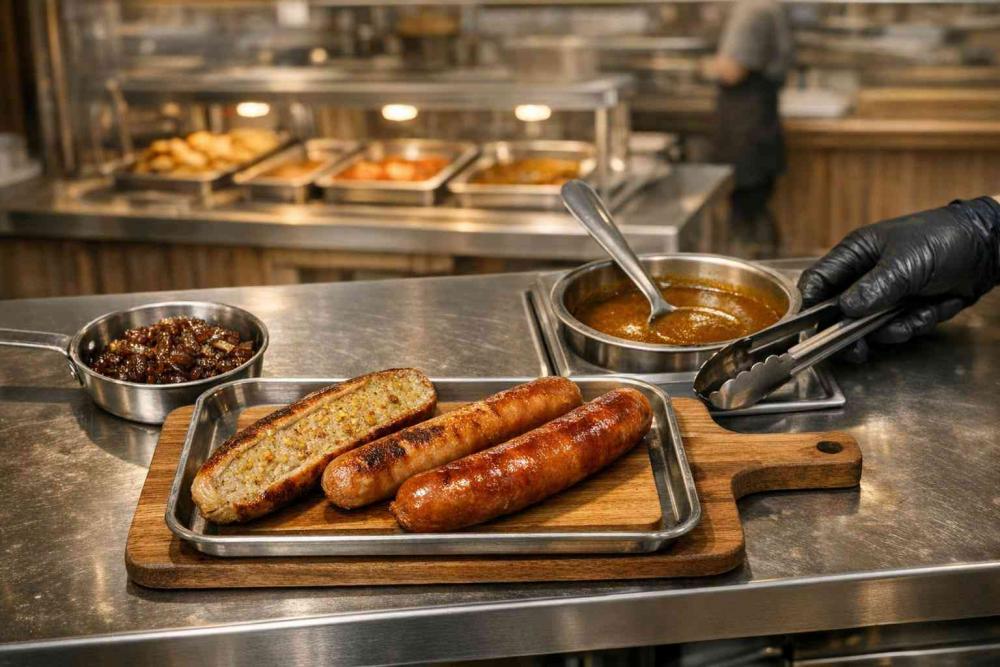
For operators, this can be useful in two ways. First, it makes the product easier to explain: this is not just a normal sausage with curry sauce; it is a curry sausage designed for currywurst. Second, it gives the dish more flavour security. Even if the sauce level varies slightly during a busy service, the sausage still carries part of the profile.
That does not mean the sauce becomes less important. A good currywurst still needs the right sauce, curry powder and serving format. But the sausage should be part of the flavour structure, not just a neutral base.
For menus where currywurst is meant to stand out, adding curry into the sausage is a sensible step. It gives the dish more depth without making service more complicated.
Curry Pork Bratwurst or Curry Frankfurter: Which Fits Your Menu Better?

The Curry Pork Bratwurst and Curry Frankfurter should not be seen as two versions of exactly the same idea. They are likely to suit different types of menu, service style and customer expectation.
The Curry Pork Bratwurst is the stronger fit where the dish needs a more traditional German sausage feel. It suits operators who want grill appeal, a more substantial bite and a product that feels close to classic bratwurst service. For pubs, event caterers, farm shops, garden centres and street food traders, this can work well as a currywurst plate, a sausage-and-chips
The Curry Frankfurter is likely to suit faster and cleaner service. Frankfurters work well where speed, consistency and easy handling matter, especially in hot dog-style formats or high-volume trading. For cafés, kiosks, sports venues, festivals and quick-service counters, the frankfurter can offer a smoother route into currywurst without changing the whole operation.
In practical terms, the choice comes down to positioning:
- Use the Curry Pork Bratwurst when the sausage itself should feel more rustic, grilled and substantial.
- Use the Curry Frankfurter when the priority is speed, neat service and hot dog-style consistency.
Both can work. The better choice depends on what your customer is expecting and how your counter actually runs.
What Makes a Good Sausage for Currywurst?
A good currywurst sausage has to do more than sit under sauce. It needs enough flavour, texture and structure to remain noticeable once it is sliced, sauced and dusted with curry powder.
The first requirement is balance. Currywurst already brings sweetness, acidity, spice and warmth through the sauce and seasoning. If the sausage is too weak, it disappears. If it is too aggressively seasoned, the whole dish can become heavy or confused. The best result is a sausage with savoury depth and enough curry character to support the dish without fighting the sauce.
Texture also matters. Currywurst is often eaten quickly, standing up, from a tray, at an event, market, kiosk or casual food counter. The sausage should cut cleanly, hold its shape and give a satisfying bite. A product that splits badly, dries out or becomes soft under sauce will reduce the perceived quality of the whole meal.
There is also the visual side. Currywurst is not a delicate dish, but it still needs to look appetising. Sliced sausage, rich sauce, curry dusting and chips can be a strong, simple plate when the sausage looks properly cooked and substantial.
For operators, the best currywurst sausage is one that gives reliable results under real service pressure. It should taste good, handle well, photograph well enough for menus and social media, and still feel worth paying for.
How Curry Sausages Can Help Operators Build a More Distinctive Menu
Currywurst is already familiar enough to be understandable, but still different enough to feel interesting on a UK menu. That is a useful position. Customers do not need a long explanation, but the dish still feels more distinctive than another standard hot dog, sausage bap or loaded fries option.
This cultural overview from Goethe-Institut explains the background and broad appeal of currywurst, which helps show why it can feel distinctive yet accessible on a UK menu.
A curry sausage strengthens that position. It gives operators a clearer menu story: curry flavour is not just added on top; it is part of the sausage. That makes the dish feel more intentional and easier to sell as a house special, German street food option, festival portion or seasonal menu feature.
It can also help with menu simplicity. Rather than adding more toppings, more sauces and more complicated builds, the product itself does more work. A Curry Pork Bratwurst with chips and curry sauce can be a complete offer. A Curry Frankfurter in a roll with curry sauce and crisp onions can be quick, neat and easy to serve. The flavour point is already built in.
For pubs and cafés, this can create a warmer lunch or casual dining option without needing a large German menu. For event traders and showmen, it gives a clear alternative to standard sausage-and-chips. For garden centres and farm shops, it can add a more interesting hot food special while still staying accessible.
The commercial advantage is not complexity. It is controlled difference. A curry sausage gives the menu a stronger hook while keeping the operation simple enough to work during busy service.
Serving Ideas for Currywurst, Chips, Rolls and Loaded Specials
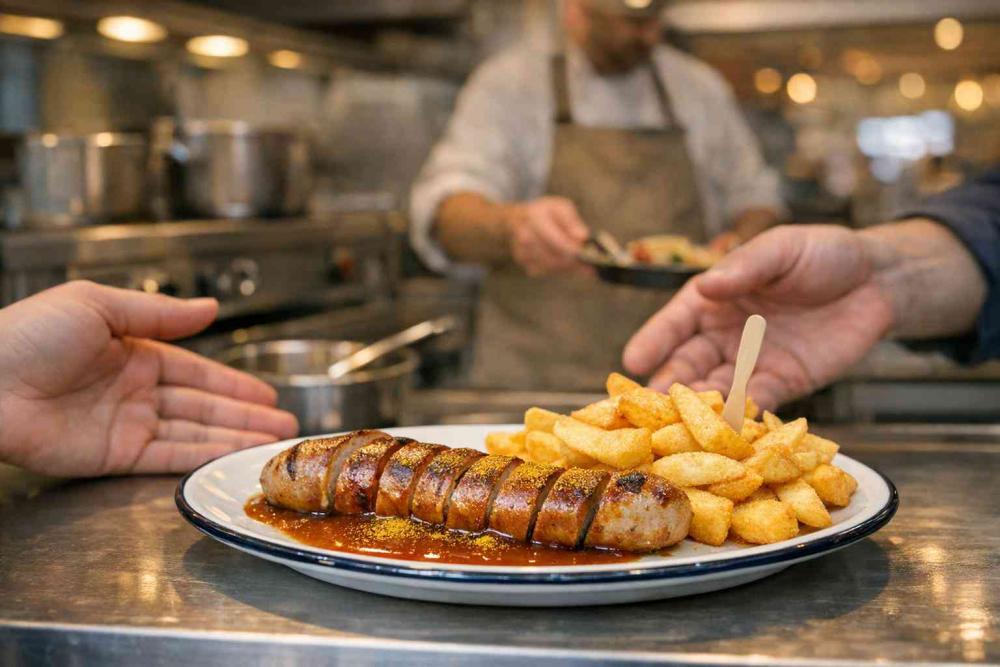
Currywurst is flexible because it can sit in several menu formats without losing its identity. The classic version is still the easiest to understand: sliced sausage, curry sauce, curry powder and chips. It is quick to serve, familiar enough for most customers, and strong enough to feel like a proper hot food offer rather than a side dish.
This tourism page highlights a classic Düsseldorf currywurst serving style that is useful for comparing sauce, slicing, and chip presentation on the plate.
The Curry Pork Bratwurst would suit this format particularly well. It gives the dish a more substantial German sausage feel, especially when grilled and sliced before saucing. Served with chips, a wooden fork and a good portion of sauce, it becomes a simple but satisfying street food plate.
The Curry Frankfurter opens up slightly different options. It can work well in a roll, especially for operators who want a cleaner hand-held format. A curry frankfurter in a quality roll with curry sauce, crispy onions and a light curry dusting could be a strong alternative to a standard hot dog.
There is also room for loaded specials, provided they stay controlled. Currywurst chips with sliced sausage, sauce, onions and perhaps a small amount of cheese can work well, but the build should not become too heavy or messy. The best currywurst specials are generous without becoming chaotic.
For UK operators, the key is to choose a format that matches the trading environment. A tray works well for sit-down, markets and festivals. A roll works better for fast movement. Loaded chips can work as a higher-value special when the service setup can handle it.
Why Currywurst Works Well for Fast, High-Volume Service
Currywurst is well suited to busy service because the basic build is simple. The sausage can be cooked, held appropriately, sliced to order or in controlled batches, then finished with sauce and seasoning. There are not many customer decisions, and that matters when a queue starts building.
Compared with more complicated loaded hot dogs or build-your-own menus, currywurst keeps the line moving. The customer understands the offer quickly. Staff do not need to manage too many toppings. The serving method can be repeated consistently by different team members.
That is commercially useful for event traders, showmen, food courts and busy lunch counters. A simple currywurst setup can be built around a few repeatable actions:
- cook or hold the sausage correctly
- slice cleanly and quickly
- add sauce consistently
- finish with curry powder
- serve with chips, bread or a roll
The operation still needs proper planning. Sauce temperature, portion control, slicing setup, chip flow, allergen information and service space all matter. But the dish itself is naturally suited to speed because it does not require much assembly.
A curry-flavoured sausage can make that even more reliable. If part of the flavour is already inside the product, the finished dish is less dependent on heavy saucing or extra toppings. That can help keep service cleaner, reduce variation between portions and make the menu easier to execute under pressure.
Menu Positioning: Street Food, Pubs, Cafés and Event Catering
Currywurst can be positioned in different ways depending on the venue. It does not need to be treated as a niche German dish that only works on a themed menu. In the right format, it can sit comfortably as street food, a lunch special, a hot counter item or a simple event catering offer.
This Berlin tourism feature highlights currywurst’s place in the city’s food culture, which helps explain why it works as more than a niche German dish on a menu.
For street food traders and festival operators, the appeal is speed and visibility. Sliced sausage, sauce and chips look generous, smell good and are easy to explain from a board. A Curry Pork Bratwurst can give the offer a more authentic, grilled sausage feel, while the Curry Frankfurter can support faster hot dog-style service.
For pubs, currywurst can work as a casual food special. It can sit alongside chips, loaded fries, bar snacks or German beer-style promotions without requiring a full menu change. It gives the kitchen a dish that feels different but does not need complex plating.
For cafés and garden centres, the Curry Frankfurter may be especially useful. It can be served in a roll or as a neat lunch plate, offering something warmer and more distinctive than a standard sausage roll or panini-style option.
Event caterers need a product that works under pressure. Currywurst can fit because it is simple, portionable and easy to scale if the cooking, holding and service flow are properly planned.
The main positioning advantage is accessibility. Currywurst sounds interesting, but not difficult. That is a good balance for UK customers.
Coming Soon from The Sausage Haus
The Curry Pork Bratwurst and Curry Frankfurter are being developed as two practical additions for operators who want to build a stronger currywurst offer. The idea is not to make currywurst more complicated. It is to make the sausage itself do more of the work.
The Curry Pork Bratwurst is aimed at menus where a proper bratwurst feel matters. It should suit grilled service, sliced currywurst plates, sausage and chips, and more traditional German street food presentations. It gives operators a product that can feel hearty, recognisable and distinctive at the same time.
The Curry Frankfurter is intended for operators who want speed, consistency and cleaner service. It should suit rolls, hot dog-style builds, cafés, kiosks, event counters and high-volume setups where a fast and tidy product makes a real difference.
Both products are about giving currywurst more flavour from the centre of the dish, not just from the sauce ladled over the top. That can help operators create a more rounded product while keeping the menu simple.
For The Sausage Haus, these additions fit naturally into a wider German sausage range built for UK foodservice. For caterers, pubs, traders and buyers, they offer a useful way to refresh a familiar idea and turn currywurst into something more deliberate, more distinctive and easier to sell.
Frequently Asked Questions
For a classic currywurst feel, sliced is usually the better choice. It lets the sauce coat the sausage properly, makes the dish easy to eat from a tray, and gives the customer the familiar currywurst look.
Whole sausage in a roll can still work, especially with the Curry Frankfurter, but that becomes more of a curry hot dog than a traditional currywurst plate. That is not a problem if the menu describes it clearly. The main point is to match the format to the service setting: sliced for trays and chips, whole for hand-held speed.
It should be noticeable, but not overpowering. Currywurst works best when the sausage, sauce and curry powder support each other rather than compete.
For UK customers, a warm, savoury curry note is usually more useful than aggressive heat. Many customers want flavour and comfort, not a chilli challenge. Operators can always add extra spice at the sauce or finishing stage, but if the sausage itself is too hot, it limits the audience and makes the product harder to use across different menu formats.
Yes. The curry flavour in the sausage should improve the dish, not replace the sauce. Currywurst still needs a good sauce because that is part of the identity of the dish.
The advantage of a curry-led sausage is that the flavour does not rely entirely on the sauce. The dish tastes more complete because the curry note runs through the sausage as well as the topping. This can be useful during busy service, where sauce portions may vary slightly from one plate to the next.
Yes, but the menu wording needs to do some of the work. “Currywurst” is known by many customers, but not everyone will immediately understand it. A short description can make a big difference.
For example, “German curry sausage with curry sauce and chips” is clear without sounding forced. For a roll format, “Curry Frankfurter with curry sauce and crispy onions” may be easier to understand than using only the word currywurst. The aim is to keep the name interesting while making the dish instantly clear.
For a first trial, choose the product that best matches the way you already serve food. If your setup is built around grilled sausages, chips and trays, the Curry Pork Bratwurst is likely to be the more natural test.
If your operation is built around rolls, hot dogs, cafés, kiosks or quick hand-held service, the Curry Frankfurter may be easier to introduce. The lower-risk approach is not always the most exciting product; it is the one your staff can serve well and your customers can understand quickly.
Start with a limited special rather than a full menu change. A weekend special, event special or “German curry sausage and chips” lunch offer gives you a clean way to measure interest.
Keep the build simple: sausage, sauce, curry powder and chips or a roll. Avoid adding too many extras at the trial stage, because it becomes harder to know what customers are actually responding to. Watch the basics: how quickly it sells, whether people understand the board, whether staff can serve it cleanly, and whether customers ask for it again.
Chips are the obvious choice because they are familiar, fast and commercially strong. They also suit the sauce, which is one reason currywurst and chips works so well as a tray meal.
Bread rolls can work better where customers are walking around or where tray service is less practical. For pubs or cafés, a small side salad, slaw or pickled garnish can lighten the plate, but it should not make the dish fussy. Currywurst is strongest when it stays direct, generous and easy to eat.
Yes, but it should be premium through product quality, portion confidence and a well-built dish, not through unnecessary complexity. Customers will not usually pay more because a menu uses fancy wording. They pay more when the food looks substantial, tastes distinctive and feels better than a standard sausage-and-chips offer.
good sausage, a proper sauce, a clean serving format and a clear menu description can make currywurst feel like a stronger dish. Premium does not have to mean complicated. In many foodservice settings, premium simply means better executed.
The practical details matter more than the idea itself. Before adding currywurst, check how it fits your cooking equipment, holding setup, chip flow, serving space and staffing.
Sauce handling is especially important. You need a safe, consistent way to heat, hold and portion the sauce during service. You should also check allergen information, local authority expectations, event rules and any site restrictions that affect cooking, heating or service. A simple dish still needs a properly planned setup.
They can, but only if the difference is clear to the customer. If the menu simply lists two curry sausages without explaining the choice, it may slow ordering down.
better approach would be to use them for different formats. The Curry Pork Bratwurst could be the sliced currywurst plate with chips, while the Curry Frankfurter could be the curry hot dog or roll option. That gives each product a clear job and avoids making the menu feel busier than it needs to be.
Conclusion
Currywurst is simple on paper, but the best versions are not just sausage, sauce and powder thrown together at the end. The sausage has to carry the dish. It needs enough bite, savoury depth and visual appeal to stand up to the sauce, the curry seasoning and the serving style.
That is the idea behind the coming Curry Pork Bratwurst and Curry Frankfurter from The Sausage Haus. Instead of treating curry as an afterthought, these products are being developed to bring curry flavour into the sausage itself. For operators, that can make the finished dish feel more rounded and easier to position as something a little different from a standard bratwurst or hot dog.
The Curry Pork Bratwurst should suit menus that want a more traditional German sausage feel, especially where a proper grilled bratwurst is part of the appeal. The Curry Frankfurter should work well where speed, consistency and cleaner handling are more important, particularly for hot dog-style service, festival menus, cafés, pubs and quick-service setups.
For UK operators looking to refresh a currywurst offer, these two sausages should give more choice without making the menu more complicated. More flavour in the sausage, fewer moving parts on the counter, and a dish that is easier to explain to customers. That is usually a good starting point.
About The Sausage Haus
The Sausage Haus supplies authentic German sausages for UK operators who want a practical, reliable and commercially useful foodservice offer. The focus is not only on good sausages, but also on how they work in real trading conditions: fast service, clear menus, simple prep, strong customer appeal and sensible product choice.
The range is produced by Remagen, a specialist German sausage producer with long experience in traditional and foodservice-ready sausage products. In the UK, The Sausage Haus range is distributed by Baird Foods, helping caterers, street food traders, pubs, cafés, farm shops, garden centres, event operators and wholesale buyers access a more distinctive German sausage offer.
For many operators, the value is in keeping the menu simple while making the product feel more premium than a generic hot dog or standard sausage bap. Bratwurst, frankfurters and currywurst-style products can work well across lunch trade, events, grab-and-go counters and casual dining, especially where speed and consistency matter as much as flavour.