Bratwurst and chips sounds simple, and that is exactly the point. For the right operator, it can become a fast, tidy, high-appeal service line that feels more distinctive than a generic sausage offer without turning the kitchen into a juggling act. This article looks at where that format works, why it sells, and what makes it practical in real UK trading conditions.
Faster Service, Better Appeal

Build For 90-Second Flow

Use Add-Ons Carefully
Introduction
There is a reason sausage and chips keeps turning up on busy menus. It is familiar, filling, easy to understand at a glance, and fast to serve when the setup is right. The trouble is that many versions feel generic, look a bit lazy, or create more mess and delay than they should. That is where bratwurst changes the equation.
A proper bratwurst and chips offer can give operators something that sits in a useful middle ground. It feels more considered than a basic catering sausage, but it is still simple enough to run at pace. For pubs, event traders, cafés, garden centres, farm shops and grab-and-go food outlets, that matters. Customers want something hot, satisfying and easy to order. Operators want something that moves quickly, holds together in service, and does not rely on too many fiddly steps.
The real opportunity is not just the product itself. It is the service line logic behind it. A 90-second service line is not about theatre for its own sake. It is about reducing queue drag, removing avoidable decisions, and building a dish that staff can execute consistently under pressure. Bratwurst and chips can do that well if the format is thought through properly.
That means portion logic, holding method, sauce choice, service sequence, packaging, and how the offer fits the site. Get those right and the dish becomes more than a fallback. It becomes a reliable, profitable menu worker
Key Takeaways
- Bratwurst and chips works best when it is built as a simple service system, not just a menu idea.
- The format suits busy lunch trade, casual evening service, events, and sites where queue speed matters.
- A tighter menu beats endless customisation if the goal is consistent 90-second service.
- One bratwurst, one chip format, and a small sauce set usually performs better than an overcomplicated offer.
- Good holding and assembly flow matter as much as product quality when service gets busy.
- Bratwurst gives the dish a more distinctive and premium feel than a generic catering sausage.
- The offer is most useful where operators want comfort-food appeal without adding a labour-heavy dish.
Why Bratwurst and Chips Works Better Than a Generic Sausage Offer
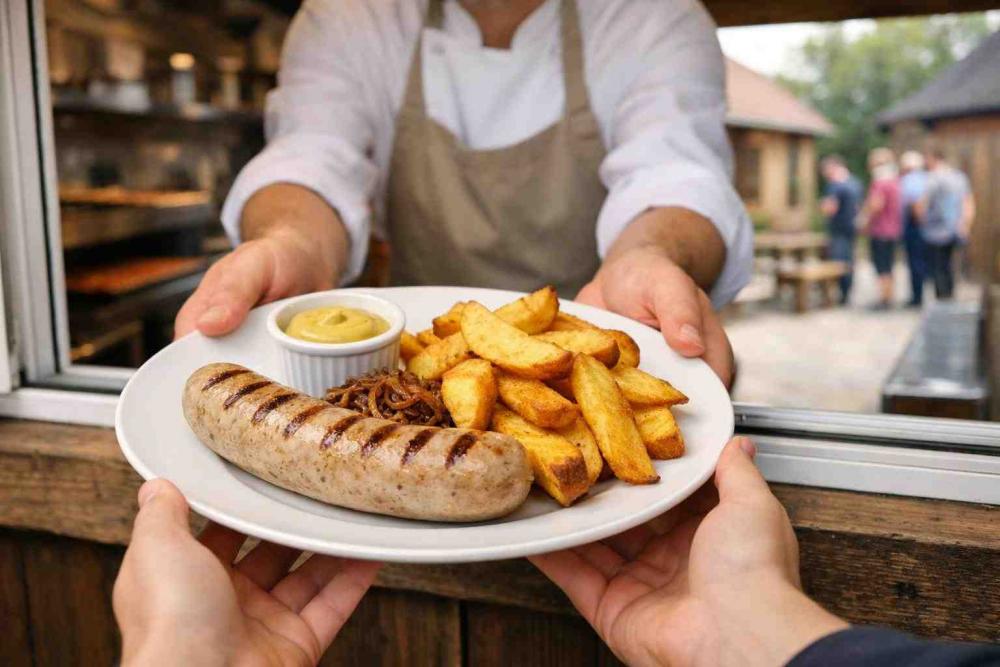
A generic sausage and chips dish can sell, but it often does very little for the business beyond filling space on the menu. It is familiar, yes, but it is also easy to ignore. Customers have seen it everywhere, and unless the site is competing almost entirely on price, that kind of offer rarely gives them much reason to remember where they bought it.
Bratwurst changes that without making the dish difficult to understand. The format still feels accessible. People know what chips are. They understand the basic idea immediately. But bratwurst gives the plate a more defined identity. It suggests something a little more deliberate, a little less canteen-like, and a little more worth paying attention to.
That matters because perceived value often starts before the first bite. A dish that looks more specific and better thought through usually feels more credible. Bratwurst helps create that impression. It separates the offer from the standard thin catering sausage or anonymous hot counter option and gives the operator a stronger story to tell, even in a quick-service setting.
There is also a practical advantage. A proper bratwurst tends to feel more substantial and more premium without demanding a complicated plate build. You are not relying on multiple garnishes or clever presentation tricks to make the dish feel worthwhile. The sausage itself does some of that work.
For operators, that can improve the menu in several ways:
- It gives a familiar format a more distinctive centrepiece
- It helps the dish feel less like a budget fallback
- It supports a more premium casual positioning without becoming fussy
- It creates better distance from generic fast-food sausage offers
Another reason it works better is menu fit. Bratwurst sits comfortably in pubs, event catering, farm shop food counters, market setups and cafés because it has enough character to feel intentional, but not so much that it needs explaining. It bridges the gap between easy comfort food and something that looks like a considered trade offer.
That is useful commercially. Many operators do not need a dish that is wildly original. They need one that is easy to sell, easy to produce, and slightly better than what the customer expected. Bratwurst and chips does that well. It feels familiar enough to move quickly, but specific enough to avoid the flat, forgettable effect that often comes with a generic sausage offer.
In other words, it gives the menu a bit more spine without giving the kitchen a headache.
What a 90-Second Service Line Actually Requires in Real Trade Conditions
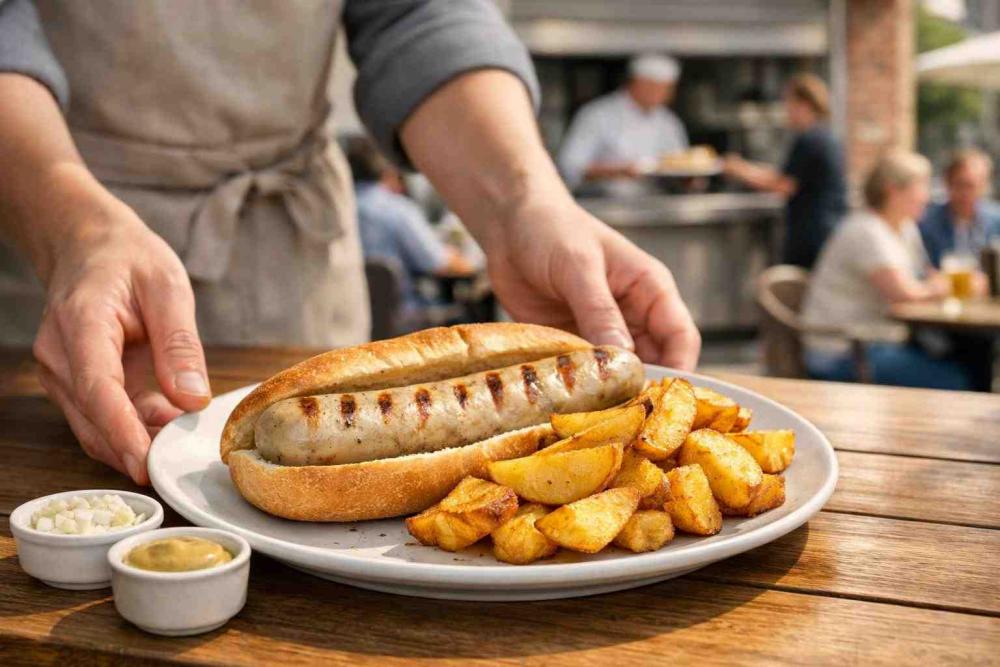
A 90-second service line sounds good on paper, but real speed does not come from wishful thinking or a stopwatch in a quiet kitchen. It comes from designing the whole offer around quick decisions, clear hand movements, minimal clutter, and repeatable staff actions. If any part of the line relies on hesitation, over-customisation or awkward assembly, the timing starts to fall apart very quickly.
The first requirement is a simplified offer. Operators often lose speed because they try to make a fast seller behave like a fully flexible menu item. That usually means too many topping choices, too many sauce decisions, or too many last-minute finishing steps. A 90-second bratwurst and chips line works best when the menu has already made most of the decisions for the customer.
That might mean one core bratwurst option, one chip format, and a short set of clearly named finishes. Not because variety is bad, but because service speed depends on reducing friction.
The second requirement is a sensible holding and replenishment plan. The sausage, chips and packaging all need to be close to hand and easy to access in the right order. If staff are turning, reaching, opening extra containers or checking too many components, the line slows down even before the site gets busy.
The third requirement is staff clarity. A fast line is not just about product readiness. It is about whether the person serving knows exactly what happens next. In a good service setup, the sequence is obvious and repeatable:
- pick the tray, box or serving vessel
- portion the chips
- add the bratwurst
- finish with the selected sauce or topping
- pass and reset
That sounds almost too simple to mention, but simplicity is the whole point. Under pressure, even small moments of confusion create queue drag.
There is also a site reality to consider. A 90-second line in a pub kitchen may look different from a 90-second line at an outdoor event or a garden centre counter. Space, staffing, heat source, extraction, holding equipment, packaging area and customer flow all affect what is realistic. Operators need to check what their actual service environment can support rather than borrowing a setup that only works elsewhere.
This is also where compliance and practicality meet. Gas use, electrical load, food holding temperatures, handwashing access, site rules and event requirements all need proper checking. The dish may be simple, but the operation still has to be suitable for the environment.
So the real secret is not speed for its own sake. It is controlled simplicity. When the dish, line, staffing and holding method all support one another, 90-second service becomes a realistic operating model rather than a nice phrase in a menu meeting.
How to Build the Dish So It Feels Substantial Without Becoming Clumsy
One of the easiest ways to damage a fast-selling dish is to overbuild it. Operators often start with a sound idea, then add too much in an effort to make it look generous or premium. The result can be awkward to serve, messy to eat, and oddly less appealing than a simpler version.
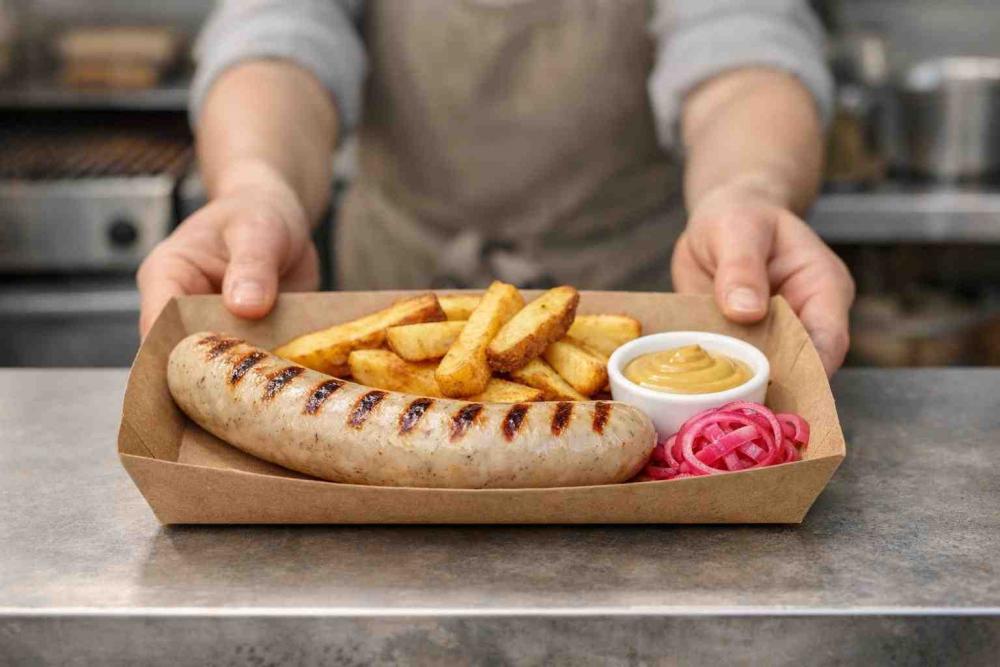
This recipe guide shows how quick-pickled red onions can add sharp contrast to bratwurst without overcomplicating a fast service line.
Bratwurst and chips works best when it feels complete rather than overloaded. Customers want it to look like a proper meal, not a sparse side order, but they also want to understand it in a second. That balance matters. If the dish becomes too bulky, too wet, or too stacked, it stops feeling efficient and starts feeling like hard work.
The first building block is the bratwurst itself. It should look like the hero, not like something lost under chips, toppings and sauce. That does not mean the portion has to be theatrical. It just means the sausage should be visually clear and properly central to the dish.
The second is chip choice and portion logic. Too few chips and the dish feels mean. Too many and the pack becomes heavy, messy and hard to finish. The right amount depends on the site and price point, but the principle stays the same: enough to feel satisfying, not so much that the dish loses shape or slows service.
Then comes the issue of moisture. This is where many loaded or semi-loaded sausage dishes go wrong. Too much sauce, too many wet toppings, or loose ingredients scattered across the top can quickly turn a tidy fast-service item into a soggy tray. What looked generous at the pass can look scruffy two minutes later.
A better approach is controlled assembly. Think in terms of structure:
- a stable base of chips
- bratwurst placed clearly and neatly
- one main sauce or topping direction
- optional extras that add contrast, not confusion
This is also where texture matters. A substantial dish is not always a bigger dish. It can simply be one with a satisfying contrast between the sausage, the chips and the finish. A little crunch, a clean sauce line, or a restrained topping can do more than piling on extra volume.
Commercially, this matters because clumsy dishes are hard on both sides of the counter. They take longer to assemble, are harder for staff to keep consistent, and are more likely to disappoint in the hand than they did on the menu board. A dish that feels substantial and tidy is usually the better seller over time.
In practical terms, the strongest build is usually one that gives the customer a clear main event, enough food to feel worthwhile, and just enough finish to make it feel chosen rather than generic. That is where bratwurst and chips starts to become a smart operator dish instead of just another tray of hot food.
Which Sauces, Toppings and Add-Ons Help Sales Without Slowing Service
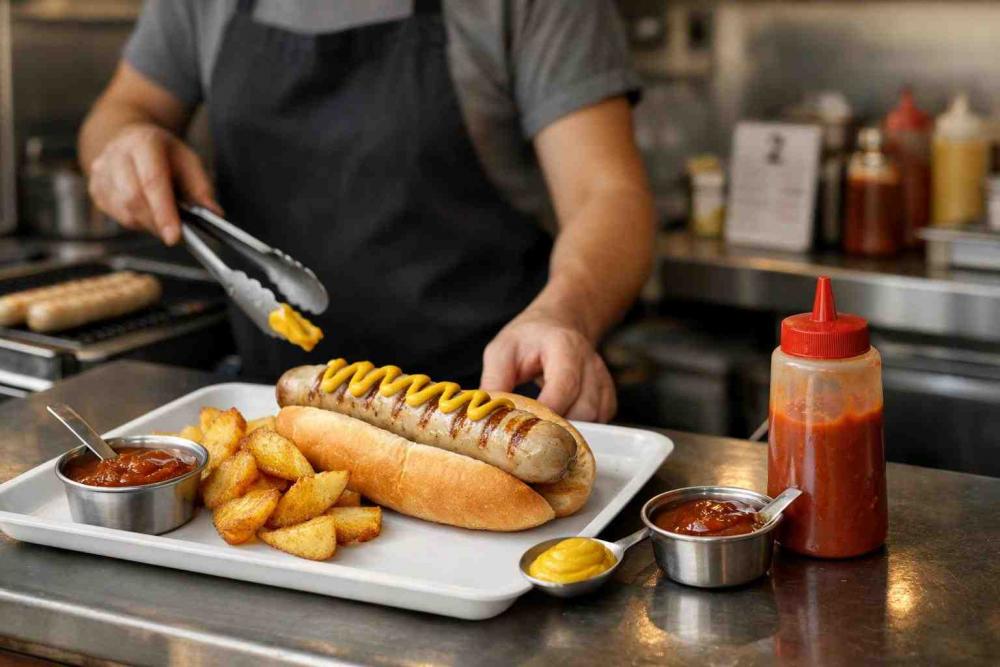
Extras can lift the spend per head, but they can also wreck the rhythm of a fast line if they are handled badly. The key is to choose additions that make the dish feel more tailored or more indulgent without creating a choose-your-own-adventure problem at the counter.
The best sauces and toppings do one of three jobs. They add flavour contrast, improve visual appeal, or give the customer a reason to trade up slightly. What they should not do is require fiddly assembly, complex storage, or too many separate questions from staff.
A short sauce list usually works better than a long one. In most cases, two or three clear options are enough. They should be distinct from one another, easy to describe, and suitable for quick application. A warm curry-style sauce, a mustard-led finish, or a smoky tomato-based option can all make sense depending on the wider menu style. The important thing is that each one offers a recognisable direction rather than a vague splash of something anonymous.
This recipe guide shows how to make a curried ketchup for bratwurst that could work as a practical curry-style sauce on a fast service menu.
Toppings should follow the same logic. Fast service and messy garnish are rarely good friends. Toppings need to be easy to portion, easy to hold, and stable enough to survive the handover from counter to customer. That usually rules out anything too delicate, too wet, or too awkward to distribute consistently.
Useful topping directions often include:
- crispy onions for crunch and visual lift
- a restrained onion topping that complements rather than floods
- chopped pickles or similar sharp elements in small amounts
- grated or melted cheese only where the setup can handle it cleanly
Add-ons are where operators can improve spend without overcomplicating the core item. The trick is to keep them operationally separate from the main service line where possible. A bottled drink, a simple side, or an upgrade from standard chips to a more premium variation can be easier to manage than trying to create endless custom sausage builds.
There is also value in naming combinations properly. Customers often buy more easily when the decision has already been framed for them. A house bratwurst and chips, a curry version, and a mustard-and-onion version may move better than a blank menu line followed by six topping questions. Good naming reduces service friction and helps the dish feel intentional.
From a commercial angle, the best extras are the ones that increase appeal without increasing uncertainty. If a topping makes staff pause, causes packaging issues, or creates an inconsistent finished look, it may not be worth the extra margin on paper.
The strongest approach is usually modest but clear: a few well-chosen finishing options, a couple of easy upsells, and enough distinction to make the customer feel they have chosen a version that suits them. That keeps sales moving while the queue still behaves itself.
Where This Format Fits Best: Pubs, Events, Cafés, Farm Shops and Garden Centres
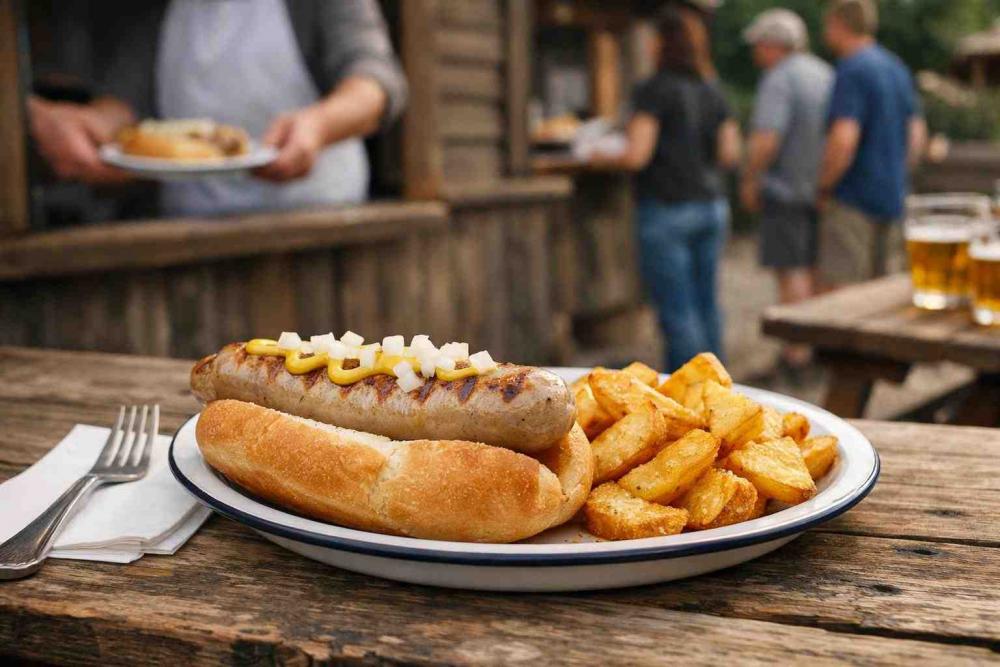
Bratwurst and chips is one of those formats that can travel well across different types of site, but it does not fit each one in exactly the same way. The core appeal stays consistent: it is familiar enough to sell quickly, distinctive enough to feel a bit more deliberate than a generic sausage offer, and simple enough to run without creating a second kitchen inside the first. The detail lies in how each setting uses it.
In pubs, the format works best as a casual, high-trust menu item that sits between a snack and a full plated meal. It suits sites that want something easy to order with a drink, useful at lunch, and manageable in evening service without pulling too much attention away from the wider menu. It can also help pubs add a warm, hearty option that still feels more interesting than standard freezer-to-fryer fare.
At events and festivals, the strength is speed and recognisability. People are often ordering in queues, in crowds, or between other activities. They want something they understand immediately and can carry without too much trouble. A bratwurst and chips offer works well here when it is built for clean handover, obvious pricing and minimal decision-making. It is not trying to be a tasting menu. It is trying to be a good decision in a busy environment.
In cafés, it tends to work best where there is already some appetite for hot savoury food, lunch trade, or seasonal specials. It can give the menu a stronger hot-food anchor without requiring a long list of components. The key is whether the café’s style can support something a little heartier without it feeling out of place.
For farm shops and garden centres, the format can be particularly useful because customers often want food that feels straightforward, comforting and worth the stop. Bratwurst gives the dish a slight lift in identity, which helps it feel more considered than a generic hot counter sausage and chips. That can matter in places where the wider retail environment already trades on quality, provenance or a more premium everyday experience.
The real question is not whether the format can work. It usually can. The better question is what role it should play on that site:
- a fast lunch seller
- a reliable event queue mover
- a warm casual pub option
- a stronger hot counter dish
- a seasonal or weekend special
When operators are clear on that role, the setup becomes much easier to design. The dish starts working with the site instead of merely sitting on the menu.
How to Keep Staff Execution Fast, Clean and Consistent During Busy Periods
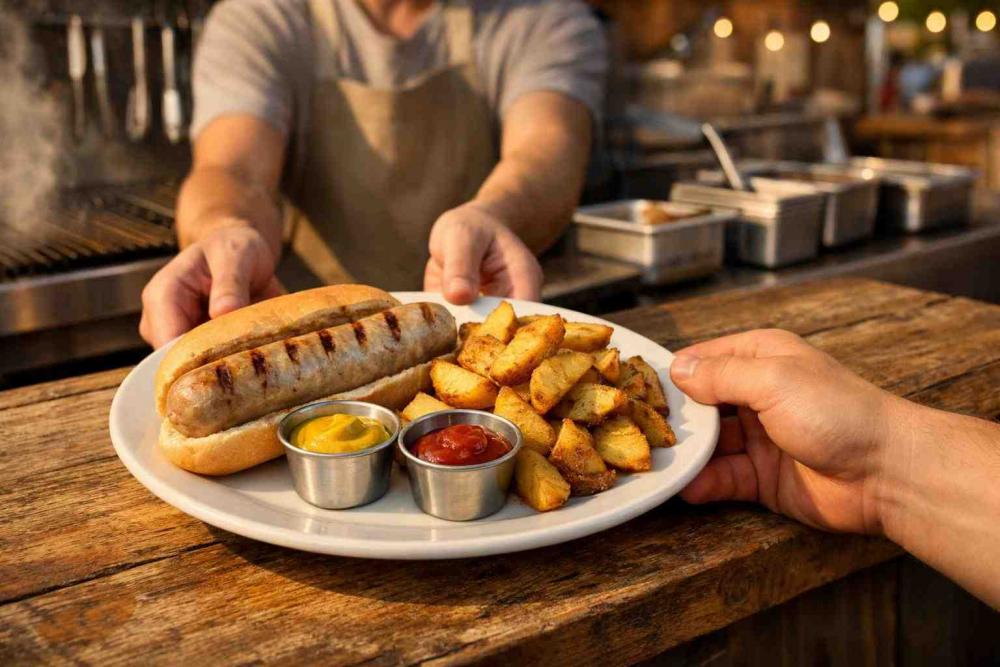
A quick-selling dish only stays quick if staff can repeat it without thinking too hard. That is where many good menu ideas start to wobble. The product may be right, and the demand may be there, but once the rush hits, the line depends on whether the team can assemble the dish neatly, confidently and in the same way every time.
The first step is to reduce the number of judgement calls staff need to make. Busy service is not the moment for guesswork on chip portions, sauce quantity or where toppings should go. If every plate or tray depends on individual interpretation, consistency disappears and speed goes with it. Clear portioning tools, set build order and a defined finish make a noticeable difference.
It also helps to organise the line around the natural order of service rather than where equipment happened to fit on setup day. Chips, bratwurst, toppings, sauces and packaging should sit in a sequence that supports clean movement. Staff should not be crossing over one another, turning awkwardly, or reaching behind hot equipment for basic components. Small layout flaws become very obvious when the queue grows.
Clean execution matters just as much as fast execution. A dish that looks rushed in the wrong way can weaken perceived value even if the food is perfectly decent. Sauces spilled over the edge of the tray, chips falling out of packs, or inconsistent topping amounts make the operation feel less controlled than it should.
A strong service rhythm usually includes:
- one clear assembly order
- pre-agreed portion sizes
- limited finishing choices
- regular replenishment before items run low
- a reset habit between orders
That last point matters more than people think. A staff member who resets their station properly after each handover is far less likely to create cumulative mess or confusion during a run of orders.
Training does not need to be elaborate, but it does need to be practical. It is better to run staff through the actual line, the actual packaging and the actual peak-service sequence than to explain the dish in abstract terms. Timing, hand movements and presentation all improve faster when people rehearse the real task.
There is also value in recognising when the line needs support. During a genuine rush, even a simple offer may benefit from split roles, with one person handling the hot components and another finishing, packing or taking payment depending on the site model.
In short, staff consistency is rarely a mystery. It usually comes from a simple setup, an obvious build, and a service rhythm that helps people stay tidy under pressure. When those pieces are right, bratwurst and chips can move quickly without looking like it has been thrown together.
Common Mistakes That Turn a Quick Seller Into a Slow Mess
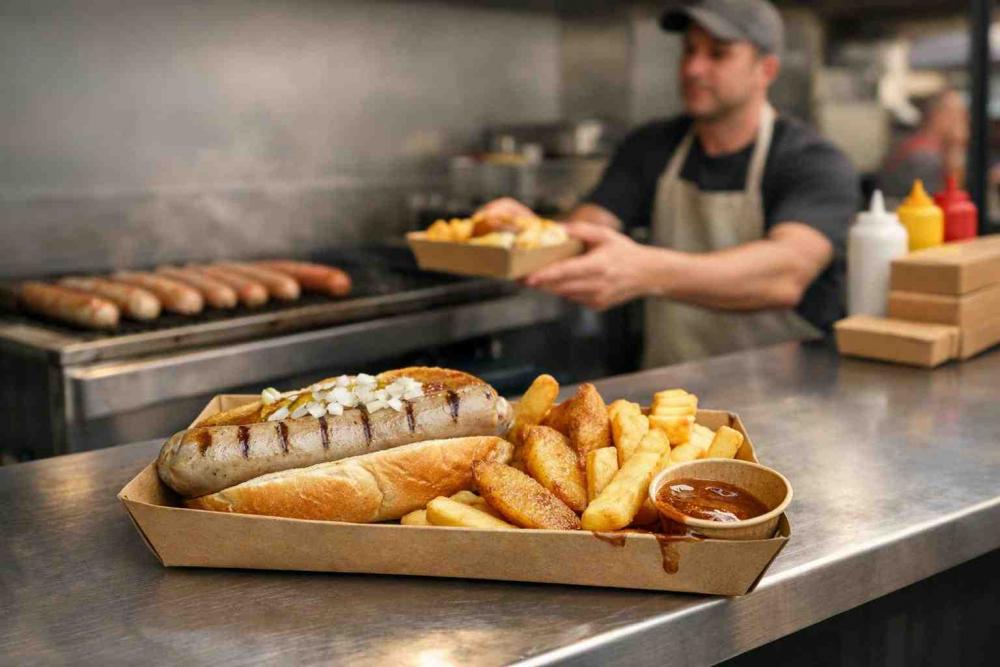
Bratwurst and chips has the potential to be one of the easier items on the menu, which is exactly why it is so frustrating when operators accidentally make it awkward. Most of the problems are not dramatic. They are small decisions that seem harmless on their own, then start to stack up in service until the line feels slower, messier and less consistent than it should.
One common mistake is trying to offer too many versions. The dish starts as a clean, high-speed seller, then gradually collects multiple sausages, four chip options, six sauces and a handful of toppings. At that point, customers hesitate, staff pause, and the queue begins to thicken. Choice can help sales, but too much of it often damages the very speed advantage that made the dish useful in the first place.
Another problem is poor packaging logic. A tray or box that looks fine when empty may become awkward once chips, sausage and sauce are added. If the pack is too shallow, too narrow or unstable in the hand, staff struggle to present it neatly and customers end up with a more awkward eating experience than they expected.
There is also the classic error of overloading the build. Too many wet toppings, too much sauce, or a chip portion that overwhelms the sausage can make the whole thing feel unruly. A dish does not feel better just because more has been piled onto it. Often it simply becomes harder to serve and harder to eat.
Other issues show up behind the scenes:
- holding product too far from the line
- allowing sauces to become a bottleneck
- running out of core items mid-rush
- unclear portioning between staff
- building every order from scratch when partial prep could have been standardised
A subtler mistake is treating the dish as if it will run itself. Because bratwurst and chips sounds simple, operators sometimes underestimate the need for testing. They assume it will naturally be fast and tidy without checking how it performs in a real lunch rush, on a busy Saturday, or during an event peak. That is often when the weaknesses show themselves.
Another mistake is pricing and positioning it badly. If it is presented like a cheap fallback, customers may treat it as such. If it is priced like a premium signature dish but delivered in a sloppy, generic way, the value perception suffers. The offer needs the right middle ground: straightforward, credible, and clearly intentional.
The good news is that most of these problems are fixable. They are usually not product failures. They are execution failures. When operators strip the dish back to what genuinely helps service and sales, it becomes much easier to see what belongs and what is only slowing the whole operation down.
What to Check Before Putting Bratwurst and Chips on a Live Menu
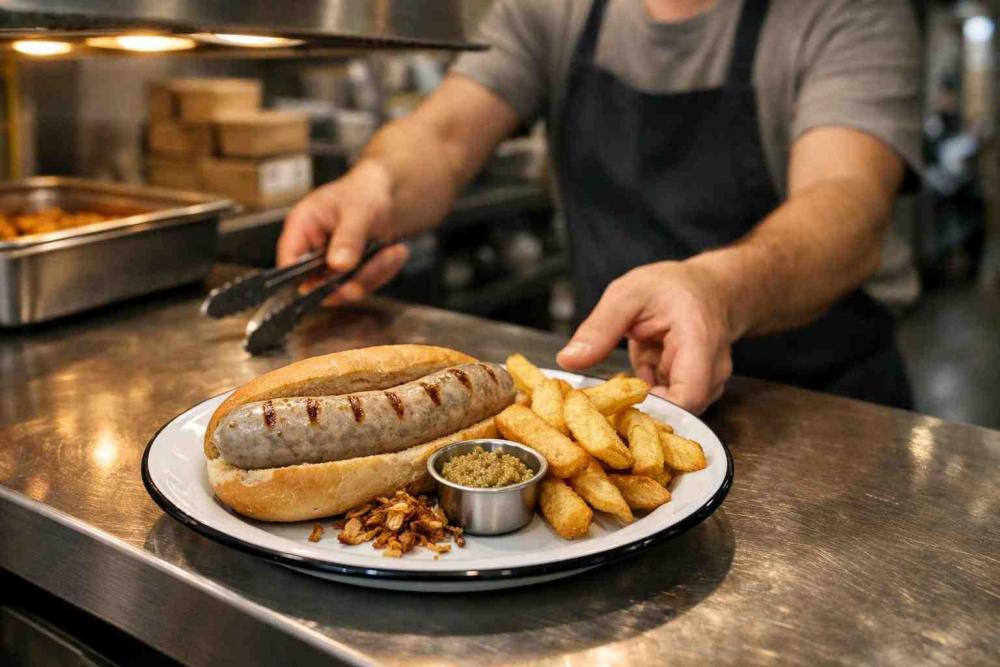
A dish can look commercially sensible in theory and still be the wrong fit for a site if the basics have not been checked properly. That is especially true with something like bratwurst and chips, which feels simple enough to add quickly. Simplicity can be helpful, but it can also encourage shortcuts in planning. Before it goes live, operators should be clear that the setup works not just on paper, but in their actual trading environment.
The first thing to check is service suitability. Does the site have the space, kit and workflow to serve the dish cleanly and consistently? That includes the obvious equipment, but also the less glamorous points like holding space, pass layout, packaging storage and whether staff can assemble the dish without blocking other menu items. A dish that only works when the kitchen is half empty is not properly ready.
Next comes site-specific compliance and practical setup. Depending on the operation, that may include gas safety, electrical capacity, extraction, food holding arrangements, handwashing access, waste handling and event or venue-specific rules. None of that is unique to bratwurst and chips, but all of it matters if the format is being introduced to a live pub, stall, café or event line. Operators should check what their site, landlord, venue, organiser or local authority actually requires rather than assuming a standard setup is acceptable everywhere.
This official HSE guidance on gas safety in catering and hospitality helps food operators check appliances, ventilation and compliance points before service.
It is also worth checking menu fit. Not every site needs the dish for the same reason. Is it there to drive lunch trade, improve speed of service, add a more distinctive hot-food option, or support events and peak days? The answer affects portioning, price point, packaging and how much customisation the line can realistically carry.
Commercial checks should include:
- likely selling window and daypart
- realistic staff capability during peak periods
- margin at the intended selling price
- speed of replenishment
- whether the offer complements or cannibalises other items
That last point is important. A new seller is not always helpful if it steals trade from a stronger existing line while adding more work.
Testing matters too. Before launch, it is sensible to run the dish through a live-style service rehearsal or limited trial. That helps reveal whether the chips hold as expected, whether the sauce application is too messy, whether packaging performs properly, and whether the line truly supports the speed being promised.
Finally, operators should check whether the offer still looks good when it leaves the pass. That sounds basic, but it is easy to miss. A bratwurst and chips dish may look fine at the assembly point and much less convincing after a short walk to a table, takeaway handover or event standing area.
Putting it on a live menu should be the final step, not the first experiment. When the checks are done properly, the dish has a much better chance of performing like a reliable seller instead of a well-meant idea that never quite settles.
Frequently Asked Questions
That depends on the site and the role the dish is meant to play. If the goal is quick lunch trade, takeaway, event service or a garden centre hot counter, a tray-and-go format usually makes more sense. It keeps the handover simple and supports faster service.
If the site is a pub or café where customers are sitting down and ordering from a fuller menu, a plated version can help the dish feel a bit more settled and worth a stronger selling price. The important point is to choose one service style that suits the setting rather than trying to make the same dish behave like both at once.
For most operators, one good bratwurst with a sensible chip portion is the better starting point. It keeps the dish easier to price, easier to eat, and easier to serve quickly. It also leaves room for an upgrade path if customers want more.
Two sausages can work, but usually as a deliberate upsell or a larger-site variation rather than the default build. Otherwise the dish can become heavier, messier and less balanced than it needs to be. It is usually better to make the base offer feel complete first, then test whether a larger version has a real audience.
Yes, but the premium feel has to come from clarity and quality rather than from piling extras on top. A bratwurst and chips dish feels more premium when the sausage looks properly central, the build is tidy, the sauce choice feels intentional and the whole thing arrives as if someone has actually thought about it.
Not usually. In fact, that familiarity often helps. Most customers do not need a detailed explanation of what the dish is trying to do. They understand sausage and chips immediately, and bratwurst is close enough to be approachable while still feeling a bit more interesting.
The key is not to over-explain it. Present it clearly, name it confidently and make the finished dish look like a natural choice. If the site already sells hot dogs or basic sausage offers, bratwurst and chips can work well as a cleaner, more distinctive alternative rather than a confusing departure.
short, controlled trial is usually the safest route. Run it on a limited number of days, in one serving format, with one clear version rather than launching multiple variations at once. That gives you a better read on ordering speed, staff handling, customer reaction and whether the dish still looks good after handover.
It is also worth watching what happens around the dish, not just whether it sells. Does it slow the line, create more mess than expected, or pull customers away from stronger-margin items? A useful trial is not just about demand. It is about whether the offer improves the operation overall.
It can work year round, but the way it is presented may shift with the season. In colder months, it naturally leans into comfort and warmth. In spring and summer, it often works better when the dish feels clean, quick and not overly heavy.
That might mean keeping the toppings tighter, avoiding overloaded builds and making sure the packaging suits outdoor eating if relevant. It does not need to become a “light” dish in the strict sense. It just needs to feel manageable, appealing and easy to choose in the setting it is being sold in.
simple house build is often enough, especially at the start. In many cases, operators get more value from one clearly defined version that staff can execute properly than from a menu full of named variants that dilute the line.
That said, a signature version can help if it gives the dish a recognisable identity without adding too much complexity. The test is simple: does the signature element make ordering easier and the offer more memorable, or does it just create another layer of decision-making? If it is the latter, the simpler build will usually perform better.
In some settings, yes. It can be a useful replacement where an existing burger or sausage offer is underperforming, too generic, or creating more prep and waste than it is worth. Bratwurst and chips has the advantage of being straightforward, recognisable and easier to keep focused as a system.
That does not mean it should automatically replace anything popular. The question is whether it fills a clearer role. If the current line is muddled, hard to execute or not giving customers much reason to choose it, bratwurst and chips may offer a more distinctive and manageable alternative. The sensible move is to compare service speed, spend per head, staff ease and repeatability before making that call.
Usually it comes down to repeatability. A dish becomes a regular seller when it is easy for customers to understand, easy for staff to execute and reliable enough that the quality does not swing wildly between services. If it only works when the strongest team member is on shift or when the site is half busy, it is unlikely to settle into the menu properly.
The other deciding factor is whether it earns its place commercially. That means not just selling once out of curiosity, but fitting the site’s pace, pricing structure and service model in a way that still makes sense after the novelty has gone. The strongest regular sellers are rarely the most elaborate. They are the ones that keep making sense on an ordinary Tuesday as well as on a busy Saturday.
Conclusion
Bratwurst and chips is not a clever idea because it is complicated. It is useful because it is easy to understand, easy to sell, and capable of feeling better than the standard sausage-and-chips fallback many sites drift into. That matters in trade. Customers want something familiar enough to order quickly, but good enough to feel worth buying. Operators want something that does not collapse the moment service gets busy.
The strongest version of this dish is usually the simplest one. A proper bratwurst, a chip format that suits the site, a limited sauce choice, and a service sequence that staff can repeat without hesitation will usually outperform a more ambitious but slower setup. When the offer is built around flow rather than clutter, the speed becomes believable and the margin logic becomes easier to protect.
It is also a flexible format. It can sit in a pub menu, a festival line, a garden centre hot counter or a trader setup without needing to reinvent the whole operation. That makes it commercially useful rather than merely interesting.
If you are looking at ways to sharpen speed of service without sliding into a generic offer, bratwurst and chips is worth a proper look. Done well, it is a straightforward dish with a surprisingly strong trade case behind it.
About The Sausage Haus
The Sausage Haus helps UK operators serve authentic German sausages in a way that is practical, commercially sensible, and easier to run in real service conditions. The focus is not just on product quality, but on helping pubs, cafés, caterers, traders, farm shops, foodservice buyers and event operators build offers that work under pressure.
This producer guide helps operators compare authentic German sausages for a bratwurst menu that still works in fast service.
That means thinking beyond the sausage itself. Speed of service, menu simplicity, holding practicality, perceived value, and staff execution all matter if a dish is going to perform properly. The Sausage Haus is built around that reality, offering products and ideas that help operators create a cleaner, more distinctive and more reliable sausage operation.
The sausages are produced by Remagen, a German manufacturer with the kind of product heritage operators want when authenticity matters. In the UK, distribution is handled by Baird Foods, making the range accessible to trade customers who want a more dependable route into premium German sausage service.
For operators who want something more appealing than a standard catering sausage, but still need service to stay fast and manageable, The Sausage Haus is designed to be a workable answer.