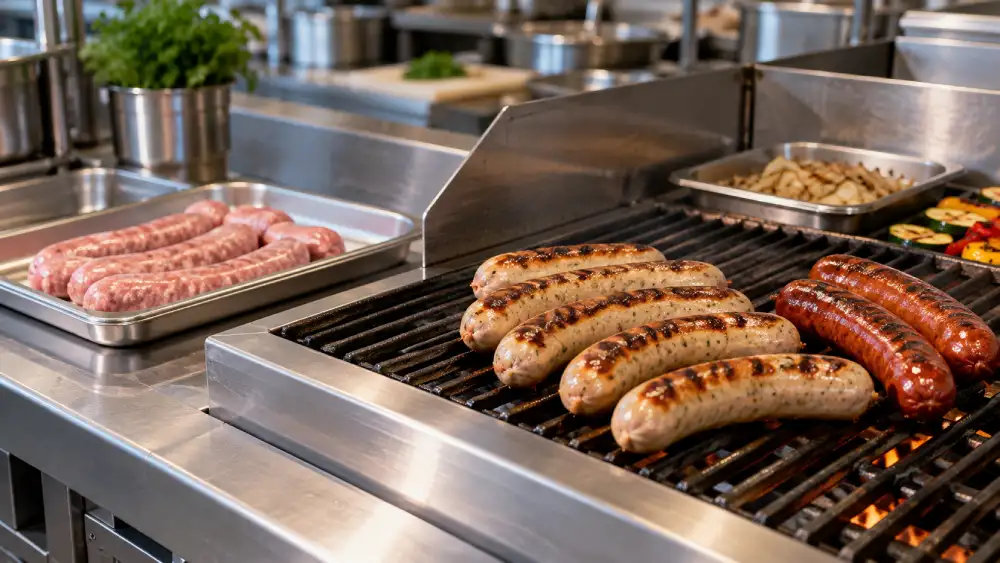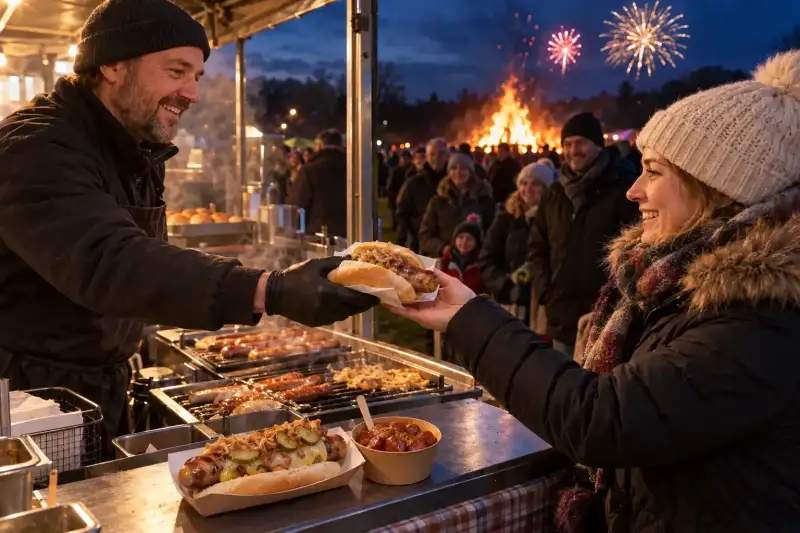
Choosing the right bread is not a small detail when you sell proper 25cm German sausages. I learnt that the hard way on festivals, country shows and Christmas markets. A great Bratwurst in the wrong roll feels clumsy, cheap or slow to serve. The right Booker hot dog rolls, ciabattas or baguettes can make the whole operation cleaner, faster and easier to sell.

Choose Bread for Service

Test Ciabatta for Premium

Use Brioche or Baguette Carefully
Introduction
When I started serving German sausages at events, I underestimated the bread. Like many caterers, I first focused on the sausage, the grill, the onions, the sauces and the queue. All of that matters. But after a few busy services, you realise the roll can make or break the product.
A 25cm Bratwurst, Krakauer or jumbo hotdog does not behave like a small snack sausage. It needs bread with enough length, structure and hand-feel. If the roll is too short, the sausage looks awkward. If it is too soft, the product collapses under onions and mustard. If it is too bready, the sausage disappears and the customer feels they are eating bread with a sausage somewhere inside it.
That is why can be useful for UK operators. It gives caterers, pubs, cafés, farm shops, garden centres and event traders access to practical foodservice bread options, from jumbo hot dog rolls to ciabattas, baguettes and premium brioche. Booker
This article is not about finding the fanciest bread. It is about choosing the bread that works in real service. I want bread that can be stored sensibly, opened quickly, hold a proper sausage, survive toppings, and still look good when the customer gets it.
Key Takeaways
- The best bread for Bratwurst and Krakauer is not always the most premium-looking bread. It is the one that fits the sausage, the service speed and the customer expectation.
- For high-volume work, a proper jumbo hot dog roll is usually the easiest operational choice.
- Ciabatta can work very well for a more premium German market-style serve, especially when the sausage is allowed to show beyond the bread.
- Baguettes can look excellent, but they are usually slower because they need cutting, warming and more careful handling.
- Brioche rolls can lift the perceived value, but they create a softer, sweeter, less traditional German-style result.
- Gluten-free options should normally be treated as a separate limited alternative, not as the main bread system for 25cm sausages.
- Every operator should test the bread with the actual sausage, toppings, wrapping and service method before putting it on the menu.
Why the Roll Matters More Than Most Traders Think
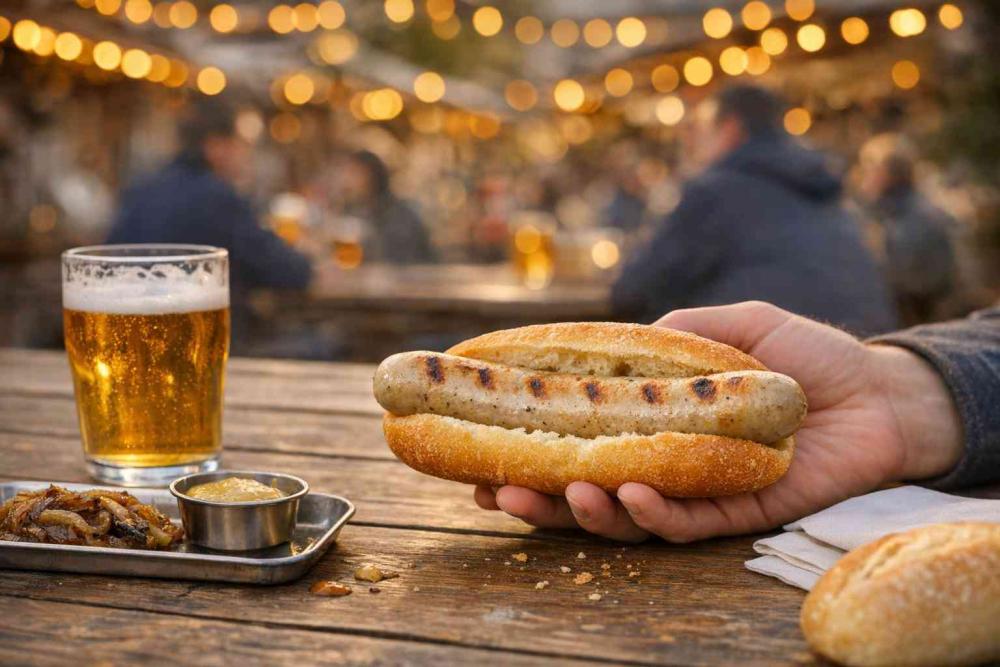
When you serve proper German sausages at events, the roll is not just a holder. It affects speed, presentation, perceived value, waste, queue flow and how cleanly the customer can eat the product while standing in a field, walking through a market, or holding a drink in the other hand.
I learnt quickly that a great in the wrong roll still feels wrong. If the bread is too short, the sausage looks oversized in a bad way rather than generous. If the roll is too soft, it collapses once you add onions and sauce. If it is too thick, the first bite is mostly bread and the sausage loses its impact.
For high-volume catering, the roll also affects staff rhythm. A roll that opens cleanly and consistently is faster. A roll that tears, sticks, crumbles or needs fiddling with slows the line. When you are serving at a Christmas market or country show, those small delays become big problems.
The customer rarely says, “That was the wrong bread.” They just decide whether the whole product felt worth the money. A good roll supports the sausage, makes the portion look right, and keeps the eating experience tidy. That is why I treat bread as part of the menu engineering, not as a last-minute purchasing decision.
What I Look for in Bread for a 25cm German Sausage
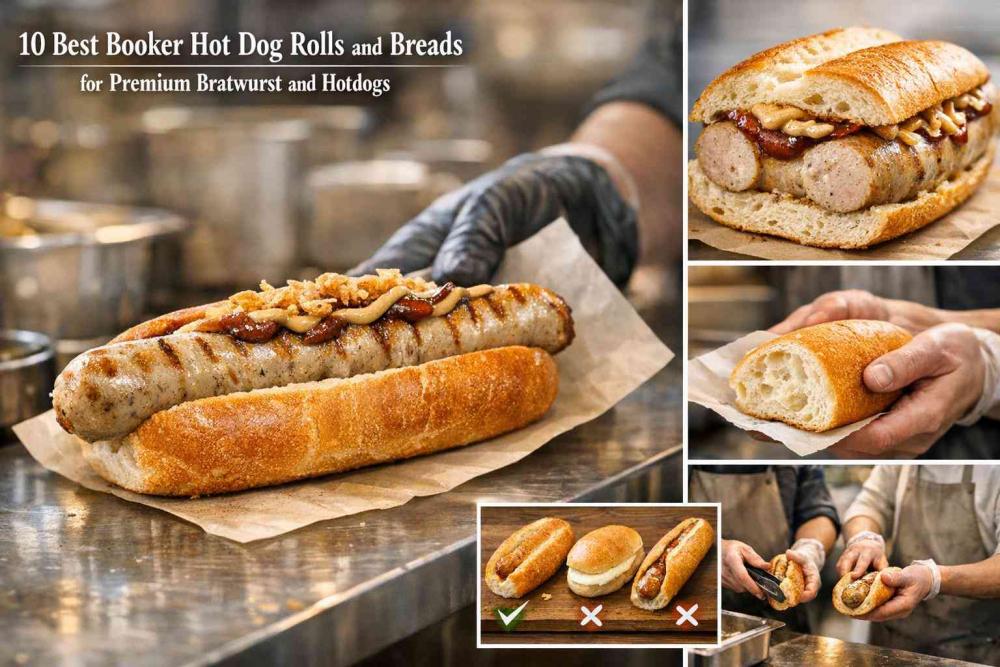
For a 25cm German sausage, I look for bread that makes the sausage look generous without making the serve awkward. The roll does not have to be exactly the same length as the sausage. In fact, with Bratwurst and Krakauer, it often looks better when the sausage extends beyond the bread at both ends. That gives the product a more traditional market feel and makes the portion look substantial.
The first test is structure. The bread needs to hold a hot sausage, onions and sauce without splitting or turning soggy too quickly. A very soft roll may be pleasant for a smaller hotdog, but it can struggle with a 150g Bratwurst or Krakauer, especially during busy service when the product may sit wrapped for a short time before the customer starts eating.
The second test is speed. I want bread that staff can open, fill and hand over quickly. If it needs too much cutting, warming or careful handling, it may still work in a pub or café, but it is not ideal for a fast event queue.
The third test is balance. The bread should not dominate the sausage. A good German sausage has flavour, bite and visual presence. The roll should frame it, not hide it.
In practice, I usually judge bread by four simple questions:
- Does it make the sausage look premium?
- Can staff use it quickly under pressure?
- Does it hold onions and sauces cleanly?
- Would I be happy eating it standing up at an event?
If the answer is yes to all four, it is worth testing properly.
10 Booker Hot Dog Rolls and Breads Worth Testing
Booker is useful because it gives operators a mix of proper hot dog rolls, food-to-go breads, part-baked baguettes and premium retail-style options. I would still check current branch availability, pricing, case sizes and delivery rules before building a menu around any one product, because ranges can vary. Booker’s own recipe pages and bakery order-book information show several relevant options, including Chef’s Larder jumbo hot dog rolls, St Pierre brioche hot dog rolls, BS jumbo hot dog rolls, Baker Street hot dog rolls, part-baked baguettes and brioche baguettes.
Chef’s Larder Hot Dog Rolls Jumbo Side 1 × 48pk
This would be my first test for a fast, high-volume sausage operation. Booker lists CL Hot Dog Rolls Jumbo Side 1 × 48pk in its Simple Hot Dog recipe, which already tells us it is meant for practical food-to-go use rather than a delicate café serve.
For a 25cm Bratwurst, Krakauer or jumbo hotdog, the advantage is speed. A side-cut jumbo roll is easy for staff to open, fill and pass down the line. In a busy event setup, that matters more than many people think. You do not want staff fighting with awkward bread while the queue grows.
I would use this as the control product in testing. Put the sausage in, add onions and mustard, wrap it, hold it briefly, and see how it behaves. If it works cleanly, it becomes the sensible operational benchmark. Other breads may look more premium, but they have to beat this roll on customer experience without making service slower.
Chef’s Larder 30 Ciabatta
The Chef’s Larder 30 Ciabatta is one of the more interesting options for a premium German-style serve. It is not a classic long hot dog roll, and that is partly why I like the idea. With a 25cm sausage, a shorter ciabatta can allow the Bratwurst or Krakauer to show generously at both ends, which gives the product that proper market-style look.
I would not choose ciabatta if the only aim is maximum speed. It usually needs more handling than a soft hot dog roll. But for pubs, cafés, garden centres, farm shops and more premium street food setups, it can make the whole serve feel more substantial and less like a standard takeaway hotdog.
The practical test is the cut. If the ciabatta opens neatly and holds the sausage without cracking, it can be excellent. If it tears, becomes too chewy, or makes the sausage sit awkwardly, it will slow the line. I would warm it lightly where possible, because ciabatta usually eats better when it has a little heat and structure.
BS Jumbo Hot Dog Rolls 4 Pack
Booker’s bakery order-book information lists BS Jumbo Hot Dog Rolls 4pack under wrapped white, finger, hot dog and burger rolls.
I see this more as a test or low-volume option than the main event catering choice. A 4-pack is useful when you want to trial a sausage menu, run a small special, or compare bread performance without committing to a larger case. It is also helpful for pubs, cafés and smaller takeaway operators who need a simple starting point.
The main question is whether the roll has enough length and strength for a full 25cm sausage. Some “jumbo” rolls are still not quite right once you add a proper 150g Bratwurst or Krakauer. If the sausage overhang looks generous, fine. If it looks silly or the bread struggles under toppings, move on.
For me, this is a practical comparison product. Test it against the Chef’s Larder jumbo side-cut roll and the ciabatta. The one that gives the best mix of speed, appearance and eating quality wins.
St Pierre Brioche Hot Dog Rolls 4pk
Booker uses St P Brioche Hot Dog Rolls 4pk in its St Pierre Gourmet Wild Boar Hotdog recipe, so it is clearly positioned for a more premium hotdog-style build.
Brioche can work well when you want a richer, softer, more indulgent serve. It photographs well, it feels familiar to customers, and it can lift perceived value on a menu. I would consider it for pubs, cafés, garden centres and special boards, especially with a smoked sausage, Bacon Frankfurter or Krakauer.
The trade-off is that brioche is not especially traditional for German Bratwurst. It is sweeter and softer than the bread I would normally associate with a Christmas market-style sausage. That is not automatically a problem, but the operator should know what style they are creating.
I would also be careful with wet toppings. Fried onions, mustard and a little sauce are fine. Too much ketchup, chilli or cheese sauce can make brioche collapse or feel sticky. Brioche is a good option, but it needs restraint.
St Pierre Brioche Baguettes 4 Pack
Booker’s bakery order-book information lists St Pierre Brioche Baguettes 4 pack in the brioche section.
This is worth testing if the hot dog roll feels too small or too ordinary, but a crusty baguette feels too heavy. The brioche baguette gives you a longer, more substantial format with a softer eating texture. It can work for a premium smoked pork hotdog or Krakauer where you want the final product to feel like a proper lunch rather than a snack.
I would not use this for the fastest festival queue unless the bread can be pre-cut and handled very cleanly. The longer format can be excellent, but it can also create more crumbs, more cutting time and more inconsistency if staff are rushing.
Where I think it fits best is a controlled food-to-go counter, pub terrace, garden centre café or farm shop event. It has enough visual presence to support a premium price, but it still needs a sausage with enough flavour and size to stand up to the bread.
LB Stone Oven Baguette 260g
The LB Stone Oven Baguette 260g appears in Booker’s part-baked breads section.
This is the kind of bread I would test for a more rustic, European-looking sausage serve. A stone oven baguette can make the product feel more substantial and more premium, especially if the customer sees it as closer to a market or deli-style offer than a standard hotdog.
The disadvantage is operational. A baguette normally needs cutting, warming, opening and portion control. That is fine in a pub, café, farm shop or garden centre. It is less ideal when you have a queue of 40 people and three staff trying to serve quickly.
The eating experience also needs testing. If the crust is too hard, customers can drag the sausage out with the first bite. If the bread is too thick, the sausage disappears. I would cut the baguette to a length that frames the sausage well and avoid overfilling it with toppings.
Used carefully, this can look very strong. Used carelessly, it becomes bread logistics with a sausage trapped inside.
Jack’s White Baguettes 2 Pack
Booker’s order-book information lists Jack’s White Baguettes in the part-baked bread section.
This is a more budget-friendly baguette-style test. I would look at it where the operator wants a warm, fresh-baked feel but does not want to use a more premium baguette or ciabatta. It can work well for a simple Bratwurst serve with mustard and onions, especially if the bread is warmed properly and cut consistently.
The main question is whether it fits the service model. Part-baked bread can be useful because it gives a fresher eating quality, but it also adds another job. Someone has to bake, cool, cut and hold it properly. At a country show or Christmas market, that may be worth it. In a very fast chip shop-style operation, it may be a nuisance.
I would treat this as a practical middle option: more character than a basic roll, less premium than ciabatta or stone oven baguette, but potentially very usable if the price and workflow make sense.
Hovis Prograin Buttermilk Protein Subroll 2pk
Booker’s order-book information lists Hovis Prograin Buttermilk Protein Subroll 2pk among wrapped white, finger, hot dog and burger rolls.
This is not the first bread I would choose for a classic German sausage serve, but it is interesting for lunch trade. A subroll can make the product feel more like a handheld meal, which may suit cafés, garden centres, farm shops and food-to-go counters.
The “protein” positioning may also appeal to some customers, although I would not overplay that angle in a sausage menu. The real question is structure and length. Does it hold a 25cm sausage neatly? Does it split properly? Does it survive onions and sauce? Does it still feel like a premium sausage serve, or does it start to look like a generic sandwich?
I would test this with a smoky Krakauer rather than a delicate Bratwurst. A stronger sausage can usually handle a more modern bread format better. If it works, it could be a useful lunch-facing option rather than a traditional event roll.
Hovis Prograin Sun & Honey Protein Subroll 2pk
Booker also lists Hovis Prograin Sun & Honey Protein Subroll 2pk in the same wrapped rolls section.
This is another lunch-trade test rather than a first-choice Bratwurst roll. The potential issue is sweetness. A slightly sweeter bread can work with smoky, salty or spicy sausages, but it may feel wrong with a traditional Bratwurst if the balance is too soft.
I would test this with Krakauer, Bacon Frankfurter or a smoked pork hotdog before using it with a classic Bratwurst. The bread needs a sausage with enough character to keep the finished product from feeling too gentle.
The advantage is that it gives the operator something a bit different from a normal hot dog roll. That may be useful in a café or garden centre where customers expect a more lunch-like product. I would not use it for a German Christmas market-style offer unless the tasting really works.
As always, the final decision should come from the full serve: sausage, bread, topping, sauce, wrapping and customer hand-feel.
Baker Street Hot Dog Rolls 4 Pack
Booker’s order-book information lists Baker Street Hot Dog Rolls 4 pack in the long-life breads section.
This is not my first choice for a premium Bratwurst or Krakauer. I would normally prefer something with a fresher feel, better structure or more visual presence. But long-life bread has one real advantage: it can save you when stock planning goes wrong.
For smaller operators, backup bread matters. If you are running a farm shop event, a garden centre barbecue, a late-night takeaway add-on or a small weekend special, you may not want to waste fresh rolls every week. A long-life hot dog roll can be kept as a practical safety option.
The danger is that the bread makes the sausage feel cheaper than it is. If you are serving a proper 25cm German sausage, the customer should feel the product is worth the price. So I would only use this if the eating quality, length and structure are genuinely acceptable after testing.
For me, this belongs in the “backup or small trial” category, not the “best premium serve” category. It can have a role, but it should not drag the sausage down.
Jumbo Hot Dog Rolls vs Ciabatta vs Baguette
I would not say there is one perfect bread for every German sausage operation. The right choice depends on the setting. A festival queue, a fish and chip shop, a pub terrace and a garden centre café all need slightly different things from the bread.
For pure speed, jumbo hot dog rolls are usually the safest starting point. They are easy to open, easy to fill, easy to train staff on, and they fit naturally into a high-volume service line. If I were building a fast setup for a busy show or takeaway counter, this is where I would start.
Ciabatta gives a more premium impression. It feels less like a basic hotdog and more like a proper food-to-go serve. It also works visually with a 25cm Bratwurst or Krakauer because the sausage can show clearly at both ends. That makes the portion look generous without needing extra toppings.
Baguettes can look excellent, especially for a rustic continental feel, but they are the least forgiving. They need cutting, warming and more careful handling. If the crust is too hard or the bread too thick, the sausage gets lost or pulls out when the customer bites.
In practice, I see it like this: jumbo rolls for speed, ciabatta for premium balance, baguettes for slower, more deliberate service where presentation matters more than maximum throughput.
Why Ciabatta Can Work So Well for Bratwurst
Ciabatta is not the obvious choice for everyone, but I have always liked the idea of a proper German sausage in a good ciabatta-style roll. It gives the serve more structure and more character than a soft hot dog bun, without becoming as heavy or awkward as a full baguette.
The biggest advantage is visual balance. A 25cm Bratwurst or Krakauer should look generous. With a shorter ciabatta, the sausage can extend from both ends in a way that feels intentional rather than clumsy. That is often closer to the feel of a market serve: simple bread, proper sausage, visible value.
Ciabatta also has enough body to hold onions, mustard and sauce without collapsing immediately. That matters when customers are eating outside, standing up, walking around a showground, or carrying food back to a table. A very soft roll can be pleasant, but once it gets wet or compressed, the eating experience can go downhill quickly.
There is still a practical warning. Ciabatta needs testing with the actual sausage and the actual service method. Some ciabattas split beautifully. Others crack, tear or become too chewy. I would warm it lightly if the setup allows, because it usually improves the texture.
For a premium Bratwurst or Krakauer offer, ciabatta can give you that useful middle ground: better perceived value than a standard roll, but still manageable in real service.
When Brioche Makes Sense and When It Does Not
Brioche can work, but I would use it deliberately rather than automatically. It has a softer, richer, slightly sweeter profile, which can make a hotdog feel more premium and indulgent. That suits some settings very well: pubs, cafés, garden centres, farm shops, terrace menus and special boards.
It is especially useful when the offer is closer to a premium hotdog than a traditional German market Bratwurst. A smoked pork hotdog, Bacon Frankfurter or Krakauer can sit well in brioche because the sausage has enough savoury character to balance the bread. Add fried onions, mustard, maybe a little cheese, and the result can feel very appealing.
Where I would be more cautious is with classic Bratwurst. A soft sweet roll can pull the serve away from the German-style feel. That is not necessarily wrong, but it changes the product. If the menu promises a traditional Bratwurst experience, brioche may not be the most honest match.
Brioche also needs restraint with toppings. Too much sauce, wet onion, chilli or cheese sauce can make it sticky and unstable. It is not the bread I would choose for the fastest, roughest event service.
So my rule is simple: use brioche when you want a richer, more modern hotdog-style serve. Use ciabatta, baguette or a firmer roll when you want the sausage to feel more German, rustic or market-led.
Gluten-Free Bread Options: Useful, but Not a Direct Swap
Gluten-free bread can be useful, but I would not treat it as a straight replacement for the main roll. A 25cm Bratwurst or Krakauer is a large product, and many gluten-free rolls are shorter, more fragile, or more likely to crack when warmed and split. That does not mean they are unusable. It just means the serve needs testing properly.
For cafés, garden centres, pubs and farm shops, a gluten-free ciabatta or panini-style roll may work as a limited alternative. It gives the customer an option and helps the operator avoid saying “no” too quickly. But the build may need to be different. The sausage might need to sit more openly, be cut differently, or be served in a tray rather than wrapped like a standard hotdog.
The bigger issue is handling. If a business offers a gluten-free option, it must think carefully about storage, preparation, contact surfaces, utensils, fryers, toppings and staff communication. Operators should not imply a product is suitable for coeliac customers unless their process genuinely supports that claim.
From a commercial point of view, I would keep gluten-free bread as a controlled add-on, not the core system. The main sausage bread should be chosen for speed and consistency. The gluten-free option should be chosen for safety, practicality and honest customer communication.
Dr Schär White Ciabatta Rolls 200g
These Ciabatta Rolls would be the first gluten-free bread I would test for a sausage serve, because a ciabatta-style roll usually has more structure than a very soft gluten-free hot dog bun. That matters with a 25cm Bratwurst, Krakauer or jumbo hotdog, especially once onions and sauce are added.
I would not expect it to behave exactly like a normal wheat ciabatta. Gluten-free bread can be more fragile, and it often needs careful warming to improve texture. If it is served cold or split too aggressively, it may crack or crumble.
For me, this is best treated as a controlled gluten-free alternative, not as part of the main high-volume bread system. It could work well in a café, garden centre, farm shop or slower event setup where staff can handle the order properly.
The practical test is simple: warm it, split it, add the sausage and toppings, wrap it briefly, then eat it standing up. If it holds together and the sausage still looks generous, it is worth keeping as an option.
Dr Schär Brown Ciabatta Rolls 200g
The brown ciabatta roll could be useful if you want the gluten-free option to look a little more rustic and less like a pale substitute. Visually, that can help. A premium sausage should still feel like a proper menu item, not like the customer has been given the “special diet” version with less care.
I would test this with a Bratwurst and a Krakauer separately. The slightly more rustic bread style may suit a smoky Krakauer particularly well, especially with mustard and onions. With a milder Bratwurst, the bread needs to support the sausage without making the whole serve feel too dry or heavy.
The main thing to watch is texture. Some gluten-free brown breads can feel firm or crumbly if not warmed correctly. That is not ideal for a handheld sausage serve.
This could be a good gluten-free option for operators who want something that looks more premium, but it still needs a clear handling process and honest customer communication around gluten-free preparation.
Dr Schär Panini Rolls 150g
The panini roll is less of a classic hotdog option, but it could work for a different style of serve. I would see this more as a café, garden centre or farm shop option than a fast festival Bratwurst roll.
The shape may not naturally suit a full 25cm sausage, so the build may need adjusting. For example, the sausage could be served more openly in the roll, cut to fit the bread, or presented in a tray rather than wrapped like a standard hotdog. That can still be a good product, but it is not the same service style.
The advantage is that a panini roll can feel more like a proper lunch item. If warmed or toasted carefully, it may give a better eating experience than a fragile gluten-free roll. The downside is speed: it adds more handling and is less suited to rapid queue service.
I would only use this if the operator has the time and equipment to serve it properly. It is a useful alternative, but not a direct replacement for the main roll.
A Practical Note on Gluten-Free Service
The bread is only one part of a gluten-free offer. Operators also need to think about storage, handling, utensils, toppings, contact surfaces and staff communication. In a busy sausage or fish and chip setup, cross-contact can easily happen if the process is not planned properly.
I would avoid casual claims such as “coeliac-safe” unless the full operation genuinely supports that standard. A safer approach is to describe the product clearly and explain how it is handled. For many businesses, gluten-free bread may be best offered on request, with staff trained to prepare it separately and honestly.
The Practical Test: Speed, Holding, Wrapping and Customer Feel
Before I would put any roll on a menu, I would run a proper service test. Looking at the bread on a shelf tells you very little. The real question is how it behaves when staff are busy, the sausage is hot, the toppings are added, and the customer is eating it away from the counter.
I would test the full serve, not the bread on its own. Cook the Bratwurst, Krakauer or hotdog the way it will actually be cooked. Warm or prepare the bread the way staff will actually do it. Add the usual onions, mustard, ketchup, cheese or sauces. Then wrap it, hold it briefly, and eat it standing up.
That is when the truth appears. Some rolls look fine but split when handled. Some baguettes look premium but are too hard to bite cleanly. Some soft rolls feel good at first, then collapse once sauce and steam get involved.
I would judge each bread on five practical points:
- how quickly staff can open and fill it
- whether it holds the sausage securely
- whether it survives toppings and wrapping
- whether the sausage still looks generous
- whether the customer can eat it cleanly without a knife and fork
For me, the winner is not always the fanciest bread. It is the one that makes the sausage look good, keeps service moving, and still feels worth the money when the customer takes the first bite.
Frequently Asked Questions
Not automatically. A roll does not need to be the full length of the sausage to work well. In fact, with a 25cm Bratwurst or Krakauer, it often looks better when the sausage extends beyond the bread at both ends.
What matters more is balance. The bread should hold the sausage securely, but still let the sausage look generous. If the roll is too long or too bulky, the product can start to feel like bread with a sausage hidden inside it.
Ciabatta can be better for a premium-looking serve, but it is not always better for speed. A normal jumbo hot dog roll is usually faster, easier to open, and simpler for staff during a rush.
I would use ciabatta when the presentation matters more, for example in a garden centre, farm shop, pub, café, Christmas market or premium street food setup. For very high-volume service, I would still test it carefully against a proper jumbo hot dog roll before committing.
For busy event catering, I would normally start with a jumbo side-cut hot dog roll. It is simple, predictable, and easier to train staff on. When the queue is long, that consistency is worth a lot.
That does not mean it will always be the best-tasting or most premium option. It simply gives you a reliable benchmark. Any ciabatta, baguette or brioche option should be tested against it for speed, breakage, wrapping, and customer hand-feel.
Yes, but only if the extra preparation fits your operation. Part-baked baguettes can give a fresher, more rustic feel, but they also add jobs: baking, cooling, cutting, opening, holding and portion control.
That can work very well in a slower café, pub, farm shop or garden centre setting. In a fast festival queue, it may become a bottleneck unless the bread is prepared in a very disciplined way before service.
Sometimes, yes. Brioche can work with smoky, salty or spicy sausages such as Krakauer, Bacon Frankfurter or smoked pork hotdogs, because the sausage has enough flavour to balance the softer, sweeter bread.
With a classic Bratwurst, I would be more cautious. It can still taste good, but it moves the product away from a traditional German market-style serve. That is fine if the menu is deliberately more modern or indulgent, but it should be a conscious choice.
More than many operators think. A better roll or ciabatta can lift the perceived value of the whole product, especially if the sausage is already premium. Customers judge the complete serve, not the sausage in isolation.
That said, the bread still has to make commercial sense. If a premium bread adds cost but also slows service, increases waste, or makes the product harder to eat, the margin may not improve in practice. I would always cost the full serve: sausage, bread, toppings, packaging, waste, labour and VAT position where relevant.
Usually, warming helps, especially with ciabatta, baguette or gluten-free bread. It can improve texture, make the product feel fresher, and help the bread open more cleanly.
The question is whether your setup can do it reliably during service. If warming the bread creates another queue point or distracts staff from the grill, fryer or till, it may not be worth it for high-volume trading. For pubs, cafés and slower food-to-go counters, warming can be a real quality upgrade.
Start by controlling wet toppings. Onions, mustard, ketchup, cheese sauce and curry-style toppings can all work, but too much moisture will quickly weaken softer bread.
The build also matters. Put the sausage in first, keep sauces measured, drain onions properly, and avoid wrapping the product too tightly while it is steaming hot. For delivery or longer holding, test the full journey before adding the item to the menu. A hotdog that looks perfect at the counter can feel very different after 15 minutes in a bag.
They can be worth offering, but I would treat them as a separate controlled option rather than a direct replacement for the main roll. Many gluten-free breads are more fragile, shorter, or more sensitive to warming and splitting.
The bigger issue is process. If you offer a gluten-free bread, you need to think about storage, utensils, preparation surfaces, toppings and staff communication. Do not imply that something is suitable for coeliac customers unless your whole handling process genuinely supports that.
Test it under realistic service conditions, not just in the kitchen. Use the actual sausage, actual toppings, actual packaging and actual staff method. Then eat it the way the customer will eat it: standing up, holding it in one hand, possibly outdoors.
I would check four things before buying in volume: how fast staff can prepare it, whether it holds the sausage properly, whether it survives toppings and wrapping, and whether the final product feels worth the selling price. If it passes those tests, then it is worth costing properly.
Conclusion

The right Booker hot dog roll or bread choice depends on what kind of sausage operation you are running. For fast event service, I would usually start with a jumbo hot dog roll because it is simple, quick and predictable. For a more premium Bratwurst or Krakauer serve, I would seriously test ciabatta, especially if the goal is to make the sausage look generous and a little more continental.
Baguettes can also work, but they need more labour and a bit more care. They suit pubs, cafés, garden centres and slower food-to-go settings better than a very fast festival queue. Brioche can be useful when the offer is more indulgent or casual-dining-led, but it will not feel as traditionally German as a firmer roll or ciabatta.
The main lesson from catering is simple: never judge the bread on the packet alone. Put the actual sausage in it. Add onions, mustard, ketchup or cheese. Wrap it. Hold it for a minute. Eat it standing up, because that is what many customers will do. Then decide.
A premium German sausage deserves bread that supports it, not bread that hides it, breaks under it or slows the staff down. That is where a careful Booker shortlist can genuinely help operators make better menu decisions.
About The Sausage Haus
The Sausage Haus helps UK operators serve authentic German sausages in a way that works in real foodservice, not just on a menu description. The range is aimed at caterers, street food traders, pubs, cafés, farm shops, garden centres, event operators and foodservice buyers who want a stronger sausage offer with a faster and more reliable service system.
The sausages are produced by Remagen, a German sausage specialist, and distributed in the UK by Baird Foods. That gives operators access to a premium German-style sausage range with UK supply support and practical foodservice relevance.
For me, the sausage is only one part of the system. The right roll, the right layout, the right holding method and the right menu discipline all matter. A Bratwurst or Krakauer should be easy for staff to serve, clear for customers to understand, and strong enough commercially to earn its place on the menu.