Giant sausage rolls work because customers already understand them. Add a Bacon Frankfurter, and the idea becomes more distinctive without becoming difficult to explain, prepare or sell. For cafés, pubs, farm shops, garden centres and foodservice counters, it is a familiar British hot snack with a clear German sausage twist.

Easy to Understand, Easy to Sell

Bacon Frankfurter Adds Distinction

Keep Service Simple
Introduction
The sausage roll is one of those products that does not need much explanation. It is warm, handheld, filling, familiar and easy to sell from a hot counter. That is exactly why a better version can be commercially interesting. You are not trying to educate the customer from scratch. You are taking something they already like and giving it a sharper point of difference.
Giant sausage rolls with Bacon Frankfurter do that neatly. The pastry keeps the format recognisable, while the smoked bacon-style flavour and proper German sausage texture make the filling feel more deliberate than a standard sausage meat centre. It is still comfort food, but with enough difference to make it worth noticing.
For UK operators, the appeal is practical as well as visual. A product like this can sit well in cafés, farm shops, pub snack menus, garden centre counters, event catering and deli-style hot food displays. It can be served whole as a substantial snack, sliced for sharing, paired with sides, or positioned as a more premium sausage roll option.
The key is not to overcomplicate it. The strongest version is simple, well made and easy for staff to repeat. Good pastry, the right sausage, controlled prep and a clear serving idea matter more than throwing in too many extras.
Key Takeaways
- Giant sausage rolls are easy for customers to understand, which makes them useful for hot counters and casual foodservice menus.
- A Bacon Frankfurter gives the format a more distinctive flavour than standard sausage meat without making the product feel unfamiliar.
- The idea works best when it stays simple: good pastry, a strong sausage centre, clean seasoning and reliable bake quality.
- It can suit cafés, pubs, farm shops, garden centres, delis, event caterers and retail food counters looking for a warm, filling snack.
- Portioning matters commercially. Whole, half or sliced servings can change the perceived value and the way the product fits the menu.
- Operators should think about holding quality, reheating, display time and staff execution before adding it to a busy service.
- The strongest selling angle is familiarity with a twist: a British classic made more interesting with a proper German Bacon Frankfurter.
Why Giant Sausage Rolls Still Work So Well in UK Foodservice
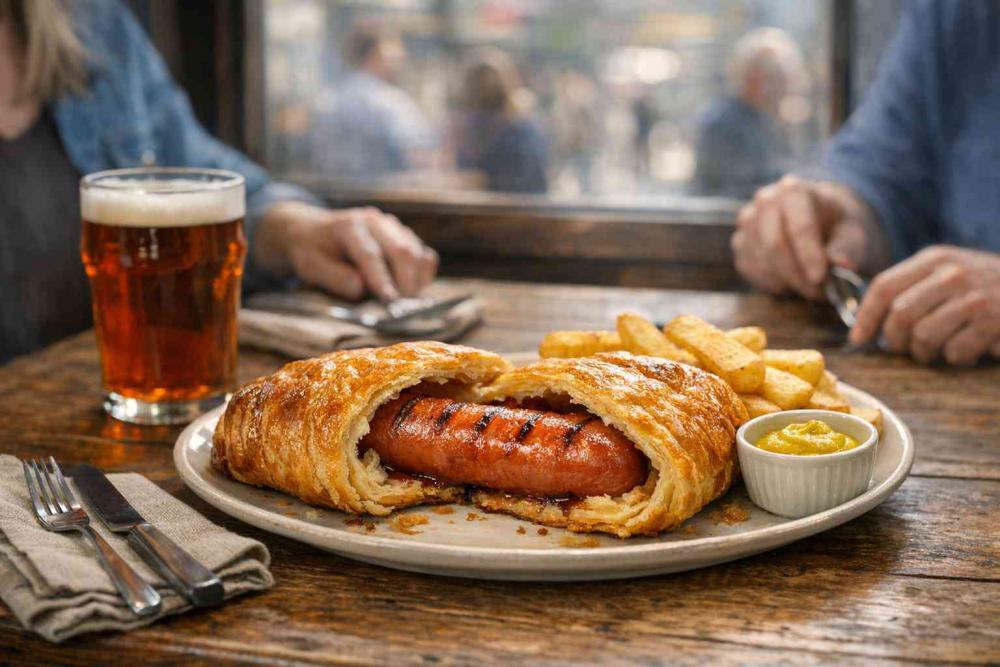
Giant sausage rolls work because they sit in a very useful part of the UK food market. Customers recognise the format instantly, but the larger size makes it feel more substantial than a small bakery snack. That matters for cafés, pubs, farm shops, garden centres and hot food counters, where a product needs to be easy to understand, quick to choose and worth the price.
The appeal is partly emotional. A sausage roll feels familiar, warm and reassuring. It does not ask the customer to take a risk. At the same time, a giant version gives operators more room to create perceived value. It looks generous in a display cabinet, photographs well for menus and can work as a proper lunch item rather than just an add-on.
For operators, the format also has practical advantages. It can be prepared in batches, baked consistently, displayed clearly and served without complex plating. Staff do not need long explanations, and customers do not need a complicated menu description.
The strongest commercial point is that a giant sausage roll can feel both traditional and upgraded. That is a useful combination. It keeps the comfort of a British classic, but gives enough size, visual impact and menu presence to justify a more considered foodservice offer.
What the Bacon Frankfurter Adds to the Classic Sausage Roll
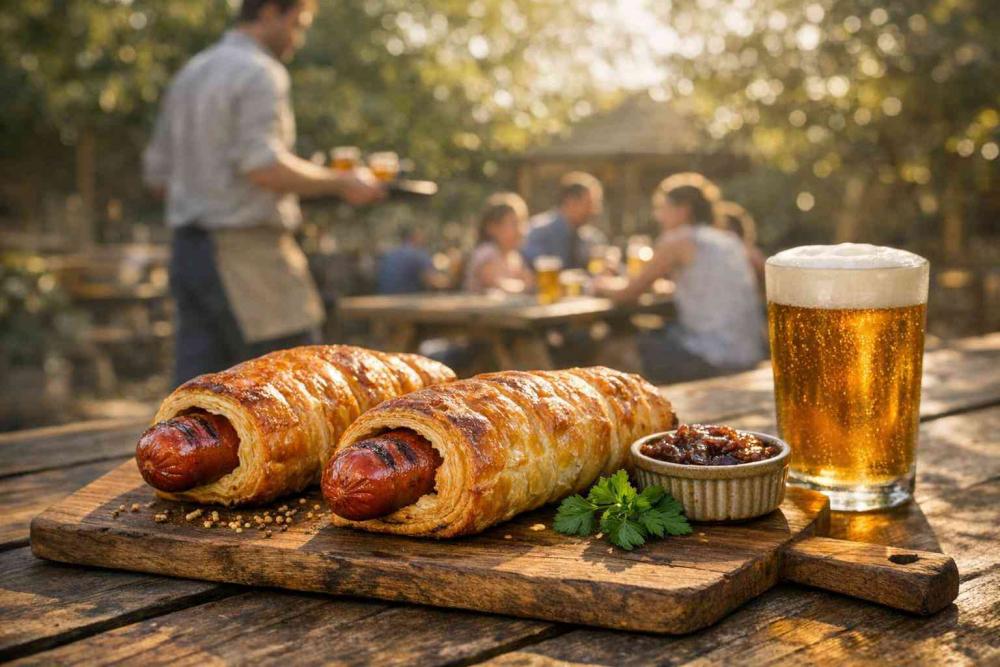
A standard sausage roll is usually built around sausage meat. That can be excellent when done well, but it can also become quite generic. Using a Bacon Frankfurter changes the centre of the product. It gives the sausage roll a more defined shape, a clearer bite and a more distinctive flavour profile.
This recipe guide from Food & Wine shows how puff pastry works around savoury fillings, which is useful when you want a sausage roll with a cleaner structure and a more defined shape.
The Bacon Frankfurter works particularly well because it brings a smoked, savoury note that fits naturally with pastry. It does not feel like an odd fusion idea. It still belongs in the comfort-food world, but the flavour is more deliberate than a plain filling. For a customer, that makes the product easier to remember.
The size also matters. A 25 cm, 150 g sausage gives the finished roll a proper centrepiece feel. It creates a long, generous sausage roll that looks different from the smaller versions customers see everywhere. That visual difference is useful on a counter, in a pub snack menu, or as a hot food special.
For operators, the Bacon Frankfurter also helps with consistency. Instead of relying only on loose filling, the sausage gives the product a more controlled core. That can make portioning, presentation and repeat production easier, especially when staff need to produce the same result across multiple batches.
The Best Serving Styles for Cafés, Pubs and Hot Food Counters
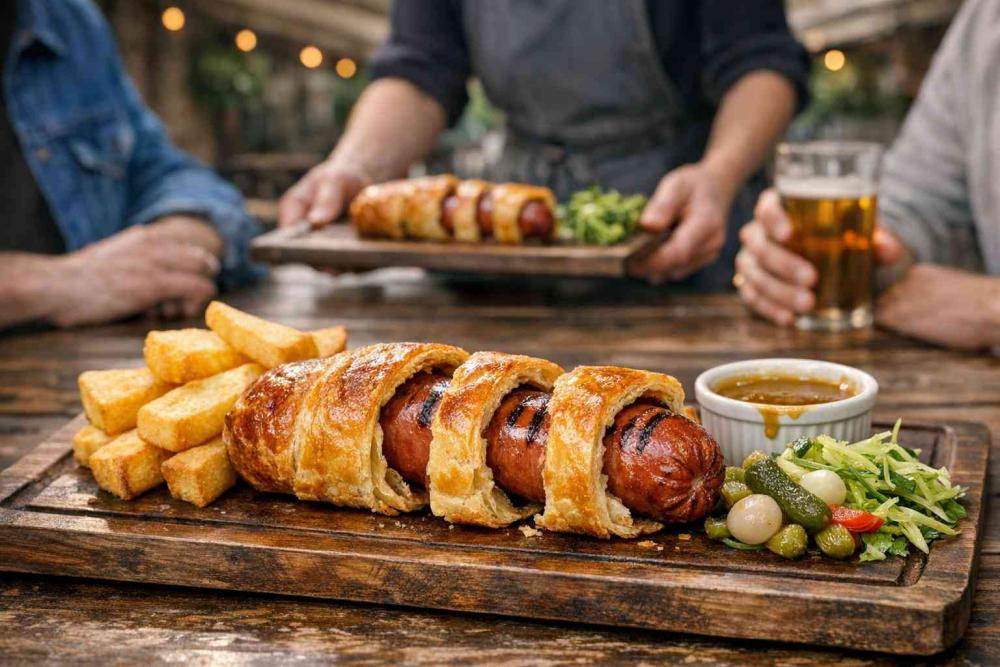
The best serving style depends on where the sausage roll is being sold. A café may want it as a filling lunchtime option. A pub may position it as a hot snack with chips, salad or pickles
This recipe guide shows how honey and mustard glazed sausages can be served as a pub-style hot snack with chips, salad or pickles.
For hot food counters, the simplest option is usually the strongest: serve it whole, warm and clearly labelled. The customer sees the size and understands the value straight away. A 25 cm Bacon Frankfurter sausage roll has enough presence to stand on its own, especially when the pastry looks golden and well finished.
For pubs and cafés, slicing can be useful. A whole giant sausage roll may be too large for some customers, but a half portion with a side salad, chips, coleslaw or mustard mayo can make it easier to fit into a lunch menu. Sliced portions can also work well for sharing boards or bar snacks.
Useful serving ideas include:
- whole with mustard, ketchup or curry ketchup
- half with chips, salad or slaw
- sliced into chunky pieces for sharing
- served with pickles for a sharper, more German-style plate
- offered as a premium hot counter special
The key is to avoid making the serving style too fussy. The product already has a clear idea. The sides and sauces should support it, not distract from it.
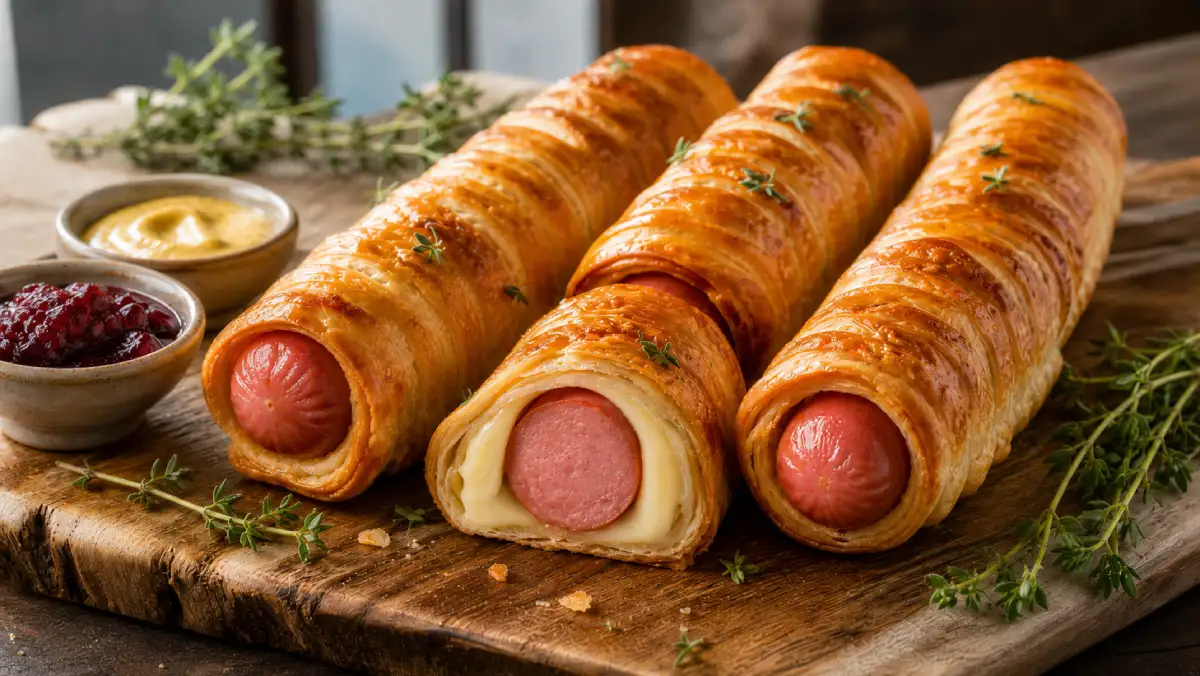
Giant Bacon Frankfurter Sausage Rolls with Brie and Cranberry
Ingredients
Method
- Line a large baking tray with baking parchment. Make sure the tray is long enough for the finished 25 cm sausage rolls, or use two trays if needed.
- Preheat the oven to 200°C fan or 220°C conventional. Keep the puff pastry chilled until you are ready to use it.
- Unroll the puff pastry sheets on a lightly floured surface if needed. Cut each sheet into two long rectangles, large enough to wrap around one full Bacon Frankfurter with a small overlap for sealing.
- Spread a thin line of cranberry sauce down the centre of each pastry rectangle. Add a few thin strips of brie alongside the cranberry. Do not overfill, as too much cheese can leak during baking.
- Place one Bacon Frankfurter on top of the cranberry and brie. If using mustard, brush a very thin layer onto the pastry or sausage before rolling. Add a little thyme and black pepper if using.
- Brush one long edge of the pastry with beaten egg. Roll the pastry firmly around the sausage, keeping the join underneath. Press the seam gently to seal. Tuck or crimp the ends lightly so the filling is enclosed but not squeezed too tightly.
- Place the sausage rolls on the lined tray and chill for 20 minutes. This helps the pastry hold its shape and bake more cleanly.
- Brush the tops with beaten egg. Score shallow diagonal lines across the pastry without cutting through to the sausage. Sprinkle with sesame or poppy seeds if using.
- Bake for 25 to 30 minutes, or until the pastry is well risen, deep golden and crisp. The sausage centre should be fully heated through according to the product’s handling instructions.
- Leave to rest for 5 minutes before serving. Serve whole as a substantial hot snack, or cut in half for café, pub or counter service. Mustard, curry ketchup, pickles, slaw or dressed leaves all work well alongside it.
Pastry, Portion Size and Bake Quality: The Details That Matter
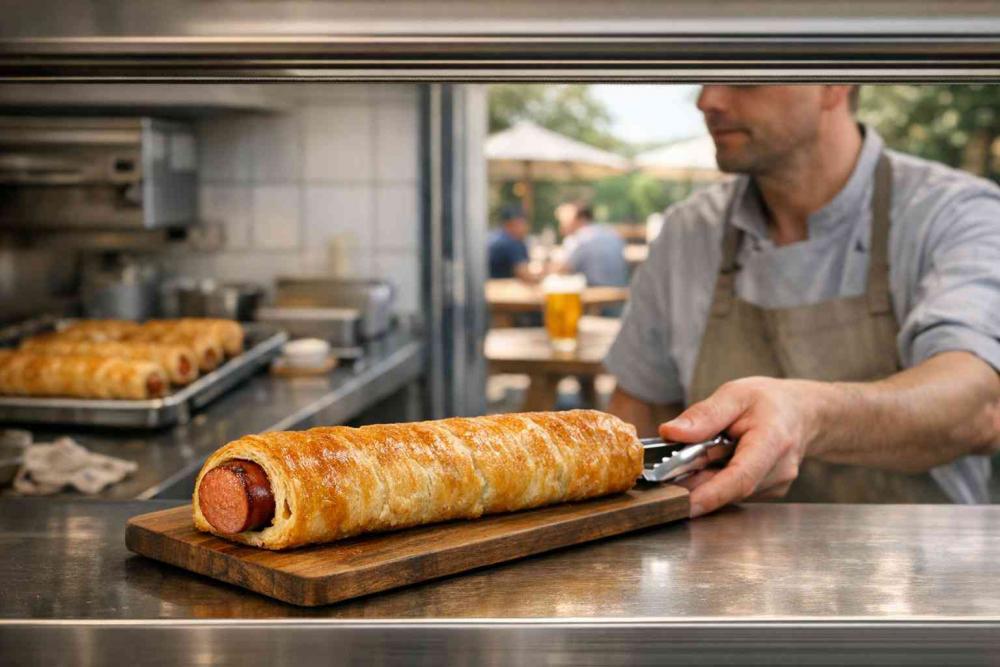
A giant sausage roll only works properly if the basics are right. The sausage can be distinctive, but poor pastry or uneven baking will still make the finished product feel ordinary. For this idea, the pastry needs to be crisp enough to hold its shape, rich enough to feel satisfying and strong enough to wrap around a 25 cm, 150 g Bacon Frankfurter without becoming heavy or soggy.
Portion size needs thought as well. A whole roll made with a full Bacon Frankfurter can be a substantial item. That can be excellent for perceived value, but it also means the operator should decide whether the product is being sold as a snack, a lunch item, or a shareable counter special. The same product can feel very different depending on how it is described and priced.
Bake quality is where consistency is won or lost. The pastry should be evenly coloured, with a clean golden finish and enough structure to stay appealing during service. Underdone pastry makes the product feel cheap. Overbaked pastry can make it dry and difficult to eat.
Operators should also think about practical holding. How long will it stay attractive in a hot display? Can it be reheated without drying out? Will staff know when a batch should be refreshed rather than pushed too long?
For a premium-feeling giant sausage roll, the details are not decorative. They are the difference between “large” and “worth buying”.
How to Position It Without Making the Menu Feel Too Busy
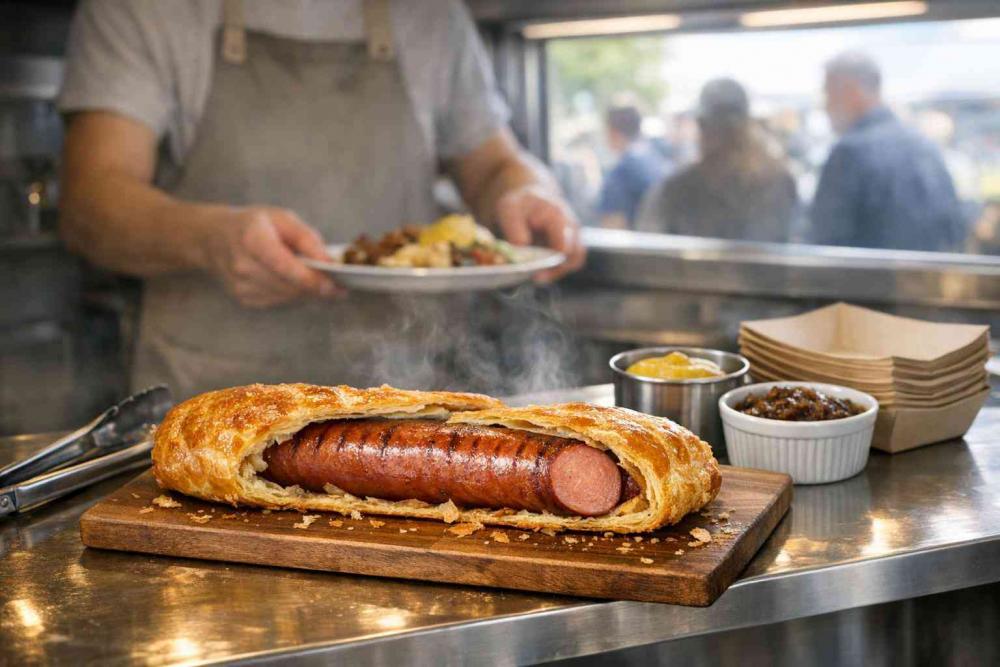
A giant sausage roll with Bacon Frankfurter should not need a complicated explanation. The best positioning is simple: a British sausage roll format, made larger and more distinctive with a proper German-style sausage centre. That is enough of a story for most customers.
Where operators can go wrong is by trying to turn the product into too many things at once. If the description includes bacon, German sausage, pastry, cheese, onions, sauces, loaded toppings and three side options, the idea starts to lose focus. A busy menu description can make a strong product feel less confident.
The cleaner approach is to give it one clear role. It might be the premium sausage roll on the counter, the warm lunch special, the pub snack with chips, or the garden centre hot food upgrade. Each version can work, but it should not try to be all of them at the same time.
A good menu description could be as simple as:
Giant Bacon Frankfurter Sausage RollA 25 cm German Bacon Frankfurter wrapped in golden puff pastry, served warm with mustard or ketchup.
That tells the customer what it is, why it is different and how it will eat. The product does the rest. For operators, this also helps staff. A simple description is easier to explain, easier to sell and easier to repeat across a busy service.
Where Giant Sausage Rolls Fit Best Commercially
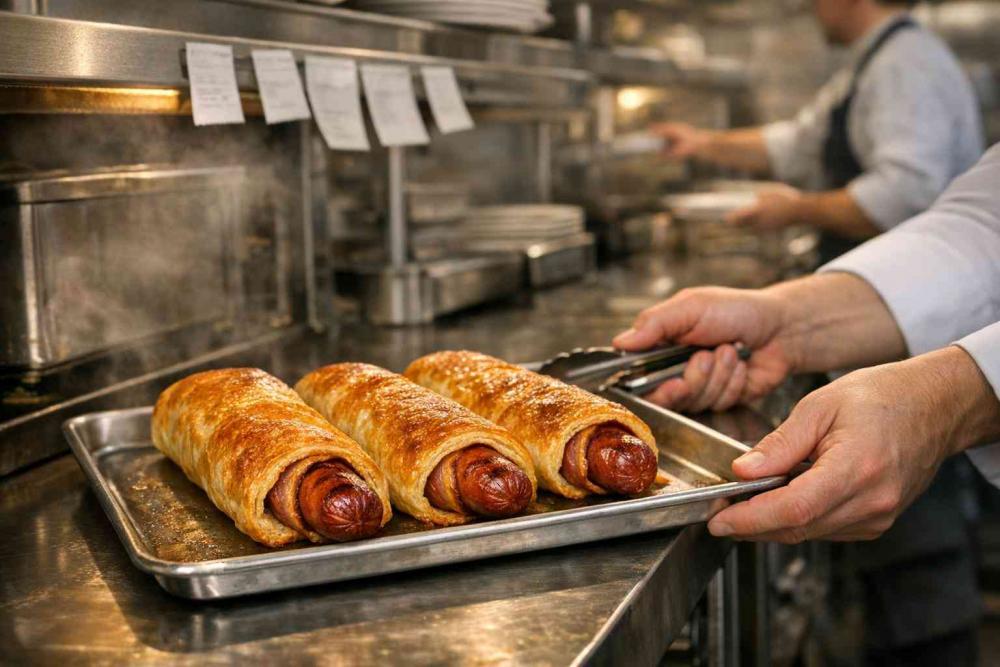
Giant sausage rolls fit best where customers already expect hot, filling, easy-to-buy food. They are not a fine-dining idea, and they do not need to be. Their strength is that they can sit between a snack and a meal, depending on portioning, sides and price point.
For cafés, they can work as a warm lunchtime special, especially when served with salad, slaw or chips. They give the menu something more substantial than a sandwich without needing a full cooked plate. For pubs, they can sit comfortably as a bar snack, lunch option or casual special, particularly when paired with mustard, pickles or fries.
Farm shops and garden centres are especially suitable because the product has strong counter appeal. A well-baked giant sausage roll is visible, familiar and easy to impulse-buy. Customers can understand it immediately from the display, which is useful in settings where people may not want to study a menu.
Event and mobile catering operators can also use the concept, but only if the service setup supports it. The question is not whether the product is attractive. The question is whether it can be baked, held, served and replenished cleanly without slowing the rest of the operation.
Commercially, it works best when it has a clear job: hot counter hero, lunch special, pub snack, or premium takeaway item.
Simple Sides, Sauces and Display Ideas That Help the Product Sell
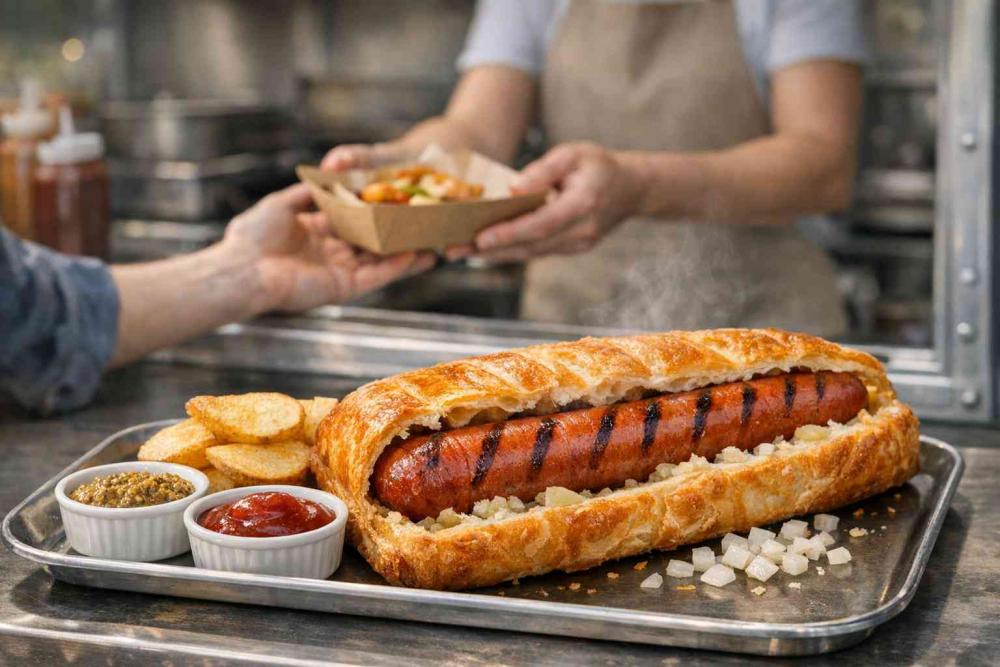
A giant sausage roll already has enough substance, so the supporting elements should be simple. The aim is to make it look more complete, not to bury it under extras. A good side or sauce should help the customer imagine the eating experience quickly.
This recipe guide shows a practical homemade currywurst sauce and serving ideas you can borrow when pairing frankfurters with bold German-style toppings.
Mustard is the most natural fit, especially if the article’s angle is a British classic with a German twist. Curry ketchup can also work well where the customer base likes a slightly sweeter, more street-food style flavour. Standard ketchup should not be dismissed either. For some counters, the familiar option helps the product feel easy and approachable.
For plated or semi-plated service, the best sides are uncomplicated:
- chips or skin-on fries for a filling pub-style plate
- slaw for a colder, sharper contrast
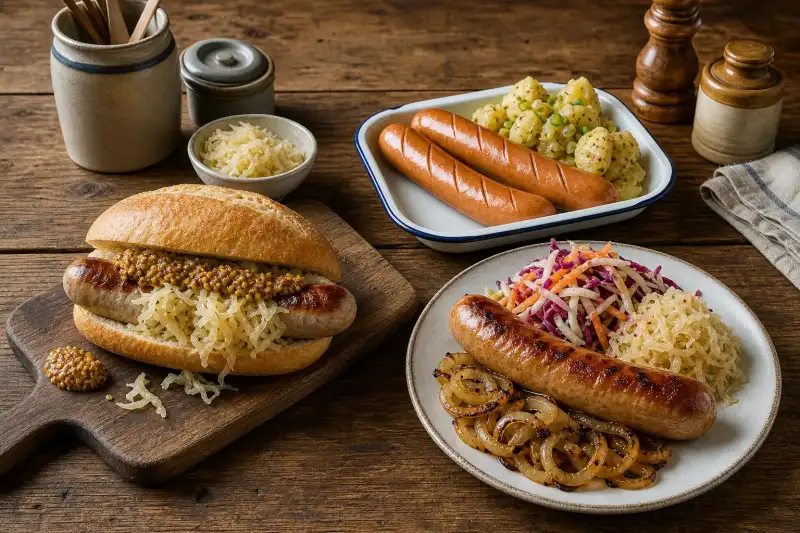
- pickles for a more German-style flavour balance
- simple dressed leaves for a lighter café lunch
- potato salad for a more deli-style offer
Display matters just as much as the side. A giant sausage roll should be shown in a way that makes the size and pastry quality obvious. Whole rolls look generous; cut examples show the Bacon Frankfurter centre and make the twist immediately clear.
For a hot counter, one sliced display piece can do a lot of selling. It shows that this is not just a larger standard sausage roll. It has a proper sausage core, a clear point of difference and a reason to choose it over the usual option.
Common Mistakes That Make Premium Sausage Rolls Feel Ordinary
The biggest mistake is assuming that size alone makes a sausage roll premium. A giant sausage roll can look impressive, but if the pastry is pale, soggy, dry or uneven, the customer will judge it as a larger version of something average. The bake has to look controlled and appetising.
Another common mistake is hiding the point of difference. If the customer cannot tell that the centre is a Bacon Frankfurter, the product loses much of its interest. That can happen when the menu description is too vague, the roll is never shown cut open, or staff describe it simply as “a big sausage roll”. The German sausage centre is the reason the product feels different.
Operators should also avoid overloading it. Too many toppings, sauces or fillings can make the product messy and harder to eat. The Bacon Frankfurter already brings flavour and structure. The pastry needs to frame it, not compete with it.
Holding is another area where quality can slip. A premium-looking sausage roll at 11:30 can look tired by 2:30 if the display and refresh rhythm are not managed properly. For any hot counter product, operators need a realistic plan for batch size, holding time and when to replace stock.
The final mistake is unclear positioning. If staff do not know whether it is a snack, lunch item, special or takeaway product, customers will not know either. A strong product still needs a clear commercial role.
Frequently Asked Questions
It depends on the setting and the price point. A whole giant sausage roll works well when you want a bold hot counter item or a substantial takeaway snack. It looks generous, feels clear to the customer and gives the product strong display value.
For cafés, pubs and garden centres, half portions can sometimes be easier to sell at lunchtime, especially with chips, salad, slaw or pickles. Sliced portions can also work for sharing boards, deli counters or tasting-style displays. The important point is to decide the role first: full meal-style snack, lighter lunch, or shareable item.
Yes, but the packaging and holding need to be thought through. A giant sausage roll can be a strong takeaway product because it is handheld, familiar and easy to understand. However, pastry can suffer if it is trapped too long in closed packaging while still hot.
For takeaway, operators should test how the product eats after five, ten and fifteen minutes in the chosen packaging. Venting, wrapping style and sauce placement all matter. Serving sauces separately is often cleaner than adding too much inside the packaging.
Lunch is probably the most natural fit, but it can also work well across the day depending on the venue. In a farm shop, bakery-style counter or garden centre, it could sell as a late-morning or lunchtime hot snack. In a pub, it may work better as a lunchtime special or early evening bar snack.
Breakfast can work if the customer base already buys savoury hot food early in the day, but the product may feel too substantial for some morning trade. The safer commercial route is usually to position it as a filling warm snack or simple lunch option.
Pricing should reflect the finished portion, the sausage quality, labour, pastry, sides, packaging, wastage and the setting. A giant sausage roll made with a 25 cm, 150 g Bacon Frankfurter should not be treated like a small bakery snack. It is a more substantial item with a clearer point of difference.
Operators should also compare it with nearby menu options. If it is sold whole, it may sit closer to a lunch item. If sold as a half portion with a side, it can be priced more flexibly. The customer needs to feel the value when they see the size, finish and serving style.
That depends on the product format, kitchen process and food safety system being used. Operators should follow the supplier’s handling guidance and make sure their own preparation method reaches the required safe serving standard.
From a practical point of view, the key is consistency. The sausage centre and pastry need to finish properly at the same time. If the sausage and pastry require very different cooking times, the process will need testing before the product goes into service. A good-looking pastry finish is not enough if the centre has not been handled and heated correctly.
Puff pastry is usually the most familiar and commercially attractive option because it gives the product lift, colour and a classic sausage roll appearance. It should be strong enough to hold the sausage without collapsing, but not so thick that the finished product feels heavy.
slightly more robust pastry sheet may work better than a very delicate one, especially for hot counters. The aim is a crisp, golden outside with enough structure for slicing, holding and serving. Operators should test the pastry after display time, not only straight from the oven.
The easiest way is through presentation, not complication. A clean display, a good golden bake, clear labelling and one cut-open example can make the product feel much more deliberate. Customers should immediately see that this is not just a larger standard sausage roll.
short description also helps: mention the Bacon Frankfurter, the giant format and the German twist. Add a simple sauce suggestion, such as mustard or curry ketchup, rather than overloading the counter with too many options.
Before launch, test the full trading reality, not just the recipe. That means checking bake time, batch size, holding quality, packaging, portioning, staff handling and customer description.
useful trial should answer these questions: Does it still look good after display time? Is it easy to serve quickly? Can staff explain it in one sentence? Does the portion match the price? Does the product fit the existing menu without slowing service? Those answers matter more than whether the idea sounds good on paper.
Conclusion
Giant sausage rolls with Bacon Frankfurter are not complicated, and that is part of their strength. They take a product UK customers already recognise and add a more distinctive filling, stronger visual appeal and a better point of difference for foodservice menus.
For operators, the commercial value sits in the balance between familiarity and novelty. A sausage roll is easy to sell because customers know what it is. The Bacon Frankfurter gives it enough character to feel more interesting than the standard version, especially when it is presented well and served hot with a simple sauce, side or counter display.
The best approach is restrained. Keep the pastry good, the portion clear, the bake consistent and the serving style easy for staff to repeat. Avoid turning a strong simple idea into a crowded recipe. In many settings, the product’s appeal comes from looking generous, tasting properly savoury and being easy to buy without a long explanation.
For cafés, pubs, farm shops, garden centres, event caterers and hot food counters, this is a practical way to make a familiar British snack feel more distinctive. Done well, it can be a small menu idea with a useful amount of pull.
About The Sausage Haus
The Sausage Haus supplies authentic German sausages for UK operators who want a stronger, more reliable sausage offer without making service unnecessarily complicated. The range is built around practical foodservice needs: consistent products, clear menu uses, strong customer appeal and faster execution for busy counters, cafés, pubs, events and catering operations.
The sausages are produced by Remagen, a long-established German producer known for proper German sausage quality, and distributed in the UK by Baird Foods. This gives UK foodservice buyers access to German-style sausages with the supply route and commercial support needed for everyday trading.
The Sausage Haus is not just about adding another sausage to the menu. The focus is on helping operators create cleaner, faster and more profitable sausage-based offers, from bratwurst rolls and hot dogs to premium specials, seasonal dishes and counter-friendly food ideas such as giant sausage rolls with Bacon Frankfurter.