Many supermarket hot dogs are cheap, convenient and easy to sell, but not always memorable. For UK caterers, pubs, cafés, farm shops and event traders, that matters. A better sausage offer can change the whole feel of a menu item, from a soft filler product into something customers notice, enjoy and buy again.

Choose Sausage First

Look For Proper Bite

Keep The Menu Simple
Overview
Many supermarket-style hot dogs are built around convenience, shelf life, mild flavour and low cost. That can make them easy to sell at retail, but it often leaves the sausage feeling soft, bland or secondary to the toppings.
For chefs, caterers, showmen and food buyers, the article looks at why this matters commercially. A hot dog served away from home needs to feel worth buying, especially when it is competing with burgers, loaded fries, wraps, pizza and other quick-serve options.
The core argument is simple: the sausage should carry the dish. Better bite, clearer seasoning and a more substantial texture can make a straightforward hot dog feel more deliberate, easier to serve and more credible on a menu.
Key Takeaways
- Cheap, convenient hot dogs can work for home snacking, but may feel weak in a paid foodservice setting.
- Customers notice bite, texture, flavour and whether the sausage feels substantial, even if they do not describe it technically.
- A soft or bland sausage can make the whole menu item feel less considered, regardless of the bun or toppings used.
- German-style sausages such as frankfurters, bratwurst, bockwurst and smoked sausages offer a clearer centrepiece for a hot dog build.
- A focused serve with a good sausage, suitable roll, simple sauce and one garnish can be more effective than an overloaded build.
- For events, pubs, cafés, farm shops and retail counters, a better sausage offer can improve perceived value and service practicality.
Why the Standard Supermarket Hot Dog Often Feels So Flat
The standard supermarket hot dog is usually designed around convenience first. It needs to be cheap enough for the shelf, mild enough for broad appeal, easy to pack, quick to heat and consistent from one batch to the next. None of those things are wrong in themselves. The problem is that flavour and texture can become secondary.
That is why many supermarket hot dogs have the same familiar weakness. They are soft, salty, slightly smoky and not especially distinctive. They sit in the bun without bringing much character of their own. The toppings then have to do most of the work, which is why so many home-style hot dogs rely heavily on ketchup, mustard, onions, pickles, cheese or chilli.
For a household snack, that may be acceptable. For a commercial food offer, it is more limiting. A pub, café, farm shop counter, event stall or garden centre menu cannot rely only on familiarity. The customer still needs to feel that the product is worth buying away from home.
This is where many supermarket hot dogs feel like an afterthought. They are treated as a background item rather than the main reason for the dish. In a stronger sausage offer, the sausage itself should carry the eating experience. The bun, sauce and garnish should support it, not rescue it.
What Customers Actually Notice When They Eat a Hot Dog
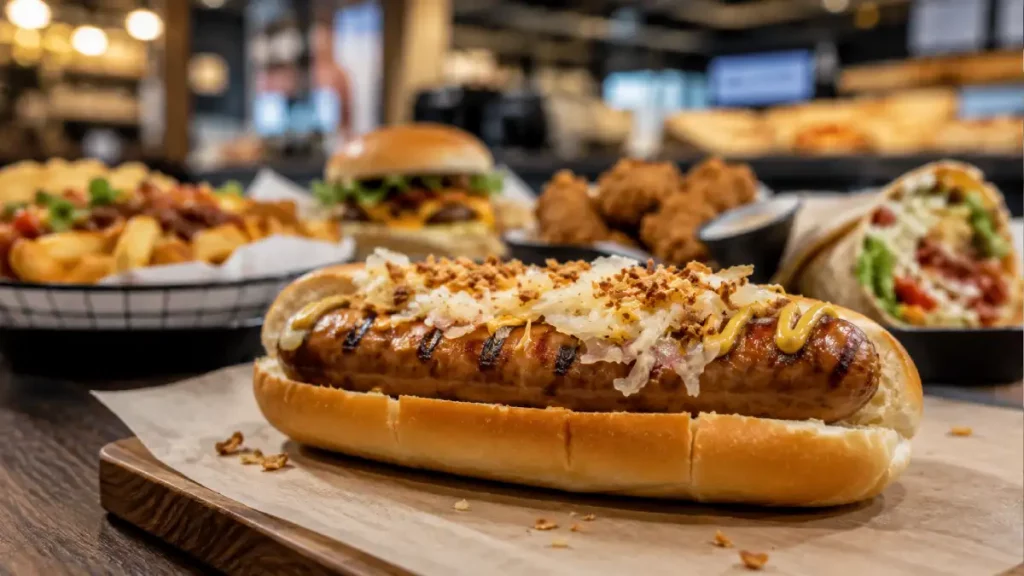
Customers may not describe a hot dog in technical terms, but they notice more than many operators think. They notice whether the sausage feels substantial or flimsy. They notice whether it has a proper bite, whether it tastes of something beyond salt and smoke, and whether the whole thing feels like a meal or just a quick filler.
This tourism guide to Munich sausages explains the different German styles, textures, and serving traditions that help define a proper bite.
In a busy setting, customers also make fast value judgements. At a festival, market, pub garden or café counter, they are not only asking, “Is this hot dog cheap?” They are often asking, “Does this look worth the money compared with everything else around me?” That comparison matters, especially when burgers, loaded fries, pizza slices, fried chicken and wraps are all competing for attention.
A better sausage helps before the customer has even taken a bite. It looks more generous, holds itself better in the bun and gives the dish a clearer identity. Once eaten, the difference becomes more obvious. A good frankfurter, bratwurst or smoked pork sausage gives the customer texture, seasoning and satisfaction without needing a mountain of extras.
The most useful hot dog products for trade are not necessarily the most complicated. They are the ones customers understand quickly and enjoy easily. A strong sausage, a good roll, one or two well-chosen toppings and clean service can often beat an overloaded hot dog that looks exciting but eats poorly.
Texture, Snap and Bite: The Difference Between Filling and Satisfying
A hot dog can be filling without being satisfying. That distinction is important for operators because customers remember the eating quality, not just the portion size. A large but soft, bland sausage may take up space in the bun, but it does not necessarily create the feeling of a proper meal.
Texture is a major part of that difference. A good sausage gives resistance when bitten. It should not collapse into the bun or feel rubbery, spongy or watery. In German-style sausages, the balance between casing, meat texture, seasoning and cooking method gives the product more presence. That presence makes the whole dish feel more deliberate.
The “snap” of a frankfurter or the firmer bite of a bratwurst also changes how the customer experiences value. It makes the sausage feel like the centre of the dish rather than a soft tube hidden under sauce. This matters in foodservice because a simple product still needs to feel worth paying for.
For operators, better texture has practical advantages too. A sausage that holds well, cooks consistently and sits neatly in the roll makes service cleaner and faster. Staff do not need to compensate with excessive toppings or complicated plating. The product does more of the work.
That is the difference between feeding someone and giving them something they would happily order again.
Why Price-Led Sausages Can Undersell the Whole Menu
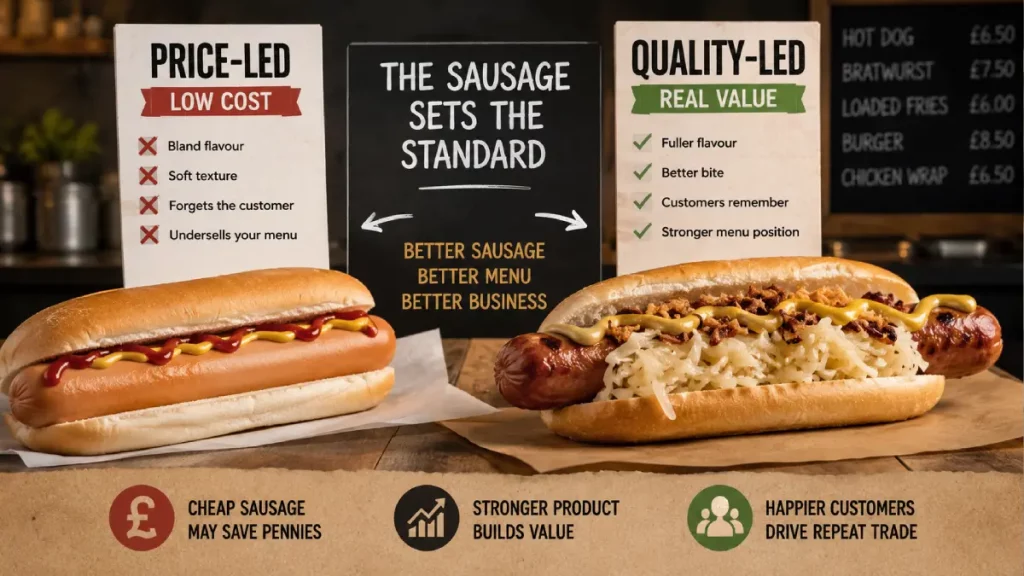
It is understandable that operators look closely at unit cost. Margins matter, especially in event catering, pub food, retail foodservice and seasonal trading. But the cheapest sausage is not always the most commercial choice. If the main ingredient weakens the whole dish, the saving can be false economy.
A price-led hot dog can make the menu feel less considered. Even with a decent bun and toppings, customers often sense when the sausage itself is the weak point. The result may still sell, but it may not build much enthusiasm, repeat trade or word-of-mouth. It becomes a “that will do” purchase rather than something people actively seek out.
There is also a pricing issue. A better sausage can support a stronger menu position because it gives the operator something real to talk about: German-style quality, better bite, more distinctive flavour, a more satisfying hot dog or a more premium sausage roll offer. That does not mean the product has to be dressed up with exaggerated language. It simply gives the menu more substance.
For pubs, cafés, farm shops and garden centres, this can help a simple sausage dish sit more comfortably alongside other quality food. For festival traders
The point is not to buy the most expensive sausage available. The point is to avoid building a menu around a product that makes everything else look cheaper than it needs to.
The Retail Shelf Problem: Convenience, Uniformity and Low Expectations
Supermarket hot dogs often sit in a difficult part of the market. They are usually expected to be cheap, long-lasting, easy to store and familiar enough for almost anyone to buy. That makes sense for retail logistics, but it does not always produce an exciting eating experience.
The shelf rewards products that are safe choices. Mild flavour, uniform shape, soft texture and simple heating instructions all help a pack appeal to a wide audience. The result is often a product that avoids obvious problems but also avoids having much character. It is not bad enough to offend, but not good enough to remember.
That has shaped customer expectations. Many people approach supermarket hot dogs with the assumption that they will be convenient rather than genuinely enjoyable. They expect something quick for children, barbecues, late-night snacks or easy weekend food. They do not necessarily expect the sausage to be the highlight.
For UK operators, this creates both a warning and an opportunity. The warning is that a generic hot dog can carry those same low expectations into a commercial setting. The opportunity is that it does not take a wildly complicated menu to improve on them.
A better sausage, cooked properly and served cleanly, can quickly change the customer’s impression. When the product has more flavour, bite and presence, the hot dog stops feeling like a supermarket habit and starts feeling like a proper foodservice choice.
What UK Operators Can Learn from Better German Sausage Products
German sausage products offer a useful lesson for UK operators because they are built around the sausage first. The bun, sauce and garnish matter, but they are not there to hide a weak centrepiece. A good bratwurst, frankfurter, bockwurst or smoked sausage should already bring seasoning, texture and identity before anything else is added.
This recipe guide shows a traditional Thüringer-style bratwurst approach that helps put sausage flavour and identity at the centre of the plate.
That is commercially useful because it keeps the menu focused. Operators do not need twenty toppings or a complicated build to make the dish feel worthwhile. A proper sausage, a suitable roll, mustard, onions, curry ketchup, sauerkraut or a simple side of chips can be enough when the product itself has character.
This matters across different trade settings. At events, speed and clarity are critical. In pubs, the dish needs to sit comfortably with the rest of the menu. In farm shops and garden centres, customers often expect something a little more considered than the cheapest convenience option. In cafés, the product needs to be easy for staff to execute without turning the kitchen into a production line.
Better German sausage products can help because they bring a clear food identity. They are familiar enough for UK customers to understand, but distinctive enough to avoid looking like the same old hot dog.
The key lesson is simple: when the sausage is strong, the menu can stay simple. That is often better for service, margin control and customer satisfaction.
How a Stronger Sausage Offer Improves Perceived Value
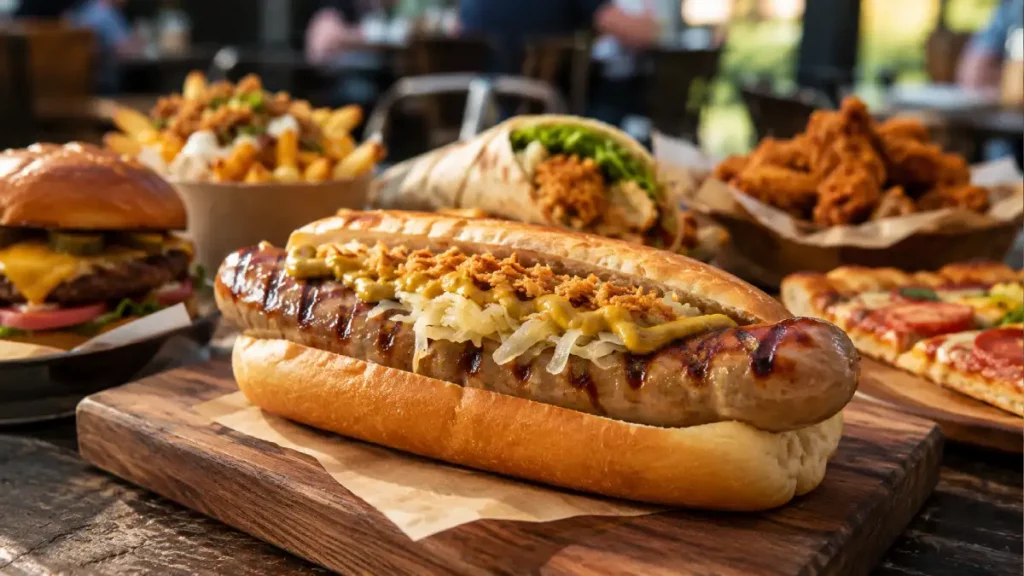
Perceived value is not only about portion size. Customers judge value by how the food looks, smells, eats and compares with nearby options. A larger but forgettable hot dog can still feel poor value if the sausage is soft, bland or lost under toppings. A more distinctive sausage can make a simpler dish feel more worthwhile.
This tourism page highlights a Stuttgart sausage-making course that shows how meat selection, seasoning, filling, and casing affect what makes a more distinctive sausage.
This is especially important in UK foodservice, where hot dogs often compete with burgers, loaded fries, wraps, chicken, pizza and other quick-serve favourites. A standard hot dog can look like the budget option unless the sausage gives it a stronger point of difference.
A better sausage offer improves perceived value in several practical ways:
- it gives the dish a clearer identity
- it makes the product feel more substantial
- it supports cleaner, simpler menu descriptions
- it reduces the need for excessive toppings
- it helps justify a more confident selling price
- it makes the operator look more specialist
That does not mean every hot dog needs to become a luxury product. In many settings, the best commercial approach is still fast, simple and familiar. The difference is that the customer can immediately see and taste why the product is not just the cheapest sausage in a bun.
For traders, pubs, cafés and retail food counters, that matters. A stronger sausage can make the same basic format feel more deliberate, more satisfying and more credible on the menu.
When a Hot Dog Becomes a Proper Foodservice Product
A hot dog becomes a proper foodservice product when it is designed as a complete offer, not just assembled from convenient parts. The sausage, roll, cooking method, holding setup, garnish, portion size, price and service flow all need to work together.
This is where many basic hot dogs fall short. The sausage may be too soft, the bun too sweet, the toppings too wet, or the build too messy for fast service. The dish might taste acceptable at home, but become awkward when served at volume, especially at events or during busy lunch trade.
A good foodservice hot dog needs more discipline. It should be easy to explain, quick to serve and consistent under pressure. It should also hold its quality long enough for real trading conditions, whether that means a pub kitchen, festival trailer, garden centre counter or farm shop café.
The strongest versions are usually not the most complicated. They often follow a clean formula: a good sausage, a roll that fits properly, one main sauce, one garnish and a clear side option. That structure helps staff serve quickly and helps customers decide quickly.
For The Sausage Haus, this is where German-style sausages fit naturally. They give operators a stronger centrepiece without forcing the menu to become fussy. The hot dog remains familiar, but the product behind it feels more serious, more practical and more worth ordering.
Frequently Asked Questions
Not always, but they are usually built for a different job. A supermarket hot dog is normally designed for home convenience, broad appeal and retail shelf value. That can work for a quick family snack, but it may not give a pub, café, event trader or food counter enough character to build a proper menu item around.
For trade use, the question is not simply whether the product is edible. It is whether it helps the operator sell a dish with confidence. If the sausage needs heavy toppings, strong sauces or a very low price to feel worthwhile, it may be holding the menu back.
Yes, because the sausage still decides whether the hot dog feels satisfying once the first impression has passed. Ketchup, mustard and onions can make a simple hot dog enjoyable, but they cannot fully fix a weak centrepiece.
better sausage gives the dish more flavour and bite even when the topping setup stays simple. That is useful commercially because it lets operators keep service fast without turning every hot dog into an overloaded build. The toppings become a finishing touch rather than a rescue mission.
Some will, if the value is clear. Customers do not usually pay more just because a menu says “premium”. They are more likely to accept a stronger price when the product looks substantial, tastes different from a basic supermarket-style hot dog, and feels like something they would not simply make at home.
The setting matters too. At a festival, garden centre, farm shop café or pub, customers are often already expecting a more considered food offer. A better sausage can support that expectation, but the price still needs to fit the location, portion size, local competition and overall menu.
For many operators, one strong core hot dog is the best place to start. It keeps buying, prep, staff training and service flow simpler. Once that is working well, additional sausage options can be added if there is clear customer demand.
simple starting range might include one classic frankfurter-style option and one more distinctive sausage, such as a bratwurst or smoked pork sausage. The important point is not to make the menu look large. It is to make the choices easy to understand and easy to serve well.
Operators should check the practical details before changing the menu, especially if the product will be served at volume. That includes cooking method, holding setup, staff workflow, bun fit, storage space, portion cost and likely selling price.
For event traders, site rules and equipment restrictions also matter. Gas use, electrical load, food handling setup, local authority expectations and event-specific requirements should be checked before designing the final offer. A better sausage only works commercially if the operation behind it is clean, legal, fast and repeatable.
Yes. German sausages are strongly associated with Oktoberfest and Christmas markets, but they do not need to be limited to those occasions. A good bratwurst, frankfurter or smoked sausage can work in pub gardens, farm shop cafés, street food pitches, garden centres, retail food counters and event catering throughout the year.
The menu language may change by season. In winter, currywurst, bratwurst with chips or loaded sausage dishes can feel natural. In warmer months, a cleaner hot dog, grilled sausage roll, lighter salad side or beer garden-style offer may fit better. The product can stay simple while the serve adapts.
The easiest way is to improve the base product first, then keep the build controlled. A good sausage, a suitable roll, one main sauce and one garnish can feel far more coherent than a long list of toppings that slow service and create mess.
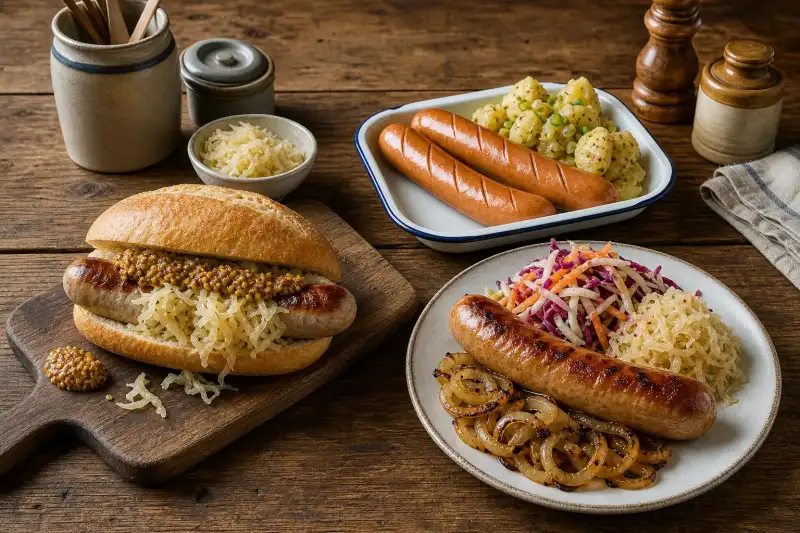
For example, a smoked sausage with mustard and crispy onions, a bratwurst with curry ketchup, or a frankfurter with sauerkraut and mustard can all feel distinctive without becoming difficult to execute. The aim is not to create novelty for its own sake. It is to give customers a clear reason to choose the hot dog.
The biggest mistake is treating the sausage as the least important part of the dish. That usually leads to overcompensation elsewhere: too many toppings, too much sauce, oversized buns, messy builds or price-led menu positioning.
commercially stronger approach starts with the sausage and builds around it. When the centrepiece has flavour, texture and a clear identity, the rest of the dish can stay simpler. That usually helps staff, customers and margins.
They can work as either, but the positioning should be deliberate. A smaller hot dog or sausage roll can be a useful bar snack, lunch item or children’s option. A larger serve with chips, salad, sauerkraut or a side dish can sit more comfortably as a full meal.
The key is to avoid the awkward middle ground where the product is priced like a meal but eats like a snack. Portion size, side options and menu wording should make the role clear. Customers are more forgiving when they immediately understand what the dish is meant to be.
The Sausage Haus fits where operators want a German-style sausage offer that feels more considered than a generic supermarket hot dog, but still practical for real service. The range can support simple hot dogs, bratwurst serves, currywurst-style dishes, sausage-and-chips offers and retail or foodservice counters.
The best use is not to make the menu complicated. It is to give the operator a stronger centrepiece, so the final dish feels cleaner, more distinctive and easier to sell.
Conclusion
Most supermarket hot dogs do their job in the narrowest sense. They are convenient, familiar and usually inexpensive. But that is also the problem. When the sausage itself feels soft, bland or anonymous, the whole dish has to work harder around it. More toppings, stronger sauces, bigger buns and heavier portions are often used to compensate for a product that does not bring much character of its own.
For UK operators, that creates a useful commercial lesson. A hot dog is not just a vehicle for ketchup, mustard and onions. The sausage sets the tone. It affects bite, flavour, perceived quality and whether the customer feels they have bought something worth the money.
This does not mean every caterer, pub, farm shop or event trader needs a complicated sausage menu. In many cases, the opposite is true. A small, well-chosen range of proper German-style sausages can make the offer cleaner, faster and easier to execute. The customer still recognises the format, but the eating experience feels more deliberate.
That is where a stronger sausage product earns its place. It helps a simple menu item feel less like an afterthought and more like a reason to order. For operators who want a hot dog offer with better flavour, stronger identity and practical foodservice value, The Sausage Haus range is a sensible place to start.
The Sausage Haüs
The Sausage Haus brings authentic German-style sausages to the UK market through a partnership between Hardy Remagen and Baird Foods.
Hardy Remagen is a long-established German producer with deep experience in traditional sausage making, continental meat products and modern food manufacturing. The range reflects the kind of products German shoppers already understand and enjoy: Bratwurst, Frankfurters, smoked hotdogs, cheese-filled sausages, Bockwurst, Weisswurst and other classic German-style lines.
In the UK, the range is represented and distributed by Baird Foods, giving retailers, wholesalers, caterers and foodservice operators access to German sausage products with a practical UK supply route. This combination is important: German manufacturing knowledge on one side, UK market understanding and distribution on the other.
For retail buyers, The Sausage Haus range offers a clear way to add something different to both chilled and frozen sausage fixtures. The products are built around real eating occasions: BBQs, premium hotdog nights, family meals, German street food, Oktoberfest promotions, Christmas market food and quick comfort meals at home.
The result is a range that gives shoppers something more distinctive than ordinary sausages and standard hotdogs, while giving buyers a compact, commercially useful product story with strong fresh and frozen potential.