Sausage mac and cheese bake with bacon frankfurters is a straightforward comfort-food dish with real trade appeal. It brings together creamy pasta, smoky sausage flavour and easy oven-baked service, making it useful for pubs, cafés, event caterers and foodservice operators who want a filling menu item that feels familiar but a little more distinctive.

Smoky flavour boost
Easy to menu and sell

Flexible service format
Overview
This article looks at how bacon frankfurters can turn a familiar mac and cheese bake into a more distinctive foodservice dish, with smoky flavour, clear portioning and broad customer appeal.
It is aimed at operators considering the bake as a pub special, café lunch dish, hot counter option, loaded side or event-friendly bowl. The focus is on practical service: balance, holding, presentation, portion control and menu fit.
Key Takeaways
- Bacon frankfurters add smoke, seasoning and bite, helping the bake feel like a complete dish rather than plain pasta with extras.
- Even sausage slicing supports consistent portions, which is important for cafés, caterers, pubs and high-volume service.
- The sauce should stay creamy without becoming too rich or greasy; freshness from slaw, herbs, salad or pickles can help balance the plate.
- Service format matters: the same base dish can work as a plated main, tray-baked hot counter item, loaded side or compact event bowl.
- Operators should test holding, portioning, oven space, allergen controls, costing and waste before adding it to a commercial menu.
Why Bacon Frankfurters Work So Well in Mac and Cheese
Mac and cheese needs a savoury centre of gravity. Cheese sauce brings richness, pasta brings comfort, but without a strong flavour element the dish can become soft, heavy and a little one-note. Bacon frankfurters solve that neatly because they bring smoke, seasoning and a firm sausage bite
That matters especially in foodservice. A standard mac and cheese can be popular, but it often needs extras to make it feel like a proper meal. Adding bacon frankfurters gives the dish a clearer identity: it is no longer just a side, a children’s option or a vegetarian-style comfort dish with meat added as an afterthought. It becomes a sausage mac and cheese bake with a definite flavour profile.
Bacon frankfurters also work well because they are easy to portion. Sliced through the bake, they give regular pieces of sausage in each serving and help the dish eat more evenly. Customers get the creamy pasta they expect, but also the smoky savoury lift that keeps the bowl interesting.
For operators, the benefit is not only taste. Bacon frankfurters are familiar enough not to confuse customers, but distinctive enough to make the dish stand apart from a basic pasta bake. That is a useful middle ground: approachable, easy to describe and commercially stronger than a plain mac and cheese.
A Comfort Dish That Still Feels Menu-Worthy
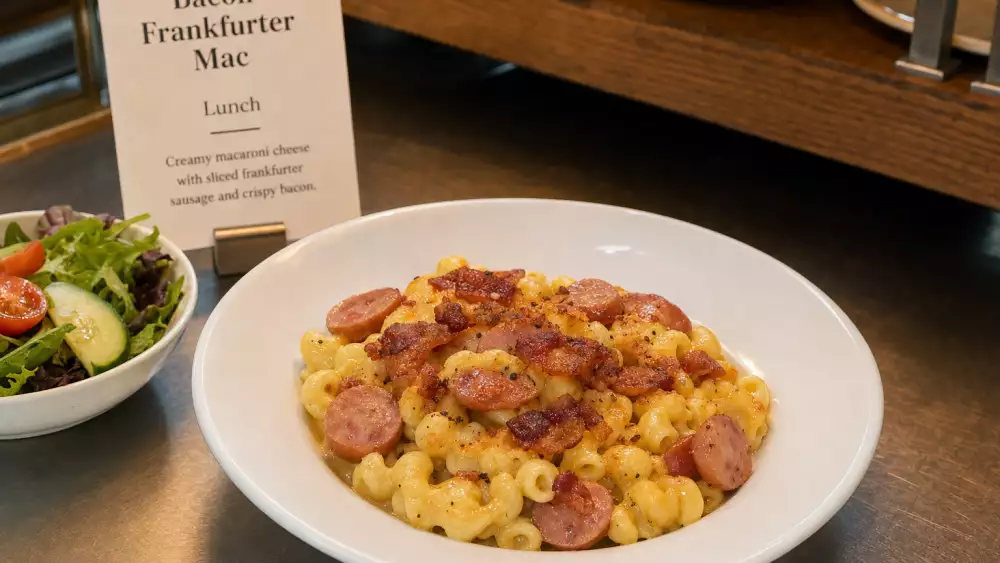
Comfort food works best when it feels generous but not lazy. Mac and cheese has obvious customer appeal because it is warm, creamy and familiar. The challenge for a pub, café, farm shop kitchen or event caterer is making it feel like a considered menu item rather than a simple tray of pasta and cheese.
Bacon frankfurters help move the dish into more menu-worthy territory. They add a recognisable premium ingredient, a stronger eating experience and a more satisfying protein element. That makes the bake easier to position as a lunch dish, hot counter option, sharing side or casual main, depending on portion size and service style.
The appeal is also practical. Customers do not need a long explanation to understand the dish. “Mac and cheese bake with bacon frankfurters” tells them almost everything they need to know. It sounds hearty, smoky and filling without leaning on overworked menu language.
For trade use, that clarity is valuable. A dish that is easy to understand is easier to sell at speed, especially in busy service environments where customers make decisions quickly. It also gives staff a simple way to describe the product: creamy baked macaroni, smoky bacon frankfurter pieces and a golden top.
Done well, the dish sits in a useful space between familiar comfort and stronger sausage-led menu development. It is not trying to be fine dining. It is trying to be the kind of dish people see, understand and want.
Where This Bake Fits in a UK Foodservice Menu
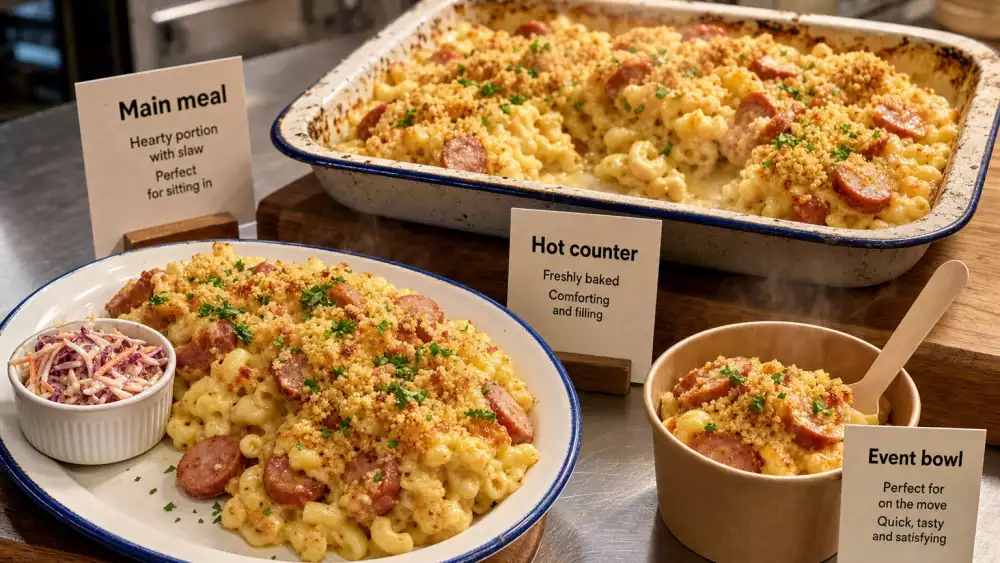
A sausage mac and cheese bake is flexible because it can play several menu roles. It can be a main meal, a loaded side, a hot deli option or a special board item. That makes it useful for operators who want more from their sausage range than a standard hot dog or bratwurst in a roll.
This industry body advice explains how flexible pub dishes can fill different menu roles, which is useful when positioning a sausage mac and cheese bake as a main, side, deli option or special.
In pubs, it can work as a comforting lunch or evening special, especially with a small salad, slaw, garlic bread or chips. In cafés and garden centres, it can sit well as a hot counter dish because it looks generous, holds visual appeal and feels familiar to a broad customer base. For event caterers and street food traders, smaller portions can work as a bowl food option where speed and ease of eating matter.
There are several practical routes:
- Main dish: a generous baked portion with garnish and a simple side.
- Loaded side: a smaller serving alongside burgers, sausages or grilled meats.
- Hot counter option: tray-baked and portioned for lunch service.
- Event bowl: compact, filling and easy to eat standing up.
- Family-friendly special: familiar enough for younger customers, with enough flavour for adults.
The best fit depends on the operation. A pub may want a plated comfort dish. A festival trader may want a tighter, faster bowl format. A farm shop café may want something warming, reliable and easy to explain. The same core dish can support all three, provided the portion, topping and service format are adjusted properly.
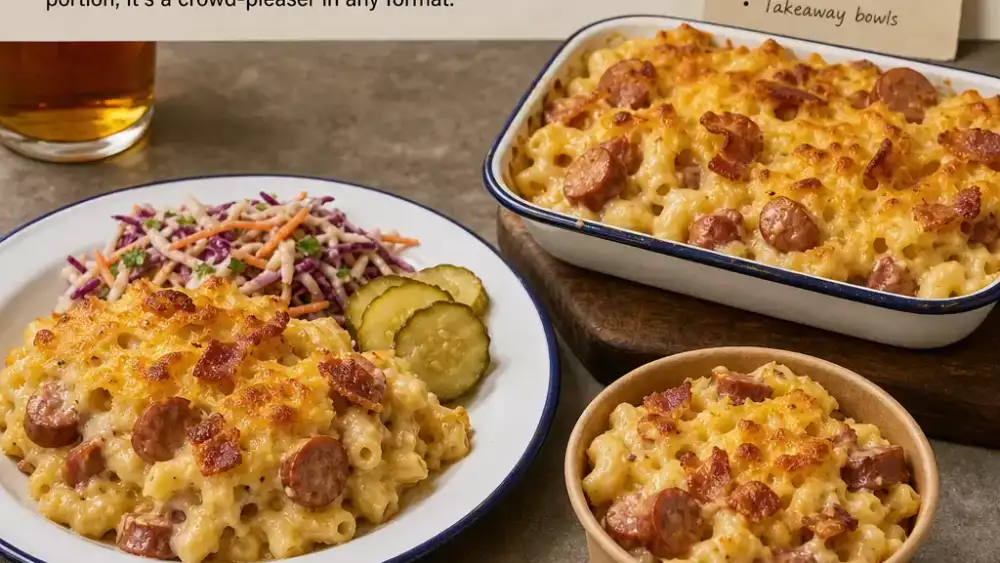
Sausage Mac and Cheese Bake with Bacon Frankfurters
Ingredients
Method
- Preheat the oven to 190°C / 170°C fan / gas mark 5.
- Cook the macaroni in salted boiling water until just al dente. Drain well and set aside. Do not overcook the pasta, as it will soften further in the oven.
- Melt the butter in a saucepan over a medium heat. Stir in the flour and cook for 1 minute, stirring constantly, to make a smooth roux.
- Gradually add the milk, whisking well after each addition to avoid lumps. Continue cooking for 4 to 5 minutes until the sauce thickens and coats the back of a spoon.
- Stir in the Dijon mustard, then add the grated cheddar and mozzarella. Mix until melted and smooth. Season with salt and black pepper to taste.
- Add the cooked macaroni and sliced bacon frankfurters to the cheese sauce. Stir gently until everything is evenly coated.
- Transfer the mixture to a medium baking dish and spread it out evenly.
- Mix the breadcrumbs, grated cheddar and melted butter in a small bowl. Scatter the topping evenly over the pasta.
- Bake for 20 to 25 minutes, until bubbling at the edges and golden on top.
- Leave to stand for 5 minutes before serving. Finish with chopped parsley or chives if using.
Getting the Balance Right: Creamy, Smoky and Not Too Heavy
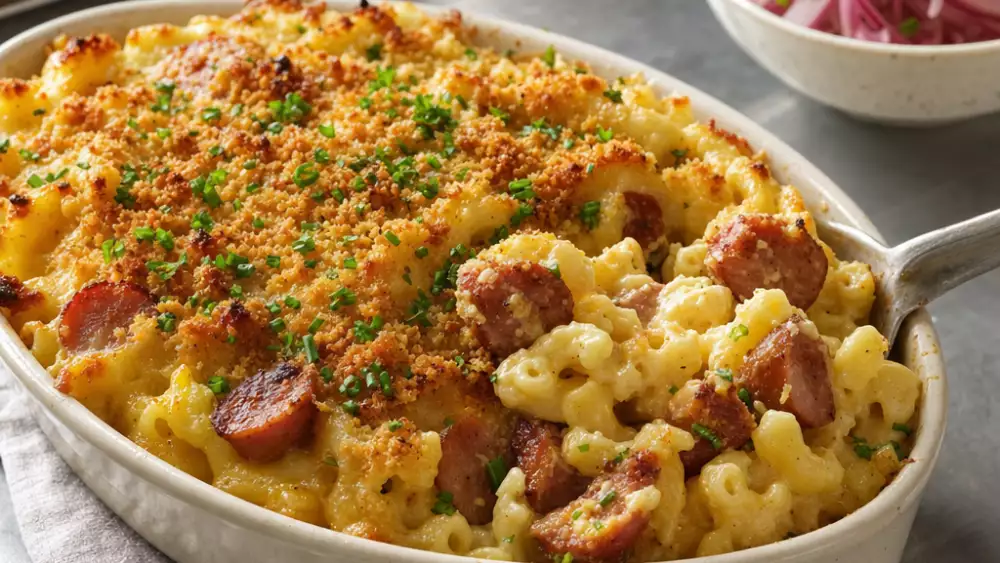
The main risk with any mac and cheese bake is excess richness. Cheese sauce, pasta and sausage can be a strong combination, but if the dish is too thick or too greasy it becomes tiring to eat. The goal is a bake that feels creamy and indulgent, while still having enough structure and contrast to keep customers enjoying it to the end.
This chef recipe from Great British Chefs shows how jalapeño and pesto add structure and contrast to a rich mac and cheese bake, which is useful when balancing smoky frankfurters on the menu.
Bacon frankfurters bring smoke and savoury depth, so the cheese sauce does not need to do all the work. A balanced sauce should be smooth, well-seasoned and cheesy, but not so heavy that it overwhelms the sausage. Mature cheddar can give useful sharpness, while a milder melting cheese can help with texture. The exact blend depends on the kitchen, but the principle is simple: flavour first, then melt.
Texture matters too. A golden crumb or cheese topping gives contrast against the soft pasta and sausage pieces. That small detail makes the dish feel more finished and can improve perceived value without adding much complexity.
Operators should also think about freshness on the plate. A little parsley, spring onion, chives, pickled onion, crisp salad or slaw can stop the dish feeling flat. This does not mean turning it into something fussy. It simply gives the richness somewhere to go.
The bacon frankfurter should be present in every portion, but not so dominant that it turns the bake into a sausage tray with pasta around it. The best version tastes clearly smoky and savoury, while still eating like a proper mac and cheese.
Portioning, Holding and Service Practicality
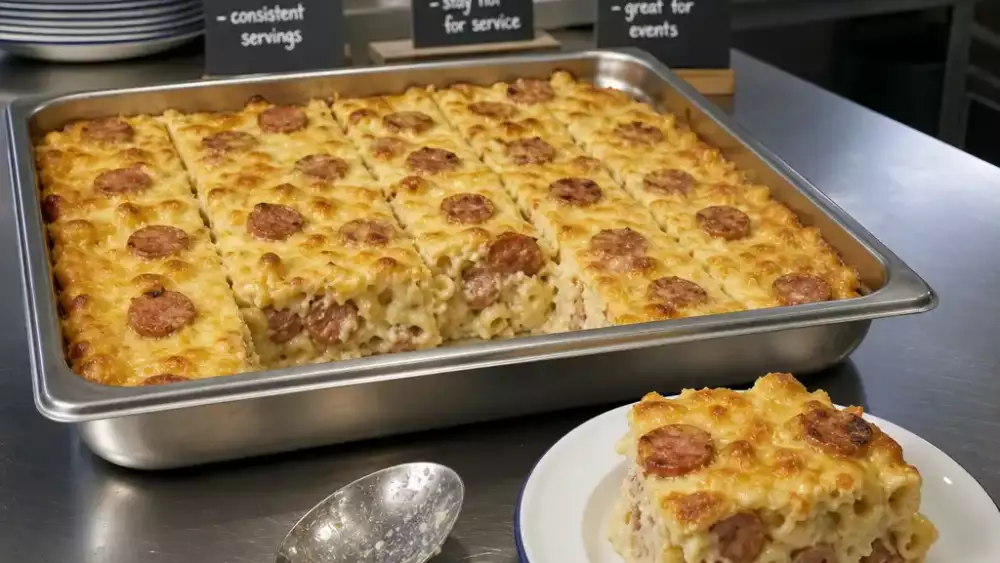
A mac and cheese bake can be very operator-friendly, but only if portioning is planned properly. The dish should cut, scoop or serve cleanly enough for the setting. A pub kitchen may be happy with individual oven dishes, while a café, garden centre or event caterer may prefer a larger tray bake that can be portioned quickly during service.
This official food safety guidance explains the hot-holding temperatures and checks worth following when serving tray-baked sausage dishes at busy events.
Bacon frankfurters help because they can be sliced evenly before baking. That gives better control over how much sausage goes into each serving and avoids the problem of one customer getting a generous portion while another gets mostly pasta. For a commercial menu, consistency matters as much as flavour.
Holding needs some care. Mac and cheese can thicken as it sits, especially if the pasta absorbs more sauce. Operators should test the recipe under real service conditions, not only straight from the oven. A sauce that looks perfect at first may become too firm after holding, while a sauce that starts slightly looser may serve better over time.
Useful practical checks include:
- whether the bake portions cleanly after resting
- whether the sauce stays creamy during holding
- whether the sausage remains evenly distributed
- whether the top stays appealing rather than dry
- whether staff can serve it neatly at busy times
For high-volume service, the best version is not necessarily the richest version. It is the one that still looks good, eats well and serves reliably when the kitchen is under pressure.
How to Make the Dish Feel More Premium Without Slowing Service
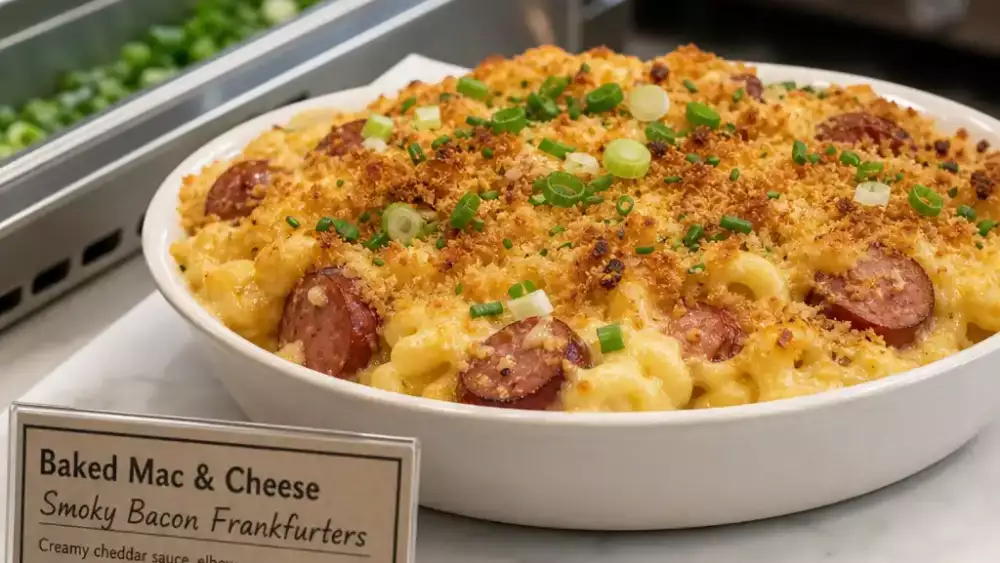
The easiest way to improve a sausage mac and cheese bake is not to add more complexity. It is to make a few visible choices that customers notice quickly: better sausage, a good topping, a cleaner finish and a menu description that sounds specific rather than generic.
This chef recipe shows how a smoked haddock mornay gets its crisp finish, with a breadcrumb-and-cheese topping worth borrowing for a good topping on sausage mac and cheese.
Bacon frankfurters already give the dish a stronger flavour point. From there, operators can lift the presentation without turning it into a slow build. A crisp topping is one of the most useful additions. A simple mix of breadcrumbs and cheese can create colour, crunch and a more finished look. It also helps the bake stand apart from a plain scoop of pasta in sauce.
Small garnishes can also do useful work. Chives, spring onion, parsley or a little crisp onion can add freshness and visual contrast. These should be quick to apply and easy for staff to repeat. The goal is not decoration for its own sake, but a dish that looks more deliberate on the plate or counter.
The menu wording matters too. “Mac and cheese with bacon frankfurters” is clear, but “baked mac and cheese with smoky bacon frankfurters” gives a stronger eating cue without sounding overdone. It tells the customer why this version is different.
The premium feel should come from clarity and execution. A good sausage, a golden top, a neat portion and a simple garnish will often do more than a long list of extras.
Useful Serving Ideas for Pubs, Cafés and Event Food
The same sausage mac and cheese bake can be adapted to different service formats. That makes it useful for operators who want one strong core dish rather than a complicated set of separate recipes. The main decision is whether the bake is being sold as a main meal, a side, a hot counter portion or an event-friendly bowl.
This hospitality trade report explains the cost pressures shaping pub menus and why flexible service formats matter when adapting dishes like sausage mac and cheese.
For pubs, it can work well as a comforting main dish, especially in colder months or on a specials board. A simple side salad, slaw, pickles or chips can help shape the value perception. The dish is rich, so something sharp or fresh alongside it often works better than adding more heavy ingredients.
For cafés and garden centres, the bake can suit lunchtime service because it feels familiar, warming and easy to explain. It can be portioned from a tray or baked in smaller dishes for a more finished appearance. Farm shops may also use it as a way to show how German-style sausages can become part of prepared food, not just retail packs.
For event food, smaller bowl portions can be more practical. Customers need something easy to eat while standing, walking or sitting outdoors. In that setting, the dish should be compact, hot, satisfying and quick to serve.
Useful formats include:
- plated pub main with slaw or salad
- hot counter tray bake for lunch service
- individual oven dish for a more premium café special
- small loaded bowl for festivals and outdoor events
- side portion alongside grilled sausages or burgers
The best format is the one that fits the speed, space and customer behaviour of the business.
What Operators Should Check Before Adding It to the Menu
Before adding a sausage mac and cheese bake to the menu, operators should test it as a service dish, not just as a recipe. The question is not only whether it tastes good. It also needs to hold properly, portion cleanly, fit the kitchen setup and make commercial sense for the type of business.
This official GOV.UK catering VAT guidance explains how to check whether hot takeaway dishes like sausage mac and cheese fall within the catering and takeaway VAT rules.
Start with the service flow. A tray bake may be simple in theory, but it still needs oven space, hot holding space, serving utensils, garnish setup and a clear portion size. If the kitchen is already tight during lunch or event service, the dish should be tested at the busiest expected time, not during a quiet prep session.
Food safety and operational checks also matter. Operators should follow their own HACCP procedures, allergen controls, temperature monitoring and local requirements. Mac and cheese commonly involves dairy and gluten, and bacon frankfurters may introduce additional allergen or labelling considerations depending on the product used. These details should be checked against supplier information and the business’s own menu controls.
Commercially, the dish should be costed properly. That means allowing for sausage quantity, pasta, cheese, sauce ingredients, topping, garnish, packaging if used and likely wastage. A dish that looks profitable on ingredients alone may be less attractive if it slows service or creates too much end-of-day waste.
The final check is customer fit. If the audience wants hot, filling, familiar food with a clear flavour hook, this bake can work very well. If the site depends on ultra-fast handheld service only, it may be better as a bowl special or side rather than the main sausage offer.
Frequently Asked Questions
Yes, but it needs testing in the actual service format. Mac and cheese can thicken as it cools and reheats because the pasta continues to absorb sauce. For trade use, it is often better to prepare the components carefully, bake close to service where possible, and use a sauce that is slightly looser than a home recipe might suggest.
If the bake is being held hot, operators should check how it looks and eats after the planned holding time. The ideal version should still be creamy, portion neatly and keep the bacon frankfurter pieces well distributed.
It can work as either, but the portion size and presentation need to match the role. As a main dish, it should feel complete enough to justify the price, usually with a clear sausage presence and a simple side such as slaw, salad or pickles. As a side, it should be smaller, richer and easy to add alongside other hot food.
For pubs and cafés, a main portion may suit lunch or evening specials. For events and street food, a smaller bowl can be easier to serve quickly and eat standing up.
Sliced frankfurters usually work best because they give a good balance between visibility, bite and portion control. Thin slices distribute easily through the pasta and help ensure each customer gets sausage in every serving. Larger chunks can look more generous, but they may make portioning less consistent.
Dicing can work for hot counter service where speed matters, but it can make the sausage feel less distinctive. For a dish built around bacon frankfurters, the customer should be able to notice them clearly.
mature cheddar is a strong practical base because it brings flavour rather than just melt. Bacon frankfurters already add smoke and savoury depth, so the cheese should support that without making the dish too salty or heavy. Some operators may blend cheddar with a milder melting cheese for a smoother sauce.
The important point is not to chase maximum richness. A sauce that tastes good after three spoonfuls but becomes tiring halfway through the portion is not ideal for repeat trade.
Use contrast. A crisp topping, a sharper cheese note, a fresh garnish or a small acidic side can all help balance the richness. Slaw, pickles, spring onion, chives or a simple salad can make the dish feel more complete without adding much service complexity.
Portion size also matters. A slightly smaller, well-presented portion can feel better value than an oversized serving that becomes stodgy. For event food, a compact hot bowl may be more practical than a large tray-style portion.
It can be, but only if the setup supports hot holding, fast portioning and safe service. Outdoor events often reward dishes that are easy to eat from a bowl, require minimal cutlery and hold their heat well. A bacon frankfurter mac and cheese bake can fit that brief, provided it does not become too thick or messy during service.
Operators should check site rules, power or gas availability, hot holding arrangements, waste handling, queue speed and packaging before committing it to an event menu.
It should be costed as a full served item, not just as pasta, cheese and sausage. Operators need to include the bacon frankfurters, cheese sauce, pasta, topping, garnish, packaging, wastage, labour and expected portion size. For events, packaging and service speed can make a noticeable difference to the real margin.
The dish may justify a stronger price if it looks generous, uses a clear sausage ingredient and feels like a proper hot meal. But the price still has to fit the setting and sit sensibly beside nearby menu items.
Yes, and that is one of its useful commercial angles. A mac and cheese bake shows how German-style sausages can work as an ingredient in hot meals, not only as a bun-based product. That can help pubs, cafés and foodservice operators build more variety from the same sausage range.
It is also useful for customers who like sausage-led dishes but may not always want another hot dog or bratwurst roll. The format feels familiar, but the bacon frankfurters give it a stronger point of difference.
Conclusion
A sausage mac and cheese bake with bacon frankfurters is not trying to be complicated, and that is part of its strength. It takes a dish many customers already understand and gives it a clearer point of difference through smoky, savoury sausage flavour. For operators, that makes it easier to describe, easier to sell and easier for staff to execute consistently.
The main advantage is practical menu value. Mac and cheese is filling, familiar and portionable. Bacon frankfurters add protein, flavour and a more distinctive eating experience without requiring an overly complex build. That can make the dish useful across different settings, from pub specials and café lunch menus to event catering and hot food counters.
The key is balance. The sausage should support the dish rather than disappear into it, while the cheese sauce should stay creamy enough to feel generous without becoming heavy or greasy. Presentation also matters. A crisp topping, a simple garnish or a well-chosen side can make the bake feel more considered without slowing down service.
For The Sausage Haus, this type of recipe shows how German-style sausages can work beyond the bun. Used well, bacon frankfurters can turn a familiar comfort dish into a commercially useful menu option with strong customer appeal and straightforward kitchen practicality.
The Sausage Haüs
The Sausage Haus brings authentic German-style sausages to the UK market through a partnership between Hardy Remagen and Baird Foods.
Hardy Remagen is a long-established German producer with deep experience in traditional sausage making, continental meat products and modern food manufacturing. The range reflects the kind of products German shoppers already understand and enjoy: Bratwurst, Frankfurters, smoked hotdogs, cheese-filled sausages, Bockwurst, Weisswurst and other classic German-style lines.
In the UK, the range is represented and distributed by Baird Foods, giving retailers, wholesalers, caterers and foodservice operators access to German sausage products with a practical UK supply route. This combination is important: German manufacturing knowledge on one side, UK market understanding and distribution on the other.
For retail buyers, The Sausage Haus range offers a clear way to add something different to both chilled and frozen sausage fixtures. The products are built around real eating occasions: BBQs, premium hotdog nights, family meals, German street food, Oktoberfest promotions, Christmas market food and quick comfort meals at home.
The result is a range that gives shoppers something more distinctive than ordinary sausages and standard hotdogs, while giving buyers a compact, commercially useful product story with strong fresh and frozen potential.