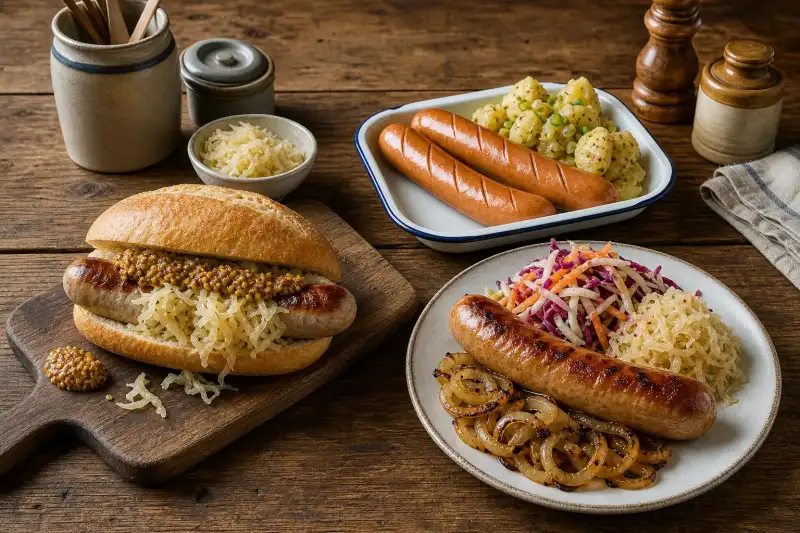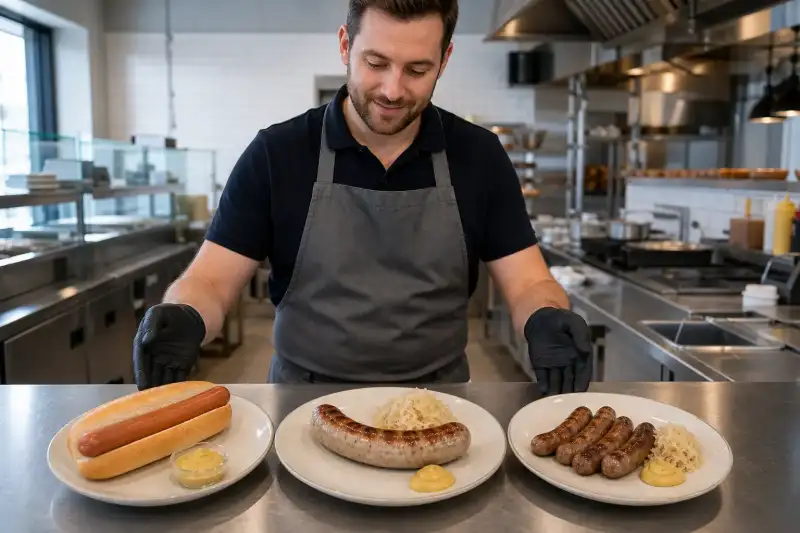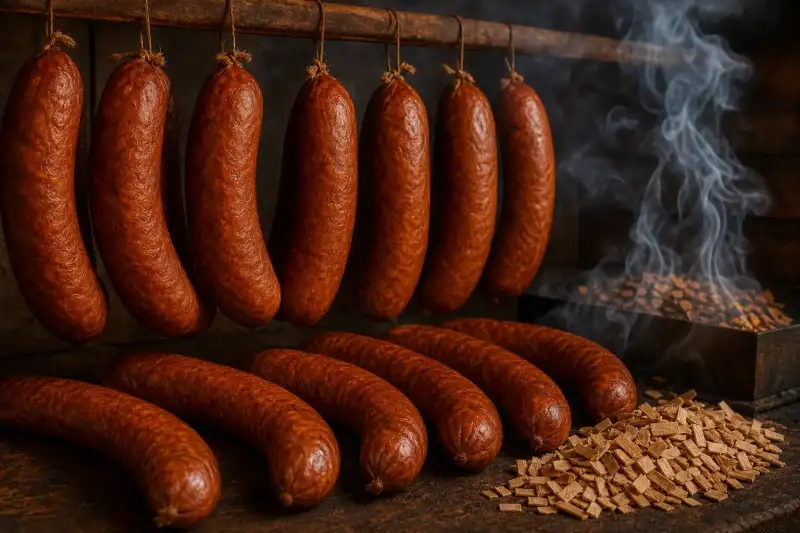
Choosing your first German sausage should not feel complicated. A good bratwurst, frankfurter or smoked hotdog can turn a simple meal into something much more satisfying, but each style suits slightly different dishes, tastes and occasions. This guide helps you pick the right starting point without needing a German sausage dictionary.

Start with Bratwurst

Pick Frankfurters for Ease

Match Sausage to Meal
Overview
Choosing a first German sausage is easier when you start with the eating occasion. Bratwurst is the most classic entry point, while frankfurters and German-style hotdogs suit quicker, milder and more family-friendly meals.
This guide compares bratwurst, frankfurters, smoked hotdogs and flavoured options such as cheese, bacon and chilli styles, with practical serving ideas for rolls, BBQs, currywurst, loaded hotdogs and simple dinners.
For chefs, caterers, retailers and showmen, the useful lesson is range clarity: each sausage style has a different role, from familiar crowd-pleasers to richer, smokier or spicier options that add variety without making service complicated.
Key Takeaways
- Bratwurst is the safest first choice for a classic German sausage experience, especially with mustard, onions, potatoes, sauerkraut or salad.
- Frankfurters are the easier option for quick, mild and family-friendly meals, particularly where children or cautious eaters are involved.
- German-style hotdogs work best in rolls with toppings, making them useful for BBQs, parties, casual menus and fast service occasions.
- Smoked hotdogs add deeper savoury flavour and suit BBQ-style meals, chips, slaw, potato salad and loaded hotdog formats.
- Cheese, bacon and chilli versions are best used when you want a richer, smokier or spicier offer rather than the most traditional starting point.
- For currywurst, bratwurst gives the most classic feel, while frankfurters are lighter and smoked or bacon styles create a deeper comfort-food result.
- A simple German sausage night or menu can be built around two or three styles, a few sides and clear toppings rather than an overcomplicated selection.
Which German Sausage Is the Safest First Choice?
If you are buying German sausages for the first time, the safest starting point is usually a classic bratwurst. It gives you the most recognisable German sausage experience: savoury, satisfying, easy to cook and flexible enough for several different meals.
This recipe guide shows how to serve classic bratwurst with sauerkraut and mashed potatoes for a traditional first German sausage meal.
Bratwurst is also a good first choice because it does not need much explanation at the table. Serve it in a roll with mustard and fried onions, plate it with potatoes and salad, or slice it into a pan meal with vegetables. It feels familiar enough for British kitchens, but different enough to be more interesting than a standard sausage dinner.
That matters if you are feeding a family. The first pack should not be something so unusual that half the table looks at it with suspicion. A good bratwurst has enough character to feel like a treat, but it is still easy to understand.
For a first German sausage meal, keep it simple. Do not begin with five toppings, three sauces and an ambitious side dish that needs a spreadsheet. A roll, mustard, onions and perhaps potato salad or chips is enough. The sausage should be the main event.
Once you know you like the basic style, you can move towards other versions: smoky hotdogs, cheese frankfurters, chilli frankfurters or currywurst-style meals. But bratwurst is the best starting line for most homes because it teaches you what German sausage is about without making the meal complicated.
The only exception is if you are mainly buying for children or for a very quick dinner. In that case, frankfurters or German-style hotdogs may be the easier first pack. They are quick, mild, easy to serve and usually less risky for nervous eaters.
So the practical answer is simple: start with bratwurst if you want the classic German sausage experience. Start with frankfurters if you want the easiest family-friendly option.
Where Can You Buy The Sausage Haus Products?
End-Consumer
For end-consumers, The Sausage Haus products are already available through selected UK retail partners.
You can currently find the Smoked Pork Hot Dog at Costco, while Pork Bratwurst, Cheese Frankfurter and Jumbo Pork Hot Dog are available at Farmfoods. Availability may vary by branch and stock levels, so it is worth checking locally if you are looking for a specific product.
We are also working on more buying options for home customers. The aim is to make The Sausage Haus range easier to find and more widely available across the UK, so more people can enjoy proper German-style sausages for BBQs, family meals, currywurst nights and loaded hotdogs at home.
For now, Costco and Farmfoods are the key places to look first, with more consumer options hopefully following soon.
For Commercial Buyers and Trade Enquiries
If you are buying for a pub, café, garden centre, farm shop, event unit, festival pitch, catering business or foodservice operation, the best route is to speak directly with our sales team.
Commercial buyers often need different information from home customers, including pack formats, case sizes, chilled or frozen options, preparation practicalities, menu fit, storage, service speed and likely suitability for their specific setup. A quick conversation is usually the easiest way to match the right sausage to the right trading situation.
The Sausage Haus range can support several commercial uses, from loaded hotdogs and currywurst to BBQ menus, pub specials, grab-and-go lunches and event food. The best choice will depend on how you serve, how quickly you need to turn orders around, what equipment you use, and what kind of customer you are feeding.
For trade enquiries, please get in contact with The Sausage Haus sales team. We will be happy to discuss the most suitable products and supply options for your business.
Bratwurst, Frankfurter or Hotdog: What Is the Difference?
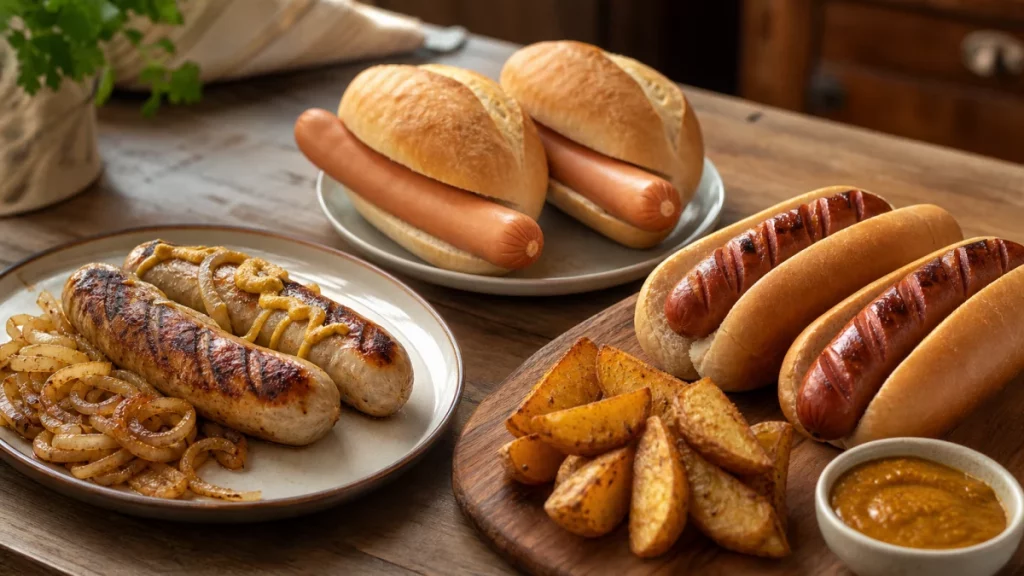
The confusing part is that the words are often used loosely in everyday British shopping. “German sausage” can mean several things, and they do not all behave the same way on the plate.
This tourism page highlights Frankfurt’s food culture and helps clarify what makes a traditional Frankfurter different from a generic German sausage.
A bratwurst is usually the more traditional meal sausage. It is the one most people imagine at a German Christmas market or beer garden. It is typically served grilled or pan-fried, often in a roll, with mustard, onions, sauerkraut, potato salad or chips. It feels hearty and proper, but not fussy.
A frankfurter is usually slimmer, smoother and more snackable. It is often the one people associate with hotdogs, quick lunches and children’s meals. A good frankfurter should still have a decent bite and proper flavour, but it is usually gentler and easier-going than a bratwurst.
A German-style hotdog sits in the same friendly space as the frankfurter, but the eating occasion is often different. It belongs in a roll, under toppings, at BBQs, parties, cinema nights, garden lunches and casual dinners. It is the option you buy when you want something fast that still feels more special than a basic supermarket hotdog.
Then there are flavoured versions. A cheese frankfurter gives you a richer, more indulgent bite. A bacon frankfurter adds savoury depth and a little smoky comfort. A chilli version brings heat and works especially well when the rest of the meal is simple: roll, onions, chips, sauce, done.
A smoked pork hotdog is useful when you want that deeper BBQ-style flavour without needing to do much more in the kitchen. It can make a very simple meal taste more complete.
The easiest way to think about it is this:
- Bratwurst: best for a classic German sausage meal.
- Frankfurter: best for quick, mild, family-friendly eating.
- Hotdog: best for rolls, toppings, BBQs and casual food.
- Cheese or bacon versions: best when you want something richer.
- Chilli versions: best when you want heat and stronger flavour.
- Smoked versions: best when you want a BBQ-style result with very little effort.
Once you understand that, choosing becomes much easier. You are not just picking a sausage. You are picking the kind of meal you want.
| Sausage type | Best first use | Flavour style | Best for | Good beginner choice? |
|---|---|---|---|---|
| Bratwurst | Classic German sausage meal | Savoury, hearty, traditional | BBQs, rolls, potato dishes, currywurst | Yes, best all-round starter |
| Frankfurter | Quick family meals | Mild, smooth, easy-eating | Children, lunches, hotdogs, fast dinners | Yes, easiest option |
| Smoked hotdog | BBQ-style meals | Deeper, smoky, savoury | Loaded hotdogs, chips, casual weekend meals | Yes, if you like smoky flavour |
| Cheese frankfurter | Comfort food | Richer, indulgent, mild | Family meals, loaded hotdogs, wedges | Yes, if you like cheese |
| Bacon frankfurter | Bigger savoury flavour | Smoky, meaty, fuller | Currywurst, loaded fries, BBQ plates | Better after trying a mild one |
| Chilli frankfurter | More character | Spicy, bold, warming | Adults, loaded hotdogs, street-food style meals | Best if you already like heat |
Best German Sausages for Family Meals
For family meals, the best German sausage is usually the one that gives you the most flexibility with the least argument. That means mild flavour, easy serving, quick cooking and enough substance to feel like dinner rather than just a snack.
Frankfurters and German-style hotdogs are often the easiest family option. They are quick to heat, simple to portion and work well with foods children already understand: rolls, chips, mashed potatoes, baked potatoes, rice, pasta salad or simple vegetables. That does not make them boring. It makes them useful.
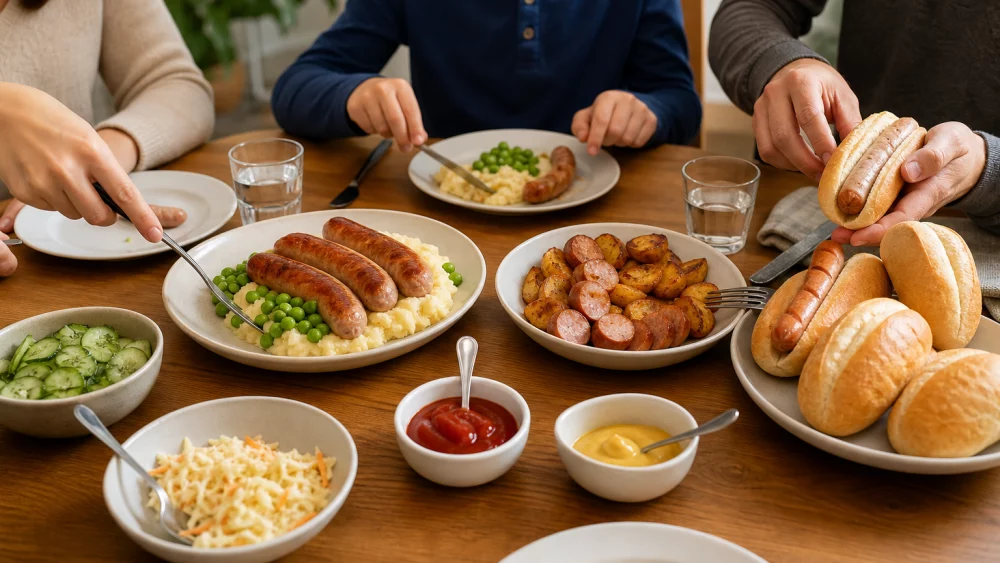
A family sausage meal should not require everyone to eat the same thing in exactly the same way. That is where German sausages work nicely. One person can have a hotdog in a roll. Someone else can have sliced sausage with potatoes. Another can add mustard, pickles and onions. The same pack can become slightly different plates without much extra work.
For younger children or cautious eaters, mild frankfurters are usually the safer route. Cheese frankfurters can also work well if the household likes richer, more comforting flavours. They are especially good with potato wedges, peas, salad, sweetcorn or a small pot of ketchup or mustard on the side.
For older children and adults, bratwurst is the better step up. It feels more grown-up, more filling and more like a proper meal. Serve it with mash and onion gravy, potato salad, braised cabbage or roasted vegetables and it becomes a very easy German-inspired dinner.
One useful family approach is to build the meal around “one sausage, two sides”. For example:
- bratwurst with fried potatoes and cucumber salad
- frankfurters with potato wedges and coleslaw
- cheese frankfurters with mash and peas
- smoked hotdogs with salad and chips
- sliced bratwurst with rice and roasted vegetables
This keeps the cooking realistic. It also avoids the trap of turning a simple sausage dinner into a themed restaurant production. German food can be generous and comforting without needing to be heavy every time.
For busy households, the main advantage is speed. A good German sausage can sit at the centre of a dinner that feels planned, even if it was assembled after a long day. That is not a small benefit. Some evenings, “everyone ate something warm and liked it” is a perfectly respectable culinary achievement.
Best German Sausages for BBQs and Weekend Cooking
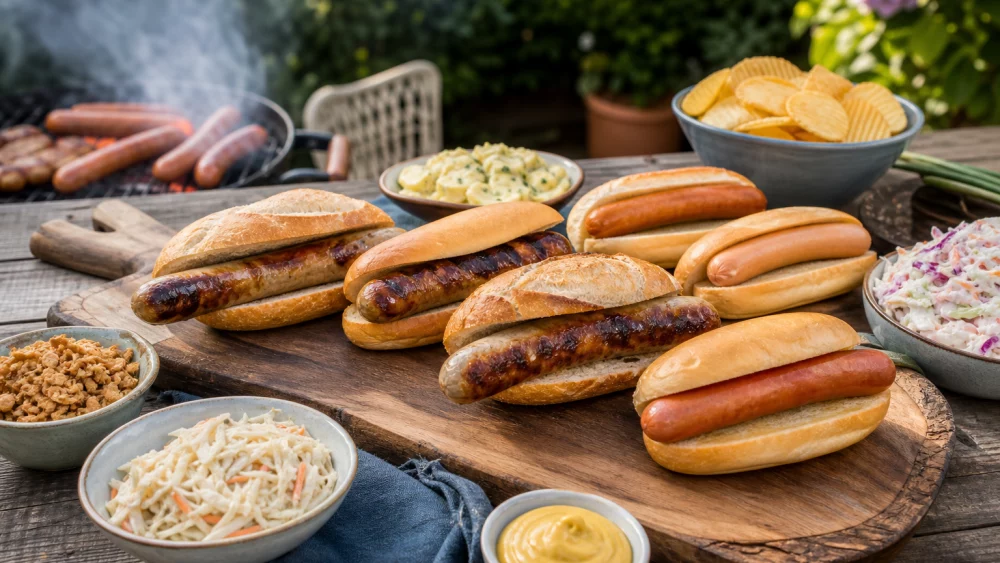
For BBQs, the best German sausage is one that can hold its own without needing too much help. This is where bratwurst and smoked hotdogs come into their own.
This recipe guide shows a bratwurst-style BBQ serving idea with beer brats, buns, and toppings that is useful for comparing casual weekend sausage options.
Bratwurst is excellent for BBQs because it feels like proper grilled food. It browns well, sits nicely in a roll and works with simple toppings: mustard, fried onions, sauerkraut, pickles or a little curry ketchup. It gives guests something more memorable than the usual supermarket sausage, but it is still easy to serve at scale.
Smoked hotdogs are also strong weekend options. They bring that deeper savoury note people associate with outdoor cooking, even if you finish them in a pan, air fryer or oven rather than on a full BBQ setup. They work especially well when the sides are simple: chips, slaw, salad, corn, potato salad or grilled onions.
Frankfurters are useful if children are eating, or if you want something quick for a mixed group. Not every BBQ guest wants the biggest, boldest sausage on the grill. A mild frankfurter gives you a safer, easy-eating option.
The mistake many people make with BBQ sausage is overcomplication. If the sausage is good, you do not need a tower of toppings that collapses after the first bite. Better to offer a few clear choices:
- classic mustard and onions
- curry ketchup and crispy onions
- sauerkraut and mustard
- cheese, onions and pickles
- chilli sauce and slaw
That gives people variety without turning the table into a condiment accident scene.
For a weekend lunch, bratwurst in a crusty roll with mustard and fried onions is hard to beat. For an evening BBQ, smoked hotdogs with chips or potato salad feel relaxed and generous. For a family garden meal, frankfurters are quick, simple and unlikely to start a debate.
If you are cooking for guests, buy more variety than you think you need, but keep the serving format simple. Two or three sausage types are enough. A classic bratwurst, a smoky hotdog and a cheese or chilli frankfurter will feel like a proper spread without making the cooking difficult.
Best German Sausages for Currywurst
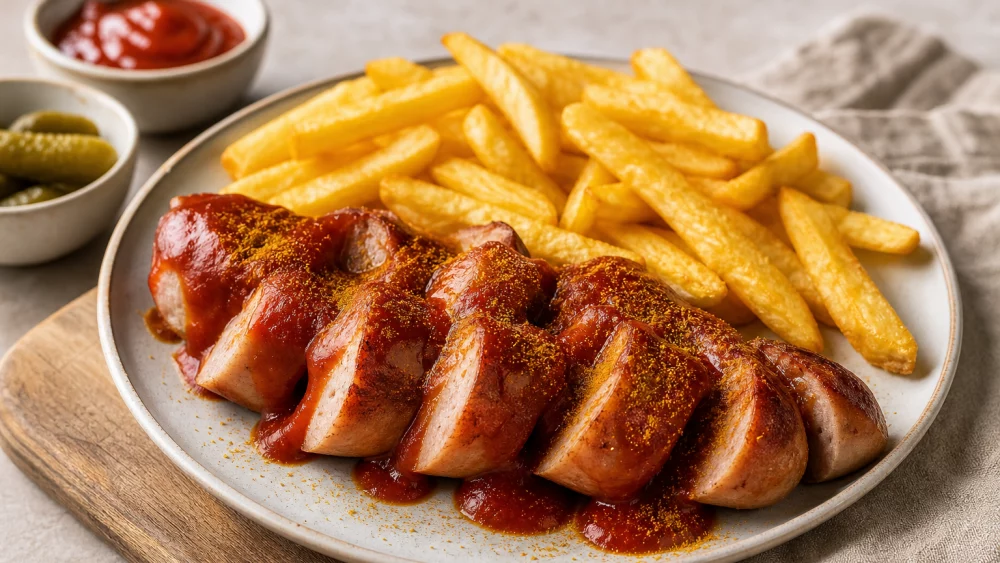
If your first thought is currywurst, you want a sausage that can stand up to sauce. Currywurst is simple food, but it is not weak food. The sausage needs enough flavour and texture to remain noticeable once the curry ketchup, curry powder and chips arrive.
This tourism page highlights Cologne street food culture and why currywurst needs a sausage with enough flavour and texture to stand up to the sauce.
A bratwurst is often the most natural choice. It gives the dish a proper German street food feel and works well when sliced into bite-sized pieces. The sausage should taste good before the sauce goes on. The sauce should complete it, not rescue it.
Frankfurters can also work, especially for a quicker, lighter version. They are easy to slice, easy to serve and good for children or people who prefer a smoother texture. The result may feel less rustic than bratwurst, but it can still be very enjoyable.
For a richer currywurst, a smoked hotdog or bacon frankfurter can be excellent. The smokier flavour gives more depth to the dish and works especially well with chips, onions and a slightly tangier curry sauce. This is the version to try if you want something closer to German street food comfort with a British loaded-fries twist.
Cheese frankfurters are more indulgent. They can work in currywurst, but they are not always the best first choice if you want the classic version. The cheese adds richness, which can be lovely, but it also changes the balance of the dish. Use it when the meal is meant to be fun and generous, not when you want something traditional.
The easiest home currywurst formula is:
- cook the sausage until nicely hot and lightly browned
- slice it into chunky pieces
- spoon over warm curry ketchup or currywurst sauce
- dust with curry powder
- serve with chips, wedges or fried potatoes
That is enough. You can add onions, pickles, slaw or salad if you like, but the core dish should stay direct.
For a first currywurst night, start with bratwurst. For a child-friendly version, use frankfurters. For a bigger, smokier version, use smoked hotdogs or bacon frankfurters. Once you have tried all three, you will probably develop an unnecessarily strong opinion about which one is “right”. That is normal. Currywurst does that to people.
Best German Sausages for Loaded Hotdogs and Quick Dinners
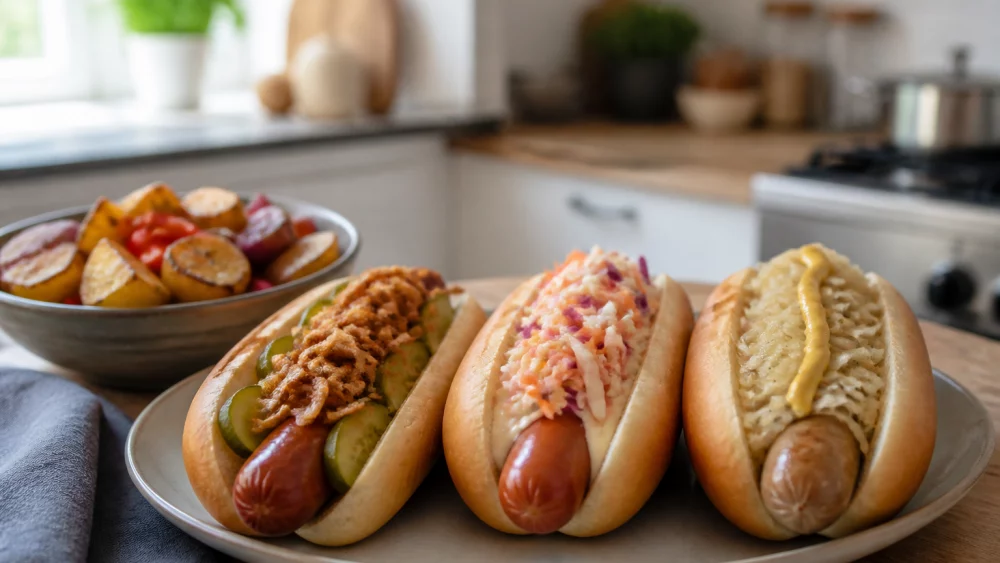
Loaded hotdogs are one of the easiest ways to make German sausages feel exciting at home. They are quick, customisable and ideal when people want something that feels like takeaway without the cost or the waiting time.
For loaded hotdogs, frankfurters and smoked hotdogs are usually the best starting point. They fit rolls neatly, heat quickly and leave room for toppings. A bratwurst can also work, but it is often chunkier and more filling, so the roll and toppings need to match.
The trick is to choose a sausage that fits the flavour of the toppings. A smoked hotdog works beautifully with fried onions, mustard, pickles and crispy onions. A Cheese Frankfurter suits jalapeños, ketchup, onions and slaw. A chilli frankfurter works with cooling toppings such as sour cream-style sauce, yoghurt dressing, cucumber, slaw or mild cheese.
A loaded hotdog should be generous, but it should still be edible. If you need a knife, a fork, a towel and emotional support, it has gone too far.
Good combinations include:
- smoked hotdog, mustard, fried onions and pickles
- cheese frankfurter, crispy onions, ketchup and jalapeños
- chilli frankfurter, slaw, mild sauce and spring onions
- bratwurst, sauerkraut, mustard and fried onions
- bacon frankfurter, BBQ sauce, onions and grated cheese
For quick dinners, you do not even need rolls. Slice the sausage into a pan with potatoes, peppers and onions. Add it to fried rice. Serve it with salad and wedges. Put it into a traybake. Use it as the main protein in a fast lunch bowl.
This is where German sausages become more useful than many people expect. They are not only “hotdog night” food. They can be the shortcut that makes a midweek meal feel more deliberate.
For households where people eat at different times, frankfurters and hotdogs are especially useful. You can heat one or two portions without cooking a whole tray of food. That makes them good for teenagers, late dinners, quick lunches and weekend snacks.
If you are buying your first pack specifically for quick meals, choose frankfurters or smoked hotdogs before bratwurst. They are the easiest to use in the widest number of casual dishes.
Fresh or Frozen: Which Format Makes More Sense at Home?
Fresh and frozen German sausages can both make sense at home. The better choice depends on how you shop, how often you cook, and whether you want convenience now or flexibility later.
This recipe guide shows how to make traditional German potato salad, a classic side worth pairing with Fresh and frozen German sausages at home.
Fresh sausages are ideal when you know what you are cooking in the next few days. They feel ready for a planned meal, weekend BBQ, family dinner or small gathering. If you are buying for a specific occasion, fresh is straightforward: buy, chill, cook, enjoy.
Frozen sausages are better when you want a useful backup in the freezer. This is especially helpful for families, busy households, or anyone who likes having a quick meal option available without another trip to the shop. A frozen pack can become hotdogs, currywurst, sausage and chips, a traybake or a fast lunch when the fridge looks uninspiring.
The important point is that frozen should not automatically mean inferior. For the home cook, frozen is often about timing and waste reduction. If you do not know exactly when you will use the sausages, the freezer gives you more control.
Fresh works best when:
- you are cooking soon
- you are planning a BBQ or weekend meal
- you prefer chilled shopping
- you want the simplest route from shop to plate
Frozen works best when:
- you want to stock up
- you cook flexibly
- you want quick emergency meals
- you do not want food sitting in the fridge unused
- you are buying for family snacks and last-minute dinners
The sensible home setup is to use both. Keep fresh sausages for planned meals and frozen sausages for backup. That way you are not relying on one format to do everything.
Always follow the storage and cooking instructions on the pack. If you are defrosting, do it safely and avoid leaving sausages at room temperature for long periods. Good food safety is not glamorous, but neither is explaining to your family that “German sausage night” has become “everyone regrets dinner night”.
How to Build a Simple German Sausage Night
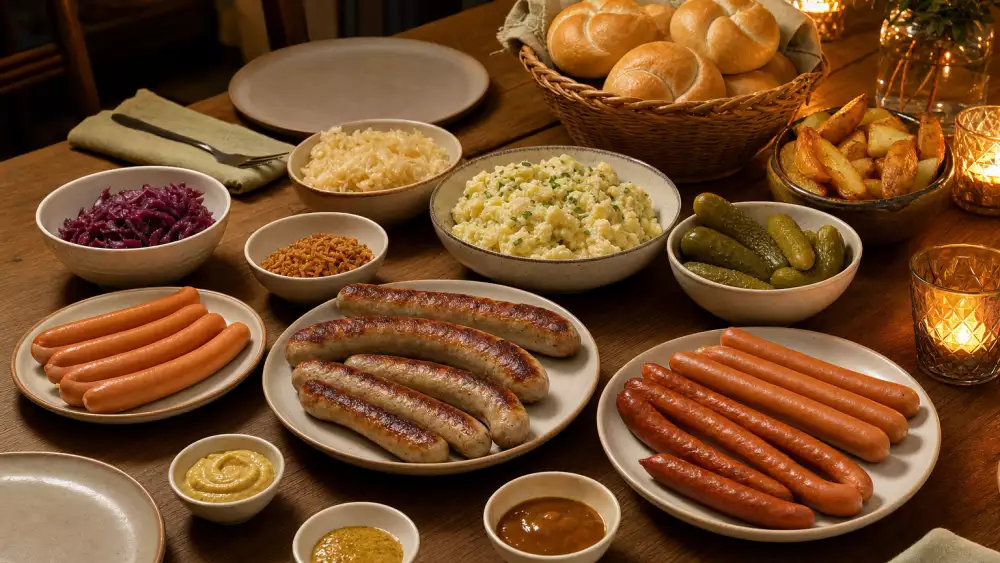
A German sausage night is one of the easiest ways to turn a few packs of sausages into something that feels like an occasion. It does not need to be formal, expensive or complicated. In fact, it works best when it feels relaxed.
The basic idea is simple: choose two or three sausages, add a few sides, offer a small selection of toppings, and let people build their own plates.
Start with one classic sausage, one easy sausage and one more distinctive sausage. For example, you might serve bratwurst, frankfurters and smoked hotdogs. Or bratwurst, cheese frankfurters and chilli frankfurters. That gives enough variety without creating too much work.
Then choose sides that suit the mood. Chips or wedges make it feel like street food. Potato salad makes it more German. Slaw and salad make it lighter. Sauerkraut, pickles and onions add the traditional edge. Roasted vegetables or fried potatoes turn it into a proper dinner.
The toppings do not need to be elaborate. A good selection might include:
- mustard
- ketchup or curry ketchup
- fried onions
- crispy onions
- pickles
- sauerkraut
- grated cheese
- slaw
- jalapeños
For children, keep some sausages plain and let them add toppings if they want. For adults, put the stronger flavours on the table and let people build their own. This avoids the common hosting mistake of assuming everyone wants the same “signature” hotdog.
A simple serving plan could look like this:
Classic plate: bratwurst, potato salad, mustard, sauerkraut
Street food plate: sliced sausage, curry sauce, chips, onions
Family plate: frankfurter in a roll, wedges, salad, ketchup
Loaded plate: smoked hotdog, fried onions, pickles, mustard
This kind of meal is useful because it feels more interesting than an ordinary sausage dinner, but it is still easy to cook. You can make it work for a Friday night, a small party, a family lunch or a BBQ where the weather is being traditionally British and refusing to commit.
The best part is that people can try different sausages side by side. That is often the quickest way to discover what you actually like. One person may prefer bratwurst, another may love the cheese frankfurter, and someone else may decide that smoked hotdogs are the only sensible future for bread rolls.
That is exactly how a good first German sausage experience should work: simple, generous, slightly fun, and easy to repeat.
Frequently Asked Questions
Usually not. A good bratwurst is savoury and distinctive, but it should not feel difficult or overly bold. For most people, it is the best first step because it gives you the classic German sausage experience while still working with familiar sides such as rolls, chips, potatoes, salad, onions and mustard.
If you are cooking for very cautious eaters or younger children, frankfurters may be the gentler starting point. For adults, BBQs or a proper weekend meal, bratwurst is normally the safer choice if you want something that feels recognisably German.
Use lighter sides and keep the toppings clean. German sausages do not always need chips, mash or heavy sauces. They also work well with cucumber salad, tomato salad, slaw, pickles, roasted vegetables, grilled peppers, sauerkraut, leaves, or a simple potato salad with a sharper dressing.
For a lighter plate, think in contrasts. A rich sausage works well with something fresh, acidic or crunchy. Mustard, pickles, onions and salad can make the meal feel brighter without removing the comfort factor.
Choose one mild option and one more characterful option. A frankfurter or classic hotdog is useful for children and cautious eaters, while bratwurst, smoked hotdogs, bacon frankfurters or chilli frankfurters give adults more flavour.
This is also why a simple “German sausage night” works well. Instead of trying to guess one perfect sausage for everyone, offer two or three styles with shared sides and toppings. It gives variety without making the cooking awkward.
No. BBQs and hotdogs are the obvious uses, but they are not the only ones. German sausages can also work in quick pan meals, traybakes, currywurst bowls, potato skillets, rice dishes, lunch plates, loaded fries and family dinners.
The trick is to choose the right format. Frankfurters and hotdogs are easiest for fast meals and rolls. Bratwurst is better when the sausage is the centre of the plate. Smoked or flavoured versions are useful when the rest of the dish is simple and you want more flavour from the sausage itself.
Yes, and that is often one of the easiest ways to start. Bratwurst with mash, onions and gravy can work very well, as long as the gravy does not overpower the sausage. Frankfurters or smoked hotdogs can also be served with wedges, peas, beans, slaw or salad for a quicker family-style meal.
The result will not be a traditional British sausage plate, but that is part of the appeal. You keep the comfort and familiarity, while adding a slightly different flavour and texture.
Use better toppings rather than more complicated cooking. Fried onions, mustard, pickles, sauerkraut, curry ketchup, crispy onions, slaw or a good roll can change the whole meal without adding much work.
simple sausage in a poor roll can feel ordinary. The same sausage in a decent roll with mustard, onions and something sharp or crunchy feels much more deliberate. The upgrade is often in the serving, not in making the recipe more complicated.
If you are unsure, a small selection is the better choice. It lets the household compare mild, classic, smoky or flavoured styles side by side. That is much more useful than guessing from the pack description.
For a first selection, choose one bratwurst, one frankfurter or hotdog, and one more distinctive option such as smoked, cheese, bacon or chilli. After one or two meals, you will usually know which style suits your kitchen best.
Use moderate heat and do not rush them. Very high heat can split the casing before the sausage is properly heated through. Pan-frying, grilling or BBQ cooking should be controlled rather than aggressive.
Follow the cooking instructions on the pack, turn the sausages regularly, and avoid piercing them unless the instructions specifically say otherwise. You want colour and heat, not a burst sausage and a dry centre.
Mild frankfurters or German-style hotdogs are usually the easiest choice for children. They are simple, quick, easy to portion and work well with familiar sides such as rolls, wedges, peas, sweetcorn, salad or ketchup.
Cheese frankfurters can also be popular if children like richer flavours. Chilli versions are better kept for older children or adults who already enjoy heat. For mixed family meals, it is sensible to keep one mild option available.
Yes. Frozen sausages are very useful if you do not cook them every week but still want a quick meal option available. They can help reduce waste because you are not relying on a short chilled window.
They are especially practical for families, weekend lunches, last-minute dinners and BBQ plans that may or may not survive the British weather. The main point is to store, defrost and cook them according to the pack instructions.
Conclusion
The best German sausage to buy first depends on what you want to cook. If you want the most classic starting point, bratwurst is hard to beat. It gives you the familiar German sausage experience and works well with rolls, mustard, potatoes, sauerkraut, fried onions or a simple salad.
If you want something easy, quick and very family-friendly, frankfurters or German-style hotdogs may be the better first choice. They are especially useful for fast dinners, loaded hotdogs, children’s meals, BBQs and relaxed weekend food. For something with more character, smoked pork hotdogs, cheese frankfurters or chilli beef frankfurters can make the meal feel more distinctive without making the cooking any more difficult.
The useful thing about a good German sausage range is that you do not need to choose forever. You can start with the mildest, most familiar option, then move towards smokier, spicier or more indulgent styles once you know what your household likes.
For most homes, the simplest approach is to choose one sausage for a classic roll or BBQ meal, one for currywurst or chips, and one for a quick family dinner. That gives you enough variety without turning the fridge or freezer into a sausage museum.
The Sausage Haüs
The Sausage Haus brings authentic German-style sausages to the UK market through a partnership between Hardy Remagen and Baird Foods.
Hardy Remagen is a long-established German producer with deep experience in traditional sausage making, continental meat products and modern food manufacturing. The range reflects the kind of products German shoppers already understand and enjoy: Bratwurst, Frankfurters, smoked hotdogs, cheese-filled sausages, Bockwurst, Weisswurst and other classic German-style lines.
In the UK, the range is represented and distributed by Baird Foods, giving retailers, wholesalers, caterers and foodservice operators access to German sausage products with a practical UK supply route. This combination is important: German manufacturing knowledge on one side, UK market understanding and distribution on the other.
For retail buyers, The Sausage Haus range offers a clear way to add something different to both chilled and frozen sausage fixtures. The products are built around real eating occasions: BBQs, premium hotdog nights, family meals, German street food, Oktoberfest promotions, Christmas market food and quick comfort meals at home.
The result is a range that gives shoppers something more distinctive than ordinary sausages and standard hotdogs, while giving buyers a compact, commercially useful product story with strong fresh and frozen potential.