Sausage gross profit margin looks simple on paper, but real service is rarely that tidy. Portion cost, yield, waste, prep time, toppings, sides and speed all affect what the product actually earns. This article sets out a practical way for UK operators to think about sausage margin in real trading conditions, not just on a spreadsheet.

Cost the Full Portion

Count Waste and Prep

Use Add-Ons to Lift Margin
Introduction
A sausage menu can look profitable because the main ingredient cost seems easy to calculate: one sausage, one roll, some onions, sauce and a selling price. But that only tells part of the story. In real service, margin is shaped by what happens around the portion.
A that cooks cleanly, holds well, plates quickly and sells with chips or an upgraded topping can behave very differently from a cheaper sausage that slows the line, breaks, shrinks, dries out, creates waste or needs too much staff attention. The actual gross profit is not just the difference between buy-in cost and menu price. It is the result of portion control, yield, waste control, service speed and the add-ons that customers are willing to buy.
For UK caterers, street food traders, cafés, pubs, farm shops and event operators, this matters because service pressure is where tidy calculations often fall apart. A model that ignores prep minutes, lost product and queue speed can make the wrong sausage look cheaper than it really is.
A better margin model does not need to be complicated. It needs to reflect real conditions: what goes on the plate, what gets wasted, how long it takes to serve, and what else the customer buys with it.
Key Takeaways
- Sausage gross profit margin should be calculated around the full served portion, not just the sausage itself.
- Yield matters because shrinkage, breakage, overcooking and unsold held product can quietly reduce the real return.
- Prep minutes have a cost, especially when staff are needed for toppings, assembly, frying, cleaning or recovery during busy periods.
- Add-ons such as chips, onions, cheese, sauces, drinks and meal deals can make a simple sausage offer much more profitable.
- A cheaper sausage is not always the better margin product if it creates more waste, slower service or weaker perceived value.
- The best model is practical: portion cost, realistic waste allowance, staff time, selling price and average add-on value.
- Operators should test margin against actual trading conditions, not just supplier price lists.
Why Sausage Margin Looks Simple but Often Isn’t
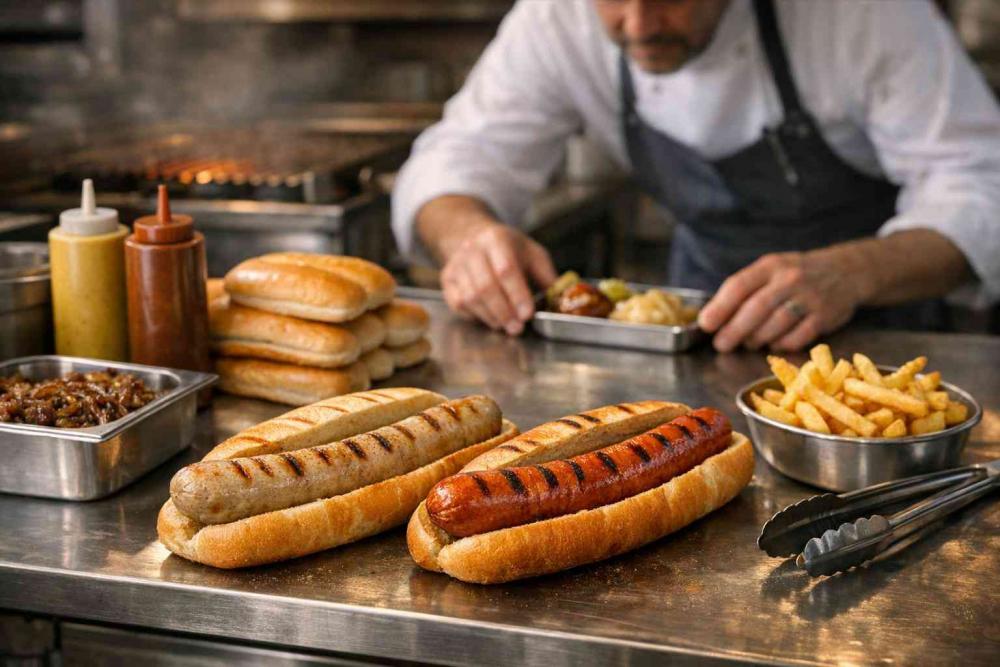
On paper, sausage margin looks like one of the easier catering calculations. You take the cost of the sausage, add the roll, onions, sauces, packaging and any garnish, then compare that with the selling price. The result gives you a neat gross profit figure.
The problem is that real service is not neat.
A sausage that looks profitable in a basic costing sheet can perform very differently once it is cooked, held, served, dressed and sold under pressure. It may shrink more than expected. It may split on the grill. Staff may overcook a batch during a rush. A topping station may slow the queue. A cheap roll may collapse under sauces and create more remakes. Small losses start to chip away at the figure.
This is why a proper sausage gross profit margin model needs to reflect service reality, not just ingredient price. The strongest operators look at the whole transaction: how fast the item can be produced, how consistently it can be portioned, how much is wasted, and whether the customer is likely to add chips, drinks or premium toppings.
That does not mean the calculation needs to become complicated. It means the calculation needs to be honest. A product is only profitable if it works on the counter, in the queue and in the customer’s hand.
Start With the Full Portion Cost, Not Just the Sausage
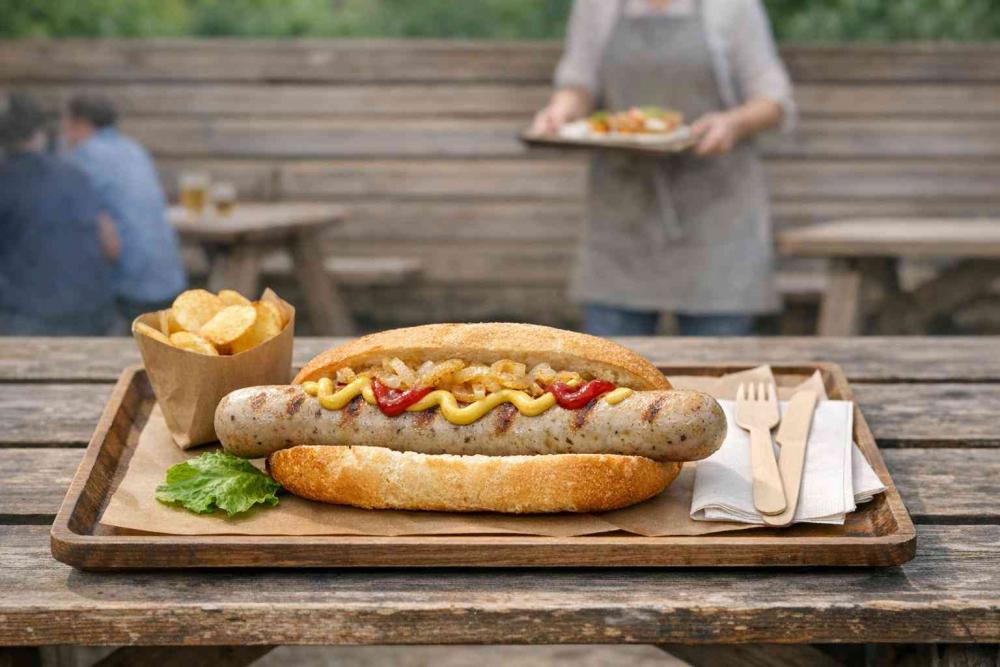
The first mistake is judging the margin from the sausage cost alone. The sausage may be the centre of the dish, but the customer buys a complete portion. That portion has a full cost attached to it.
This official European Commission guidance outlines mandatory food information and allergen rules worth checking when pricing and serving a complete portion.
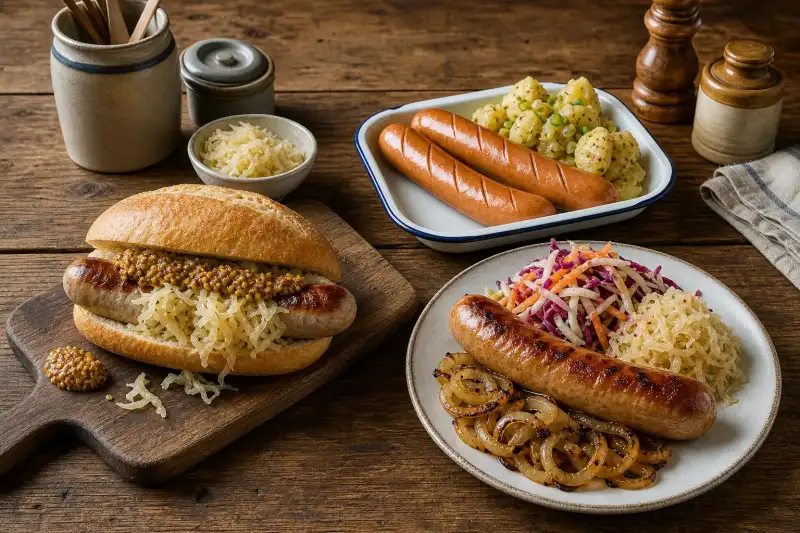
For a classic bratwurst in a roll, the actual portion cost might include the sausage, bread roll, onions, mustard, ketchup, napkins, tray or wrap, garnish and any included side. For a pub plate, it may also include chips, salad, sauerkraut, gravy, curry sauce or a plated garnish. For a farm shop or garden centre café, presentation and packaging may matter more than they first appear because they affect perceived value.
A useful costing model should separate the core portion from the optional extras. The core portion is what the customer receives as standard. Optional extras are upgrades, meal deals, sauces, sides or drinks that may increase the average transaction value.
For example, a plain sausage in a roll may have a simple ingredient cost. But if most customers add chips, fried onions or cheese, the commercial performance of the sausage offer depends on the whole basket, not the base item alone.
This is where operators can make better decisions. Instead of asking, “What is the cheapest sausage I can buy?”, the better question is, “What complete portion gives the best mix of margin, speed, consistency and customer appeal?”
Yield, Waste and the Quiet Leaks in Profit
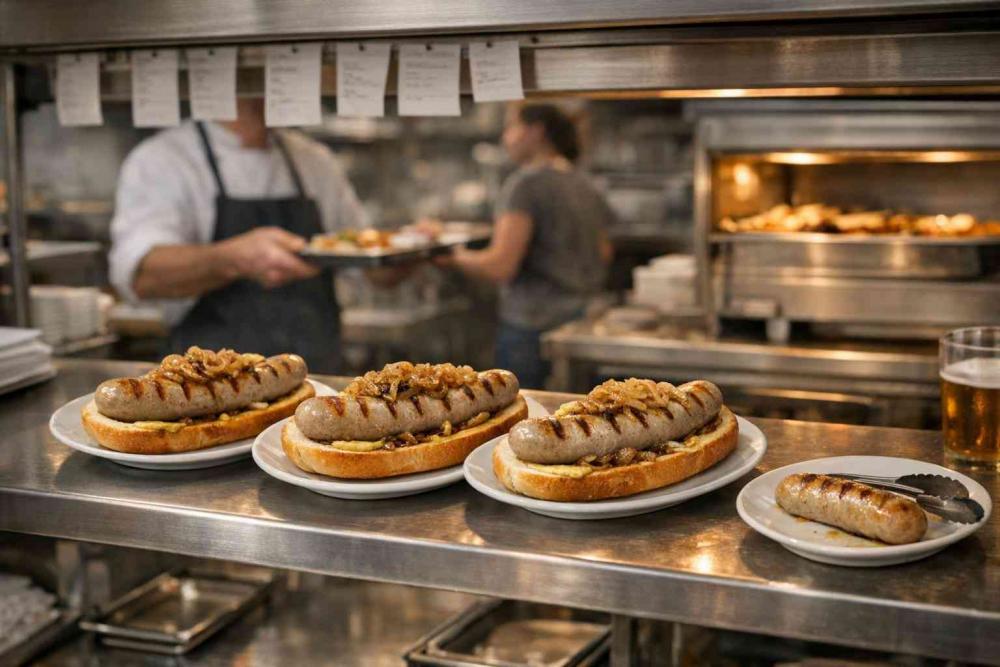
Yield is one of the quietest but most important parts of sausage margin. It rarely looks dramatic on a spreadsheet, but it can make a clear difference across a busy week, a large event or a high-volume season.
This industry body guidance explains product shelf-life checks and waste reduction points that can help sausage operators protect margin through better stock control.
Waste can come from several places. Some product may be overcooked during service. Some may sit too long and lose quality. Some may be damaged during handling. Staff may cook too many in anticipation of a rush that never arrives. At events, the final hour often creates difficult decisions: cook more and risk waste, or stop cooking and risk lost sales.
This is why operators should build a realistic waste allowance into the margin model. A perfect zero-waste calculation may look attractive, but it can mislead. Even a small percentage of waste can reduce the true profit when volume is high.
There are several practical ways to reduce the leakage:
- cook in sensible batches rather than chasing maximum display volume
- track what is left at the end of service
- use holding times that protect product quality
- train staff to avoid unnecessary piercing, squeezing or overcooking
- review slow-selling menu variations that create awkward stock patterns
The aim is not to remove every possible loss. That is rarely realistic. The aim is to understand waste well enough that it becomes managed, visible and priced into the model.
A sausage that gives consistent yield and predictable service behaviour can therefore be worth more than its unit price suggests.
The Hidden Cost of Prep Minutes in Busy Service
Prep time is easy to ignore because it does not appear on the supplier invoice. But in real foodservice, minutes have a cost. They affect labour, queue speed, staff pressure and the number of customers served during peak periods.
A sausage dish that needs too many separate actions can quietly become expensive. Staff may need to toast the roll, manage onions, add multiple sauces, portion toppings, plate sides, clean down, explain options and correct mistakes. None of these steps is a problem on its own. The issue is what happens when they stack up during a rush.
For street food traders and event caterers, this is especially important. A menu item that takes 40 seconds longer to assemble can reduce throughput at the exact moment when demand is highest. That means lost sales, longer queues and more pressure on staff. In a pub or café, the same problem shows up as slower ticket times or awkward kitchen flow.
Prep minutes should be treated as part of the margin conversation. Not with false precision, but with practical awareness. If one sausage offer needs less handling, fewer components and simpler training, it may protect profit even when the ingredient cost is higher.
A good test is simple: watch the item being served during a busy period. If staff slow down every time the order appears, the costing sheet is missing something.
Why Add-Ons Can Change the Whole Margin Picture
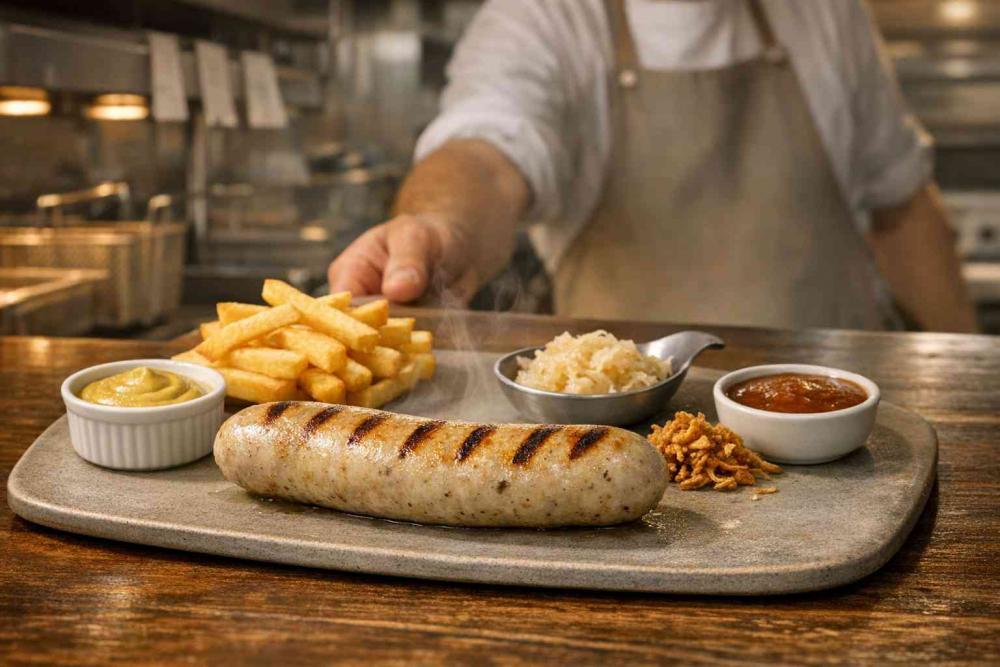
Add-ons are where a sausage menu can move from acceptable to genuinely useful. A bratwurst or frankfurter may be the reason the customer comes to the counter, but the side, topping or drink often lifts the final transaction.
This cultural overview from the Bratwurstmuseum highlights the heritage and regional identity of German bratwurst, which can help when positioning a premium sausage offer on the menu.
This is important because sausage dishes naturally suit add-ons. Chips, loaded fries, curry sauce, sauerkraut, fried onions, cheese, pickles, mustards, soft drinks and meal deals can all sit around the main product without making the offer feel forced. The key is to keep the structure clear. Too many choices slow service. Too few may leave money on the table.
The strongest add-ons usually do one of three things:
- increase the average spend without slowing service too much
- improve perceived value and make the meal feel more complete
- help position the sausage as a proper foodservice item, not just a snack
For example, a sausage in a roll may work well for quick trade, but a bratwurst with chips and curry sauce may feel like a fuller meal. In a pub, a German sausage plate with chips, sauerkraut and mustard can justify a different price point altogether.
The margin model should therefore include average add-on value. If 40% of customers buy chips or a drink, that matters. If premium toppings raise both spend and satisfaction, that matters too.
A sausage offer should not only be costed by what it contains. It should be judged by what it helps sell.
A Simple Real-Life Sausage Margin Model
A practical sausage margin model does not need to be complicated. It just needs to include the parts that affect profit in real service. The aim is to move beyond “sausage cost versus selling price” and look at the whole trading result.
A useful model can be built in seven steps.
1. Core portion cost
Add the cost of the sausage, roll or plate base, sauces, onions, garnish, packaging and any included side.
2. Realistic waste allowance
Add a small percentage for product loss, overcooking, unsold held items, remakes and end-of-service waste.
3. Prep and service time
Estimate whether the item is quick, moderate or slow to serve. You do not need a perfect labour calculation, but you do need to recognise when a dish creates extra work.
4. Selling priceUse a price that reflects both cost and perceived value. A premium German sausage can often sit differently from a generic hot dog if the menu and presentation support it.
5. Average add-on value
Estimate the extra revenue from chips, drinks, toppings, sauces or meal deals. This should be based on actual sales where possible.
6. Throughput at peak times
Consider how many portions can be served during the busiest trading window. A profitable item that slows the queue may lose sales elsewhere.
7. Final practical margin
Compare the expected gross profit with the real service burden. The best item is not always the one with the lowest unit cost. It is the one that gives a strong return while staying easy to execute.
This model is deliberately simple. Its value is not academic precision. Its value is that it reflects how sausage sales actually behave in a working food operation.
How to Compare Two Sausage Offers Fairly
Comparing two sausage offers by unit price alone can lead to poor decisions. A cheaper sausage may look attractive at first, but the fair comparison is how each product performs once it is served, priced and sold to the customer.
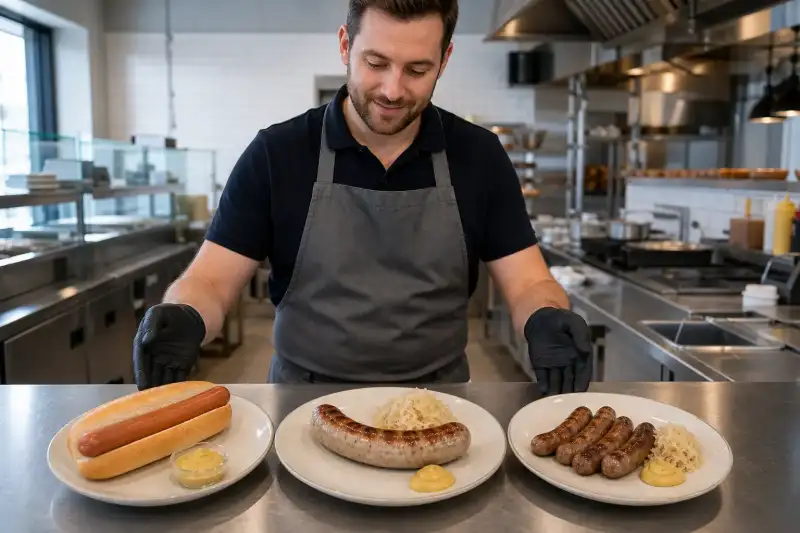
Start by putting both products into the same menu format. If one is judged as a plain sausage in a roll and the other is judged as a premium bratwurst with toppings and chips, the comparison is not useful. Keep the test conditions consistent.
Then look at the service behaviour. Does one sausage split more easily? Does one hold better? Does one need more attention on the grill? Does one create more complaints, remakes or unsold stock? These points may sound small, but they affect real profit.
Perceived value is also part of the comparison. A larger, better-looking or more distinctive sausage may support a stronger selling price. In some settings, customers may accept a higher price for something that feels more authentic, more generous or more different from a standard catering sausage.
A fair comparison should ask:
- What is the full served portion cost?
- What selling price is realistic?
- What waste rate is likely?
- How quickly can staff serve it?
- What add-ons does it naturally support?
- Which product feels stronger to the customer?
Once those questions are answered, the cheapest option may still win. But it will win for the right reasons, not because the model ignored half the costs.
What This Means for Menu Pricing and Service Design
A better sausage margin model should change how the menu is built, not just how the spreadsheet looks. Pricing, portion design and service flow all need to work together.
This European Commission guidance on fair food information helps when checking that sausage menu descriptions, pricing cues, and presentation are clear and not misleading.
For menu pricing, the lesson is simple: do not price only from ingredient cost. Price from the full commercial role of the dish. A sausage in a roll for fast service, a loaded bratwurst meal and a plated pub special may all use a similar core product, but they sit in different value positions.
For service design, the goal is to protect speed and consistency. That may mean reducing unnecessary topping choices, pre-portioning popular add-ons, using a clearer menu board or creating simple meal deal structures. A customer should be able to understand the offer quickly, and staff should be able to produce it repeatedly under pressure.
This is especially relevant for event traders and busy caterers. At peak times, margin is not only about what each portion earns. It is also about how many good portions can be sold while the queue is still willing to wait.
For cafés, pubs, farm shops and garden centres, the same thinking applies in a slightly different way. The sausage offer must feel worth the price, fit the kitchen workflow and avoid adding unnecessary complication.
The practical outcome is a menu that is easier to sell, easier to serve and easier to control. That is where sausage margin becomes real, not just theoretical.
Frequently Asked Questions
There is no single correct figure because the right margin depends on the setting, selling price, portion size, labour cost and what else is sold with the sausage. A street food trader, pub, café and farm shop counter may all need different targets.
The useful approach is to set a target that fits your operation, then test it against real service. If the sausage sells quickly, holds well, supports add-ons and does not create much waste, it may justify a different margin target from a product that needs more handling or has weaker customer appeal.
Use both, but do not rely on food cost percentage alone. Food cost percentage tells you how much of the selling price is taken up by ingredients, but gross profit shows the actual cash left after the portion cost.
For example, a lower food cost percentage can look impressive, but if the selling price is too low, the cash profit per portion may still be weak. In busy service, cash profit per transaction and speed of sale often matter more than chasing a neat percentage.
Start with a modest allowance, then adjust it from real trading records. For a controlled café or pub kitchen, waste may be lower. For outdoor events, festivals or unpredictable footfall, it may need to be higher because demand comes in waves and end-of-service decisions are harder.
The important point is to include some allowance rather than pretending waste does not happen. Track what is left, what is overcooked, what is remade and what is thrown away at the end of service. After a few trading days, the number becomes much more useful.
Not necessarily. A premium sausage may have a higher unit cost, but it can also support a stronger selling price, better perceived value and a more distinctive menu offer. The question is not whether the sausage is cheaper to buy. The question is whether it performs better as a finished portion.
For many operators, the commercial case depends on presentation and positioning. A premium bratwurst needs to be sold as a proper German sausage offer, not hidden inside a generic “hot dog” menu line. If the customer understands the value, the margin can make much more sense.
Measure both the sales uplift and the service impact. If chips, onions, cheese or curry sauce increase the average order value without creating long waits or staff confusion, they are probably helping. If every order becomes a slow custom build, the extra revenue may not be worth the lost throughput.
good add-on is easy to explain, quick to serve and simple for staff to repeat. One or two strong upgrades often work better than a long list of options that looks attractive on paper but slows the counter down.
Use the model to find the commercially safe price range, then choose a customer-friendly price. Exact spreadsheet prices are not always the best menu prices. A figure may make sense mathematically but look awkward or weak on the board.
For example, the model might show that a dish needs to sit above a certain minimum price. From there, the final price should reflect customer expectations, local competition, portion size, setting and perceived value. Pricing is partly arithmetic and partly menu psychology.
The biggest mistake is treating the sausage as a standalone ingredient rather than part of a service system. The product cost matters, but so do the roll, toppings, packaging, waste, staff time, queue speed and the average customer spend.
This is why two operators can buy the same sausage and get very different results. One may build a clean, fast, profitable offer around it. Another may bury it in a slow, cluttered menu with too many options and weak pricing.
Review it whenever costs, selling prices, portion sizes or service conditions change. Ingredient costs, packaging, labour and energy can all move, and a menu that worked six months ago may no longer produce the same return.
It is also worth reviewing after large events, seasonal changes or menu changes. A quick check of bestsellers, waste, add-on sales and average transaction value can show whether the sausage offer is still working as intended.
Yes, but only if the customer still sees fair value. A smaller sausage may work well for children’s menus, light lunch offers, sampling, lower-price specials or settings where customers want a snack rather than a full meal.
The risk is making the offer feel ungenerous. If the portion looks mean, the lower cost may be cancelled out by weaker customer satisfaction or reduced repeat trade. Smaller formats need clear positioning, sensible pricing and a portion design that still feels complete.
Test the full service process, not just the flavour. Check how quickly the sausage cooks, how it holds, how staff assemble the portion, how the menu board reads, how add-ons are handled and how waste is controlled at quieter times.
For events, also check the practical details: equipment capacity, holding setup, packaging, queue layout, staff roles, site rules and any relevant food handling or local authority requirements. A sausage offer can be excellent commercially, but it still needs to fit the site and the service conditions.
Conclusion
A useful sausage gross profit margin model should feel close to real service. It should not stop at the buy-in price of the sausage, because that is only one part of the commercial picture. The better question is what the whole portion earns after yield, waste, prep time and customer add-ons are taken into account.
For many UK operators, this changes the way sausage products should be judged. A higher-quality German sausage may cost more per unit, but if it gives better perceived value, steadier portion control, simpler service and stronger add-on potential, the final margin can still be more attractive. Equally, a low-cost product can become expensive if it creates waste, slows staff down or needs heavy discounting to sell.
The practical answer is to build a simple model and test it honestly. Count the portion, allow for realistic waste, price the prep time, track add-ons and compare products under the same service conditions. That gives a much clearer view of what a sausage menu is really doing.
For operators who want a cleaner, faster and more premium German sausage offer, The Sausage Haus can help make that calculation easier to build into the menu.
About The Sausage Haus
The Sausage Haus supplies authentic German sausages for UK foodservice, catering, event and retail operators who want a more reliable alternative to generic sausage offers. The focus is practical as much as it is culinary: products that suit busy service, clear menu positioning and a stronger customer perception of value.
The sausages are produced by Remagen, a German producer with a long-standing reputation for traditional sausage-making, and distributed in the UK by Baird Foods. This gives UK operators access to a German sausage range that can work across different settings, from street food units and festival stands to pubs, cafés, farm shops, garden centres and hospitality menus.
The Sausage Haus offer is built around products that are easy to understand, easy to serve and commercially useful. For operators, that means more than good flavour. It means a sausage range that can support faster service, simpler menu planning and a more distinctive offer for customers who want something better than a standard hot dog.