The kitchen has sent out its last ticket. The band is halfway through its second set, and someone at the bar asks if there’s still anything hot to eat. A bratwurst roll with mustard and pickled onions is a credible answer, provided the team can serve it without disrupting the bar or reopening the full kitchen.
German sausages lend themselves to that kind of service. A bratwurst can carry a roll with two toppings. A frankfurter can go into a bun or be sliced for a smaller bar snack. With the right equipment and a clear handover, both can work from the same compact station.
The best late-night food menu starts with the customers who are still there, the staff who are still on and the hours when selling food is worth the effort.
Find the hours when late-night food will sell
A pub kitchen that closes at 9pm might have a useful food window during a gig interval at 9.30pm. An event trader may see the strongest demand when the headline act finishes and people head towards the exit. A garden centre running an evening shopping event might get one short rush just before closing. Each occasion calls for a different start time, amount of stock and way of taking orders.
At a pub, start by asking the bar team when customers ask for food after the kitchen closes and what they usually want. A group settling in for another round might order a couple of snacks for the table. People leaving a function may want something substantial they can carry. Those requests give you a better starting point than the headcount in the room.
At an event, check the programme against the position of your pitch. A stall between the stage and the campsite may get a second wave after the music ends. A pitch near a daytime attraction may quieten as soon as it closes. Ask the organiser when people tend to leave and when traders must stop serving.
Then pick a window you can explain in one line on the board. At a pub, that might mean Hot rolls from 9pm to 10pm on gig nights. Start with the occasion that gives you the clearest reason to stay open.
Give people on their way home a reason to stop
The cinema lets out at 10.15pm. A group leaves the pub down the road and heads for the car park. People spill out of a gig and start checking when the next bus is due. They’ve already decided where they’re going. A hot bratwurst roll is a small enough detour to change their minds.
Start by walking the route they actually take. Stand where people come out of the cinema, turn towards the taxi rank or cross from the other pubs. Can they see your entrance? Can they read the board while they’re still walking? A big sign facing the stream of people heading home can do more for the late menu than a card on every table inside.
HOT BRATWURST ROLLS
SERVED UNTIL 10.45PM
Eat in or take away
Use your actual last food order time. Until we close has a nice ring to it, but a specific time tells someone coming out of a late screening whether they can still get fed. Inside the door, make it obvious where to order. Someone who has five minutes before their lift arrives will appreciate being able to walk straight up to the bar.
Then give the people who have time to sit down an easy reason to stay. A Bratwurst Roll & a Pint is a deal customers can understand from the pavement. Put the standalone roll price alongside the deal, name the drinks included and give drivers or anyone skipping alcohol an equally clear option, such as a roll with an alcohol-free beer or a soft drink. A group of four can then make one decision about where to stop, even if everyone orders something different.
Make the offer sound like it belongs to the place. A pub near a cinema could put After the Credits above its late menu. Near a music venue, After the Encore works on gig nights. Keep hot bratwurst rolls in the biggest lettering. That’s what tells a stranger why to walk in. If the late cinema showing finishes at a predictable time, put the board out before the crowd arrives and have the first orders ready to go promptly.
On the first few nights, ask customers who mention the sign where they’ve come from. Keep a simple tally of takeaway rolls, eat-in rolls and roll-and-drink deals. If the pavement trade buys mostly takeaways, you’ve found a new food sales window. If enough people take a seat and order a drink, the late menu is also doing a job for the bar.
Where bratwurst and frankfurters fit on a late-night menu
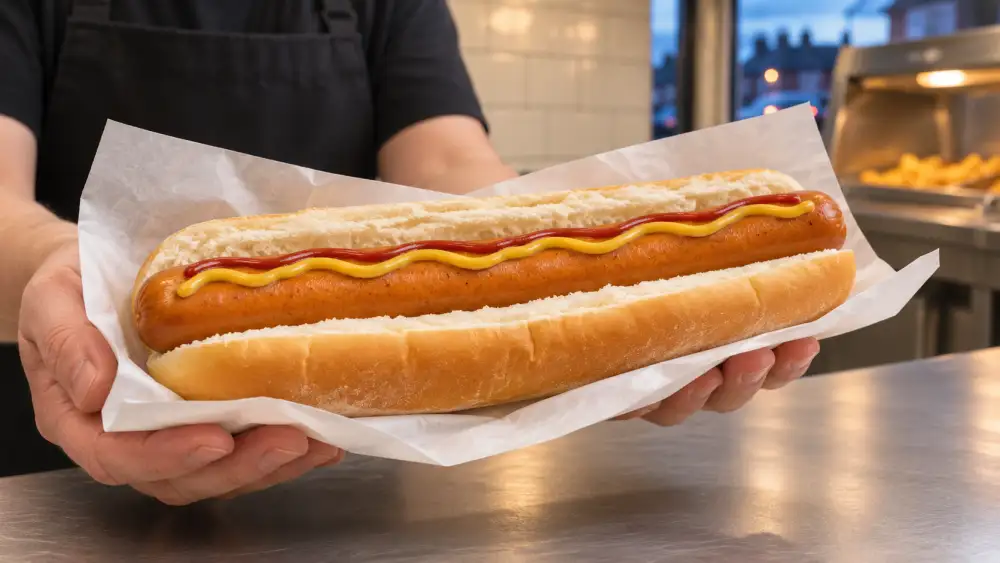
A full-size pork bratwurst is a good centrepiece when customers want a proper handheld meal. Give it a roll that fits and holds together, then use a topping with enough acidity to cut through the richness. Mustard and drained pickled red onions are a straightforward combination. They also look distinct on the menu without asking the late shift to prepare another hot component.
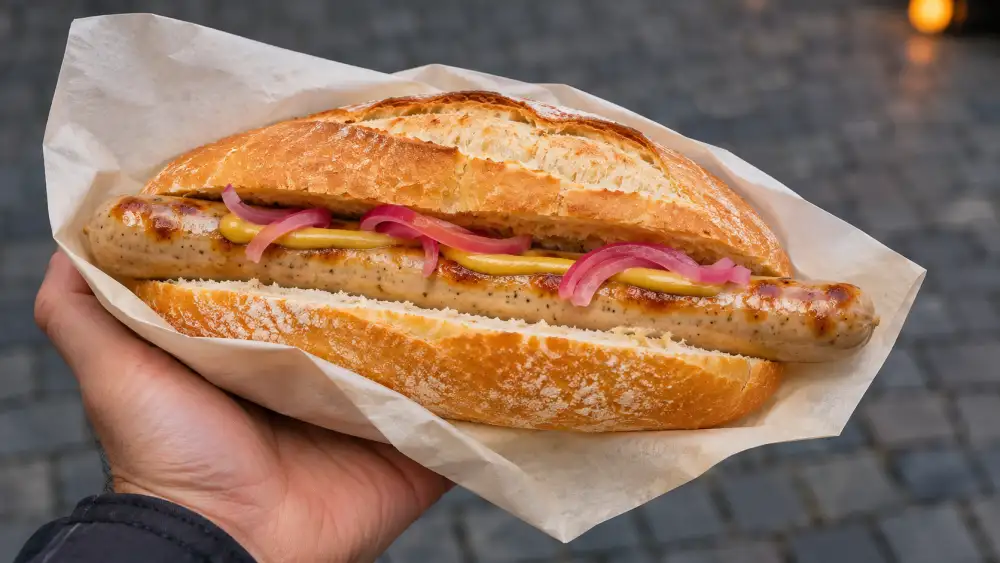
A frankfurter gives you more flexibility with portion size. A smoked frankfurter makes sense as a whole roll for customers on the move. For sit-down pub trade, slice a standard portion and serve it with gherkins, mustard and cocktail sticks. If the product’s instructions allow you to serve it hot without browning, a suitable reheating method can free up griddle space where that matters.
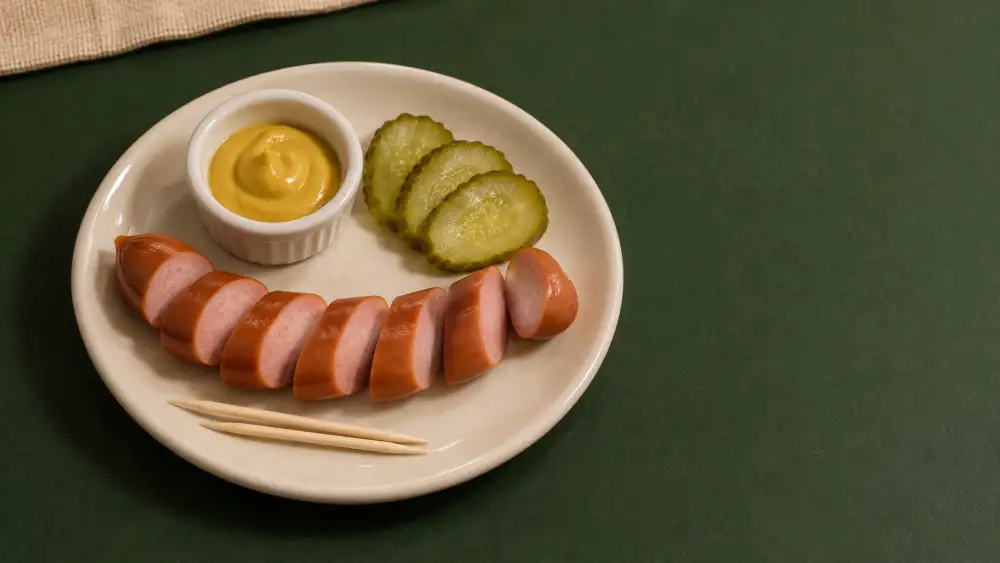
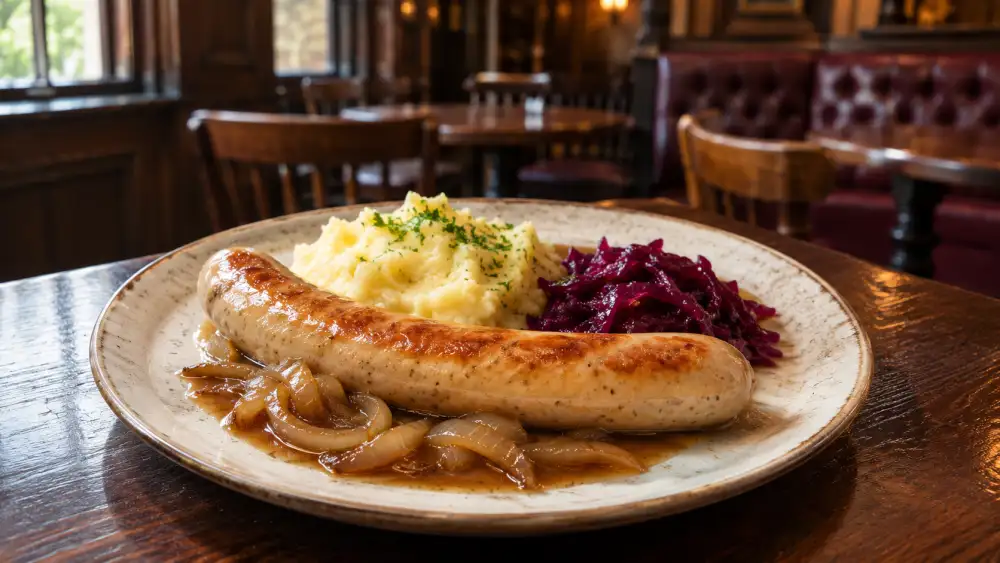
Smaller sausages offer another way to give customers a proper snack. Tourism Nuremberg describes the local three-bratwurst roll known as 3 im Weggla1, served with mustard. That format is useful inspiration for a smaller late-night roll, especially if you already carry mini bratwurst for another part of the menu.
Choose the sausage for the job it has to do. If the crowd mainly wants food to walk away with, start with the full-size roll. If guests are staying for another drink, a smaller portion with pickles gives them a reason to order food when a full meal would be too much.
Build a short menu with a snack, a roll and a meal
These three dishes cover different appetites while sharing ingredients. Choose the two that suit your service first and add the third when there’s a clear reason to carry it.
| Dish | What goes in it | Where it fits |
|---|---|---|
| Smoked frankfurter bites | A measured portion of sliced frankfurter, gherkins and mustard for dipping | A lighter bar snack or a small dish to share |
| Pork bratwurst roll | A whole bratwurst, mustard and drained pickled red onions | A gig interval, a post-match rush or a queue heading for the exit |
| Curry bratwurst and chips | Sliced bratwurst, warm curry ketchup and a measured portion of chips | A more substantial option for a pitch that already runs a fryer |
A pub can start with the bites and the roll, using the same mustard and pickles across both. A trader already selling chips can offer the roll and curry bratwurst, using one sausage across two dishes. Adding chips to a pub station purely for the late menu brings another appliance, another task and a longer clean-down. Price the extra work before putting them on the board.
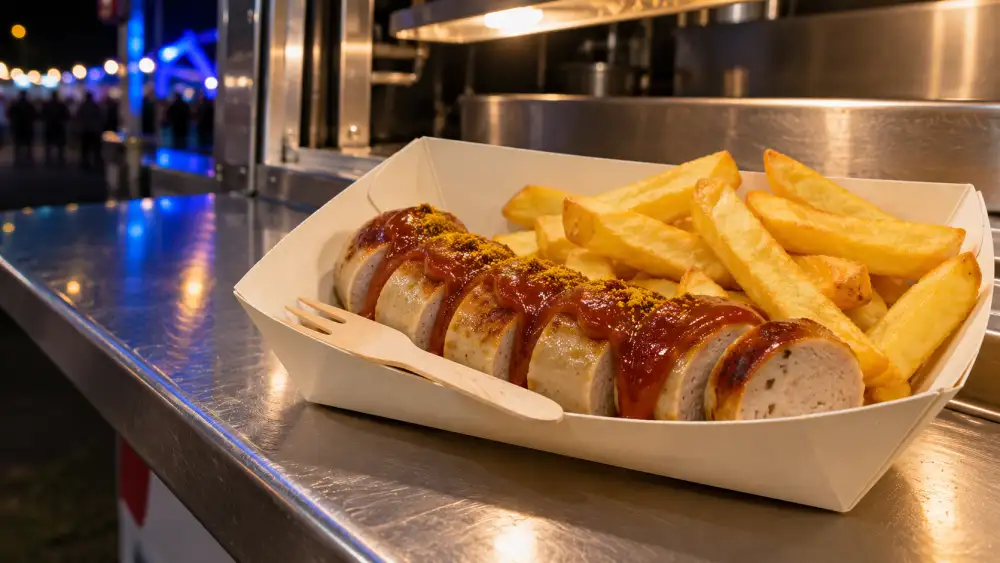
Seasonal changes can be as simple as a topping swap. Crisp apple and cabbage slaw suits a summer beer garden. Warm curry ketchup gives a cold-weather market a reason to order the same sausage again in a different format. Keep the portion and assembly consistent so the team can make the dish the same way on a quiet Thursday and during a Saturday rush.
Set up one station the late shift can run
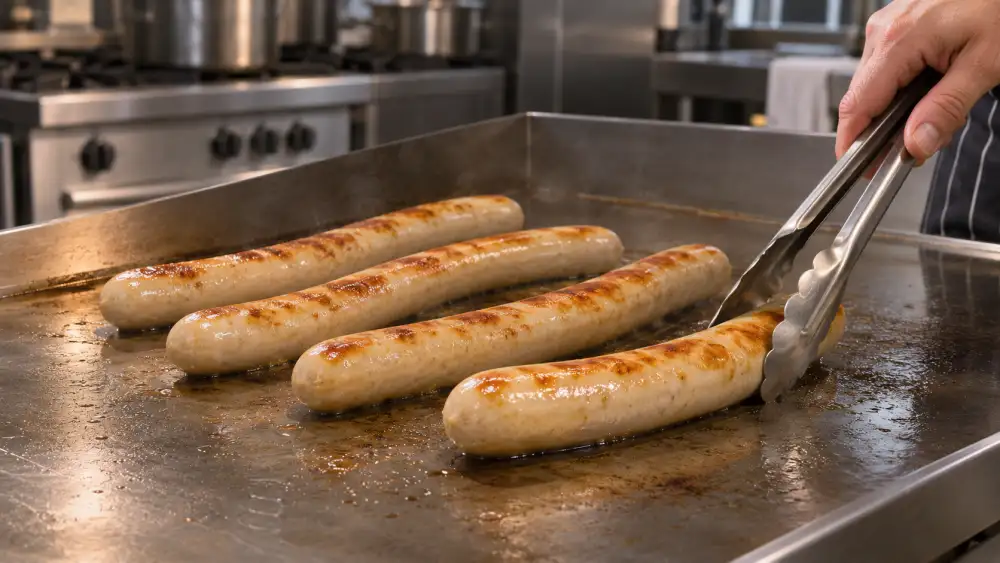
Lay out the station in the order the food moves. Keep the sausage heating area, sandwich assembly and collection point close enough for staff to work without crossing each other. Give cold toppings and spare stock their own space, and set out only the amount the team can use within its food safety procedures. A roll that takes four steps on paper can take twice as long if the buns, tongs and trays live in different places.
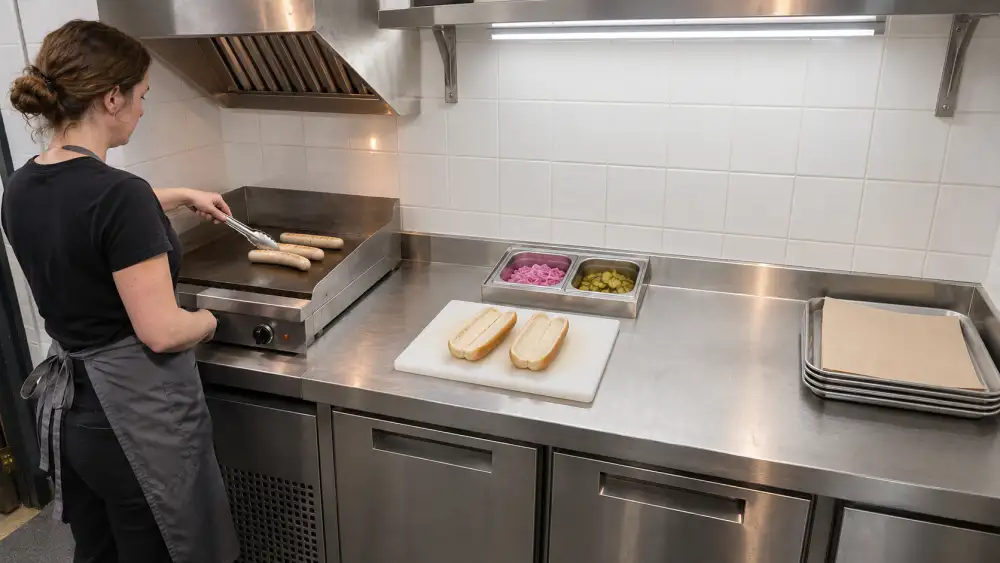
Choose equipment that suits the product and the site. A griddle can give bratwurst a browned finish, while a manufacturer-approved water heating method may suit some frankfurters. At a temporary pitch, confirm the available electrical supply with the organiser against the HSE guidance on electrical safety at events2 before committing to appliances.
Decide which parts of the main kitchen will still be available. If the extraction is off, the wash-up area is closed or the fridge is behind a locked door, work that out before service. The late team needs access to handwashing, suitable storage, clean utensils and a practical way to clean down.
Agree how each sausage will be heated and served, using the product instructions and your food safety procedures. If you plan to hold food hot, check your process against the guidance on reheating and hot holding for food businesses3. Run a short practice service with the actual late-shift team and see where the line backs up.
Check what you can serve and who will serve it
Give the late menu an owner on each shift. That person needs to know what stock has been handed over, when orders close and what to do with anything left at the end. The handover can be short. It should cover the equipment in use, where the product instructions and allergen information are kept, and who makes the call when an item sells out.
In England and Wales, supplying hot food or drink to the public from 11pm to 5am can count as late-night refreshment. Check the premises licence or event authorisation, including the hours and area it covers, and ask the local licensing authority if anything is unclear. Exemptions and the scope of the activity are covered in the Home Office premises licence guidance4. For sites elsewhere in the UK, confirm the applicable rules with the local authority.
Think through how orders will reach the station. If customers order at the bar, put the cutoff and collection point on the menu. At a pitch, mark where people wait for food so a collection crowd leaves space for new customers to see the board and place an order.
Keep written allergen information where the team takes orders and update it whenever a roll, sauce or sausage changes. The Food Standards Agency’s allergen guidance for food businesses5 covers how to provide that information to customers.
Plan for the quiet spells and the sudden queues
Late trade can be uneven. A pub might sell a few rolls over half an hour and then take a run of orders as a band breaks. A festival trader may see the reverse, with one rush at the end of the set followed by a sharp drop. Plan your first batch around the demand you can reasonably expect before the next batch is ready.
Treat the late window as its own sales period. If the till allows it, use separate buttons for the late menu so you can see what sold and when. For a one-off event, a tally in 15-minute blocks can answer the same question. Record when you sold out, how long customers waited and how many prepared portions were left at closing. A sell-out in the first 20 minutes tells a different story from a sell-out on the last order.
Keep reserve stock under the appropriate storage conditions and reload in line with your documented procedures. Use the real interval, final whistle or stage schedule as a cue to check the queue and decide whether another batch is justified. As closing approaches, reduce the batch size or move to heating to order if your equipment and service times allow.
Count leftover rolls, garnishes and prepared sausages separately. A full tray of unused buns calls for a different change from a sausage batch that went on too late. The Guardians of Grub food waste tracking calculator6 can help put a cost against what you throw away.
Work out how many orders make the extra hours pay
Cost the whole serving, including the sausage, roll, garnish, sauce and packaging. Then work out what it costs to stay open for that window. Include the time staff spend setting up, serving and cleaning down. At a busy pub, also watch what happens to drinks service if the same person has to cover both.
Suppose a bratwurst roll brings in £5.50 in sales revenue excluding VAT, where applicable, and food and packaging cost £1.90. That leaves £3.60 per roll towards the rest of the costs. If the trial window adds £54 in staffing and energy, it takes 15 rolls to cover those two costs. At 20 rolls, the session leaves £18 before waste, fees and any other additional costs. Use your own figures for the decision.
If you offer two dishes, do the maths using what customers actually bought. A lower-priced snack can still earn its place if it adds orders with little extra labour. A tray of chips may bring in a higher selling price while tying up the person you need to assemble rolls. Watch both the till and the queue.
Compare similar sessions before extending your hours. If almost all the orders come within 30 minutes of the final set, that short window may pay better than staying open for the full hour.
Frequently Asked Questions
Some might if both menus offer much the same meal at different prices. Launch the late offer after the last main-menu orders and give it a distinct format, such as a bratwurst roll sold on its own. If you already serve bratwurst and chips at dinner, the late roll gives people a smaller option without selling the same plate for less.
Compare the deal with what customers would otherwise buy. If regulars already order a roll and a pint at full price, the discount costs you margin on a sale you were likely to make anyway. Try the deal on comparable evenings and look at how many roll buyers also order a drink, alongside the amount you keep after food and drink costs.
Yes, if their customers regularly walk past your pub after a showing or gig. Give the venue one line it can use in an event reminder or at the box office, with the offer, the walking distance and the last order time. Agree which nights it applies to. A mention tied to a specific late screening is more useful than a standing promise that the pub serves food late.
Take them if the group can give you a firm quantity and a collection window. Put the order under one name and agree who will pay, especially if they want to collect everything together. Leave some capacity for walk-ins around the same time. A booking for 15 rolls is useful, but it can tie up the whole station just as the rest of the audience arrives.
Choose a roll with a hinge that holds and enough room for the sausage and toppings. Drain pickles well, use a measured squeeze of sauce and try the finished roll in its wrapper after a five-minute walk. If the bread splits or the paper is soaked by then, change the bread or topping before you change the sausage.
Check the supplier’s inner pack size as well as the case price. A cheaper sausage per portion can work out dearer if you regularly open more than you sell. Look at whether the same product can earn its keep on the daytime menu, and check the supplier’s storage, defrosting and opened-pack instructions before deciding how much stock to set aside.
If you regularly serve groups, it’s worth testing one. A single person who can’t eat either dish may decide where the whole group stops. Start with an existing meat-free item the late team can serve with the equipment and time available. Check the ingredients and preparation setup before describing it as suitable for vegetarians or vegans.
Change the sign as soon as the last portion is committed. If you still have frankfurters, advertise them by name so people know what they can order before walking in. For a first trial with limited stock, put *while stocks last* below the order time and note when you sold out. A sell-out just after a film ends is a useful signal to prepare for that specific rush next time.
Conclusion
German sausages work after the main kitchen closes because they can give customers a recognisable hot dish with a short assembly process. A full-size bratwurst roll suits customers on their way out. Frankfurter bites with pickles and mustard suit people who are staying for another drink. The occasion tells you which one deserves the space on the menu.
Start with the strongest trading window you can identify and a dish the team can serve consistently using the equipment that will still be running. Confirm that the hours and setup are suitable, give staff an order cutoff they can stick to and track what happens on the night. The figures worth keeping are portions sold, food wasted, the time spent closing down and any effect on the rest of the service.
If the first trial works, your next decision might be to serve the same roll on another busy night, add a smaller snack or shorten the window to the half-hour that sells best. If you’re choosing a sausage for the trial, The Sausage Haus can help you match the portion and format to the way you plan to serve it.
The Sausage Haüs
The Sausage Haus brings authentic German-style sausages to the UK market through a partnership between Hardy Remagen and Baird Foods.
Hardy Remagen is a long-established German producer with deep experience in traditional sausage making, continental meat products and modern food manufacturing. The range reflects the kind of products German shoppers already understand and enjoy: Bratwurst, Frankfurters, smoked hotdogs, cheese-filled sausages, Bockwurst, Weisswurst and other classic German-style lines.
In the UK, the range is represented and distributed by Baird Foods, giving retailers, wholesalers, caterers and foodservice operators access to German sausage products with a practical UK supply route. This combination is important: German manufacturing knowledge on one side, UK market understanding and distribution on the other.
For retail buyers, The Sausage Haus range offers a clear way to add something different to both chilled and frozen sausage fixtures. The products are built around real eating occasions: BBQs, premium hotdog nights, family meals, German street food, Oktoberfest promotions, Christmas market food and quick comfort meals at home.
The result is a range that gives shoppers something more distinctive than ordinary sausages and standard hotdogs, while giving buyers a compact, commercially useful product story with strong fresh and frozen potential.
References
Nuremberg Convention and Tourist Office. "3 im Weggla".
UK Government. Electrical safety - HSE. GOV.UK. Updated October 11, 2024.
UK Government. Food hygiene for businesses. GOV.UK. Updated June 25, 2026.
UK Government. Premises licence guidance. GOV.UK. Updated April 5, 2022.
UK Government. food businesses. GOV.UK. Updated July 17, 2026.
Guardians of Grub. FOOD TRACKING CALCULATOR • Guardians of Grub. Updated February 27, 2023.