Burgers remain popular for good reason. Customers understand them, kitchens know how to produce them and almost every topping can be placed between two halves of a bun.
That familiarity also creates a problem. When several traders at the same event sell burgers, or every pub menu offers a similar stack, standing out becomes more difficult. Operators can find themselves competing through portion size, elaborate toppings or price rather than offering something genuinely different.
German sausages provide another route. Bratwurst and Frankfurters are recognisable enough to feel accessible, but they remain less heavily used across mainstream UK menus. They can be served in rolls, trays, bowls or plated meals, with enough seasonal flexibility to work beyond Oktoberfest and Christmas markets.
The opportunity is not to replace every burger. It is to build a tighter sausage offer that customers can understand quickly, staff can execute consistently and competitors may not already be selling three stalls away.
Why German Sausages Have Room to Stand Out
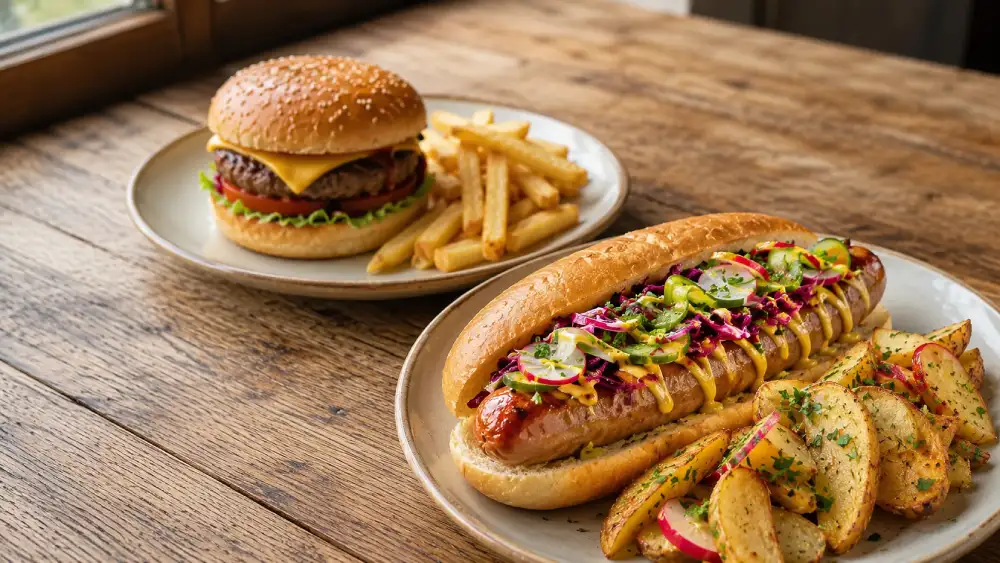
The UK burger market is not merely busy. It is visually repetitive. Patties, cheese, bacon, barbecue sauce and loaded fries appear in countless combinations, often with only small differences between operators.
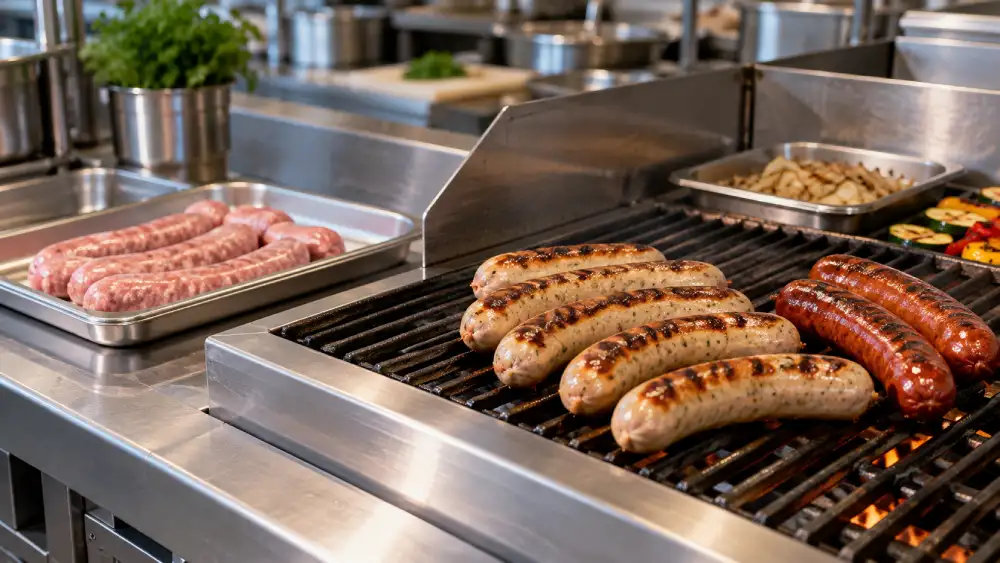
A German sausage creates a different starting point. Its long shape changes the presentation, while grilling creates movement, aroma and visible theatre. Even a simple bratwurst in a proper roll can look more distinctive than another heavily stacked burger.
German sausages also carry a useful sense of place. Germany has strong regional food traditions rather than one standard national sausage style. The official Culinary Germany guide1 reflects this mix of traditional dishes, regional ingredients and modern interpretations.
That heritage gives operators material for clearer menu descriptions. “German pork bratwurst with mustard and warm potato salad” tells a more specific story than “premium sausage and chips”. The description does not need a paragraph of folklore. A recognisable product, a suitable accompaniment and one clear flavour direction are usually enough.
This works particularly well where customers are already comparing several food choices. A sausage menu can occupy the space between an ordinary hot dog and an oversized restaurant burger. It can be filling without appearing unwieldy, premium without requiring an excessive list of toppings and familiar without looking identical to everything nearby.
The important point is differentiation, not novelty for its own sake. Customers should understand the dish within a few seconds.
Choose the Sausage Before Choosing the Toppings
A strong dish starts with the sausage style. Beginning with sauces and garnishes often produces a confused build in which the main ingredient could be replaced by almost anything.
Bratwurst generally suits builds where grilling, seasoning and a more substantial eating experience matter. It works naturally with mustard, cabbage, potato, herbs, apple, pickles and darker sauces. Frankfurters lend themselves to long rolls, quicker handheld service and sharper combinations built around gherkins, slaw, curry sauce or cheese.
These are broad menu distinctions rather than rigid German rules. Germany itself has many regional products, as the official Munich tourism guide to traditional German sausage varieties2 demonstrates. UK operators do not need to reproduce every regional convention, but the variety is a useful reminder that “German sausage” is not a single flavour or format.
Before developing a dish, assess four things:
- How pronounced is the sausage seasoning?
- Is the texture better suited to a roll, tray or plated meal?
- Will the sausage be cooked to order, batch-cooked or held?
- Which garnish adds contrast rather than covering the product?
A delicately seasoned bratwurst can disappear beneath smoked cheese, chilli sauce and crispy toppings. A fuller-flavoured sausage may need only mustard, a fresh cabbage garnish and a good roll.
Operators should also follow the supplier’s storage, cooking and handling instructions for the specific product. Do not assume every bratwurst or Frankfurter arrives in the same condition or requires the same process.
Fresh Bratwurst Ideas for Warmer & Colder Weather
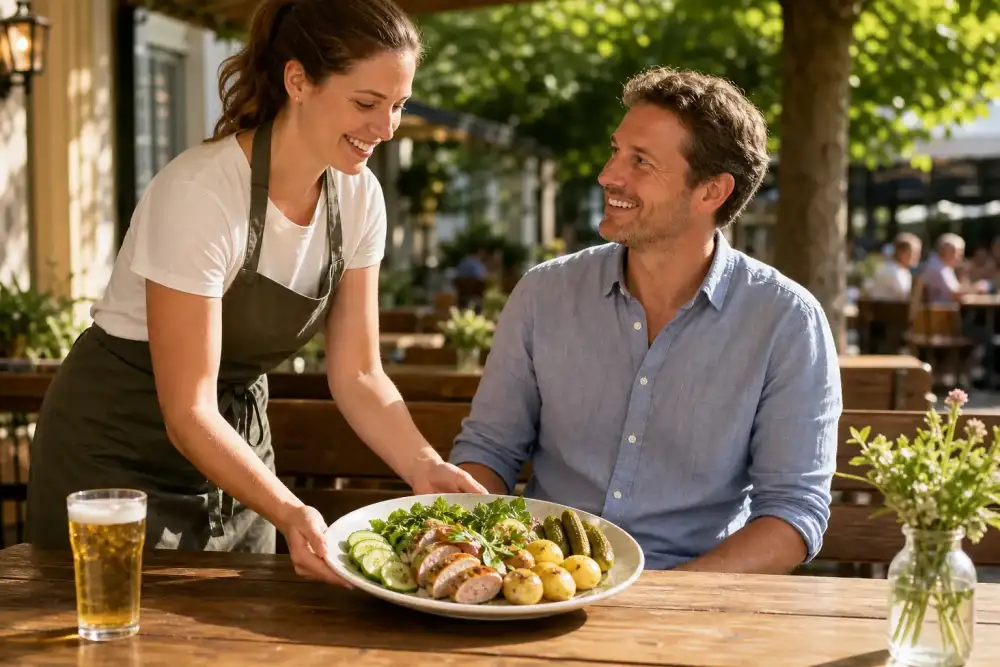
Bratwurst is often presented as cold-weather food, accompanied by heavy sauces, fried potatoes or large amounts of bread. That works in the right season, but it leaves a sizeable part of the year underused.
A fresher bratwurst dish does not have to be promoted as low-calorie or “healthy”. In menu terms, lighter usually means more freshness, acidity and vegetable content, with less reliance on cheese, thick sauce and oversized bread.
Useful warmer-weather combinations include:
- Bratwurst with herb potato salad: Use a mustard vinaigrette, spring onions and fresh parsley instead of a heavy mayonnaise dressing.
- Bratwurst and apple slaw roll: Combine finely shredded cabbage, carrot and apple with a sharp dressing and a restrained amount of mustard.
- Grilled bratwurst vegetable tray: Serve sliced sausage with courgette, peppers, cabbage or seasonal roasted vegetables.
- Bratwurst lunch bowl: Pair sliced sausage with baby potatoes, cucumber, leaves, gherkins and a mustard dressing.
- Open bratwurst plate: Use half a roll or a smaller bread portion, with dressed salad and pickles completing the plate.
The NHS Eatwell Guide3 provides general context on the place of vegetables and different food groups within an overall diet. A commercial dish should not make nutritional promises without proper analysis, but adding vegetables can improve colour, contrast and customer choice.
Freshness also helps the sausage remain central. Apple, cucumber, herbs, cabbage and pickles cut through richness rather than competing with it.
Frankfurter Builds Beyond Ketchup and Onions
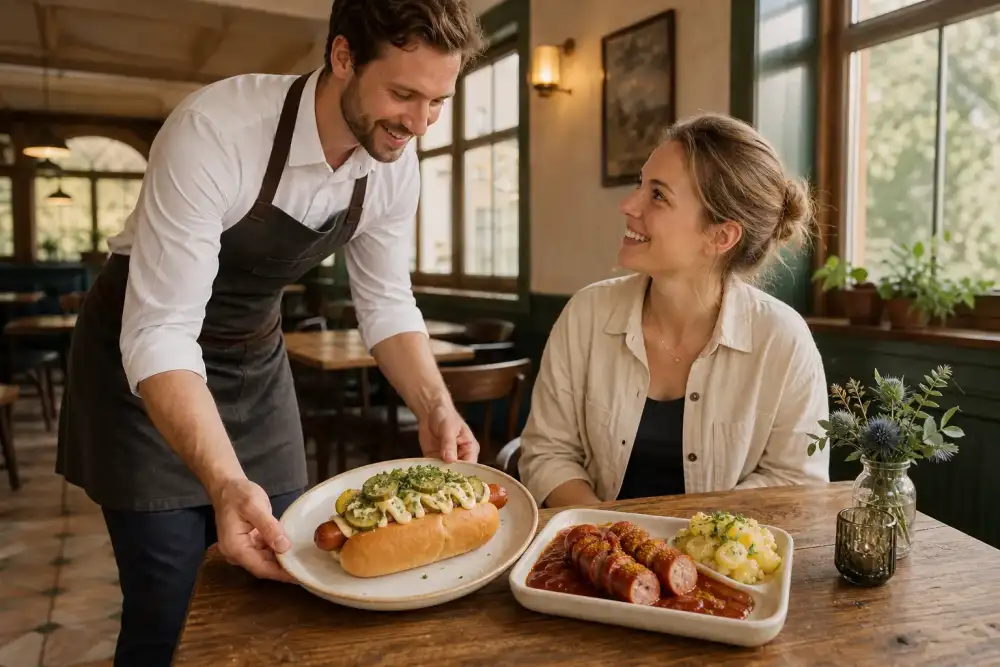
The standard hot dog combination is familiar and fast, but it can make a good Frankfurter look like a commodity. Changing one or two supporting elements is often enough to create a more distinctive product.
A green herb Frankfurter can combine a long roll, mustard mayonnaise, gherkins and chopped parsley. An apple slaw version introduces sweetness and crunch without becoming excessively heavy. For pub or café service, a Frankfurter can be plated with warm potato salad, dressed leaves and mustard rather than automatically arriving with chips.
Currywurst offers another route. It has a recognisable German identity and can be served in a tray without requiring a roll. The core format is straightforward: sliced sausage, curry-seasoned tomato sauce and a suitable side. The appeal and cultural background of German currywurst as a street-food dish4 show why it remains more than simply a hot dog with curry powder.
For UK operators, the sauce can be offered at different heat levels, but the menu should remain clear. One well-balanced house curry sauce is usually more useful than several similar versions.
A Frankfurter also makes a practical base for controlled premium upgrades. Cheese sauce, crispy bacon, jalapeños or an additional sausage can increase perceived value, provided the additions remain easy to portion. The premium version should feel visibly different, not merely cost more because it contains another spoonful of sauce.
Make Seasonality Work Without Rebuilding the Menu
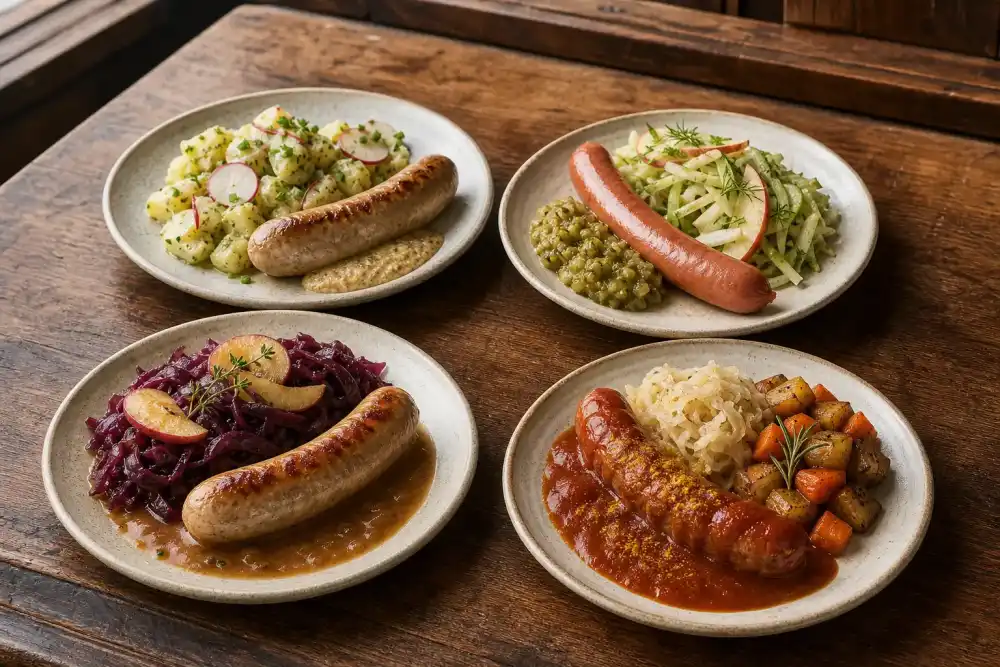
Seasonal menus can keep an offer interesting, but complete reinvention creates extra purchasing, training and waste. A better approach is to keep the core sausage format stable while changing a side, sauce or garnish.
A simple seasonal framework might look like this:
- Spring: Bratwurst with herb potato salad, radish and mustard dressing
- Summer: Frankfurter with apple-cucumber slaw and gherkin relish
- Autumn: Bratwurst with apple, red cabbage and mustard gravy
- Winter: Currywurst, sauerkraut or a cheese Frankfurter with a warm side
This gives customers something timely without requiring four separate operating systems. Mustard, cabbage, apple, potatoes and gherkins can move across several dishes, reducing the number of ingredients bought for only one menu line.
Seasonality should also follow the site. A summer garden centre may suit a plated bratwurst lunch with salad, while a busy festival needs something that can be carried and eaten easily. A Christmas market can support richer flavours, but customers still need a dish that remains manageable while standing outdoors.
Smart ingredient crossover also helps protect profit. The Guardians of Grub menu-planning resources5 explain how better planning can improve efficiency and reduce wasted food in commercial kitchens.
Run seasonal ideas as controlled specials before making them permanent. Record sales, preparation time, leftovers and customer requests. A dish that photographs well but slows the queue or leaves half a tub of garnish unused every day is not yet a successful menu item.
Match the Serving Format to the Site
The same sausage can perform very differently depending on how and where it is served. A format designed for a pub table may be awkward at a standing event, while a basic festival roll may feel too slight for a garden centre lunch.
For street food and event service, handheld builds need structural discipline. The roll should support the sausage, sauce should stay inside it and toppings should not fall away with every bite. Tray-based currywurst provides an alternative for customers who want something more substantial without creating a complicated plated meal.
Pubs and cafés have more freedom. Bratwurst can become part of a lunch plate, sharing board or sausage-and-mash dish. Frankfurters can work in brunches, loaded rolls or smaller lunch offers. Farm shops may use hot service to introduce shoppers to products they can later buy for home.
Equipment must suit the chosen format and expected volume. If gas-fired equipment is used, the Health and Safety Executive provides specific gas safety guidance for catering businesses6. Operators should also verify electrical load, ventilation, fire precautions, event requirements and any restrictions set by the organiser or local authority.
Before launch, test the format under realistic service conditions. Time ten consecutive orders, not one carefully assembled demonstration portion. Check whether the bread splits, the garnish slows assembly or the finished dish becomes difficult to carry.
The best format is not necessarily the most creative. It is the one customers want, staff can repeat and the site can support safely during the busiest part of service.
Protect Margin With a Tighter, Faster Menu
A German sausage menu does not need ten sausages and twenty sauces. Too much choice can increase stockholding, slow customer decisions and make staff execution less consistent.
A strong starting range might include one classic bratwurst, one Frankfurter and one more distinctive option such as a cheese or chilli sausage. These can support a standard build, a premium build and perhaps one tray or plated format.
Cost the entire dish rather than focusing only on the sausage. Rolls, sauces, garnishes, trays, napkins and card charges all affect the final contribution. Portion sauces with ladles, bottles or measured pumps where practical. Small uncontrolled extras become significant over a busy season.
Ingredient crossover matters here as much as product cost. Cabbage slaw can serve a Frankfurter, a bratwurst bowl and a side portion. Curry sauce can support currywurst and loaded chips. Pickles and mustard can appear across most of the range without making every dish taste identical.
Keep allergen control in the design process rather than adding it after the menu is printed. Bread, mustard, cheese sauces and sausage recipes may introduce different allergens. The Food Standards Agency’s allergen guidance for food businesses7 explains the responsibilities and recommended handling practices for UK operators.
Finally, give each dish a clear name. “German Bratwurst with Apple Slaw” sells the important information faster than a clever name that requires three lines of explanation. Customers in a queue should understand the product, portion and main flavour before reaching the counter.
Frequently Asked Questions
They may, but the value must be visible. A proper sausage, well-sized roll, distinctive accompaniment and clear menu description create a stronger proposition than an ordinary hot dog with standard sauces.
Price the finished dish around portion size, ingredient cost, local competition and trading environment. Do not assume customers will accept a premium simply because the sausage is described as German.
That depends mainly on the kitchen, service volume and available cooking time. Raw bratwurst can offer strong grill appeal, but it requires thorough cooking and careful separation from ready-to-eat ingredients. A pre-cooked sausage may simplify service, although it must still be stored, reheated and handled according to the supplier’s instructions.
Test both options during a realistic rush. The best commercial choice is the one your team can serve safely and consistently without creating a bottleneck.
Begin with one sausage and one clearly defined build as a weekend special, event dish or seasonal promotion. Avoid testing several products simultaneously, because weak sales will not tell you whether the problem was the sausage, the serving style or too much choice.
Record portions sold, service time, customer comments, leftover stock and total contribution. A short controlled trial provides more useful information than informal impressions from staff.
Compare contribution per portion and contribution per service minute, not ingredient cost alone. A burger may achieve a higher selling price but require more cooking, assembly and cleaning. A simpler sausage build may produce a slightly lower contribution per sale while allowing more orders through the same counter.
Include bread, garnishes, sauces, packaging, cooking loss, card charges and waste in the calculation. The cheapest product is not necessarily the most profitable one to serve.
Choose the bread around the sausage rather than accepting a poor fit. An undersized roll makes the portion awkward to eat, while very soft bread can split under sauces and moist toppings.
sk suppliers for exact roll dimensions and test samples with the complete build. For plated dishes, trays or currywurst, removing the long roll entirely may provide a better result than forcing the sausage into unsuitable bread.
Yes, if suitable products are available and your operation can manage them properly. Check every sausage, sauce, bread product and garnish rather than assuming that a dish is gluten-free or vegetarian from its main ingredient alone.
Consider storage, utensils, grill space and cross-contamination risks before advertising an option. If the kitchen cannot reliably follow the necessary procedure during busy service, make the limitation clear rather than promising something staff cannot deliver consistently.
The packaging should match the amount of sauce, steam and movement in the dish. Long rolls need support beneath the sausage, while currywurst and loaded trays need sufficient depth and a secure base.
Test packaging with a finished hot portion and leave it closed for the likely collection or delivery time. Check for soggy bread, trapped condensation, leaking sauce and toppings collecting at one end. Packaging that looks attractive while empty may perform poorly once the food is inside.
There is no responsible universal holding time for every sausage and setup. It depends on the product, cooking method, temperature control, equipment and supplier instructions.
Document the process within your food safety management system and verify the relevant temperature requirements. From a quality perspective, smaller batches are often preferable because prolonged holding can dry the sausage, toughen the casing and reduce its visual appeal.
Keep recognisable names such as bratwurst, Frankfurter and currywurst, but explain unfamiliar terms in plain English. Customers should not need prior knowledge of German food to understand what they are ordering.
description such as “pork bratwurst with apple slaw and German mustard” is clearer than a long string of untranslated words. Authenticity is useful, but comprehension usually sells the dish.
Conclusion
The strength of German sausage menu ideas lies in the space between the ordinary hot dog and the increasingly elaborate burger. Bratwurst and Frankfurters are easy for customers to recognise, yet still give operators room to create something visibly and commercially different.
The most effective menus start with the sausage, then add a small number of ingredients that suit its flavour and the service format. Fresh slaws, mustard dressings, potatoes, pickles and seasonal vegetables can create lighter-looking lunch dishes, while curry sauce, warm cabbage and richer toppings provide colder-weather options.
None of this requires an oversized range. One or two core sausages, a controlled premium option and ingredients that work across several dishes can produce a menu that is easier to buy, train and serve. The final choices should be tested against real preparation times, holding conditions, waste and customer demand.
Burgers are unlikely to disappear, nor do they need to. The opportunity is to offer a credible alternative where the market has become repetitive.
If you are planning a new sausage line or refreshing an existing menu, The Sausage Haus can help you identify German sausage options suited to your venue, customers and style of service.
The Sausage Haüs
The Sausage Haus brings authentic German-style sausages to the UK market through a partnership between Hardy Remagen and Baird Foods.
Hardy Remagen is a long-established German producer with deep experience in traditional sausage making, continental meat products and modern food manufacturing. The range reflects the kind of products German shoppers already understand and enjoy: Bratwurst, Frankfurters, smoked hotdogs, cheese-filled sausages, Bockwurst, Weisswurst and other classic German-style lines.
In the UK, the range is represented and distributed by Baird Foods, giving retailers, wholesalers, caterers and foodservice operators access to German sausage products with a practical UK supply route. This combination is important: German manufacturing knowledge on one side, UK market understanding and distribution on the other.
For retail buyers, The Sausage Haus range offers a clear way to add something different to both chilled and frozen sausage fixtures. The products are built around real eating occasions: BBQs, premium hotdog nights, family meals, German street food, Oktoberfest promotions, Christmas market food and quick comfort meals at home.
The result is a range that gives shoppers something more distinctive than ordinary sausages and standard hotdogs, while giving buyers a compact, commercially useful product story with strong fresh and frozen potential.
References
A guide to different types of sausages | simply Munich. different types of sausages.
National Health Service. The Eatwell Guide. NHS. Updated October 9, 2025.
Travel. favourite fast food. Updated November 8, 2023.
Guardians of Grub. Resources • Guardians of Grub. Updated November 4, 2024.
UK Government. Gas safety in catering and hospitality - HSE. GOV.UK. Updated March 9, 2021.
UK Government. food businesses. GOV.UK. Updated July 17, 2026.