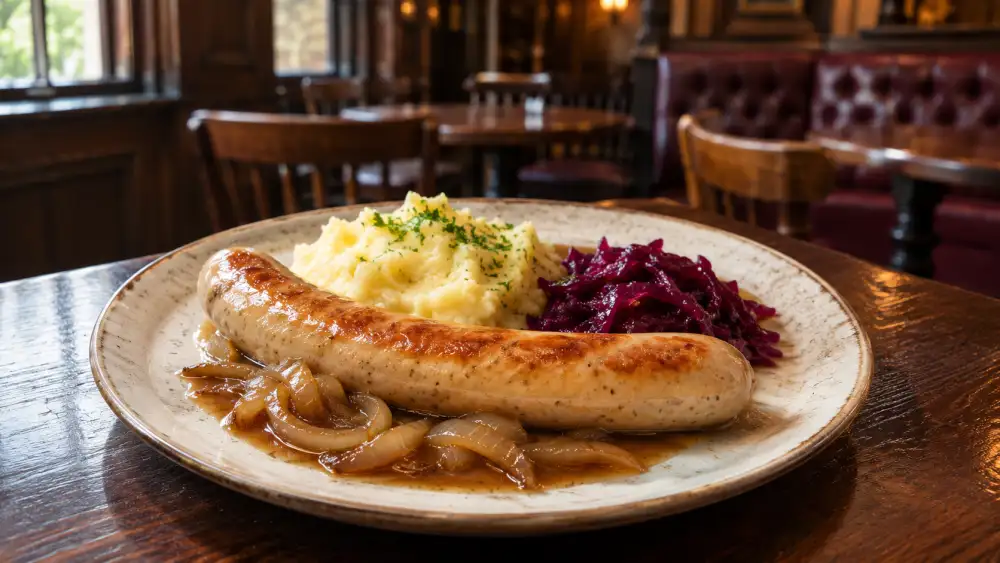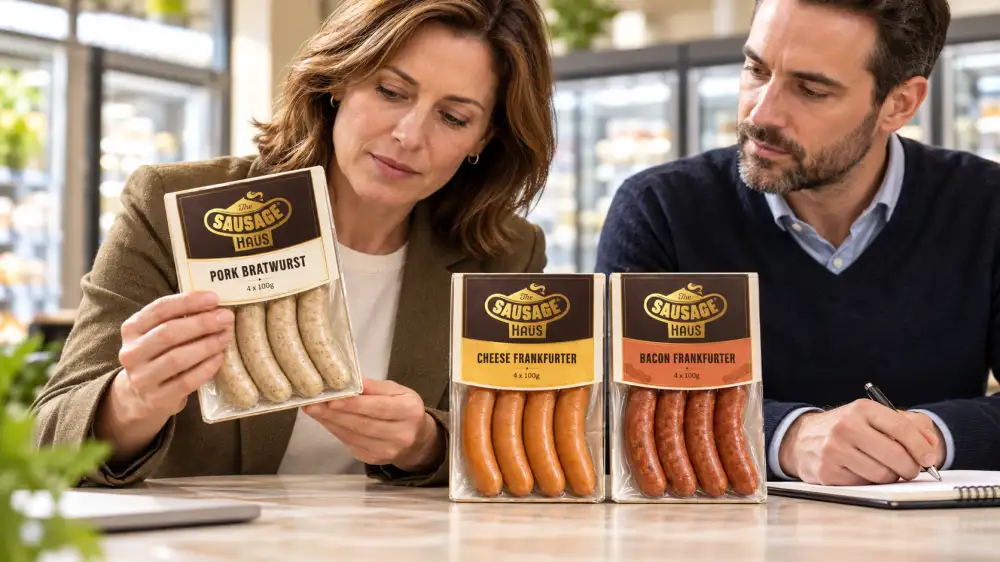
You can cook a Jumbo Pork Bratwurst from start to finish on a flat-top griddle. If you have a large batch to get through, you can heat the links in a RATIONAL combi oven and brown them on the griddle before serving. A frankfurter gives you another choice. It can go straight into the roll after gentle heating, or you can brown it for extra character.
That distinction matters when you’re choosing equipment. Bratwurst generally wants a browned finish. Frankfurters and hot dogs are equally at home served plain or browned. Bockwurst stays with gentle heating and comes straight to service. For a mixed menu, a flat-top and a suitable hot-water setup cover much of the work. A combi oven helps with volume, while a salamander is useful for finishing a few orders at the pass.
Match the sausage to the finish you want
Start with what the customer is buying. A bratwurst served with mash and onions benefits from an appetising golden casing. A Bacon Frankfurter in a soft roll can deliver its smoky flavour straight from the steamer. Once you know the finish you want, it’s easier to choose the appliance and decide how many steps the dish needs.
| Sausage family | Products and formats | Finish to aim for |
|---|---|---|
| Bratwursts | Pork Bratwurst, 100 g and 150 g. Nuremberger Bratwurst, 10 × 25 g. | A golden casing on the Pork Bratwurst and a lighter golden finish on the small Nurembergers. |
| Frankfurters | Bacon Frankfurter, also called Bacon Krakauer. Cheese Frankfurter, Chilli Beef Frankfurter and Vienna Beef Frankfurter. All four come in 100 g and 150 g formats. | All four taste good served straight after gentle heating. Brown them for extra character if it suits the dish. Keep the Cheese Frankfurter casing intact either way. |
| Hot dogs | Pork Hotdog and Beef Hotdog, both 100 g and 150 g. Smoked pork formats include the 150 g Costco Smoked Pork Hot Dog and the 4 × 120 g retail Jumbo Smoked Pork Hot Dog. | Serve without browning for a classic steamed hot dog, or brown for a grilled finish. Follow the preparation instructions for the specific pack. |
| Sausages traditionally heated in water | Munich Weisswurst, 5 × 80 g. Bockwurst, 10 × 120 g. Frankfurter Würstchen is covered as a traditional style, with Sausage Haus trade availability to confirm. | Heat gently and serve straight away. Weisswurst stays pale, and Bockwurst goes straight from gentle heating to the plate or roll. |
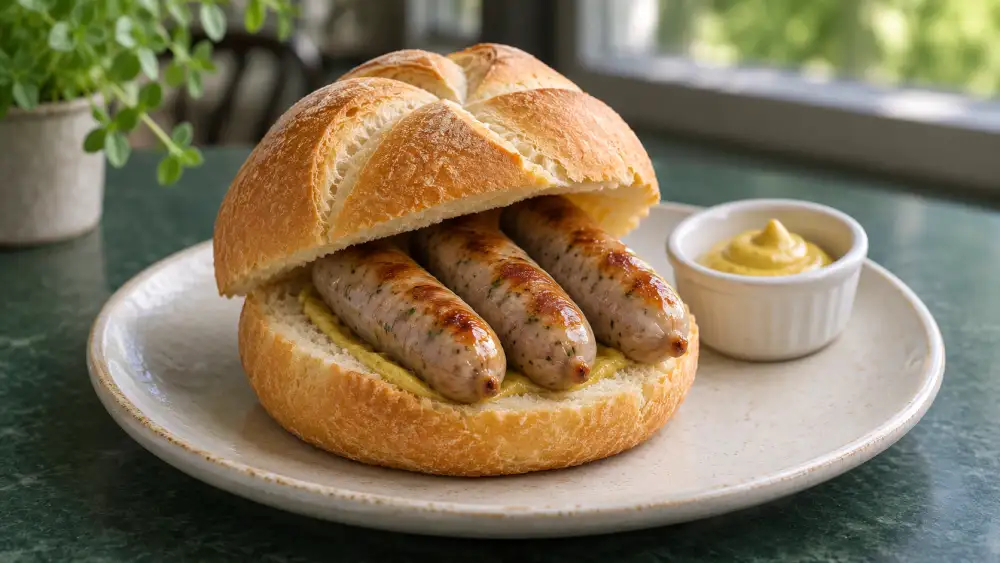
Portion size matters on the cookline. A 150 g bratwurst can carry a substantial event roll or pub main, while the 100 g format can suit a smaller lunch. The 25 g Nurembergers lend themselves to breakfast plates and smaller rolls. Three with mustard makes a compact lunch with a story behind it, as shown in Nuremberg Tourism’s guide to the traditional three-in-a-roll serving1.
Which equipment suits each German sausage?
Start to finish means you can use that appliance for the entire heating or cooking process when the product instructions support it. Finish only means the sausage goes onto the appliance already hot throughout. For a steam-heated bratwurst, plan the browning step before serving. For frankfurters and hot dogs, add that step only when you want the colour and flavour it brings.
| Equipment | Jumbo Pork Bratwurst | Nuremberger Bratwurst | Bacon, Cheese, Chilli Beef and Vienna Beef Frankfurters | Pork and Beef Hot Dogs | Weisswurst, Bockwurst and Frankfurter Würstchen |
|---|---|---|---|---|---|
| RATIONAL or other combi oven | Steam or humid combi to heat through, then brown on a flat-top, chargrill or in a pan. A suitable dry oven programme can heat and brown in the same appliance. | Fully defrost first. Heat and brown in a single layer using a separate tray programme. | Heat through and serve. Add a brief griddle finish if wanted. | Heat through and serve, or briefly griddle for colour. | Hot water is the traditional method. Use steam where the product specification supports it. |
| Flat-top griddle, plancha or hotplate | Start to finish. Turn regularly for colour all round. Also suitable for finishing combi-heated batches. | Start to finish. Cook the defrosted links in a single layer and turn frequently. | Start to finish for all four. Use a gentler zone for Cheese. | Start to finish for a browned hot dog. Also suitable for a quick finish after steaming. | Use the hot-water method. |
| Gas chargrill or charcoal BBQ | Start to finish over controlled heat, or use to brown already-hot links. | Grill the defrosted links over controlled heat and turn frequently. | Can heat and brown from start to finish where the product instructions support grilling. Give Cheese moderate heat away from flare-ups. | Heat and turn for a chargrilled finish. | Use the hot-water method. |
| Salamander or overhead grill | Finish only. Brown a few already-hot links at a time and turn them for even colour. | Briefly finish already-hot links. Watch how quickly they colour. | Optional colour on hot links. Use the gentler griddle or pan route for Cheese. | Finish an already-hot dog or melt a topping at the pass. | Use the hot-water method. |
| Frying pan or sauté pan | Start to finish for small orders. Use moderate heat and turn regularly. | Start to finish for breakfast and small orders. Cook in a single layer. | Start to finish for all four. Turn with tongs and keep Cheese on moderate heat. | Start to finish for individual orders where the pack supports pan heating. | Use a saucepan of hot water for gentle heating. |
| Bratt pan or tilting skillet | Heat and brown from start to finish in shallow batches. | Use a verified shallow-batch method for the defrosted links. | Heat and colour in batches. Use a gentler setting for Cheese. | Heat and brown in batches where the product instructions support it. | Use as a controlled hot-water bath if the equipment supports that use. |
| Fan-assisted commercial oven | Tray-cook in a single layer. Finish on the griddle or under the salamander if the casing still needs colour. | Useful for breakfast batches using a verified oven cycle for the defrosted links. | Tray-heat and serve, or griddle briefly for colour. | Tray-heat where specified. Add a griddle finish if wanted. | Use hot water or approved steam. |
| Stockpot or dedicated sausage cooker | Heat through in hot water where specified, then brown. | Use the specified griddle, grill, frying pan or combi method. | Heat gently where specified and serve straight away. Browning is optional. | Heat through and serve, or move to the griddle for colour. | First choice for all three. Keep the water below boiling and heat through to the required core temperature. |
| Commercial steamer or hot dog steamer | Heat through where specified, then brown. | Use the product’s specified cooking method. | Heat through and serve. Add a brief griddle finish if wanted. | A main method for a classic hot dog with a softer casing. | Use steam only where the specification supports it. |
| Roller grill | Choose a griddle or chargrill for the usual bratwurst finish. | Choose a pan or griddle for better control of the small links. | An option for a compatible frankfurter and a verified cycle. A griddle gives better control for Cheese. | Suits steady counter trade. Check the unit’s heating and holding functions. | Use the hot-water method. |
| Contact grill | Can finish already-hot links. Close lightly to protect the casing. | Can finish a small batch on a suitable unit. Use light pressure. | Optional finish on hot links. Handle Cheese gently. | Useful for finishing an individual hot dog. | Use the hot-water method. |
| Commercial deep-fat fryer | An unusual but viable start-to-finish method where the exact product and process support it. | Use the specified griddle, grill, frying pan or combi method. | Start to finish is possible for suitable Bacon, Chilli Beef and Vienna Beef Frankfurters. Keep the Cheese Frankfurter out of the fryer. | A start-to-finish option for a suitable product, such as the 150 g Smoked Pork Hot Dog, with a verified fryer process. | Use the hot-water method. |
| Commercial air fryer | Can heat and brown small batches where the approved instructions cover it. | Use only where the approved instructions cover the appliance. | Use only with a suitable product and approved cycle. Watch Cheese for casing splits. | An option for small batches where the product instructions allow it. | Use the hot-water method. |
| Commercial microwave | Heat only where specified, then brown in a pan or on the griddle. | Use the product’s specified cooking method. | Heat individual portions where specified. Serve or briefly brown to order. | An individual-portion option where specified. Check that the link is hot throughout. | Use the hot-water method. |
| Bain-marie, heated cabinet or hot display | Hold after heating. Brown close to service. | Hold in small batches to limit drying. | Hold after heating and keep batches small, especially Cheese. | Hold after heating and replenish in separate batches. | Hold after heating in suitable equipment and check the food temperature. |
For each method, check the exact pack or supplier specification, including whether the product starts chilled, fully defrosted or frozen. The first two can look identical on the grill once they start to colour, which is why the core temperature matters.
Cook bratwurst straight on the griddle or batch-heat it in a combi oven
For cooked-to-order service, put the jumbo Pork Bratwurst straight onto a moderately hot griddle under the approved method. Turn it regularly so the casing colours all round while the centre heats through. A frying pan works on the same principle for small orders. A chargrill gives you more pronounced grill marks, provided there’s a cooler zone you can move the links to if they colour too quickly. There’s no separate pre-heating stage for the sausage with any of these start-to-finish methods.
A RATIONAL or other combi oven becomes useful when batches start taking up too much space on the flat-top. On a steam or humid combi cycle, heat the bratwurst through and then brown it. Use the griddle, chargrill or pan, or switch to a tested dry hot-air stage in the same oven. A salamander can finish a few hot links at the pass. The appliance settings for steam, humidity and hot air are explained in RATIONAL’s iCombi Pro operating instructions2.
Run 25 g Nurembergers separately from the jumbo links. Fully defrost them as instructed, then cook in a single layer and turn frequently on the griddle or in the pan. Their small size makes them quick to colour. If you’re putting breakfast trays through the oven, start with the Nuremberger Bratwurst preparation instructions.
Serve frankfurters with or without browning
Bacon, Cheese, Chilli Beef and Vienna Beef Frankfurters can all be served straight after gentle heating. The Bacon Frankfurter still has its smoky bacon flavour, the Chilli Beef still has its kick and the Cheese Frankfurter still delivers melted Emmental. For a service built around soft rolls and quick assembly, heating the links and serving them straight away is a complete method.
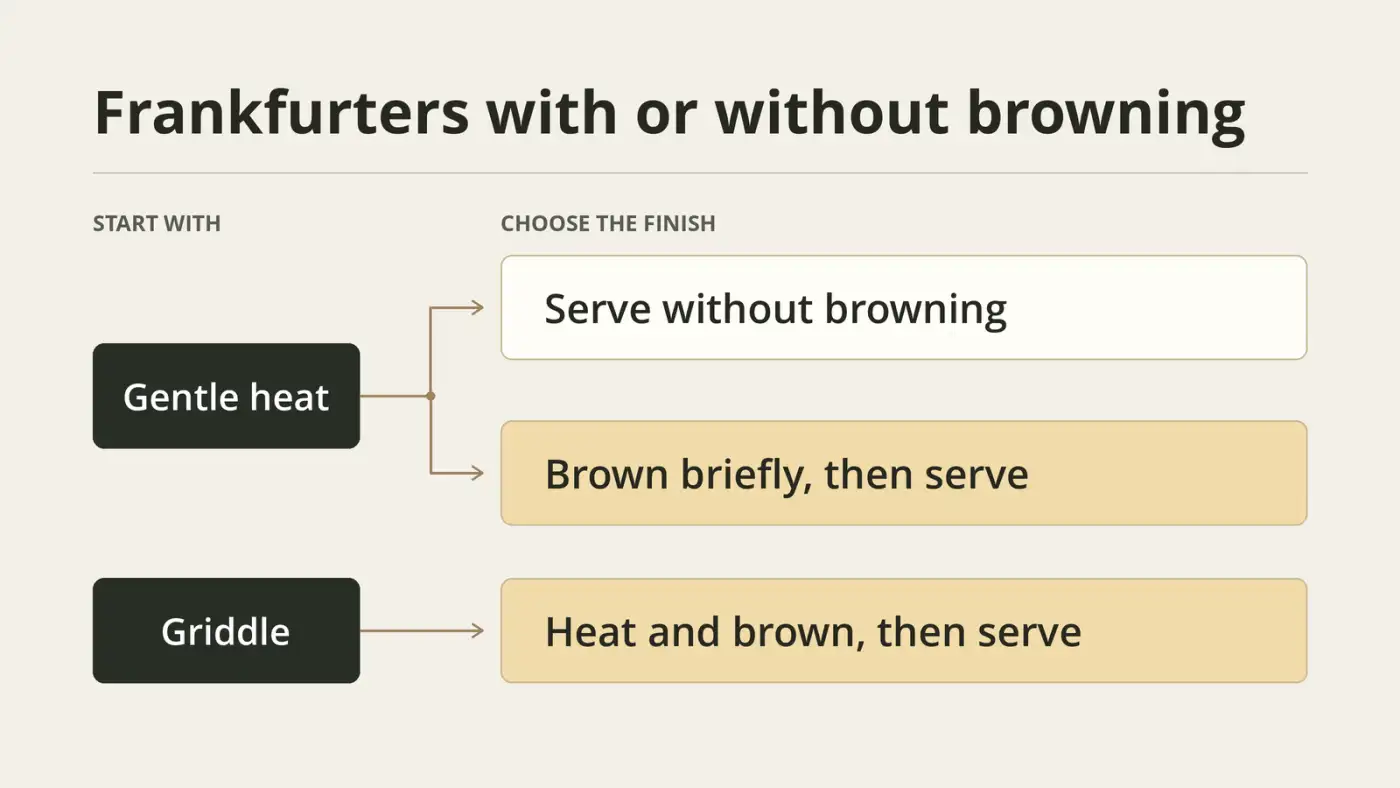
When a dish benefits from some colour, put the frankfurters straight onto a griddle or into a frying pan. Either can take all four from start to finish. Turn them with tongs and leave room to roll each sausage so it colours around the casing. At higher volume, you can also heat a batch in the combi and brown individual links to order. Choose that route when it frees useful space on the griddle.
Give Cheese Frankfurters a moderate-heat zone and keep the casing whole. If the filling starts to leak, check the surface heat and how long the links spend on it. Follow your kitchen’s allergen cleaning procedure before using the affected surface for another product. For a loaded dog with grated cheese on top, use the salamander to melt the topping on the assembled order. The sausage itself can be steamed or griddled according to the dish.
Heat Weisswurst, Bockwurst and Frankfurter Würstchen gently
Munich Weisswurst is traditionally served pale. Heat it through in water kept below a boil, following the product instructions for the starting temperature and batch size. Sweet mustard and a pretzel make a straightforward Bavarian brunch. Add a cucumber and radish salad and the same setup can serve a lighter lunch, with no extra job on the griddle.
Bockwurst goes straight from gentle heating to the plate or roll. Use a stockpot or dedicated sausage cooker, or a suitable steam programme where the product instructions support it. Keep it off the grill. A warm roll with mustard and pickles gives you a quick lunch offer, and the same sausage can go onto a plate with potato salad without an extra cooking step.
Frankfurter Würstchen use the same gentle approach for traditional service. Heat the slim links in hot water below boiling and serve them with mustard and bread. Gentle heating helps preserve the casing and its snap, as described in Hessen Tourism’s guide to Frankfurter Würstchen3.
The published Sausage Haus methods for Weisswurst and Bockwurst include heating from frozen. Check how quickly your water temperature recovers when you add the planned batch, then verify that the sausages reach the required core temperature. A small pot that works for four portions may need a smaller batch limit than staff expect.
Use a steamer, roller grill or fryer where it suits the menu
A hot dog steamer is a good fit for a classic counter dog. Both Pork and Beef Hot Dogs can go straight into the roll after heating. If you want a browned casing, take them straight through on a griddle or briefly brown them after steaming. A roller grill makes sense for steady kiosk trade when the links turn properly on the rollers and the unit’s heating and holding settings suit the product.
A commercial deep-fat fryer can take a suitable Pork Bratwurst or a Bacon, Chilli Beef or Vienna Beef Frankfurter from start to finish. It’s an unusual choice, but it can make sense on a cookline already built around a fryer. Keep the Cheese Frankfurter out of the fryer. The 150 g Smoked Pork Hot Dog is a more obvious candidate for a fish-and-chip shop. Confirm the fryer process for the exact product and starting state, and account for shared oil in your allergen assessment using the Food Standards Agency’s guidance on allergen cross-contact during food preparation4.
Judge the fryer option at the busiest point in service. A basket that’s free at three in the afternoon may already be committed to fish or chips at six. If adding a sausage delays the main order, the same product may be easier to serve from a steamer or griddle station. Time the order through to wrapping before deciding which setup is quickest.
Check core temperatures and manage hot holding
Check whether the exact product is raw or pre-cooked, then follow its approved cooking or heating instructions and your food-safety procedure. For raw sausage cookery, 70°C at the core for two minutes is one standard combination in GOV.UK’s cooking guidance for food businesses5.
Use a clean, sanitised probe in the centre of a representative link. When setting up a method, check several positions at the intended batch load. The fullest corner of a griddle or a tray near the door of an oven can behave differently from the spot where you tested one sausage.
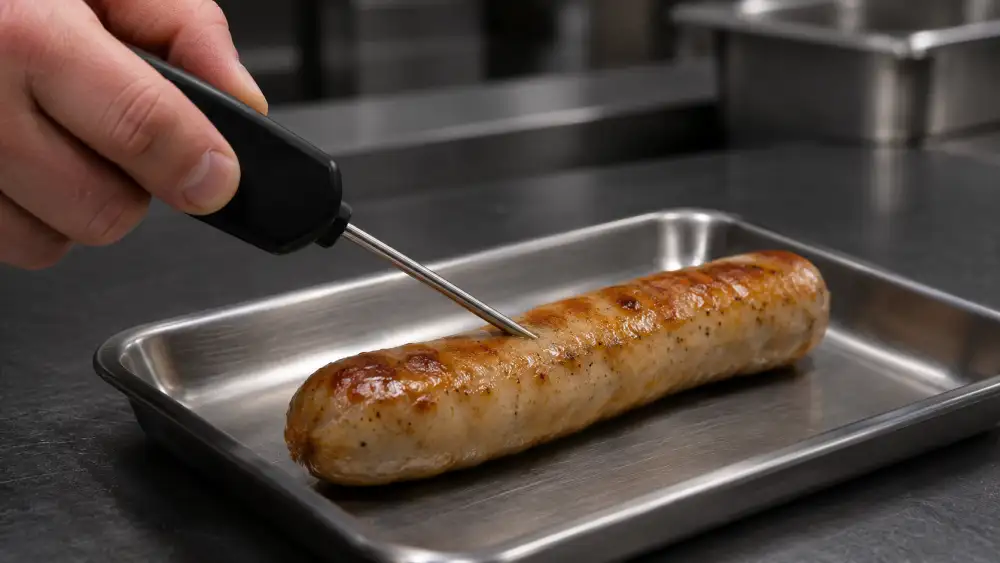
Record the product, starting state, batch size, heating settings and any finishing step. Check the process again if you switch from 100 g to 150 g links, increase the number of trays or use a different appliance.
For Scottish operations, check how the 82°C reheating guidance and its exceptions apply to your process in Food Standards Scotland’s CookSafe temperature-control guidance6.
Set a holding window for eating quality as well as safety. Taste the product at the point the customer would receive it. A properly heated sausage can still spend long enough in a cabinet for the casing to dry out.
Label batches by time and use a fresh tray for replenishment. This makes the oldest batch easy to identify when another member of staff takes over the station.
Preheat the holding equipment and load sausages once they’re fully hot. Check the temperature of the food itself and follow the requirements that apply to your operation. The 63°C hot-holding threshold and the use of preheated equipment are covered in the Food Standards Agency’s safe method for hot holding7.
Set up the cookline for a pub lunch or a festival rush
At a pub lunch, a frying pan or small flat-top can handle bratwurst and frankfurters to order. A browned Pork Bratwurst with mustard mash and a Vienna Beef Frankfurter roll with pickled onions can share the same equipment. A café or farm shop can cook Nurembergers on the breakfast griddle, then use the same portioning routine for a three-sausage lunch roll.
For a festival or showground pitch, run a short trial with several orders landing together. Watch which job makes the next customer wait. If the griddle operator also dresses the rolls and takes payment, the bottleneck may be assembly. Moving the rolls, toppings and wrapping within easy reach can make more difference than adding another cooking appliance.
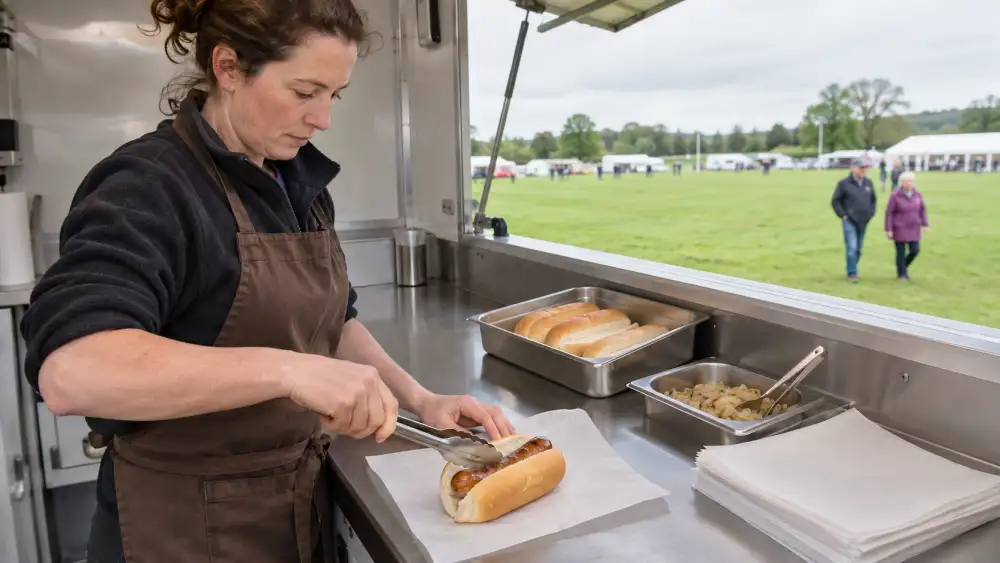
If heating really is the bottleneck, a combi can bring the next bratwurst batch through while the flat-top finishes the current one. Stagger the trays so the team can brown what it needs as orders come in. A steamer can run alongside that setup for hot dogs or frankfurters you want to serve without browning, freeing griddle space for the bratwurst and onions.
Check the site rules, permitted fuel, extraction and electrical supply before committing to a setup. For fixed kitchens and relevant installations, consult HSE guidance on ventilation in catering kitchens8.
Frequently Asked Questions
Work from the length of the sausages and the space you need to turn them with tongs. Before buying a griddle, mark out its usable cooking area and lay out the number of portions you expect to serve together. Leave room for onions and rolls if they’ll share the surface.
The griddle may need more time to recover its heat between batches. Try loading fewer sausages at once or alternating between two areas of the flat-top. Test several batches back to back. That tells you how much the griddle can handle through a rush, when it rarely gets a break.
perforated tray lets steam circulate around the sausages and allows condensation to drain. For dry browning, try a solid tray or a compatible griddle plate. If you use both stages during service, check whether your setup calls for a tray change and allow for that when timing the batch.
contact grill can finish already-hot sausages if the lid can rest lightly on them. Check how the hinge sits over a jumbo sausage. A lid that presses down at an angle can split the casing at one end. Also check how much grill time you can spare when toastie orders are coming in and follow your kitchen’s cleaning and allergen procedures.
Cook and brown the bratwurst whole, then slice it just before adding the curry sauce. The whole sausage is easier to turn and portion, and the cut faces stay juicy. If you also sell bratwurst in rolls, you can use the same batch for both dishes and slice only the currywurst orders.
Lift the sausage with tongs and let surface moisture drain before putting it into the roll. For takeaway, try lightly toasting the cut faces and putting wetter toppings on the sausage itself. Check the result after it’s been wrapped for as long as a customer would typically carry it.
Yes. Give each menu item a standard finish and make it clear on the order ticket. A classic hot dog can go straight from the steamer to the roll. A separate grilled option can take a brief turn on the flat-top before assembly. Staff know which route to use as soon as the ticket comes through.
Compare the cost per **saleable portion** across two realistic service runs. Count staff time spent loading, turning, finishing and cleaning, along with the cost of any sausages that split or go unsold. Include the time an appliance is tied up if you also need it for a core menu item, such as chips or toasties.
Conclusion
Choose the equipment by looking at the finish you want and the number of orders you need to serve together. A griddle or frying pan can take Pork Bratwurst and all four frankfurters from start to finish. At higher volume, a combi can handle the heating stage and leave the flat-top free to brown the bratwurst. A salamander is useful when the pass needs to finish a few hot portions or melt a topping to order.
Frankfurters and hot dogs give you more flexibility. Serve them straight after gentle heating for a classic counter offer, or brown them when that extra character suits the dish. Keep Weisswurst, Bockwurst and Frankfurter Würstchen on the gentle heating route. If a fryer is already central to the kitchen, it can be a complete method for suitable bratwurst and frankfurters, with the Cheese Frankfurter kept out of the oil.
Before settling on a method, run a batch at the size you expect to serve, check the core temperature and taste the result at handover. If you’re planning a new menu or replacing an existing line, ask The Sausage Haus for the product specifications for the sizes and formats you’d like to trial.
The Sausage Haüs
The Sausage Haus brings authentic German-style sausages to the UK market through a partnership between Hardy Remagen and Baird Foods.
Hardy Remagen is a long-established German producer with deep experience in traditional sausage making, continental meat products and modern food manufacturing. The range reflects the kind of products German shoppers already understand and enjoy: Bratwurst, Frankfurters, smoked hotdogs, cheese-filled sausages, Bockwurst, Weisswurst and other classic German-style lines.
In the UK, the range is represented and distributed by Baird Foods, giving retailers, wholesalers, caterers and foodservice operators access to German sausage products with a practical UK supply route. This combination is important: German manufacturing knowledge on one side, UK market understanding and distribution on the other.
For retail buyers, The Sausage Haus range offers a clear way to add something different to both chilled and frozen sausage fixtures. The products are built around real eating occasions: BBQs, premium hotdog nights, family meals, German street food, Oktoberfest promotions, Christmas market food and quick comfort meals at home.
The result is a range that gives shoppers something more distinctive than ordinary sausages and standard hotdogs, while giving buyers a compact, commercially useful product story with strong fresh and frozen potential.
References
Nuremberg Convention and Tourist Office. "3 im Weggla".
RATIONAL’s iCombi Pro operating instructions.
Hessen Tourismus. Frankfurter Würstchen.
UK Government. Precautionary allergen labelling. GOV.UK. Updated September 3, 2023.
UK Government. Food hygiene for businesses. GOV.UK. Updated June 25, 2026.
Food Standards Scotland’s CookSafe temperature-control guidance.