Nuremberger Bratwurst versus the Standard British Breakfast Sausage
A Nuremberger Bratwurst is not simply a British breakfast sausage made smaller. The two products create noticeably different results in flavour, texture and presentation.
British breakfast sausages vary widely, but they are commonly thicker, softer and more substantial as individual pieces. Their seasoning may include sage, pepper and other familiar herbs, while the casing and texture depend heavily on the recipe and producer. One or two larger sausages usually form the conventional full English portion.
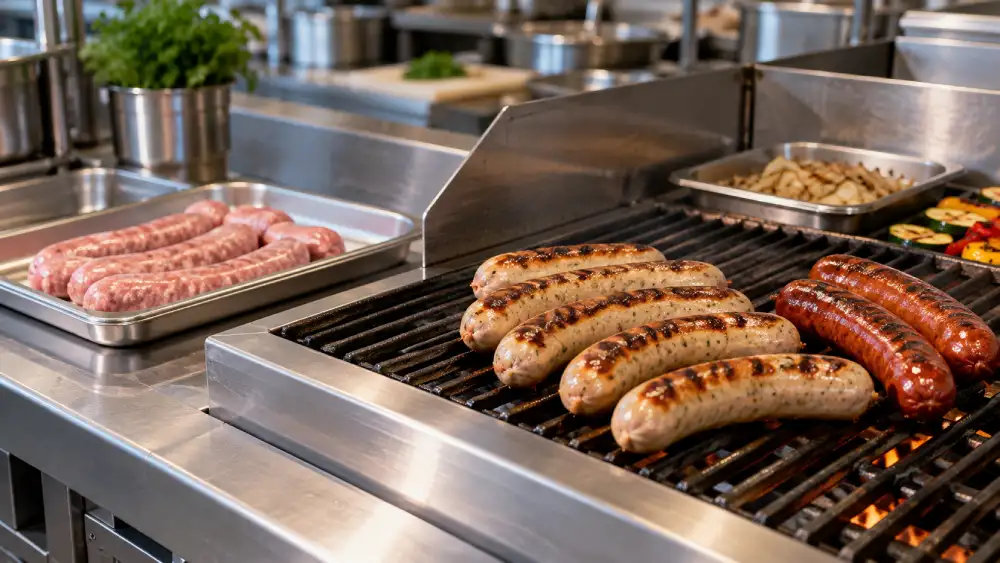
The is approximately 8cm long and weighs 25g. Its slim natural sheep casing provides a more defined bite, while the finely textured pork filling has a mild, savoury flavour led by marjoram. Several small sausages therefore look and eat differently from one large breakfast sausage.
Neither format is automatically better. A traditional British sausage may be the stronger choice for a deliberately local or classic fry-up. Nuremberger Bratwurst becomes interesting when an operator wants to differentiate the plate without replacing the ingredients customers recognise.
Four small bratwursts can sit alongside bacon, eggs, beans, mushrooms and toast just as easily as two conventional sausages. The customer still receives a recognisable full English, but the sausage count, shape and German character make the dish more distinctive.
For operators, the decision should come down to the intended menu identity, portion cost, cooking performance and customer expectations—not nationality alone.
Why the Compact 25g Format Works on a Full English

The 25g format gives kitchens more control than a breakfast built around one fixed-size sausage. Four Nuremberger Bratwursts provide approximately 100g of sausage, creating a substantial serving without requiring staff to cut, weigh or reshape anything during service.
That matters because a full English is a multi-component dish. The sausages must share the plate with eggs, bacon, beans, mushrooms, tomatoes, toast and perhaps a hash brown or black pudding. One oversized sausage can dominate the available space, while several compact bratwursts can be arranged around the other ingredients.
The format also allows straightforward portion changes:
- Three sausages for a lighter breakfast or breakfast roll
- Four sausages for a standard full English
- Five or six sausages for a larger or sausage-led breakfast
- Two or three as part of a mixed breakfast or sharing board
These are starting points rather than universal rules. Operators should calculate the complete dish weight and cost before deciding how many sausages belong on each plate.
The separate pieces can also create a stronger impression of abundance. Four neatly arranged sausages often appear more generous than one larger item of a similar total weight. That visual advantage is useful, but it should not be used to disguise an undersized portion.
The real commercial benefit is flexibility. The kitchen can build several clearly defined breakfast sizes from one product, while customers receive an understandable sausage count rather than an ambiguous description such as “served with bratwurst”.
How Marjoram-Led Seasoning Complements Traditional Breakfast Ingredients
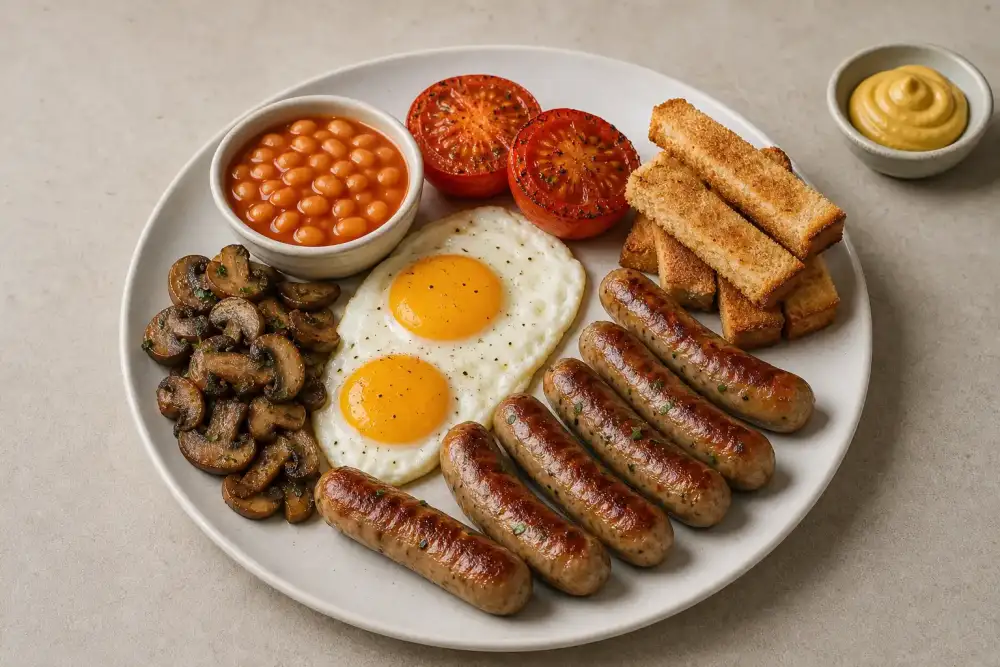
A full English contains several assertive flavours: salty bacon, rich egg yolk, sweet tomato, earthy mushrooms and the familiar sweetness and acidity of baked beans. A heavily smoked or aggressively spiced sausage can compete with those ingredients rather than completing the plate.
Nuremberger Bratwurst takes a more restrained approach. Marjoram provides its recognisable herbal note, supported by mild savoury seasoning rather than pronounced chilli, smoke or sweetness. The official Nuremberg tourism guide to the city’s bratwurst1 explains the traditional product’s connection with its compact format and regional identity.
On a full English, the marjoram works particularly well with mushrooms, fried or poached eggs and grilled tomatoes. Its gentle aromatic character can also soften the contrast between rich bacon and sweet baked beans. The result remains recognisably breakfast-like rather than tasting like a German dinner placed beside an egg.
Condiments should support that balance. English mustard, German mustard and brown sauce can all work, but they produce different menu identities. Ketchup remains familiar, although too much can obscure the sausage’s relatively delicate seasoning. Strong barbecue sauces, intense chilli sauces and heavily smoked toppings are usually less helpful unless the breakfast has deliberately been designed around them.
For commercial kitchens, the practical advantage is broad accessibility. The flavour is distinctive enough to justify naming the sausage, but mild enough that customers do not need to be committed German-food enthusiasts to enjoy it.
Portion Planning for Cafés, Hotels and Home Kitchens
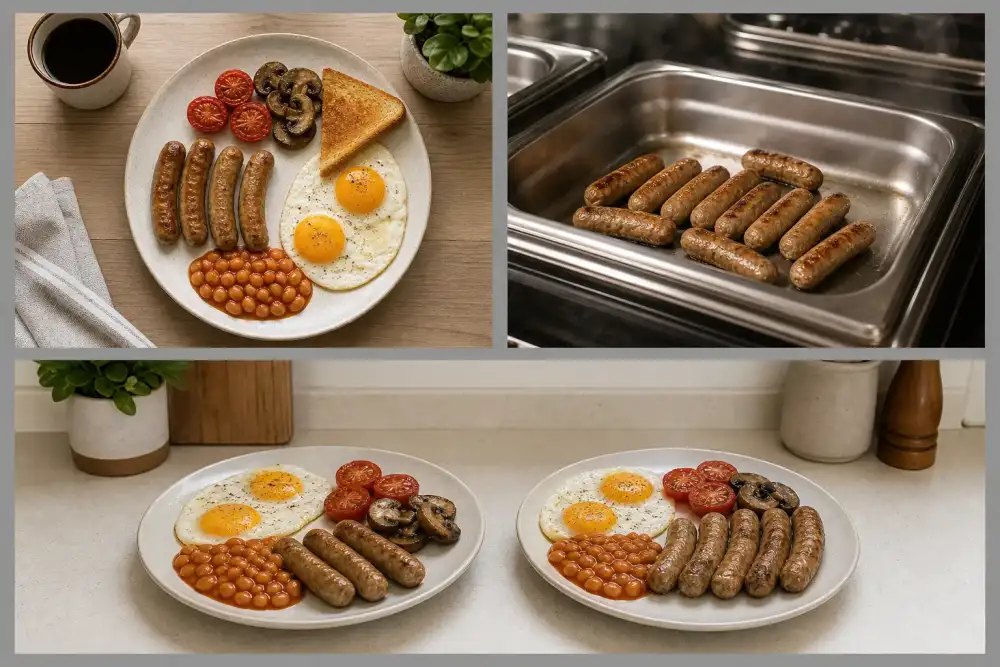
The right portion depends on the complete meal, not simply the number of sausages. Four 25g Nuremberger Bratwursts may be appropriate on a full breakfast with several accompaniments, while a sausage-led plate with fewer sides may need five or six.
For cafés and pubs, consistency should come first. Choose a standard sausage count for each menu item and include it in the dish specification. Staff can then plate the breakfast correctly without estimating by eye during a busy service. Stating the count on the menu—“served with four Nuremberger Bratwursts”—also helps prevent customers from mistaking the compact size for a reduced portion.
Hotels face a different challenge. Breakfast buffets need visible abundance, but small sausages can lose moisture if held for too long. Replenishing shallower trays in smaller batches is likely to protect the texture better than placing a large quantity under prolonged hot holding. Every operation should follow its documented food-safety system and supplier instructions; the Food Standards Agency’s safer food guidance for caterers2 provides practical resources for cooking, holding and recording controls.
At home, portioning can be more flexible. Three sausages may be sufficient for a lighter breakfast, while four approximate a 100g sausage serving. Larger appetites can be accommodated without changing the rest of the meal.
Whatever the setting, test the complete plate before finalising the count. Cost, appetite, plate size and the number of other components all matter more than following one supposedly perfect portion.
Cooking Nuremberger Bratwurst Without Splitting or Drying the Casing

A small sausage cooks relatively quickly, but that does not mean it benefits from maximum heat. Excessive heat can colour the outside too aggressively, split the slim natural casing or dry the filling before service.
Frozen Nuremberger Bratwurst should first be defrosted under refrigeration in accordance with the supplier’s instructions and the kitchen’s food-safety procedures. Avoid trying to compensate for an icy centre with a hotter griddle. This makes the exterior harder to control and can lead to uneven cooking.
A flat-top griddle is practical for breakfast service because it provides consistent contact and allows staff to turn the sausages regularly. A frying pan works well for smaller café batches and home kitchens. A chargrill can add attractive markings, but the heat should remain controlled so that the pale sausage does not become heavily charred. Combination ovens and contact grills may also be suitable once the kitchen has tested the product with its own equipment.
A few habits improve consistency:
- Cook in manageable batches rather than crowding the surface
- Turn the sausages regularly for even colouring
- Avoid piercing the casing and releasing moisture
- Limit hot-holding time where service allows
- Check cooking results with the site’s established temperature procedure
Exact cooking times will vary by appliance, batch size and starting temperature. Follow the final product instructions and the Food Standards Agency’s advice on cooking food safely3. The target is a properly cooked centre, light even browning and a casing that retains its bite.
Building a Better-Looking Breakfast Plate Without Increasing Portion Weight
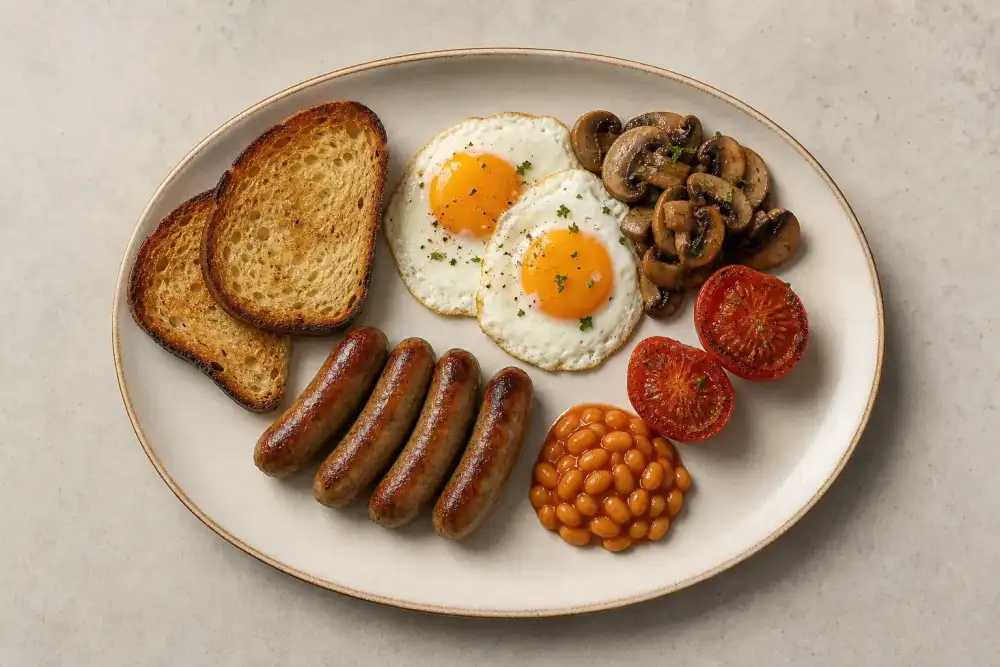
A premium-looking breakfast does not always require more food. Often, the difference comes from ingredient placement, visible contrast and choosing components that suit the available plate.
Four small Nuremberger Bratwursts offer more arrangement options than one large sausage. They can be placed in a neat row, grouped beside the eggs or divided into two pairs to balance the plate. Their compact shape makes it easier to keep wet ingredients such as beans away from toast and fried items, helping the dish look more deliberate when it reaches the customer.
The aim should not be to spread a modest portion thinly across an oversized plate. Instead, create a clear focal area and give each component enough space to remain recognisable. A smaller oval plate can sometimes present the breakfast more generously than a very large round one.
Colour also matters. The lightly browned sausages contrast well with eggs, mushrooms, grilled tomato and black pudding. Avoid burying them beneath beans or sauce, particularly when their unusual size is part of the menu’s point of difference.
For consistency, photograph the approved presentation and include it in the kitchen’s plating guide. That gives staff a practical reference during busy periods and reduces variation between shifts.
Home cooks can use the same principle: arrange first and add sauces afterwards. The finished plate should look generous because it is balanced and carefully built, not because every available space has been filled with extra food.
Menu Names, Customer Expectations and the Different Bratwurst Spellings
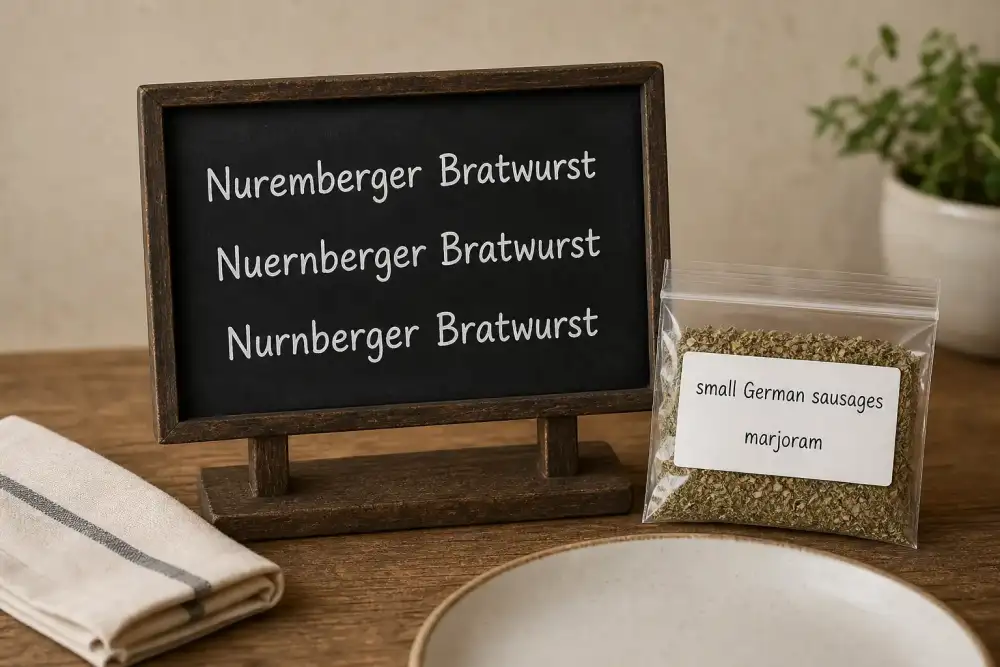
The product appears under several related spellings, but they are not equally useful in every context.
Nürnberger Bratwurst retains the German umlaut and looks the most recognisably German. Nuernberger Bratwurst replaces “ü” with “ue”, which is the conventional alternative when the umlaut is unavailable. Nuremberger Bratwurst uses the English name for Nürnberg—Nuremberg—and is usually easier for UK customers to read and pronounce. Nurnberger Bratwurst also appears in searches, but dropping the umlaut without adding the “e” is better treated as a search variation than preferred menu wording.
There is also an important distinction between a descriptive English product name and the protected regional name Nürnberger Rostbratwürste. The latter is associated with a defined product and place of production. Operators should therefore reproduce the name given on the supplier’s packaging and specification rather than independently adding protected-origin language or making authenticity claims.
For a UK breakfast menu, clarity is more valuable than linguistic perfection. A practical description might be:
Full English with four Nuremberger Bratwursts – small German pork sausages with marjoram
This tells customers what they are receiving, explains the unfamiliar format and makes the sausage count visible. “Mini German sausages” may be easier to understand, but it removes much of the product’s identity and sounds less premium.
Choose one main spelling and use it consistently across menus, ordering screens and staff guides. Alternative spellings can appear naturally within supporting website content, but they should not be crowded into the customer-facing dish name.
When Nuremberger Bratwurst Is - and Is Not - the Right Breakfast Choice
Nuremberger Bratwurst is particularly well suited to businesses that want to make an established breakfast more distinctive without introducing complicated new preparation. Cafés, pubs, farm-shop restaurants, garden centres and hotels can keep the familiar full English format while using the smaller German sausage as the identifying feature.
It is a strong fit when:
- The menu needs a visible point of difference from nearby competitors
- Flexible three-, four- or six-piece portions would be useful
- The kitchen can cook manageable batches close to service
- Customers are receptive to a mild German alternative
- The operation wants one sausage that can also support rolls, buffets or sharing plates
It may be less suitable where customers expect a highly traditional local sausage, especially if regional provenance is central to the breakfast offer. It is also a weaker choice for an operation that must hold large cooked batches for long periods without frequent replenishment. The slim format requires sensible heat control and can become dry if treated carelessly.
Price positioning matters as well. Simply replacing two British sausages with two much smaller bratwursts is likely to look ungenerous. The plate, sausage count and menu description must work together so that customers understand what is different and why it belongs there.
For consumers, the decision is simpler. Nuremberger Bratwurst is worth trying when you want a lighter-looking, finely textured and gently seasoned alternative to a conventional banger. If the pleasure of a full English lies specifically in a large, coarse British sausage, however, there is no need to replace it merely for novelty.
Frequently Asked Questions
Probably not. Start with a controlled trial rather than changing the entire breakfast offer at once. Run the Nuremberger Bratwurst as a weekend special, premium option or alternative sausage choice and compare sales, preparation time, plate cost and customer comments.
short trial also shows whether the sausage works with your equipment and service pattern before menus, photography or printed materials are changed.
Yes, particularly on a mixed grill or premium breakfast where variety is part of the appeal. The contrast between a larger British sausage and several smaller German bratwursts can make the plate more interesting.
For a standard full English, however, mixing both formats may make portioning and menu communication unnecessarily complicated. Give each sausage a clear role rather than adding more meat without a commercial reason.
Compare the cost of the **finished serving**, not the price of one sausage. Four 25g bratwursts should be assessed against the total weight, cooking loss and cost of the sausages they would replace.
lso consider preparation time, waste, storage requirements and whether the distinctive format supports a higher menu price. A slightly dearer sausage can still make commercial sense if it improves the complete offer, but that should be demonstrated through an actual plate-cost calculation.
Keep their expectations in mind rather than assuming every customer wants something different. A café with a loyal traditional breakfast trade could initially offer Nuremberger Bratwurst as a named alternative instead of removing the existing sausage.
Clear wording matters. Customers are more likely to accept the change when they understand that they are receiving several small German pork sausages, not undersized substitutes for a British banger.
Yes, their compact shape can work particularly well in a breakfast bap because several sausages can be distributed across the bread rather than leaving empty bites at either end. Two or three may be suitable depending on the bread size and other fillings.
For takeaway boxes, protect the casing from trapped steam and wet ingredients. Where practical, keep beans and sauces in separate compartments and test the complete meal over the typical collection or delivery time.
It can, provided the kitchen has enough demand and a practical defrosting plan. The sausages can move from breakfast plates into filled rolls, mixed grills, sharing boards or German-style dishes later in the day.
That flexibility can reduce the need for separate low-volume products. It does not remove the need for proper stock control, however. Forecast how much thawed product is likely to sell and follow the confirmed storage, defrosting and use-by instructions.
Obtain the current supplier specification and check the ingredients, allergens, storage conditions, pack size, defrosting instructions, shelf life and cooking guidance. Do not rely on assumptions based on traditional recipes or information from a different bratwurst producer.
The approved product name and any origin wording should also come from the packaging or supplier documentation. Update the kitchen’s allergen information and staff guidance before the dish goes on sale.
short description is usually enough: “They’re small German pork bratwursts with mild marjoram seasoning and a natural casing.” Staff can also mention the number included in the breakfast.
There is no need to deliver a detailed history lesson unless the customer is interested. The important points are the compact size, mild flavour and how the portion differs from a conventional British breakfast sausage.
Conclusion
Nuremberger Bratwurst will not automatically be the best sausage for every full English breakfast. Operators serving a deliberately traditional British fry-up may prefer a familiar local breakfast sausage. For cafés, pubs, hotels and farm-shop restaurants seeking a noticeable but approachable point of difference, however, the compact German bratwurst makes a strong case.
Its small 25g format provides useful control over portion size. Four sausages create approximately 100g of product while often looking more generous and considered than one or two larger sausages. Kitchens can reduce the count for a lighter breakfast or add another sausage to support a more substantial premium plate without cutting or weighing portions during service.
The mild pork filling and restrained marjoram-led seasoning also sit comfortably beside bacon, eggs, beans, mushrooms, tomatoes and toast. The sausage contributes a recognisable German character without turning the breakfast into an unfamiliar themed dish.
Good results still depend on controlled cooking, sensible batch sizes and clear menu wording. The slim natural casing can dry or split if exposed to excessive heat or held for too long, while customers should be told how many small sausages the breakfast includes.
For operators reviewing their breakfast offer, the practical next step is a side-by-side kitchen trial. Compare cooking performance, finished plate appearance, portion cost and customer response against the sausage currently used. The Sausage Haus Nuremberger Bratwurst can then be assessed on what matters most: how well it works in the actual breakfast service.
The Sausage Haüs
The Sausage Haus brings authentic German-style sausages to the UK market through a partnership between Hardy Remagen and Baird Foods.
Hardy Remagen is a long-established German producer with deep experience in traditional sausage making, continental meat products and modern food manufacturing. The range reflects the kind of products German shoppers already understand and enjoy: Bratwurst, Frankfurters, smoked hotdogs, cheese-filled sausages, Bockwurst, Weisswurst and other classic German-style lines.
In the UK, the range is represented and distributed by Baird Foods, giving retailers, wholesalers, caterers and foodservice operators access to German sausage products with a practical UK supply route. This combination is important: German manufacturing knowledge on one side, UK market understanding and distribution on the other.
For retail buyers, The Sausage Haus range offers a clear way to add something different to both chilled and frozen sausage fixtures. The products are built around real eating occasions: BBQs, premium hotdog nights, family meals, German street food, Oktoberfest promotions, Christmas market food and quick comfort meals at home.
The result is a range that gives shoppers something more distinctive than ordinary sausages and standard hotdogs, while giving buyers a compact, commercially useful product story with strong fresh and frozen potential.
References
Congress- und Tourismus-Zentrale Nürnberg. Nuremberg Sausages.