Sausage and schnitzel service can unravel quickly when queues build, fryers are full, grills are overloaded and staff start making rushed decisions. The answer is not to panic-cut quality. It is to have a simple peak-time contingency plan that protects the core eating experience while making the operation faster, cleaner and easier to recover.

Triage the queue fast
Pre-portion the support items

Reset before the next wave
Overview
When a German sausage or schnitzel service falls behind, the priority is to recover without damaging the core eating experience. This means simplifying the operation quickly, not cutting corners on the parts customers notice most: colour, heat, crispness, portion feel and clean presentation.
The article sets out a practical contingency approach for busy kitchens, caterers and event traders: triage the menu, reduce slow choices, pre-portion support items, protect the hero product, and reset the kitchen before the next wave of trade arrives.
It is especially useful for teams handling lunch rushes, event surges or interval service where small delays in fries, sauces, rolls, fryer space or garnish can quickly turn into a much larger queue problem.
Key Takeaways
- Make one clear call early on what stays available and what is temporarily paused.
- Lead with the fastest reliable dishes, such as simplified sausage or schnitzel formats.
- Pre-portion support items like rolls, sauces, slaw, trays and napkins before the rush.
- Keep sausages and schnitzel properly finished rather than relying on poor-quality shortcuts.
- Use temporary spec changes around format, garnish and choice, not the core product quality.
- Reset stock, equipment, layout and front-of-house communication as soon as the queue eases.
Why German Food Service Falls Behind During Peak Trading
German food service often looks simple from the outside: sausage in a roll, schnitzel in a bun, fries, sauces, toppings, next customer. In reality, peak-time pressure builds because every small delay lands in the same narrow service window.
Sausages and schnitzel both need proper finishing. A bratwurst cannot simply be rushed out pale and under-coloured. A schnitzel cannot sit too long once crisped, or it starts to lose the texture that makes it worth ordering. When the grill, fryer, griddle or combi oven is already full, the kitchen has fewer shortcuts than it may appear.
The common problems are rarely dramatic on their own. Too many menu variations. Too many garnish choices. Staff waiting for fries. Sauces stored in the wrong place. Rolls not opened in advance. Schnitzel being cooked one at a time instead of in a planned batch. Sausages moving from chill to finish without a clear holding stage.
During a lunch rush, event surge or half-time interval, these small friction points stack up fast. A 5-minute delay becomes 15 minutes, then 30, then 45. By that point, the team may start making inconsistent decisions just to keep the queue moving.
The aim is not to remove the character from the food. It is to protect the core German offer while stripping out avoidable complexity when service is under strain.
The First 10 Minutes: How to Triage the Queue Without Losing Control
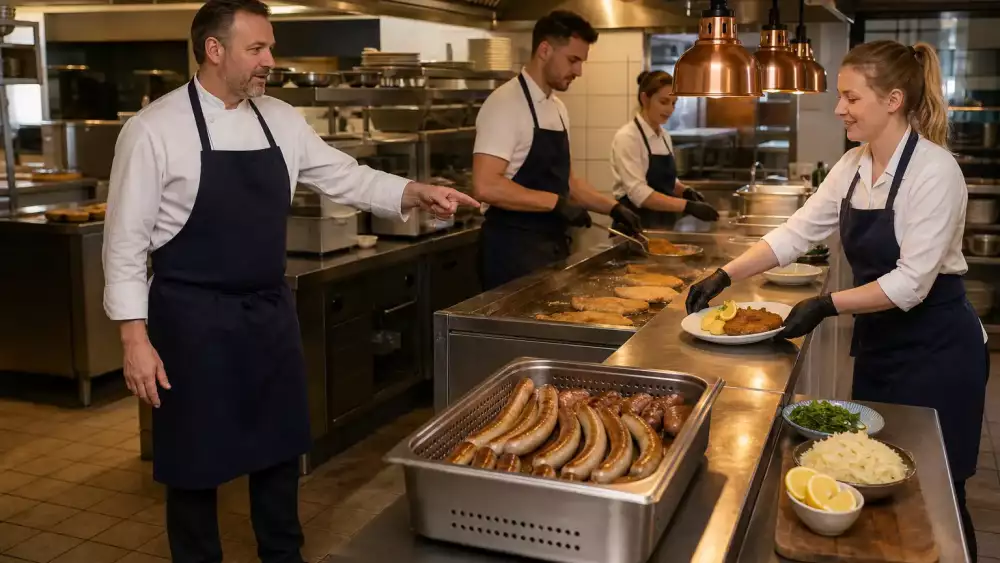
When service starts falling behind, the first 10 minutes matter more than the next 30. This is where the team decides whether the delay becomes controlled recovery or full kitchen drift.
The first job is to stop treating every order as equal. A queue under pressure needs triage. That means identifying which dishes are fastest to execute, which ones are causing the bottleneck, and which menu choices can be paused without damaging the offer.
For a sausage and schnitzel operation, the team should quickly check three things: what is cooked, what is nearly ready, and what is slowing the pass. If bratwurst are already cooked and holding correctly, they should become the lead offer for the next wave of customers. If schnitzel is creating fryer congestion, it may need to move temporarily into a narrower format, such as schnitzel rolls only, rather than full plated builds with several sides.
The front-of-house message also matters. A calm, simple line is better than a vague apology. For example: “We’re running a reduced peak menu for the next few minutes so we can serve everyone faster.” That sounds controlled. “We’re really behind” does not.
The kitchen lead should make one clear call and communicate it once. Avoid committee decisions during the rush. Staff need to know what is still available, what is temporarily paused, and what the fastest recommended order is.
Good triage is not panic. It is choosing the service shape before the queue chooses it for you.
Build a Temporary Triage Menu Around Sausages and Schnitzel
A temporary triage menu should not feel like a downgrade. It should feel like a tighter version of the same German food offer, built around the dishes the team can execute quickly and consistently.
This hospitality trade article explains how menu simplification and a temporary triage menu can help sausage and schnitzel kitchens protect speed and margin when service backs up.
The safest approach is to keep the core products visible and reduce the variables around them. Bratwurst, currywurst, frankfurters, hot dogs and schnitzel can still carry the menu, but the number of builds, toppings and side combinations may need to shrink for a short period.
For example, a busy event trader might move from a full menu to:
- Bratwurst in a roll with mustard or ketchup
- Currywurst with fries
- Cheese frankfurter hot dog
- Schnitzel roll with slaw or sauce
- Fries as a side, not as a custom-loaded build
This keeps choice, but removes slow decisions and complicated assembly. It also helps staff work in repeatable patterns. Rolls can be opened in batches, sauces can be positioned at the pass, sausages can be finished in predictable waves, and schnitzel can be served in one or two formats instead of several.
For pubs and cafés, the same principle applies. During a difficult rush, plated schnitzel with several garnish options might pause, while schnitzel buns and sausage plates continue. The customer still sees a proper German offer, not a kitchen in retreat.
The important rule is to decide the triage menu before it is needed. Once service is already 45 minutes behind, nobody should be debating which items are too slow. That decision belongs in the pre-service plan.
Pre-Portioning That Speeds Service Without Making Food Feel Cheap
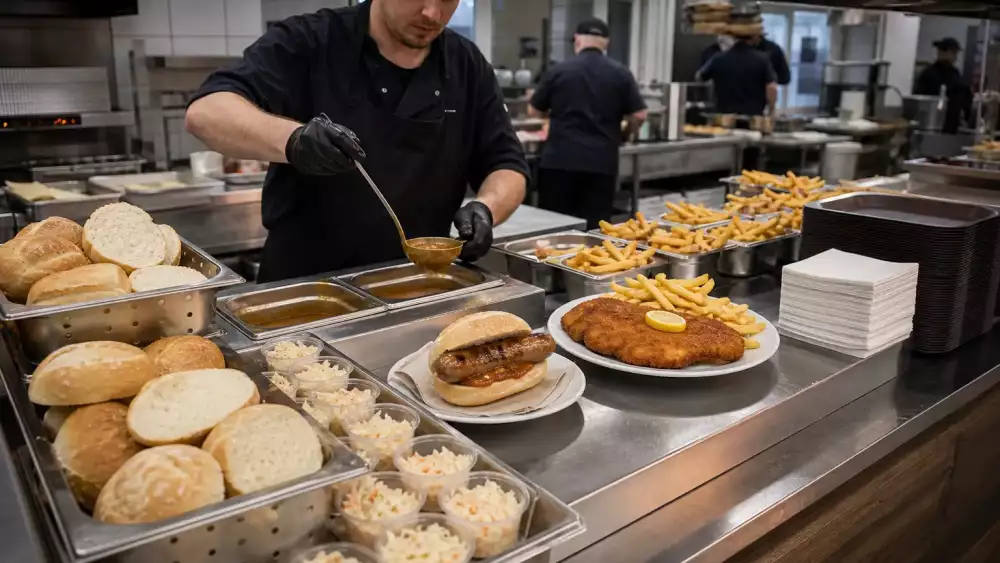
Pre-portioning is one of the most useful peak-time tools, but it has to be done carefully. Done well, it speeds service and improves consistency. Done badly, it makes the food look mean, tired or over-controlled.
This industry body case study explains how careful pre-portioning supports faster, more consistent service during busy periods.
For German sausage and schnitzel service, the best pre-portioning usually happens around the supporting elements rather than the main product. The sausage or schnitzel should still feel freshly finished, properly handled and central to the dish. The time saving comes from preparing the build around it.
Useful pre-portioning can include:
- rolls sliced and counted into service trays
- curry sauce held in measured ladles or sauce bottles
- slaw portioned into chilled tubs
- fries portion sizes agreed and scoop-controlled
- garnish pots prepared for the pass
- schnitzel rolls set up with base spread before the rush
- napkins, forks and trays stacked by the handover point
This reduces hesitation and prevents portion creep, which matters commercially. During a rush, staff often over-serve toppings or fries because they are moving quickly and trying to be generous. That can damage margin without improving the customer’s experience.
The key is to pre-portion the parts customers do not mind being standardised, while keeping the visible hero element right. A bratwurst should still look well-filled in the roll. A schnitzel should still have enough presence to justify the price. A currywurst should still feel saucy and satisfying, not rationed.
Good pre-portioning is not about making the dish smaller. It is about making the same dish easier to serve properly, even when the queue is pushing hard.
Temporary Spec Changes That Protect Quality
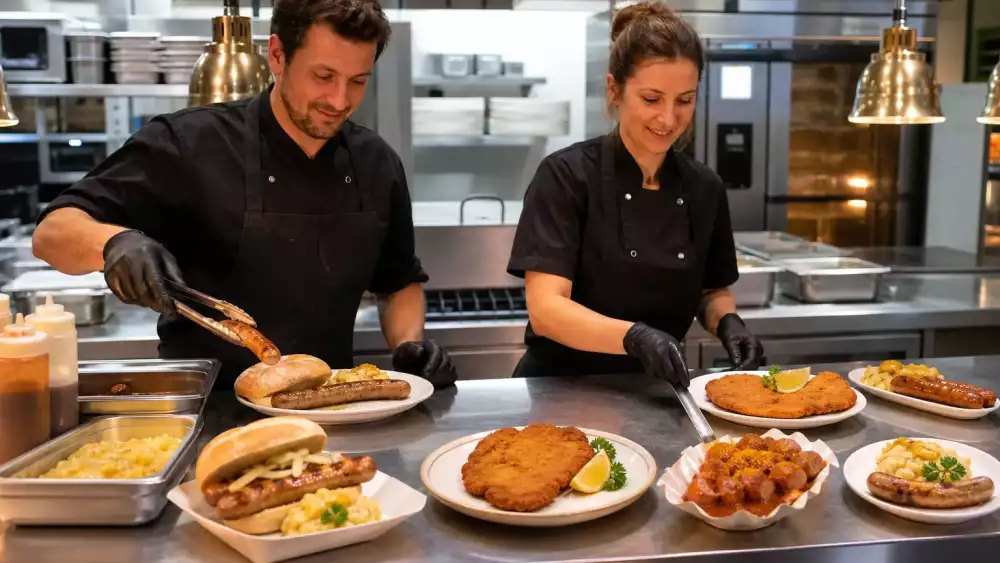
A temporary spec change should make service faster without making the dish feel worse. That is the line to hold. If the change damages the main eating experience, it is not a contingency; it is just a bad shortcut.
For German sausage and schnitzel service, the safest changes are usually around format, garnish and choice rather than the core product. A bratwurst still needs good colour, proper heat and a clean bite. A schnitzel still needs crispness and enough presence in the serve. Those are not the places to save time.
Better temporary changes might include switching from plated schnitzel to schnitzel rolls, reducing sauce choices from four to two, pausing loaded fries, or serving currywurst in one standard portion size only. These changes reduce assembly time and decision points while keeping the offer recognisably strong.
The team should know which changes are allowed before peak service starts. For example:
- pause custom toppings, but keep house sauces
- pause slow plated builds, but keep roll-based serves
- simplify garnish, but do not remove freshness completely
- standardise portion sizes, but do not make the dish look mean
- recommend the fastest items clearly at the counter
The wrong spec changes are the ones customers immediately notice for the wrong reason: pale sausages, limp schnitzel, cold rolls, dry currywurst or garnish that looks like an afterthought.
A good rule is simple: change the complexity, not the character of the food. That keeps the service moving without turning a German food offer into something forgettable.
Holding, Finishing and Garnishing: Where to Save Time Safely
Peak-time recovery depends heavily on knowing what can be held, what must be finished fresh, and what should never be left waiting too long. This is where professional equipment helps, but only if the team uses it with a clear system.
This official food safety guidance explains safe hot-holding practice and what can be kept ready during a delayed sausage or schnitzel service.
Sausages can often work well with a staged approach: cooked or nearly cooked in planned batches, held safely according to the kitchen’s food safety procedures, then finished quickly on a grill, griddle or other suitable equipment to restore heat, colour and service appeal. That final finish matters. It gives the product the look and aroma customers expect when ordering bratwurst, frankfurters or currywurst.
Schnitzel needs more caution. Once crisped, it has a shorter quality window. Holding it too long can soften the coating, especially if it is covered tightly or stacked badly. For schnitzel, the better saving is usually in preparation and assembly rather than extended holding: portioned pieces, ready rolls, prepared slaw, sauces close to the pass and a clear batch rhythm.
Garnishing is another safe place to save time, provided it remains tidy. During a rush, every unnecessary flourish costs seconds. The garnish should do a job: freshness, contrast, colour or flavour. If it does none of those, remove it from the peak-time version.
Good peak service is not about making everything in advance. It is about moving the right work earlier, finishing the hero product properly, and cutting the fiddly parts that do not repay the time they take.
How to Reset the Kitchen After the Rush
Once the queue has eased, the job is not finished. A rushed kitchen can look operational while quietly setting up the next delay. Trays are in the wrong place, sauces are half-empty, prep levels are unclear, staff are guessing, and the pass has lost its normal rhythm.
This official HSE catering guidance explains the slip and trip checks worth resetting after a rush so spills, clutter, and poor workstation layout do not slow sausage service again.
The reset should be deliberate and quick. The kitchen lead needs to bring the team back from emergency mode into normal service before quality and consistency drift. That means checking what is left, what needs replenishing, and which temporary changes should now be lifted.
A useful reset covers four areas. First, stock: sausages, schnitzel portions, rolls, fries, sauces, garnish and packaging. Second, equipment: grill space, fryer condition, holding setup, hot cupboards, combi trays or griddle zones. Third, layout: sauces back in the right place, service trays restacked, bins cleared, handover area cleaned. Fourth, communication: front-of-house told clearly what is back on and what is still paused.
This is also the moment to protect the next wave of trade. At events, that might be another surge after a show, match interval or weather change. In pubs and cafés, it might be the second lunch sitting or early evening orders.
A good reset does not need to be dramatic. Ten focused minutes can prevent another half-hour problem. The worst option is to relax too soon because the visible queue has gone. Peak-time damage often shows up after the rush, when the team is tired and the system has not been put back together.
What to Review After Service So the Same Delay Does Not Repeat
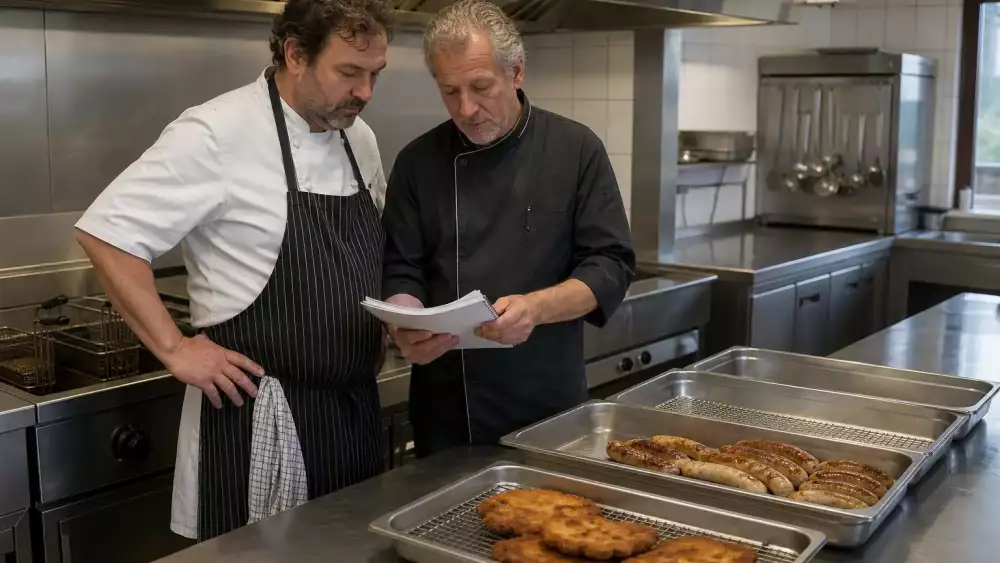
A peak-time delay is useful only if the business learns from it. If the team simply says “we were busy” and moves on, the same problem will come back on the next strong trading day.
The review should be specific, practical and unemotional. The question is not who struggled. The question is where the system failed. Was the grill overloaded? Did schnitzel slow the fryer? Were rolls being opened to order? Did one loaded item take too much pass time? Were customers asking too many menu questions? Did staff lack a clear reduced-menu instruction?
Good review questions include:
- Which menu item created the biggest delay?
- Which prep step should have been done earlier?
- Which product held well, and which lost quality fastest?
- Which garnish or sauce slowed the build?
- Did the till team know what to recommend?
- Did the temporary menu protect margin, or create waste?
- What should be changed before the next busy service?
This review does not need to become a long meeting. For a street food trader or event caterer, five minutes after pack-down can be enough to capture the main lesson. For a pub, café or garden centre kitchen, it may be better to note the issue after service and review it properly before the next rota or menu change.
The aim is to turn pressure into a better operating system. A German sausage and schnitzel menu can be fast, profitable and distinctive, but only if the team knows where the real bottlenecks are and fixes them before the next queue forms.
Frequently Asked Questions
The risk comes when the reduction removes the reason people wanted the food in the first place. A bratwurst in a good roll with the right sauce still feels like a proper order. A schnitzel roll with a crisp finish and fresh garnish still has appeal. But if the dish looks smaller, drier or noticeably less considered, customers may feel the kitchen is cutting corners rather than managing service.
good rule is to remove complexity before removing value. Reduce garnish options, sauce choices, custom builds and slow sides first. Keep the main sausage or schnitzel serve looking generous and well handled.
Yes, especially if the customer is already looking at a fuller menu board. The message should be calm and practical, not apologetic or dramatic.
For example: “We’re running a reduced peak menu for faster service at the moment.” That gives a clear reason and frames the change as controlled. It also prevents staff from having to explain unavailable items repeatedly while the queue is building.
t events, it can help to have a small “Peak Service Menu” board ready in advance. For pubs, cafés or garden centres, staff can use the same wording at the till. The important thing is consistency. If each staff member explains it differently, the operation starts to look more chaotic than it is.
It depends on the bottleneck. If the fryer is the main constraint, schnitzel may need to be narrowed or paused before sausage dishes. If the grill or griddle is overloaded, a simpler schnitzel roll may actually be easier to push than multiple sausage builds.
The decision should be based on equipment, staff position and current prep levels, not on what feels easiest in theory. A well-set sausage station can be extremely fast. A poorly organised sausage station with too many toppings, rolls and sauce options can be slower than expected.
The best operators decide before service which dishes are “protect”, “simplify” and “pause” items. That avoids rushed judgement when the queue is already unhappy.
Yes, currywurst can be an excellent peak-time dish if the build is controlled. It has strong customer appeal, clear German identity and a fairly repeatable service pattern. The difficulty is keeping sauce, sausage, fries and packaging moving together.
For busy periods, it usually helps to offer one standard currywurst portion rather than several variations. Sauce should be hot, easy to dispense and close to the pass. Fries need a reliable batch rhythm, because waiting for fries can turn currywurst from a fast dish into a bottleneck.
Currywurst is less suitable as a heavily customised loaded item during a difficult rush. Keep the dish recognisable, satisfying and quick to assemble.
Holding should be treated as a controlled service stage, not a place where food disappears until someone remembers it. Operators should follow their own food safety procedures, equipment guidance and any relevant local requirements.
From a quality point of view, the key is to understand which items tolerate holding and which do not. Some sausages can work well with a staged cook-and-finish system when managed properly. Schnitzel is more sensitive because the coating can soften if held too long or handled badly.
The final finish still matters. Heat, colour, aroma and texture are what customers notice. Holding saves time only if the product still eats well when it reaches the customer.
Small teams need an even simpler plan because there are fewer people available to recover from mistakes. The menu should be built around repeatable actions, not constant judgement calls.
For a two- or three-person setup, that might mean one person on cooking, one on assembly and one on till and handover. If there are only two people, the menu needs to be tighter still. Every additional topping, side or choice adds pressure because nobody has spare hands.
Smaller operators should also be realistic about what they can sell quickly. A focused sausage menu with two or three strong serves may outperform a broader menu that looks more impressive but collapses under queue pressure.
Smaller portions are rarely the best first response. They may save a little cost, but they can also damage perceived value very quickly, especially at events where customers are comparing offers visually.
It is usually better to standardise portions rather than shrink them. Use agreed scoops, ladles, trays and garnish amounts so staff can serve consistently without guessing. That protects margin and keeps the dish looking fair.
If a portion size genuinely needs to change for a specific trading format, it should be priced and presented honestly. A smaller lunch serve, snack portion or children’s option can work. A full-price dish that quietly becomes meaner during a rush usually does not.
good supplier cannot fix a badly organised service line, but the right products can make the operation easier to control. Consistent sizing, reliable cooking behaviour, clear pack formats and products that suit the intended equipment all help reduce friction.
The product should fit the service model. A premium sausage or schnitzel offer is strongest when the kitchen can serve it consistently, not only when trade is quiet.
Stopping orders is a last resort, but sometimes it is better than continuing to take money for food the team cannot realistically serve on time. This is especially true at events with fixed breaks, coach departures, match intervals or closing times.
Before stopping completely, operators can try a reduced peak menu, clear wait-time communication or temporarily limiting orders to the fastest items. If that still does not stabilise service, a short pause can protect the customer experience and prevent refunds, complaints or unsafe rushing.
The decision should be made by the person with the clearest view of the kitchen, not by the loudest pressure at the counter. A controlled pause is better than a long queue built on unrealistic promises.
Conclusion
Falling 45 minutes behind during peak service is not a small inconvenience. For a German sausage or schnitzel operation, it can quickly affect queue confidence, staff judgement, food quality and margin. The key is to decide in advance what can change under pressure and what must stay protected.
This hospitality industry programme from DEHOGA Baden-Württemberg shows the kinds of operational topics and service pressures being discussed around major foodservice events like INTERGASTRA.
A strong contingency plan does not mean reducing the food to the lowest common denominator. It means simplifying the offer temporarily, tightening the build, reducing unnecessary choice, pre-portioning sensibly and focusing staff effort on the parts of the dish that customers actually notice. A bratwurst still needs to eat well. A schnitzel still needs the right texture. A loaded sausage still needs to feel generous and intentional, not rushed and thrown together.
For caterers, pubs, cafés, festival traders and event food businesses, the best peak-time systems are the ones staff can follow when the pressure is already on. Clear menu triage, sensible prep, defined holding rules and practical reset steps can turn a difficult rush into a recoverable service.
The Sausage Haus supports operators who want German food that is distinctive, efficient and commercially workable. With the right products and the right service plan, peak trading can become a strength rather than the moment where the offer starts to slip.
The Sausage Haüs
The Sausage Haus brings authentic German-style sausages to the UK market through a partnership between Hardy Remagen and Baird Foods.
Hardy Remagen is a long-established German producer with deep experience in traditional sausage making, continental meat products and modern food manufacturing. The range reflects the kind of products German shoppers already understand and enjoy: Bratwurst, Frankfurters, smoked hotdogs, cheese-filled sausages, Bockwurst, Weisswurst and other classic German-style lines.
In the UK, the range is represented and distributed by Baird Foods, giving retailers, wholesalers, caterers and foodservice operators access to German sausage products with a practical UK supply route. This combination is important: German manufacturing knowledge on one side, UK market understanding and distribution on the other.
For retail buyers, The Sausage Haus range offers a clear way to add something different to both chilled and frozen sausage fixtures. The products are built around real eating occasions: BBQs, premium hotdog nights, family meals, German street food, Oktoberfest promotions, Christmas market food and quick comfort meals at home.
The result is a range that gives shoppers something more distinctive than ordinary sausages and standard hotdogs, while giving buyers a compact, commercially useful product story with strong fresh and frozen potential.