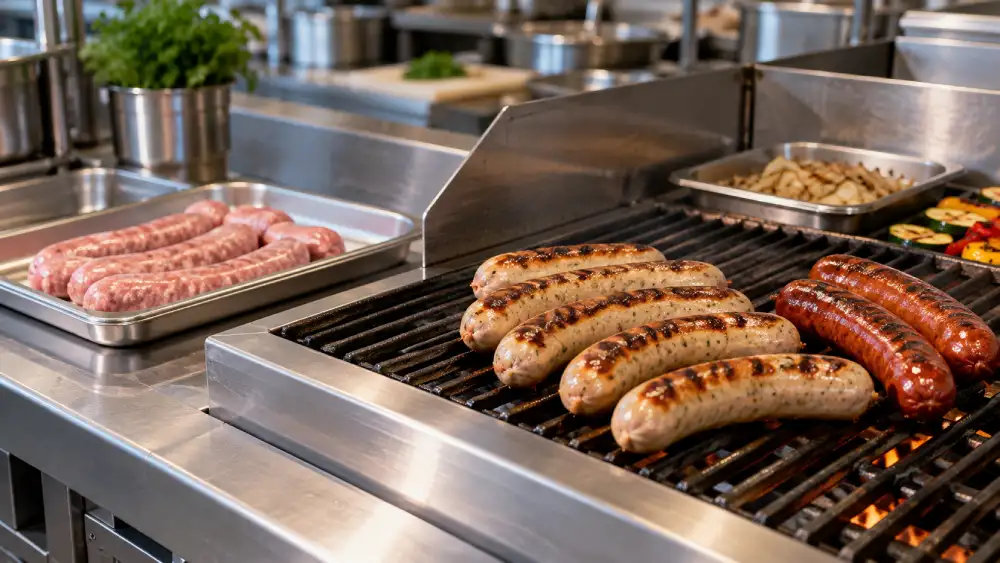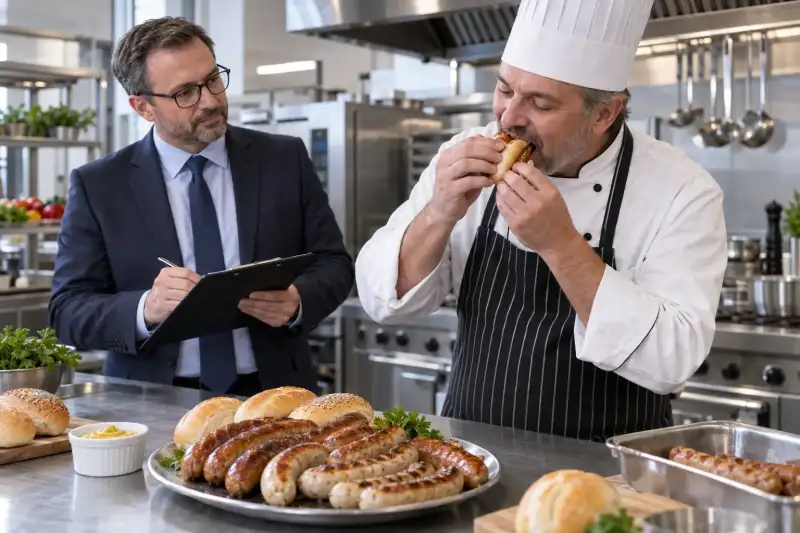
German sausages for pubs are not just a novelty alternative to burgers. For many operators, bratwurst, frankfurters and loaded sausage dishes can be faster to serve, easier to hold, simpler to staff and more distinctive on the menu, while still feeling familiar enough for regular pub customers.
This tourism page highlights why bratwurst is such a recognisable part of German food culture, which is useful context when making German sausages feel distinctive on the menu.

Faster Than Burgers

Simple, Satisfying Builds
Distinctive But Familiar
Overview
This article looks at how German sausages can give pubs and casual food operators a practical alternative to adding yet another burger to the menu.
It focuses on the operational case: simpler builds, faster service, flexible serving formats and dishes that feel familiar to customers while still offering a clearer point of difference.
For chefs, caterers and food buyers, the emphasis is on repeatable trade use rather than novelty — choosing serves that suit lunch, match days, beer gardens, bar snacks and busy kitchen teams.
Key Takeaways
- German sausages can be quicker to prep, cook and serve than many burger builds, especially during busy pub service.
- Bratwurst, frankfurters and currywurst-style dishes are familiar enough for UK customers, but still give menus a more distinctive identity.
- Simple accompaniments such as rolls, chips, mustard, onions, pickles, potato salad and sauerkraut can create complete serves without overcomplicating the kitchen.
- The same core sausage lines can support several formats, including hot dogs, plated mains, sharing boards, bar snacks and match-day specials.
- Operators still need to plan equipment, holding, food safety, allergens, portion cost, staff training and service flow before adding them to the menu.
- A well-positioned sausage dish can protect speed and consistency while giving pubs, taprooms, venues and caterers a practical point of difference.
Why another burger is not always the easiest win
Burgers are popular, familiar and easy to understand. That is exactly why so many pub menus already have them. The challenge is not whether a burger can sell; it is whether another burger gives the operator anything new.
A burger often needs a full build to feel competitive: bun, patty, cheese, sauce, salad, garnish, chips and sometimes several premium toppings. That can work well, but it also adds prep, assembly time and more points where consistency can slip. During a busy lunch, match day or beer garden rush, the difference between a neat menu item and a fiddly one becomes very real.
There is also the issue of comparison. Customers already have a mental picture of what a good burger should be, and many pubs, chains, burger specialists and delivery brands are competing in that same space. A new burger has to work hard to stand out.
German sausages for pubs can take a different route. A bratwurst in a good roll
For operators, that can be the smarter opportunity: not replacing burgers entirely, but adding a faster, clearer and more distinctive menu item beside them.
German sausages offer familiar comfort with a clearer point of difference
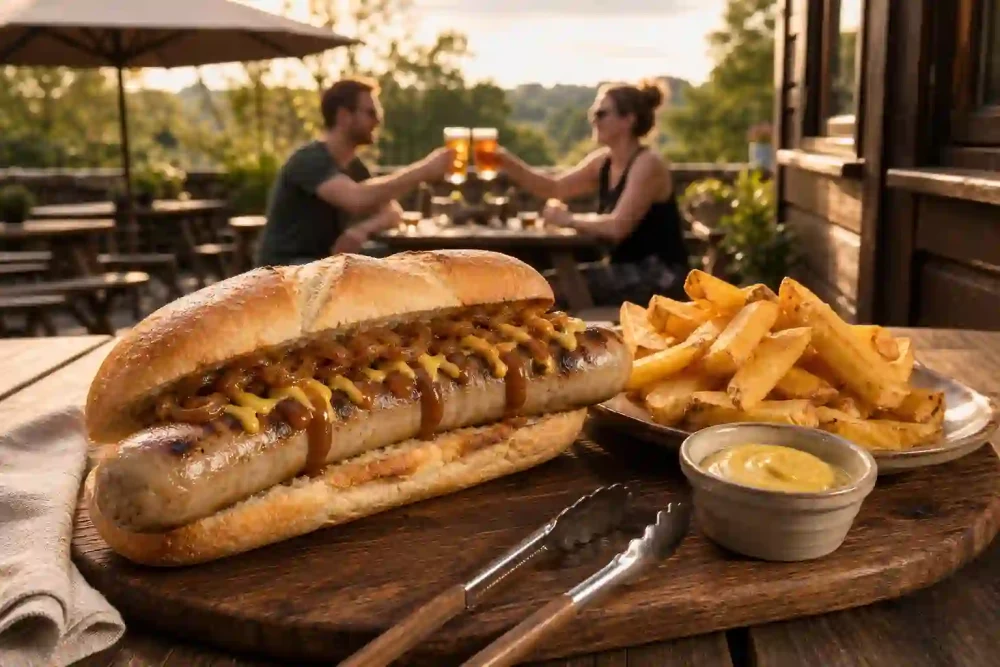
A good pub menu usually needs food that feels accessible. Customers should not need a long explanation before ordering. German sausages work well because they sit in a useful middle ground: familiar enough to feel safe, but different enough to create interest.
This tourism page highlights a Hamburg take on currywurst that is useful for seeing how German sausages can feel both familiar and distinctive on a pub menu.
Most UK customers understand sausages, hot dogs, chips, mustard, onions and bread rolls. They also understand the idea of German food as hearty, savoury and beer-friendly. That means a bratwurst, frankfurter or currywurst does not feel strange or difficult. It feels like comfort food with a slightly more specific identity.
That identity matters commercially. A plain sausage in a roll can feel basic. A German bratwurst with proper mustard, fried onions and a good roll immediately feels more deliberate. A standard hot dog can feel cheap. A German-style frankfurter with snap, smoke or cheese can feel more like a proper menu item. Currywurst, meanwhile, gives pubs a dish with street food character without becoming operationally complicated.
This gives operators a useful point of difference without asking customers to take a big risk. It can suit pubs, beer gardens, sports venues, taprooms, event menus and casual dining spaces because it feels easy to order and easy to enjoy.
The key is positioning. German sausages should not be presented as filler. They should be treated as a proper trade menu item with a clear flavour, a clear serve and a clear reason to choose it.
Speed of service matters when the kitchen is under pressure
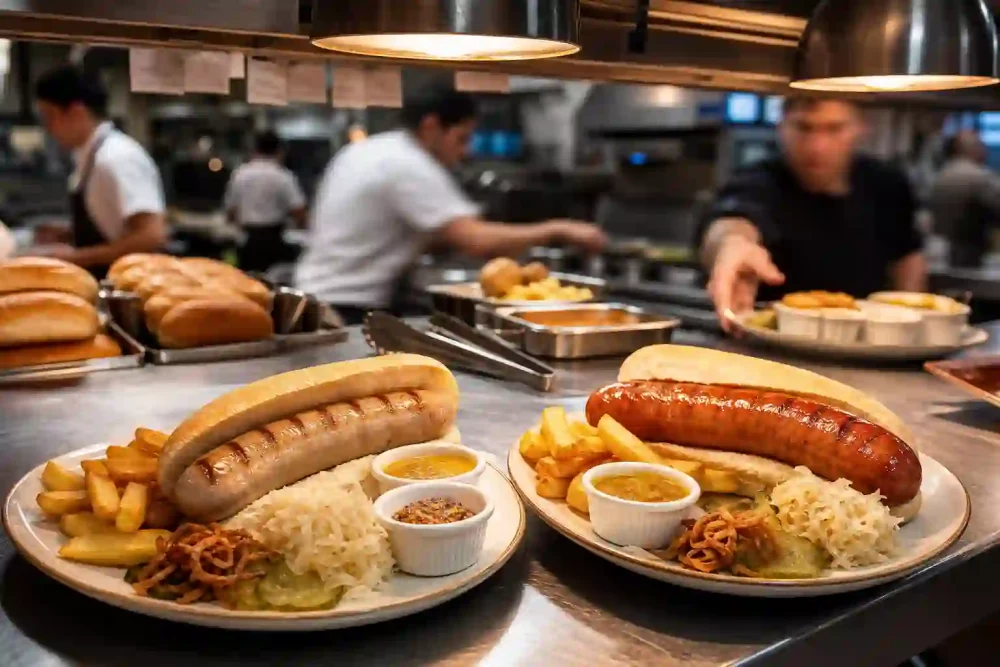
In a quiet kitchen, almost any dish can look manageable. The real test is what happens when orders come in quickly, staff are stretched and customers expect food without a long wait. This is where German sausages can make strong operational sense.
A sausage-led dish can be relatively simple to execute if the setup is planned properly. The core product is already portioned. The serve can be built around reliable components such as rolls, chips, potato salad, sauerkraut, fried onions, pickles, curry sauce or mustard. That can reduce the amount of last-minute assembly compared with more complicated dishes.
For pubs, this can help in several common trading situations:
- lunch service, where speed and simplicity matter
- match days, when orders arrive in waves
- beer garden service, where customers want satisfying food quickly
- limited kitchen teams, where every extra prep step matters
- special menu nights, where consistency is more important than complexity
This does not mean sausages require no thought. Operators still need to check equipment, holding method, food safety procedures, staff training and service flow. A poorly planned sausage offer can still become messy or slow. But when the serve is designed sensibly, it can be easier to repeat consistently.
That consistency is commercially valuable. A pub does not just need a dish that tastes good once. It needs a dish that can be served well on a busy Friday evening by the team that is actually on shift.
A simpler menu item can still feel premium
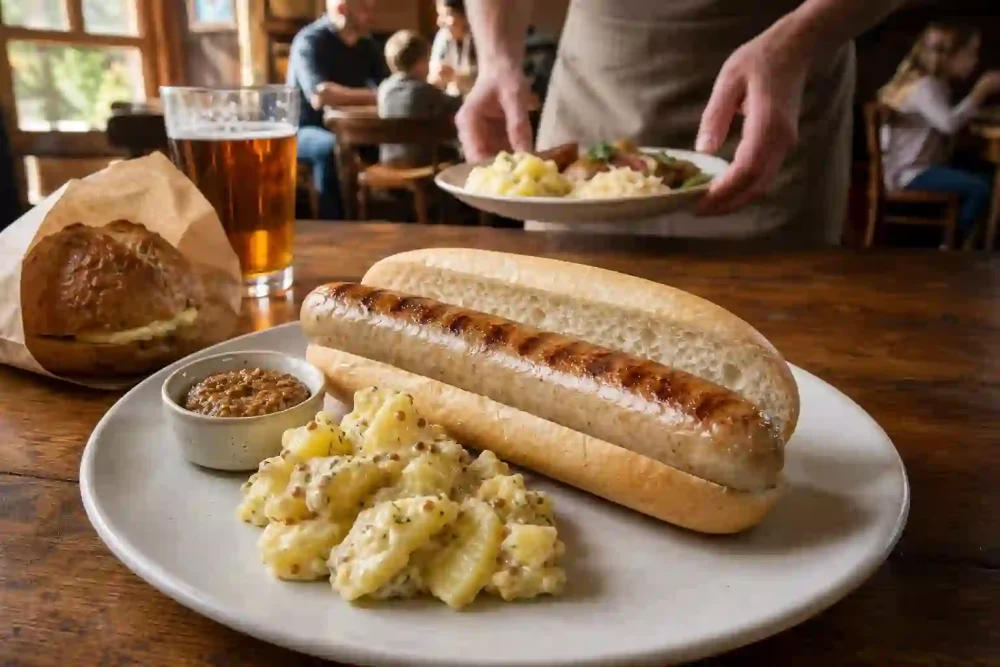
There is a common mistake in menu development: assuming that premium always means complicated. In practice, many strong pub dishes are simple. They feel premium because the core product is good, the serve is well judged and the plate makes sense.
This recipe guide shows how a mustard potato salad can work as a simple, punchy side for bratwurst or other pub sausage serves.
German sausages are well suited to this approach. A quality bratwurst or frankfurter does not need to be hidden under too many toppings. It can carry the dish. The job of the pub is to support it with the right bread, sauce, side and garnish, not to bury it until the customer can no longer taste what they ordered.
A premium-feeling sausage dish might be very straightforward: a bratwurst in a good roll with mustard and onions, served with fries. Or currywurst with crisp chips and a properly balanced curry sauce. Or a smoked frankfurter with potato salad, pickles and sauerkraut for a more German-style plate. None of these ideas needs a complex kitchen process, but each can feel more considered than a generic sausage serve.
Perceived value comes from the total experience. Customers notice flavour, texture, portion size, presentation and whether the dish feels intentional. A clean, confident sausage plate can often feel better than an overloaded dish that is difficult to eat and slow to prepare.
For pubs, this is the useful balance. A simpler menu item can protect service speed while still giving customers something that feels distinctive, satisfying and worth paying for.
Bratwurst, frankfurters and loaded hot dogs give pubs more menu flexibility
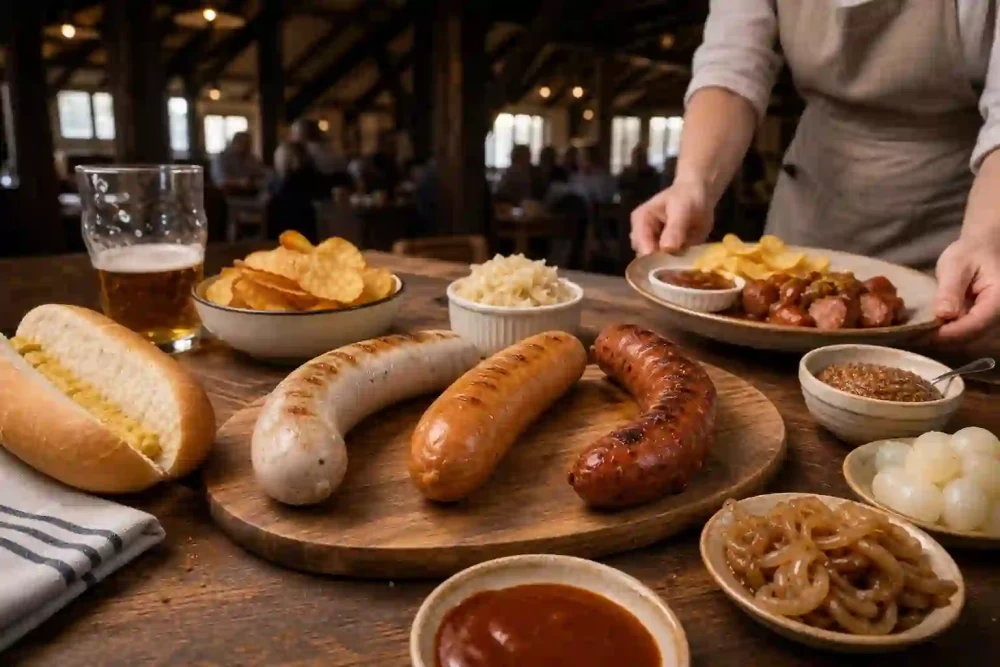
One useful advantage of German sausages is that the same core product can support several different menu styles. That gives pubs flexibility without needing to build a completely new food offer from scratch.
This tourism page highlights regional German recipes and serving ideas that show how sausages can fit different menu styles in a pub offer.
A bratwurst can sit comfortably in a roll with mustard and onions, but it can also work as a plated dish with chips, fried potatoes, sauerkraut or salad. A frankfurter can become a premium hot dog, a children’s menu option, a bar snack, or part of a sharing board. A cheese or chilli sausage can create a stronger special without adding too many extra ingredients.
Loaded hot dogs are especially useful because they allow pubs to create variety through toppings rather than through entirely separate dishes. For example:
- currywurst sauce, crispy onions and chips
- smoked frankfurter with mustard, pickles and sauerkraut
- chilli cheese sausage with jalapeños and melted cheese
- bratwurst with beer onions and proper mustard
- bacon frankfurter with fries and a sharp pickle garnish
This helps operators offer choice while keeping the back-of-house setup manageable. Instead of stocking several unrelated mains, the kitchen can use a small number of sausage lines and build different serves around them.
That is valuable for pubs that want seasonal specials, match-day food, beer garden options or a more interesting lunch menu without making the kitchen feel overcomplicated.
How German sausages support lunch, bar snacks and beer garden trade
Pub food has to work across different customer occasions. A dish that suits a Saturday evening meal may not be right for a quick lunch, and a beer garden customer may want something easier to eat than a full plated main. German sausages are useful because they can move between these occasions without feeling out of place.
This pub industry resource from CAMRA offers useful context on , including what works well for beer garden service.
At lunchtime, a bratwurst roll or German-style hot dog can be quick, filling and easy to understand. It gives customers a proper savoury option without the weight or wait of a more complex main course. Served with fries, potato salad or a small dressed salad, it can feel complete without becoming fussy.
For bar snacks, smaller serves can work well. Sliced sausage with curry sauce, mustard dips, pickles or chips can create a sharing-style option that suits drinks-led trade. This can be particularly useful for pubs that want more than crisps and nuts, but do not want to run a full kitchen menu all day.
In beer gardens, sausages make natural sense. They are informal, hearty and easy to pair with lager, pilsner, ale or wheat beer. A German sausage offer can also give an outdoor menu a clearer identity than another generic grill item.
The key is matching the serve to the moment. Lunch needs speed. Bar snacks need easy sharing. Beer garden food needs flavour, portability and simple enjoyment.
What pubs should consider before adding sausages to the menu
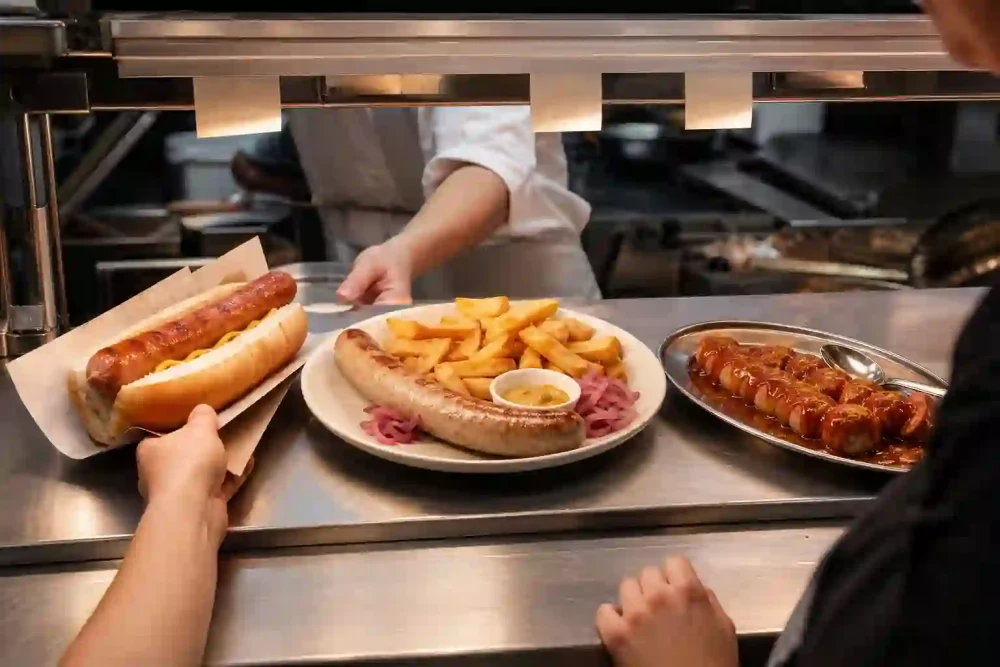
German sausages can be a strong pub menu item, but they still need a sensible setup. The best results come when the dish is designed around the realities of the kitchen, not just the idea on paper.
This industry body advice from the British Beer & Pub Association helps operators think through practical pub menu setup and service considerations for dishes like German sausages.
The first question is service format. Will the sausage be served in a roll, plated with chips, sliced as currywurst, or offered as part of a board? Each version affects prep, holding, plating, cutlery, packaging and speed of service. A roll may suit fast trade. A plated serve may suit lunch or evening meals. Currywurst can be excellent, but only if the sauce, chips and portioning are properly organised.
Operators should also think about equipment and flow. The kitchen needs a reliable way to heat, finish and hold the product safely without drying it out or slowing down other dishes. Staff should know exactly how each serve is built, what goes with it, and how it should look when it leaves the pass.
Other practical checks include:
- allergen information and menu wording
- supplier storage instructions
- chilled or frozen handling
- portion cost and target selling price
- bread, sauce and side quality
- expected demand during busy periods
A sausage menu should feel simple to the customer, but it should not be improvised behind the scenes. Clear setup is what turns a good idea into a repeatable trade dish.
Where The Sausage Haus fits into a smarter pub food offer
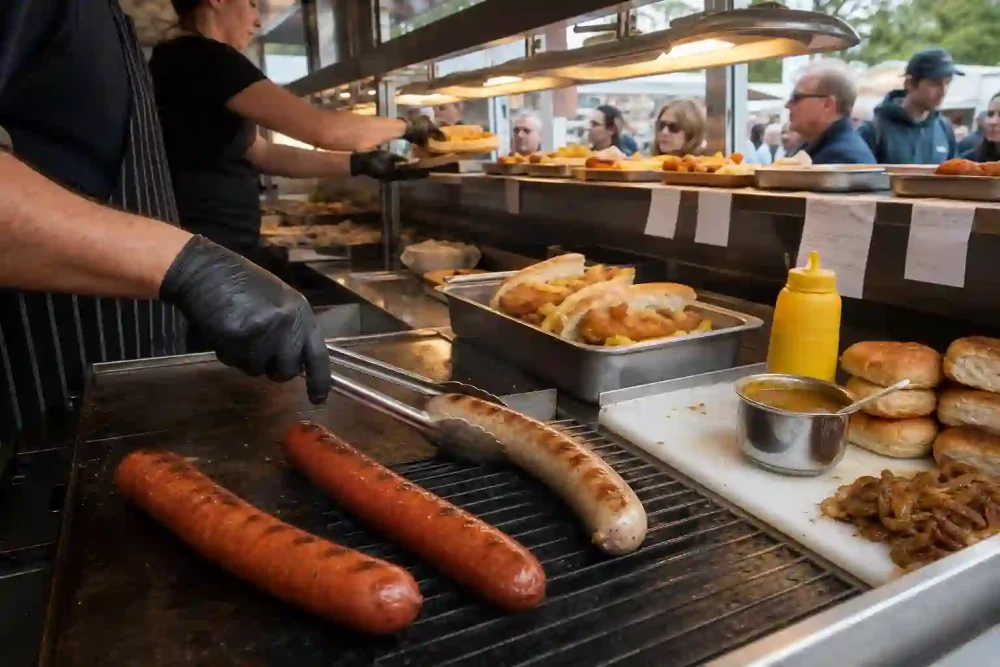
The Sausage Haus is built around the idea that German sausages should be practical for the UK trade, not just interesting in theory. Pubs need products that can support real service: consistent portions, clear menu uses and enough flavour to justify their place on the plate.
That is where bratwurst, frankfurters and German-style hot dog options can be useful. They allow pubs to create dishes that feel familiar to customers while still giving the menu a more distinctive edge. A pub does not need to become a German restaurant to use them well. A few carefully chosen serves can be enough: a bratwurst roll, a currywurst plate, a loaded frankfurter, or a sausage board for sharing.
This fits especially well for operators who want to improve their casual food offer without adding unnecessary complexity. The product can do much of the flavour work, while the kitchen focuses on execution: good bread, crisp chips, suitable sauces, clean garnish and reliable service.
For foodservice buyers, the appeal is similar. German sausages can help create a clear menu point of difference across pubs, taprooms, event venues, cafés, garden centres and casual catering settings.
Used well, they are not just an alternative to burgers. They are a compact, flexible and commercially sensible way to add character to a pub food menu.
Conclusion
For many pubs, the question is not whether burgers still sell. They clearly do. The better question is whether every new menu idea needs to compete in the same crowded burger space.
German sausages give operators a practical alternative. They are familiar enough for customers to understand quickly, but different enough to create interest. A good bratwurst, frankfurter or loaded German-style hot dog can work across several pub occasions, from a quick lunch to a beer garden dish, a match-day special or a more generous evening plate.
The main commercial advantage is simplicity. A sausage-led dish does not need a complicated build to feel satisfying. With the right bread, potatoes, sauce, onions, pickles, mustard or side salad, it can offer strong perceived value without slowing down the kitchen. That matters in real pub service, where staff time, equipment space and consistency are often just as important as creativity.
Burgers will always have their place, but German sausages can give pubs another route: faster, cleaner, distinctive and easier to adapt. For operators who want a practical menu item with character, they deserve serious consideration. The Sausage Haus range is built for exactly that kind of trade use, where flavour, reliability and simple execution all need to work together.
Frequently Asked Questions
Usually, no. The stronger approach is to place them beside burgers, not instead of them. Burgers still have a clear role on many pub menus, but they are also heavily competed and often expected.
German sausages can give the menu another route: faster service, a clearer point of difference and more flexibility for lunches, bar snacks, beer gardens and match days. For many pubs, one or two well-designed sausage dishes may be more useful than adding another burger variation.
It depends on the serve. Bratwurst is a strong all-rounder for rolls, currywurst, sausage and chips, and more traditional German-style plates. Frankfurters work especially well for premium hot dogs, lighter lunch serves and fast bar food. Smoked, cheese, chilli or bacon versions can help create specials without changing the whole menu.
sensible starting point is to choose one classic sausage and one more distinctive option. That gives customers choice without making stock control or staff training more complicated.
They can be, provided the serve is kept simple and the workflow is planned properly. A small kitchen may benefit from dishes that use consistent portions, limited garnish and clear finishing steps.
The important point is not just the sausage itself, but the complete setup. Operators should check cooking method, holding time, fridge or freezer space, bread quality, sauce preparation, allergen information and how the dish fits alongside the existing menu. A compact sausage offer can work well, but it should still be tested during realistic service conditions.
The dish needs to feel intentional. A better sausage helps, but the full serve matters: the roll, chips, sauce, onions, mustard, pickles, salad or potato side all affect perceived value.
premium sausage dish does not need to be overloaded. In fact, too many toppings can make it messy and harder to eat. A cleaner build with a good-quality sausage, a proper side and a clear flavour direction often feels more professional than a large but careless plate.
There is no single correct price because it depends on portion size, sausage cost, sides, labour, location, VAT position, customer expectations and target margin. A sausage in a roll for lunch will not be priced the same as a plated currywurst with chips, garnish and sauce.
The useful method is to cost the whole dish properly, not just the sausage. Include bread, potatoes, sauce, garnish, wastage allowance, packaging if relevant, and staff time. Then compare the finished dish against other pub mains, lighter meals and bar snacks so it sits naturally on the menu.
Most will, if the menu wording is clear. Terms such as bratwurst, frankfurter and currywurst can work well, but the description should quickly explain what the customer is getting.
For example, “Bratwurst roll with mustard, fried onions and fries” is easier to buy than a vague German name with no context. A short description can make the dish feel interesting without making it difficult. The goal is to add character, not confusion.
They can work for both, but the format should change. At lunch, speed and ease matter, so rolls, hot dogs and simple sausage-and-chips serves are often the most practical. In the evening, a more complete plate, currywurst dish or sharing board may feel more suitable.
For drinks-led trade, smaller sausage portions with dips, pickles or chips can work as bar snacks. The same core product can support different dayparts if the menu is designed carefully.
The most common mistake is treating the sausage as a basic filler rather than the centre of the dish. That often leads to weak bread, poor garnish, bland sauce or a plate that looks like an afterthought.
Other mistakes include making the serve too messy, adding too many toppings, failing to train staff on the build, or choosing a dish that does not suit the kitchen’s real service flow. A German sausage dish should be simple, but it still needs standards.
Yes, and this is often a sensible way to test demand. A pub could trial currywurst on a match day, a bratwurst roll in the beer garden, or a German sausage board during an Oktoberfest-style weekend.
special allows the operator to check customer reaction, speed of service, kitchen fit, portion cost and staff confidence before committing to a permanent menu line. The key is to test it properly, not as a rushed one-off with poor supporting ingredients.
Outdoor or event-style service brings extra practical checks. Operators should confirm site rules, equipment permissions, gas or electrical requirements, food safety procedures, handwashing access, holding method, service speed and any local authority or event organiser requirements.
The dish itself may be simple, but the setup still needs to be robust. A sausage offer can be excellent for beer gardens, markets and busy outdoor trade, but only when the practical side is planned before service starts.
The Sausage Haüs
The Sausage Haus brings authentic German-style sausages to the UK market through a partnership between Hardy Remagen and Baird Foods.
Hardy Remagen is a long-established German producer with deep experience in traditional sausage making, continental meat products and modern food manufacturing. The range reflects the kind of products German shoppers already understand and enjoy: Bratwurst, Frankfurters, smoked hotdogs, cheese-filled sausages, Bockwurst, Weisswurst and other classic German-style lines.
In the UK, the range is represented and distributed by Baird Foods, giving retailers, wholesalers, caterers and foodservice operators access to German sausage products with a practical UK supply route. This combination is important: German manufacturing knowledge on one side, UK market understanding and distribution on the other.
For retail buyers, The Sausage Haus range offers a clear way to add something different to both chilled and frozen sausage fixtures. The products are built around real eating occasions: BBQs, premium hotdog nights, family meals, German street food, Oktoberfest promotions, Christmas market food and quick comfort meals at home.
The result is a range that gives shoppers something more distinctive than ordinary sausages and standard hotdogs, while giving buyers a compact, commercially useful product story with strong fresh and frozen potential.