Ingredients
Method
Prepare the potatoes
- Wash the potatoes well. If they are small and neat, leave them whole. If they are larger, halve them into even pieces.
- Put them into a steamer or steaming basket over simmering water, cover, and steam until tender. This usually takes around 20 to 25 minutes, depending on size. Once cooked, keep them warm. If you like, toss them very lightly with a small knob of butter and a little salt just before serving.
- The potatoes should stay simple and restrained. Their job is to support the asparagus and schnitzel, not to compete with them.
Prepare the white asparagus
- Peel the asparagus thoroughly from just below the tip down to the base. Trim off the woody ends. White asparagus only feels elegant when it has been peeled properly, so do not rush this step.
- Arrange the asparagus in a steamer in as even a layer as possible. Sprinkle with the salt and sugar and add the small knob of butter. Steam gently for about 12 to 18 minutes, depending on thickness, until just tender. Keep warm once cooked.
- Steaming rather than boiling gives the asparagus a cleaner flavour and stops it becoming waterlogged.
Make the herb reduction for the hollandaise
- Put the white wine, white wine vinegar, sliced shallot, crushed white peppercorns, parsley stalk, tarragon stalk, optional chervil stalk, and the small strip of lemon peel into a small saucepan.
- Bring to a gentle simmer and reduce slowly until only about 1 1/2 to 2 tablespoons of liquid remain. Strain the reduction through a fine sieve and leave it to cool slightly.
- This reduction gives the hollandaise far more depth and refinement than a simple lemon-only version. It should smell aromatic, lifted, and elegant.
Clarify the butter for the hollandaise
- Melt the butter gently over low heat. Pour off or spoon off the clear golden butterfat, leaving the milky solids behind as much as possible. Keep the clarified butter warm, but not hot.
- Using clarified butter gives the hollandaise a finer, cleaner texture and makes the sauce more stable.
Prepare the veal
- Lay each veal escalope between two sheets of baking paper or cling film and pound gently until thin and even, about 3 to 4mm thick. Be careful not to tear the meat.
- Season lightly on both sides with salt and pepper.
Set up the breading
- Put the flour into one shallow dish. In a second dish, beat the eggs with the milk. Put the breadcrumbs into a third dish.
- Coat each veal escalope first in flour, shaking off the excess. Then pass it through the egg mixture, letting the excess drip away. Finally coat it in the breadcrumbs. Cover it evenly, but do not press the crumbs down hard. The coating should sit lightly on the meat so it can fry up crisp, delicate, and slightly rippled rather than dense and compact.
Build the hollandaise
- Put the egg yolks, the strained reduction, and the cold water into a heatproof bowl set over a pan of barely simmering water. Make sure the bottom of the bowl does not touch the water.
- Whisk continuously until the yolks thicken, lighten in colour, and become airy. This is the sabayon base and it should feel smooth and slightly voluminous before the butter goes in.
- Now start adding the warm clarified butter very slowly, whisking all the time. Begin almost drop by drop, then increase to a thin steady stream once the sauce starts to come together. Keep whisking until the hollandaise is smooth, glossy, and silky.
- Season with fine sea salt and finish with 1 to 2 teaspoons lemon juice, just enough to brighten the sauce without making it sharp. If the sauce becomes too thick, loosen it with a teaspoon of warm water.
- Keep warm in a barely warm place for a short time only. Do not let it get hot again or it may split.
Heat the frying fat for the schnitzel
- Put a large frying pan over medium to medium-high heat and add enough clarified butter for generous shallow frying. The schnitzels should not sit on a barely greased surface. They need enough hot fat around them to fry properly.
- If needed, you can mix in a little neutral oil, but clarified butter gives the most elegant and classical result.
- The fat is ready when a breadcrumb dropped in starts sizzling immediately.
Fry the schnitzels
- Fry the schnitzels one at a time, or at most two if the pan is large enough. Do not crowd the pan.
- Cook for about 1 1/2 to 2 minutes on the first side, then turn and cook the second side for another 1 to 1 1/2 minutes, until golden, crisp, and lightly rippled.
Baste while frying
- As the schnitzels cook, gently tilt the pan and spoon hot clarified butter over the top surface, or carefully move the pan so the fat washes around the schnitzel. This helps the crust cook evenly and encourages the light, delicate, slightly lifted structure that makes a really good schnitzel feel elegant rather than flat.
- The goal is not drama. The goal is a crust that feels alive.
Drain briefly
- Lift the schnitzels out and let them drain briefly on kitchen paper or a rack. Do not leave them sitting too long. They should go to the plate while the crust is still crisp and at its best.
Plate the dish
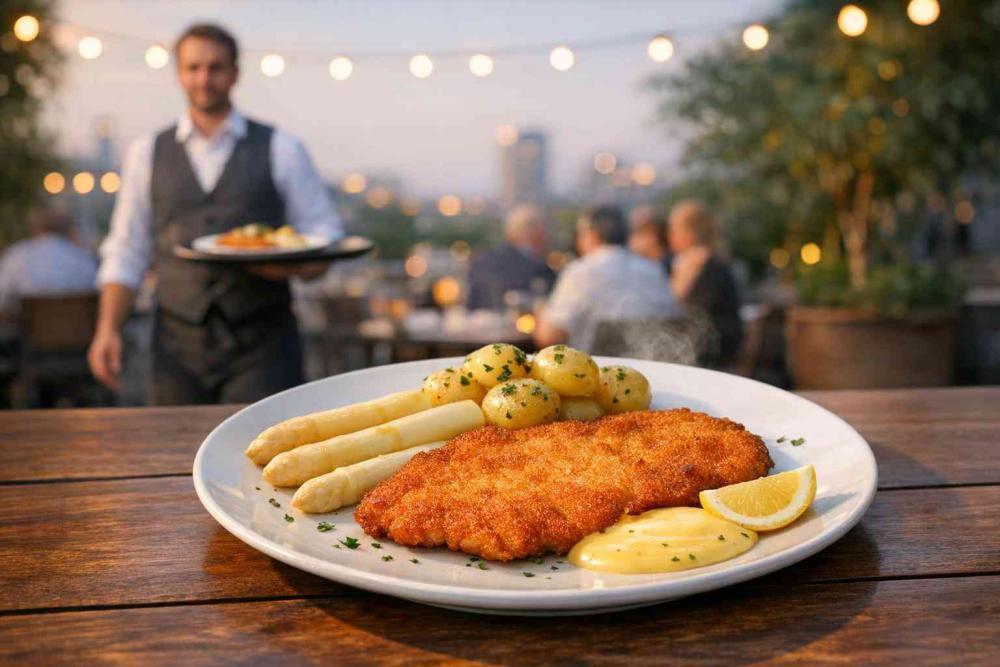
- Arrange the schnitzel on warm plates with a lemon wedge. Add the steamed white asparagus and the steamed potatoes. Spoon a measured amount of hollandaise over the asparagus, or serve the sauce alongside. Do not drown the schnitzel in sauce.
- The finished plate should feel balanced, elegant, and seasonal rather than overloaded.
Notes for the best result
- Use veal escalopes if you want the most refined version of this dish. Pork can work, but it makes the plate heavier.
- Steam the asparagus rather than boiling it if you want a cleaner, less diluted flavour and a more elegant texture.
- Use waxy potatoes such as Charlotte, Jersey Royals, Anya, or good salad potatoes. Avoid floury potatoes here.
- Make the hollandaise with the proper herb reduction if you want a more restaurant-level result. It adds depth without making the sauce loudly herbal.
- The schnitzel must stay thin, light, and properly fried. This dish only works when the schnitzel still feels elegant beside the asparagus and hollandaise.