
Spring is a useful time to rethink how bratwurst appears on the menu. Customers often still want something satisfying, but they are less drawn to the heaviest combinations. A fresher approach can make bratwurst feel more seasonal, more lunch-friendly, and easier to sell across cafés, pubs, farm shops, garden centres, and event settings.

Keep Bratwurst Bright

Build Better Lunch Plates

Use Sides to Lift
Introduction
Bratwurst is often associated with hearty, colder-weather food, but that can make operators miss a strong spring opportunity. As soon as the weather starts to lift, many customers begin looking for meals that still feel substantial but do not sit quite so heavily. That does not mean taking the sausage out of the spotlight. It means changing the way it is framed on the plate.
This hospitality trade article looks at a chef’s spring menu thinking for lighter, more seasonal dishes that can help bratwurst feel fresher on lunch and casual foodservice menus.
In practice, spring bratwurst dishes work best when they bring in more freshness, more contrast, and a little more colour. Crisp salads, mustard-led dressings, lighter potato dishes, herb finishes, pickled elements, yoghurt-based sauces, spring greens, peas, radishes, and flatterbreads can all help move a dish away from a winter feel without making it seem skimpy. For operators, that can open up more daytime appeal and give bratwurst a stronger role in lunch trade, garden-centre dining, beer garden menus, and seasonal specials boards.
This is also commercially useful. A lighter-feeling bratwurst dish can widen the customer base beyond those specifically looking for a heavy hot meal. It can help a menu feel more in season, support add-on sales through sides and sauces, and give staff a clearer way to sell the dish. The key is not to make bratwurst feel less generous. The key is to make it feel fresher, brighter, and more balanced while still delivering the satisfaction people expect.
Key Takeaways
- A spring bratwurst dish should feel fresher and brighter, not smaller or less satisfying.
- Lighter plates usually work through contrast, such as crisp vegetables, sharper dressings, fresh herbs, and less heavy starches.
- These dishes can perform particularly well in lunch-led environments such as cafés, farm shops, garden centres, and casual pubs.
- A good spring offer can help bratwurst appeal to customers who want something warm and filling without a full winter-style plate.
- Simpler, faster formats often work best commercially, especially where staff execution and service speed matter.
- Sides, sauces, and garnishes do a lot of the work in making bratwurst feel seasonal.
- The strongest spring dishes still keep the sausage central; they just change the balance around it.
Why Spring Is a Good Time to Refresh a Bratwurst Menu
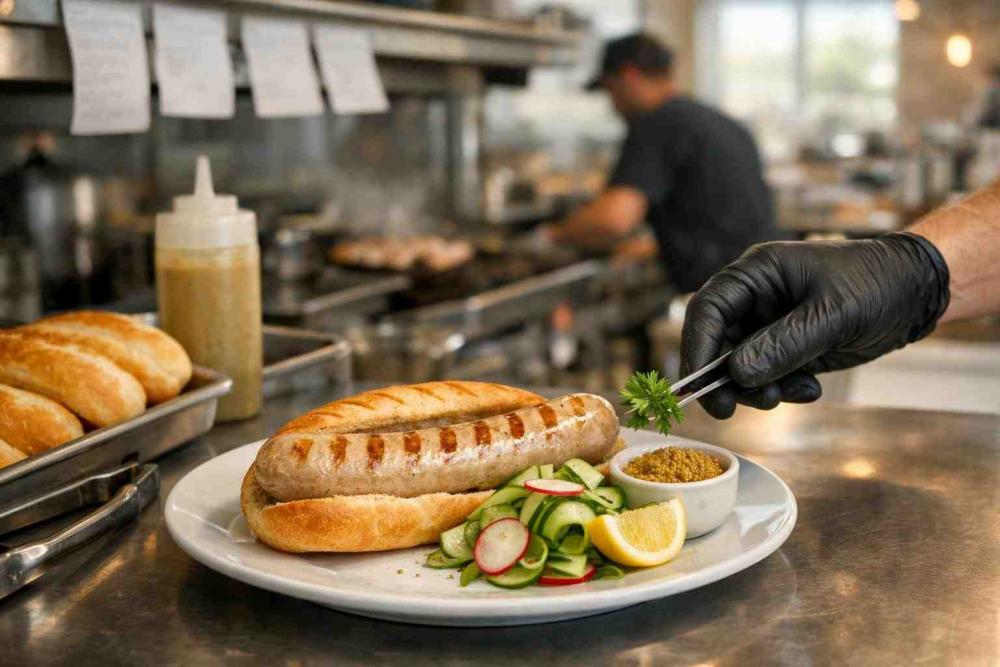
Spring changes the way people read a menu. They are not necessarily looking for less food, but they are often looking for food that feels a little brighter, cleaner, and more seasonal. That matters for bratwurst, because the product itself is satisfying and familiar, yet the way it is usually presented can lean heavily towards colder-weather comfort.
For operators, this creates a useful opening rather than a problem. You do not need to move away from bratwurst in spring. You need to present it in a way that feels more aligned with how people want to eat at that time of year. A fresher dish can make bratwurst feel more relevant for lunch, easier to sell in daytime settings, and more appealing to customers who might hesitate over a very heavy plate.
This is especially helpful in environments where the meal needs to feel easy to choose. In cafés, garden centres, farm shops, food halls, and casual pubs, the customer is often deciding quickly. If the dish looks too dense, too beige, or too wintery, it can lose out to something that appears fresher, even if the customer still wants something warm and filling.
Spring also helps with menu storytelling. A seasonal bratwurst dish gives staff and menus a clearer reason for the offer. It feels current rather than static. Instead of serving the same sausage plate all year round, the business can show some movement without making the operation complicated.
That does not mean chasing novelty for its own sake. In most cases, the refresh is not about invention. It is about balance. The sausage still provides the anchor of the dish, but the accompaniments do more of the seasonal work. That can make the offer easier to position, easier to sell, and easier to justify as a special or a spring-led menu line.
A good spring refresh usually does three things at once:
- makes the plate look more alive
- broadens the appeal beyond the cold-weather customer mindset
- keeps service practical enough for repeatable execution
That combination is where spring bratwurst dishes can become commercially stronger rather than merely different.
What Makes a Bratwurst Dish Feel Lighter Without Feeling Underwhelming
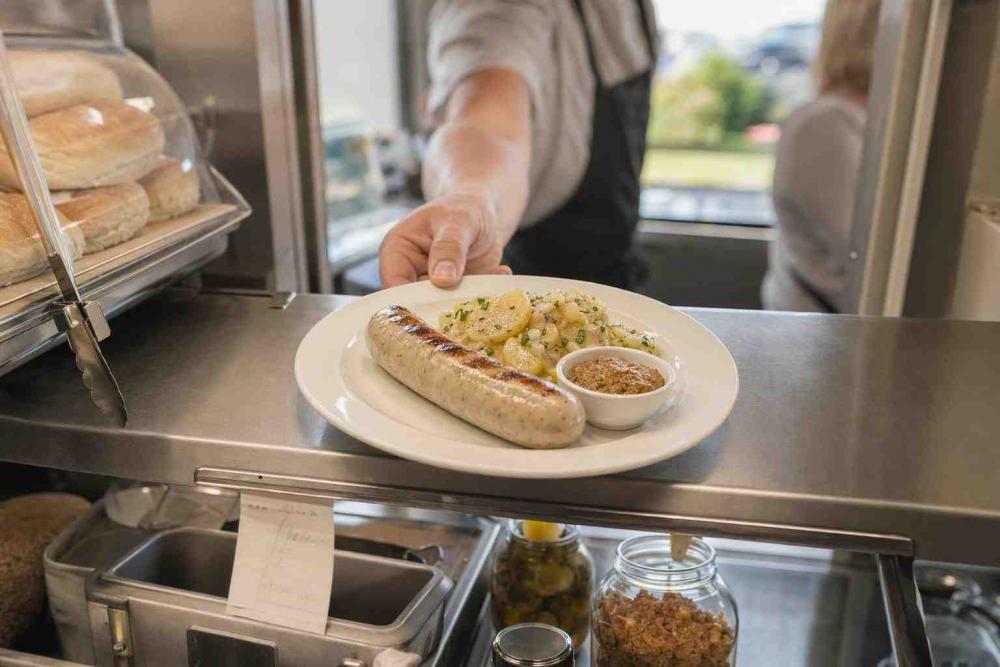
A lighter bratwurst dish is not simply a smaller one. That is where many operators go wrong. If the plate loses generosity, the customer notices immediately. What you want instead is a dish that still feels complete, but not weighed down by too many dense elements competing with each other.
This recipe guide shows how a Swabian potato salad with broth, oil and vinegar can keep a bratwurst plate lighter without losing its German character.
Much of that effect comes from contrast. Bratwurst already brings savouriness, warmth, and substance. If the rest of the plate adds more heaviness in the form of thick sauces, large portions of mash, fried sides, or too much bread, the whole thing can feel one-dimensional. The answer is not to remove all those elements in every case. It is to be more selective about how many rich components sit together.
Texture matters a great deal here. Crisp vegetables, lightly dressed leaves, pickled onions, radishes, cucumber, herbs, and sharper slaws can change the impression of the dish quickly. They bring freshness without taking away satisfaction. The same is true of sauces. A yoghurt-mustard dressing, herb crème fraîche, or a lighter mustard vinaigrette can keep flavour high while making the plate feel less dense than a thick creamy sauce or dark gravy.
Portion design matters as well. A bratwurst with one well-judged starch and one bright side often feels better than a plate that tries to do everything at once. New potatoes with herbs can feel more spring-appropriate than a large mound of mash. A fresh flatbread with crunchy garnish can feel easier than an oversized roll with multiple heavy toppings.
The key is to keep one strong base note and surround it with lift. That way the dish remains satisfying because it still has warmth, fat, seasoning, and substance, but it gains freshness through the elements around it.
A useful test is this: if the customer finishes the dish and feels pleasantly fed rather than slowed down, you are probably close to the right balance.
Signs a dish is lighter in the right way:
- the sausage still feels central
- the accompaniments add freshness, not emptiness
- the plate has colour and contrast
- the sauce sharpens the dish instead of flattening it
- the customer can imagine eating it at lunch without regretting the choice afterwards
That is a better target than “light” in the diet sense. It is really about making bratwurst feel more balanced and more seasonally convincing.
The Spring Ingredients That Bring Freshness, Colour and Lift
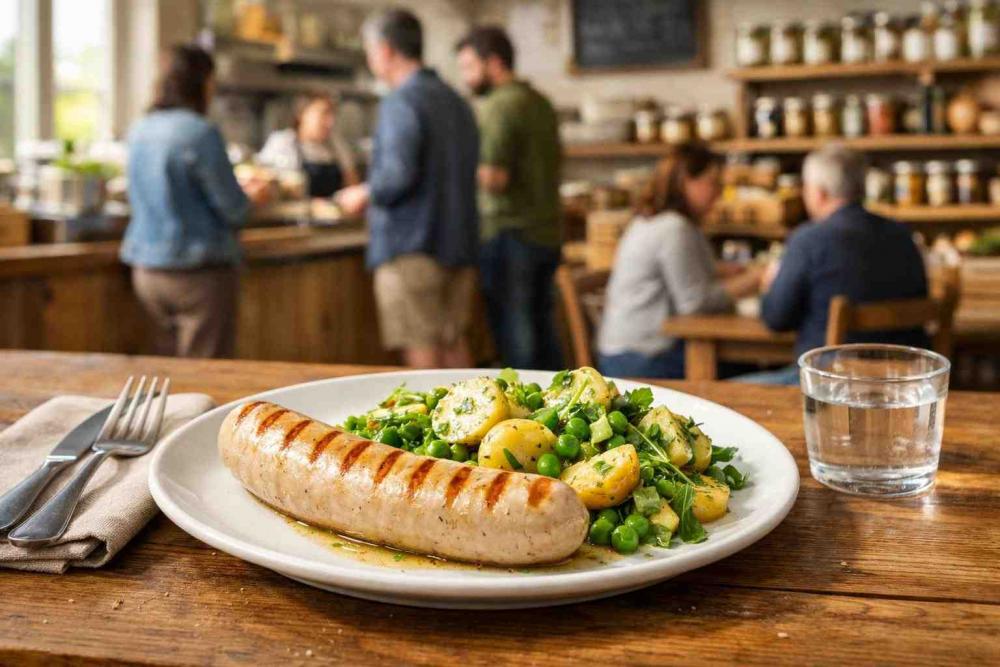
The ingredients around bratwurst do most of the spring work. The sausage provides consistency and depth, but the plate only starts to feel seasonal when the supporting elements change. That is why ingredient choice matters so much more in a spring bratwurst dish than many operators first assume.
This recipe guide from Essen und Trinken shows how a herb potato salad with peas and fresh herbs can bring lighter, seasonal contrast to bratwurst, and its herb potato salad with peas and fresh herbs is useful menu inspiration.
The most useful spring ingredients are usually the ones that bring one of four things: freshness, sharpness, colour, or texture. Leaves such as rocket, watercress, baby spinach, or mixed spring greens can make a plate look immediately more alive. Fresh herbs such as parsley, chives, dill, and tarragon help in a similar way. They lift both aroma and appearance, which matters when you are trying to stop sausage from feeling visually heavy.
Vegetables with bite are particularly helpful. Radishes, spring onions, cucumber ribbons, fennel, and lighter slaws can all provide a cleaner contrast to bratwurst. Peas and broad beans are useful too, especially in warm salads or simple spring vegetable mixes, because they add sweetness and seasonal character without dragging the dish down.
Potatoes still have a place, but the format matters. Warm herb-dressed new potatoes usually feel fresher than mash, and a good potato salad with mustard and herbs often works better in spring than a richer, heavier build. Lentils, grains, or beans can also work, but only when the rest of the plate stays bright enough to stop the dish becoming earthy and dense.
Acidity is one of the most important spring tools. Pickled onions, cornichons, apple slaw, mustard dressing, lemon, and yoghurt-led sauces can all make bratwurst feel more open and less heavy. They cut through richness and help the plate feel more deliberate.
Useful spring ingredients often include:
- herb-dressed new potatoes
- rocket, watercress, spinach, or mixed leaves
- radishes, spring onions, peas, cucumber, fennel
- pickled onions or mustard pickles
- yoghurt, crème fraîche, mustard, lemon, and fresh herbs
The strongest spring plates do not use all of these at once. They choose a few that work together and let each one do its job clearly. Too many ingredients can make the plate feel messy or overdesigned. A simpler combination is often more convincing, particularly in busy commercial settings.
If the end result looks fresher, tastes brighter, and still gives the customer enough warmth and substance, the ingredients are doing the right kind of work.
Spring Bratwurst Dishes That Work Especially Well for Lunch Trade
Lunch is where spring bratwurst dishes can become particularly useful. At that time of day, customers often want something warm and satisfying, but they are less likely to choose the heaviest option on the board unless the weather is poor or the setting strongly supports it. That makes lunch the natural home for fresher bratwurst formats.
Bratwurst with Warm Potato Salad and Herbs
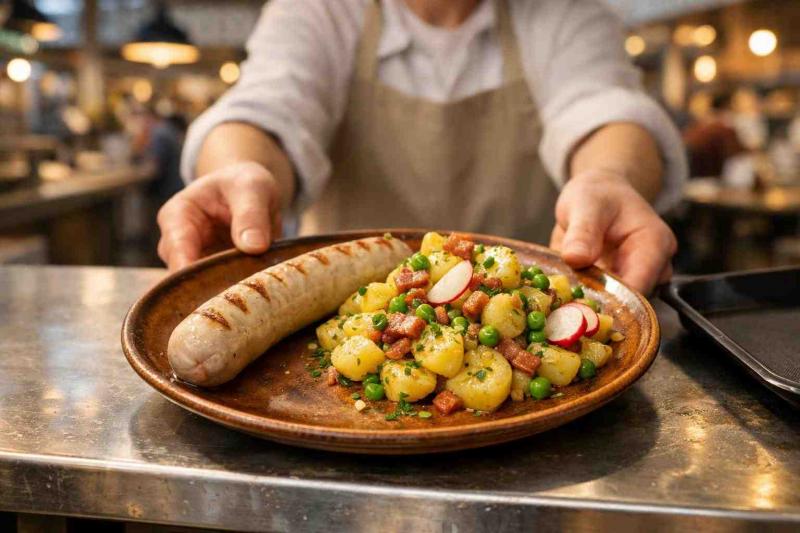
This is one of the easiest spring-friendly plates to sell. It keeps familiar comfort through the sausage and potatoes, but the dish feels much lighter than a mash-and-gravy combination. A mustard-led dressing, chopped herbs, and a few crisp vegetables can make it feel complete without making it heavy.
This recipe guide shows how a warm German potato salad with bacon and mustard dressing can give bratwurst a lighter spring side that still feels substantial.
Sliced Bratwurst with Spring Greens and Peas
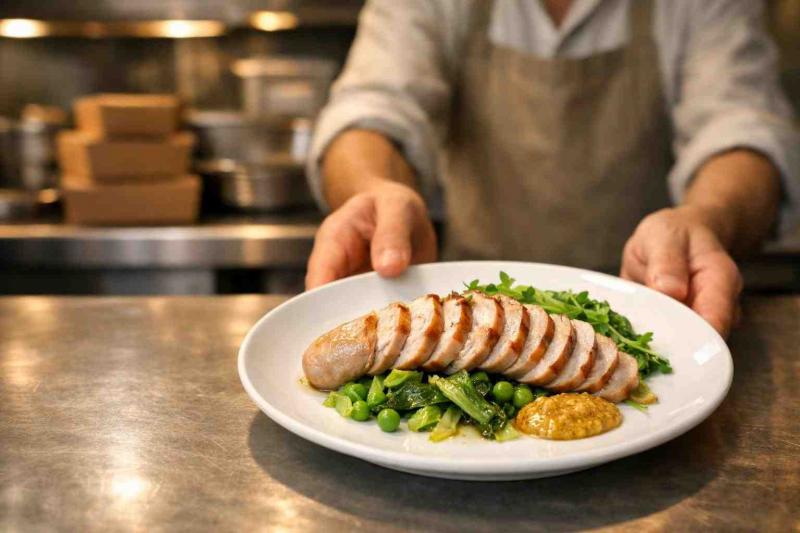
This format works well where you want a plate that looks fresh and a little more composed. Slicing the sausage can help it feel more integrated into the dish and may improve visual appeal in cafés or lunch-led venues. The greens and peas keep it seasonal, while a sharper sauce stops the plate feeling too soft.
Bratwurst Flatbread with Rocket and Mustard Crème Fraîche
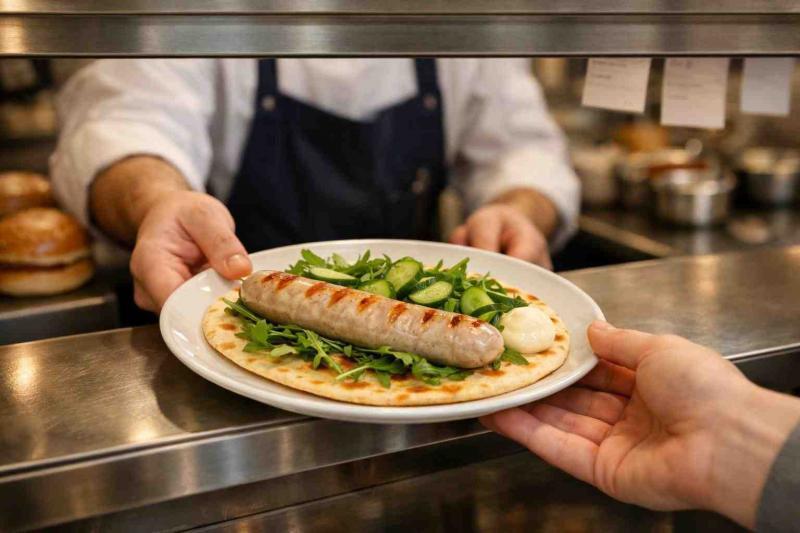
This is a strong option where the customer wants something handheld or semi-casual, but not a standard loaded roll. A flatter format often feels more contemporary and lighter. It can also be easier to portion cleanly and easier to refresh visually with leaves, pickles, and a lighter sauce.
Bratwurst Salad Plate with Lentils or New Potatoes
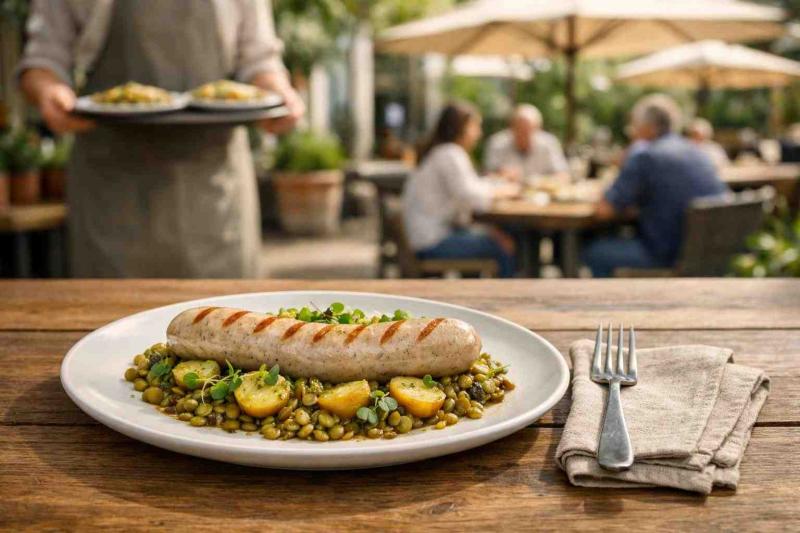
In the right setting, this can broaden the appeal of bratwurst significantly. It keeps the sausage central but gives the customer a plate that feels more like a smart lunch than a heavy meal. This can work especially well in farm shops, food halls, and better daytime hospitality environments.
The best lunch dishes tend to share a few strengths:
- they are easy to understand quickly
- they do not look overbuilt
- they balance warmth with freshness
- they still feel like good value
- they can be executed consistently during busy service
That last point matters. A spring lunch dish only works commercially if it survives real service conditions. If it looks great on paper but slows the line down, depends on too many fragile garnishes, or becomes inconsistent after a busy hour, it will not last. The best lunch-led bratwurst dishes are the ones that feel fresh while still being robust enough for real trading conditions.
How to Keep a Spring Bratwurst Offer Satisfying While Reducing Heaviness
The challenge with a spring bratwurst offer is not making it lighter. That part is easy. The challenge is making it feel lighter without losing the satisfaction that justifies the purchase. If the customer finishes the dish and feels they have had a snack rather than a proper meal, the concept has probably gone too far.
Satisfaction comes from several things working together. Bratwurst already brings flavour, warmth, fat, savouriness, and familiarity. That gives you a strong foundation. The mistake is assuming that every other part of the plate also needs to be heavy in order for the meal to feel complete. In reality, the sausage is often doing most of the grounding work already.
What the customer still needs is enough structure around it. That usually means one proper base element, one freshening element, and one flavour bridge such as a dressing, sauce, or pickle. If those three parts are in place, the dish can feel complete without being overloaded.
A useful way to think about it is this:
- the sausage provides the core
- the starch or carrier provides reassurance
- the fresh element provides lift
- the sauce or dressing ties the dish together
That is often enough. The moment you add too many rich extras, the spring feel disappears. But the moment you remove too much structure, the plate starts to look thin and underpowered.
Perceived value also matters here. Customers are not only judging weight. They are judging completeness, care, and whether the dish looks worth the spend. A fresher plate can still feel premium and generous if it is presented with intention. Colour, contrast, clean plating, and good garnish placement all help.
This is why a well-made spring bratwurst plate can be satisfying even when it is less dense than a winter version. The satisfaction comes from balance and coherence, not sheer mass. In fact, many customers will read that kind of plate as the more appealing choice precisely because it feels easier to eat and better suited to the season.
If the dish feels balanced rather than stripped back, you are in the right place.
The Best Sides, Salads and Sauces for a Fresher Bratwurst Plate
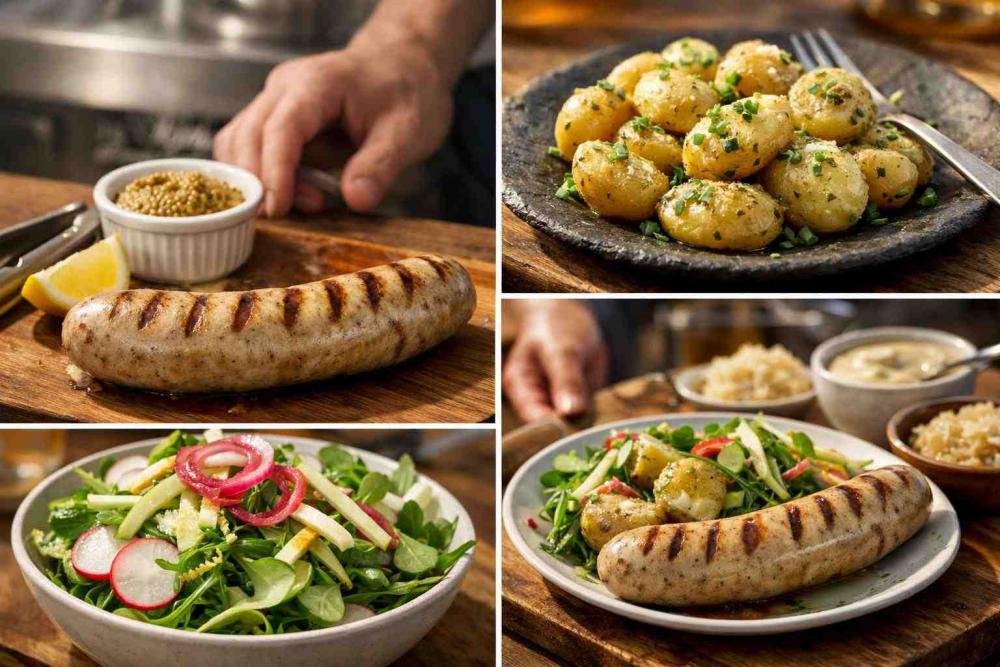
Sides, salads, and sauces are where a spring bratwurst offer either comes together or falls apart. You can start with a strong sausage, but if the accompaniments are too heavy, too soft, or too generic, the dish will still read like a colder-weather plate. This part of the menu deserves more attention than it often gets.
The best sides in spring tend to support rather than dominate. Warm new potatoes are often one of the safest choices because they still feel substantial while taking herbs, mustard, lemon, and lighter dressings very well. Potato salad can also work extremely well, provided it stays bright and not overly creamy. Lightly dressed lentils or a spring grain salad can be effective too, but only if they do not make the dish too dry or worthy.
Salads work best when they bring crunch and acidity. Rocket, watercress, shaved fennel, cucumber, apple slaw, radish, and pickled onions all help. What you want is something that cuts through the sausage rather than sitting passively beside it. A dull side salad with no bite rarely improves a bratwurst plate.
Sauces need restraint. Spring is usually a better moment for mustard dressings, herb yoghurt, crème fraîche with chives, light mustard mayonnaise, apple and mustard slaw, or a vinaigrette with a little sweetness and acidity. Thick gravies, very rich cream sauces, or overly sweet relishes can quickly undo the fresher direction.
A useful spring combination might include:
- bratwurst
- warm herbed potatoes
- peppery leaves or radish salad
- mustard and herb dressing
Another might be:
- bratwurst in flatbread
- pickled onion
- rocket
- yoghurt-mustard sauce
The important point is that each part should earn its place. If a side is there only because it is traditional, but it makes the overall dish feel heavy or repetitive, it may not be the best spring choice. A fresher bratwurst plate usually works because every element has a clear role: one adds comfort, one adds crunch, one adds acidity, one adds cohesion.
That is a much better standard than simply asking whether the dish needs chips or not.
Where Lighter Bratwurst Dishes Fit Best Across UK Foodservice Settings
Not every setting needs the same spring bratwurst dish. A good operator-led article should acknowledge that, because the best format depends heavily on when, where, and to whom the dish is being sold. The fresher the concept, the more important it becomes to match it to the right commercial environment.
This hospitality trade article looks at spring pub menu ideas and why dishes need to suit the right commercial environment for the venue and customer base.
In garden centres, farm shops, and daytime cafés, spring bratwurst dishes can be particularly strong because the customer is often already in a daytime, browsing, or lunch-led mindset. A lighter-feeling plate fits naturally there. Warm potato salad, dressed leaves, flatbreads, or plated lunch dishes tend to feel more right than a very heavy pub-style combination.
In casual pubs, the role is slightly different. Here, a spring bratwurst dish often works best as a seasonal special that offers a break from the usual richer sausage-and-mash expectation. It can give the menu a fresher option without making the offer feel too soft or too health-led. The pub customer still wants value and flavour, so the plate needs visible substance even when it is less heavy overall.
In street food or event trading, speed and clarity matter more. The spring angle can still work, but the format usually has to be more direct. A cleaner bratwurst roll, a flatterbread build, or a quick seasonal topping combination may be more realistic than a composed plated dish. The fresher direction has to survive fast service, movement, packaging, and changing weather.
For food halls and more premium casual settings, there is often room for a slightly more composed offer. Sliced bratwurst with a sharper salad, more visible herbs, or a plated seasonal build can help the dish feel more distinctive and less generic.
A useful way to think about fit is this:
- daytime retail and café settings suit fresher plated dishes best
- pubs suit seasonal specials with broad appeal
- street food suits faster, cleaner handheld formats
- premium casual settings can carry more composed presentations
The strongest operators do not ask whether the dish is good in the abstract. They ask whether it fits the customer journey, service model, and price expectation of the setting. That is where a spring bratwurst dish becomes commercially sharp rather than simply attractive on paper.
How to Keep Spring Bratwurst Dishes Fast to Serve and Easy to Repeat
A spring menu idea is only useful if it survives service. This is where many seasonal dishes fail. They look good during planning, but in live trading they become fiddly, inconsistent, or too dependent on last-second assembly. A spring bratwurst dish needs to feel fresher, but it also needs to remain operationally realistic.
This hospitality trade article explains why a seasonal dish only works if it survives service, which is worth keeping in mind when developing lighter spring bratwurst specials.
The first principle is to let a small number of flexible components do most of the work. If one herb dressing can be used across two or three dishes, that is better than building multiple sauces with narrow use. The same goes for pickled onions, dressed leaves, slaws, or potato components. Reusable elements help keep prep tighter and reduce the risk of waste.
The second principle is assembly simplicity. The most repeatable dishes are usually the ones with a clear build order and no fragile finishing stage that breaks under pressure. If the dish depends on five separate garnishes being placed precisely every time, it may not hold up in a real lunch rush. A smarter build uses bold but simple elements that still look good when prepared at pace.
It also helps to keep formats legible. Staff should be able to understand quickly what makes the spring version different from the standard version. If the distinction is too vague, the dish will be sold inconsistently and plated inconsistently.
From a service point of view, the safest spring systems often include:
- one core bratwurst format
- one prepared starch or carrier
- one or two fresh elements held ready
- one consistent sauce or dressing
- one simple garnish that visually signals the season
That kind of structure gives enough room for freshness without making the offer operationally fragile. It also helps with training. Staff do not need a long explanation to get the dish right.
The real win here is repeatability. A spring bratwurst dish should not feel like a special project. It should feel like a practical seasonal variation that can be delivered well every day. When it is easy to build, easy to explain, and easy to keep looking good, it has a much better chance of staying on the menu long enough to prove its value.
Frequently Asked Questions
Yes, it can, as long as the dish still feels complete and well thought through. Customers do not only judge value by how heavy a plate is. They also judge presentation, freshness, balance, and whether the dish feels like a good seasonal choice rather than a cut-down version of something bigger.
In practice, a spring bratwurst dish can still command a solid price if it includes a proper sausage, a well-matched side, and accompaniments that feel deliberate rather than token. Fresh herbs, pickled elements, a good mustard-led dressing, and a cleaner plated look can all support perceived value. The key is to avoid making the dish look sparse or under-built.
For many operators, it works best as a seasonal special first. That gives you room to test customer response without having to redesign the wider menu around it. It also gives staff a clearer selling story, because the dish feels timely and intentional.
If it performs well, some versions can stay on longer, especially in lunch-led settings such as cafés, farm shops, and garden centres. In pubs or more comfort-food-led environments, it may work better as a rotating spring and summer option rather than a year-round mainstay.
The most common mistake is taking too much away without replacing it with enough freshness, texture, or structure. That usually leaves the dish feeling incomplete rather than lighter.
better approach is to keep the sausage central, keep one satisfying base element, and then change the surrounding balance. If the plate still has substance but now includes more colour, acidity, crunch, or herb lift, it will usually land much better than a dish that simply looks smaller and less generous.
They can be, but the format matters. A plated spring bratwurst dish may work well in seated event catering or premium outdoor hospitality, but in faster-moving event trading you usually need something simpler and easier to serve consistently.
That is where cleaner bratwurst rolls, flatbreads, or handheld formats come into their own. The fresher spring feel can still be there through toppings, pickles, slaws, herbs, or lighter sauces. The important thing is to check whether the build holds up in real service conditions, including packaging, queue speed, weather, and staffing levels.
They often do well with daytime customers who want something warm and satisfying without committing to the heaviest option on the menu. That can include lunch customers in cafés, garden centres, farm shops, and food halls, as well as pub customers looking for a seasonal special rather than the richest available plate.
They can also help broaden appeal beyond the most obvious sausage buyer. A fresher presentation can attract customers who like the idea of bratwurst but might otherwise skip it because they assume it will feel too dense or too wintery.
Not necessarily. In some cases, they can actually simplify the offer if you build the dish around a small number of reusable components. A herb dressing, a pickled garnish, a spring slaw, or a warm potato side can often be used across multiple dishes rather than created for one item only.
Bread can still work very well, but it usually needs a cleaner build. A heavy loaded roll with multiple rich toppings can push the dish back into colder-weather territory, whereas a neater roll or flatterbread with sharper toppings can feel much more seasonally appropriate.
So the question is not whether bread belongs. It is whether the overall combination still feels balanced. If the bread is doing too much of the weight and the toppings add no freshness, the dish may feel heavier than intended. If the bread acts as a straightforward carrier and the rest of the build brings lift, it can work very well.
The strongest sign is not just sales volume, but the type of sales it generates. A good spring bratwurst dish often wins customers who might not have chosen a heavier sausage plate. It can also perform well at lunch, lead to fewer hesitations at the point of ordering, and feel easier for staff to recommend.
It is also worth watching how consistently the dish is executed. If staff can plate it well under pressure, if it still looks appealing during busy service, and if customers finish it looking satisfied rather than overwhelmed, that is usually a strong sign the balance is right. If you are testing it in a specific venue or event setting, also check site rules, service flow, holding practicality, and whether the format suits the real trading conditions.
Conclusion
A spring bratwurst offer does not need to abandon what makes bratwurst appealing in the first place. It simply needs to rebalance the dish. When the sausage stays central but the surrounding ingredients become fresher, greener, sharper, or a little less dense, the whole plate feels more suited to the season. That can make a real difference in spring, when customers often want something warm and satisfying without the full weight of a winter-style meal.
For operators, this creates a useful middle ground. You are not trying to turn bratwurst into a health-food product, and you are not trying to strip the dish back so far that it loses value. You are creating plates that feel brighter, more versatile, and more commercially flexible. That can help across lunch trade, garden seating, seasonal specials, café menus, and foodservice settings where a fresher look matters.
Done well, these dishes can also make menu planning easier. A small number of well-chosen sides, salads, sauces, and garnishes can create several spring-ready combinations without making service overly complicated. That is often where the real value lies: not just in taste, but in repeatability, sell-through, and day-to-day practicality.
If you are looking at how to make bratwurst feel more seasonal without losing its core appeal, spring is a very good place to start.
About The Sausage Haus
The Sausage Haus helps UK operators serve authentic German sausages in a way that feels commercially practical, consistent, and easy to execute. The focus is not just on the product itself, but on helping caterers, cafés, pubs, street food traders, event businesses, garden centres, and foodservice operators build sausage offers that work in the real world.
That means thinking beyond a single menu item. It means considering speed of service, plate build, holding practicality, perceived value, customer appeal, and how German sausage dishes can be made more distinctive and more reliable in day-to-day trade. For operators who want something more authentic than a generic sausage offer, but still need a system that works under pressure, that balance matters.
The sausages are produced by Remagen, with Baird Foods as the distributor in the UK. Together, that creates a route for operators who want a more premium German sausage proposition backed by a faster, more dependable service model.