What exactly makes a real German Frankfurter? At first glance, many sausages look similar — long, smooth, lightly smoked and ready for the grill. But behind a true Frankfurter lies a level of craftsmanship, precision and heritage that most standard hotdogs simply don’t match. From natural casings and carefully balanced pork–fat ratios to the distinct aroma of beechwood smoke, every part of the process has a purpose.
In this guide, we look at the defining features of an authentic German Frankfurter through the eyes of a butcher — including why cheap UK hotdogs taste completely different, and how Hardy Remagen’s 300-year tradition continues to set the benchmark for quality today.
Table of Contents
ToggleIntroduction
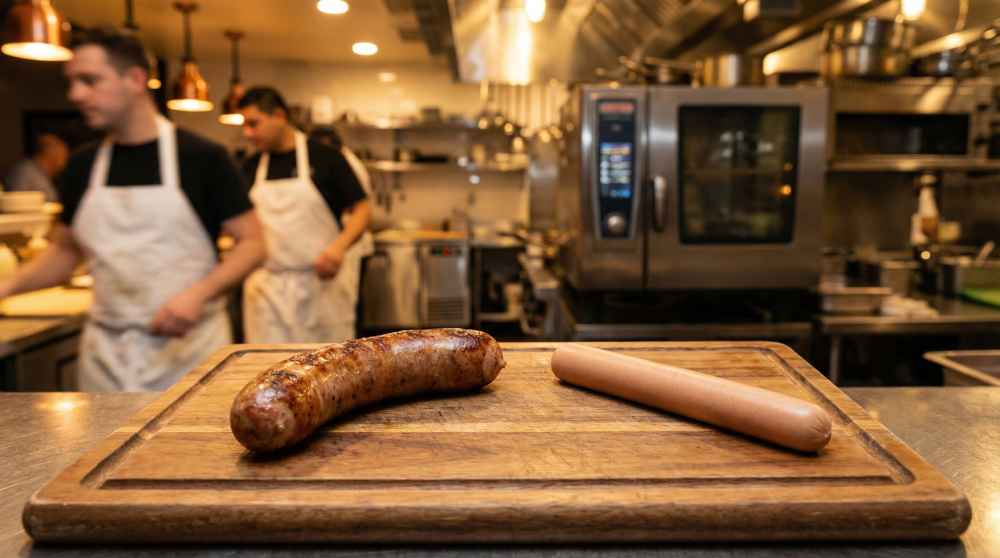
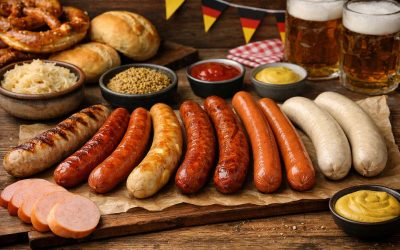
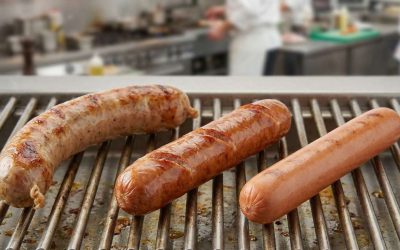
Real German Frankfurter: the visible difference between an authentic, browned frankfurter and a pale industrial hotdog.
Ask any German butcher what makes a real Frankfurter, and you’ll get the same answer: it’s all about the craft. A proper Frankfurter isn’t simply a sausage — it is the result of centuries of refinement, strict production standards and a dedication to flavour and texture that borders on obsession. In Germany, the Frankfurter has a defined identity, shaped by heritage and protected by tradition, and the best producers treat it with the kind of respect usually reserved for fine artisanal foods.
In the UK, most people only know the mass-produced hotdog version: soft, mild, uniform and inexpensive. But an authentic Frankfurter is a completely different experience. It snaps when you bite into it. It carries a gentle, natural smoke. Its interior is finely emulsified, structured and silky. And it is made using techniques that have been passed down through generations of butchers who understand how each step influences the final bite.
This commitment to craftsmanship is exactly what defines our own range at The Sausage Haüs. Our Bacon Frankfurter, Cheese Frankfurter and Chilli Beef Frankfurter are all made using traditional German methods — natural casings, beechwood smoking and carefully balanced emulsions — ensuring they deliver the unmistakable quality of a real German Frankfurter. These products are not simply flavoured variations; they are authentic, heritage-driven sausages that honour the same principles German butchers have relied on for hundreds of years.
This article breaks down those key elements — natural casing, smoking method, wood choice, meat ratios and heritage — to show exactly what separates a real German Frankfurter from an ordinary hotdog. Whether you’re a chef, a pub operator or someone who simply enjoys exceptional food, understanding these differences helps you appreciate why premium German sausages deliver such remarkable flavour and consistency.
Key Takeaways
- A real German Frankfurter uses natural casings, creating the iconic “snap” that customers instantly recognise.
- uthentic flavour comes from gentle, controlled smoking, traditionally using German beechwood for smoking.
- The pork–fat ratio is precisely balanced to achieve a smooth emulsion — never greasy, never dry.
- Mass-market UK hotdogs taste different because they use lower-quality meat, artificial casings and liquid smoke instead of real smoking.
- Hardy Remagen’s 300-year butchery tradition ensures consistent, heritage-driven craftsmanship in every Frankfurter.
- Understanding these elements helps pubs and retailers choose products that offer higher quality, stronger customer appeal and more profitable dishes.
Why Authenticity Matters in a German Frankfurter

Hand-stuffing natural casings — a traditional technique that defines the craftsmanship behind every real German Frankfurter.
Not all sausages are created equal — and that is especially true for Frankfurters. In Germany, this sausage is more than a menu item; it is a culturally protected speciality with a clearly defined identity rooted in centuries of butchery tradition. A Frankfurter carries expectations around flavour, texture and craftsmanship in the same way a true Parma ham or Champagne does. When customers order one in Germany, they anticipate a very specific sensory experience: the crisp snap of a natural casing, the clean aroma of beechwood smoke, and the smooth, finely emulsified interior that defines the product.
Authenticity matters because it reflects technique, origin and integrity. A real German Frankfurter is the product of precise ratios, controlled emulsification, traditional smoking methods and high-quality cuts of pork. It is not designed to be the cheapest sausage on the market; it is designed to deliver a flavour and texture that stand above mass-produced alternatives. And consumers can tell the difference immediately.
This distinction carries significant weight for pubs, restaurants and retailers. In a competitive food landscape where diners are increasingly discerning, authenticity signals quality. Serving a true Frankfurter — rather than a generic hotdog — elevates your offering, reinforces your brand’s commitment to craftsmanship and provides customers with a taste experience that feels premium and intentional.
Authenticity also plays a role in consistency and guest trust. When a product is made according to strict, time-tested standards, it behaves predictably in the kitchen: it browns well, reheats reliably, holds its shape and delivers the same flavour profile every time. This reliability is essential for any venue looking to maintain high standards across busy services.
In contrast, mass-produced hotdogs in the UK are built for convenience and low cost. They often lack structure, rely on fillers or artificial smoke, and deliver a mild, generic taste. While they have their place, they simply do not provide the depth, craftsmanship or customer appeal of an authentic German Frankfurter.
For operators seeking to differentiate their menus, attract repeat customers and build a stronger perception of quality, choosing a real Frankfurter is an easy and impactful decision. It raises expectations — and meets them. And in a market where authenticity increasingly drives customer loyalty, that matters more than ever.
Natural Casing — The Signature Texture of a Real Frankfurter
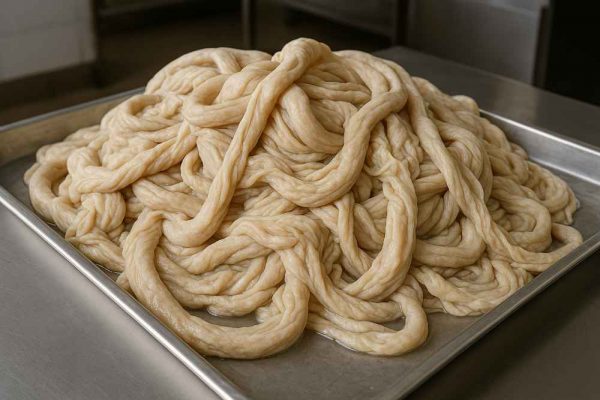
Natural sausage casings prepared for production — an essential component in creating the snap and texture of a real German Frankfurter.
If there is one characteristic that immediately reveals whether you’re eating a real German Frankfurter, it is the snap. That clean, satisfying pop when your teeth break through the casing is not a gimmick — it is a hallmark of authenticity, and it is only achieved through the use of natural sheep or pork casing. For German butchers, this is non-negotiable. The casing is integral to both texture and flavour, and it plays a crucial role in how the sausage behaves during smoking and cooking.
Natural casing delivers several key advantages that artificial or collagen casings simply cannot replicate:
1. The unmistakable bite
The thin, delicate casing creates a tactile experience that is instantly recognisable. It provides enough resistance to give a satisfying snap, but not so much that it feels tough or rubbery. This sensory dimension is one of the reasons customers perceive authentic Frankfurters as premium.
2. Superior flavour transfer during smoking
Natural casings allow smoke to penetrate gently and evenly. This creates a subtle, balanced smokiness rather than the harsh or artificial flavours sometimes found in mass-produced hotdogs. Smoking becomes an integral part of the seasoning, not a surface-level effect.
3. Better moisture retention
The natural casing holds the emulsion in place, helping the sausage remain juicy and smooth inside. When heated, the casing keeps the flavour locked in while allowing steam to escape in a controlled way — preventing bursting and ensuring consistency in the final bite.
4. Authentic visual appearance
A genuine Frankfurter has a slightly curved, elegant shape with small, natural variations that come from hand-linking and natural casings. In contrast, artificial casings create a perfectly uniform, industrial look that lacks the character and craftsmanship of the real thing.
5. Integrity during cooking
Natural casings are remarkably resilient. They withstand grilling, pan-frying, steaming and even simmering without collapsing or tearing, making them ideal for both professional kitchens and home cooks.
Cheap UK hotdogs almost never use natural casings. They rely on collagen or even skinless formats because they are cheaper, faster and easier to mass-produce. But these versions miss the essential attributes that define a Frankfurter: authenticity, structure, mouthfeel and the iconic snap.
For pubs and retailers, the casing is not just a detail — it’s a quality signal. When customers bite into a sausage and hear that subtle crack, they immediately understand they’re eating something crafted with care, not manufactured for volume. Natural casing elevates the entire dish and sets a level of expectation that benefits your brand.
The Smoking Process — How Flavour Is Built, Not Added
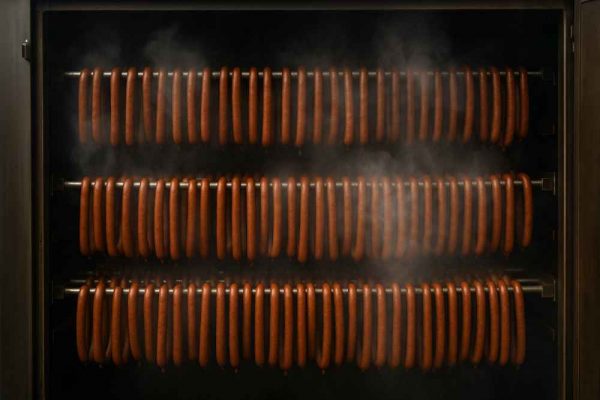
Rows of real German Frankfurters smoking over beechwood — the traditional method that creates their signature aroma, colour and depth of flavour.
One of the defining characteristics of a real German Frankfurter is its gentle, authentic smoke profile. This isn’t an afterthought or a flavour sprayed on at the end. Smoking is a controlled, traditional process that shapes the final product from the inside out. When done properly, it creates a depth of flavour and aroma that mass-produced hotdogs simply cannot achieve.
A real German Frankfurter is always smoked. This step is essential — not optional — because it contributes to the sausage’s identity in several key ways:
1. Natural flavour layering
Instead of relying on liquid smoke or artificial flavourings, a real German Frankfurter absorbs smoke slowly and evenly during the cooking process. This creates a subtle, rounded smokiness that enhances the meat rather than overpowering it. The goal is balance, not intensity.
2. Colour and appearance
That iconic golden-brown exterior isn’t from colouring agents. It comes from the interaction between natural casing, gentle heat and real wood smoke. This warm hue is one of the visual hallmarks of a real German Frankfurter and instantly signals authenticity to those who know what they’re looking for.
3. Texture development
Smoking helps tighten the casing and set the emulsion inside, giving the sausage its characteristic firmness and bite. Without smoking, a Frankfurter lacks the structural integrity that defines a real German Frankfurter.
4. Natural preservation
Historically, smoking served as a preservation method — and while modern refrigeration has replaced that necessity, the process still contributes to shelf stability and flavour development. This is one of the reasons a real German Frankfurter remains consistent and reliable across different cooking methods.
5. Avoidance of artificial shortcuts
Cheap UK hotdogs often substitute true smoking with chemical shortcuts:
- Liquid smoke
- Smoke-flavoured additives
- Colourants to imitate smoked meat
These approaches create a superficial “smoky” note, but they lack the complexity and depth of flavour that define a real German Frankfurter. Customers notice the difference instantly, especially when the sausage is served simply — grilled, sliced, or in a pub dish that lets the flavour speak for itself.
Smoking as craftsmanship
In traditional German butchery, smoking is as much an art as emulsification or seasoning. Producers like Hardy Remagen treat the smoking process with absolute precision — controlling moisture, temperature, air flow and timing to create a real German Frankfurter that is consistent, aromatic and unmistakably authentic.
This is what sets the product apart in the UK market. Where many hotdogs are designed to be cheap and fast, a real German Frankfurter is designed to deliver flavour, tradition and craftsmanship in every bite.
Wood Choice Matters — Beechwood and the German Butchery Standard
The type of wood used during smoking is far more than a technical detail — it is central to the flavour and identity of a real German Frankfurter. In traditional German butchery, the standard wood for smoking is beechwood, and this choice is anything but accidental. Beechwood burns cleanly and evenly, producing a mild, aromatic smoke that enhances the sausage rather than dominating it.
This wood selection is one of the reasons a real German Frankfurter tastes refined and balanced instead of overly smoky. The gentle profile of beechwood allows the natural flavours of pork, seasoning and emulsification to shine through, creating the harmonious taste that defines an authentic product.
In contrast, cheaper sausages or UK-style hotdogs rarely follow this approach. Many use:
- Mixed industrial woods
- Stronger, inconsistent smoke sources
- Liquid smoke additives in place of real smoking
These alternatives may mimic the appearance of a smoked sausage, but they cannot reproduce the clean, elegant aroma that beechwood imparts to a real German Frankfurter. This is why authentic producers insist on proper wood smoking — it is fundamental to achieving the traditional flavour profile.
Why beechwood specifically?
Beechwood is prized for four key qualities:
- Consistency
It burns evenly, which is essential for achieving uniform smoking results across large batches of sausages. - Mild aroma
Unlike hardwoods that can overpower the meat, beechwood enhances the natural seasoning without masking it. - Stability in temperature
A controlled smoking environment is crucial for maintaining the texture and moisture level of a real German Frankfurter. - Historical authenticity
German butchers have used beechwood for centuries, and the flavour expectations of consumers are built around this tradition.
The connection to craftsmanship
For producers like Hardy Remagen, using beechwood is part of a broader philosophy: every detail must support the integrity of the sausage. Smoking with the wrong wood would alter the flavour, colour and aroma in ways that would break the continuity of heritage. Maintaining the beechwood tradition ensures that each real German Frankfurter tastes exactly as it should — mild, aromatic and unmistakably authentic.
In a market where shortcuts are common, the choice of wood is a quiet but powerful reminder of what separates true craftsmanship from mass production. Beechwood smoking is not just a technique; it is a signature of quality that customers can taste the moment they cut into a real German Frankfurter.
Pork-to-Fat Ratios: The Science Behind Perfect Emulsion
At the heart of every real German Frankfurter is a meticulously balanced emulsion of pork and fat. This balance is so important that German butchers consider it the foundation of the entire product. A Frankfurter may appear simple from the outside, but its interior texture — smooth, firm, elastic and finely structured — is the result of precise calculations and generations of expertise.
A typical real German Frankfurter uses a pork-to-fat ratio of around 70:30. This split is not arbitrary. It ensures the sausage has enough fat to remain juicy and supple, while still allowing the clean flavour of quality pork to come through. Too much fat and the sausage becomes greasy or spongy. Too little, and it turns dry, crumbly or rubbery.
Why emulsification matters
A real German Frankfurter is an emulsion sausage, meaning the meat and fat aren’t simply mixed — they are finely processed until they bind into a cohesive, stable matrix. This creates the familiar, silky interior that distinguishes a Frankfurter from coarser sausages like Bratwurst.
The emulsification process affects:
- Texture — the smooth, bouncy bite expected of an authentic Frankfurter
- Moisture retention — preventing dryness when heated
- Mouthfeel — that satisfying firmness without being tough
- Flavour delivery — distributing seasoning evenly throughout the sausage
To achieve this level of refinement, the temperature of the mixture must be carefully controlled. Even a small increase in heat during emulsification can cause fat separation — an immediate failure in the eyes of any German butcher. This is why only skilled producers can deliver a true emulsion that holds perfectly during cooking.
The difference versus UK hotdogs
Most cheap UK hotdogs do not follow these principles. They often use:
- Mechanically separated meat
- Low-grade cuts
- Excess stabilisers and fillers
- Artificial binders to mimic texture
Rather than forming a true emulsion, these products rely on processing shortcuts that produce a softer, less structured interior. The difference in quality becomes apparent as soon as the sausage is cut open. A real German Frankfurter shows a firm, uniform interior with no visible fat pockets — the hallmark of skilled emulsification.
Consistency from batch to batch
Producers like Hardy Remagen maintain strict standards for meat selection, trimming and fat control. This ensures that every real German Frankfurter behaves predictably in the kitchen — browning evenly, reheating cleanly and maintaining its signature texture under pressure.
This consistency is essential for pubs and retailers who need reliable quality. With each sausage manufactured to the same precise ratio, operators can cost dishes more accurately and deliver a consistent guest experience every time.
Emulsion as craftsmanship
To the German butcher, emulsification is one of the highest expressions of skill. It requires knowledge, precision and respect for the product. The smooth interior of a real German Frankfurter isn’t just a technical achievement — it’s a reflection of a tradition where details matter, shortcuts aren’t tolerated and the end result must always honour the craft.
Why Cheap UK Hotdogs Taste Different
Understanding what makes a real German Frankfurter special becomes much easier when you compare it to the typical mass-produced UK hotdog. The two might look similar at first glance, but they are built on completely different principles. A Frankfurter is a product of tradition, technique and carefully managed ingredients. A cheap hotdog, by contrast, is designed primarily for speed and affordability.
1. Lower-quality meat inputs
Most inexpensive UK hotdogs rely on:
- Mechanically separated meat
- Highly processed cuts
- Meat recovered from bones under pressure
- Fillers and binders to bulk out the mixture
These ingredients lack the clean flavour and structure that define a real German Frankfurter, which uses carefully selected pork and precisely controlled fat content. The difference in taste is immediate and impossible to hide.
2. Artificial casings or no casings at all
A real German Frankfurter always uses natural sheep casing — the source of the iconic snap. Cheap hotdogs typically use:
- Collagen casings
- Plastic-like artificial casings
- Or no casing (“skinless hotdogs”)
These alternatives remove the characteristic bite and alter the mouthfeel entirely. Without the natural casing, the sausage loses one of the essential markers of authenticity.
3. Liquid smoke instead of real smoking
Perhaps the most telling difference is how flavour is developed. A real German Frankfurter is gently smoked using beechwood, building flavour layer by layer. Cheap hotdogs often skip real smoking entirely and instead use:
- Liquid smoke
- Smoke-flavouring additives
- Artificial colouring to mimic the appearance of smoked meat
These shortcuts create a superficial flavour that lacks the depth, warmth and subtlety of a naturally smoked Frankfurter. Customers may not know the technical reasons — but they instantly recognise the difference in taste.
4. Inconsistent or incorrect emulsion
Without controlled pork-to-fat ratios and skilled emulsification, cheap hotdogs tend to have:
- A softer, mushier interior
- Greasiness or water release during cooking
- A mealy or rubbery texture
- Uneven seasoning
In contrast, the interior of a real German Frankfurter is smooth, firm and perfectly bound. It holds its shape when sliced, browns evenly and provides a consistent bite — qualities that come from meticulous butchery rather than industrial shortcuts.
5. Generic seasoning profiles
Cheap hotdogs often rely on simple, one-note seasoning: salt, pepper and smoke flavour. A real German Frankfurter uses a balanced blend of spices developed over generations:
- White pepper
- Nutmeg
- Mace
- Garlic
- Mustard seed (in some regional styles)
These subtle flavour layers give the sausage its refined, unmistakable profile.
6. Designed for mass production, not craftsmanship
At the core, cheap hotdogs are built for speed and low cost. They’re designed for canteens, concession stands and budget foodservice. There is nothing wrong with that purpose — but it means they can never match the quality, texture or flavour of a real German Frankfurter, which is grounded in heritage, not volume.
Why this difference matters for pubs and retailers
When customers taste a genuinely premium sausage — with a natural snap, real smoke and balanced seasoning — they immediately perceive the dish as higher quality. This perception:
- Increases willingness to pay
- Enhances the reputation of your venue
- Encourages repeat orders
- Differentiates your menu from competitors
Simply put, choosing a real German Frankfurter isn’t just about tradition; it’s about delivering a better, more memorable customer experience.
The 300-Year Hardy Remagen Tradition
Behind every real German Frankfurter lies a lineage of craftsmanship that cannot be replicated by modern shortcuts or industrial production lines. Hardy Remagen — the producer behind The Sausage Haüs range — embodies this heritage more than almost any other German butcher. With a history stretching back over 300 years, the Remagen family has spent generations refining their techniques, protecting regional traditions and preserving the standards that define an authentic product.
This longevity is not a marketing embellishment; it is a direct reflection of how seriously the craft is taken. To produce a real German Frankfurter that honours centuries of culinary history, you need more than equipment and recipes. You need knowledge passed down through families, apprenticeship-style training, and a dedication to detail that simply doesn’t exist in large-scale commodity hotdog production.
1. Generational expertise in emulsified sausages
Creating a perfect emulsion — the smooth, balanced interior of a real German Frankfurter — is a skill that takes years to master. Hardy Remagen’s butchers are trained to recognise the subtle cues that determine quality:
- How cold the mixture must stay
- The exact texture and sheen of a properly formed emulsion
- When to adjust seasoning based on meat characteristics
- How different casings influence final texture
These micro-decisions cannot be automated. They rely on craft.
2. Respect for traditional smoking methods
While many producers cut corners with artificial smoke, Hardy Remagen continues to smoke their sausages over natural beechwood, just as German butchers did centuries ago. This method gifts each real German Frankfurter its signature aroma — gentle, warm and naturally integrated into the sausage rather than applied artificially.
The smokehouses used today may be more efficient, but the principles remain the same: controlled heat, consistent airflow and patient timing.
3. Strict sourcing and meat selection
The quality of a real German Frankfurter begins long before emulsification. Hardy Remagen uses only carefully selected cuts of pork that meet strict quality and fat-content standards. This ensures:
- A clean, consistent flavour
- Stable emulsion performance
- Predictable cooking behaviour
- Reliable texture in every batch
The result is a sausage that behaves exactly as a chef expects — a crucial advantage in busy UK hospitality environments.
4. Precision, not mass production
In industrial hotdog manufacturing, the goal is volume. In traditional German butchery, the goal is fidelity — ensuring the product reflects centuries of standards and meets the expectations of customers who know the difference.
Producing a real German Frankfurter means:
- Monitoring temperatures with exceptional accuracy
- Using natural casings prepared correctly
- Following specific pork-to-fat ratios
- Maintaining consistency from batch to batch
- Rejecting anything that doesn’t meet internal quality thresholds
This level of discipline is why Hardy Remagen Frankfurters taste the same today as they did generations ago.
5. Heritage that adds value to your menu
For pubs, restaurants and retailers, offering a real German Frankfurter from a heritage producer does more than elevate flavour — it enhances storytelling. Customers gravitate toward products with authenticity, history and provenance. A dish built around a sausage made by a 300-year-old German butchery carries credibility and trust, strengthening both menu appeal and brand identity.
Tradition you can taste
When you bite into a real German Frankfurter from Hardy Remagen, you’re tasting more than just pork, seasoning and smoke. You’re tasting preservation — of technique, of culture, of standards that have endured for centuries. This is what makes the product exceptional, and why it stands apart in a market full of shortcuts.
What Real German Frankfurters Mean for UK Pubs and Retailers
Choosing to serve a real German Frankfurter isn’t just a culinary decision — it’s a strategic one. In a competitive market where customers have countless dining options and quality expectations continue to rise, authenticity becomes a powerful differentiator. A genuine Frankfurter does more than deliver flavour; it sends a clear message about your standards and your commitment to offering something above the ordinary.
For UK pubs and retailers, incorporating real German Frankfurters into the menu can have a meaningful impact across several areas:
1. Higher perceived value and stronger pricing power
Customers recognise quality immediately. The natural casing snap, the aroma of beechwood smoke, and the refined texture signal that they are enjoying something far superior to a basic hotdog. This perception allows venues to price dishes more confidently. A real German Frankfurter can command premium positioning on the menu, whether served as a loaded dog, part of a sharing platter, or integrated into a special.
2. Consistent performance in busy kitchens
Real German Frankfurters behave predictably under pressure. They brown evenly, reheat reliably, and maintain their structure even during high-volume service. This consistency is invaluable for UK pubs trying to deliver high-quality dishes with small teams, tight turnaround times and changing staff. When your core ingredient performs flawlessly every time, the entire dish becomes more dependable.
3. Signature dishes that drive repeat business
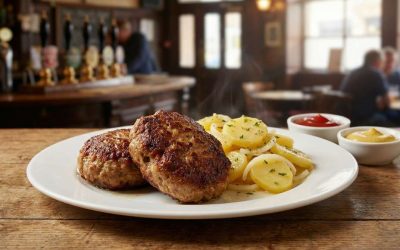
Great pubs often become known for one or two standout menu items. A dish built around a real German Frankfurter — whether Currywurst, a Bratkartoffeln skillet or a premium Frankfurter board — has the potential to become exactly that kind of signature offering. Customers return for dishes they can trust, and authenticity makes those dishes memorable.
4. Stronger differentiation from competitors
In many UK pubs and casual dining venues, the “hotdog” remains an afterthought — something inexpensive, generic and used primarily for kids’ menus or sports events. Serving a real German Frankfurter breaks that pattern instantly. It elevates the entire category and positions your venue as a place where quality comes first. That differentiation helps attract food-focused guests and builds loyalty.
5. Greater menu storytelling potential
Modern diners appreciate provenance. Being able to tell customers that the Frankfurter on their plate comes from a 300-year-old German butchery like Hardy Remagen adds depth, credibility and emotional appeal. Story-driven purchasing is powerful, especially when the product’s flavour fully supports the narrative.
6. Enhanced food photography and marketing appeal
A real German Frankfurter simply looks better on the plate. The golden, naturally smoked colour, the clean grill marks, and the slight curve from the natural casing make it far more visually appealing than a pale, uniform hotdog. For social media, online menus and printed marketing, these visual advantages matter.
7. Reliability for ordering, costing and stock planning
Premium Frankfurters are produced with rigorous consistency. This helps UK operators:
- Plan stock accurately
- Maintain stable margins
- Avoid costly menu variability
- Reduce waste
When an ingredient is consistent, everything downstream becomes easier to manage.
8. A better guest experience overall
Ultimately, serving a real German Frankfurter means giving customers something distinctive, satisfying and rooted in genuine culinary heritage. In a market increasingly driven by authenticity and quality, that experience stands out — and customers reward it with return visits and positive word of mouth.
Frequently Asked Questions
Traditionally, yes — a real German Frankfurter is primarily made from pork with a precisely controlled fat ratio. Variants like Bacon Frankfurters or Chilli Beef Frankfurters follow the same craftsmanship principles but use alternative flavour profiles.
Yes. With more than 300 years of German butchery heritage, Hardy Remagen follows traditional methods using natural casings, precise emulsions and real beechwood smoke to create a genuine, real German Frankfurter.
Authentic Frankfurters are gently smoked using beechwood, which burns cleanly and gives the sausage a mild, balanced aroma. This traditional method builds flavour slowly and contributes to the golden-brown colour of a real German Frankfurter.
Authentic Frankfurters offer superior flavour, texture and visual appeal. They command higher customer satisfaction, stronger pricing power and more consistent kitchen performance — making a real German Frankfurter both a culinary and commercial advantage.
A real German Frankfurter is made using natural sheep casing, a carefully balanced pork-to-fat emulsion, and traditional beechwood smoking. It follows established German butchery standards that create the signature snap, aroma and flavour unmatched by mass-produced hotdogs.
Emulsification blends meat and fat into a smooth, stable matrix. This is what gives a real German Frankfurter its silky interior and firm bite. Poor emulsification leads to grainy or mushy textures typical of low-cost hotdogs.
Cheap hotdogs often use lower-quality meat, fillers, collagen casings and artificial smoke flavouring. They skip the emulsification, natural casing and real smoking that give a real German Frankfurter its refined texture and depth of flavour.
The natural casing creates the distinctive “snap” that customers expect from a real German Frankfurter. It also enhances smoke penetration, improves texture and helps retain moisture during cooking — benefits artificial or skinless casings cannot replicate.
Beechwood burns evenly and produces a mild, clean smoke that enhances rather than overwhelms the sausage. It is the traditional choice in Germany and remains essential in producing the flavour profile of a real German Frankfurter.
About The Sausage Haüs
The Sausage Haüs is dedicated to bringing the highest-quality German sausages to UK pubs, restaurants, caterers and retailers — with a focus on authenticity, consistency and heritage. Our products are crafted in Germany by Hardy Remagen, a family-owned butchery with more than 300 years of continuous history. Their commitment to tradition, precision and quality is the foundation of every real German Frankfurter, Bratwurst, Bacon Frankfurter and Cheese Frankfurter in our range.
Working alongside Baird Foods as our UK distribution partner, we ensure that this craftsmanship reaches professional kitchens across the country with reliability and consistency. Together, we deliver a premium product supported by a dependable cold-chain supply, helping operators serve dishes that look impressive, taste exceptional and perform consistently in high-pressure environments.
From natural casings and beechwood smoking to carefully balanced meat ratios and strict quality controls, every sausage reflects the heritage of German butchery and the modern needs of UK hospitality. Whether you’re looking to elevate your menu, improve operational efficiency or differentiate your offer with authentic European flavours, The Sausage Haüs provides ingredients built on tradition and trust — craft you can taste, and quality you can rely on.
Conclusion: Craftsmanship You Can Taste
A real German Frankfurter is much more than a sausage. It is the result of centuries of refinement, precise butchery techniques and a cultural respect for tradition that has shaped one of Germany’s most iconic foods. From the natural casing that delivers the distinctive snap, to the gentle beechwood smoke, to the finely balanced pork-to-fat emulsion, every detail plays a crucial role in creating the unmistakable flavour and texture that customers instantly recognise.
For UK pubs, restaurants and retailers, choosing a real German Frankfurter means choosing authenticity. It means offering a product with depth — one that carries history, craftsmanship and quality in every bite. And in a market where diners increasingly seek out genuine, high-quality food experiences, this authenticity becomes a key advantage.
Cheap UK hotdogs may fill a space on the menu, but they cannot match the integrity, structure or flavour of a real German Frankfurter. When guests encounter that contrast — the snap, the aroma, the balanced seasoning — they understand immediately that they’re enjoying something far superior. This elevates the entire dish and reflects positively on your brand, your menu and your commitment to quality.
Heritage producers like Hardy Remagen continue to honour the techniques that have defined German sausage-making for more than 300 years. Their dedication to proper ingredients, real smoking and precise emulsification ensures that every Frankfurter behaves the way a classic should — reliable, flavourful and unmistakably authentic. For professionals in hospitality, this consistency is invaluable.
Whether served as a simple grilled sausage, part of a loaded pub dish or featured in a signature plate, a real German Frankfurter delivers both culinary impact and commercial value. It enhances the guest experience, supports strong margins and positions your venue as one that respects craft and tradition.
In the end, the difference between an ordinary hotdog and a real German Frankfurter is a difference your customers can taste — and one your business can benefit from every day.