Small in size but commercially versatile, the Sausage Haüs Nuremberger Bratwurst brings a distinctive German sausage format to UK breakfast, pub, catering and event menus. Its compact 25g portion, traditional pale appearance and gently seasoned pork filling make it suitable for everything from full breakfasts and sharing platters to bread rolls, buffets and mixed sausage dishes.

Flexible Portion Control

Distinctive Breakfast Upgrade
Easy To Cook And Serve
Overview
This article looks at a compact German-style Nuerberger bratwurst designed for practical use across UK foodservice menus. At around 25g each and approximately 8cm long, the sausages give kitchens flexible portion control without cutting or reshaping.
The product is described as pale, slim and gently seasoned, with marjoram as the most recognisable flavour note. Its natural sheep casing and mild pork filling make it distinctive, while still suitable for familiar dishes such as breakfasts, rolls, buffets and sharing boards.
For chefs, buyers, caterers and event operators, the main value is menu flexibility: the same sausage can be used in three-, four- or six-piece portions depending on appetite, price point and service style.
Key Takeaways
- The 25g format supports flexible three-, four-, five- or six-piece portions without cutting, helping control plate size and presentation.
- Its pale colour, slim casing and marjoram-led seasoning can add a point of difference to a full English without changing the wider dish format.
- The sausages can be used across breakfasts, crusty rolls, German-style plates, buffets, sharing boards, mixed grills and event menus.
- Recommended cooking methods include griddle, grill, frying pan, contact grill or combi oven, with moderate controlled heat to protect texture and casing.
- The product should be fully defrosted under refrigeration before cooking, then prepared in manageable batches according to site procedures and supplier instructions.
- Smaller individual sausages can improve perceived abundance on the plate while allowing kitchens to match portions to appetite, selling price and service occasion.
What Makes a Nuremberg Bratwurst Distinctive?
A Nuerberger Bratwurst is immediately recognisable by its compact size, pale colour and gently seasoned appearance. Rather than the long, thick shape associated with many German bratwursts, the Sausage Haüs version is approximately 8cm long and weighs 25g, with a slim natural sheep casing and a slight, irregular curve.
This regional German guide highlights the origins and defining traits of Nürnberger Rostbratwürstchen, useful if you want to compare its protected regional identity and traditional seasoning.
That smaller format is part of the product’s character. It creates a bratwurst that looks traditional and handmade rather than mechanically uniform, while still being consistent enough for commercial portioning and presentation. The casing gives the sausage a defined bite, while the finely textured pork filling keeps the centre tender and cohesive.
The seasoning is deliberately restrained. Marjoram is the most recognisable flavour note, supported by a balanced mixture of mild spices rather than heavy smoke, chilli or sweetness. This makes the sausage distinctive without making it difficult to place on a menu.
Visually, the uncooked sausage has the white-grey colouring associated with this style of German bratwurst, with small seasoning flecks visible through the casing. During cooking, it develops light golden browning while retaining a much paler appearance than a smoked frankfurter.
For UK operators, that combination provides useful differentiation. It is clearly not a standard breakfast sausage, yet it remains familiar enough to work alongside eggs, bacon, beans and toast. It can introduce German character
Why the Compact 25g Format Works for Foodservice
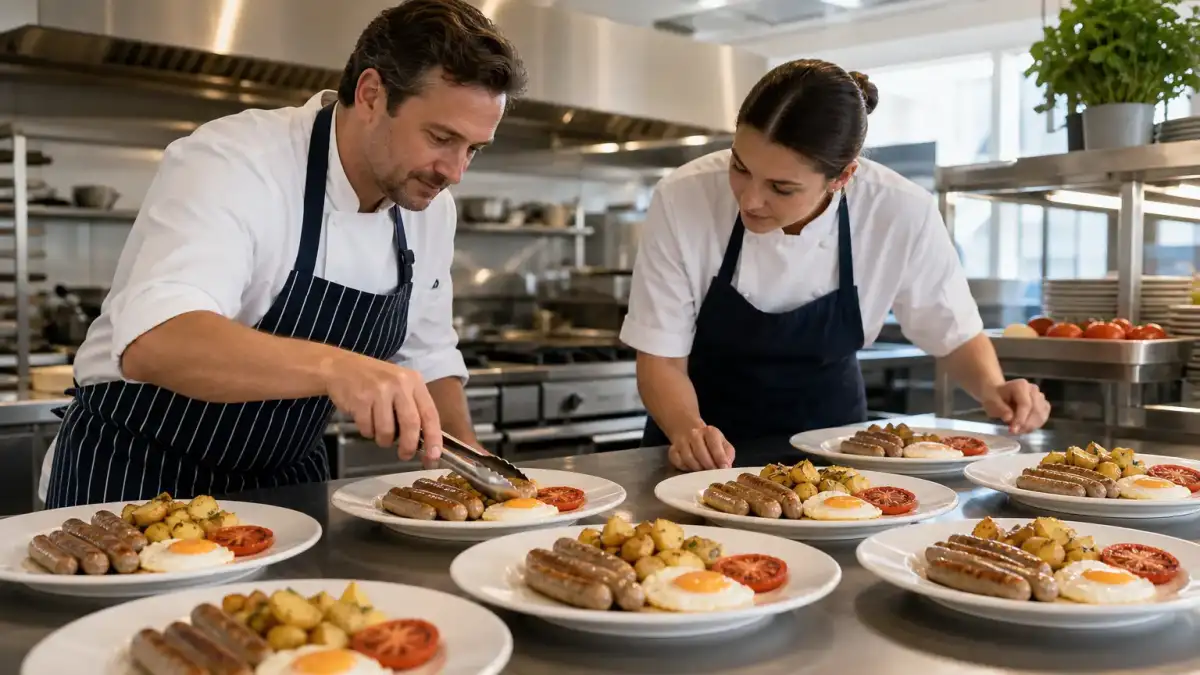
The 25g format gives operators more control over portion size than a single large sausage. Rather than committing every dish to one fixed portion, the kitchen can use three, four, five or six sausages depending on the meal, selling price and intended appetite.
This official Munich guide to protected geographical food names is useful if you want to check how Nürnberger Bratwürste are formally recognised and defined.
That flexibility is particularly useful in breakfast service. Four Nuremberger Bratwursts create a generous visual portion without dominating the plate. Three may suit a lighter breakfast or children’s option, while five or six can support a premium breakfast, brunch platter or German-style main course
The small size also makes the sausages easy to arrange. They can be lined up neatly beside an egg, grouped around beans and mushrooms, or stacked carefully on a sharing board. There is no need to cut a larger sausage into uneven pieces, which improves presentation and reduces handling.
Operationally, compact sausages can also be easier to batch-cook in modest quantities. Staff can place only the required number on the griddle or grill, helping the kitchen respond to changing demand without preparing oversized portions in advance.
The format works well across different service styles:
- Four sausages on a full English breakfast
- Three sausages in a crusty roll
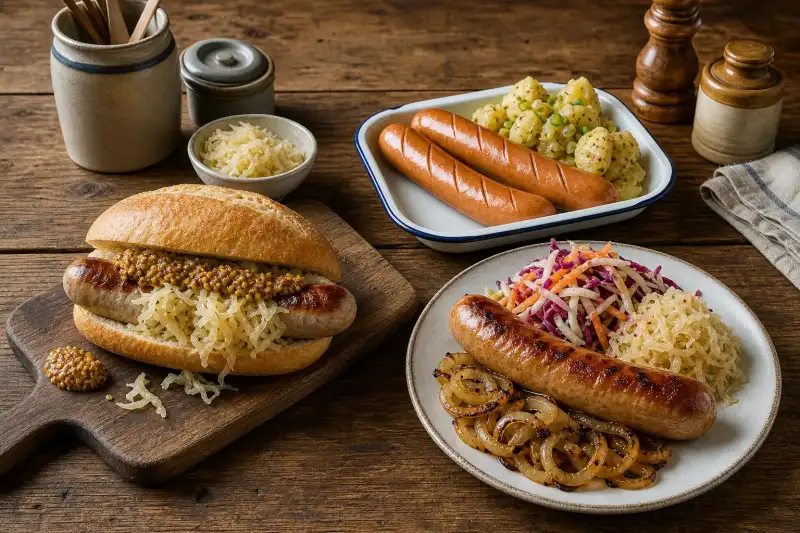
- Six sausages with sauerkraut and mustard
- Two or three sausages on a mixed breakfast or sharing board
- Smaller quantities for buffets and children’s meals
The main advantage is not simply that the sausage is small. It is that the operator can build several commercially distinct dishes from the same product without cutting, reshaping or changing the preparation method.
Flavour, Texture and Customer Appeal
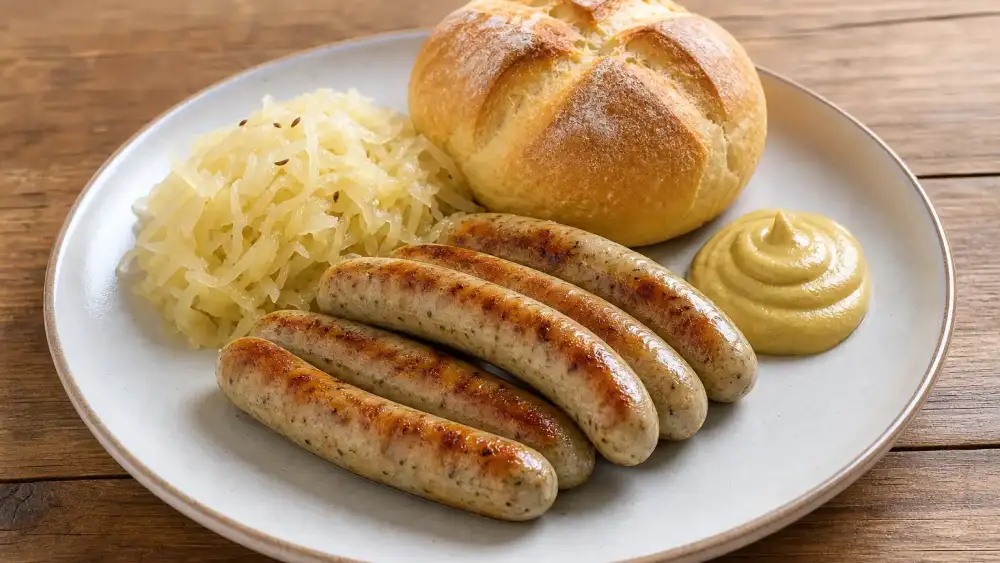
The appeal of the Nuremberger Bratwurst lies in its balance. It has enough seasoning to taste distinctive, but it is not so heavily flavoured that it competes with the rest of the plate. The pork filling is mild and savoury, with marjoram providing a recognisable herbal note and gentle spices adding warmth.
This German recipe guide shows the classic seasoning and serving style behind Nürnberger Rostbratwürstchen, useful if you want to compare the marjoram-led flavour profile with our Nürnberger Rostbratwürstchen recipe source.
This makes it particularly suitable for mixed dishes. On a full English breakfast, the sausage sits comfortably alongside smoky bacon, rich egg yolk, beans and grilled tomato. On a German-style plate, it pairs naturally with mustard, sauerkraut
The natural sheep casing contributes an important part of the eating experience. When cooked correctly, it should provide a light snap before giving way to a fine, juicy interior. That contrast helps the sausage feel more carefully made than a soft, skinless breakfast sausage.
Its smaller size also changes how customers experience the dish. Several sausages create more visible abundance than one large item, while the separate pieces make the meal easier to eat and share. This can be especially effective on breakfast platters, buffets and mixed sausage boards.
For customers unfamiliar with German sausages, the flavour remains approachable. It is not aggressively smoky, spicy or heavily seasoned. For customers who already know German food, the compact shape and pale, marjoram-led style provide a more recognisable point of difference.
The result is a sausage that can broaden a menu without requiring the operator to explain an unfamiliar flavour profile. Its character is clear, but its use is flexible.
From Full English Breakfasts to German Sharing Platters
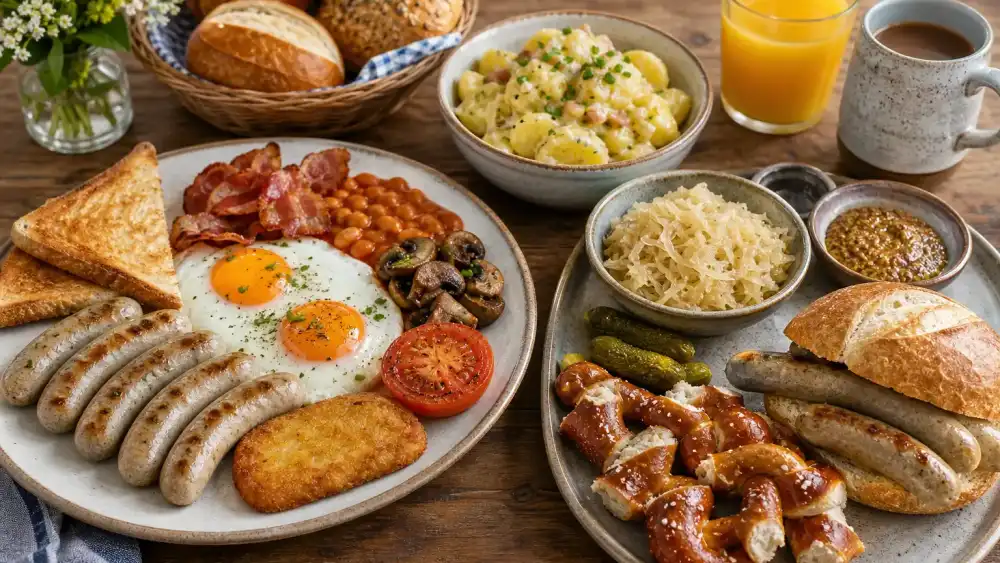
The Nuremberger Bratwurst is unusually adaptable because its flavour works in both British and German serving formats. The most straightforward application is a full English breakfast, where four sausages can replace two standard breakfast sausages and create a more distinctive plate.
This recipe guide shows how bubble and squeak can round out a hearty breakfast plate alongside a full English breakfast sausage serve.
The presentation can remain familiar: fried or poached eggs, bacon, beans, mushrooms, grilled tomato, toast and a hash brown. The difference is provided by the smaller German sausages, which give the dish a stronger point of identity without changing the rest of the kitchen process.
For a more German-style offer, the same product can be served with sauerkraut, mustard and warm potato salad. Six sausages create a substantial main course, while three or four can form part of a smaller lunch plate
The compact format also suits sharing boards. A mixed platter might include Nuremberger Bratwursts, sliced larger bratwurst, pretzel pieces, pickles, mustard and warm potatoes. This allows customers to try several products without the plate becoming excessively heavy.
Other practical uses include:
- Three sausages in a crusty roll with mustard
- A breakfast bap with egg and two or three sausages
- A beer-garden platter with sauerkraut and fried potatoes
- A buffet tray with mustard and bread
- A mixed grill alongside bacon, black pudding or larger sausages
The strongest menus do not rely on novelty alone. They use the product in ways customers already understand, then allow the sausage’s size, flavour and appearance to provide the differentiation.
Cooking Nuremberger Bratwurst in a Commercial Kitchen
Nuremberger Bratwursts benefit from moderate, controlled heat. Their slim sheep casing and small diameter allow them to cook relatively quickly, but excessively high temperatures can brown the exterior before the centre has heated properly.
A flat-top griddle is one of the most practical options for busy breakfast service. It provides direct contact, even browning and a clear cooking zone that staff can monitor easily. Turn the sausages regularly rather than leaving one side against the hot surface for too long.
A chargrill creates a more pronounced grilled appearance and can add a lightly charred note. The heat should remain controlled, however. Dark, heavy grill marks can overpower the pale colour and delicate character of the sausage.
A contact grill can work well where speed and consistency are priorities, provided the plates do not crush the sausages or apply excessive pressure. A frying pan is suitable for smaller batches, while a combination oven may be useful for preparing a larger quantity before a short griddle finish.
A salamander is better treated as a finishing appliance than the primary cooking method. It can add colour or restore surface heat shortly before service, but it does not provide the same controlled, all-round cooking as a griddle, grill or oven.
Whatever equipment is used, operators should test the product in their own kitchen. Cooking time will vary with the appliance, batch size, starting temperature and loading pattern. The aim is an evenly browned casing, a properly heated centre and a juicy texture without splitting or shrivelling.
Defrosting, Preparation and Service Planning
The frozen Nuremberger Bratwurst should be fully defrosted before cooking. Defrosting under refrigeration provides a more controlled process and helps the kitchen maintain consistent texture, cooking times and food-safety procedures.
This industry body advice explains defrosting under refrigeration and other frozen-food handling checks worth following in busy catering kitchens.
The sausages should not be left to thaw at room temperature. Instead, staff should move the required quantity from frozen storage into a suitable covered container in the refrigerator, following the product specification and the kitchen’s established stock-control procedures.
Good planning begins with realistic demand. Breakfast operators may need a larger quantity ready before the morning rush, while pubs or event traders may prefer smaller staged batches throughout service. Because the sausages are supplied in a compact format, kitchens can prepare only the amount they expect to sell rather than opening or cooking an unnecessarily large quantity.
Once defrosted, the product should be kept chilled and used within the period stated on the final packaging or technical specification. It should not be refrozen after defrosting.
For efficient service:
- Defrost enough stock for the expected trading period
- Keep raw and cooked products clearly separated
- Cook in manageable batches rather than overloading the equipment
- Record defrosting and temperature checks within the site’s food-safety system
- Follow the confirmed supplier instructions for shelf life and cooking
Holding should be approached cautiously. A small sausage can lose moisture if kept hot for too long. Where possible, cook closer to order or use short, controlled batches. This generally produces a better casing, juicier centre and more attractive presentation.
Portion Control, Menu Pricing and Perceived Value
The Nuremberger Bratwurst gives operators a practical way to build different price points from one product. Because each sausage weighs approximately 25g, portions can be adjusted in simple increments without cutting or weighing individual servings during service.
This hospitality trade article explains gastronomy pricing methods that can help operators build different price points from flexible bratwurst portions.
Four sausages provide approximately 100g of product, making them a natural starting point for a full English breakfast. Three may be enough for a lighter plate or breakfast bap, while six can support a larger German-style meal or sharing dish.
The important commercial point is that portion size should be linked to the complete plate rather than judged in isolation. A breakfast with eggs, bacon, beans, toast and hash brown may not need six sausages. A German platter where the bratwurst is the main feature may justify a larger portion.
Several smaller sausages can also create strong perceived value. Four separate pieces often look more generous than one sausage of a similar total weight, especially when arranged carefully rather than piled together.
Operators should calculate the full dish cost, including:
- Sausages
- Bread or breakfast accompaniments
- Sauces and garnishes
- Cooking loss
- Labour and preparation
- Packaging for takeaway service
- Delivery-platform or event fees where relevant
The product should not be priced solely as a replacement for an ordinary breakfast sausage. Its German identity, natural casing and distinctive format may support a more differentiated menu description. That value must still be visible on the plate through good preparation, clear naming and a portion that feels appropriate for the selling price.
Where Nuremberger Bratwurst Fits Best

The strongest immediate opportunity for the Nuremberger Bratwurst is the full English breakfast. The dish is already familiar, widely ordered and easy for customers to understand. Replacing standard breakfast sausages with four small German bratwursts adds a clear point of difference without requiring a completely new menu concept.
For cafés, pubs, garden centres and farm shops, this creates an opportunity to offer a more distinctive premium breakfast. The menu can remain recognisably British while the sausages introduce a German element through their size, casing and seasoning.
A typical serving might include four Nuremberger Bratwursts with two eggs, bacon, baked beans, mushrooms, grilled tomato, toast and a hash brown. Operators can also create smaller versions using three sausages, or a larger breakfast featuring five or six.
Beyond breakfast, the product fits well in:
- Pub brunch menus
- Hotel and event breakfast buffets
- Farm-shop cafés
- Garden-centre restaurants
- German-themed street food
- Christmas and seasonal markets
- Beer festivals and outdoor events
- Sharing boards and mixed grills
For event traders, three sausages in a roll can create a compact, easy-to-handle serving. For pubs, six sausages with sauerkraut and mustard can form a straightforward . For buffets, the small format allows guests to take one or two pieces without committing to a full-sized sausage.
Its greatest strength, however, remains breakfast. The product gives operators a simple way to make a standard full English more memorable while retaining familiar ingredients, established equipment and an efficient service format.
Frequently Asked Questions
Use **Nuremberger Bratwurst** as the main name if the menu has enough space to explain it. A short descriptor such as “miniature German pork bratwursts with marjoram” helps customers understand what they are ordering.
For breakfast menus, wording such as “Full English with four Nuremberger Bratwursts” gives the product identity without making the dish sound unfamiliar or overly themed.
Yes, but the portion should be compared by total weight rather than sausage count. Four 25g Nuremberger Bratwursts provide roughly 100g of sausage, which may replace two standard 50g breakfast sausages.
The smaller pieces create a different presentation, so the plate layout and selling price should be reviewed rather than treating the change as a simple one-for-one substitution.
They may if the menu and presentation do not explain the format. Customers are more likely to understand the value when the sausage count is stated clearly and the products are arranged deliberately on the plate.
Four or five separate bratwursts can look generous, while two small sausages may appear under-portioned even when the rest of the breakfast is substantial. Good menu wording and visible abundance matter more than individual sausage length.
Yes, although they are best replenished in smaller batches. Their compact size makes them easy for guests to serve, but it also means they can lose moisture more quickly than a thicker sausage during prolonged hot holding.
Use shallow trays, avoid overfilling the buffet pan and replace smaller quantities more frequently. Holding temperatures and maximum holding times should follow the site’s documented food-safety procedures.
They can be incorporated into a planned cook-and-hold or cook-chill system, but only where the kitchen has suitable procedures, temperature controls and staff training in place. The supplier’s cooking and storage instructions should also be followed.
For many cafés and pubs, the simpler option is to defrost sufficient stock in advance and cook manageable batches during service. This generally gives a better casing and reduces the risk of dry, over-held sausages.
German mustard is the most obvious choice, but the sausage also works with English mustard, brown sauce and a restrained amount of ketchup on breakfast dishes.
For German-style plates, sauerkraut, pickles, horseradish and mustard complement the mild marjoram seasoning. Strong sauces should be used carefully, as excessive smoke, chilli or sweetness can overwhelm the sausage’s more delicate flavour.
Yes, particularly in breakfast boxes, filled rolls and compact German-style meals. Packaging should allow steam to escape, as trapped moisture can soften the casing and reduce the freshly cooked texture.
For delivery, avoid covering the sausages in wet toppings. Place beans, sauces or sauerkraut in separate compartments where practical, and test how the complete dish holds over the typical delivery time.
That is one of its main practical advantages. The same sausage can appear at breakfast, brunch, lunch, buffet service and German-themed events without requiring a different cooking process.
Conclusion
The Sausage Haüs Nuremberger Bratwurst offers operators something recognisably different without demanding a complicated new kitchen process. Its small 25g format makes it easy to portion, quick to cook after defrosting and flexible enough to use across several menu styles.
For breakfast service, four sausages can create a generous-looking plate while remaining easy to arrange alongside eggs, bacon, beans and toast. For German-themed menus, several sausages can be served with sauerkraut, mustard, potato salad or a bread roll. They can also work well on buffets, sharing boards, children’s menus and mixed sausage platters where a full-sized bratwurst would be too substantial.
The main operational advantage is flexibility. A compact sausage allows the kitchen to adjust portion size without cutting the product or compromising presentation. Staff can serve three, four or six sausages depending on the dish, price point and appetite occasion.
As with any frozen foodservice product, the sausages should be fully defrosted under refrigeration before cooking, then prepared in manageable batches using a grill, griddle, contact grill, frying pan or combination oven. Exact timings and holding procedures should be tested with the equipment used on site.
For operators seeking a practical German sausage with strong breakfast, pub and event potential, the Nuremberger Bratwurst is well worth considering for the next menu review.
The Sausage Haüs
The Sausage Haus brings authentic German-style sausages to the UK market through a partnership between Hardy Remagen and Baird Foods.
Hardy Remagen is a long-established German producer with deep experience in traditional sausage making, continental meat products and modern food manufacturing. The range reflects the kind of products German shoppers already understand and enjoy: Bratwurst, Frankfurters, smoked hotdogs, cheese-filled sausages, Bockwurst, Weisswurst and other classic German-style lines.
In the UK, the range is represented and distributed by Baird Foods, giving retailers, wholesalers, caterers and foodservice operators access to German sausage products with a practical UK supply route. This combination is important: German manufacturing knowledge on one side, UK market understanding and distribution on the other.
For retail buyers, The Sausage Haus range offers a clear way to add something different to both chilled and frozen sausage fixtures. The products are built around real eating occasions: BBQs, premium hotdog nights, family meals, German street food, Oktoberfest promotions, Christmas market food and quick comfort meals at home.
The result is a range that gives shoppers something more distinctive than ordinary sausages and standard hotdogs, while giving buyers a compact, commercially useful product story with strong fresh and frozen potential.