Put a frankfurter in a roll and most customers will happily call it a hot dog. From there, it is easy to make the leap that every German sausage is simply another version of the same thing. That is rather like deciding every type of bread is a burger bun.
The categories overlap, but they are not interchangeable. A fine-textured smoked frankfurter, a fresh pork bratwurst and a small Nuremberg-style sausage can differ in flavour, texture, preparation and the kind of menu they suit.
For UK operators, that distinction is more than culinary trivia. The sausage you choose affects cooking time, service speed, portion size, menu wording, accompaniments and the price customers may accept. Clearing up the common myths makes it easier to build a range that feels distinctive without becoming difficult to run.
German sausages and hot dogs are related, not identical
“Hot dog” is an unusually flexible term. It can mean the sausage itself, particularly a smooth, cooked sausage such as a frankfurter or wiener, or the complete handheld dish of sausage, split roll and toppings. That explains some of the confusion, but it does not turn every sausage served in bread into the same product.
Bratwurst is a broad family in its own right. Depending on the style and producer, it may be fine or coarse, fresh or pre-cooked, mildly seasoned or more assertive. Frankfurters are usually smoother and may have a smoked character. Other German sausages can be poached, grilled, fried or eaten cold. Product names are helpful, but the specification and cooking instructions remain the reliable source for the item in front of you.
Regional identity also matters. European geographical indication schemes exist precisely because certain food names are connected to a place, a specification or established know-how. The European Commission’s explanation of protected geographical indications and quality schemes1 shows why a recognised regional name can mean more than a general description of shape or flavour.
Not every German-style sausage carries a protected name, and it should not be presented as one unless the product genuinely qualifies. Even without that status, however, useful differences remain. Meat blend, seasoning, texture, casing, smoke, size and whether the sausage is raw or already cooked all influence the result.
The practical starting point is therefore simple: identify the exact sausage before deciding how to cook, describe or sell it. “It looks like a hot dog” is not a product specification.
Seven myths that make German sausages seem more limited than they are
The following myths survive because each contains a small piece of truth. Hot dogs can be simple, bratwurst is excellent from a grill, and sauerkraut is a classic partner. The trouble begins when one familiar example is treated as the only possibility.
Myth 1: All hot dogs are the same
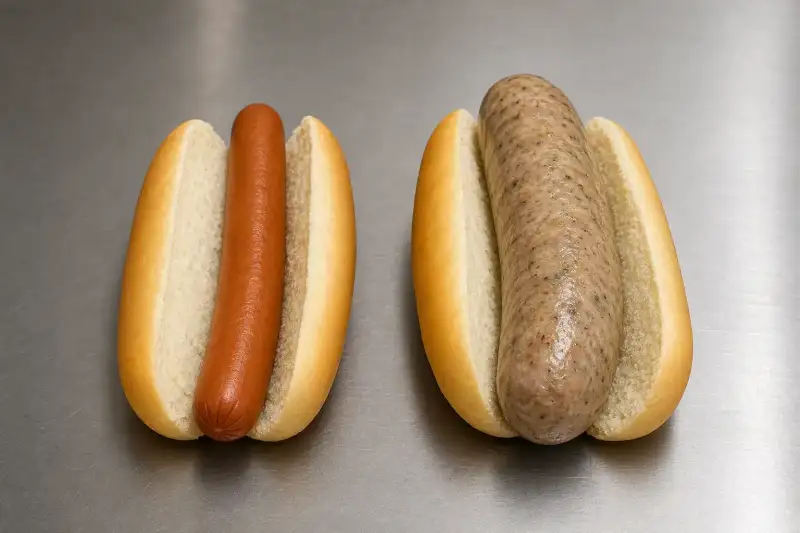
Two sausages of the same length can behave very differently. The meat and fat blend, grind, seasoning, smoking, casing and production method all affect flavour, bite and juiciness. Diameter and weight also change bun fit, cooking time and portion cost.
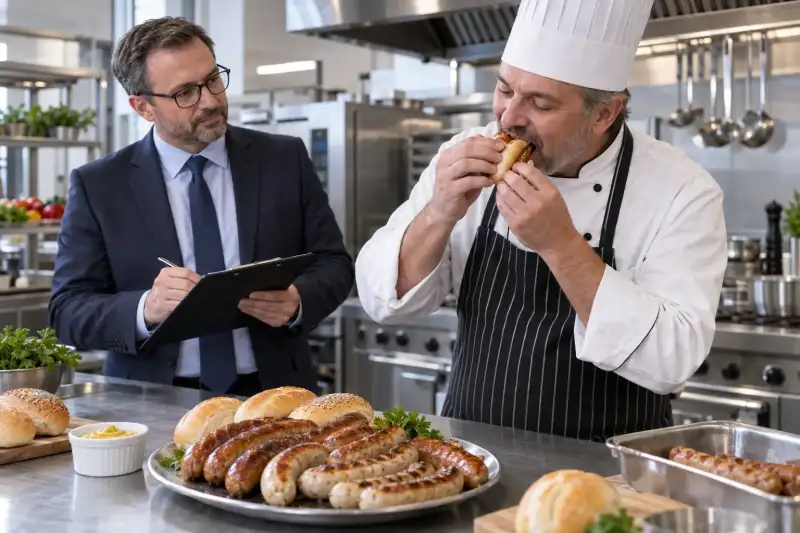
For an operator, interchangeability should be tested rather than assumed. Cook possible products on the equipment used during service, place them in the intended roll and taste them with no toppings first. A sauce-heavy trial can disguise the very differences you need to assess.
A straightforward hot dog can be exactly right for a high-volume family event. A more distinctive frankfurter may justify stronger menu language or a higher-value build. Neither is automatically better. They are simply different tools for different jobs.
Myth 2: German sausages are only for barbecues
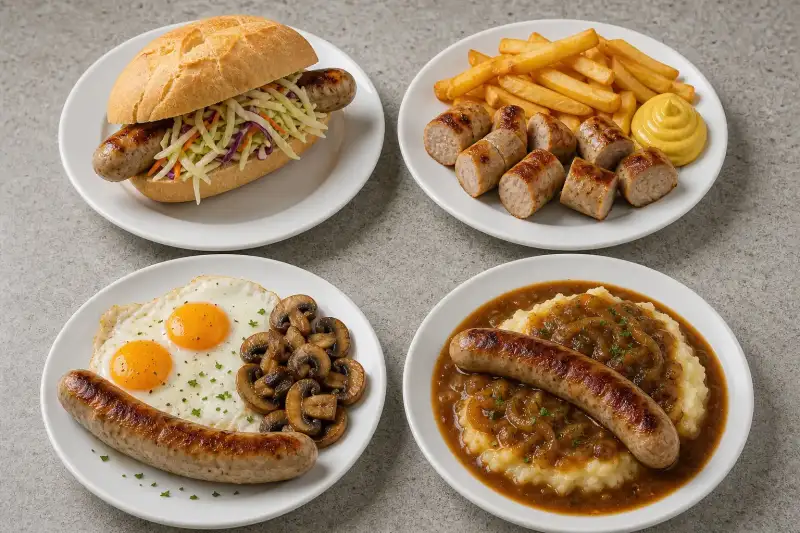
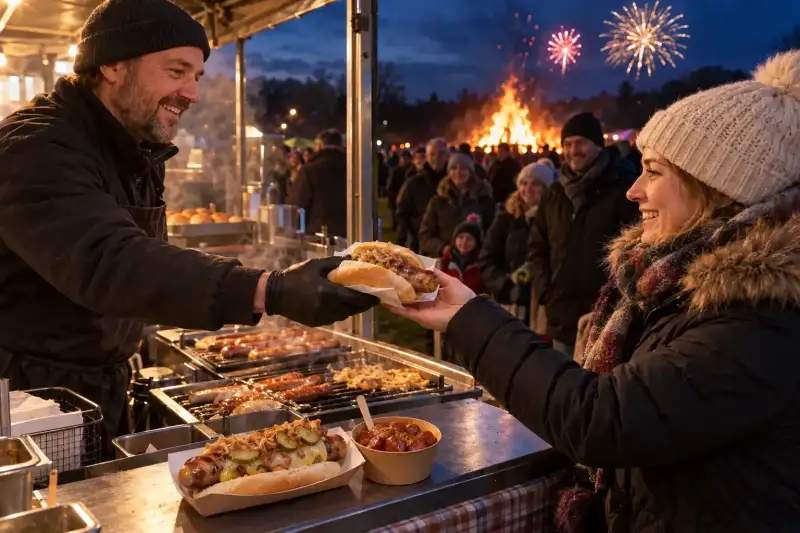
Grilling is important, but it is only one part of the picture. In Germany, sausages appear as street snacks, quick lunches, breakfast dishes, pub meals and cold counter food. Nuremberg’s official Christmas market guide describes its small bratwurst served both by the plate and as three Nuremberg sausages in a bread roll2, which is a useful reminder that convenience and tradition can occupy the same menu.
In a UK operation, the same principle opens up more than a summer barbecue slot. Bratwurst can sit beside chips and mustard in a pub, join eggs and mushrooms on a breakfast plate, be sliced into a curry sauce for fast service, or headline a winter market special.
Seasonality often comes from the format rather than the sausage. A roll with crisp slaw feels lighter in spring, while gravy, potatoes or a warm spiced sauce moves the same core product towards autumn and winter. That creates variety without requiring an entirely new protein range every few months.
Myth 3: Frankfurters are only for children

Frankfurters work well on children’s menus because they are familiar, easy to portion and often mild. That does not make them childish. The same product can support an adult lunch or evening offer when the presentation, accompaniments and menu description give it a clear identity.
A smoked frankfurter with sharp mustard and pickles reads differently from a plain sausage with ketchup. Sliced frankfurter with curry sauce and chips creates another proposition, as does a substantial sausage served in a good roll with slaw. The aim is not to make the dish needlessly sophisticated. It is to give customers a reason to see it as a considered menu item rather than an emergency children’s option.
Menu placement matters too. If the only mention of frankfurters is under “Kids”, adults are unlikely to reconsider them. A well-photographed main-menu build, a lunch deal or a seasonal special can change the signal without changing the basic product.
Myth 4: Bratwurst is difficult to cook
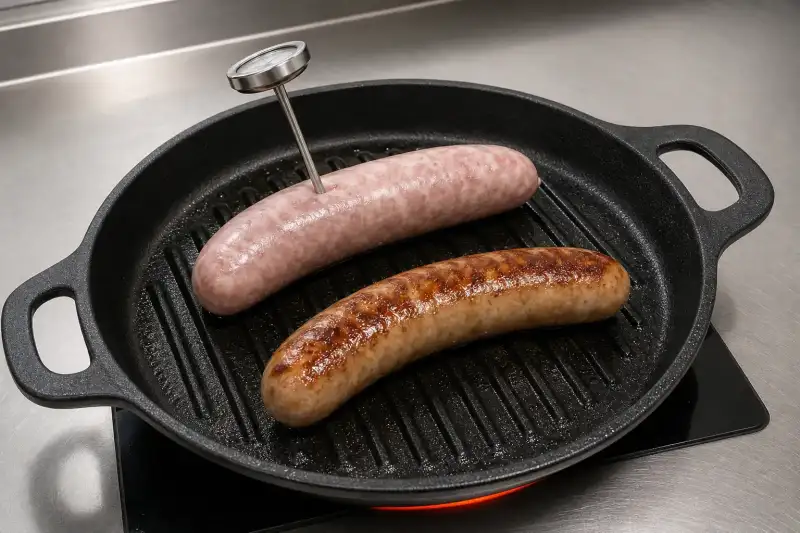
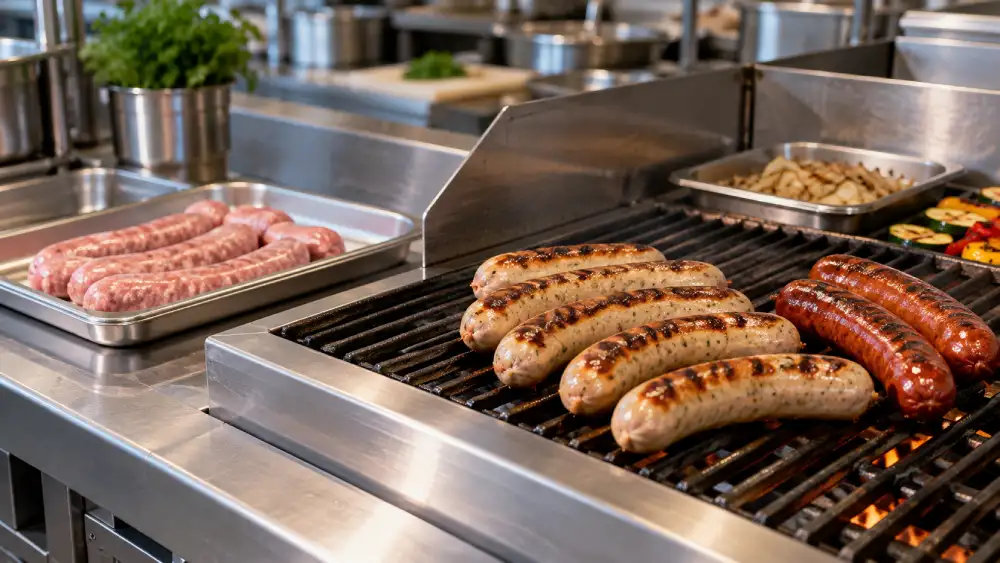
Bratwurst becomes difficult when staff do not know what type they are handling. A fresh raw sausage and a fully cooked product do not have the same job on the grill. One needs to be cooked thoroughly; the other may primarily need safe reheating and an appetising finish. Always follow the supplier’s instructions for the specific product.
For raw sausages, the Food Standards Agency states that minced-meat products must be cooked all the way through. Its official cooking temperature guidance3 gives validated time and temperature combinations, including 70°C for two minutes, and recommends using a clean food thermometer.
From a quality point of view, controlled heat is usually more useful than an aggressive blast. Very high heat can colour the outside before the centre is ready and may encourage casings to split. Turn the sausages regularly, test the thickest part and establish a repeatable method on the actual grill, pan or griddle used by the team.
The answer is not more culinary theatre. It is a short, product-specific procedure that staff can repeat during a rush.
Myth 5: You need loads of toppings
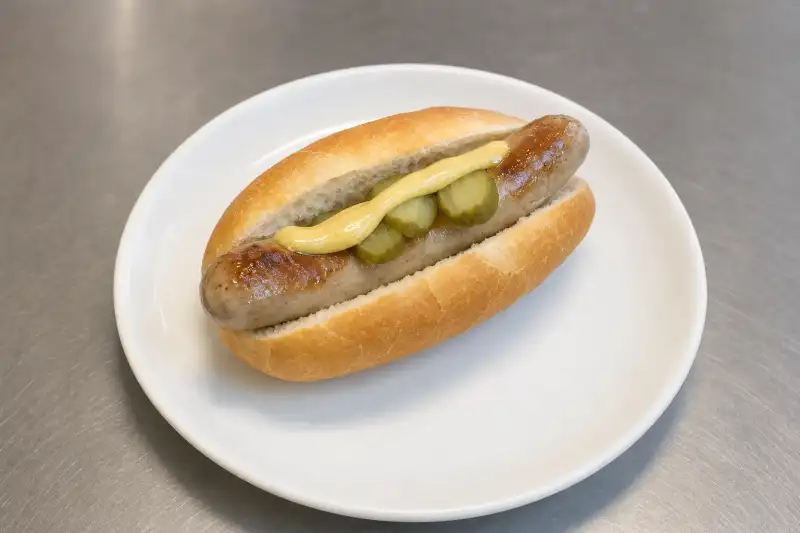
An overloaded sausage can look generous in a photograph and become awkward at the till. Every extra topping adds prep, stock, allergen considerations, assembly time and another chance for the roll to collapse on the customer’s coat.
A strong build often needs only three decisions:
- the right sausage and roll
- one sauce that sets the direction
- one contrasting element, such as pickles, slaw or crisp onions
That might produce bratwurst with mustard and pickles, a smoked frankfurter with barbecue sauce and slaw, or currywurst with sauce and chips. Each has a recognisable idea. None requires six sauces and a landslide of garnish.
Restraint also makes the sausage easier to taste. If a more distinctive product costs extra, burying it under cheap toppings can remove the very reason for buying it.
Myth 6: Frozen sausages are lower quality
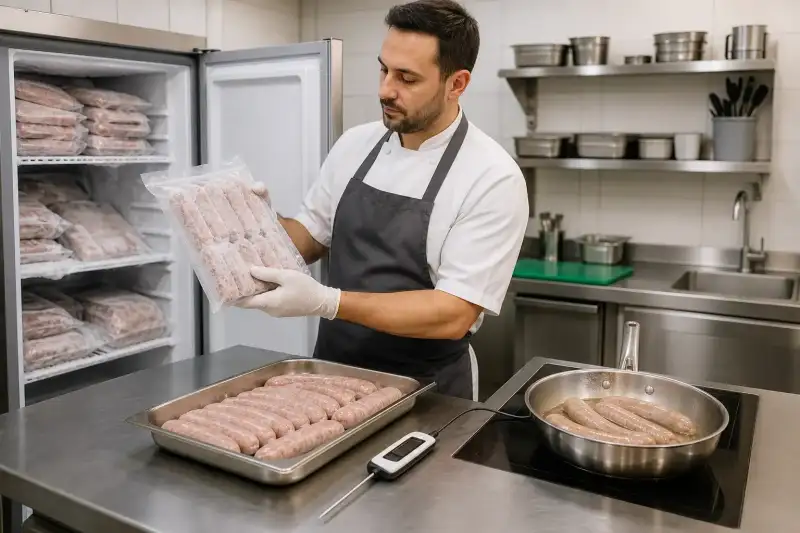
Frozen is a storage condition, not a complete quality judgement. The result depends on the sausage before freezing, the production process, packaging, cold-chain control, storage time and the way it is defrosted and cooked. The Food Standards Agency’s guidance on chilling, freezing and defrosting food safely4 explains the safety purpose of proper temperature control.
For an operator, frozen stock can offer practical advantages: longer planning windows, less pressure to sell every pack immediately and more flexibility around unpredictable event demand. The trade-offs include freezer capacity, defrosting discipline and the need to protect texture through correct handling.
The fair comparison is not “fresh on its best day” against “frozen after poor treatment”. Trial both products through the real working process, including storage, thawing where required, cooking, holding and final service. Judge taste, casing, moisture, waste and labour together.
Myth 7: German sausages only work with sauerkraut
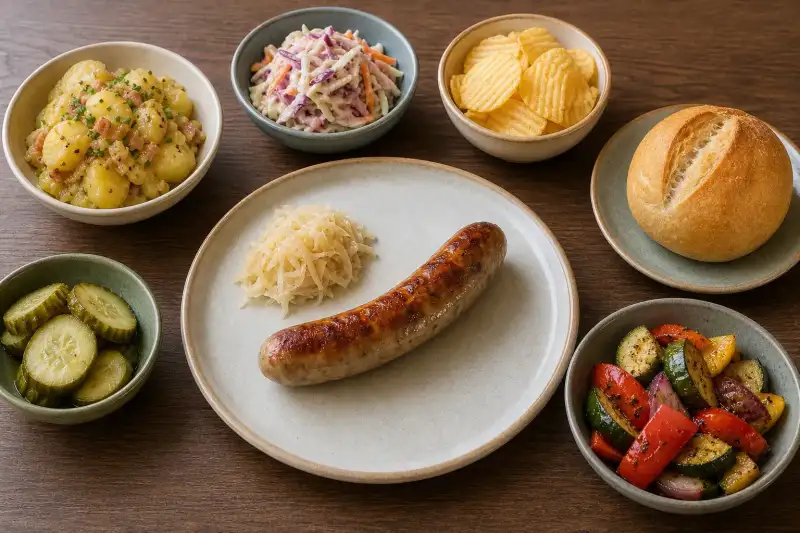
Sauerkraut has earned its place. Its acidity cuts through a rich sausage, it carries a clear German association and it works particularly well in colder weather. It is a strong option, but it is not an obligation.
Germany’s own regional food traditions are much broader. Munich’s official guide to traditional sausage varieties and serving styles5 ranges from boiled Weisswurst with sweet mustard and pretzels to fried Wollwurst with gravy and potato salad, alongside grilled sausages served in rolls.
For a UK menu, plausible partners include chips, warm potato salad, slaw, pickles, roasted vegetables, salad, eggs, beans, gravy or a simple bread roll. The right choice depends on the occasion, equipment and target spend. A festival trader needs fast assembly; a pub can support a fuller plate; a café may want a lunch that sits comfortably beside familiar British dishes.
Keeping sauerkraut as one option preserves the connection without allowing it to define the entire range.
Match the sausage to the service style
The best sausage is not simply the one with the most impressive description. It is the one that fits the pace, equipment and expectations of the business. Start with the service problem, then choose the product.
- High-volume events: prioritise repeatable portioning, quick finishing and a build that can be assembled cleanly. Check how the chosen product should be cooked, reheated and held before committing to the workflow.
- Street food: use a sausage with enough identity to anchor a short menu. One classic build and one signature variation are usually easier to execute than a long list of minor combinations.
- Pubs: consider a plated bratwurst meal, currywurst, a substantial hot dog or a seasonal special. Existing sides and sauces can keep additional prep under control.
- Cafés and garden centres: think beyond the obvious roll. Breakfast plates, lunch specials and sausage with chips or salad can reach customers who are not looking for festival food.
- Farm shops and retail counters: clear product names, cooking instructions and sensible pack sizes matter as much as the display. Customers need to understand what they are buying and how it differs from a standard supermarket hot dog.
Run a service trial before making the menu permanent. Record cooking time, cooked appearance, queue speed, waste and customer handling. A dish that tastes excellent but takes four hands to assemble is not yet a finished commercial concept.
Better cooking starts with knowing the product
Consistency comes from a simple operating method rather than individual staff instinct. Businesses developing or reviewing their food-safety system can also use the Food Standards Agency’s free MyHACCP food-safety management tool6 as a structured starting point, alongside the guidance relevant to their operation and local authority requirements.
For each sausage, the working method should establish:
- whether it arrives raw, cooked or ready to eat
- storage and defrosting requirements
- the cooking or reheating method and verified endpoint
- safe hot-holding limits, where holding is part of the service
- maximum batch size on the available equipment
- how staff prevent raw-to-cooked cross-contamination
- what happens to unused or held product at the end of service
Quality controls can sit beside safety controls. Decide what an acceptable casing, colour and finish look like. Specify the right tongs, grill zone and turning method. Test how long the product remains attractive under the intended service conditions rather than assuming it will hold indefinitely.
Site rules, power or gas capacity, equipment instructions and local authority expectations should all be checked for the actual location. A method developed on a quiet kitchen griddle may need adjusting before it is suitable for an outdoor event with a long queue.
Build value with restraint, not topping overload
Perceived value begins with a product customers can identify, cooked well and described honestly. A clear name such as “smoked pork frankfurter” or “pork bratwurst” does more work than a paragraph of vague premium language. Any origin, regional or production claim should be verified before it reaches the menu.
A useful menu ladder can create choice from overlapping ingredients:
- Classic: sausage, roll and one familiar sauce
- Signature: the same base with one distinctive sauce and one contrasting topping
- Plated: sausage with a substantial side, sauce and simple garnish
This gives customers recognisable price steps while keeping the buying list manageable. It also makes upgrades understandable. The customer can see what has been added, rather than facing several differently named dishes built from unrelated ingredients.
Price each version from the full served cost, including the roll, sauce, garnish, packaging and likely waste. More toppings do not automatically create more margin. A cleaner build that moves quickly and arrives intact can be the stronger commercial product.
What buyers should check before adding a German sausage range
The tasting sample is important, but it is only one part of the buying decision. Ask for enough information to understand how the product will behave from delivery to service.
Check:
- the exact product style and a clear description of its flavour and texture
- meat type, ingredients and declared allergens
- casing type, size, weight and expected portion
- whether the product is raw, cooked or ready to eat
- the supplier’s cooking, reheating, storage and defrosting instructions
- pack format, case quantity and the shelf life that applies before and after opening
- cooked yield and how well the sausage fits the intended roll or plate
- origin and any regional, smoking or production claims you plan to repeat
- ordering lead times, delivery arrangements and continuity of supply
Allergen information must also work at the point of sale, not remain buried in a technical sheet. The Food Standards Agency’s allergen guidance for food businesses7 sets out the responsibilities for providing accurate information, including for non-prepacked food.
Finally, test the sausage with the team who will actually serve it. Buyers may focus on flavour, chefs on cooking and front-of-house staff on assembly. A successful product needs to survive all three perspectives.
Frequently Asked Questions
Lead with the product customers are actually getting, followed by the serving format and the most important flavour cue. For example, “smoked pork frankfurter with sharp mustard and pickles” is clearer than an elaborate name that staff must repeatedly explain.
Only use claims such as German-made, regional, traditional or beechwood-smoked when they are supported by the supplier’s product information. If the sausage is German-style rather than made in Germany, the menu should make that distinction clear.
Yes, but only when they perform different menu roles. A frankfurter may suit fast handheld service, while a bratwurst can provide a more substantial texture and a stronger point of difference for plated meals or premium builds.
If both sausages use the same roll, toppings and price point, the extra choice may simply increase stockholding and waste. Smaller operators may be better starting with one core sausage and testing the second as a seasonal special.
pre-cooked sausage can simplify service when customer numbers arrive in sudden waves, but it is not automatically the right choice. Cooking instructions, reheating time, holding quality and the available equipment still need to be tested.
Fresh bratwurst may offer the flavour and texture required for a particular menu, but it demands sufficient cooking capacity and careful separation between raw and cooked food. Compare both options during a realistic peak-service trial rather than during a quiet tasting.
They can sometimes be prepared ahead, but only through a documented method that fits the product instructions and the business’s food-safety system. Partially cooking raw sausages and leaving them until later is not a suitable shortcut.
Depending on the product and operation, the practical answer may be cooking in smaller batches, safe hot holding, or fully cooking, cooling and reheating under controlled conditions. Check temperatures, timings, equipment limits and local authority expectations before adopting the method.
The best roll fits the cooked sausage rather than its nominal pack dimensions. Check the sausage after cooking because its length, diameter and shape may change. A slim frankfurter can disappear inside an oversized roll, while a thick bratwurst may split a roll that is too soft or narrow.
Test the complete serve after it has been wrapped or plated for several minutes. The roll must cope with heat, moisture and sauce without becoming tough, soggy or difficult to eat.
Run it as a clearly described special and measure actual behaviour. Customer surveys can be encouraging, but sales, repeat orders and willingness to choose the product without heavy discounting provide stronger evidence.
Track the full contribution per serving, preparation time, waste and units sold. A higher-priced sausage does not need to outsell the cheapest option if it produces a better return without slowing service or complicating stock control.
Make the difference visible before they order. A concise menu description, a representative photograph and a familiar serving format can prevent surprise without requiring a lesson in sausage history.
frankfurter can still be described as a hot dog when that accurately reflects the dish. A bratwurst is usually better identified as a grilled bratwurst roll or bratwurst meal, with a short reference to its texture or seasoning. Clear expectations help the distinction feel like added value rather than an unfamiliar substitute.
Never assume they are. Recipes vary, and sausages, seasonings or production processes may include ingredients that affect allergen suitability. The roll, sauce, mustard, fried toppings and shared cooking equipment must also be considered.
Use the current specification for the exact product and maintain accurate allergen information throughout the complete dish. Recheck the information when suppliers, recipes or pack formats change.
It can be worthwhile at mixed-group events or venues where one unsuitable menu can lose an entire party. However, the extra product must justify its freezer or chiller space, preparation requirements and potential waste.
Check whether the same equipment can be used appropriately, how cross-contact will be managed and whether the complete build is genuinely vegetarian or vegan. The bun, sauce and toppings matter just as much as the sausage.
Use short shelf descriptions that explain flavour, texture and preparation. Terms such as “smooth and lightly smoked”, “coarse-textured pork bratwurst” or “mild sausage for grilling” tell shoppers more than a long historical description.
Cooking instructions should be prominent, particularly where raw and pre-cooked products are displayed near each other. If sampling is practical and permitted within the shop’s food-handling procedures, a plain cooked sample can demonstrate differences more effectively than extra packaging copy.
Conclusion
German sausages and hot dogs overlap, but treating them as identical hides useful differences. Frankfurters can provide familiar, fast service with more adult appeal than their reputation suggests. Bratwurst can bring a different texture, seasoning profile and menu identity without requiring a complicated cooking operation. Both can work far beyond the barbecue.
The seven myths fall apart once the product is assessed properly. Frozen does not automatically mean inferior. Sauerkraut is not the only credible side. A mountain of toppings is not a substitute for a good sausage, and a straightforward cooking procedure is more valuable than unnecessary technique.
For UK caterers, traders, cafés, pubs and retail buyers, the practical lesson is to choose by service need as well as by name. Confirm what the sausage is, test it on the real equipment, build a concise serve around it and calculate the whole plate or handheld cost. That is how a familiar category becomes more distinctive without making the operation slower or harder to control.
The Sausage Haus range can support different menu formats, from fast handheld service to fuller plated dishes. If you are reviewing your current sausage offer, start with the service style and customer occasion, then choose the product and build that fit them best.
The Sausage Haüs
The Sausage Haus brings authentic German-style sausages to the UK market through a partnership between Hardy Remagen and Baird Foods.
Hardy Remagen is a long-established German producer with deep experience in traditional sausage making, continental meat products and modern food manufacturing. The range reflects the kind of products German shoppers already understand and enjoy: Bratwurst, Frankfurters, smoked hotdogs, cheese-filled sausages, Bockwurst, Weisswurst and other classic German-style lines.
In the UK, the range is represented and distributed by Baird Foods, giving retailers, wholesalers, caterers and foodservice operators access to German sausage products with a practical UK supply route. This combination is important: German manufacturing knowledge on one side, UK market understanding and distribution on the other.
For retail buyers, The Sausage Haus range offers a clear way to add something different to both chilled and frozen sausage fixtures. The products are built around real eating occasions: BBQs, premium hotdog nights, family meals, German street food, Oktoberfest promotions, Christmas market food and quick comfort meals at home.
The result is a range that gives shoppers something more distinctive than ordinary sausages and standard hotdogs, while giving buyers a compact, commercially useful product story with strong fresh and frozen potential.
References
Three Nuremberg sausages in a bread roll.
UK Government. Cooking your food. GOV.UK. Updated December 18, 2017.
UK Government. How to chill, freeze and defrost food safely. GOV.UK. Updated December 18, 2017.
A guide to different types of sausages | simply Munich. different types of sausages.
UK Government. MyHACCP Home Page.
UK Government. food businesses. GOV.UK. Updated July 17, 2026.