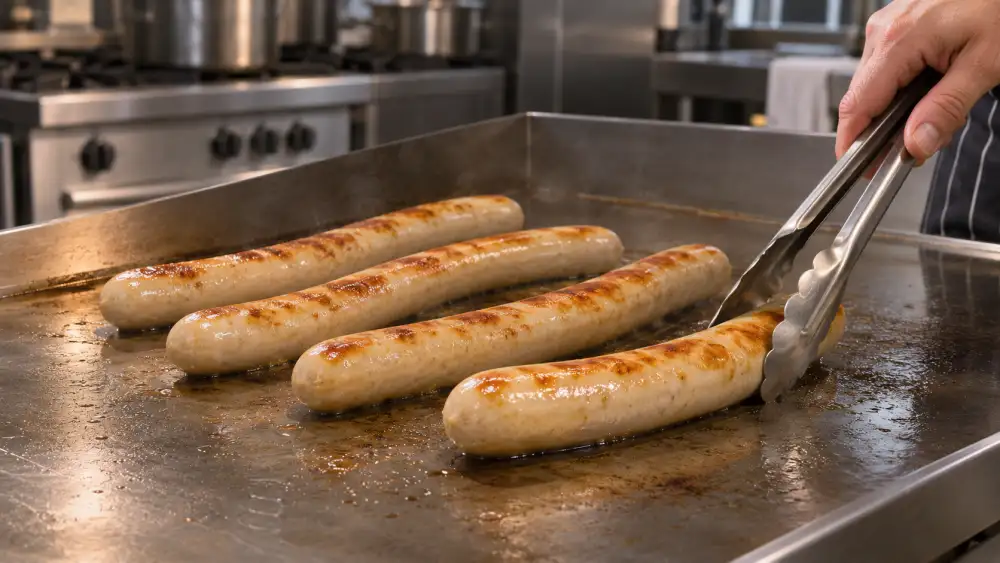
A fish and chip shop already has most of what it needs to sell a good hotdog. The chips are going out anyway, the curry sauce is on the menu, and there’s a fryer behind the counter. The 150g Costco Jumbo Pork Hotdog gives you several ways to put those ingredients and equipment to work, provided your fryer has room and the pack instructions support your chosen method.
The simplest place to start is with one serving, a small amount of stock and a shift you can measure. Here’s how to choose that first serving, work out what it earns and decide whether it deserves a permanent spot on the board.
What a 150g hotdog adds to a chippy menu
If your shop already sells battered sausages and saveloys, a smoked pork hotdog needs a reason to be there. A 150g portion makes a substantial lunch in a roll. With chips, it gives customers another full takeaway meal. The smoked flavour also gives you something specific to put on the menu board and something customers can taste under a spoonful of curry sauce.
The Sausage Haüs Jumbo Pork Hot Dog product spotlight describes the Costco format as pre-cooked and frozen, with ten 150g hotdogs to a pack. The fixed portion makes costing straightforward. For a hotdog in a roll, the first thing worth checking is whether your bread can carry the sausage, onions and sauce without splitting when someone picks it up.
Put the finished order next to your current sausage and chips or lunch deal. Look at what the customer gets, how the two items sit on the board and what you’d need to charge for each. If your regular sausage already covers the tray-and-chips order well, trial the hotdog in a roll at lunch. If bread would be an entirely new line for the shop, a smoked sausage and chips special is a simpler way to see whether customers want it.
Can it go in the fryer you already use?
Yes. The 150g Costco Jumbo Pork Hotdog can go into your existing fryer straight from frozen or after defrosting. It takes longer from frozen, so work out a separate timing for each. That gives you the option to defrost a batch for a busy shift or fry from frozen when orders are less predictable.
Start with the oil temperature you normally use and test a few batches at the size you’d fry during service. Check the centre with a clean probe to make sure the hotdog is heated through, and look for the colour and texture you want. Once you’re happy with the result, write down both timings so staff can repeat them. The GOV.UK guidance on safe cooking and reheating for food businesses1 explains how to check that food is heated through.
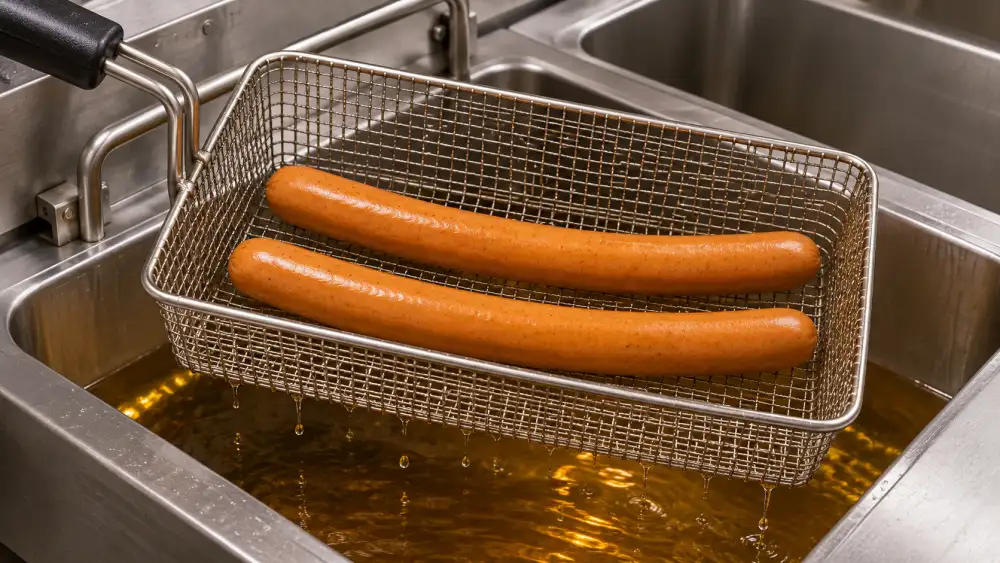
Finally, time a hotdog and chips together. If the hotdog takes longer than the chips, start it first so both are ready to wrap at the same time. Try the same order while the fryer is handling its usual workload. That will tell you whether it fits a Friday rush or works better as a lunchtime special.
How frozen stock makes a small trial easier
Frozen stock is useful when you’re still finding out who will buy the hotdog and when. You can keep unopened reserve stock for a later service within the pack’s stated storage conditions and shelf life. The figure that matters when buying is the time remaining on the pack in front of you, especially if you’re tempted to take more than you need for the first trial.
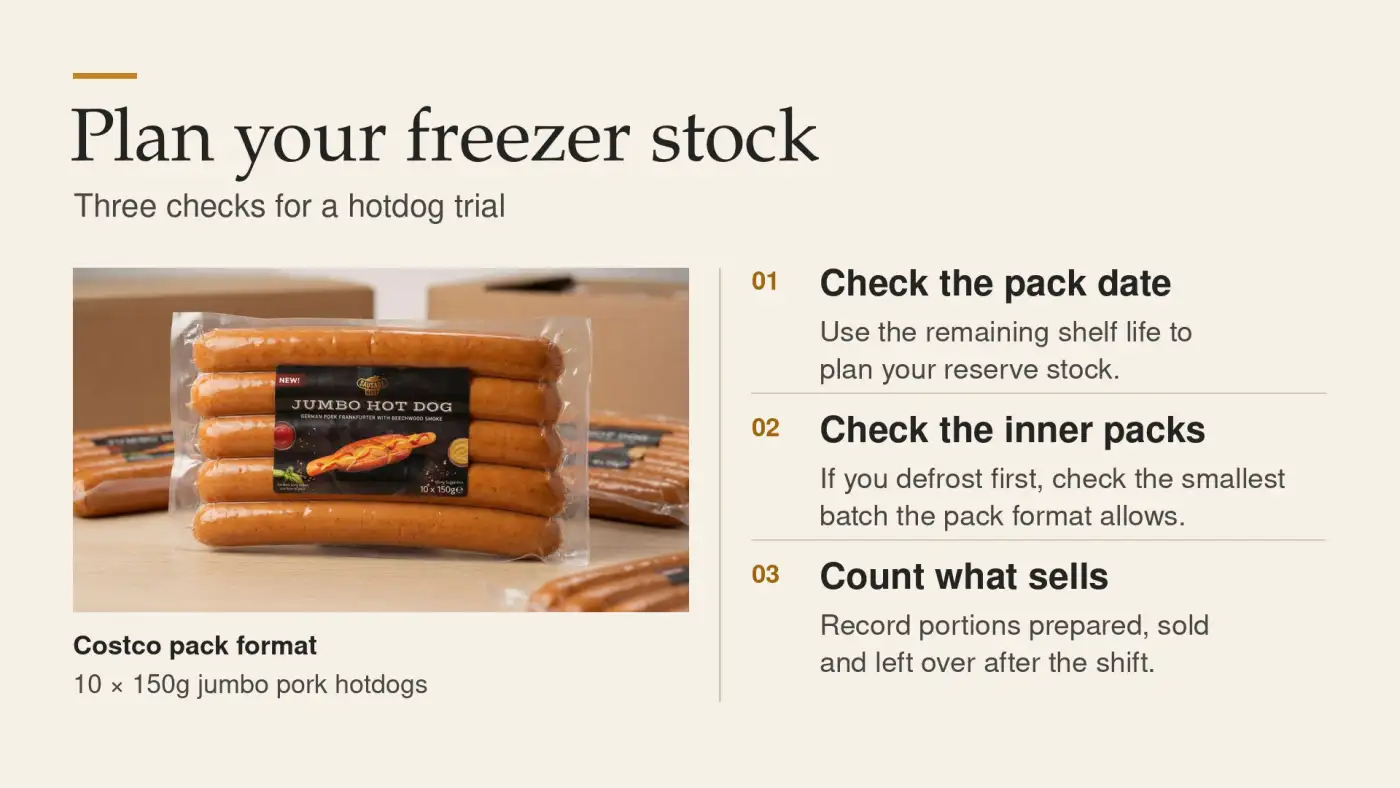
Before you put the special on the board, check how the sausages are packed inside the outer pack. If your approved process calls for fridge defrosting and you have to thaw an entire inner pack, that pack size sets the minimum batch you’ll have to sell within the labelled storage period. The GOV.UK guidance on chilling, freezing and defrosting food in a business2 advises fridge defrosting and says to defrost food fully before cooking unless the manufacturer instructs otherwise.
Plan the first batch around the shift you’re testing. If you expect to sell six at Saturday lunch, check whether the pack format allows you to prepare six. Count the portions prepared, sold and left over, and follow the label’s instructions for opened or defrosted stock. Include rolls in the count if you’re buying them specifically for the trial. An easy-to-store sausage can still leave you throwing away bread every Monday morning.
Three ways to serve the same sausage
The easiest first build is the one that makes sense with the stock and staff you already have. These three give customers a different reason to order, using the same 150g sausage as the starting point.
A jumbo hotdog in a roll
Serve it with ketchup or mustard, with onions if you already keep them for service. It’s a straightforward lunch item that customers can carry away without a tray of chips. Test the roll with the sausage and toppings inside, then wrap it as you would for a real order. You’ll soon see whether the bread is up to the job.
Smoked sausage and chips
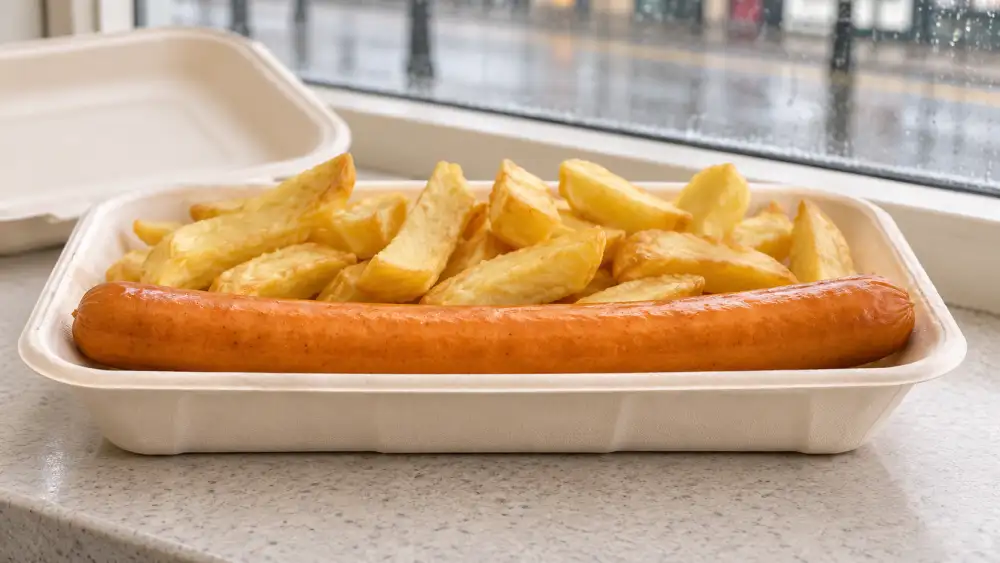
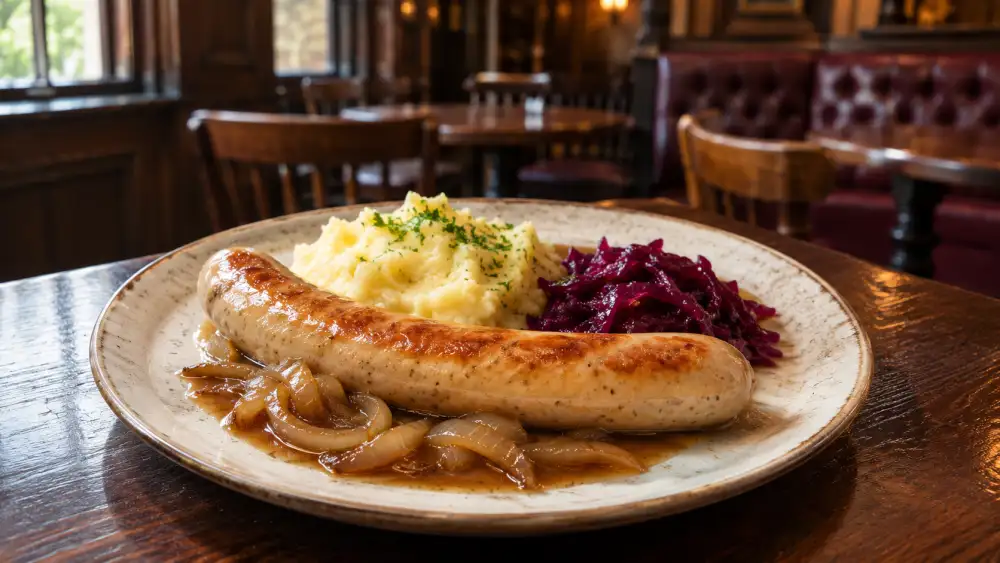
Serve the hotdog whole beside your usual portion of chips. This is the easiest format to trial if you already sell sausage and chips and want to offer a smoked version. Use the packaging you have if the sausage fits comfortably, and price it as a complete meal so customers can compare it easily with the other choices on the board.
A curry sausage and chips special
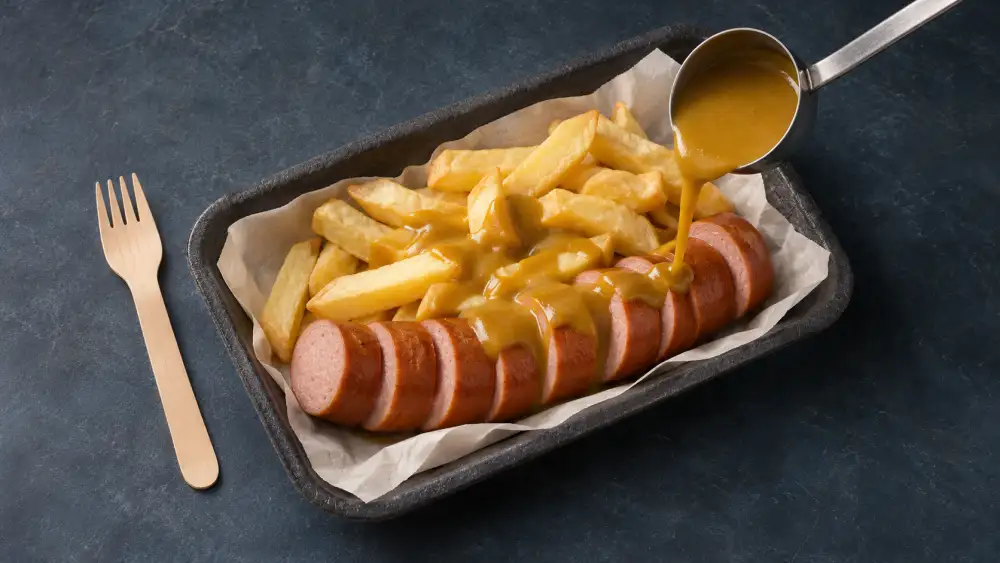
Slice the reheated sausage over chips and add a measured ladle of your usual chip shop curry sauce. For delivery, try packing the sauce separately and see how the chips travel. This is a practical weekend special if your customers already buy curry sauce and you want to test a different way to sell it.
What staff need to know about allergens
Check the whole serving before it goes on sale. The hotdog, roll, curry sauce, mustard and any onions or toppings each have their own ingredients. Use the current pack labels or supplier specifications to update your written allergen information. A change of roll or curry sauce supplier can change the answer your team needs to give.
Check the oil as well. The guidance on allergen cross-contact and shared fryers3 identifies a shared cooking liquid as a route for allergens to transfer. A separate basket in the same oil still shares that oil with fish, batter and anything else fried in it. Take that into account when deciding which part of the range to use and what staff can accurately tell customers.
Give the person on the till access to the same information as the person at the fryer. If a customer asks about the smoked sausage and chips, the answer needs to cover that full order, including the curry sauce if they add it. Make it clear who updates the information whenever a supplier or ingredient changes.
If you also sell through your website or a delivery app, check that the information there matches what staff use in the shop. The Food Standards Agency’s best practice guidance for allergen information on food sold loose4 covers how to make that information accessible to customers.
How much does each serving actually earn?
Start with the cost of a finished order. A hotdog in a roll includes bread, sauce, toppings and packaging. A tray of sausage and chips includes your chip portion, its tray and any sauce included in the price. Cost each version separately. The roll can look cheaper on paper until you factor in bread you buy solely for that item and have to write off at the end of the week.
As a worked example, suppose a hotdog in a roll sells for £5.40 and the sausage, roll, toppings and packaging cost £1.80 in total. At 20% VAT, a VAT-registered shop would have £4.50 in sales revenue excluding VAT, leaving £2.70 before labour, energy, waste, delivery commission and other overheads. These are example figures. Use your own invoice costs and sales price.
Look at what the hotdog sells alongside and what it replaces. If lunchtime customers buy it with a side of chips, you can see how it affects the value of the order. If most buyers switch from your usual sausage meal, compare what each meal earns and how long each ties up the fryer. When pricing bundles, check HMRC’s VAT guidance for catering and takeaway food5, which covers hot dogs and mixed food and drink deals.
How to run a trial that tells you something
Pick one serving and sell it over two comparable shifts. For a shop with a quieter lunch trade, that might mean the jumbo hotdog in a roll on two Saturdays. If your customers usually order meals in trays, start with smoked sausage and chips. Put it on the board with its price and a short description, and tell staff how it’s served before opening. Keep the build and price consistent so the comparison gives you something to work with.
At the end of each shift, write down how many you prepared, sold and discarded. Note when the orders came in and whether they held up another item. Ask the person wrapping the food what slowed them down. A torn roll or a tray that’s too short is easy to fix. A fryer that’s already full whenever customers want the hotdog is a different problem.
Count bread, sauce and packaging alongside the sausage when reviewing the trial. The Guardians of Grub food waste tracking calculator6 can help put a cost on the food you throw away. If the roll sells steadily at lunch and the team can serve it alongside normal orders, give it a regular lunch slot. If demand comes in bursts, a clearly advertised special may suit the shop better.
Frequently Asked Questions
Try it plain first so customers can taste the smoked pork. If battered sausages are a big seller in your shop, compare one of each side by side, including after a few minutes in the wrapper. The battered version needs to earn the extra prep and fryer time. It should also give customers a reason to choose it over the battered sausage you already sell.
Fry to order if sales come in ones and twos. If several orders reliably arrive at once, try a small batch using your shop’s hot-holding procedure. Taste one after the time it would actually spend waiting. If the outside dries out before the batch sells, reduce the batch size or go back to frying to order.
Yes. Half a 150g hotdog gives you a 75g portion for a small roll or a lunch tray. It makes most sense if you have a smaller roll on hand and enough demand to sell both halves. Cost it as a complete order. Bread, sauce, wrapping and assembly still cost money, so halving the sausage won’t halve the cost.
Use a name that tells customers what they’ll get. **Jumbo Smoked Pork Hotdog** works for the roll, and **Smoked Pork Sausage & Chips** makes the tray clear. Costco is useful when someone asks where the product comes from. On the board, the smoked pork, portion size and what comes with it are more useful buying cues.
Test it in the packaging you actually use. Wrap one as usual, leave it closed for a typical delivery journey, then pick it up and eat it. If the roll goes soft or the sausage slides out, try a firmer roll or use less sauce. If chips come with it, check whether packing them separately keeps both parts of the order in better shape.
Treat the 120g version as a separate menu decision. It’s 30g lighter per serving, so check how it looks in your roll or tray and whether the price still makes sense. Check its own label for preparation and allergen information, and update any menu listing that specifies 150g before making the switch.
Conclusion
The 150g Costco Jumbo Pork Hotdog makes sense for a fish and chip shop because it can work with ingredients that already sell. In a roll, it gives lunchtime customers something they can eat on the move. With chips, it’s a full takeaway meal. With chip shop curry sauce, it becomes a special you can build from stock already on hand.
Choose the version that fits your shop first. Confirm the reheating method for the pack you’re buying, check the fryer under realistic conditions and see how much stock you’ll need to prepare for a shift. Then cost the portion as it leaves the counter, including its bread or chips, sauce and packaging.
Two comparable shifts can tell you whether customers will pay the price, whether staff can fit it around their regular orders and whether you’re preparing the right amount. If those results stack up, you have a case for a regular menu slot. If you’d like to check the Costco pack format or discuss preparation for your setup, speak to The Sausage Haüs team.
The Sausage Haüs
The Sausage Haus brings authentic German-style sausages to the UK market through a partnership between Hardy Remagen and Baird Foods.
Hardy Remagen is a long-established German producer with deep experience in traditional sausage making, continental meat products and modern food manufacturing. The range reflects the kind of products German shoppers already understand and enjoy: Bratwurst, Frankfurters, smoked hotdogs, cheese-filled sausages, Bockwurst, Weisswurst and other classic German-style lines.
In the UK, the range is represented and distributed by Baird Foods, giving retailers, wholesalers, caterers and foodservice operators access to German sausage products with a practical UK supply route. This combination is important: German manufacturing knowledge on one side, UK market understanding and distribution on the other.
For retail buyers, The Sausage Haus range offers a clear way to add something different to both chilled and frozen sausage fixtures. The products are built around real eating occasions: BBQs, premium hotdog nights, family meals, German street food, Oktoberfest promotions, Christmas market food and quick comfort meals at home.
The result is a range that gives shoppers something more distinctive than ordinary sausages and standard hotdogs, while giving buyers a compact, commercially useful product story with strong fresh and frozen potential.
References
UK Government. Food hygiene for businesses. GOV.UK. Updated June 25, 2026.
UK Government. Food hygiene for businesses. GOV.UK. Updated June 25, 2026.
UK Government. Precautionary allergen labelling. GOV.UK. Updated September 3, 2023.
UK Government. Catering, takeaway food (VAT Notice 709/1). GOV.UK. Updated June 8, 2026.
Guardians of Grub. FOOD TRACKING CALCULATOR • Guardians of Grub. Updated February 27, 2023.