Remember, remember, the fifth of November. The fireworks, the glow of the bonfire, the cold evening air—and the smell of sausages cooking as people arrive.
Food belongs at the heart of that experience. A well-filled Bratwurst roll, a smoky Cheese Frankfurter or a warming portion of Currywurst can give visitors something satisfying to enjoy while they wait for the display. For caterers, pubs and event operators, those dishes also offer the foundations of a focused, appealing menu.
Successful Bonfire Night catering starts well before the first sausage reaches the grill. The menu needs to suit the audience, the equipment must cope with the busiest trading period, and customers should be able to order and collect without missing the evening’s main attraction.
German sausages give operators plenty to work with. The challenge is to turn that potential into an offer that looks inviting, tastes memorable and works when the queue begins to grow.
Build Your Bonfire Night Menu Around the Event
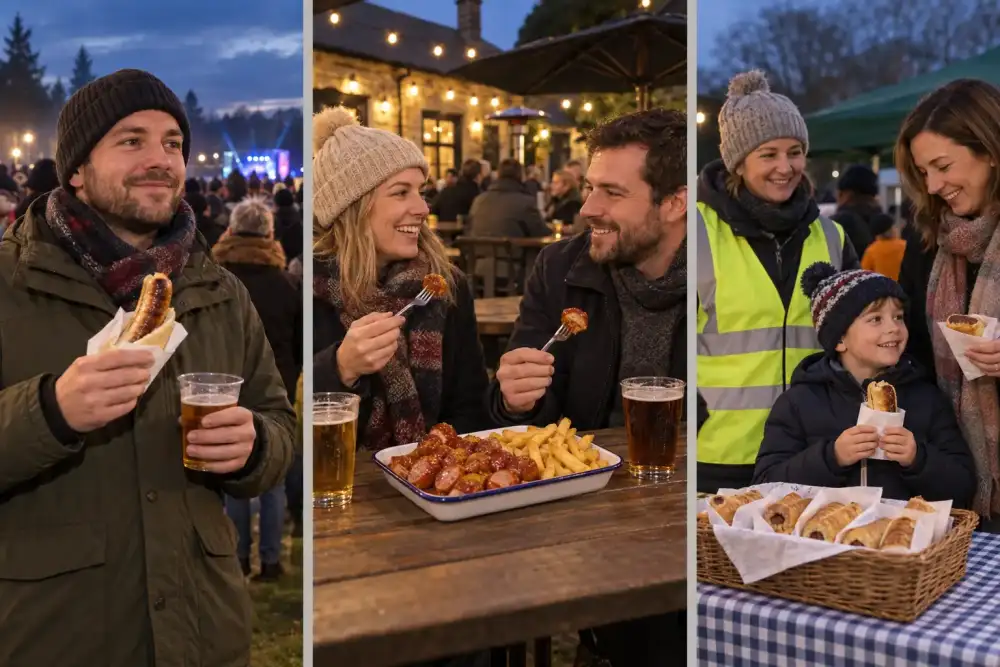
Start with the event programme and the way visitors will spend their evening.
A public fireworks display, a pub garden celebration and a community fundraiser can all sell sausage dishes, but each creates different demands. Opening times, seating, competing food outlets and the timing of the fireworks should influence the menu.
| Event setting | What to establish first | A suitable menu approach |
|---|---|---|
| Large public fireworks display | Expected attendance, competing traders, display times and likely queue locations | A compact choice of recognisable dishes with straightforward assembly |
| Pub or hospitality venue | Kitchen capacity, table availability, drinks service and existing bookings | Handheld sausages outside, with a more substantial meal option where seating allows |
| Community or fundraising event | Team experience, equipment, purchasing budget and expected family attendance | A short menu with clear portions, simple pricing and limited customisation |
At a standing event, test whether customers can comfortably carry the food alongside a drink. A sausage roll in a supportive sleeve may be easier to manage than a heavily loaded tray. Where tables are available, Currywurst with chips or a sausage meal can make more sense.
Think about the group making the purchase, too. A family may want several straightforward meals with different sauce preferences. A couple staying for the evening may be more interested in a premium serve and a drink.
A clear core dish, one indulgent alternative and one substantial meal can provide useful choice. Each should have a distinct role and be achievable with the team and equipment available.
Create Three Appealing German Sausage Serves
Bonfire Night food should look generous, smell inviting and be easy to understand from the menu board. The following three ideas give a sausage offer a clear structure while allowing ingredients and preparation to be shared.
1. The Classic Bonfire Bratwurst
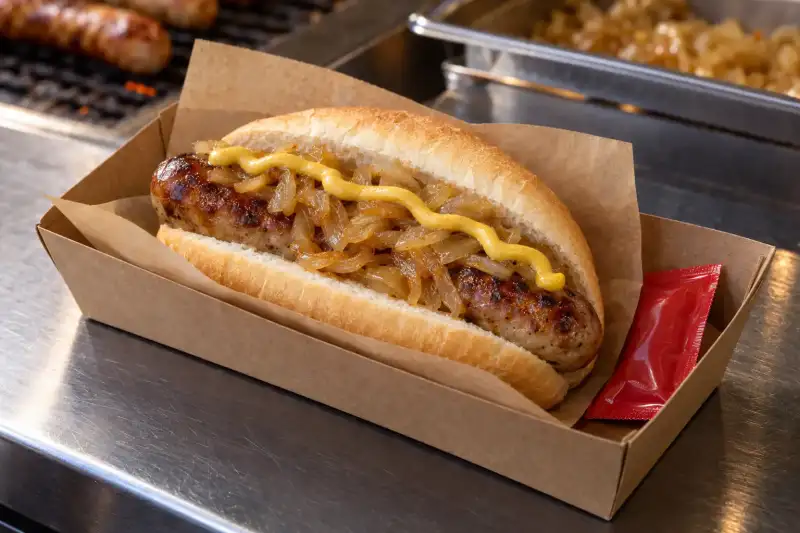
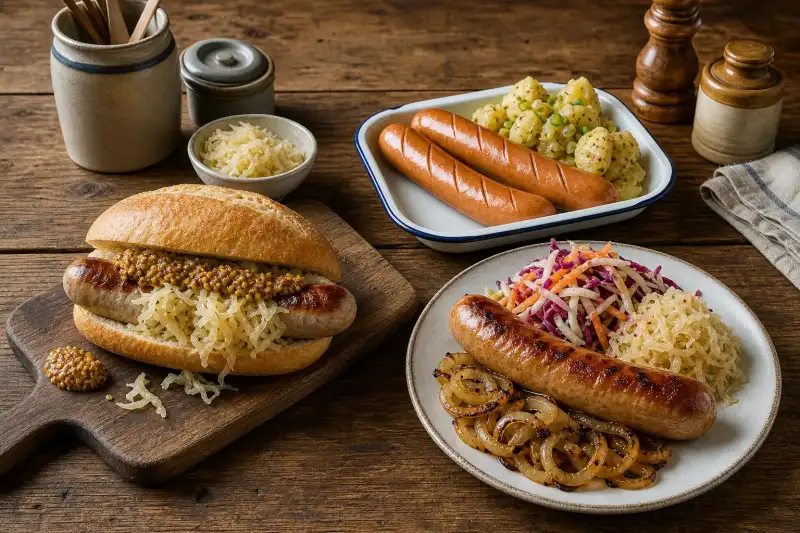
Serve a browned pork Bratwurst in a well-fitting roll with soft golden onions and a measured line of mustard. Offer ketchup as an alternative, with a plain version available for customers who prefer it.
The appeal comes from getting the familiar details right: a sausage with good colour, bread that holds its shape and onions that add sweetness without soaking the roll.
Choose the bread alongside the sausage. A large roll can make the filling look disappointing, while a roll that is too small leaves customers struggling to hold everything together. Test the complete serve in its actual packaging before committing to the order.
The Sausage Haüs catering Pork Bratwurst is listed in frozen 100g and 150g formats, giving buyers different portion options to assess.
On the menu board, a description such as “German Bratwurst with golden onions and mustard” tells customers what they are getting without requiring an explanation at the till.
2. The Cheese Frankfurter with Pickles and Crispy Onions
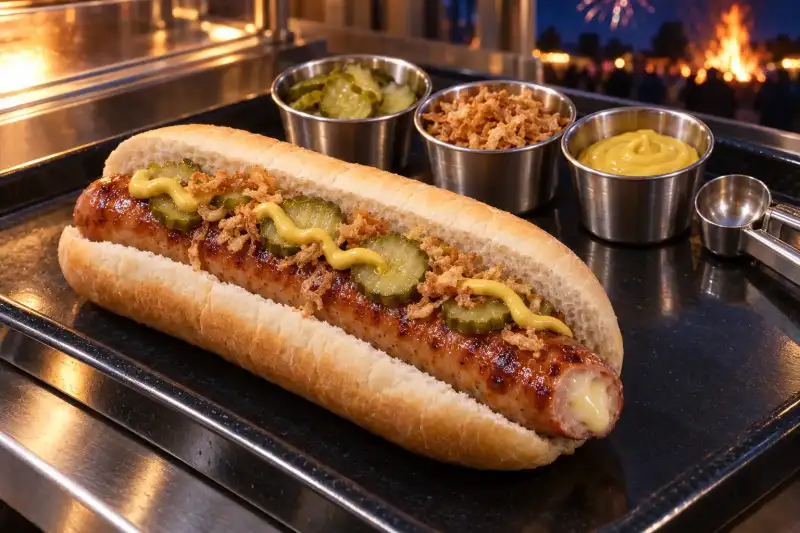
A Cheese Frankfurter provides an indulgent alternative with a clear point of difference. The Sausage Haüs Cheese Frankfurter contains Emmental cheese, bringing richness within the sausage itself.
Pair it with sliced pickled gherkins, a modest scattering of crispy onions and mustard. The pickle adds sharpness, while the onions provide texture.
Keep the sausage visible. A heavy covering of cheese sauce and several additional toppings can obscure the product and make the finished roll difficult to eat. Let the filling do most of the work.
For service, pre-portion the toppings or use consistent utensils so the dish looks the same from the first order to the last. Add crispy onions at assembly to preserve their texture.
“Cheese-filled Frankfurter with pickles and crispy onions” makes a useful premium menu description. Any price difference should reflect the actual product and serving costs.
3. The Warming Currywurst Pot
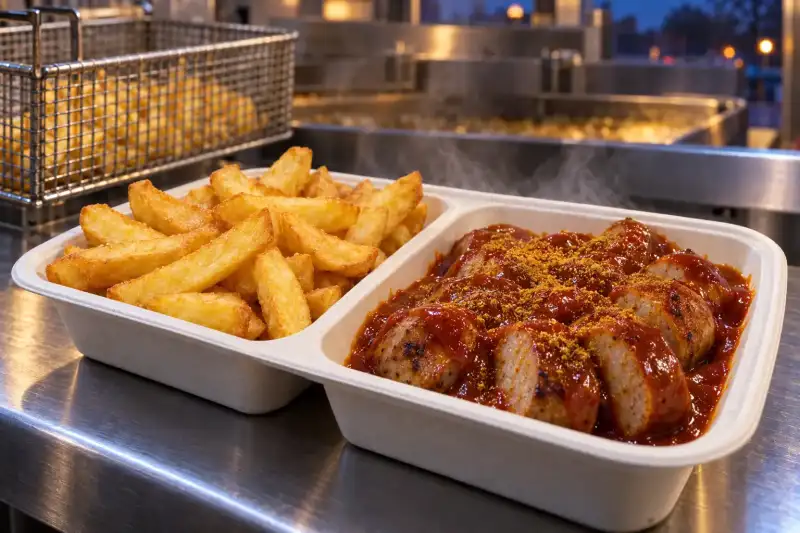
For customers wanting a more substantial meal, serve sliced Bratwurst with hot curry sauce and chips in a sturdy food container.
Use enough sauce to coat the sausage while keeping the chips appealing. A light finish of curry seasoning can complete the dish without adding another preparation task.
This format needs a realistic equipment check. Chips introduce fryer capacity, oil management and an additional assembly stage. A stall that handles sausage rolls comfortably may struggle once most orders also require a portion of chips.
Test a sequence of mixed orders before the event. If the fryer becomes the limiting factor, consider serving the Currywurst with a bread roll instead, or reserving the chips option for a venue with sufficient kitchen capacity.
The menu description can stay simple: “German Currywurst with hot curry sauce and chips.”
Together, these dishes offer a classic, an indulgent alternative and a fuller meal. They form the sausage part of the event menu; operators responsible for the whole food offer should also plan appropriate vegetarian choices and consider other dietary requirements.
Plan Service Around the Fireworks
A fireworks event has a timetable that can shape food demand. Visitors may want to eat after arriving, buy something before taking their places, or look for food as the display ends.
Treat these as planning possibilities and check them against the organiser’s experience. Some events retain visitors with music or other entertainment after the fireworks. At others, a large share of the audience leaves immediately.
Ask when the gates open, when the display starts, whether there are multiple displays and when food trading finishes.
Prepare for a Concentrated Rush
Total sales alone do not tell you whether the operation will cope. The same number of meals can be comfortable across an evening and difficult within a short interval.
For illustration, serving 180 portions during a 30-minute rush requires an average of six portions per minute. That is a planning calculation, not a forecast or a claim about any particular equipment.
Test whether the whole operation can achieve the required pace. Heating the sausages is only one stage. Bread preparation, toppings, payment and collection also take time.
Run a short rehearsal using the planned team, packaging and a mixture of orders. Include a customer asking a question or ordering for several people. Those interruptions are part of normal service and should be reflected in the test.
Give Ordering and Collection Clear Positions
Customers should be able to see the menu before they reach the ordering point. Display prices prominently and make the difference between a sausage roll and a meal immediately obvious.
Where the space and staffing allow, give ordering and collection separate positions. Agree queue placement with the organiser so it fits the wider site layout and keeps access routes clear.
Allocate responsibilities for taking orders, preparing food, assembling dishes and handing them over. Smaller teams may combine jobs, but everyone should understand who controls each stage during the rush.
Keep frequently used items within easy reach. A team member repeatedly leaving the counter to find rolls, napkins or sauce bottles can interrupt the entire line.
Protect Quality During Holding
Prepare manageable batches based on the rate of sale and the product’s instructions. Assess how the sausages look and eat after the intended holding period, including their casing, moisture and appearance.
Follow the preparation instructions for the exact product and your documented food safety procedures. Pre-cooked products still need appropriate storage, handling and preparation.
Official guidance states that food being kept hot for service should remain at 63°C or above. Reheated food should be steaming hot throughout; holding equipment should not be relied on to bring inadequately heated food up to serving temperature. See the government guidance on cooking, reheating and keeping food hot1.
Keep bread, sauces and toppings under their appropriate conditions and assemble close to collection. This helps the finished meal reach the customer in better condition.
Make the Food Appealing After Dark
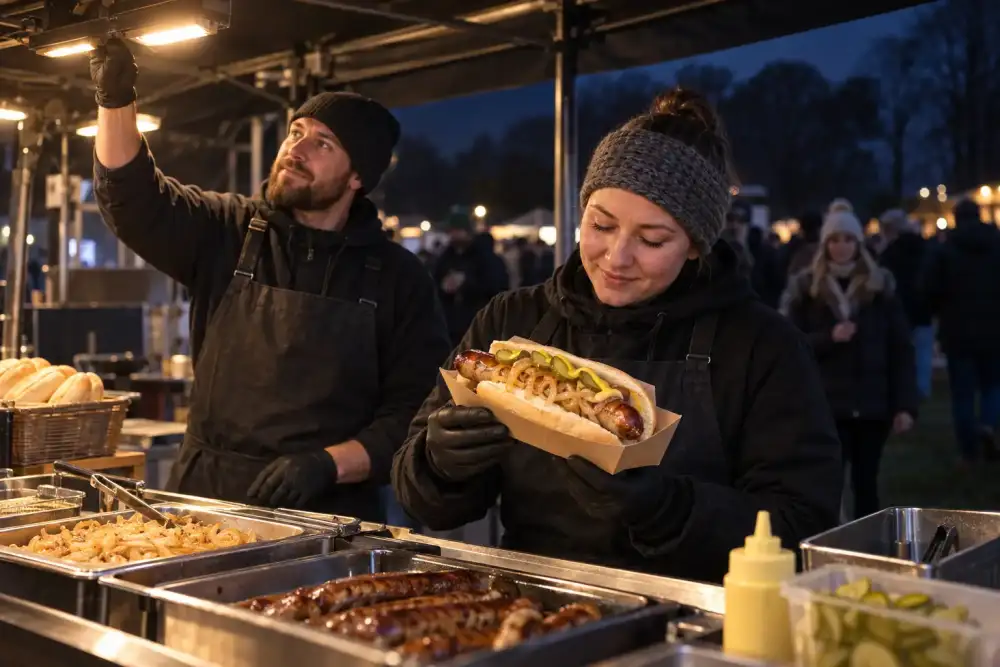
At an evening event, customers need to understand the offer while approaching the stall, often through a crowd.
Lighting should make the menu readable and the food easy to see. Check the setup after dark, including reflections on laminated signs and shadows across the counter.
Use short descriptions with the main ingredient first. “German Bratwurst with onions” is immediately recognisable. A playful Bonfire Night name can add personality, provided the description underneath explains the dish.
One strong photograph of each serve can help customers compare the options. Use images that match the portion, bread, toppings and packaging they will receive.
Give the Sausage Room to Stand Out
Good presentation starts with the food itself. Aim for appealing browning, a neatly filled roll and enough contrast to make the ingredients visible.
Golden onions, green pickles and mustard can make a sausage roll look inviting without adding complicated garnish. Keep sauces controlled so customers can still see the sausage they are buying.
An attractive dish should also survive the journey away from the counter. Test the packaging with the full portion and ask someone to carry it while wearing a coat and holding a drink.
For rolls, check that the sleeve or tray supports the bread. For Currywurst, use a container suitable for hot, sauced food and provide the appropriate fork.
Make Dietary Questions Easy to Handle
Keep current ingredient and allergen information available for the whole dish, including bread, sauces and toppings. Check any substitutions before using them, and make sure staff know how to answer questions or refer them to the responsible person.
For food sold loose, the Food Standards Agency recommends written allergen information supported by a conversation. An accessible dish-level record can help staff provide a clear answer during busy service. See the FSA allergen guidance for food businesses2.
Prepare the Buying Brief Early
A useful supplier enquiry explains the event and the intended service.
Include the date, location, expected demand, preferred sausage formats and the equipment available. This gives the supplier or wholesaler a practical basis for discussing product suitability, quantities and delivery.
The Sausage Haüs wholesale range includes frozen catering products for event and foodservice use. Confirm the current specification, pack configuration, availability and preparation instructions for the products being considered.
Forecast Your Share of Food Sales
Attendance is a starting point. Your forecast also needs to consider how many visitors are likely to buy food and how much of that trade your outlet could receive.
A simple planning model is:
Expected attendance × proportion buying food × your share of those purchases = estimated portions
For example, 2,000 visitors × 40% buying food × a 25% share gives an estimate of 200 portions.
Those percentages are illustrative assumptions. Replace them with previous event results, advance information and the organiser’s knowledge. Allow for competing traders, included meal vouchers, event duration and whether visitors are likely to eat before arriving.
Prepare low, expected and high scenarios. Use them to decide what to order, how much to prepare initially and what reserve can remain safely stored.
Keep the proportion assigned to each menu item explicit. If the forecast assumes most customers will choose Bratwurst rolls, the purchasing plan should not divide stock equally across three dishes without a reason.
Give Your Supplier the Information That Matters
| Information to provide | Why it helps |
|---|---|
| Event date, location and delivery access | Establishes the practical delivery requirements |
| Expected portions and proposed menu split | Helps translate the forecast into product quantities |
| Preferred sausage size and serving format | Connects the product to the planned roll or meal |
| Pack and case requirements | Supports ordering, storage and stock allocation |
| Freezer, refrigeration and preparation capacity | Helps assess whether the intended format suits the operation |
| Product specifications and allergen information required | Supports menu preparation and staff briefing |
| Latest decision date and arrangements for changes | Clarifies what needs to be settled before the event |
For wholesalers supplying several operators, the same information can be gathered across accounts. Separating confirmed requirements from provisional estimates makes it easier to plan stock and discuss changes.
For an operator running several outlets, allocate stock by location and expected demand. Record any transfers between outlets so the team can see where products are selling and where reserves remain.
Cost the Complete Serve
Include the sausage, bread, toppings, sauces, packaging and napkin when costing each dish. A premium serve should have a clear recipe and portion size so the calculation remains useful during service.
Assess the wider event costs as well: staffing, pitch fees or commission, transport, energy, payment charges and likely waste. These determine whether an attractive food margin becomes a worthwhile event result.
Review the sales mix afterwards. Record which dishes sold, what remained and when demand was strongest. That information will make the next event’s purchasing decisions more reliable.
Your Bonfire Night Catering Checklist
Before confirming the final order and menu, work through these eight points:
- Event programme: Confirm arrival times, fireworks timings, trading hours and the likely pattern of departures.
- Audience and competition: Understand who is attending, what other food is available and where your outlet fits.
- Menu: Give each dish a clear role, description, portion and price.
- Service capacity: Rehearse a mixture of orders using the actual equipment, team and packaging.
- Stock plan: Prepare low, expected and high demand scenarios, with an agreed menu split.
- Supplier arrangements: Confirm product specifications, quantities, delivery details and any order deadlines.
- Food information and handling: Have current allergen records, preparation instructions and the relevant food safety procedures ready.
- Presentation: Check lighting, signs, packaging and the finished dishes under evening conditions.
Share the final plan with the people serving the food. A short briefing should cover the menu, portions, responsibilities, stock locations and what to do when a product is running low.
Frequently Asked Questions
Work backwards from the supplier’s ordering deadline, the agreed delivery date and the space available for frozen or chilled storage. Ask about current availability, pack sizes and lead times before advertising a specific product.
For a large event, begin the conversation while attendance estimates are still provisional. Confirm the final order as soon as ticket sales, weather expectations and the number of competing food outlets give you a more reliable forecast.
It can be. One well-executed Bratwurst serve may work better than several choices that create extra stock, slower decisions and more complicated preparation.
You can still offer some flexibility through a small choice of sauces or onions. Add another sausage only if it serves a clear purpose, such as a Cheese Frankfurter as a premium option or a different portion size for younger customers.
smaller portion can make sense at family events, but it must be properly costed and easy to produce. Consider a smaller sausage, a half portion or a simple sausage-and-roll option with sauces offered separately.
void creating a children’s meal that requires its own collection of ingredients and packaging. It should use the same service system as the main menu and remain straightforward for staff to identify and assemble.
Usually only where the organiser permits it and the operator can manage it safely. Site rules, fire precautions, insurance conditions, equipment restrictions and the position of the catering area all need to be checked.
controlled commercial grill or griddle will normally provide more predictable heat and throughput. The nearby bonfire may create the atmosphere, but it does not need to be the cooking method.
Use controlled heat, avoid piercing the casing and follow the instructions for the specific product. Excessive heat or leaving the sausages on the grill for too long can damage the casing and allow the cheese to escape.
Heat manageable batches and use the grill mainly to develop colour and finish. Test the product with the intended equipment before the event so the team understands the correct timing and heat level.
They can help when they are connected to a simple collection process. Meal tokens can be useful for staff, organised groups, hospitality guests or prepaid family packages.
Give advance orders a defined collection point or time where possible. If prepaid customers have to join the same ordering queue and explain what they bought, the system may add confusion rather than remove it.
gree the cancellation and postponement arrangements with the organiser and suppliers before placing the final order. Establish when decisions will be made, what costs remain payable and whether the event could move to another date.
Plan what can happen to unused stock. Unopened frozen products may provide more flexibility when they have remained correctly stored, but always follow their storage instructions and use-by or best-before information. Do not assume that thawed stock can simply be refrozen.
Consider what happens if the power supply, payment connection, lighting or a key appliance fails. The appropriate backup depends on the site and must comply with the organiser’s requirements.
Useful preparations may include spare lighting, charged payment devices, an agreed payment procedure for poor connectivity, extra serving utensils and a reduced emergency menu. The team should know which products can still be served safely if part of the setup stops working.
Record total sales, the number sold of each dish, remaining stock, waste and the busiest trading periods. Add the weather, attendance, competing food offers and any operational problems that affected service.
Note when products sold out and whether this represented missed demand or sensible stock control. These details will make purchasing, staffing and menu decisions more reliable for the next fireworks event.
Conclusion
Bonfire Night gives German sausages a setting in which their appeal is easy to understand: hot food, inviting aromas and a satisfying meal on a cold evening. Turning that appeal into a successful catering offer takes careful choices before the gates open.
Choose sausages that earn their place on the menu. Give customers clear, appetising options. Test the complete service, plan purchasing around realistic demand and make sure the last customer receives the same care as the first.
A well-made Bratwurst roll or Cheese Frankfurter can become part of what visitors remember about the evening. For the operator, consistent portions, organised service and informed buying decisions give that experience a sound commercial foundation.
Start the conversation early. Contact The Sausage Haüs with your event date, expected requirements and serving plans to discuss suitable products, formats and supply arrangements.
Remember the fifth of November—and give your customers food worth remembering with it.
The Sausage Haüs
The Sausage Haus brings authentic German-style sausages to the UK market through a partnership between Hardy Remagen and Baird Foods.
Hardy Remagen is a long-established German producer with deep experience in traditional sausage making, continental meat products and modern food manufacturing. The range reflects the kind of products German shoppers already understand and enjoy: Bratwurst, Frankfurters, smoked hotdogs, cheese-filled sausages, Bockwurst, Weisswurst and other classic German-style lines.
In the UK, the range is represented and distributed by Baird Foods, giving retailers, wholesalers, caterers and foodservice operators access to German sausage products with a practical UK supply route. This combination is important: German manufacturing knowledge on one side, UK market understanding and distribution on the other.
For retail buyers, The Sausage Haus range offers a clear way to add something different to both chilled and frozen sausage fixtures. The products are built around real eating occasions: BBQs, premium hotdog nights, family meals, German street food, Oktoberfest promotions, Christmas market food and quick comfort meals at home.
The result is a range that gives shoppers something more distinctive than ordinary sausages and standard hotdogs, while giving buyers a compact, commercially useful product story with strong fresh and frozen potential.
References
UK Government. Food hygiene for businesses. GOV.UK. Updated June 25, 2026.
UK Government. food businesses. GOV.UK. Updated July 17, 2026.