Bratwurst is one of the easiest “premium upgrades” you can put on a menu – familiar enough to sell fast, but distinctive enough to feel special. In this product spotlight, we break down what makes a great Bratwurst, how to cook it properly without splitting or drying out, and how pubs, caterers and farm shops can serve it for consistent results. You’ll also get practical serving ideas and hot-hold tips.
Last updated: February 2026
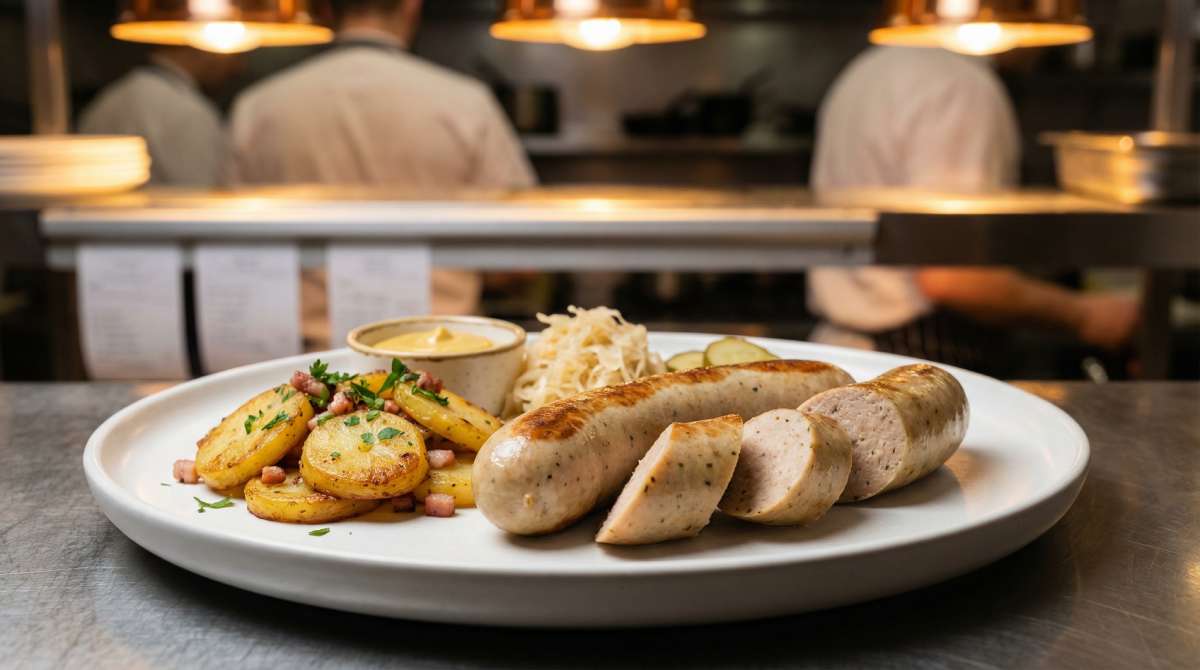
Bratwurst, Bratkartoffeln, sauerkraut and mustard – plated on the kitchen pass for service.
Introduction
If you’re looking for a sausage that performs in a busy UK kitchen and still feels like a step up from the standard offer, Bratwurst is the obvious place to start. It’s arguably the most iconic German sausage of all – and in the UK it’s already widely recognised from festivals, Christmas markets, and street-food stands, where the aroma alone does half the selling. That familiarity is commercial gold: customers know what they’re getting, but it still feels like a treat when it’s done properly.
From a trade point of view, Bratwurst earns its place because it’s predictable and versatile. You can grill it for theatre and speed, pan-fry it for controlled colour, or cook through gently and finish to order during service. It also translates well to British favourites: think “bangers and mash, upgraded”, loaded plates with onions and mustard, or a simple Bratwurst-and-Bratkartoffeln dish that looks premium without adding labour.
This spotlight is written for buyers and kitchens that care about consistency: how to avoid splitting and dryness, how to hold Bratwurst without killing texture, and how to plate it so it reads as a proper menu item – not just “a sausage on a plate”.
Key Takeaways
- Bratwurst is a menu-friendly premium upgrade: familiar, fast-selling, and easy to position as “German-inspired” without complex prep.
- Best results come from gentle heat + a final colour finish: cook through steadily, then sear or grill for a clean golden-brown casing.
- Avoid boiling: it can split the casing and wash out flavour; warm gently if you’re pre-heating, then finish for colour.
- Hot-holding is possible without drying out if you manage moisture and rotation (hold for service, finish to order where possible).
- Plating matters: Bratwurst looks instantly more premium with Bratkartoffeln, sauerkraut and proper mustard rather than messy sauces.
- Multiple revenue routes: works as a plated main, a hot counter item, event service staple, or an add-on for sharing platters.
- Easy upsell with sides: mustard varieties, caramelised onions, kraut, and pub-style gravies increase perceived value fast.
What is Bratwurst (and why it’s the iconic German sausage)
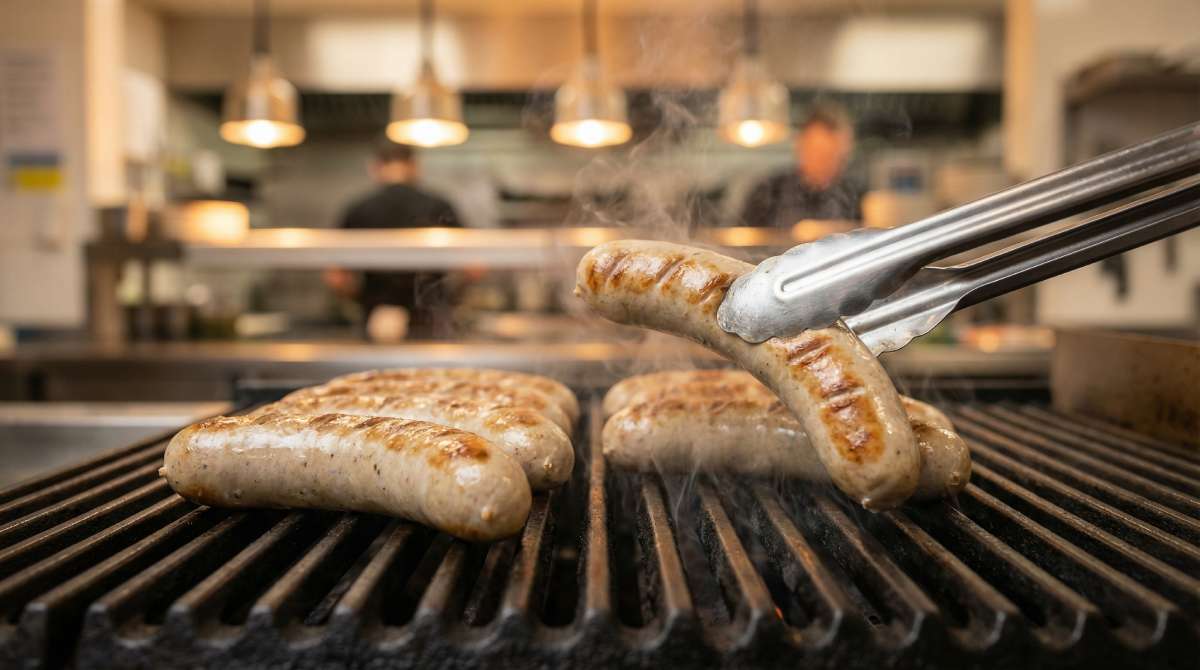
Bratwurst browning on the grill – the classic finish for aroma, colour and casing snap.
Bratwurst is the classic German pork sausage designed for cooking “braten” – pan-frying or grilling – until the casing takes on a light golden-brown colour while the inside stays juicy. It’s the benchmark sausage you’ll see everywhere in Germany, from butcher counters and family barbecues to beer halls and street-food stalls. That’s why Bratwurst has become the most iconic German sausage of all: it’s simple, versatile, and instantly recognisable when cooked well.
In the UK, Bratwurst is already familiar to a huge number of customers, even if they don’t know the finer details. Think festivals, Christmas markets, Oktoberfest events, food trucks and pop-up street food. People recognise the aroma, the look, and the promise: a proper, satisfying sausage that feels more “special” than a standard banger. That recognition matters commercially – Bratwurst is one of the few specialist sausages that sells itself with minimal explanation, especially when you lean into the German cues (mustard, onions, sauerkraut, potatoes) and keep the execution consistent.
Product spotlight: The Sausage Haus Bratwurst at a glance
The Sausage Haüs Bratwurst is a traditional German pork Bratwurst designed to be easy to run in UK service – consistent, quick to heat, and versatile across grill, pan, hotplate and roller-grill style setups. The key commercial advantage is that it’s fully pre-cooked and commonly supplied frozen, so teams get predictable results without the “is it cooked through?” risk that comes with raw sausages in high-volume environments.
What it tastes and feels like (what to expect on the plate)
This sits firmly in the classic Bratwurst lane: mild, savoury, and balanced rather than spicy or heavily smoked, with a juicy bite and an even, fine texture that slices cleanly for premium plating (diagonal cuts, sharing boards, or currywurst-style portions). The casing is intended to take on a clean golden-brown finish when grilled or pan-fried – that’s where the “Bratwurst smell” and the appetising look come from.
Key product specs
- Product name: Bratwurst (German pork sausage)
- Weight options: 100 g / 120 g / 150 g (use the size to match your menu role – snack, standard, or hero portion)
- Format: Pre-cooked; supplied frozen as standard for service efficiency (the spec also references availability as frozen or fresh depending on route)
- Origin: Produced in Germany by Hardy Remagen
- UK distribution: Baird Foods with nationwide cold-chain supply
- Shelf life (frozen): 12 months (useful for seasonal peaks like Oktoberfest and Christmas markets)
Cooking and service behaviour (why kitchens like it)
Because it’s pre-cooked, this Bratwurst is built for fast heat-through and consistent finish. The site lists grill, pan-fry, hot water heating as options, but for the best eating quality and “market-style” appeal you’ll typically finish on a grill/hotplate/pan to develop colour and casing snap. That gives you the premium look customers associate with German Bratwurst, while keeping service times tight.
Quick positioning line you can reuse
“Authentic German pork Bratwurst – pre-cooked and service-ready, available in multiple sizes, produced in Germany and distributed across the UK via Baird Foods.”
Where Bratwurst fits on UK menus
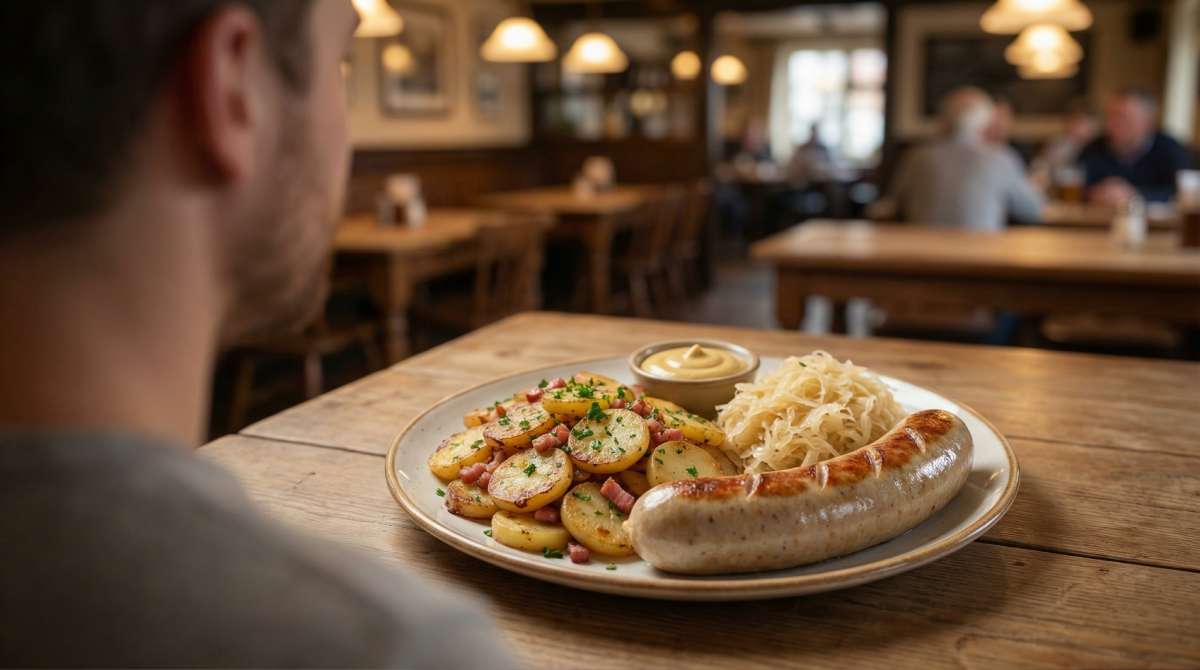
Bratwurst with Bratkartoffeln, sauerkraut and mustard – a classic pub plate.
Bratwurst earns its keep because it works across multiple UK channels with the same core prep. In pubs, it fits as a plated main (Bratwurst + Bratkartoffeln + sauerkraut) or as a premium twist on familiar comfort food (think mash and onion gravy, but with a German angle). For festivals and Christmas markets, it’s a proven seller because customers already associate Bratwurst with that setting – fast service, strong aroma, high perceived value. In hot counters and grab-and-go, it performs as a simple “hot hold + finish” item that still looks and tastes intentional when served with mustard and onions.
Farm shops and delis benefit from the same story: Bratwurst feels authentic, premium, and giftable as a “German BBQ” or “market-style” pick, especially when merchandised with kraut, mustard, and potato sides. Caterers like it because it scales: you can cook through gently in batches, finish for colour at service, and present it in several formats (plated, in a roll, or as part of a sharing platter).
From a portioning and price-point perspective, Bratwurst gives you flexibility without complication. It can be positioned as a satisfying single-serve centrepiece, split and served as a sharing component, or paired with low-labour sides that lift perceived value. The key is to treat it like a hero ingredient – cook it with care, finish it for colour, and plate it with one or two strong German cues rather than burying it under sauce.
How to cook Bratwurst properly
Because The Sausage Haüs Bratwurst is pre-cooked, the job in the kitchen is heat-through + finish for colour. You want a juicy interior and a clean, golden casing, not split skins and dry sausage.
Golden rules (works in any kitchen)
- Heat gently, finish confidently. Warm the Bratwurst through first, then use higher heat briefly to brown the casing.
- Do not boil hard. Rolling boils are the fastest route to split casings and washed-out flavour.
- Avoid aggressive high flames. Flare-ups scorch the casing before the middle is properly hot.
- Use a probe if you run volume. Follow your HACCP. For temperature checks, Food Standards Agency examples of safe cooking/reheating combinations include 75°C for 30 seconds or 70°C for 2 minutes.
Grill (best aroma, best “market” appeal)
- Preheat to medium heat.
- Grill 8–12 minutes, turning regularly, until evenly browned.
- If the Bratwurst is coming from frozen, either thaw first or use a gentle warm-through step (steam or low oven), then finish on the grill for colour.
Trade tip: grill gives you the smell that sells. Keep a steady rotation, do not crowd the bars.
Pan-fry (most controlled colour, great for plating)
- Medium heat, light oil.
- Pan-fry 10–12 minutes, turning often.
- If you want maximum juiciness, add a splash of water, lid on for 2–3 minutes mid-cook to warm through, then lid off to brown.
Result: clean, even colour and a casing that stays intact.
Oven finish (good for batches, then quick sear)
Use this when you need consistency with minimal hands-on time.
- Oven 160–180°C.
- 10–15 minutes to heat through (longer if cooking from very cold).
- Finish with a quick sear on grill or hotplate for 1–2 minutes per side to get the proper Bratwurst look.
Trade tip: this method is excellent for pubs that want predictable service. Oven warms the middle, grill provides the selling finish.
Steam-then-sear (service method for speed + juiciness)
This is the most reliable workflow for busy service, festivals and counters.
- Steam gently (or warm in hot water that is not boiling) until the sausage is hot throughout.
- Transfer to a hotplate or grill for 60–120 seconds per side to brown.
- Serve immediately, or move to controlled hot-hold (see next section).
Why it works: steam gives you a juicy heat-through, sear gives you colour and casing snap.
Hot-holding Bratwurst for service
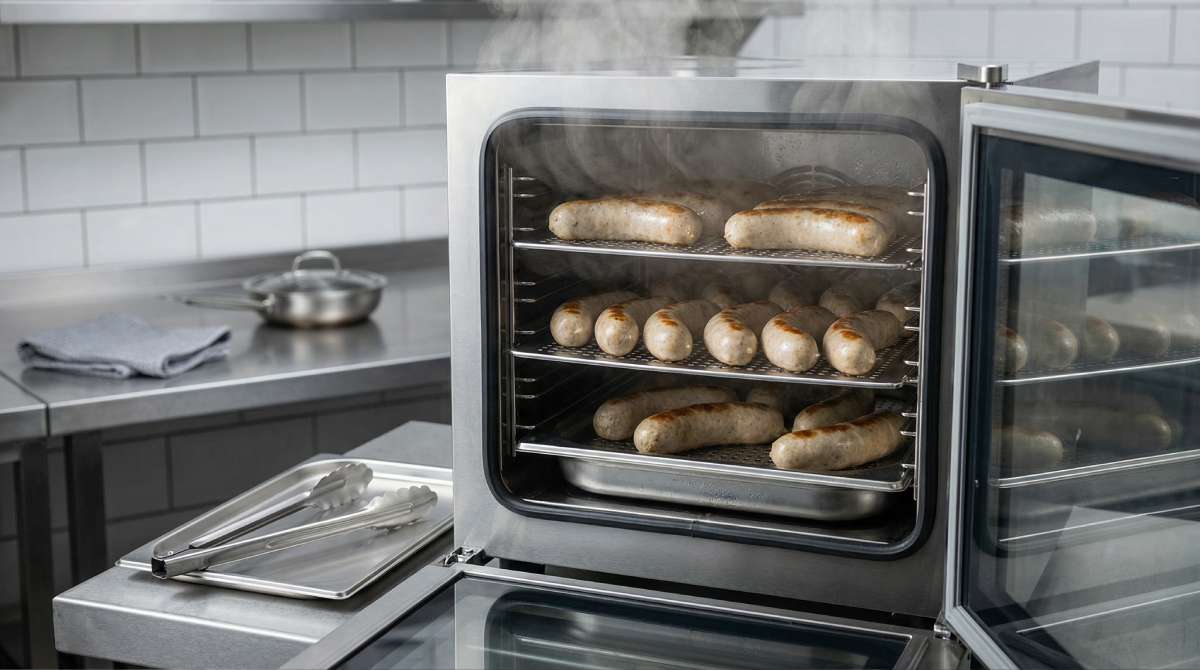
Hot-hold sausages in a steamer: pre-browned bratwursts held hot on a rack for fast service without sitting in condensation.
Hot-holding is where many sausages die. The aim is simple: hold hot without drying out, and keep the finish fresh.
The temperature rule that matters
For UK food businesses, hot food must be kept at 63°C or above when hot holding. If that is not possible, there is a limited-time display tolerance, but the safest operational approach is to design your process around 63°C+.
Best-practice hot-hold setup (choose your equipment)
Bain marie or steam table (moist holding)
- Use for gentle holding where you want to protect juiciness.
- Keep the environment moist, but do not let Bratwurst sit in aggressively boiling water.
- Workflow: steam-then-sear to order is ideal. If you must pre-sear, keep colour light and refresh briefly on the grill when serving.
Rotation: smaller batches more often beats a huge batch that sits too long.
Steamer (fast warm-through, excellent for volume)
- Perfect for getting Bratwurst hot quickly and evenly.
- Best paired with a finishing grill/hotplate for colour.
- Keeps the casing from drying out during the warm-through stage.
Finish-to-order: hold warm in steam, then brown per order in seconds.
Hot-holding cabinet (dry heat risk, manage carefully)
- Cabinets can work well, but they can also dry casings if too dry or held too long.
- Use covered trays where possible and avoid excessive airflow directly on the product.
- Plan a short hold window and refresh with a quick sear if needed.
A simple “finish to order” workflow (high consistency)
- Heat-through in steam/bain marie (keep above 63°C).
- Finish on grill/hotplate for colour when the order lands.
- Serve immediately with mustard and onions or plate with sides.
This gives you the best of both worlds: speed and a just-finished look.
Serving ideas that sell (plated, handheld, and sharing)
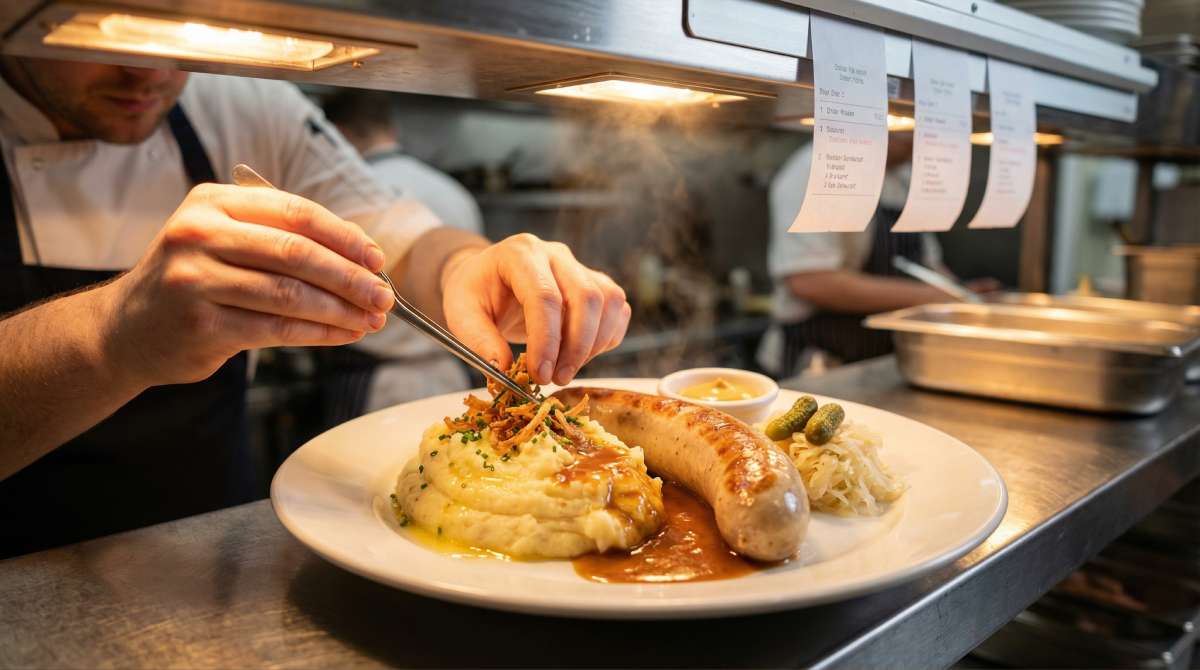
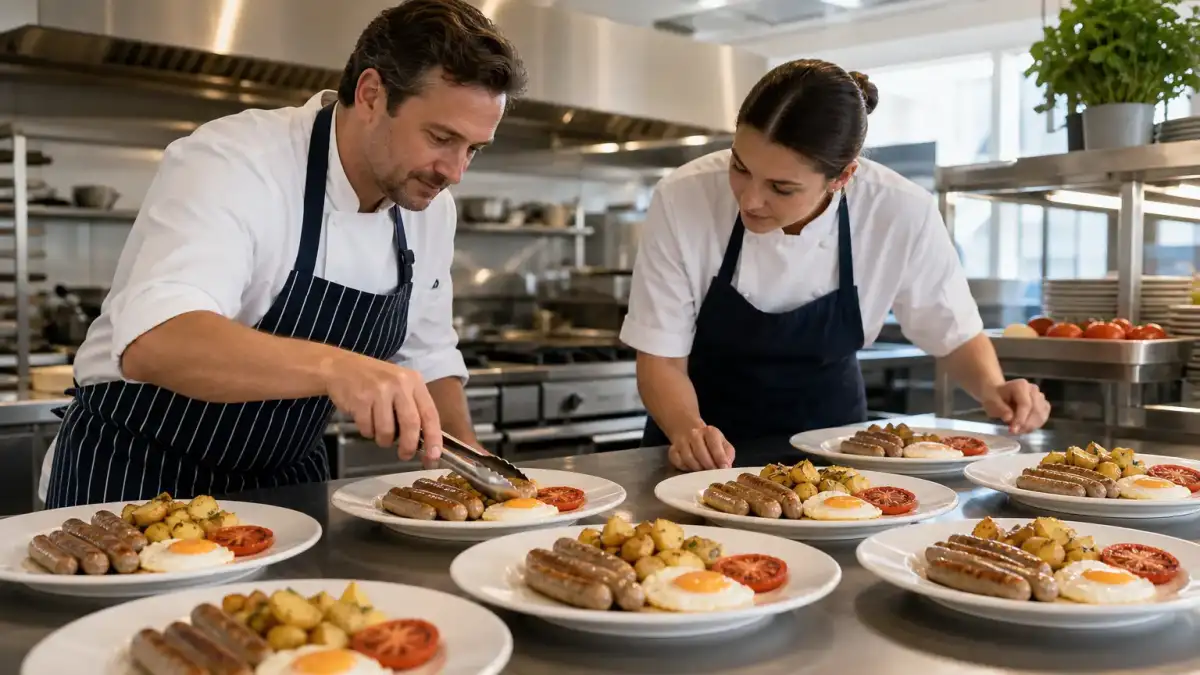
Bratwurst bangers and mash – chef finishing the plate on the pass for service.
Bratwurst sells best when you lean into one or two German cues and keep it tidy. The sausage should look like the hero, not an afterthought.
Plated: Bratwurst + Bratkartoffeln + sauerkraut (the classic)
- One Bratwurst, browned properly, optionally sliced on the bias for a premium feel.
- Bratkartoffeln with bacon and herbs.
- A neat mound of sauerkraut and a ramekin of German mustard.
- Add pickles or onions for contrast.
Why it sells: it reads as a “proper dish” and photographs well for menus and boards.
Pub favourite: “Bangers and mash” upgrade
- Replace standard sausage with Bratwurst.
- Creamy mash, onion gravy, and mustard on the side.
- Optional: crispy onions or a small kraut garnish to keep the German identity.
Why it sells: familiar British comfort, but with a clear premium twist.
Beer and onion gravy Bratwurst
- Serve Bratwurst with a glossy beer-onion gravy and either mash or roasted potatoes.
- Keep the sauce controlled: coat, do not drown.
- Mustard on the side for punch.
Why it sells: rich, winter-friendly, perfect for seasonal boards and cold weather trading.
Handheld: market-style Bratwurst roll
- Soft roll, Bratwurst browned well, onions (fried or caramelised), mustard.
- Keep it clean and fast to build.
- Optional: add kraut as an upsell topping.
Why it sells: customers already know this format from festivals and Christmas markets.
Sharing platters (high perceived value)
- Slice Bratwurst into bite-sized pieces and build a German sharing board:
- Bratwurst, schnitzel bites (if you run them), pretzels
- Bratkartoffeln or roasted potatoes
- sauerkraut, pickles, two mustards
- Position as “German beer hall platter” for groups.
Why it sells: low extra labour, strong margin on sides, great for beer-led venues.
Best sides and condiments for Bratwurst
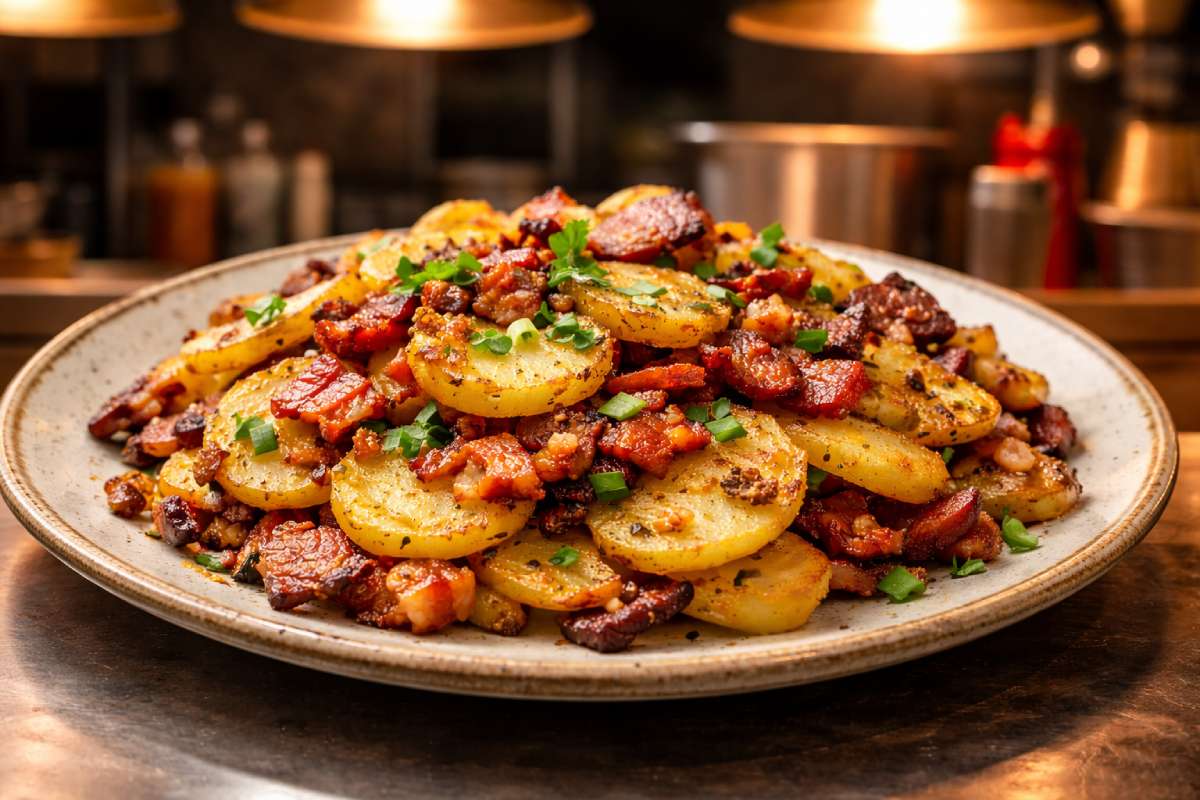
Classic German Bratkartoffeln with bacon and herbs, kept warm on the pub kitchen pass.
Bratwurst is at its best when you treat it like the hero ingredient and build the plate around contrast. The sausage itself is savoury and relatively mild, so the supporting cast should bring acidity, gentle heat, crunch and a little sweetness – without turning the dish into “sausage under sauce”.
The most reliable route is the classic German trio: kraut, onions, mustard. Kraut gives you that sharp, clean lift that cuts through pork fat and keeps the dish feeling balanced. Onions add sweetness and depth, and mustard provides the punch that makes each bite feel “complete”. Add pickles for crunch and you have a plate that reads instantly as German, even in a UK pub context.
Practical pairings that work in real kitchens:
- Sauerkraut (kraut): warm gently and drain well so it’s glossy, not watery. A watery kraut floods the plate and makes the Bratwurst look less premium.
- Onions: fried onions for speed; caramelised onions when you want a more premium feel; beer onions for winter trading.
- Mustards: serve in a ramekin (it looks premium) or as a neat swipe on the plate. If you can, stock two styles:
- mild/sweet mustard for broad appeal
- a hotter mustard for customers who want a kick
- Pickles/gherkins: small cost, big upgrade; they add snap and acidity and work especially well for platters and handheld serving.
For potatoes, you have several “winning” options depending on your service style. Bratkartoffeln is the most authentic and it photographs beautifully, which matters for menus and socials. Mash is the quickest bridge to British comfort food and makes a strong “bangers and mash upgrade”. Roasted potatoes are excellent for batch prep, and chips keep the offer simple for casual or fast service.
What to avoid is mostly about not undoing your own good work. A few common pitfalls:
- Over-boiling: hard boiling can split the casing and wash out flavour. If you need water heat, keep it gentle, then finish for colour.
- Watery kraut: drain, and if needed reduce slightly so it plates cleanly.
- Heavy sauce overload: beer/onion gravy can be fantastic, but the sausage should still be visible and appetising. Coat, don’t drown.
Bratwurst vs other German sausages
This comparison helps buyers and kitchens choose the right sausage for the right job. Bratwurst is usually the all-rounder: it browns well, carries that classic festival aroma, and works plated or handheld. The other German sausages shine when you need a specific eating experience – smoother bite, smokier flavour, or a “speciality” offer.
Here’s the simple way to think about it:
- Bratwurst vs Frankfurter:
Bratwurst is the grill-and-plate hero – it’s meant to brown and look finished on a grill or hotplate. Frankfurters sit more in the “hot dog lane”: a smoother bite, quick to heat, often best warmed gently and served fast. - Bratwurst vs Bockwurst:
Bratwurst brings that classic browned finish and a slightly more robust “sausage” presence. Bockwurst is typically milder and softer, and it’s a strong pick for counters where you want a very gentle profile and simple heating. - Bratwurst vs Krakauer:
Bratwurst is balanced and not smoke-forward. Krakauer is the bolder cousin – usually smokier and more intense, which makes it ideal when you want standout flavour even with minimal toppings. - Bratwurst vs Weisswurst:
Bratwurst is built for browning. Weisswurst is a speciality sausage traditionally heated gently and served pale, more “breakfast/beer hall tradition” than grill theatre.
If you’re ranging products for a UK menu, the quickest commercial logic is: start with Bratwurst as the signature German sausage, then add one extra for differentiation – Frankfurter for ultra-fast hot dog service, Krakauer for smoky punch, or Weisswurst as a specialist feature item.
Storage, handling and planning
Bratwurst becomes a really strong trade product when your storage and prep are disciplined, because it lets you run a consistent service flow and keep waste low. The operational sweet spot is to treat Bratwurst as something you can plan in batches, warm through efficiently, and finish for colour close to the point of sale.
In most real-world UK environments, frozen stock is often the most practical option because it gives you predictable availability for spikes in demand – weekends, events, and seasonal trading. Chilled handling can be great for steady weekly volume, but it requires tighter rotation and more frequent ordering. Either way, the principles are the same: keep the cold chain solid, train staff on rotation, and choose a workflow that protects juiciness.
Key handling habits that keep quality high:
- Thaw under refrigeration, not on the counter. It’s safer and it protects texture.
- For volume service, aim for heat-through first, finish second: warm the sausage through (steam/gentle warm-through or low oven), then finish quickly on a grill or hotplate for colour.
- Cook smaller batches more often. A huge batch held too long is where sausages dry out and where waste creeps in.
- Set a simple internal rule for hot-hold: when product has sat too long, either refresh properly or remove it.
From a service-planning angle, it helps to run two “lanes” depending on the venue and footfall. Lane A is your speed lane: warm-through plus hot-hold, then a short finish to order. Lane B is your premium lane: grill to order for maximum aroma and visual impact. Both can be profitable – the key is to pick one as your default and train the team so the customer experience is consistent.
Finally, Bratwurst supports strong menu engineering because the sausage itself acts as the “hero protein”, while the sides (potatoes, kraut, onions, mustard) create margin and perceived value. If you build the plate around sides you can batch prep well, Bratwurst becomes one of those items that is easy to run and easy to sell, all year round – and especially during Oktoberfest and Christmas market season.
Frequently Asked Questions
It’s better not to boil hard. If you need water heat, use hot water that is not boiling to warm the Bratwurst gently, then finish on a grill or pan for colour and the proper Bratwurst aroma.
Hold hot with moisture control (steam/bain marie is helpful), rotate smaller batches, and finish to order where possible. A good workflow is warm-through in steam, then sear briefly on the grill/hotplate when the order lands.
For a pre-cooked Bratwurst, grilling is mainly for heating through and browning. As a practical guide, allow around 8–12 minutes on medium heat, turning regularly, and adjust based on equipment, load and starting temperature.
Bratwurst can be sold either raw or pre-cooked depending on the producer and format. The Sausage Haüs Bratwurst is supplied as a pre-cooked, service-ready product, so the kitchen focus is heat-through and finishing for colour.
German mustard and onions are the classics, with sauerkraut and pickles for acidity and crunch. Keep sauces controlled so the Bratwurst stays the hero.
Bratwurst is the most iconic German sausage, traditionally made from pork and cooked by grilling or pan-frying until lightly browned. It’s known for a mild, savoury flavour and a juicy bite, and it’s widely recognised in the UK from festivals and Christmas markets.
Bratkartoffeln is the most authentic pairing. Mash, roasted potatoes or chips also work well depending on your service style. The key is adding contrast with kraut, mustard and onions.
The Sausage Haüs Bratwurst is available in multiple sizes (100 g / 120 g / 150 g), which lets you match the sausage to your menu role – snack portion, standard serving, or a hero plate.
A strong seller is a plated dish: Bratwurst with Bratkartoffeln, sauerkraut and German mustard. If you want a familiar British crossover, a “bangers and mash upgrade” works very well.
Use medium heat and turn regularly. Avoid hard boiling and aggressive high flames. A reliable method is steam or gentle warm-through first, then a quick sear on a grill or hotplate to brown the casing.
Conclusion
Bratwurst earns its place on a UK menu because it combines two things that rarely come together: it’s instantly recognisable to customers, and it’s operationally simple for the kitchen. People know Bratwurst from festivals and Christmas markets, so you are not trying to “teach” the product – you are just delivering it properly. That means consistent heat-through, a clean golden finish, and a serving format that keeps the sausage as the hero.
For trade buyers and chefs, the practical win is flexibility. Bratwurst can sit comfortably as a plated main with Bratkartoffeln and kraut, it can become a premium twist on bangers and mash, and it can run as a fast handheld option when speed matters. With a sensible workflow – warm-through first, finish for colour close to service, and controlled hot-holding – you can keep quality high without slowing the pass. The sides and condiments do the rest: mustard, onions, pickles and kraut add contrast and perceived value without adding complexity.
If you want a German signature item that sells on familiarity but still feels premium, Bratwurst is a straightforward choice. When you’re ready, take a look at the other Sausage Haüs product spotlights and buyer guides to build a tight, profitable range across different service styles.
About Sausage Haüs
The Sausage Haüs brings authentic German sausages to the UK trade and foodservice market with a focus on products that perform in real kitchens – consistent quality, service-friendly formats, and strong customer recognition. Our range is designed for pubs, caterers, festivals, farm shops, hot counters and event operators who want reliable results without complicated prep.
All Sausage Haüs products are produced in Germany by Hardy Remagen, a specialist manufacturer with deep expertise in traditional German sausage making. UK distribution is handled through Baird Foods, enabling nationwide cold-chain supply for professional kitchens and trade buyers.
If you are building a German-themed menu, adding a seasonal Oktoberfest feature, or simply looking for a premium sausage that sells quickly in a UK setting, Sausage Haüs can help you choose the right products and service methods for your operation. Explore our product spotlights and get in touch to discuss the best fit for your venue and trading style.