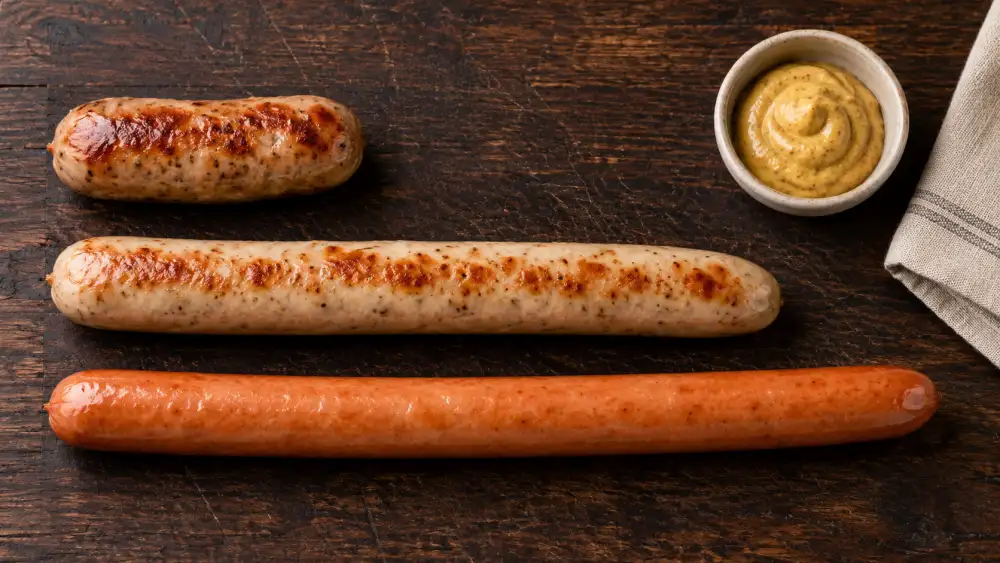
A chilled pack can look like the obvious premium choice. A frozen pack can look like the safer stock decision. Neither impression tells a retail buyer enough.
When comparing fresh vs frozen sausages, the useful questions concern the product specification, eating quality, saleable life, pack format and money left after waste. A lower purchase price means little if too many packs end up in the reduction cabinet.
For farm shops, garden centres, independent food shops and retail buyers considering German bratwurst or frankfurters, the aim is to choose a format that suits how customers shop and how the business replenishes stock. Sometimes that means chilled. Sometimes frozen. Sometimes a carefully chosen combination.
Fresh, chilled, frozen and pre-cooked: get the comparison right
Start by separating storage condition from preparation status. They answer different questions.
Chilled or frozen describes how the product is stored. Raw or pre-cooked describes its preparation status. A chilled German sausage may already be cooked, while a frozen sausage may be raw or pre-cooked. Neither storage format tells you everything the customer needs to do before serving.
The word “fresh” needs particular care. In a buying conversation, one person may mean chilled, another may mean raw, and a shopper may understand it as never previously frozen. Ask the supplier to describe the actual product and its storage history rather than relying on shorthand.
For each candidate, establish the sausage type, recipe, weight, casing, preparation status and intended storage conditions. Then confirm the instructions for cooking or reheating. Pre-cooked does not automatically mean ready to eat straight from the packet.
The government’s guidance on food information for consumers1 explains the importance of accurate product information, including ingredients, allergens and any special storage conditions or instructions needed for appropriate use.
This matters commercially because an apparent fresh-versus-frozen comparison can otherwise become a comparison between two entirely different products. A raw pork sausage and a pre-cooked smoked frankfurter differ in more than their position in the cold store. Match the specifications before drawing conclusions about the format.
Judge eating quality with a fair product test
Neither a chilled label nor a frozen label is a tasting result. Assess the sausages the customer will actually eat.
Appearance still matters at the fixture. AHDB’s research on meat purchase decisions2 found that appearance was a stronger influence in-store than shoppers had claimed beforehand. That research covers meat buying more broadly, but it gives retailers a useful reason to assess pack presentation as well as taste.
Where possible, compare the same recipe, sausage weight and casing in both formats. If the products differ, record those differences. Otherwise, a preference for one recipe can easily be mistaken for a verdict on freezing.
Prepare each sample according to its own instructions, using equipment reasonably representative of home use. Keep accompaniments simple for the first tasting. Mustard, onions and a generous bun can make almost anything feel like a successful lunch.
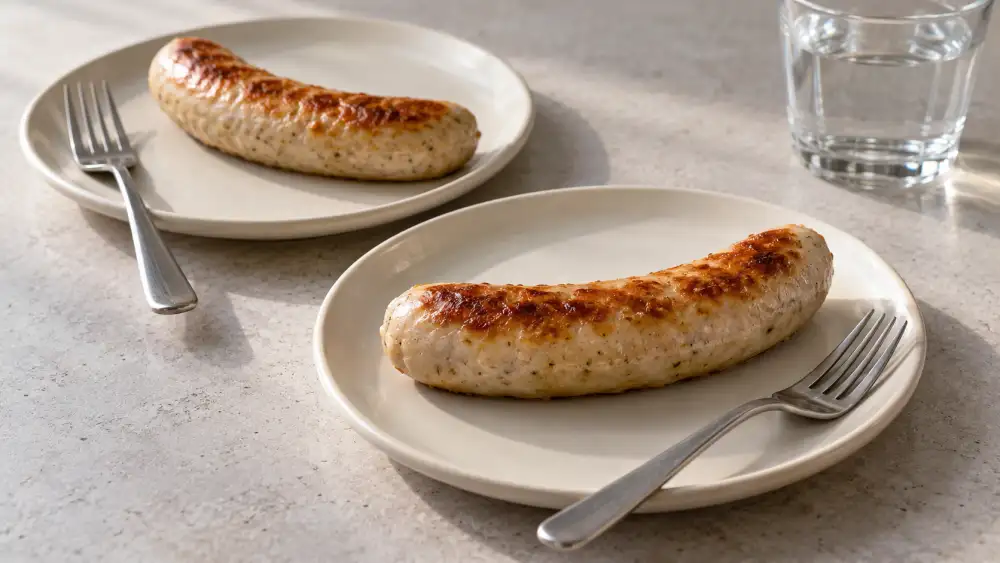
Look at the cooked product as well as tasting it. Is the casing pleasant to bite through? Is the centre juicy without seeming watery? Does the seasoning remain balanced? Does the sausage retain a useful shape and size for the suggested serving?
Then test it in context. A bratwurst intended for a barbecue roll should fit the roll and deliver enough flavour alongside bread and condiments. A frankfurter promoted for a quick family supper should perform using the preparation method shown on its pack.
Record a small set of consistent scores, supported by short comments. Include ease of preparation, appearance and eating quality.
If you operate a café alongside the shop, add a separate service test using the product’s approved preparation instructions. A good retail sample and a good café service product may need different pack formats, even when the sausage itself is the same.
Compare shelf life remaining when the delivery arrives
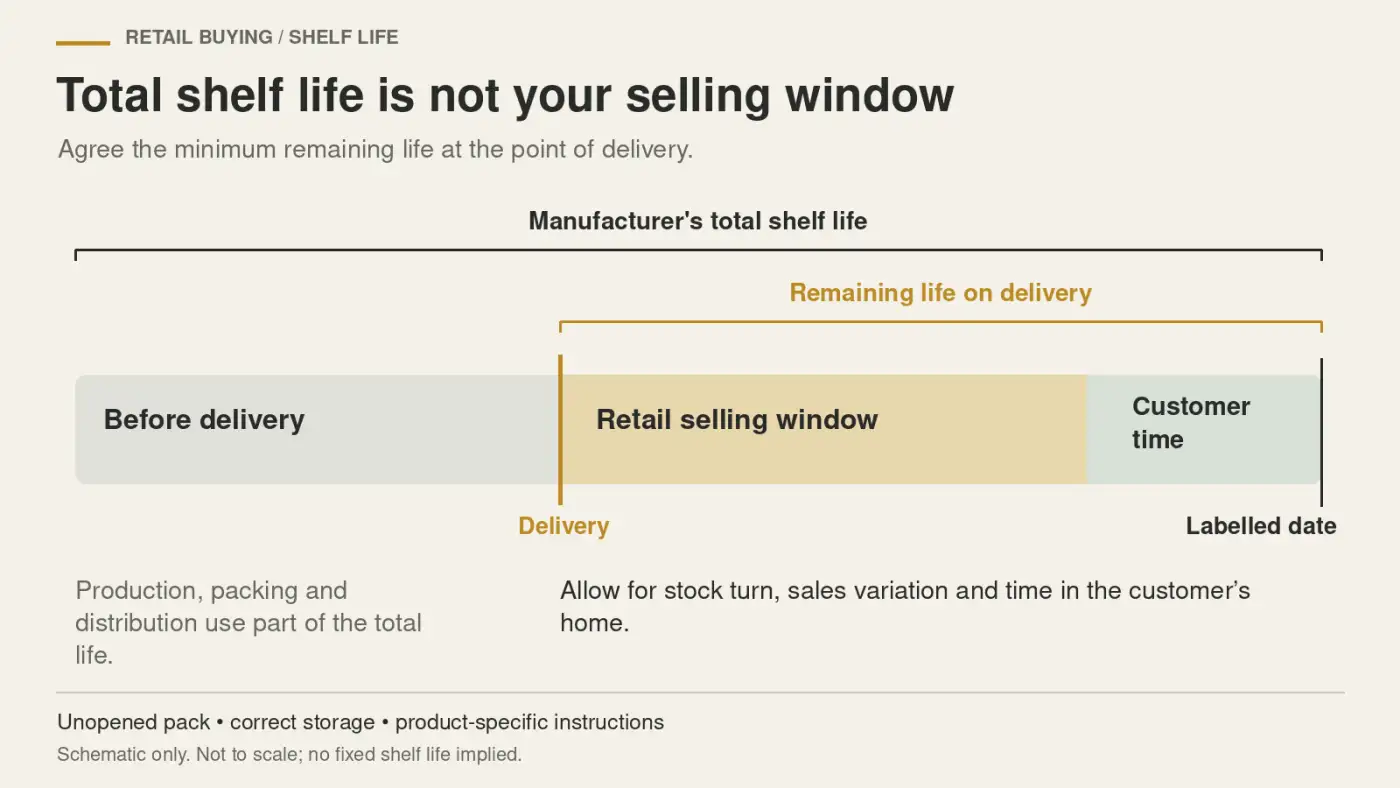
The useful shelf-life figure is the time you receive, rather than the longest period mentioned in a brochure.
Ask for the minimum remaining life guaranteed on delivery, the relevant storage conditions and the supplier’s process for resolving short-dated deliveries. Establish whether the quoted life applies to an unopened pack and what changes after opening or defrosting.
For chilled stock, work backwards from realistic sales. If a case contains 12 retail packs and the shop normally sells three each week, that case represents roughly four weeks of demand. The delivery needs to leave room for that selling period, the shopper’s time at home and some variation in sales.
Frozen stock needs the same discipline. A longer date can support flexibility, but a slow-selling case still occupies space and ties up cash.
The government’s explanation of best before and use-by dates3 distinguishes safety dates from quality dates. Storage instructions remain essential, and food must not be sold after its use-by date.
Use first-expiring stock first, including when a later delivery arrives with an earlier date. Keep the relevant dates visible during replenishment.
Avoid setting a blanket assumption that all chilled German sausages have the same life, or that frozen products can remain in stock indefinitely. Obtain the specification for the exact product. An attractive headline shelf life is only commercially useful when it translates into enough selling time at your door.
Compare commercial performance beyond the buying price
For retail buyers, the relevant comparison is how each format contributes across its listing period, taking account of achieved selling price, promotional support, markdown exposure, waste and stockholding.
Chilled and frozen sausages can have different commercial strengths. A chilled listing may support premium positioning and strong seasonal sales, provided the remaining shelf life and replenishment arrangements match demand. Frozen can offer greater flexibility around slower or less predictable sales, although longer storage does not remove the cost of carrying stock.
Assess both formats against the same commercial measures:
- Achieved margin: reflecting the expected mix of full-price, promotional and reduced sales.
- Rate of sale and stock turn: showing how quickly the initial investment returns through the till.
- Space productivity: measuring contribution against the chilled or frozen capacity allocated.
- Waste and markdown exposure: based on delivery life, case quantities, replenishment frequency and demand variability.
- Stockholding requirements: including working capital, storage costs and seasonal residual stock.
The balance will vary by retailer. A fast-selling chilled bratwurst line may justify its space despite some markdown exposure. A frozen speciality line may remain commercially attractive at a lower weekly rate of sale if stockholding is controlled and its contribution meets the retailer’s requirements.
Also assess whether the listing adds category sales or mainly displaces an existing product. The strongest choice is the format that delivers a worthwhile contribution within the retailer’s space, stock and customer proposition.
Check case sizes, storage space and delivery practicality
A useful product can still be an awkward purchase if the case is too large.
Distinguish between the consumer pack and the outer case. A four-sausage pack might suit your shoppers perfectly, while the minimum wholesale order creates more stock than the shop can sensibly hold. Ask about mixed cases, split-case ordering and replenishment frequency before making a listing decision.
Measure the space required in both the selling fixture and the stockroom. Use the actual case dimensions rather than assuming there will be room somewhere behind the chips. Freezer capacity has an opportunity cost when another proven line could occupy it.
Deliveries also need to fit staffing. The government’s business guidance on chilling and freezing food4 advises putting frozen deliveries into the freezer promptly. It also explains safe defrosting and the need to follow manufacturer instructions where cooking from frozen is intended.
For a garden centre with a busy café and a small retail team, the practical issue may be who receives the delivery during lunch service. For a farm shop, it may be limited freezer access during weekend trading.
If the café uses frozen stock, allow space and time for any required controlled defrosting. Retail packs sold frozen and sausages prepared for café service create different handling tasks.
Include equipment running costs in the comparison, especially if the listing requires additional refrigeration. Existing spare capacity and buying another freezer are two very different business cases.
Make sure the pack works for retail sale
A foodservice case and a retail-ready product are different propositions. Confirm which one you are buying.
Review an actual consumer pack before ordering. Check the product description, net weight, ingredients, allergen information, storage instructions, date marking and preparation directions. A product photograph alone cannot tell you whether the pack is suitable for your intended sale.
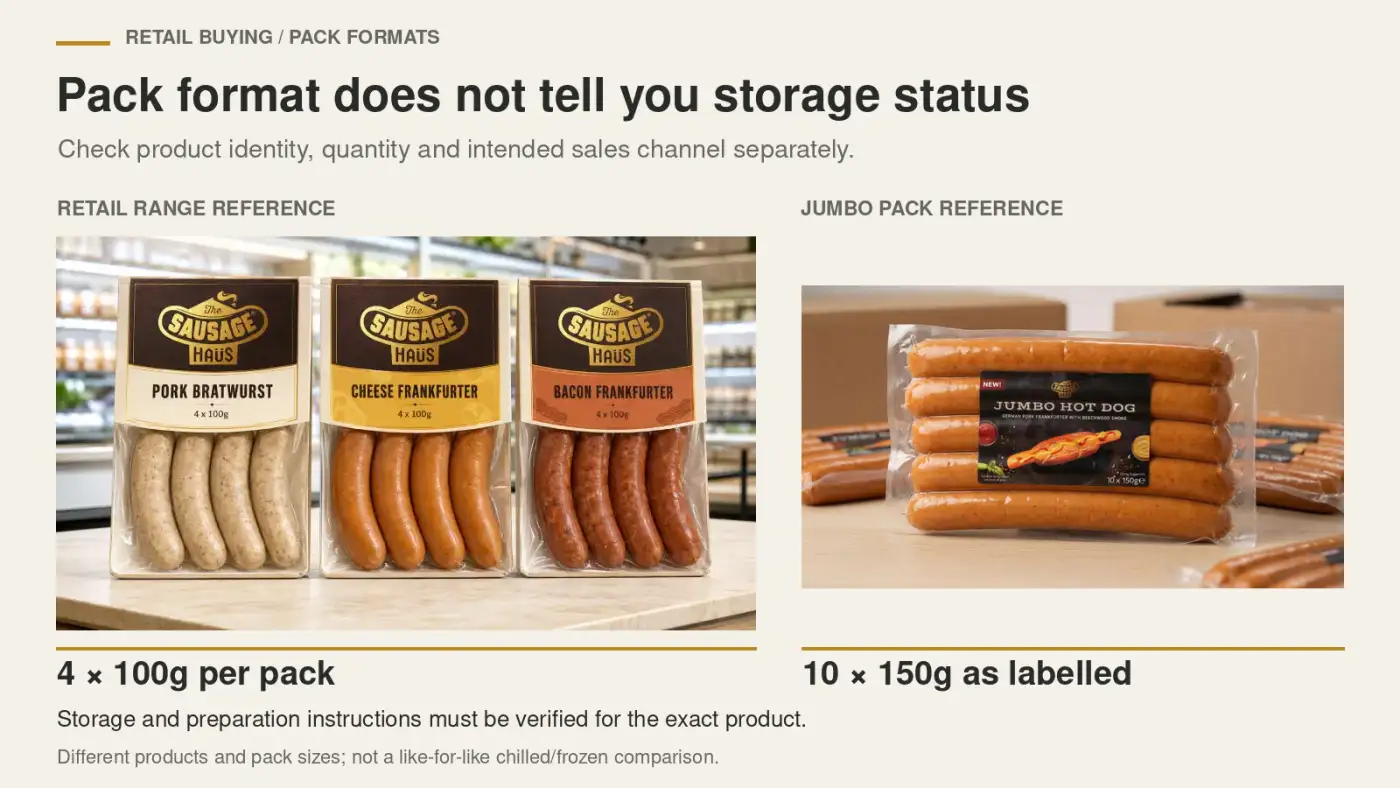
The information should also be easy for customers to understand. Can they tell how many sausages are included, whether cooking or reheating is required, and what to do after opening? If frozen, are the defrosting or cooking-from-frozen instructions clear?
Take particular care if you intend to buy frozen stock and sell it chilled. Do not create a chilled shelf life by guesswork or assume that changing the display location leaves the original labelling appropriate.
The rules on naming foods sold defrosted5 include a requirement to identify defrosted foods, with specified exemptions. Establish which requirements apply to the exact product and sales arrangement with the supplier and, where necessary, your local authority.
Obtain a supported handling process and appropriate labelling before making that change. Buying a product already specified and labelled for the intended route can be much simpler.
Finally, inspect the pack in your fixture. Is the product name readable through the freezer lid? Does the pack stack securely? Can staff rotate dates without dismantling the display? Retail suitability includes the ordinary tasks repeated every week.
Where shoppers look and what chilled or frozen signals
A sausage cannot earn a place in the basket if the shopper never finds it. The buying decision therefore includes where the product will sit and what that location communicates.
In-store: choose a fixture customers can understand
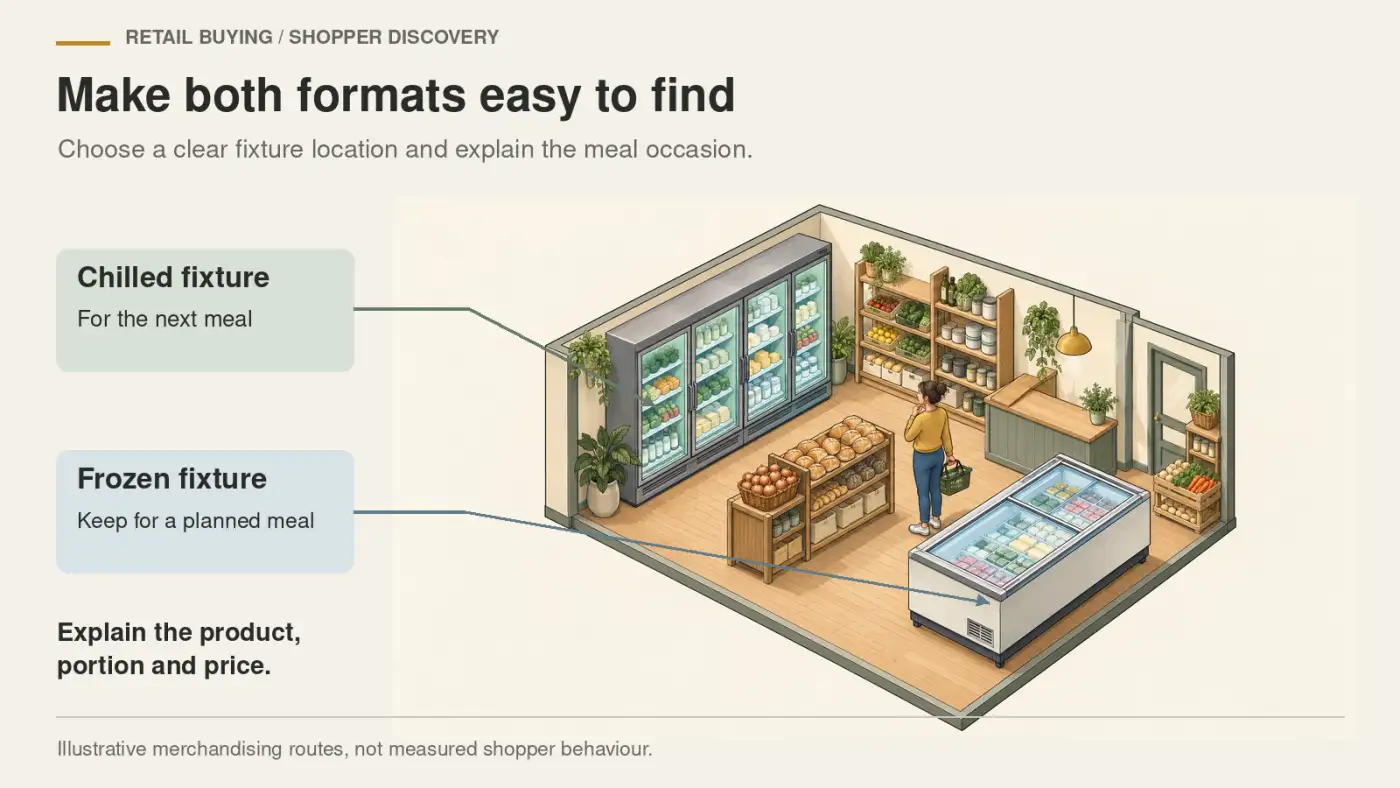
Consider the likely route for each product. A shopper seeking raw bratwurst may look among chilled sausages and barbecue meats. Someone looking for pre-cooked frankfurters may check chilled hotdogs or continental cooked meats. Frozen sausages need a clear position within the frozen meat or meal range.
These are merchandising routes to test, rather than a claim that every shopper follows the same path. Do not assume someone browsing the chilled meat cabinet will also visit the freezer.
Use clear category signage and, where useful, a sign directing shoppers from a related display to the correct cold-storage fixture. Rolls, mustard or a barbecue display can introduce the serving idea without moving sausages out of their required storage conditions.
Online: cover the product, the format and the meal
On your own website or online shop, make products findable through broad terms such as “sausages” as well as accurate names such as “bratwurst”, “frankfurters” and “hot dogs”. Include chilled or frozen status prominently on the product page.
Use relevant categories and serving content to connect the product with barbecue meals, hotdog nights or quick suppers. These are useful search-language examples, not measured keyword-volume claims. Review your own site-search records and Google Search Console data to see which terms bring customers to your business.
A frozen bratwurst listed only under an unfamiliar brand name is asking the shopper to do unnecessary detective work.
Perceived value: explain what the price buys
Chilled presentation can support a premium, buy-for-tonight message. Frozen can support a keep-for-later message built around flexibility and value. Treat those as positioning opportunities, not guarantees of quality or willingness to pay.
In YouGov’s research on British frozen-food buying habits6, value for money was the most frequently cited purchase driver, followed by quality and taste. The findings concern frozen food generally, rather than sausages specifically.
For a premium frozen sausage, therefore, explain the recipe, sausage size, flavour and practical use. A shopper comparing it with a budget frozen banger needs to understand why it costs more.
For chilled sausages, show what supports the premium beyond being in the fridge: a distinctive bratwurst recipe, a particular casing or a clearly described smoked flavour, where verified for that product.
Compare price per kilogram and, when portion sizes are comparable, price per sausage or serving. Frozen does not have to mean cheap, and chilled does not automatically justify a higher price.
Keep the meal suggestion simple: bratwurst rolls for a weekend barbecue, frankfurters for a quick supper, or sausages with warm potatoes and slaw. Give the customer both a reason to notice and a reason to eat them.
Run a small trial before committing to the range
Use the first order to answer a defined buying question. Can this product achieve acceptable sales, customer response and profit within the space available?
Keep the initial range compact enough to interpret the results. Adding several sausage types, pack sizes and storage formats at once makes it difficult to see what is working. Choose products with distinct roles and agree a review date that reflects their shelf life and expected purchase frequency.
Give each listing clear pricing, a readable description and one useful serving suggestion. A neglected freezer corner and a prominent chilled display will not provide a fair comparison of formats.
Before ordering, complete a short supplier comparison:
| Check | What to obtain |
|---|---|
| Product specification | Recipe, sausage weight, casing and preparation status |
| Shelf life | Minimum remaining life on delivery and relevant handling instructions |
| Ordering | Case size, minimum order, lead time and delivery charges |
| Retail suitability | Consumer-pack images and complete label information |
| Supply support | Process for damaged, incorrect or short-dated deliveries |
Alongside the commercial checks, follow the government’s guidance on suppliers, delivery checks and traceability7. Keep the records needed to identify received stock and respond effectively to a problem.
Track units sold, full-price sales, markdowns, write-offs, gross profit and stock remaining. Add brief staff and customer feedback.
For a Sausage Haus range discussion, bring those requirements to the supplier. Ask which bratwurst or frankfurter formats fit the intended fixture and sales pattern, then confirm the current specification before placing the order.
Frequently Asked Questions
Price parity can make sense where the recipe, weight and pack contents are equivalent, but it should be a deliberate positioning decision. Consider the competing products in each fixture and whether customers recognise the same value in both formats.
If prices differ, make the reason understandable. A larger pack, different sausage size or promotional offer provides a clearer explanation than storage format alone. Avoid assuming that frozen automatically requires a discount.
Potentially, provided the second listing brings additional sales or serves a distinct purchasing occasion. The useful test is whether combined contribution increases enough to justify the additional space and stock.
Track total sales across both formats alongside changes to the original listing. If customers simply transfer their purchases between fixtures, the wider range may add complexity without improving category performance. Selected-store trials can help establish where a dual listing earns its place.
Compare performance with relevant existing barbecue lines over the same period, rather than judging the sausage against its forecast alone. Weak sales across the whole occasion suggest a different issue from one product underperforming while comparable lines sell well.
lso separate availability, visibility and conversion. A line that was poorly displayed or repeatedly unavailable has not received a meaningful test. Agree any extension around a specific question that the additional trading period can resolve.
It can materially affect the product’s usefulness. Individually frozen sausages may allow customers to remove the quantity needed, where the packaging and handling instructions support that use. A block-frozen pack may require the whole contents to be defrosted together.
For retail, assess whether the pack quantity suits the intended household or occasion. For an adjoining café, establish the smallest practical preparation batch. Confirm the actual freezing format with the supplier rather than assuming every frozen case offers portion-by-portion flexibility.
They can support purchasing volume and introduce customers to the product, but assess the two channels separately. Strong café demand can otherwise conceal a retail pack that is not selling through effectively.
Record stock transfers and use an appropriate internal cost so each channel’s contribution remains visible. Confirm that the product specification and pack format suit both uses. A successful café serve can then provide a credible retail serving suggestion, supported by clear information about which product customers should buy.
For a trial, consider how much commitment each route requires. Supplier-branded packs may provide a simpler starting point where suitable retail packaging is already available. Own label may offer a closer fit with the shop’s proposition, subject to supplier capability and commercial terms.
Before committing, establish minimum production quantities, artwork costs, lead times, responsibility for product information and exposure to unused packaging. Those commitments should reflect demonstrated demand, particularly for a seasonal or specialist line.
Prioritise arrangements that manage stock exposure: phased deliveries, clear order cut-offs, agreed minimum remaining life and visibility of replenishment lead times. These can be more valuable than a lower unit price tied to a large opening order.
Clarify promotional funding, availability during peak weeks and any agreed arrangements for residual stock before launch. Do not build the commercial case around assumed returns or supplier support that has not been confirmed.
It provides a useful starting point, but the result needs context. A farm shop with an established continental-food range may perform differently from a garden centre where most food purchases accompany a café visit.
Review the trial store’s customer profile, fixture position, pricing and promotional support. Expand into a representative group of locations, with clear performance criteria, before committing the whole estate. The aim is to establish which store types suit the listing and whether the result can be repeated.
Conclusion
The strongest fresh vs frozen sausages comparison starts with equivalent products and ends with actual shop performance.
Chilled may suit a retailer whose customers regularly buy for the next meal and whose sales support frequent replenishment. Frozen may suit a shop that needs more flexibility around seasonal or less predictable demand. A mixed range can work where each listing has a clear purpose and sufficient sales to justify its space.
The decision becomes clearer when buyers compare eating quality, remaining life on delivery, case quantities, retail labelling and the cost of holding stock. They also need to consider where customers will find the product and whether its presentation explains the price. Purchase price belongs in that assessment, alongside markdowns, write-offs and the time taken to sell through.
A small trial is usually more informative than a broad assumption about which format is better. Give the products a fair display, record the results and judge the contribution over a meaningful trading period.
If you are considering German bratwurst or frankfurters for your shop, discuss your customer base, available storage and expected sales with The Sausage Haus. Use that conversation to establish suitable formats, request current product details and build a manageable first order.
The Sausage Haüs
The Sausage Haus brings authentic German-style sausages to the UK market through a partnership between Hardy Remagen and Baird Foods.
Hardy Remagen is a long-established German producer with deep experience in traditional sausage making, continental meat products and modern food manufacturing. The range reflects the kind of products German shoppers already understand and enjoy: Bratwurst, Frankfurters, smoked hotdogs, cheese-filled sausages, Bockwurst, Weisswurst and other classic German-style lines.
In the UK, the range is represented and distributed by Baird Foods, giving retailers, wholesalers, caterers and foodservice operators access to German sausage products with a practical UK supply route. This combination is important: German manufacturing knowledge on one side, UK market understanding and distribution on the other.
For retail buyers, The Sausage Haus range offers a clear way to add something different to both chilled and frozen sausage fixtures. The products are built around real eating occasions: BBQs, premium hotdog nights, family meals, German street food, Oktoberfest promotions, Christmas market food and quick comfort meals at home.
The result is a range that gives shoppers something more distinctive than ordinary sausages and standard hotdogs, while giving buyers a compact, commercially useful product story with strong fresh and frozen potential.
References
AHDB’s research on meat purchase decisions.
UK Government. Understanding food labelling. GOV.UK. Updated June 25, 2026.
UK Government. Food hygiene for businesses. GOV.UK. Updated June 25, 2026.
YouGov’s research on British frozen-food buying habits.
UK Government. Running a food business. GOV.UK. Updated January 30, 2025.