Beer gardens, pub terraces, festivals and outdoor cafés all need food that is quick to serve, easy to enjoy and worth paying for. Bratwurst and good quality frankfurters fit that setting naturally: warm, informal, adaptable and far more useful than their simple appearance suggests.

Fast, Outdoor-Friendly Service

Simple Menus Sell Better

Strong Value For Operators
Overview
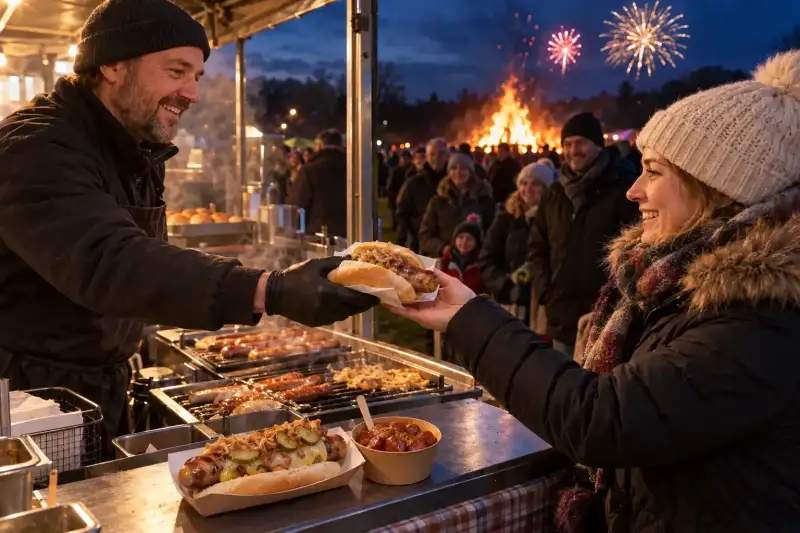
Outdoor food has to work differently from indoor dining. For beer gardens, terraces, festivals and outdoor cafés, the best dishes are quick to serve, easy to carry and suited to customers who may want something lighter than a full plated meal.
Bratwurst and quality frankfurters fit this setting because they can be served as handheld rolls, tray meals or simple lunch plates without making the menu complicated. They give operators a warm, familiar offer that can still feel distinctive with the right rolls, toppings and sides.
This article looks at how chefs, caterers, retailers and event traders can use German sausages as a focused outdoor food offer, with practical attention to speed, consistency, staff training, menu wording and service flow.
Key Takeaways
- Build the offer around one or two strong sausages, then create a small number of clear serving formats such as a bratwurst roll, frankfurter with onions or currywurst-style tray.
- Choose toppings and sides that support outdoor eating: sauerkraut, mustard, crispy onions, pickles, slaw, potato salad or grilled vegetables can add variety without slowing service.
- Quality matters because simple sausage dishes have little to hide behind; the sausage, roll and toppings need to justify the price and eating experience.
- Keep customisation controlled. Too many sauces, rolls or build-your-own choices can slow queues, increase errors and make staff training harder.
- Check the operating setup before launch, including cooking method, holding, storage, temperature control, allergen information, staffing, packaging and site rules.
Why Beer Garden Food Needs To Work Differently
Beer garden food has a different job from food served inside a dining room. It has to suit movement, weather, queues, outdoor tables, casual drinking occasions and customers who may not want a full plated meal. A dish can be excellent in the kitchen and still be wrong for the garden if it is awkward to carry, slow to serve or too heavy for warm weather.
For operators, the commercial test is simple: can the item be prepared consistently, served quickly and eaten easily outside? That matters for pubs, cafés, garden centres, farm shops with outdoor seating, and event traders. When the sun comes out, customers often arrive in waves. A menu that relies too heavily on complex plating, long cook times or too many garnish steps can create delays just when the terrace should be making money.
Good beer garden menu ideas usually share a few traits. They are clear, familiar enough to sell, flexible enough for small variations, and robust enough to handle outdoor service. They should also feel seasonal without becoming fussy. A customer sitting outside with a drink often wants something satisfying, but not necessarily a heavy indoor-style main course.
This is why German sausages work well in the setting. Bratwurst and frankfurters can be served simply, dressed up sensibly, or built into a more complete dish. They sit comfortably between snack, lunch and casual meal, which is exactly where many beer garden menus need stronger options.
The Outdoor Advantage: Why Bratwurst Feels Right In The Open Air
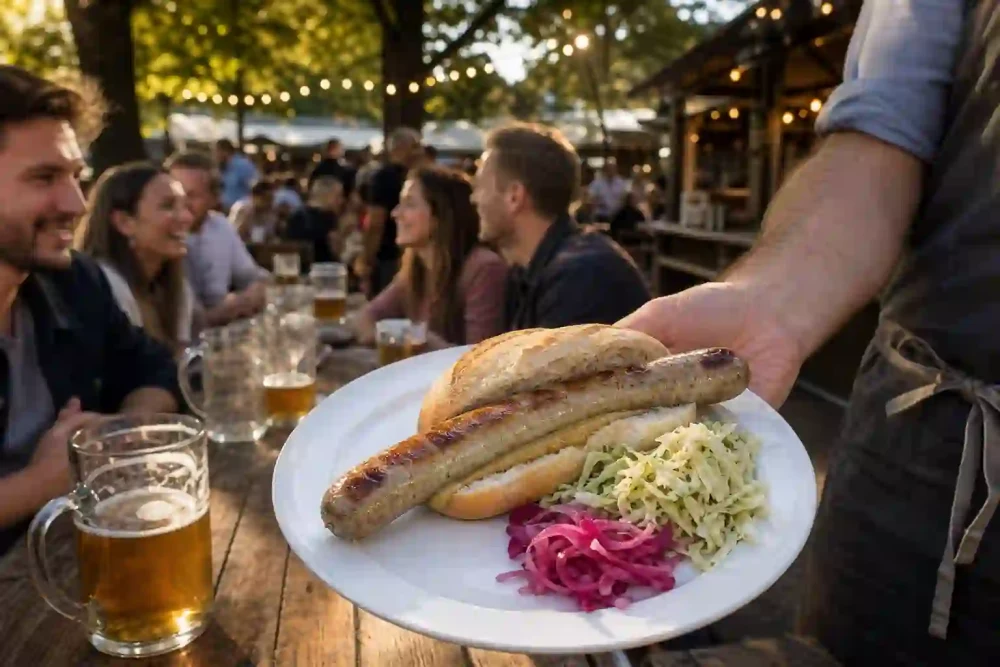
Bratwurst has an outdoor quality that is hard to manufacture. It belongs naturally with open-air eating, beer gardens, markets, festivals and spring or summer trading. That is partly cultural, but it is also practical. A good bratwurst gives customers aroma, warmth, texture and a sense of occasion without asking the operator to build a complicated plate.
This regional German guide highlights the history, identity, and outdoor serving culture of Thüringer Rostbratwurst for anyone shaping an authentic beer garden menu.
For UK venues, that matters because outdoor menus often need to feel relaxed but still worth paying for. A bratwurst in a proper roll with mustard, onions, sauerkraut or a crisp seasonal slaw feels more considered than a basic sausage in bread, but it remains easy to understand. Customers do not need a long explanation. They can see what it is, imagine eating it, and order quickly.
Bratwurst also gives useful menu range. It can be served as a classic handheld option, sliced with curry sauce, paired with chips, or plated with potato salad for a slightly more substantial lunch. That flexibility helps different businesses use it in different ways. A pub may use it as a beer garden special. A festival trader may use it as the core product. A garden centre café may present it as a seasonal lunch dish.
The important point is not simply that bratwurst is German. It is that it suits the rhythm of outdoor service. It smells good, eats well outside and feels informal without looking cheap. That combination is valuable.
Quality Frankfurters And The Case For Cleaner, Faster Service
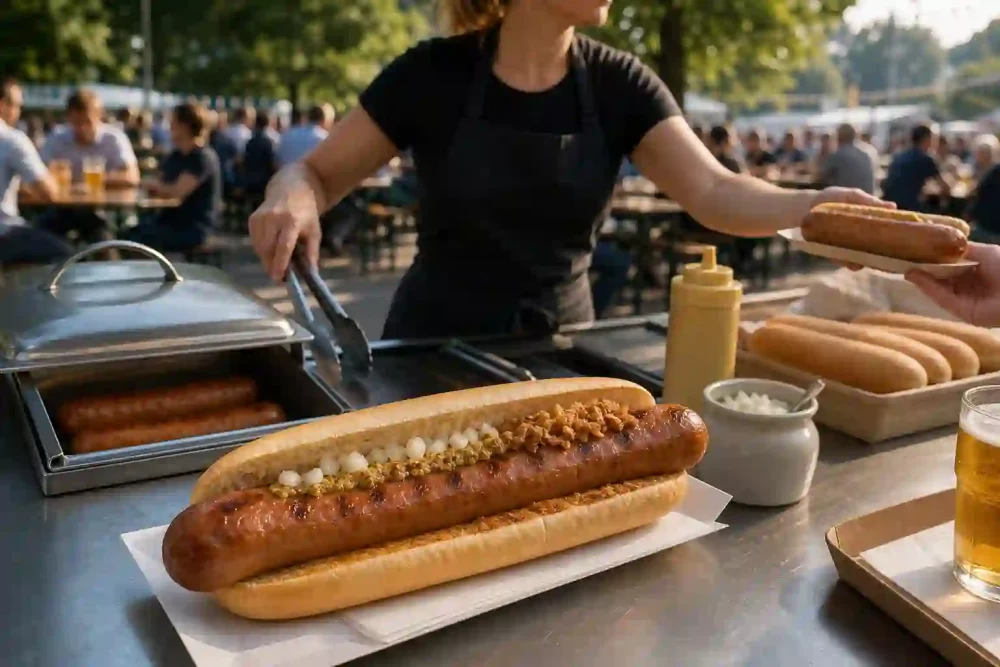
Frankfurters are often underestimated because poor versions have made the category look too basic. A good quality frankfurter is a different proposition. It gives operators speed, consistency and clean service, while still allowing the finished dish to feel premium when the sausage, roll and toppings are properly chosen.
This cultural overview explains why currywurst became an everyday German icon and helps put popular sausage formats on a beer garden menu into wider context.
For busy outdoor trade, that speed can be a major advantage. A frankfurter offer can move quickly through a queue because the assembly is straightforward. There is less fiddly plating, fewer components to manage and less risk of staff interpreting the dish differently from one order to the next. That makes it useful for pubs with limited outdoor staffing, cafés with lunch rushes, and traders who need reliable throughput.
The other advantage is neatness. Customers eating outside often want food they can carry to a table, eat standing up, or manage with one hand while holding a drink. A frankfurter in a good roll is far more forgiving than a dish that collapses, leaks or needs a full cutlery setup. That improves the customer experience and keeps the service area cleaner.
Quality matters here because the sausage has nowhere to hide. If the frankfurter is bland, watery or cheap-tasting, the whole dish feels ordinary. If it has a good bite, balanced seasoning and a proper eating quality, it can carry a simple menu format very effectively. In a beer garden, that is often the sweet spot: fast to serve, easy to eat and better than customers expected.
Lighter Serving Ideas For Spring And Summer Menus
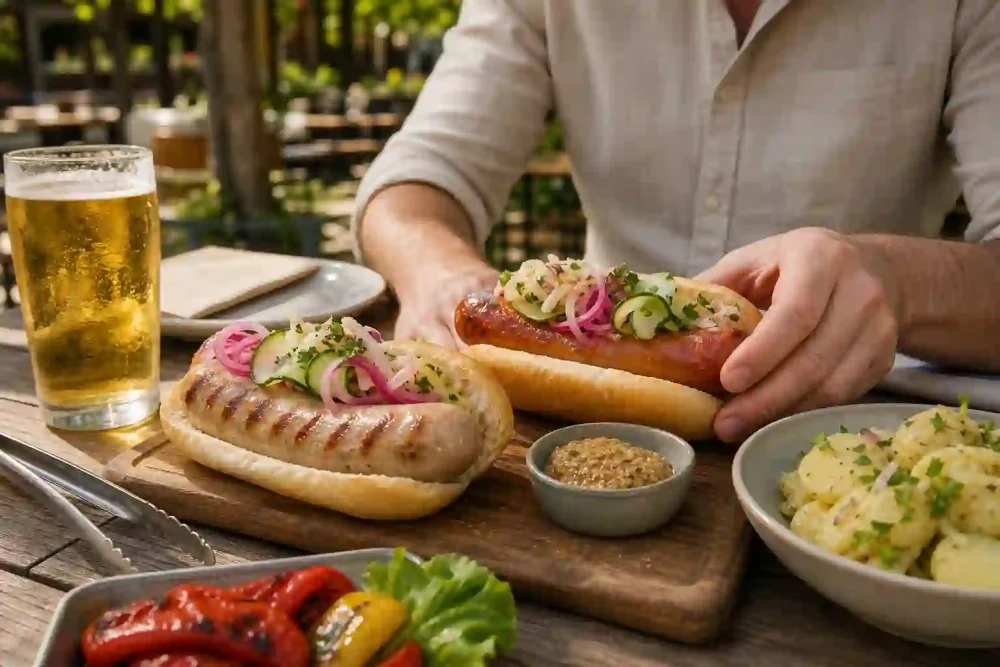
Outdoor sausage dishes do not have to mean heavy winter food. Bratwurst and frankfurters can work very well in spring and summer when they are paired with lighter sides, sharper toppings and fresher menu language. The key is to avoid making every dish feel like a dense plate of sausage, chips and gravy.
This recipe guide shows how a warm German potato salad can work as one of the lighter sides for bratwurst and frankfurters
A bratwurst in a roll can be brightened with quick-pickled onions, sauerkraut, cucumber, mustard, herbs or a cabbage slaw. These additions bring acidity and crunch, which helps the dish feel cleaner in warm weather. A quality frankfurter can be served with a lighter potato salad, crisp salad leaves, grilled peppers or a simple relish rather than being pushed only towards loaded fast food.
For operators, this creates a useful balance. You can keep the core service model simple while still giving the menu a more seasonal feel. A few well-managed topping routes can make the offer look broader without making the kitchen harder to run.
Practical spring and summer ideas include:
- Bratwurst roll with mustard, sauerkraut and crispy onions
- Frankfurter with cucumber relish, pickled onion and a lighter dressing
- Currywurst-style sliced bratwurst with fries as the more indulgent option
- Bratwurst with potato salad and dressed leaves for a café-style lunch plate
- Frankfurter with grilled peppers and onions for a warm outdoor special
This range gives customers choice without losing operational control. The menu can feel fresh, but still trade-friendly.
How To Build A Beer Garden Sausage Menu Without Slowing The Kitchen
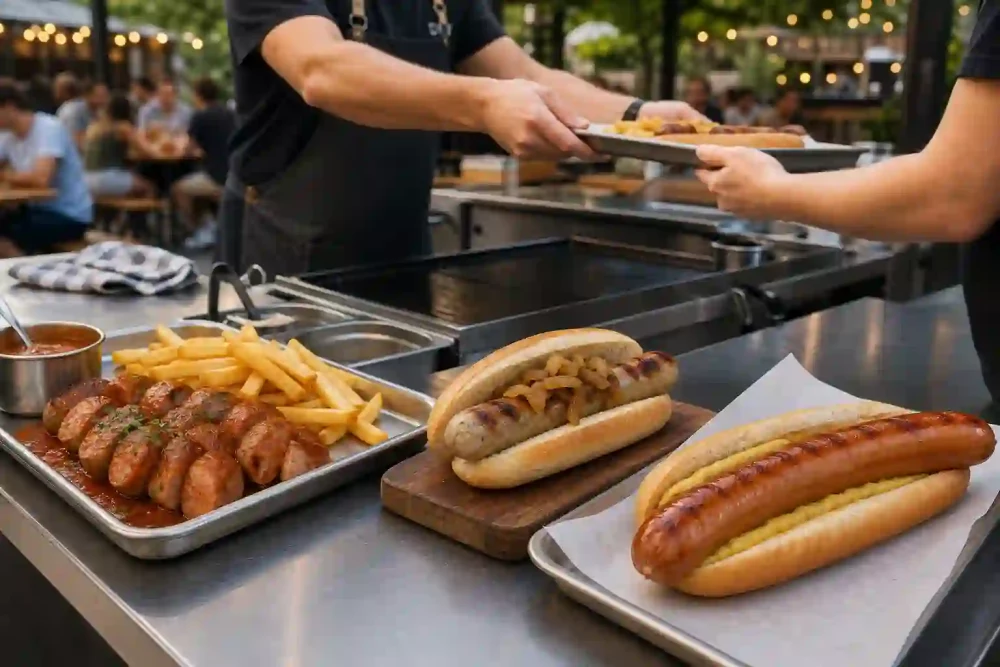
The strongest beer garden sausage menus are usually built around a tight core offer rather than too many moving parts. A menu with six sausages, five sauces, four rolls and endless toppings may look exciting on paper, but it can quickly become slow, messy and difficult for staff to execute during a busy outdoor service.
A better approach is to start with one or two strong sausages and build clear formats around them. For example, a pub might offer a classic bratwurst roll, a frankfurter with onions, and a sliced currywurst option with chips. That already gives three different eating occasions: simple handheld, familiar hot dog-style dish, and a more filling plate or tray.
The real work is in the prep system. Toppings should be easy to portion. Rolls should hold the sausage properly. Sauces should be fast to apply. Staff should understand exactly what goes into each dish, in what order, and how it should be presented. This is not glamorous, but it is what makes the difference between a menu that sounds good and a menu that survives a sunny Saturday.
Operators should also think carefully about the number of custom choices. Some choice is useful, but too much choice slows queues and increases errors. A short list of well-named options often sells better than a build-your-own system that forces customers to make too many decisions.
For many venues, the best model is simple: a clear core sausage, two or three finished menu items, and one special that can change with the season.
What Pubs, Cafés And Garden Centres Can Learn From Street Food Traders
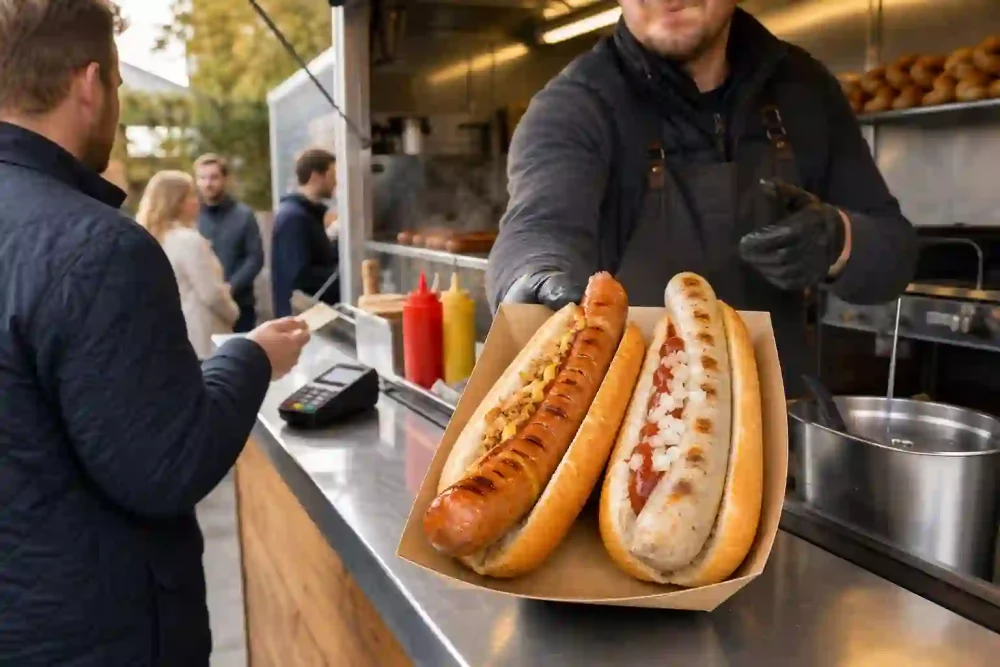
Street food traders understand something every beer garden operator can use: a good outdoor menu is not just about the product. It is about the whole flow from first glance to final bite. Customers need to understand the offer quickly, order without confusion and receive something that looks appealing even when served at speed.
This tourism page highlights Hamburg currywurst culture and why quick, recognisable sausage dishes work so well for outdoor trading.
This is especially useful for pubs, cafés and garden centres, where outdoor food can sometimes be treated as an extension of the indoor menu. That can work, but it can also create friction. A dish designed for a quiet indoor table may not suit a sunny terrace with a queue at the bar and children moving between tables. Street food thinking makes the offer more direct.
The menu board should make decisions easy. Product names should be clear. The difference between options should be obvious. A customer should not have to decode the menu while holding up the queue. “Classic Bratwurst Roll”, “Currywurst & Chips” and “Frankfurter With Crispy Onions” are the kind of names that do their job.
Street food traders also tend to respect repetition. They know that the same dish made well, again and again, is often more profitable than a large menu that creates stress. For fixed venues, that is a useful lesson. Outdoor service rewards focus.
This does not mean making the offer crude or basic. It means building a menu that is easy to buy, easy to serve and still good enough for customers to come back for.
Practical Checks Before Adding Outdoor Sausage Service
Before adding bratwurst or frankfurters to an outdoor menu, operators should look beyond the dish itself. The idea may be strong, but the setup has to match the site, staffing and trading pattern. A good product cannot compensate for a service point that is too slow, poorly positioned or awkward to manage safely.
This official HSE guidance explains crowd safety checks for outdoor catering layouts, including stall positioning, congestion risks, and trading patterns worth reviewing before a busy beer garden service.
The first check is equipment. Venues need to know whether the sausage will be cooked inside and finished outside, cooked fully at an outdoor station, or served from an existing kitchen pass. Each option affects staffing, holding, queue management and customer visibility. Gas, electric load, ventilation, weather protection and safe working space should all be considered properly.
Food handling also needs a clear plan. Chilled or frozen storage, temperature control, allergen information, cross-contamination controls and cleaning routines should be practical for the site, not just written down somewhere. Outdoor service can be busy and exposed, so the system needs to be robust.
Operators should also check the commercial basics:
- Can the dish be served quickly at peak times?
- Does the price work once roll, toppings, packaging and labour are included?
- Will staff be able to produce it consistently?
- Does the outdoor service point create a better customer experience or just another queue?
- Are local authority, event, landlord or site rules relevant to the setup?
These checks are not barriers. They are the difference between a good idea and a reliable trading offer. The more practical the setup, the easier it is for sausage dishes to perform well outside.
Where The Sausage Haus Fits Into A Better Beer Garden Offer
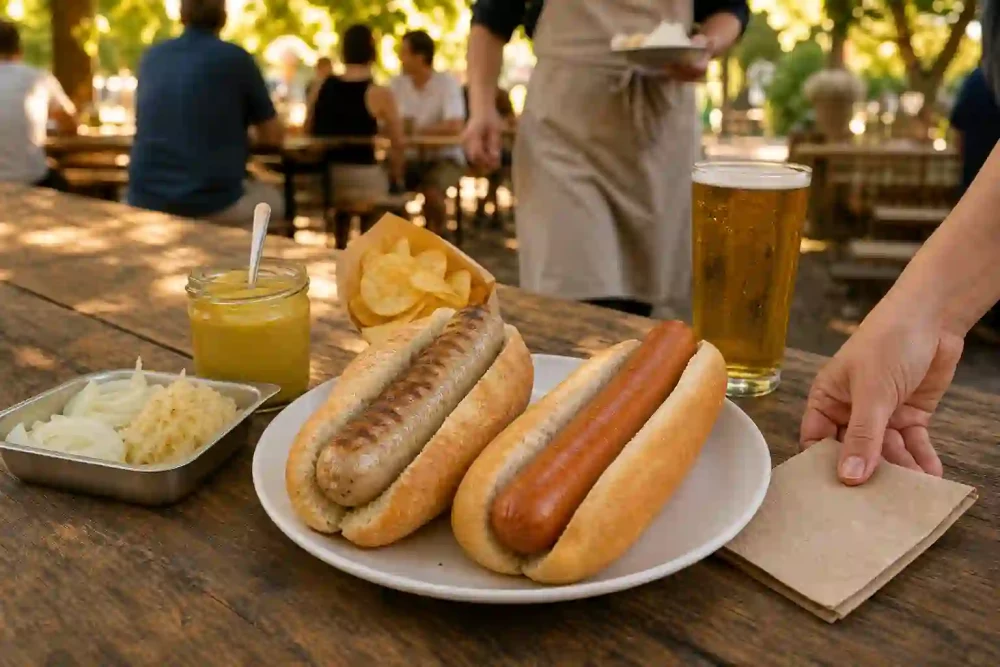
The Sausage Haus is well placed for operators who want a German sausage offer that feels more distinctive than a generic hot dog, but still remains practical for real service. That balance matters. Beer garden food should not become so elaborate that staff struggle to deliver it, but it should also not feel like the cheapest possible option with a nicer name.
A strong bratwurst or frankfurter gives the operator a better foundation. From there, the menu can stay simple: a quality sausage, a suitable roll, two or three topping routes and a small number of clear serving formats. This is where the range can support pubs, cafés, farm shops, garden centres, event traders and foodservice buyers who want something with recognisable appeal and stronger menu character.
The benefit is not only flavour. It is the way the product can fit into different trading models. A pub may want a seasonal beer garden special. A street food operator may want speed and queue appeal. A café may want a lighter lunch plate. A farm shop or garden centre may want something warm, simple and more interesting than another panini. German sausages can adapt to each of these without losing their identity.
The most effective beer garden menus are rarely the most complicated ones. They are the ones customers understand quickly and staff can serve confidently. That is a useful place for The Sausage Haus to sit: premium enough to lift the offer, practical enough to use outside.
Frequently Asked Questions
No. Pubs are an obvious fit, but the same idea can work for cafés, garden centres, farm shops, street food traders, event caterers and outdoor visitor attractions. The important question is not whether the setting is technically a beer garden. It is whether customers are eating casually outside and need food that is quick, warm, easy to carry and simple to understand.
garden centre café, for example, might use bratwurst as a seasonal lunch special with potato salad and leaves. A farm shop might use frankfurters as a weekend hot food offer. A street food trader might build the whole menu around two or three German sausage formats. The format can be adapted, but the service logic stays similar.
They can do both, which is one of the reasons they are useful. A frankfurter in a roll can sit comfortably as a quick snack, light lunch or bar food option. A bratwurst with chips, potato salad, slaw or curry sauce can become a more substantial meal without needing a complicated kitchen setup.
For menu planning, it is often sensible to offer one clear handheld option and one fuller tray or plate option. That gives customers a choice without making the range too wide. It also helps operators cover different trading moments, from a quick lunchtime order to a more relaxed early evening beer garden meal.
Not if they are served properly. The sausage itself is warm and satisfying, but the finished dish can be made much lighter with the right accompaniments. Sauerkraut, pickled onions, cucumber relish, dressed cabbage, salad leaves, mustard and lighter potato salad can all make the dish feel fresher and more seasonal.
The mistake is to treat every outdoor sausage dish like a winter comfort plate. Chips and loaded options have their place, especially for events and evening trade, but spring and summer menus benefit from acidity, crunch and cleaner presentation. This helps the dish suit warmer weather without losing its appeal.
For most operators, fewer than they think. A tight menu with two strong sausages and three finished dishes is often easier to sell and easier to execute than a long list of similar choices. Too many options slow ordering, increase staff errors and make stock control harder.
practical starting point could be a classic bratwurst roll, a quality frankfurter with onions, and a currywurst-style tray with chips. Once those sell reliably, a venue can add a seasonal special or rotate toppings. It is better to build confidence with a small, strong offer than launch with a menu that looks impressive but becomes awkward at peak service.
The best toppings are those that add flavour and texture without making the dish messy or slow. Mustard, crispy onions, sauerkraut, pickled onions, curry sauce, grilled peppers, slaw and cucumber relish can all work well. The key is to choose toppings that are easy to portion and consistent during service.
Operators should be careful with very wet toppings, overfilled rolls or too many sauces. A beer garden customer may be eating at a small outdoor table, standing near a bar or carrying food across a terrace. The dish needs to look generous, but it also needs to behave itself. A sausage that tastes good but collapses in the customer’s hand is not a good trade item.
Yes, but only if the service model is kept simple. A sausage offer can be a useful pressure valve for a busy kitchen because it can be standardised, repeated and served quickly. However, it should not add lots of extra prep steps, custom plating or complicated garnish work.
The best approach is to define the process clearly before launch. Decide where the sausages are cooked or finished, how they are held, who assembles the dish, how toppings are portioned and how orders are handed over. A simple sausage menu can help a busy kitchen. A badly organised one just creates another bottleneck.
It depends on the operator’s setup, storage and trading pattern. Chilled products may suit venues with predictable turnover and regular service. Frozen products can be useful where demand is seasonal, weather-dependent or uneven, because they can make stock control easier.
The right choice should be based on how often the menu runs, how much storage space is available, how quickly stock is used and how the kitchen manages defrosting or chilled holding. Operators should always follow the product’s storage and handling instructions and make sure the system fits their food safety procedures.
Pricing should start with the full finished dish, not just the sausage. Rolls, toppings, sauces, chips or salads, packaging, staff time, wastage and VAT all affect the real margin. A dish that looks profitable when only the main ingredient is counted may be much weaker once the full service cost is included.
It also helps to think about perceived value. A quality bratwurst in a proper roll with a well-chosen topping can usually carry a stronger price than a basic sausage in bread. Clear naming, good presentation and consistent portioning all support the price. The customer should feel they are buying a proper outdoor food item, not an afterthought from the barbecue.
Not necessarily. Names such as bratwurst and frankfurter are familiar enough for many UK customers, but menu wording should still make the offer easy to understand. If a product name might be unfamiliar, add a short description rather than expecting customers to ask.
For example, “Bratwurst Roll with Mustard and Sauerkraut” is clearer than using a German name on its own. “Currywurst & Chips” works well because it sounds distinctive but still tells the customer what to expect. The aim is to keep enough German character to make the dish interesting, while making the buying decision quick and comfortable.
Start with a limited trial during a realistic trading period. A quiet weekday lunch may not reveal much. A sunny weekend, a garden event, a match day, a market day or a busy terrace session will give a better view of how the dish performs under pressure.
Operators should watch more than sales numbers. Check queue speed, staff confidence, customer comments, waste, topping usage, packaging performance and whether the dish competes well against existing menu items. If the trial shows strong demand and smooth execution, the offer can be refined and made more permanent. If it sells but slows the team down, the menu may need simplifying rather than abandoning.
Conclusion
Beer garden menu ideas work best when they suit the way people actually eat outside. Customers usually want something warm, satisfying and easy to handle, but not necessarily a heavy plated meal. Operators need food that can be served quickly, held sensibly, customised without chaos and priced in a way that protects margin. That is where bratwurst and quality frankfurters make strong commercial sense.
A good German sausage offer does not need to be complicated. In fact, it is often better when it is not. A few well-chosen sausages, good rolls, sensible toppings, crisp sides and clear menu wording can create a beer garden option that feels more distinctive than another burger, but still familiar enough to sell confidently.
For pubs, cafés, farm shops, garden centres, street food traders and event operators, the real value is not just in the sausage itself. It is in the service model around it: fast execution, simple training, flexible presentation and strong appeal across lunch, afternoon and early evening trade.
Bratwurst and frankfurters belong outside because they match the setting. They are practical, sociable and easy to build into a menu that feels seasonal without becoming fussy. For operators looking to refresh an outdoor food offer, The Sausage Haus range gives a useful starting point for a cleaner, more focused German sausage menu.
The Sausage Haüs
The Sausage Haus brings authentic German-style sausages to the UK market through a partnership between Hardy Remagen and Baird Foods.
Hardy Remagen is a long-established German producer with deep experience in traditional sausage making, continental meat products and modern food manufacturing. The range reflects the kind of products German shoppers already understand and enjoy: Bratwurst, Frankfurters, smoked hotdogs, cheese-filled sausages, Bockwurst, Weisswurst and other classic German-style lines.
In the UK, the range is represented and distributed by Baird Foods, giving retailers, wholesalers, caterers and foodservice operators access to German sausage products with a practical UK supply route. This combination is important: German manufacturing knowledge on one side, UK market understanding and distribution on the other.
For retail buyers, The Sausage Haus range offers a clear way to add something different to both chilled and frozen sausage fixtures. The products are built around real eating occasions: BBQs, premium hotdog nights, family meals, German street food, Oktoberfest promotions, Christmas market food and quick comfort meals at home.
The result is a range that gives shoppers something more distinctive than ordinary sausages and standard hotdogs, while giving buyers a compact, commercially useful product story with strong fresh and frozen potential.