A chilli beef frankfurter can be a difficult menu item to get right. Too mild and it feels forgettable; too hot and it loses broad customer appeal. This article looks at why a balanced chilli beef frankfurter works so well for UK menus, and why moderate heat often performs better commercially than extreme spice.

Moderate Heat Sells Wider

Easy To Position Fast

Pairs Well With Classics
Introduction
For many UK operators, spicy sausages sound like an easy way to make a menu feel more exciting. The problem is that “spicy” can mean very different things to different customers. A product that works well in theory can become harder to sell in practice if the heat level narrows the audience too much, creates uncertainty at the point of sale, or makes repeat ordering less likely.
That is where a well-judged can stand out. When the heat is present but controlled, it does something commercially useful. It gives customers a clear flavour difference from a standard hot dog or generic sausage, while still feeling safe enough for a broad part of the market. In other words, it adds interest without creating unnecessary resistance.
This matters in real trading conditions. Street food traders, cafés, pubs, event caterers, farm shops and food-to-go operators usually need products that are easy to explain, easy to serve, and easy for customers to say yes to. A chilli beef frankfurter with balanced heat can tick those boxes. It feels a little more special, helps a menu stand out, and avoids the common mistake of confusing “more heat” with “better demand”.
The real appeal is not just that it is hot. It is that it is hot enough to feel distinctive, but still enjoyable for a wide range of UK customers.
Key Takeaways
- A chilli beef frankfurter works best when the heat adds flavour rather than overwhelming the sausage.
- Moderate spice usually has broader UK customer appeal than very hot menu items.
- It gives operators an easy way to differentiate from standard beef hot dogs and generic frankfurters.
- Balanced heat is easier to sell in mixed groups where customers have different spice preferences.
- A product like this can feel premium without making service slower or the menu harder to manage.
- It suits a wide range of settings, including street food, pubs, lunch menus, event catering and food-to-go.
- Repeat sales often depend more on enjoyable flavour and consistency than on extreme heat.
Why Moderate Heat Often Sells Better Than Extreme Spice
In theory, a very hot sausage can sound like a strong selling point. It feels bold, memorable and easy to market. In real trading conditions, though, extreme spice often reduces the number of customers willing to order it. What looks exciting on a menu board can become a slower seller if too many people hesitate, ask how hot it is, or decide it sounds like too much effort for lunch, a casual snack, or a quick food-to-go purchase.
This hospitality trade article looks at how taste drives menu choices in real trading conditions, which is useful when judging how much heat a chilli frankfurter should carry.
That is why moderate heat so often performs better. It gives customers something extra without making the product feel risky. A chilli beef frankfurter with controlled warmth can still feel more interesting than a standard hot dog, but it remains approachable. The customer gets flavour, a little lift, and a clearer sense of personality in the product, without feeling they are signing up for a challenge.
This matters even more in mixed trading environments. At events, in pubs, in garden centres, and in food-to-go settings, people are often ordering in groups. If one person wants something with a bit more character, but others want something safe and easy to enjoy, moderate heat is a much better fit than an aggressively hot product. It gives the menu some energy without narrowing its appeal too sharply.
From an operator’s point of view, extreme heat can also create avoidable friction. Staff may need to explain it more carefully, customers may ask more questions, and some buyers may worry about complaints from people who expected one thing and got another. Moderate heat is easier to position. It can be described quickly, understood easily, and sold with more confidence.
There is also the repeat-purchase point. A product people enjoy is usually more valuable than one they only try once. Extreme spice can create curiosity, but it does not always build loyalty. Moderate heat is more likely to bring people back because it feels satisfying rather than punishing.
In commercial terms, that balance is often where the real value sits:
- enough heat to feel distinctive
- enough flavour to justify the choice
- enough accessibility to keep the audience broad
That is why moderate heat is not a compromise. In many cases, it is the smarter selling point.
What UK Customers Usually Want from a Spicy Sausage
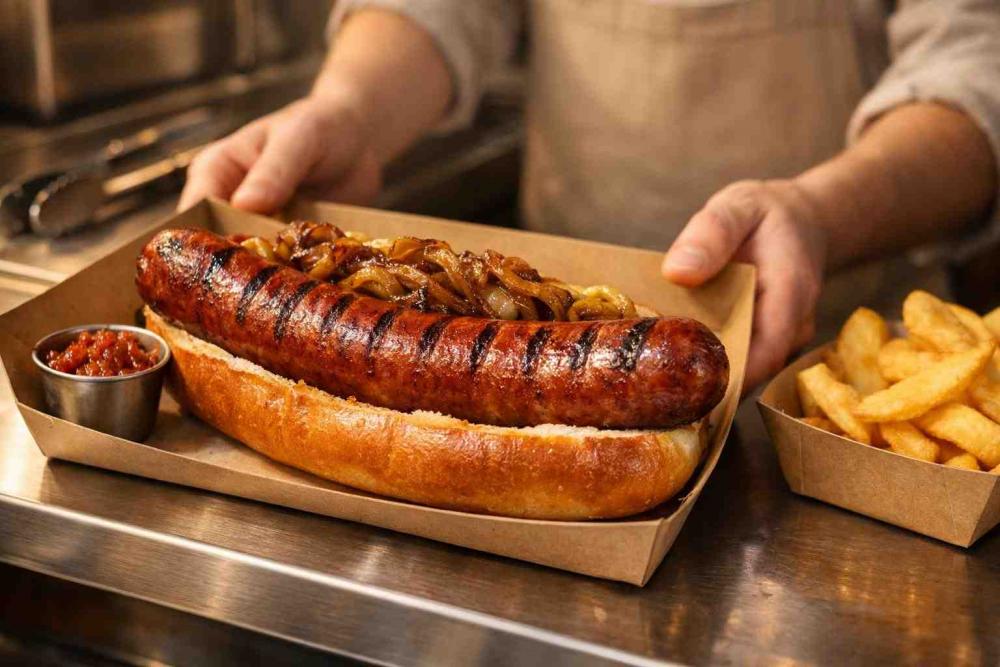
Most UK customers who choose a spicy sausage are not looking for a novelty item or a heat challenge. They usually want something that feels a bit livelier, fuller in flavour, and slightly more interesting than a standard option. They want to notice the spice, but they still want to enjoy the whole meal. That difference is important, because it shapes what actually sells rather than what merely sounds exciting in product development meetings or menu brainstorming.
In practice, many customers want three things from a spicy sausage. First, they want clear flavour. The chilli needs to add character, not just heat. Second, they want reassurance that the product will still be enjoyable. Third, they want the sausage to make sense in the context they are buying it, whether that is a quick lunch, an event meal, a pub special, or a hot food counter purchase.
That is why heat on its own is rarely enough. A spicy sausage still has to feel like proper food, not a stunt. Customers want something they can order with confidence. If they think it may be too hot, too messy, or too one-dimensional, they may fall back on a safer choice. On the other hand, if it sounds warm, flavourful and manageable, it becomes easier to say yes to.
For UK menus, this often means the best spicy sausage is one that feels familiar enough to trust but different enough to justify the choice. A beef frankfurter with a chilli edge does exactly that. It stays within a format people already understand, while adding a bit more personality.
Customers also respond well when the offer feels honest and easy to read. Terms like “light kick”, “gentle chilli warmth” or “balanced spice” can be more effective than language that overstates intensity. Overpromising heat can backfire, particularly if the actual eating experience is milder than expected, or if the wording scares off people who might otherwise have ordered it.
In broad terms, UK customers usually want a spicy sausage that is:
- recognisably spiced, but not overwhelming
- flavour-led rather than heat-led
- easy to pair with familiar breads, toppings and sides
- suitable for an everyday meal, not just a dare
That is one reason a balanced chilli beef frankfurter can work so well. It gives customers what they are actually looking for, not what sellers sometimes assume they want.
How a Chilli Beef Frankfurter Adds Interest Without Limiting Your Audience
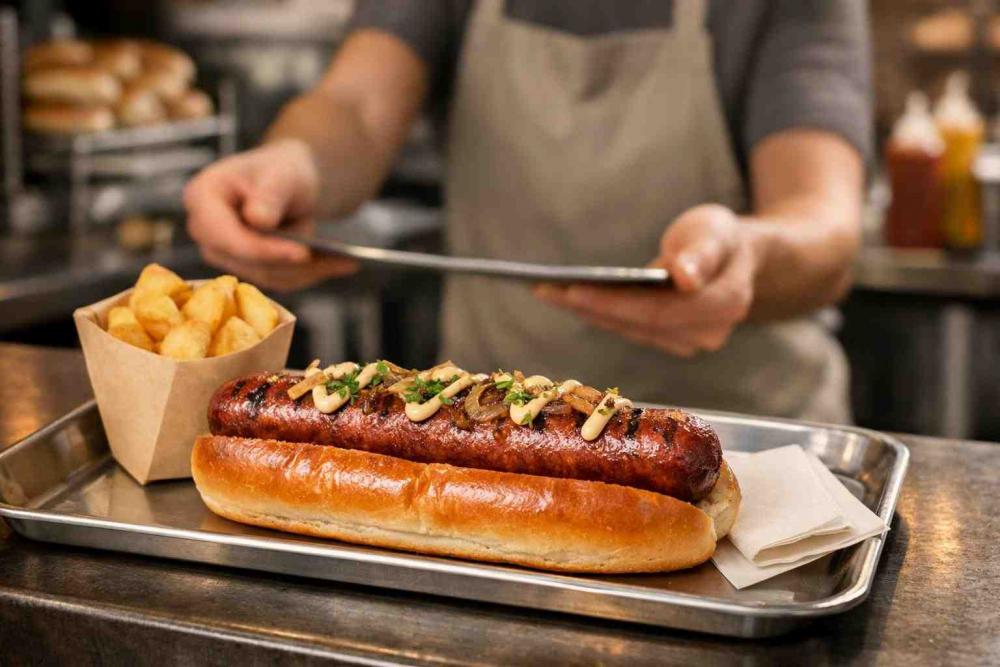
One of the hardest menu decisions for operators is finding ways to make the offer more interesting without making it harder to sell. New items can create attention, but they can also narrow demand if they feel too niche, too intense, or too difficult to explain. A chilli beef frankfurter can solve that problem when it is pitched properly, because it brings a clear point of difference without stepping too far away from what customers already know.
The format does a lot of the work. People understand what a frankfurter is. They know how it fits into a bun, how it works with onions and sauces, and how it sits on a hot food menu. That familiarity matters. It means the product does not require much education. The chilli element then adds the twist. The result is a menu item that feels slightly more adventurous, but still easy to order.
This is commercially useful because it helps you move beyond generic sausage offers without becoming over-specialised. A standard beef hot dog can be dependable, but not always memorable. A very hot or unusual sausage can be memorable, but not always dependable in sales. A chilli beef frankfurter can sit between those two positions. It feels more distinctive than a generic hot dog, but it still has broad enough appeal to work in mainstream settings.
That can be especially valuable for operators who want a product that gives them a talking point without creating menu clutter. Instead of carrying multiple specialist spicy options, one well-balanced chilli beef frankfurter can do the job of making the range feel more varied while keeping service simple.
It also opens up useful menu language. You can present it as something with a bit more bite, a warmer finish, or a richer alternative to standard beef hot dogs. That kind of wording gives customers a reason to trade up without making the product sound extreme.
From a commercial perspective, it adds interest in several ways:
- it breaks the routine of the standard hot dog offer
- it gives returning customers something new to try
- it can justify a more premium position on the menu
- it remains easy for staff to explain and serve
That is the key point. Interest on a menu is only valuable if people still want to buy it. A chilli beef frankfurter works well because it makes the range feel more characterful without cutting away too much of the potential audience.
Where This Product Fits Best on UK Menus
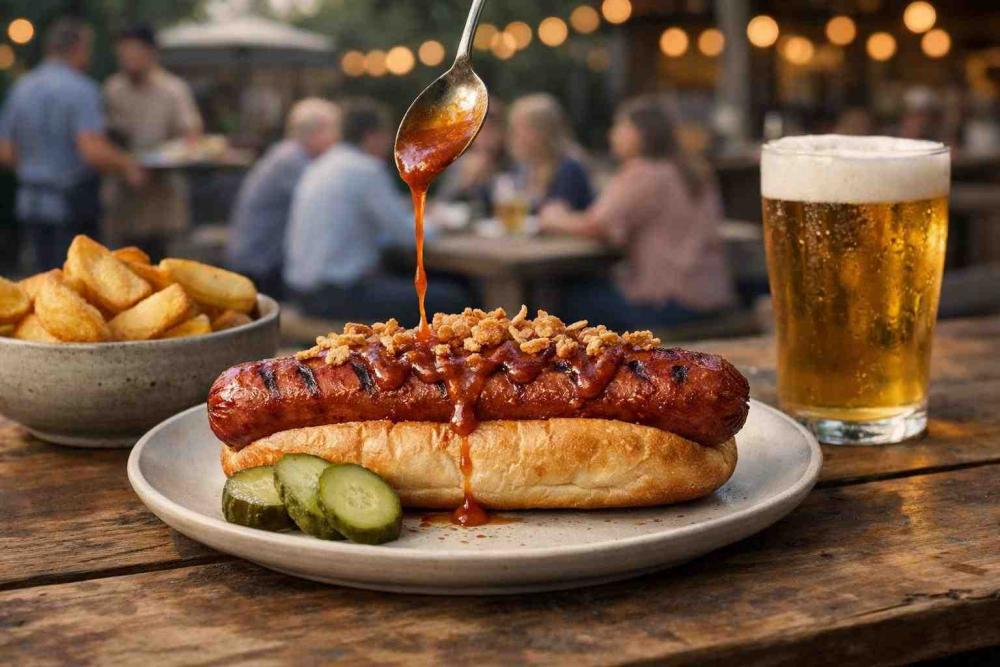
A chilli beef frankfurter is one of those products that can work across several menu types, but it tends to perform best where operators need a balance of familiarity, flavour interest and service practicality. It is not just about where spicy food is accepted. It is about where a product like this helps the menu do a better job commercially.
This recipe guide shows how currywurst works as a simple, fast-service sausage format with homemade sauce and classic accompaniments that can inspire menu types across casual and takeaway offers.
One strong fit is street food and event trading. In those settings, customers are often looking for something quick to understand but slightly more exciting than the most standard option on offer. A chilli beef frankfurter gives traders an easy upgrade path from a basic beef hot dog. It keeps service simple, but adds enough difference to help the stall feel less generic.
It also suits pubs and casual hospitality venues, especially where menus benefit from easy-win items that feel stronger than standard freezer-to-plate sausage formats. A chilli beef frankfurter can sit well on lunch menus, casual bar food offers, and simple specials boards where customers want something comforting with a bit more punch.
Cafés, garden centres and farm shops can also use it well, provided the menu language is right. In these settings, the product often works best when positioned as a warm, flavourful alternative rather than the hottest thing on the board. Customers in these environments are often open to something different, but still want it to feel approachable.
Good menu fits often include:
- loaded hot dogs with onions, pickles, mustard or a balanced chilli sauce
- lunch specials where a premium frankfurter offers a step up from standard sausage choices
- event menus where the item needs broad appeal and straightforward service flow
- mixed sausage offers where one item brings a touch of heat without dominating the range
Where it can struggle is on menus that already lean heavily into extreme spice, because there it may feel too restrained unless positioned carefully. It is also less effective if hidden behind vague wording. Customers usually respond better when the menu makes clear that it offers flavour and warmth rather than punishing heat.
The main strength of this product is its versatility. It works best where operators want a sausage that feels a little different, sells to more than a niche audience, and fits into service without unnecessary complication. That makes it a practical option for a surprisingly wide range of UK menus.
Why It Works Better Than Many Generic Beef Hot Dogs
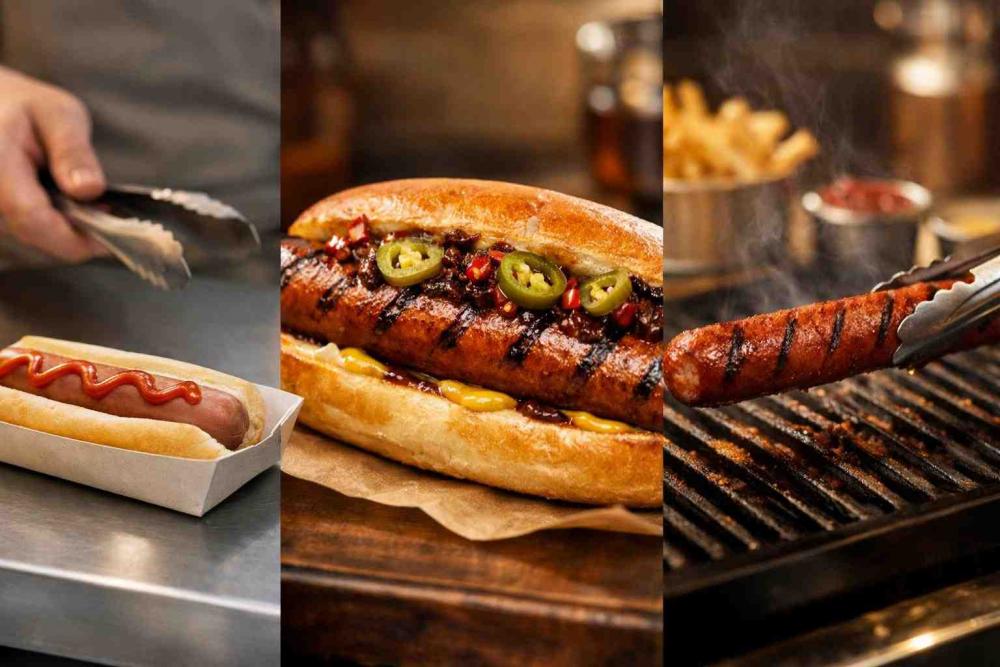
A generic beef hot dog can do a job, but it often struggles to create much enthusiasm. For many operators, that is the real issue. The product may be serviceable, but it does not always give customers a strong reason to choose it over other quick meal options. If the sausage feels standard, the whole offer can feel standard too.
This recipe guide shows how a hot dog with fiery onion relish can turn a standard frankfurter into a more distinctive menu idea.
A chilli beef frankfurter works better because it creates a clearer sense of choice. It offers something recognisably familiar, but with more character. That matters on menus where customers scan quickly and make snap decisions. “Beef hot dog” can sound functional. “Chilli beef frankfurter” sounds more distinctive, more flavour-led, and slightly more premium without becoming difficult to understand.
The difference is not just in the name. It is in the eating experience. Many generic beef hot dogs are built to be neutral and widely acceptable, which can also make them easier to forget. A balanced chilli beef frankfurter gives the customer something more defined. There is more identity in the product, more menu personality, and often more perceived value as a result.
That can help in several commercial ways. It can support a better selling price, reduce the sense that the item is interchangeable with cheaper alternatives, and make the menu feel less generic overall. In practical terms, it is easier to sell a product that sounds like it offers something specific rather than something purely standard.
It also works well in environments where customers want a little more than the baseline. A pub lunch, a street food queue, an event stall or a hot counter often benefits from products that feel slightly upgraded. A chilli beef frankfurter can deliver that upgrade without needing a complicated build or specialist service setup.
Generic beef hot dogs often rely heavily on toppings to become interesting. A chilli beef frankfurter starts from a stronger base. That gives operators more flexibility. Even a simple serve can still feel like a deliberate menu choice rather than the default option.
That is why it often works better:
- it sounds more distinctive at the point of order
- it adds flavour interest before toppings even come in
- it helps the menu feel less commodity-driven
- it gives customers a reason to trade up from a basic beef hot dog
A product does not need to be extreme to stand out. It just needs enough personality to stop feeling generic.
How to Sell a Chilli Beef Frankfurter Without Overcomplicating the Offer
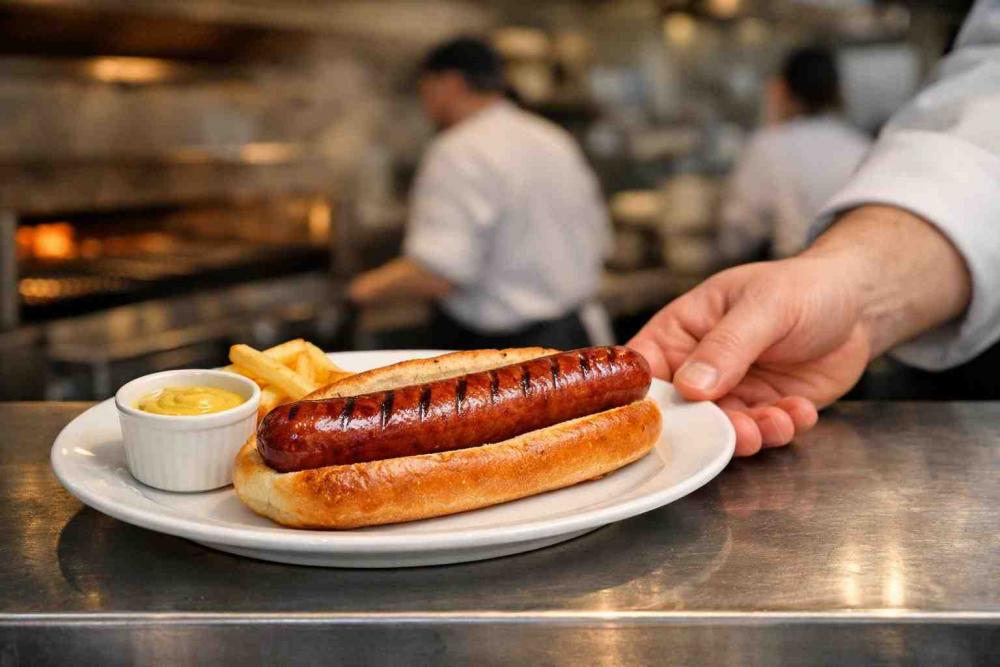
One of the easiest ways to weaken a good product is to overbuild it. A chilli beef frankfurter already has a built-in point of difference, so it does not need a long explanation, a crowded topping list, or too many versions fighting for attention. In most cases, it sells best when the offer is clear, quick to read, and easy for staff to describe.
This industry advice from NCASS explains how clear menu descriptions can help a chilli beef frankfurter feel easy for staff to describe and quick for customers to choose.
The first priority is simple positioning. Customers should understand in a few seconds what makes it different. That usually means describing it in plain menu language, not in marketing language. Terms such as “beef frankfurter with a gentle chilli kick” or “chilli beef frankfurter with balanced heat” do more work than overblown wording about fire, challenge, or extreme spice.
It also helps to avoid giving the customer too many decisions. If the product is already more interesting than a standard hot dog, the build around it should stay disciplined. One core version with a sensible topping combination is often stronger than several loosely defined versions that slow service and dilute the message.
For example, a strong base offer might be:
- chilli beef frankfurter in a bun
- fried onions or crispy onions
- one house sauce or mustard-based pairing
- optional jalapeños or pickles for customers who want extra bite
That keeps the menu easy to read and the service line easier to manage. Staff can explain it quickly, and customers are less likely to hesitate.
Selling also becomes easier when the product has a clear role on the menu. It should not feel hidden between generic items. It works best when it is either the warm-spice option in the range or the step-up choice from a standard beef hot dog. That gives it a commercial purpose, not just a place on the list.
Good point-of-sale language matters too. The aim is to reduce uncertainty. Customers should know this is a flavour-led sausage with some heat, not an unpredictable spicy gamble. That is especially important in mixed settings where people are ordering quickly or choosing as part of a group.
The best approach is usually:
- make the difference obvious
- keep the explanation short
- give it one strong default build
- let the sausage do most of the talking
A chilli beef frankfurter already has selling power. The job is to present it clearly enough that customers can say yes without having to think too hard.
What Sides, Sauces and Toppings Help It Perform Even Better
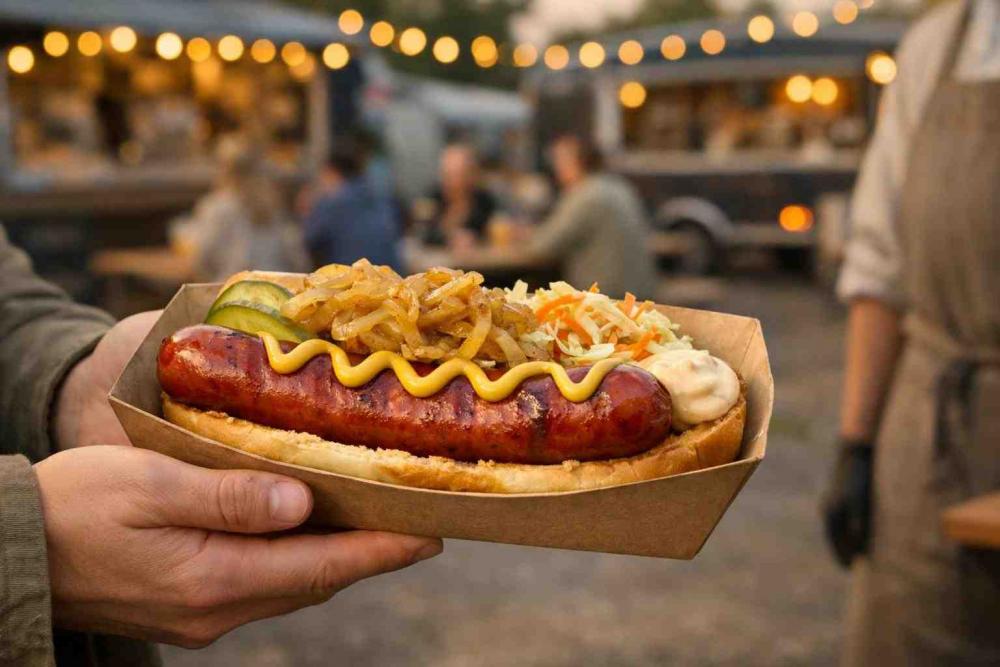
A chilli beef frankfurter already brings its own flavour direction, so the best sides, sauces and toppings are usually the ones that support that character rather than compete with it. This is where some operators get the balance wrong. They assume that a spiced sausage needs even more spice piled on top. In practice, that can muddy the flavour and make the whole product feel heavier or less controlled.
The most effective toppings tend to do one of three jobs. They add contrast, add texture, or round out the heat. That is why onions, pickles, mustard, slaw and certain creamy or smoky sauces often work so well. They give the customer a more complete eating experience without taking attention away from the sausage itself.
Onions are one of the safest wins. Fried onions
This recipe guide shows how to make crispy German fried onions that add sweetness, crunch, and a more authentic topping option for frankfurters.
The best toppings are usually those that feel deliberate, not overloaded. A chilli beef frankfurter can become less appealing if it is buried under too many competing flavours. In most settings, two or three well-chosen additions will outperform a long build.
Useful combinations include:
- fried onions and mustard for a simple, savoury, reliable serve
- pickles and crispy onions for contrast and crunch
- slaw and smoky sauce for a fuller street-food style build
- jalapeños in moderation for customers who actively want more heat
Sides matter too. Chips, loaded fries, potato salad, slaw and simple deli-style salads can all work, depending on the setting. The key is matching the side to the trading environment. A fast lunch offer may need something easy and familiar. A pub or event menu may support a more indulgent side. A farm shop or café may benefit from something that feels a bit cleaner and more balanced.
Drinks can also influence performance, especially in hospitality settings. Products with a little warmth often pair well with lager, cider, soft drinks with citrus, or simple sparkling serves that keep the meal refreshing.
The goal is not to make the product more complicated. It is to make it more complete. Good pairings help the chilli beef frankfurter feel better judged, easier to enjoy, and more worth ordering again.
The Commercial Advantage of a Sausage That Feels Different but Still Easy to Order
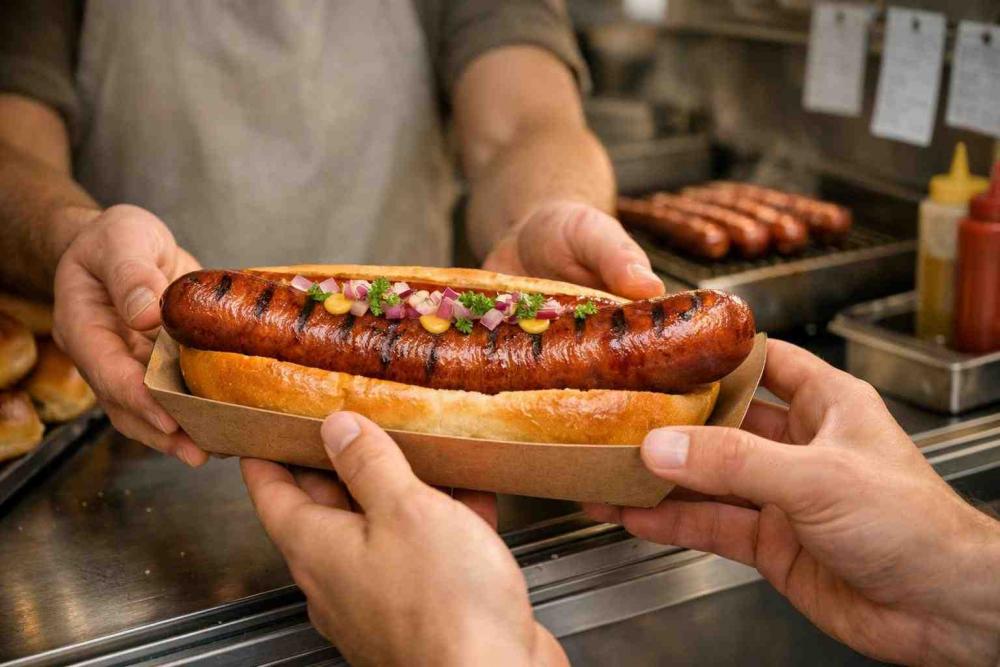
Some products fail because they are too ordinary to stand out. Others fail because they are so unusual that customers hesitate. The strongest menu items often sit in the middle. They feel distinct enough to catch attention, but familiar enough that ordering them still feels easy. That is exactly where a chilli beef frankfurter can be commercially strong.
From a customer point of view, ease matters more than many menus acknowledge. People often make quick decisions, particularly in food-to-go, lunch, event and casual hospitality settings. If an item sounds too vague, too niche, or too intense, they may move on. If it sounds familiar with a twist, it becomes much easier to choose. A chilli beef frankfurter benefits from that effect because the format is already understood. Customers know roughly what they are getting, but they also feel they are getting something a bit better than the baseline.
That creates a useful commercial position. The product can stand apart from generic beef hot dogs without forcing the operator into a highly specialised offer. It can feel more premium, support stronger menu identity, and still work within straightforward service systems. That combination is valuable because it improves appeal without creating unnecessary complexity in prep, staff training, or customer communication.
It can also help with menu architecture. Not every product needs to serve the same purpose. Some items are there to reassure, some to trade customers up, and some to give the range a bit more energy. A chilli beef frankfurter can do the last two at once. It adds interest to the menu, and it gives customers an easy step up from the most standard option.
The commercial benefits often show up in practical ways:
- stronger perceived value than a basic hot dog
- broader appeal than a very hot speciality item
- simpler selling language than more unusual sausage concepts
- better menu differentiation without operational clutter
This kind of product is especially useful for operators who want the menu to feel sharper without making it harder to run. It helps create the impression of a more considered offer, but it stays easy enough for everyday service.
That is the real advantage. A sausage does not need to be unfamiliar to feel special. In many cases, the better commercial result comes from being just different enough to be interesting, while still being easy for customers to understand and easy for staff to sell.
Frequently Asked Questions
Not if the heat is judged properly and the product is presented clearly. A chilli beef frankfurter can sound more specialised than it really is, but in practice it often sits in a very useful middle ground. It feels more interesting than a standard beef hot dog, while still being familiar enough for mainstream customers to understand quickly.
The key is how it is described and where it sits on the menu. If you position it as a flavourful sausage with a bit of warmth, it is usually much easier to sell than if you frame it as something fiery or extreme. For many operators, it is not a niche item at all. It is simply the menu’s more characterful hot dog option.
In the right setting, yes. If your customer base is open to a little flavour variation and your menu is not aimed at the most cautious end of the market, a chilli beef frankfurter can work as the main beef hot dog offer. It gives the menu more personality without requiring extra complexity.
That said, the right answer depends on the venue and audience. A family-heavy site, a very traditional café, or a setting where customers strongly expect a plain classic option may still benefit from having a standard product alongside it. If space is tight, it is often worth asking whether your menu needs the safest possible option or the one that gives people a more memorable reason to buy.
Good wording reduces uncertainty. Customers want to know whether they are getting a sausage with a bit of warmth or something much more intense. A short, honest description usually does the job better than dramatic language. In many cases, better wording will improve sales more than adding extra toppings or changing the build.
Not necessarily. It can work very well in daytime trade if the heat level is moderate and the surrounding offer feels approachable. The mistake is assuming that anything with chilli belongs only in late-night, pub, or event settings. Many daytime customers are perfectly happy with a mild-to-moderate spicy option if it sounds balanced and manageable.
The best answer usually comes from real service, not theory. You can make a sensible judgement from the type of venue, the local audience, and how adventurous your customers already are, but trading feedback matters most. What staff hear at the point of sale and what customers reorder will tell you far more than assumptions.
practical approach is to start with a clean, clear version of the offer and listen carefully to how people respond. Are customers asking whether it is very hot? Are they pleasantly surprised by the balance? Are they reordering it? That kind of feedback helps you judge whether the product is pitched correctly for your setting.
Often, yes, provided the overall offer supports it. The product usually has a stronger identity than a generic beef hot dog, and that can justify a more premium position. Customers are generally more open to paying a little more when the item sounds distinct and feels like a deliberate choice rather than a basic default.
Price still has to make sense in context. Bread quality, toppings, portion impression, presentation and venue expectations all shape what feels fair. A sausage with more character can support better value perception, but only if the rest of the serve does not make it feel underbuilt or overly stripped back.
common mistake is trying to make it do too much. Some operators overcomplicate the build with too many sauces and toppings, while others oversell the heat and create unnecessary hesitation. Both can weaken the product.
chilli beef frankfurter tends to perform best when the sausage remains the main story. It needs enough around it to feel complete, but not so much that the flavour direction becomes confused. In commercial terms, clarity usually beats cleverness. A strong base product with a disciplined build is often the better seller.
It can work in either role, but the right choice depends on how much range you already carry and how customers use your menu. As a permanent item, it gives the offer a reliable point of difference and can help stop the range feeling too standard. As a special, it gives you an easy way to test customer response without changing the core menu too heavily.
For many operators, a special is the sensible first step. It lets you see how the product performs in your own setting, how staff handle it, and whether customers treat it as a one-off curiosity or something they actively want back. If it sells cleanly and repeat demand looks promising, it may then earn a permanent place.
It is strongest in a bun because that is the easiest format for customers to recognise and order quickly. That familiarity helps sales, especially in busy or mixed-service environments. It also makes the product easier to position against standard beef hot dogs and other quick-serve sausage options.
That said, it can work in other formats if the setting supports them. Sausage plates, loaded fries-style offers, or simple lunch combinations can all make sense, particularly in pubs, farm shops, or venues with more sit-down trade. The main question is whether the alternative format makes ordering easier and more appealing, or whether it simply adds friction.
You should check whether the product fits your real service conditions, not just the idea of the menu. That includes bun supply, holding practicality, topping speed, staffing levels, and how quickly the item can be assembled during busy periods. A product that sounds strong on paper still has to move well in service.
It is also worth checking site-specific constraints where relevant, such as power availability, gas setup, local event rules, food handling arrangements, and the physical working space you will actually have. The best menu item is not just the one customers like. It is the one that your team can execute consistently under the conditions you are trading in.
Conclusion
A chilli beef frankfurter works well on UK menus when it understands the market it is being sold into. Most operators do not need the hottest sausage on the menu. They need one that catches attention, feels a bit different, and still appeals to a wide enough range of customers to make commercial sense.
That is why controlled heat matters. It creates a clearer point of difference than a standard frankfurter, but it does not make the product difficult to explain or risky to order. Customers can expect flavour, a little heat, and a more interesting eating experience without feeling they are taking on a challenge.
For operators, that balance can make a real difference. It supports menu variety, helps a premium offer feel justified, and gives staff something simple to sell. In the right setting, it can also bridge the gap between classic beef hot dogs and more adventurous menu items.
A good chilli beef frankfurter is not popular because it is extreme. It is popular because it gets the balance right. That is often what makes a product easier to repeat, easier to recommend, and easier to build into a menu that works.
About The Sausage Haus
The Sausage Haus supplies authentic German sausages for UK operators who want products that are easier to sell, easier to serve, and better suited to modern foodservice. The focus is not just on sausage quality, but on helping traders, caterers, cafés, pubs, farm shops and event operators run a faster, more reliable service with products that customers genuinely want to order.
This industry body guide outlines practical street food business advice for event operators looking at service setup, compliance, and day-to-day trading.
The range is designed for practical commercial use, with strong customer appeal and clear menu relevance across different trading environments. Whether the goal is a better hot dog offer, a more premium lunch item, or a stronger event menu, The Sausage Haus is built around products that work in real service conditions.
The sausages are produced by Remagen and distributed in the UK by Baird Foods. That gives UK operators access to authentic German products through a supply route that understands the needs of the local market.
For businesses that want to move beyond generic sausage offers, The Sausage Haus provides a more distinctive and commercially useful alternative.