German Sausage Lunch Specials give garden centres, farm shops and cafés a practical way to serve a lunch offer that feels different without making service messy. The right menu can keep prep simple, speed up lunchtime decisions, and help operators sell a more premium meal with straightforward holding, plating and add-on options.

Fast Lunches, Less Fuss

Choose Sides That Sell

Design for Easy Service
Introduction
For many UK operators, lunch is not about building a huge menu. It is about serving something reliable that looks appealing, moves quickly, and does not create unnecessary pressure on a small kitchen or counter team. That is exactly where German Sausage Lunch Specials can work well.
Garden centres, farm shops and cafés often need dishes that sit between a light snack and a full plated meal. Customers want something warm, satisfying and easy to understand. They also tend to order in short lunchtime bursts, which means slow assembly, unclear menu boards and overcomplicated side options can quickly cause queues and wasted labour.
A focused sausage-based lunch offer can solve several problems at once. It gives customers a recognisable product with broad appeal, while giving operators a menu that is easier to portion, repeat and price. It also works across different service models, whether the venue runs a café counter, a small plated lunch menu or a quicker grab-and-go hot food point.
Done properly, German Sausage Lunch Specials can support:
- faster ordering at peak lunch times
- better consistency across staff shifts
- simple upsells with sides, sauces and drinks
- a more distinctive menu than standard jacket potatoes, paninis or soup alone
The big advantage is not just the sausage itself. It is the system around it: simple builds, sensible sides, clear holding methods and lunch combinations that make commercial sense for UK daytime trade.
Key Takeaways
- German Sausage Lunch Specials work best when the menu is tight, easy to read and built for quick lunch decisions.
- Garden centres and farm shops usually benefit from warm, familiar combinations with one clear sausage choice and two or three dependable sides.
- German sausage café specials should be designed for speed, tidy plating and easy replenishment, not kitchen theatre.
- A good lunch menu for cafés should make room for profitable add-ons such as drinks, traybakes, cakes or upgraded sides.
- The strongest offers are usually the simplest: one premium sausage, one bread or potato format, one salad or slaw element, and a clear sauce choice.
- Before rolling out any new hot food idea, verify site rules, equipment suitability, power supply, gas safety arrangements and local authority requirements where relevant.
Why German Sausage Lunch Specials Work So Well for Garden Centres, Farm Shops and Cafés
German Sausage Lunch Specials fit daytime venues unusually well because they solve a problem many operators deal with every week: customers want something warm, satisfying and slightly more interesting than the usual sandwich-and-soup routine, but the kitchen still needs to keep service quick, tidy and repeatable. In places such as garden centres, farm shops and cafés, that balance matters more than novelty on its own.
A lot of lunchtime trade in these venues comes in short bursts. You may have a queue after the morning shopping run, another wave around midday, and then a slower tail into the afternoon. In that pattern, dishes that take too long to explain, assemble or plate can slow everything down. German Sausage Lunch Specials work because the format is easy to understand at a glance. The customer sees a proper hot lunch, while the operator sees a menu line that can be prepped sensibly and served with fewer awkward steps.
They also suit the kind of customer these venues attract. Garden centre visitors, farm shop shoppers and café regulars often want food that feels dependable, filling and worth sitting down for. They are not usually looking for an overly fussy lunch. A good sausage-based special feels familiar enough to order quickly, but still different enough to stand out from standard café options. That is especially useful if you want your lunch board to feel more distinctive without rebuilding the whole menu.
Another strength is flexibility. German Sausage Lunch Specials can be built around a roll, mash, potato salad, fries, sauerkraut, slaw or a tray-style plated format depending on the venue. That means the same core product can be adapted to different levels of service, different kitchen setups and different price points. For operators looking at profitable lunch specials UK buyers will actually order, that is a major advantage. You are not relying on one very narrow style of dish.
This recipe guide shows how German-style potato salad is traditionally made, making it a useful side to compare with bratwurst lunch specials.
From a commercial point of view, this type of offer can also help with menu focus. Rather than trying to cover too many midday options, a venue can build a small number of strong combinations around sausages and sides. That keeps ordering clearer, reduces unnecessary stock complexity and makes staff training easier. German sausage café specials also offer useful upsell opportunities through hot drinks, cold drinks, cakes, traybakes or upgraded sides.
In practical terms, these lunch specials tend to work well because they support:
- clear menu decisions during busy service
- easy pairing with common café sides and drinks
- simple portion control and repeatable plating
- a more distinctive lunch line than generic café staples
That does not mean every venue should run the exact same format. A farm shop café may lean into rustic plated lunches, while a garden centre may need something neater and faster for tray service. The point is that German Sausage Lunch Specials are adaptable without becoming complicated. They offer warmth, recognition and operational control in one package, which is exactly why they suit so many UK daytime venues.
What UK Daytime Customers Actually Want from a Sausage-Based Lunch Offer
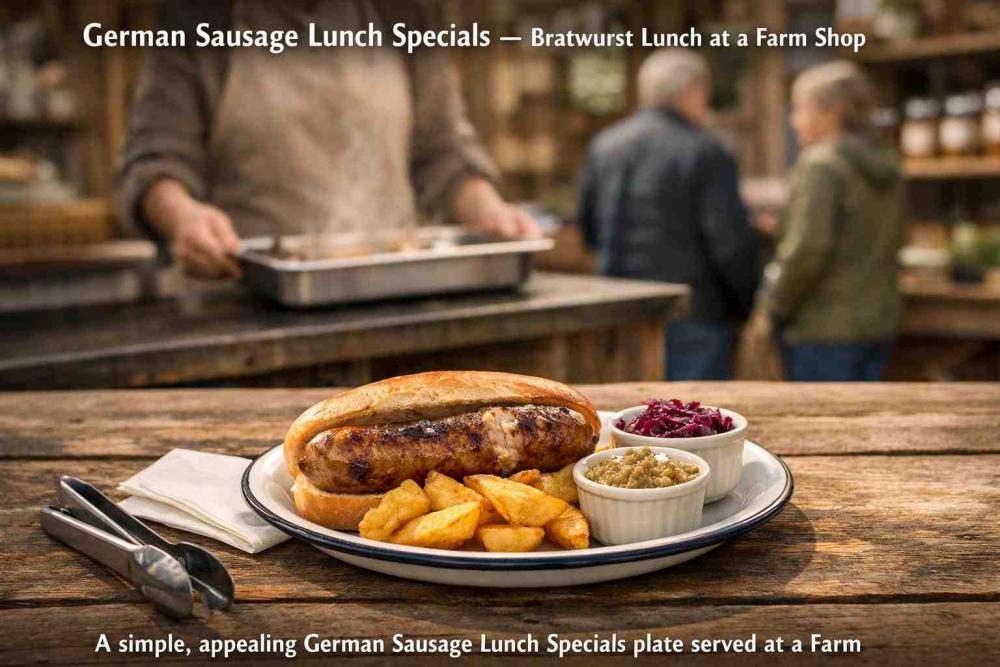
When operators plan a sausage-based lunch menu, it is easy to focus too much on the product itself and not enough on what the customer is really trying to buy. In most daytime settings, people are not searching for the most elaborate plate on the board. They want a lunch that looks appealing, feels worth the spend, and arrives without a long wait. That is why the best German Sausage Lunch Specials are usually the ones that make the decision simple.
For many UK customers, lunchtime is a practical purchase with a small comfort factor built in. They want food that is warm, filling and recognisable, especially in garden centres, farm shops and cafés where the setting often encourages a slower, more relaxed stop during the day. A sausage-based offer works best when it feels generous but not heavy, premium but not pretentious, and easy to understand without staff needing to explain every component.
Clarity matters more than many operators think. If a customer sees three or four strong lunch combinations, they can decide quickly and move on. If they see too many custom options, too many unfamiliar descriptions or too many side choices, ordering becomes slower. That is rarely helpful during midday trade. German Sausage Lunch Specials work best when the structure is obvious: one quality sausage, one starch or bread element, one fresh or tangy contrast, and perhaps one sauce choice that rounds it off.
Customers also tend to respond well to lunches that feel complete. A single sausage in a bun may work for some settings, but in many garden centre lunch ideas or farm shop café menu ideas, people expect something that feels more like a proper meal. That might be a bratwurst with sautéed onions and fries, or a sausage plate with mash and slaw. The exact build can vary, but the feeling of getting a rounded lunch is important.
Another point is comfort and cleanliness. Daytime customers are often older, shopping with family, or carrying bags and trays. They are not always looking for the messiest or most overloaded food. A neat, well-balanced plate often performs better than a lunch special that is hard to carry, awkward to eat or overloaded with sauce. For a quick lunch menu for cafés, ease of eating can matter just as much as flavour.
What customers usually want can be summed up quite simply:
- a hot lunch that feels filling without being overcomplicated
- clear menu wording and easy choices
- a meal that looks worth the price on the plate
- something slightly different from the standard café offer
- tidy service and reliable consistency from visit to visit
This is where operators can get real value from German Sausage Lunch Specials. They give customers a product that feels a little more special than the everyday default, while still meeting the basic daytime expectations that drive repeat lunch trade. In other words, customers do not just want a sausage. They want an easy decision, a satisfying meal and a lunch experience that feels smooth from counter to table. When the offer is built with that in mind, German sausage café specials become much easier to sell and much easier to repeat successfully.
The 7 German Sausage Lunch Specials That Suit Busy Midday Trade
Not every lunch idea survives the reality of midday service. In garden centres, farm shops and cafés, the best sellers are usually the ones that look generous, read clearly on the board, and can be plated or wrapped without slowing the queue. That is where German Sausage Lunch Specials have a real advantage. They feel more distinctive than the usual lunch offer, but they do not need a large kitchen brigade or a complicated build.
For operators, the goal is not just to serve something tasty. It is to serve something that fits the pace of daytime trade, works with existing sides, and can be repeated consistently by different staff members. The most successful German Sausage Lunch Specials tend to share a few traits:
- they are easy to understand in one glance
- they use sides and sauces that are already practical in UK café service
- they hold up well during the lunch rush without becoming messy or fussy
- they give customers a lunch that feels complete, not improvised
Below are seven formats that suit busy midday trade particularly well.
1. Bratwurst in a Soft Roll with Fried Onions and Mustard
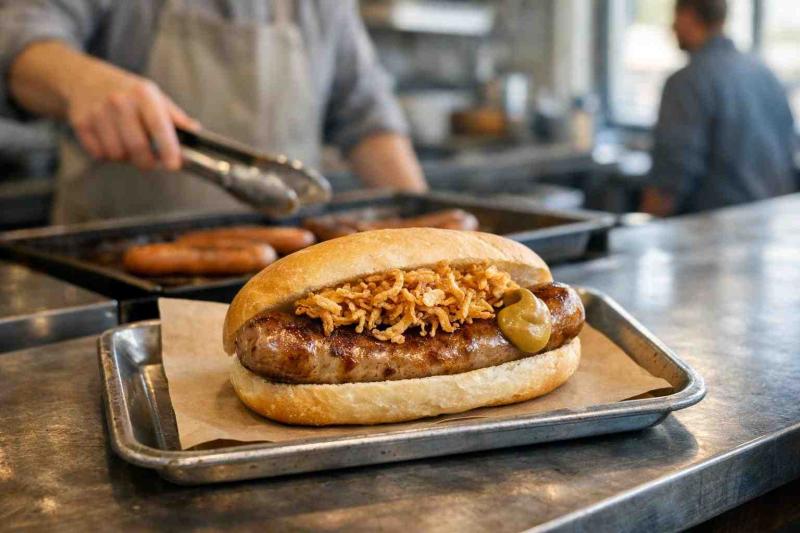
This is one of the most straightforward German sausage café specials because it asks very little from the customer and very little from the service line. People understand it instantly. It is warm, filling, familiar and easy to serve quickly, which makes it a strong choice for a quick lunch menu for cafés and garden centre counters.
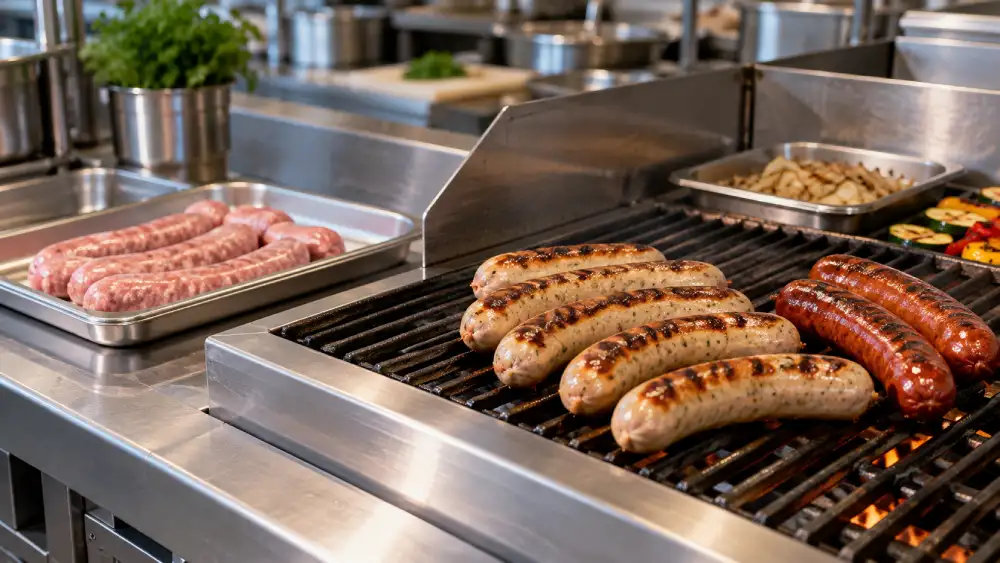
This chef article on grilling sausages is useful if you want better bratwurst colour, texture, and classic pairings for quick lunch service.
The key is to keep it neat and well balanced. A good soft roll, a properly cooked bratwurst, a sensible amount of fried onions and one clear mustard option are usually enough. Once operators start overloading it with too many toppings, it becomes slower to build and less pleasant to eat on a tray.
This format works especially well where the lunch offer needs to feel accessible to a broad age range. It also pairs easily with crisps, salad garnish, fries or a hot drink upsell, depending on the venue.
2. Currywurst with Skin-On Fries
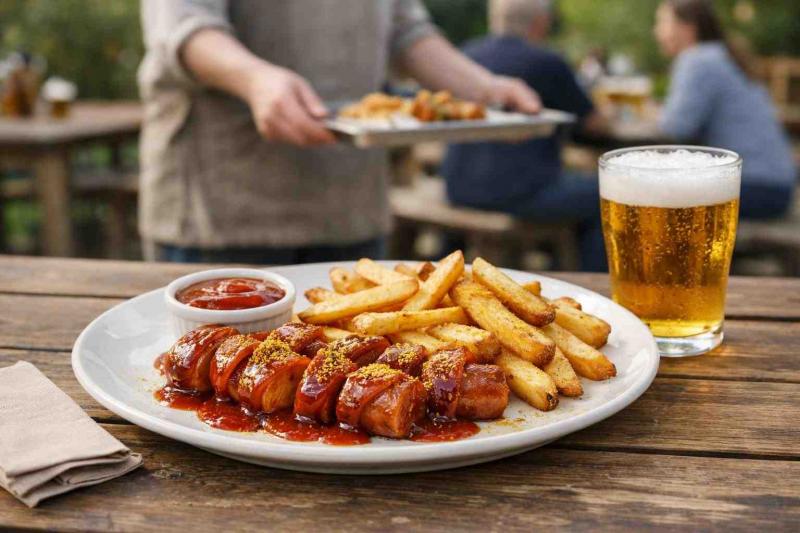
For venues that want a slightly bolder option, currywurst can be one of the most attractive German Sausage Lunch Specials on the menu board. It feels a bit different from standard café fare, but it is still easy for customers to understand. Sausage, sauce and fries is not a difficult sell at lunchtime.
This tourism page highlights the background and street-food appeal of currywurst, which is useful if you want to understand why it works so well as a German lunch special.
In practical terms, this dish suits sites that already handle fries well and can portion sauce consistently. It is often better as a plated or tray-served special than as a grab-and-go item, because the sauce is part of the appeal. For profitable lunch specials UK operators can run without too much complexity, this can work very well if the portion size stays sensible and the presentation stays tidy.
The main thing to control is mess. Keep the sauce level generous but not excessive, and make sure the fries are there to support the dish rather than turn it into a huge, low-margin pile.
3. Bratwurst with Mash and Onion Gravy
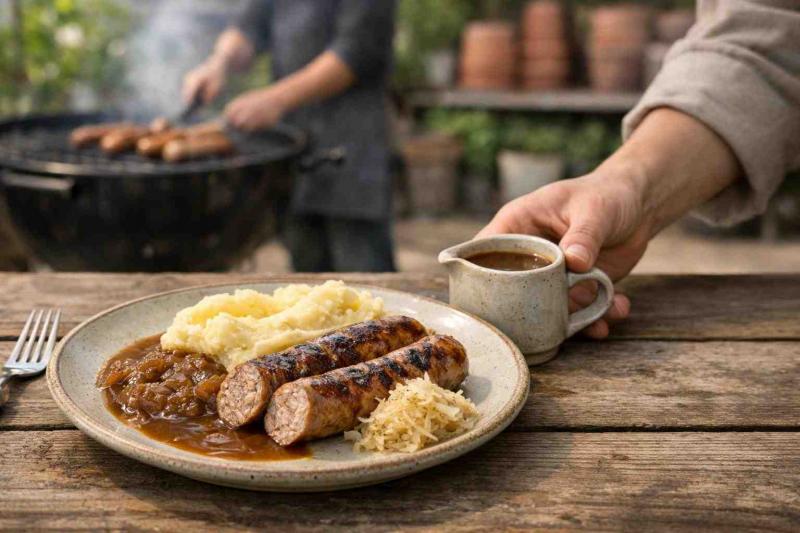
This is one of the most dependable lunch formats for cooler days, traditional daytime customers and venues where a plated meal tends to outperform hand-held food. In garden centre lunch ideas and farm shop café menu ideas, this sort of dish often feels especially natural because it sits comfortably beside other classic British lunch choices without being boring.
This regional German guide highlights Thüringer bratwurst and shows how it is traditionally served with mashed potatoes and sauerkraut for a more classic plated lunch.
It works because it gives customers a complete plate. The mash makes it feel substantial, the gravy adds comfort, and the sausage provides the point of difference. For staff, it can also be a relatively manageable service line if mash and gravy are already part of the wider menu system.
This special is often a good fit when the venue wants to encourage people to sit down rather than simply grab something and leave. It can also support a slightly stronger price point than a basic roll-based option, provided the portion looks balanced and the plate is not overloaded.
4. Sausage, Potato Salad and Slaw Plate
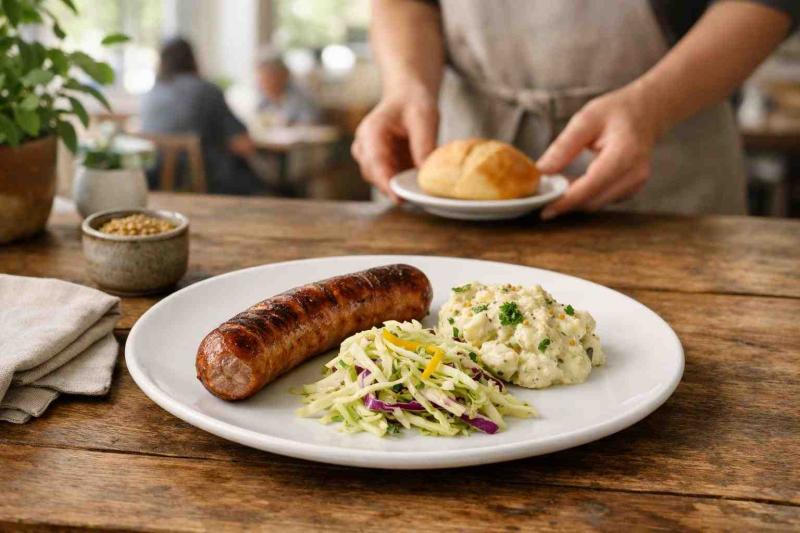
Not every lunch special needs to be heavy. Some customers want a proper lunch, but not something that feels too rich in the middle of the day. This is where a sausage plate with potato salad and slaw can become one of the more useful German Sausage Lunch Specials, especially in spring and summer or in venues with brighter daytime trade.
This format feels lighter while still being substantial. It also works well in farm shops and cafés where customers often respond to lunch plates that look fresh, tidy and easy to eat. The contrast between warm sausage and cold sides can be very appealing if it is plated neatly and the portions are kept under control.
For operators, this is also a practical way to avoid relying too heavily on fries or mash for every special. It gives variety to the board without adding unnecessary confusion. In some locations, it can also help position the sausage offer as more versatile than a standard hot dog-style line.
5. Bratwurst with Sauerkraut and Buttered New Potatoes
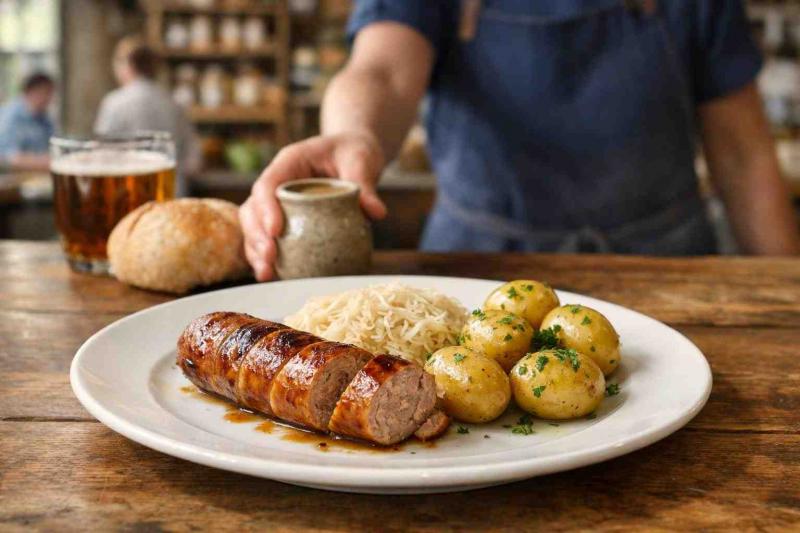
This option leans more visibly into the German character of the offer while still staying approachable for UK lunch customers. It is not the right fit for every site, but in the right venue it can give the lunch menu more identity and help German Sausage Lunch Specials stand apart from generic café dishes.
The strength of this plate is that it feels authentic without becoming niche. The sausage remains the anchor, while the sauerkraut adds sharpness and the buttered potatoes keep the dish grounded and familiar. It is best presented in a clean, simple way rather than trying to make it look overly elaborate.
This can work especially well in farm shops and destination cafés where customers are a little more open to trying something beyond the usual sandwich or jacket potato. It is also a useful reminder that hot food ideas for garden centres do not always need to follow the same pattern to sell well.
6. Sausage Baguette with Melted Cheese and Pickles
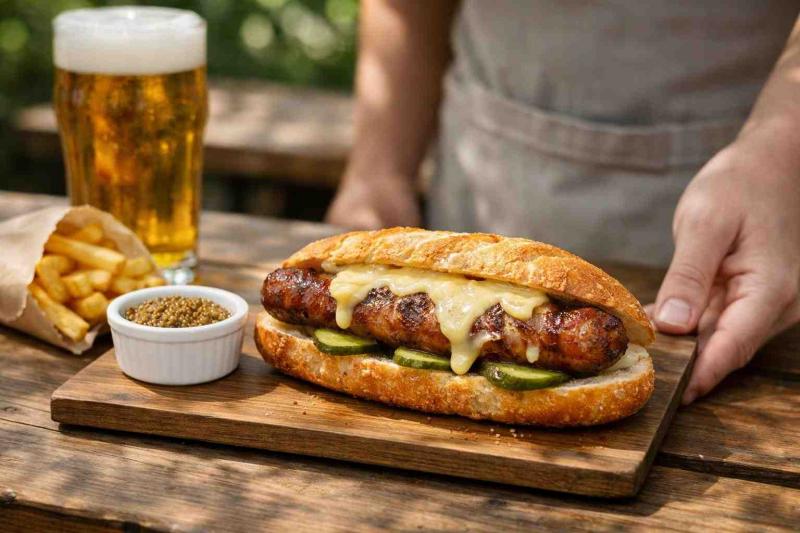
Where venues want a lunch special that feels a bit more indulgent without becoming hard to manage, a sausage baguette can be a smart middle ground. It has some of the convenience of a hand-held offer, but it feels more substantial and premium than a very basic roll.
The cheese and pickles matter because they make the build feel intentional. The sausage brings the core flavour, the cheese adds comfort and richness, and the pickles cut through it so the final result does not feel too flat or heavy. For German sausage café specials aimed at lunchtime spend, this kind of combination can encourage customers to trade up from simpler choices.
Operationally, this format suits sites with a small grill, panini press or finishing oven, but it should still be kept simple. One sausage, one cheese, one pickle element and perhaps one mustard-based spread is usually enough. Too many additions slow the line and make the product harder to eat.
7. Sausage Lunch Box with One Side and One Sauce
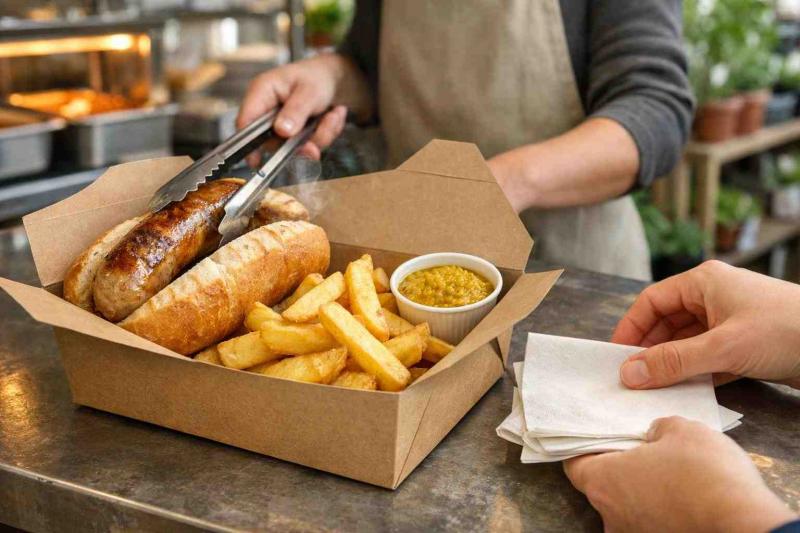
For busy counters, mixed-use venues or sites that want a more modular system, a boxed lunch format can be one of the most practical German Sausage Lunch Specials of all. Instead of building every dish as a bespoke plate, the operator creates a clear format: sausage, side, sauce, done.
This can work particularly well where the lunch rush is intense and consistency matters more than presentation flair. Customers still feel they are getting a proper hot lunch, but the service team gets a simpler assembly process. It is also easier to standardise across staff members, which matters in venues where different people may rotate through lunch service.
A boxed format can be adapted to different styles of trade:
- fries and curry sauce for a faster street-food feel
- potato salad and mustard for a lighter café-style offer
- mash and gravy for a more traditional plated-lunch feel packed into a tray or box
That flexibility makes it especially useful for operators testing German Sausage Lunch Specials before committing to a larger menu expansion.
The best choice depends on the venue, the service setup and the kind of daytime customer you attract. Some sites will do better with a plated bratwurst and mash. Others will sell more through a neat roll, baguette or lunch box system. The common thread is that each special needs to be easy to read, easy to serve and satisfying enough to justify its place on the lunch board. When that balance is right, German Sausage Lunch Specials become far easier to run during busy midday trade.
How to Build a Lunch Menu That Feels Premium but Stays Easy to Run
A premium lunch menu does not have to mean a long menu, expensive presentation, or a kitchen full of extra steps. In most garden centres, farm shops and cafés, premium simply means the offer looks considered, tastes reliable, and feels worth paying for. That is why the strongest German Sausage Lunch Specials are usually built around clarity rather than complexity.
The first mistake many operators make is trying to offer too many versions at once. They add multiple sausages, too many side choices, several sauces, and different serving formats, then wonder why the lunch period feels harder to control. A better approach is to create a small number of combinations that already make sense together. Customers do not want to design a meal from scratch at the counter. They want to spot something appealing and order it quickly.
A practical premium menu often starts with one or two sausage types and then builds around familiar, good-value accompaniments. That might mean a bratwurst in a soft roll, a plated sausage with mash, or a lighter sausage-and-potato-salad option. The menu feels stronger when each item has its own identity rather than looking like the same dish shuffled into different shapes. That is especially important for German sausage café specials, where the menu should feel distinctive but still easy to read.
Presentation also matters, but not in a fussy way. A clean tray, a decent roll, tidy onions, a well-portioned side and a clear garnish often do more for perceived value than adding unnecessary components. In farm shop café menu ideas, customers often respond well to lunches that look proper and generous without appearing overloaded. The more controlled the plate looks, the more premium it tends to feel.
There is also a staffing benefit to this approach. German Sausage Lunch Specials are easier to run well when staff know exactly how each dish is built. That reduces hesitation at the point of service and makes lunch quality more consistent across shifts. A premium menu that only works when one experienced person is on duty is not really premium in commercial terms. It is fragile.
A simple structure often works best:
- one core sausage line
- two or three defined lunch builds
- a small side and sauce range that repeats across the menu
- clear names that customers understand immediately
The best quick lunch menu for cafés usually feels edited. It gives enough choice to keep customers interested, but not so much that the kitchen loses rhythm. For profitable lunch specials UK operators can repeat day after day, discipline matters more than menu length. If the lunch line looks organised, reads clearly and plates reliably, customers will usually read that as quality. That is what makes the menu feel premium while still staying easy to run.
Which Sides, Sauces and Drinks Help Increase Lunch Spend
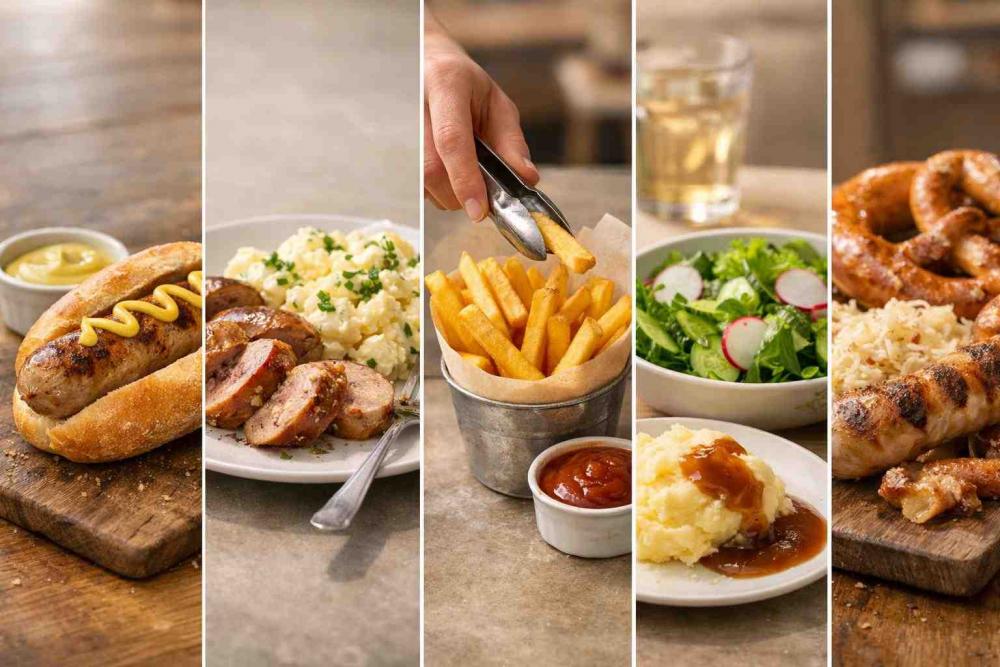
A sausage lunch special rarely earns its full value from the sausage alone. The extra spend often comes from what sits beside it and what gets added at the till. That is why good side and drink choices matter so much. The right extras make German Sausage Lunch Specials feel more complete for the customer while quietly improving average spend for the operator.
The key is to offer add-ons that feel natural, not forced. Customers are far more likely to upgrade when the side or drink seems like part of a proper lunch rather than an obvious sales push. In garden centres and cafés, this often means keeping the pairing familiar. Fries, potato salad, slaw, mash and simple salads usually work because customers understand them immediately. They also suit different moods. Some people want a more indulgent midday meal, while others want something lighter but still substantial.
Sauces are another useful tool, but they need restraint. One or two good options usually outperform a long sauce list. Mustard, curry sauce, onion gravy or a mild paprika-style sauce can each add value if they match the lunch format. Too many sauces slow decisions and make the counter feel cluttered. German Sausage Lunch Specials work best when the sauce is part of a defined offer, not a long customisation exercise.
Drinks matter more than many operators realise. A lunch special that links neatly to a hot drink, bottled drink or seasonal soft drink often performs better than one sold in isolation. In a farm shop or garden centre setting, people are often already in a daytime browsing mindset, which makes bundled lunches especially effective if the offer is simple and visible. A sausage lunch with fries and a bottled drink, or a plated lunch with a tea or coffee option, can lift spend without making the menu harder to run.
Good upsell choices tend to share a few characteristics:
- they are easy to explain in one line
- they fit the meal naturally
- they do not slow service or create messy plating
- they use stock already sensible for café service
For German sausage café specials, the best side choices are usually the ones that support the identity of the dish. A bratwurst roll can take crisps or fries. A plated sausage lunch can support mash, slaw or potato salad. A currywurst special often makes most sense with fries and a cold drink. The offer feels stronger when the extras have a purpose.
From a commercial angle, this is where menu engineering becomes practical rather than technical. You do not need a complicated formula. You need combinations customers are happy to say yes to. German Sausage Lunch Specials become more profitable when the side, sauce and drink structure is built in from the start. That way, the higher spend feels like a better lunch, not an awkward upsell.
How to Keep Service Fast, Clean and Consistent During the Lunch Rush
Lunch trade is where good menu ideas either prove themselves or start causing problems. A dish can look excellent on paper, but if it slows the counter, creates mess on trays or depends on one staff member doing everything just right, it becomes hard to scale. That is why German Sausage Lunch Specials need to be designed for real service conditions, not just menu appeal.
This official food safety guidance explains the service checks, hygiene controls, and hot-holding basics worth reviewing for reliable lunch service conditions.
The first priority is reducing decisions during the rush. The more choices staff and customers have to make in the moment, the slower the line becomes. This is one reason fixed lunch combinations often outperform heavily customisable dishes. When the menu says exactly what comes with the sausage, service becomes more rhythmic. Staff can repeat a sequence rather than rebuilding each order from scratch. That matters in any quick lunch menu for cafés, but especially in venues with midday surges.
A clean service line also starts with the build itself. Certain lunch formats naturally stay neater than others. A tidy roll with onions and mustard is easier to move through service than a heavily loaded item that spills as soon as it is picked up. A plated sausage with mash and gravy can work well too, but only if portions are controlled and the plate is laid out sensibly. German Sausage Lunch Specials should feel generous, but generosity and mess are not the same thing.
Holding and replenishment need attention as well. If sausage, sides and sauces all run on different rhythms, the whole system becomes patchy. Operators get better results when they think in short, repeatable replenishment cycles rather than building too much in advance. That helps protect quality and stops lunch service drifting into a rushed clear-up exercise halfway through the peak period.
A few practical habits make a big difference:
- use defined builds for each lunch special
- keep garnishes and sauces limited and purposeful
- portion sides consistently before the rush where possible
- make the menu board easy to scan from a distance
Consistency is just as important as speed. Customers notice when the same lunch looks different from one visit to the next. Staff notice it too, because inconsistency usually creates hesitation, waste or rework. German sausage café specials are easiest to run when every team member can picture the final plate or box before they start assembling it.
It also helps to be realistic about the site. A farm shop café may have space for plated lunches, while a busier garden centre may benefit more from tray-friendly or boxed formats. German Sausage Lunch Specials work best when the service style matches the environment. If your lunch rush involves trays, retail footfall and a broad age range, ease of carrying and eating should influence the menu.
In the end, fast and clean service is less about working harder and more about removing friction. When the menu is disciplined, the build is controlled and replenishment is planned properly, the lunch rush becomes far easier to manage.
What to Check Before Adding German Sausages to a Café or Farm Shop Menu
Adding a new lunch line is not just a product decision. It is an operational decision. German Sausage Lunch Specials may look straightforward, but they still need to fit the site, the service style and the day-to-day realities of the business. The better the checks are at the beginning, the less likely the menu is to create avoidable problems later.
This official food safety guidance explains the allergen information and process checks worth reviewing before adding new sausage lunch specials to your menu.
The first thing to review is whether the format actually suits the venue. A plated sausage lunch may work well in a seated café with enough kitchen flow, but not in a smaller service area where customers are balancing trays and shopping bags. In the same way, a roll-based option might be ideal for one site and feel too basic for another. Before committing to a menu change, operators need to think about who the lunchtime customer is, how they move through the venue, and what type of meal feels natural in that setting.
Equipment is the next major point. German Sausage Lunch Specials do not need an overly complex setup, but they do need a sensible one. Check whether the current kit supports cooking, holding and finishing the chosen format without creating bottlenecks. Also consider extraction, hot holding, chilled storage, plating space and service reach. A lunch special that only works when space is perfectly free is not likely to perform well during real midday trade.
This official guidance explains the VAT and temperature-control points worth checking when planning a hot takeaway sausage lunch offer.
Supply and staff routine matter too. A lunch line becomes much easier to run when it fits existing prep habits and existing side options. That is why many profitable lunch specials UK operators run successfully are not built around entirely separate systems. They share potatoes, slaw, sauces or drinks already sensible for the wider menu. The more naturally German sausage café specials fit into what the team already does well, the stronger the rollout usually is.
There are also a few checks that should always be verified rather than assumed:
- site rules for food preparation and service
- gas safety arrangements where relevant
- electrical load and equipment suitability
- local authority requirements, event licensing or trading permissions where applicable
- storage, allergen handling and service flow on the actual site
Pricing should be checked with equal care. A sausage lunch special has to look good value to the customer, but it also has to make sense once sides, sauces, labour and wastage are considered. That does not mean making the menu complicated. It means being honest about the full build and not underpricing the offer just because the core format looks simple.
Finally, test the menu as a service system, not just as a recipe. The important question is not only “Does this taste right?” but also “Can this be repeated cleanly at lunchtime by the team we actually have?” German Sausage Lunch Specials are at their best when product, layout, staffing and venue type all line up. Once those checks are done properly, the menu is much more likely to succeed in a café or farm shop environment.
Frequently Asked Questions
They suit venues that need a warm, satisfying lunch option without slowing service down. The format is easy for customers to understand and simple for staff to assemble and plate. It also gives operators a more distinctive lunch offer than standard sandwich or soup choices. The same core product can be adapted to different service styles and price points.
They usually want something warm, filling and easy to understand. They also tend to prefer lunch that feels reliable rather than overly fussy. Because orders often come in short bursts, a clear and simple menu helps people decide quickly. That makes service smoother for both customers and staff.
The menu should stay tight so customers can choose quickly and staff can serve without delays. A simple sausage-led format works best when it is built around a small number of dependable combinations. Clear menu choices also reduce confusion during peak lunch times. This helps keep queues moving and service consistent.
Fries, mash, slaw and potato salad are the easiest sides to run well. These sides work as straightforward upsells without adding much complexity to prep or service. Pairing the sausage with one clear side keeps the offer simple and easy to repeat. It also helps the lunch feel complete without overloading the menu.
Adding one side, one sauce and a drink option can lift spend without making the offer complicated. The key is to keep the choices clear so customers can add extras easily. This approach supports upselling while still keeping service fast. It also avoids creating too many decisions at the counter.
It should be built for tidy plating, quick holding and repeatable prep across shifts. That makes it easier for different staff members to deliver the same result. A well-designed special should also be simple to replenish during the lunch rush. The goal is consistency, not kitchen theatre.
You should check equipment suitability, storage, site rules and pricing before launch. It is also important to confirm power supply, gas safety arrangements and any relevant local authority requirements. These checks help make sure the offer works in real service conditions. They also reduce the risk of problems once the menu goes live.
Use a simple build with one premium sausage, one bread or potato format, one salad or slaw element and a clear sauce choice. That combination feels more considered than a basic snack, but it still stays easy to prepare. The strongest offers are usually the simplest ones. This approach supports a premium feel without adding unnecessary complexity.
A focused menu makes decisions faster for customers and service easier for staff. It also reduces stock complexity and makes training simpler across shifts. With fewer options, it is easier to keep the offer consistent and well presented. That can support smoother lunch trade and better commercial control.
The lunch ideas include bratwurst in a soft roll with fried onions and mustard, currywurst with skin-on fries, bratwurst with mash and onion gravy, and sausage with potato salad and slaw. Other options include bratwurst with sauerkraut and buttered new potatoes, a sausage baguette with melted cheese and pickles, and a sausage lunch box with one side and one sauce. These formats show how the same core product can be adapted to different service styles. They also give venues several ways to keep the lunch offer varied while still staying simple.
Conclusion
German Sausage Lunch Specials are not about turning a garden centre café or farm shop kitchen into a full street food operation. The value is in giving customers a warm, appealing lunch that feels a little different, while keeping prep, service and staffing manageable.
For operators, that matters. A good lunch line needs to move well, hold quality through the busy window, and fit the rhythm of daytime trade. It also needs to work commercially. When the menu is built around sensible portions, practical sides and straightforward assembly, it becomes much easier to run a cleaner and more profitable service.
That is why this kind of offer suits so many UK venues. It can sit comfortably alongside existing café favourites, seasonal specials and light lunch items without forcing a full menu reset. It also gives buyers and operators a format that is flexible enough for plated service, counter service or hybrid lunch trade.
If you are reviewing your daytime menu, German Sausage Lunch Specials are worth considering as a practical next step. The right range and service setup can help you add something distinctive without making the operation harder to run.
About The Sausage Haus
The Sausage Haus helps UK caterers, showmen, festival traders, street food operators and foodservice buyers run a faster, cleaner and more reliable German sausage offer. The focus is not just on product supply, but on making the whole operation easier to deliver in real trading conditions.
That means authentic German sausages, practical menu formats, and service methods that work in busy UK environments such as events, cafés, farm shops, garden centres and mobile catering setups. The goal is simple: help operators serve food that looks the part, tastes right and performs well during service.
Our sausages are produced by Remagen, with Baird Foods as the distributor in the UK. That gives operators access to a dependable route to authentic German sausage products, backed by a supply setup that understands foodservice needs.
Whether you want to tighten your hot food menu, improve lunchtime speed, or create a more profitable sausage-based offer, The Sausage Haus is built around practical solutions for UK trade customers.