Roller grill hotdogs are one of the simplest “sell-more-with-less-labour” plays in UK foodservice for 2026: high visibility, fast service, and reliable portion control. This guide explains what makes a hotdog perform on a hot dog roller grill, the key UK hot-holding rules operators must follow, and why The Sausage Haüs Pork Hotdog and Beef Hotdog are built for roller-grill speed, consistency and repeat purchase—supported by practical operating SOPs and menu upsells.
Introduction
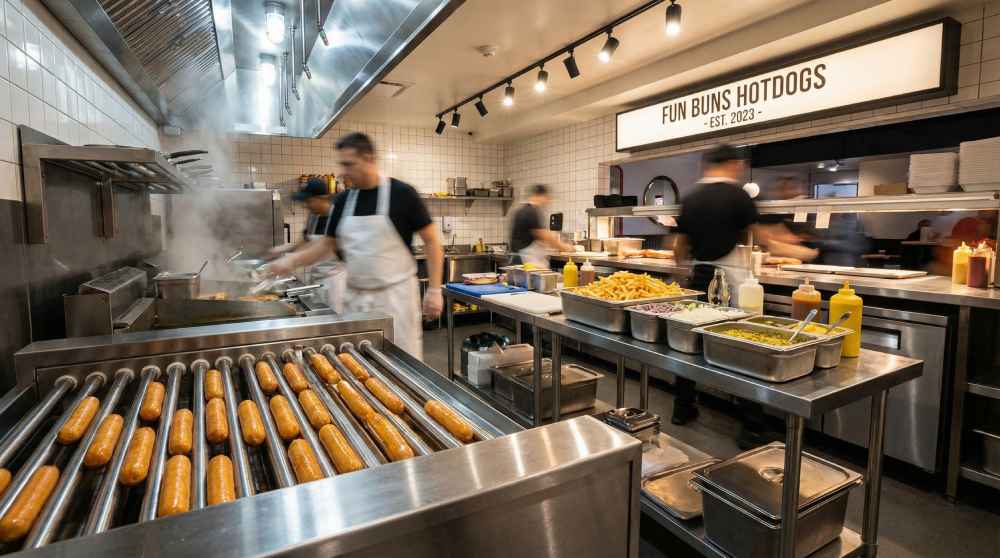
Roller grill hotdogs: a fast, consistent cooking method for high-volume hotdog service.
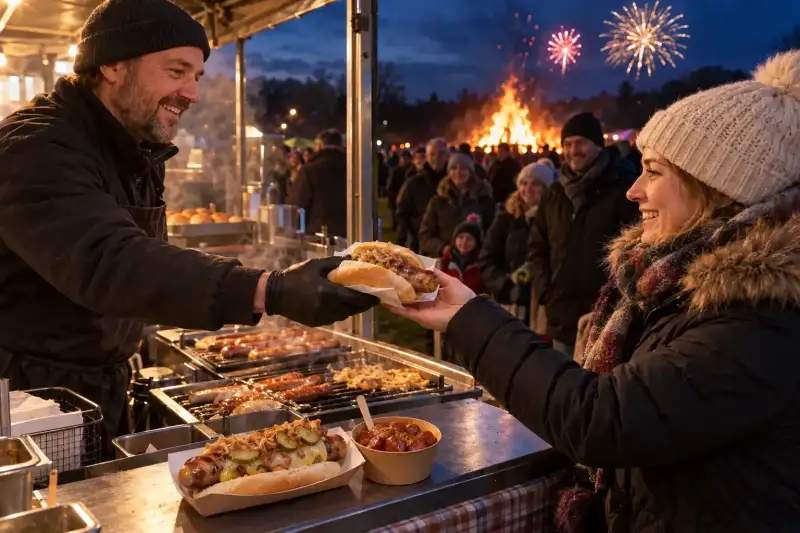
A roller grill is not “just equipment”—it is a retail engine. In the right location, it works like a silent salesperson: constant movement catches the eye, the smell signals “hot food now,” and the product stays ready to serve with almost no kitchen intervention. That combination matters in 2026, when many operators are trying to protect margin while running lean teams and serving customers who expect speed. A well-run roller grill gives you predictable portioning, minimal prep, and a hot-food offer that can trade all day—especially in pubs during peak sessions, forecourts and convenience stores at tills, and event kiosks where queues kill conversion.
Where roller grill programmes often fall down is not demand—it is execution. The common failure points are choosing a hotdog spec that does not hold well, overloading the rollers “just in case” and then over-holding, treating the rollers like a cooking station instead of a hot-holding and display unit, and running temperature checks inconsistently. The result is usually the same: products that look tired, eat dry, create extra cleaning work, and quietly erode repeat purchase. The operators who win are the ones who treat the roller grill like a simple system: the right product, the right holding discipline, and a tight menu that makes the buying decision effortless.
The Sausage Haüs range is designed specifically for real-world UK service: fast handling, consistent units, and flavour that performs under pressure. If you are building (or fixing) a roller grill offer for pubs, forecourts, convenience retail, events or kiosks, our Pork Hotdog and Beef Hotdog give you a focused two-SKU programme. Pork delivers the broad-appeal “classic” that sells itself; Beef gives you an immediate premium step-up for higher ticket sales—without changing your workflow. Together, they keep stock simple, staff training quick, and service reliable, while giving you enough variety to upsell and build a genuinely profitable hot-food corner.
Key Takeaways
- Roller grills are best for pre-cooked product: rollers are designed to heat evenly and hold; they are not suitable for cooking fresh sausages.
- UK hot-holding is non-negotiable: hot food held for service must be 63°C+, with a limited two-hour allowance below that under specific conditions.
- Product spec matters: consistent size, strong “bite”, and good holding performance reduce waste and protect repeat sales.
- A two-SKU ladder sells: run Pork as the crowd-pleasing classic, Beef as the premium upsell—same workflow, higher ticket.
- Use a simple roller-grill SOP (preheat, load, rotate, record, quality window) to keep both compliance and eating quality stable.
What is a roller grill—and why it sells hotdogs so well?
A hot dog roller grill is a compact, purpose-built hot-food unit that uses rotating heated rollers to warm product evenly while creating an appetising “grilled” finish. The rollers constantly turn the hotdogs, which helps maintain a consistent surface temperature and an even, attractive colour. Many commercial roller grills are designed specifically for front-of-house use, because the real value is not just heating—it is merchandising. A roller grill turns hotdogs into a highly visible, ready-to-serve offer that customers can see at a glance, smell from a distance, and buy without needing a cook line.
That “movement + aroma + visibility” combination matters because it reduces the decision effort for the customer. The hotdogs look hot and fresh, the unit signals convenience (“I can grab this now”), and the constant motion subtly communicates ongoing preparation even when the product is being held. In high-traffic environments—pub bars, forecourts, convenience tills, stadium kiosks, service stations, event huts—that immediate visual reassurance is often what converts a passing glance into a sale.
From an operator perspective, the roller grill advantage is straightforward:
- Reduces line pressure during peaks by offering a hot food item that does not rely on grill space, chef attention, or ticket times.
- Enables near-instant service, which improves throughput, reduces queues, and protects conversion when trade is busy.
- Standardises portion output because each unit is consistent and staff are serving a repeatable product in a repeatable format.
- Supports impulse purchase, especially when positioned at tills and counter lines, where add-on food decisions happen fastest.
In short: a roller grill is one of the simplest ways to build a dependable “hot food now” option that sells itself—provided the hotdog spec is suitable for roller holding and your operating routine is disciplined.
The most common roller grill mistake: using it as a cooking appliance
The fastest way to turn a roller grill from a profit centre into a problem is to treat it like a cooker. A roller grill is fundamentally a display and hot-holding platform: it is designed to keep food attractively hot, evenly presented, and ready to serve at speed. It is not designed to take raw product through a safe cook step, and it is not a reliable reheating solution when you are under pressure. That distinction matters because “roller grill failures” are rarely demand issues—they are almost always process issues.
Industry guidance is very clear on the principle: hot holding equipment is for hot holding only and should not be used to cook or reheat food. Separately, many equipment manufacturers describe roller grills as suitable for heating pre-cooked sausages and not suitable for cooking fresh sausages. The practical takeaway is simple: if you want consistent quality and consistent compliance, your roller grill should sit after your proper heating step—not replace it.
When operators use rollers as a cooking appliance, the consequences show up quickly:
- Food safety risk: uneven heating and inconsistent internal temperatures, especially during peak trade.
- Quality degradation: wrinkling, splitting, drying, and “tired-looking” product that does not sell.
- Higher waste: longer hold times to “make it safe” usually destroys eating quality and increases binning.
- Operational drag: more grease and residue on the rollers, more cleaning time, and less staff confidence.
- Reputation damage: customers will try a hotdog once; they only come back if the second one is just as good as the first.
In practice, the winning approach is a simple three-part system:
- Bring product up properly per your product/process spec
Start with the correct heating step (aligned to your product instructions and HACCP plan). The roller grill should never be the only control point for achieving “properly hot.” - Use the roller grill to hold hot and present well
Once product is properly hot, the roller grill’s job is to maintain safe hot holding while keeping the surface attractive and service friction low. - Manage a quality window so you sell “hot and juicy,” not “hot and tired”
Even if hot holding is compliant, eating quality declines over time. Define a clear internal quality window, train staff to rotate stock, and load to demand rather than filling the unit “just in case.”
Run this like a programme—heat correctly, hold correctly, sell quickly—and the roller grill does what it’s meant to do: drive impulse sales at speed with consistent results.
UK food safety essentials for roller grills (63°C and the two-hour allowance)
If you operate a roller grill in the UK, you need a simple, documented method for hot holding. The rules are not complicated, but they must be applied consistently—especially when multiple team members work the same shift and the unit is running all day.
At a practical level, your roller grill controls should cover three basics:
- Hot holding temperature: Hot food should be kept at 63°C or above, with limited exceptions.
- The two-hour allowance: If holding above 63°C is not possible, hot food can be displayed below that temperature for up to two hours. This allowance can only be used once; after that, the food must be handled appropriately in line with safe procedures (for example reheated properly, cooled correctly, or disposed of, depending on your plan and the situation).
- How to verify temperatures: Use a clean, disinfected probe thermometer and check the centre/thickest part of the product. Make temperature checks part of a routine, not a “when we remember” task.
Operational note: This is where roller-grill programmes succeed or fail. Compliance is mandatory, but consistency is what protects your reputation and repeat purchase. Customers notice immediately when one hotdog is juicy and the next is dry, wrinkled, or overheated. A simple log, clear staff ownership, and a realistic loading plan (load to demand, not to maximum capacity) typically solve 90% of roller grill problems.
What makes a hotdog “roller grill ready” in 2026?
Not every hotdog performs well on rollers. A roller grill is an unforgiving environment: constant rotation, continuous heat exposure, and a service reality where product may sit for a period before it is sold. The hotdogs that succeed are the ones engineered (by spec and format) to look great, hold well, and serve fast—without creating waste, mess, or inconsistency.
The roller grill rewards products that deliver three outcomes simultaneously:
1) Uniformity (portion + turn rate + service predictability)
Uniformity is the foundation of a reliable roller programme. When hotdogs are consistent in length and diameter, they heat evenly, colour evenly, and present consistently—critical when multiple staff members run the station across shifts. It also makes stocking and forecasting easier: you can load to demand with confidence and protect margin because portion cost is predictable.
A practical point here is shape. Hotdogs in natural casings often sit curved (they retain a bend), which means they do not rotate cleanly or sit evenly across the rollers. Curved product tends to:
- ride “high” on some rollers and “low” on others
- heat less evenly
- look less consistent in display
- create awkward handling at service
That is why skinless, straight hotdogs are typically the best choice for roller grills: they sit correctly, rotate smoothly, and create a uniform, appetising presentation.
2) Surface performance (appetite appeal without splitting)
Roller grills are visual merchandising. If the hotdog looks tired, customers hesitate. You want a product that develops an appetising colour and finish without:
- excessive wrinkling
- splitting along the surface
- leaking fat/water onto the rollers
Splitting and leakage are not just quality problems; they are operational problems. They increase cleaning time, reduce staff confidence, and often lead to binning. A roller-ready hotdog should keep its integrity and look “saleable” throughout the service window.
3) Holding performance (hot, juicy, and pleasant through the service window)
A roller grill is a holding environment as much as a heating environment. Even when food safety is controlled, eating quality can deteriorate if a hotdog dries out, goes rubbery, or loses its “bite.” The right hotdog must retain a good experience long enough to match your real trading patterns—whether that is a 30-minute rush window in a pub, a steady all-day forecourt trickle, or a high-throughput event kiosk.
This is the difference between a hotdog that sells once and a hotdog that sells repeatedly: consistent juiciness, consistent texture, and consistent flavour—even under the realities of hot holding.
Why The Sausage Haüs Pork & Beef Hotdogs win on roller grills (and the simplest two-SKU programme for 2026)
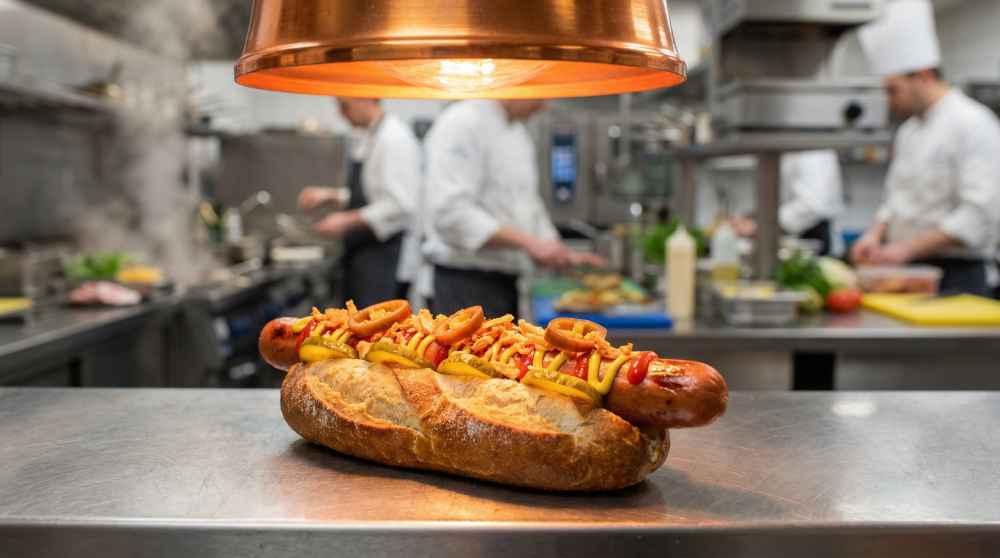
Jumbo Pork Hot Dog: a high-impact, ready-to-serve hotdog build designed for busy pub service.
The Sausage Haüs roller-grill offer is built around a simple idea: run two hotdogs that do two different commercial jobs, using one workflow. Our Pork Hotdog is the classic, broad-appeal seller that moves volume; our Beef Hotdog is the premium step-up that increases average spend—without adding labour or operational complexity.
Why the Pork Hotdog is ideal for roller grills
Our Pork Hotdog is a high-quality frozen German sausage made with 78% pork, complemented by smoky bacon, with a mild, crowd-pleasing spice profile (including paprika and nutmeg notes) that suits broad UK tastes. In roller-grill terms, that translates into a product that supports a familiar “classic hotdog” offer customers recognise instantly, works reliably across forecourts, pubs, kiosks and events, and makes menu engineering straightforward: a base hotdog that is easy to upsell with paid toppings and sauces.
Why the Beef Hotdog is your premium roller-grill upsell
Our Beef Hotdog is positioned as a bold, juicy beef option inspired by traditional New York-style hotdogs, offered in 100g and 150g sizes, and supplied pre-cooked and frozen for quick service. On rollers, Beef does one job exceptionally well: it lets you charge more without changing the station—same bun spec, same toppings, same SOP, but higher perceived value and a clear premium choice on the menu board.
The simplest profitable roller-grill programme: two SKUs, one workflow
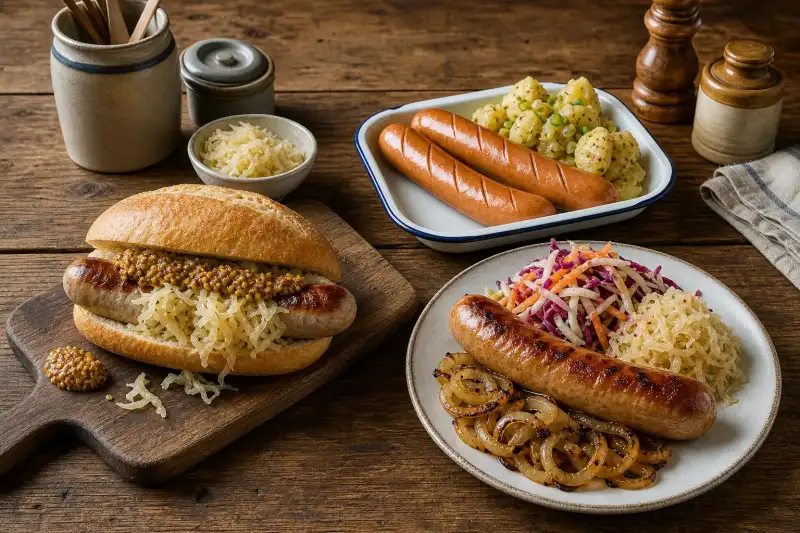
If you want roller-grill profit, keep the programme tight: Pork Hotdog = the default crowd-pleaser, Beef Hotdog = the premium step-up. Then build margin with simple upgrades that do not slow service: a “Loaded” build, premium sauces, high-impact add-ons (crispy onions, jalapeños, cheese sauce), and easy meal-deal bundles.
Frequently Asked Question
Yes. They are ideal for peak periods and late service because they reduce kitchen pressure, speed up service, and enable a consistent hot-food offer from a small footprint.
A roller grill should be treated as a hot-holding and display unit, not a cooking appliance. For best results and safe operations, start with properly heated, pre-cooked product and then hold/present on the rollers.
Load to demand (don’t overfill), define a clear quality window, rotate stock first-in-first-out, keep rollers clean, and make temperature checks routine so product stays both compliant and appetising.
Fast, high-impact options: crispy onions, pickles, jalapeños, cheese sauce, curry ketchup, premium mustard, and meal bundles (drink + crisps/sides). Keep the menu tight so service stays quick.
Hot food should be kept at 63°C or above, with limited exceptions and specific controls when operating below that threshold.
A roller grill is used to heat and hot-hold pre-cooked hotdogs/sausages while presenting them in a visible, front-of-house display that encourages impulse purchases.
If food cannot be held at 63°C+, it can be displayed below 63°C for up to two hours (only once). After that it must be handled safely (e.g., reheated properly, cooled correctly, or discarded depending on your procedures).
Three things: uniform size (predictable heat and portion control), surface integrity (no splitting/leaking), and holding performance (stays hot, juicy and pleasant throughout the service window).
Skinless hotdogs are typically straight, so they rotate evenly and present consistently. Natural casing hotdogs often sit curved, which can cause uneven contact with rollers, less consistent heating, and a less uniform display.
t creates a simple price ladder: Pork as the classic crowd-pleaser and Beef as the premium upsell—same workflow, higher average spend, and broader customer appeal.
Conclusion
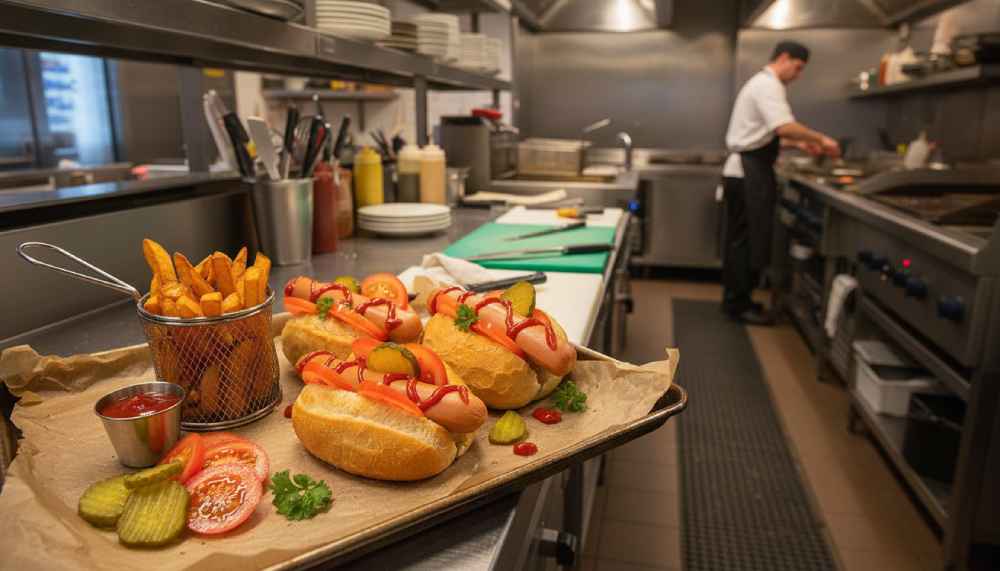
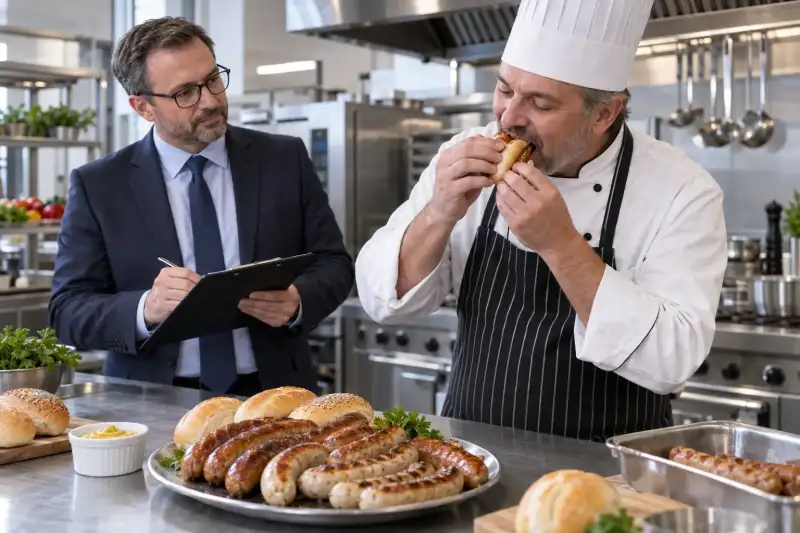
A fast, consistent hotdog-and-chips serve that suits high-throughput pub kitchens.
A roller grill is one of the most operationally efficient ways to sell hot food in 2026—provided you treat it as a presentation + hot-holding programme, not an improvised cooking method. The roller grill wins because it reduces labour dependency, speeds up service, and turns hotdogs into a visible, impulse-friendly offer that can trade all day. But the same visibility that drives sales also exposes weaknesses instantly: tired-looking product, inconsistent heat, messy rollers, and unclear staff routines will quickly erode conversion and repeat purchase.
That is why discipline matters. Follow UK hot-holding fundamentals: keep hot food at 63°C or above (with the limited two-hour allowance below that when properly managed), use a clean probe thermometer to verify temperatures, and keep a simple record so checks happen consistently across shifts. Just as importantly, manage a realistic quality window. Even when food safety is controlled, eating quality can drop if product is held too long—so load to demand, rotate stock, and train staff to prioritise “hot and juicy” over “hot and hanging around.”
This is exactly where the right hotdog spec makes the difference. The Sausage Haüs Pork Hotdog and Beef Hotdog are built for real service conditions: consistent portion formats, pre-cooked convenience, and flavour that remains compelling in a hot-holding environment. Pork gives you the classic, broad-appeal seller that moves volume; Beef gives you an immediate premium step-up that lifts average spend—without changing your bun spec, toppings station or SOP. Keep the programme tight around those two SKUs, engineer your upsells with fast, high-impact toppings and meal bundles, and the roller grill becomes what it should be: a dependable profit centre that sells itself, rather than a maintenance headache that creates waste and inconsistency.
About Sausage Haus
The Sausage Haüs supplies authentic German sausages to UK retail and foodservice—built for consistent quality, reliable handling, and strong customer appeal. Our focus is simple: help pubs, caterers, forecourts, event operators, wholesalers and retailers serve products that taste premium, perform consistently in busy service, and support strong margins with minimal operational complexity.
We work with established partners to deliver that reliability at scale. Our sausages are produced with heritage expertise in Germany, including our long-standing manufacturing partner Hardy Remagen (founded in 1718), where traditional butchery standards, disciplined recipes, and consistent production are central to every batch. In the UK, the range is supported by distribution through Baird Foods, ensuring dependable availability and a supply chain that works for professional kitchens and commercial operators.
Across our portfolio—Bratwursts, Frankfurters, premium hotdogs and other German classics—the goal is the same: products that are easy to portion, easy to cook and hold, and consistently satisfying for customers. Whether you are building a premium pub menu, upgrading a forecourt hot-food offer, or running high-throughput event service, The Sausage Haüs range is designed to help you deliver authentic German flavour with the operational confidence required in modern UK foodservice.