Updated January 2026.
This article updates and strengthens your Zigeunerschnitzel Recipe for 2026, positioning it as a practical, high-impact German pub dish built for modern service. It brings together the best elements of German comfort cuisine: a crisp, golden schnitzel, a vibrant paprika-pepper sauce, and a refreshing bowl of Gurkensalat for contrast and balance. Written with real kitchens in mind, the workflow prioritises speed, consistency, and repeatable results across busy lunch and evening sessions—while still delivering the bold, colourful plating that performs well on boards, specials menus, and editorial-style food content.
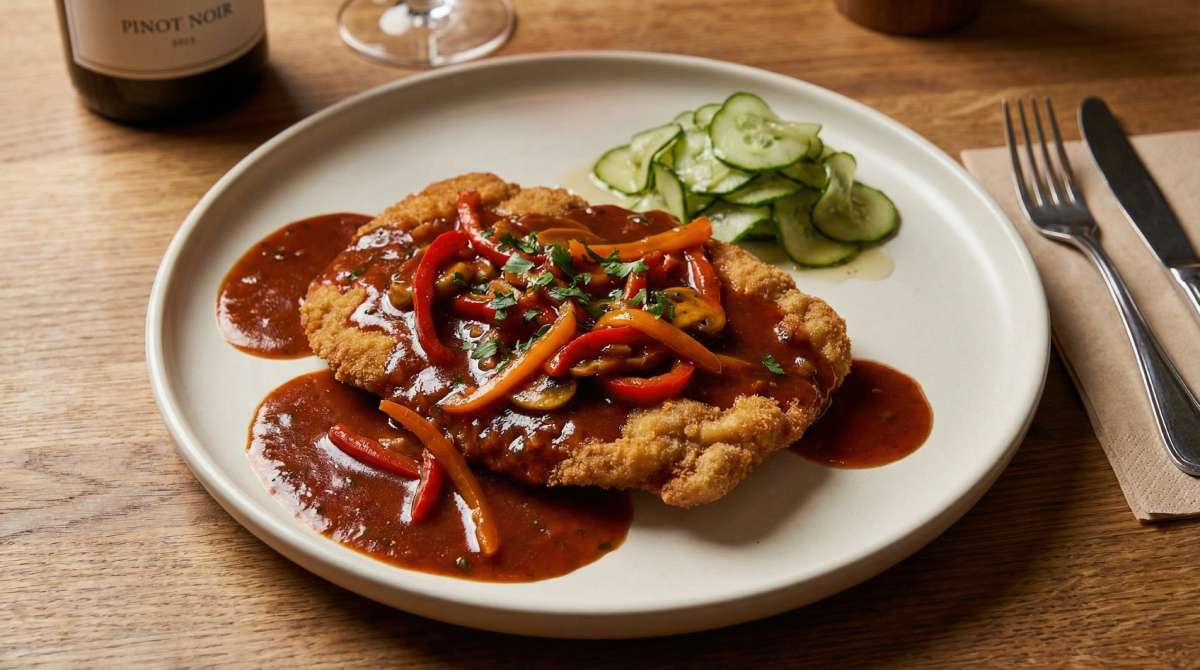
Crispy Zigeunerschnitzel (Paprika Schnitzel) with glossy pepper-tomato sauce, mushrooms and a fresh side of Gurkensalat.
Introduction
A great Zigeunerschnitzel Recipe delivers excitement even before the fork touches the plate. It’s the kind of dish that announces itself visually, aromatically and emotionally the moment it arrives at the table. Diners first notice the vivid paprika-red sauce cascading over the golden surface of a perfectly fried schnitzel — a glossy, aromatic blanket of sautéed peppers, tomatoes and onions that signals warmth and comfort. Steam rises gently from the plate, carrying the unmistakable fragrance of sweet peppers caramelising in butter, onions slowly cooked down to softness and the subtle acidity of tomato lifting everything around it.
Then comes the contrast, which is at the heart of every memorable Zigeunerschnitzel Recipe:
- Crisp against silky — the crackling breadcrumb crust meeting the smooth paprika sauce.
- Hot against cold — the warm schnitzel paired with chilled, refreshing Gurkensalat.
- Rich against acidic — savoury meat balanced by tangy vegetables.
- Hearty against light — the boldness of the sauce offset by the delicacy of cucumbers.
This interplay of textures and temperatures is exactly what makes Zigeunerschnitzel one of Germany’s most enduring pub classics.
Across German Gasthäuser, roadside inns and modern Wirtshäuser, Zigeunerschnitzel — also known today as Paprika Schnitzel or Balkan Schnitzel — is a beloved staple. Diners gravitate toward the sweet-tangy punch of the paprika-pepper sauce and the comforting familiarity of a golden pork schnitzel. The sauce itself is part of the signature experience: deeply caramelised peppers and onions, softened into a rich stew-like base, simmered with stock and tomato until the flavours meld into a warm, aromatic harmony. It’s bold, colourful and deeply satisfying.
From a culinary operations standpoint, this Zigeunerschnitzel Recipe is a practical asset for chefs. The paprika-pepper sauce is exceptionally batch-friendly — it cooks in one pan, holds beautifully on the line and reheats without splitting or losing texture. Schnitzels can be prepped in advance and fried to order in minutes, making ticket times short and consistent. The Gurkensalat, with its crisp cucumbers and bright vinegar-dill dressing, can be prepared well ahead of service and keeps its freshness throughout the shift.
And that Gurkensalat is more than just a side — it is the balancing force that elevates the entire dish. Where the schnitzel offers crunchy richness and the paprika sauce provides warmth, sweetness and depth, the cucumber salad cuts through with cool acidity, herbal brightness and a gentle crunch that refreshes the palate. The interplay transforms the dish from simply hearty to genuinely well-rounded and memorable.
Visually, this Zigeunerschnitzel Recipe is a standout: vivid reds, golden browns and fresh greens on one plate. It photographs beautifully, sells itself instantly on chalkboards or menu headers and satisfies customers looking for something that feels both comforting and vibrant. For pubs that want maximum flavour with minimal operational complexity, Zigeunerschnitzel offers an unbeatable combination.
Key Takeaways
- A bold, vibrant German classic
This Zigeunerschnitzel Recipe delivers a striking combination of colours and flavours — golden schnitzel, vivid paprika-pepper sauce and refreshing Gurkensalat — making it one of the most visually appealing dishes on any pub menu. - Perfect balance of richness and freshness
The dish pairs a crisp, hearty schnitzel with a tangy, aromatic paprika sauce and a cool, acidic cucumber salad. Together, the elements create a perfectly rounded plate that never feels heavy. - Batch-friendly for professional kitchens
The pepper-onion-tomato sauce can be cooked in volume and held for hours without splitting, while Gurkensalat can be prepared ahead and remains crisp throughout service. - Fast to finish during peak hours
Schnitzels fry in minutes, allowing fast ticket times even in busy pub environments. The workflow integrates seamlessly into existing schnitzel production systems. - High-margin comfort dish
Affordable core ingredients — pork, peppers, cucumbers — paired with strong customer appeal make this a profitable addition to any menu, especially in winter or during themed events. - Modern name flexibility
While traditionally known as Zigeunerschnitzel, modern menus may use Paprika Schnitzel or Balkan Schnitzel — giving you the option to tailor naming without changing the recipe. - Strong social and menu presence
The bright red sauce and crisp golden schnitzel create excellent photography for social media, menu thumbnails and promotional material. - Versatile across seasons
The warm paprika sauce suits colder months, while the refreshing Gurkensalat makes the dish equally appealing in spring and summer. - Ideal as a hero dish for a German-themed night
The bold flavours and easy execution make it a standout choice for events, specials boards or beer-pairing menus.
What Makes This Zigeunerschnitzel Recipe Special?
This Zigeunerschnitzel (often listed simply as Paprika Schnitzel on modern menus) is designed to deliver true German pub flavour and high reliability in a professional kitchen.
- Fast, repeatable crunch: The schnitzel cooks in minutes and stays consistently crisp when you bread cleanly, let it set briefly, and drain on a rack rather than paper.
- A sauce that eats like a Wirtshaus classic: The pepper-tomato sauce is brighter and deeper than a basic paprika gravy—built around sweet peppers, tomato, and a small “restaurant” finish for gloss and roundness.
- Service-proof holding: The sauce can be reduced for body, then finished to stay stable on the line and plate beautifully without turning watery.
- Prep-ahead Gurkensalat: The cucumber salad can be made in advance in either a light vinegar-dill style or a creamy variation, and it stays fresh and crisp through service.
- Discover-level visuals: Golden schnitzel, glossy red sauce, and pale green cucumbers create high contrast and clear “feed appeal”—the kind of plate that performs on specials boards, thumbnails, and social.
The result is a dish that feels both comforting and vibrant: crispy pork, sweet peppers, tangy tomato depth, and a clean cucumber lift—a classic reworked to look better, taste sharper, and run smoothly at pace.
Dish Description
This Zigeunerschnitzel (often called Paprika Schnitzel on modern menus) delivers a plate that feels generous, vibrant, and remarkably well-balanced. At its core is a properly fried pork schnitzel: deep golden, audibly crisp, and finished with a light, airy breadcrumb shell that fractures cleanly under the fork rather than turning dense or oily. The crust has that classic schnitzel character—thin, blistered in places, and just rustic enough at the edges to signal “fresh from the pan.”
Over the top comes the dish’s signature: a glossy paprika-pepper sauce designed to taste like a German pub classic rather than a generic tomato gravy. Sweet sautéed bell peppers and onions form the aromatic base, then tomato brings body and gentle acidity. Paprika adds warmth and colour, while mild seasoning keeps everything rounded and savoury. Done right, the sauce is silky and cohesive—it coats the schnitzel without drowning it, clings to the crumb in a way that still leaves crisp pockets, and lands on the palate with a clear progression: sweetness from peppers, tang from tomato, a subtle paprika warmth, and a faint, friendly heat that keeps the next bite interesting.
The plate is lifted and “reset” by Gurkensalat. Served cold, the cucumber salad provides a clean, refreshing counterpoint to the warm schnitzel and sauce. Thin cucumber slices in a lightly sweetened vinegar-and-dill dressing bring brightness and crunch, cutting through richness and making the dish feel lighter than it looks. If you offer a creamy variation, it turns the side into a softer, more rounded contrast—still fresh, but with an extra layer of comfort that suits winter menus and premium pub plating.
From a visual standpoint, this is exactly the kind of dish that earns attention on specials boards and in feed-style discovery:
- Vivid reds and yellows from the pepper-tomato sauce, with visible pepper strips for texture
- A clear golden centrepiece in the schnitzel, signalling crunch at a glance
- Cool greens from the cucumbers and dill, adding colour contrast and a “fresh” cue
It’s photogenic without being fussy: one clear hero, one high-gloss sauce, one crisp, cooling side. In service, it performs in both casual and premium settings because the experience is coherent—crunch against silk, warmth against brightness, sweetness against acidity. Every element supports the others, producing a dish that feels satisfying and complete rather than heavy, and that keeps tasting “alive” from the first bite to the last.
The Perfect Three-Dish Breading Line
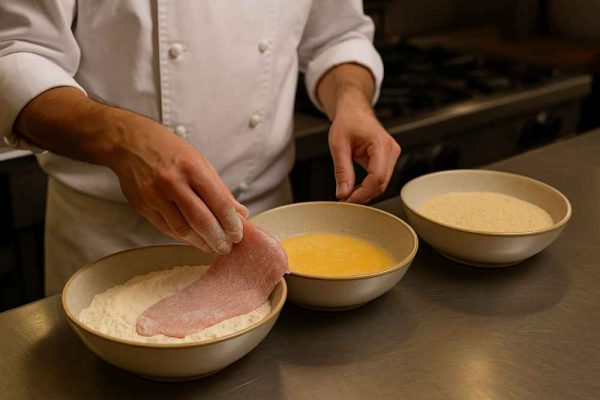
A chef demonstrates the classic three-bowl breading method for Schnitzel: flour, beaten egg and fine breadcrumbs — the foundation of every authentic Wiener Schnitzel.
A consistent, crisp schnitzel starts long before it hits the pan. In professional kitchens, the quality of a Zigeunerschnitzel is largely determined by how well the three-dish breading line is set up and maintained. When done correctly, it delivers even coverage, strong adhesion, and the light, flaky crust that defines a proper schnitzel.
1) Seasoned Flour – The Foundation Layer
The first dish contains plain flour, lightly seasoned with salt and a small amount of white pepper. This step dries the surface of the meat and creates the essential base that allows the egg to cling evenly. Any excess flour should be shaken off thoroughly; a thin, even coating is the goal. Too much flour leads to clumping and weak adhesion further down the line.
2) Egg Wash – The Binding Stage
The second dish holds beaten eggs, whisked just until smooth and fluid, not frothy. The egg acts as the glue between flour and breadcrumbs, so full contact is critical. The schnitzel should be completely coated, with no dry patches, but allowed to drip briefly before moving on. This keeps the crumb light rather than heavy.
3) Fine Breadcrumbs – The Crisp Shell
The final dish is filled with fine, dry breadcrumbs. The schnitzel is laid gently into the crumbs and coated without pressing hard. Light pressing only at the edges helps secure the crumb while preserving air pockets in the coating. This loose structure is what creates the signature crispness and even browning during frying.
Workflow Tip for Service
In busy pub kitchens, the three-dish line should be kept clean, dry, and refreshed regularly. Cloudy egg, damp crumbs, or flour overloaded with moisture will immediately compromise texture. A well-managed breading station allows schnitzels to be prepped quickly, fried to order, and served with consistent results throughout service.
The Perfect Souflage in Clarified Butter
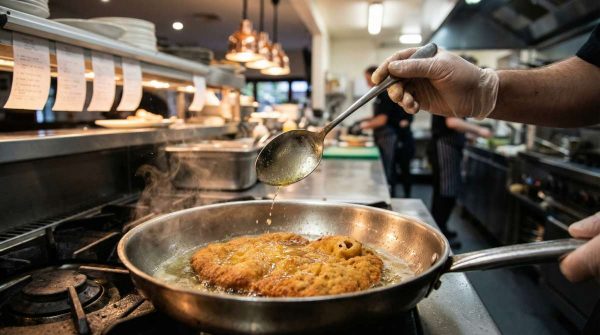
The key to a great schnitzel: shallow-frying and basting in hot butter for a crisp, golden crumb.
True schnitzel quality is defined not just by crispness, but by soufflage—the light separation of the breadcrumb coating from the meat that creates a blistered, airy crust. Achieving proper souflage requires the right fat, the right temperature, and controlled pan movement. Clarified butter (Ghee) is essential.
Why Clarified Butter Matters
Clarified butter delivers clean butter flavour while tolerating higher frying temperatures than whole butter. With the milk solids removed, it allows the schnitzel to fry evenly without burning, while promoting rapid steam release between meat and crumb—key to lifting the coating.
Pan Setup and Fat Depth
Use a wide, heavy-based pan and add enough clarified butter to reach a depth of roughly 1–1.5 cm. The schnitzel should float slightly rather than sit flat on the pan. Heat the butter to around 170–175°C; it should shimmer gently but never smoke.
The Frying Technique
Lay the breaded schnitzel into the hot butter away from you to avoid splashing. Immediately begin gentle pan movement, tilting and swirling so hot butter continuously washes over the top of the schnitzel. This constant basting causes steam to form beneath the breadcrumb layer, lifting it away from the meat and creating the characteristic blistered texture.
Do not press the schnitzel down. Pressure destroys the air pockets needed for souflage. Turn once, only when the underside is evenly golden, and continue the basting motion after flipping.
Timing and Visual Cues
Proper souflage develops quickly. Within seconds, the coating should start to ripple and lift in small bubbles. Total frying time is typically 2–3 minutes per side, depending on thickness. The finished schnitzel should be evenly golden, light, and visibly separated from the meat beneath.
Service Discipline
For consistent results during service, keep clarified butter clean and at stable temperature. Overcrowding the pan or allowing crumbs to burn in the fat will prevent souflage and dull flavour. A clean pan and fresh butter restore performance immediately.
Service Notes
This Zigeunerschnitzel Recipe is built for real-world pub operations:
- Batch-prep friendly: Pepper sauce can be made in volume and held for hours with no separation.
- Fast to order: Schnitzels cook in minutes, making the dish ideal for peak hours.
- High-margin potential: Affordable ingredients with strong customer appeal.
- Perfect visual impact: Bright colours make this a standout on chalkboards and digital menus.
- Cross-season success: Light enough for summer, warm enough for winter — consistently sellable.
- Flexible pairing: Gurkensalat keeps things fresh, but fries, rice or potatoes can be swapped as needed.
For pubs looking for a reliable German-inspired hero dish, this Zigeunerschnitzel Recipe is one of the best-performing options available.
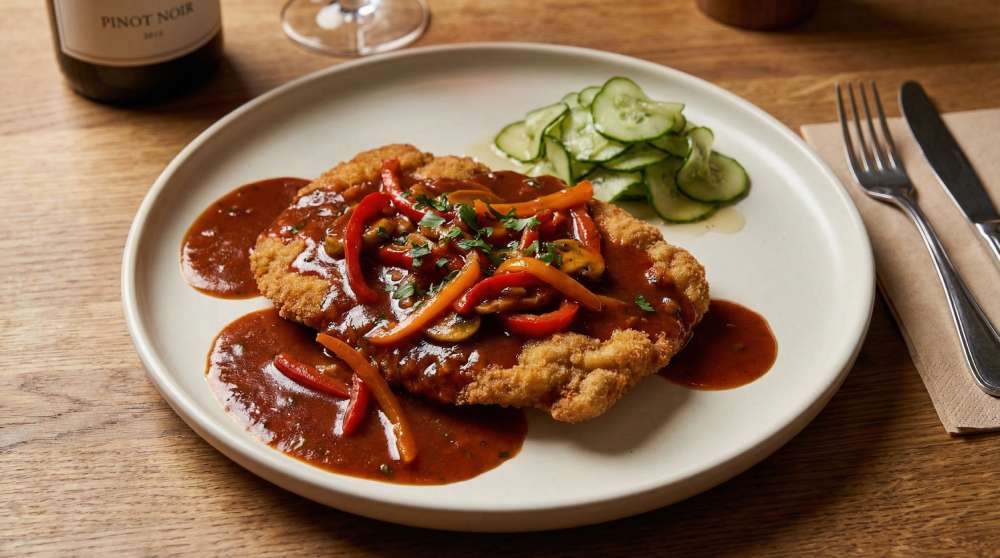
Zigeunerschnitzel (Paprika Schnitzel) with Gurkensalat
Ingredients
Method
- Pound the pork schnitzel to an even thinness (3–4 mm).
- Season lightly with salt and white pepper.
- Plate 1: flour
- Plate 2: beaten egg
- Plate 3: breadcrumbs
- Coat the schnitzel: flour → egg → breadcrumbs.
- Shake lightly — do not press the crumbs, to keep the crust airy.
- Heat butter or oil in a sauté pan.
- Add onions and cook until soft and lightly golden.
- Add red and yellow peppers; cook until tender and caramelised.
- Add garlic (if using) and sweet paprika; cook briefly.
- Stir in tomato paste, then add passata and stock.
- Simmer until glossy and slightly thickened.
- Add a dash of vinegar or lemon juice for brightness.
- Season with salt, pepper and a pinch of sugar if needed.
- Hold warm for service.
- Mix vinegar, sugar, water, salt and pepper into a light dressing.
- Add thinly sliced cucumber and dill.
- Toss gently and chill.
- Serve cold for maximum contrast.
- Heat shallow fat in a pan (3–4 mm deep).
- Fry schnitzel for 2–3 minutes per side until golden and crisp.
- Drain on a rack — not on paper — to preserve crunch.
- Place schnitzel on a warm plate.
- Spoon generous paprika-pepper sauce over the centre (leave edges exposed for crispness).
- Serve the Gurkensalat on the side in a small bowl or neatly mounded.
- Garnish with dill or parsley.
Other Schnitzel Recipes
Cordon Bleu
A golden, crisp schnitzel layered with ham and melting cheese, delivering rich, creamy flavour and indulgent texture — a classic comfort favourite with broad appeal.
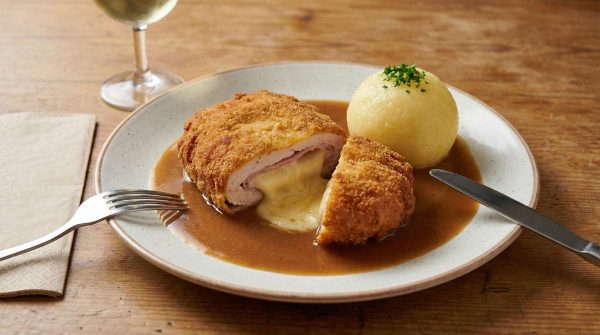
Golden, crispy Cordon Bleu with melted cheese and ham, served with rich brown gravy and a classic Kartoffelknödel.
Jägerschnitzel
A hearty German classic: crisp pork schnitzel smothered in rich, savoury mushroom gravy, often paired with buttery Spätzle for deep, earthy flavour.
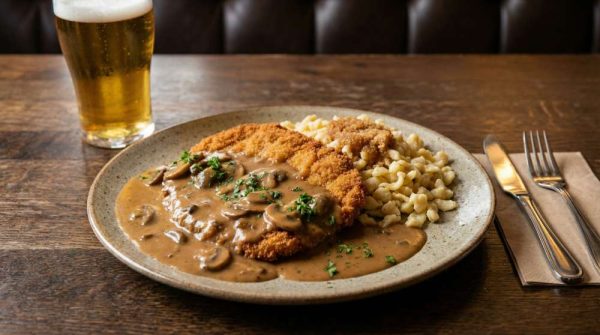
Classic Jägerschnitzel with rich mushroom sauce, golden breaded schnitzel and Swabian-style spätzle, served in a traditional pub setting.
Wiener Schnitzel
Austria’s iconic breaded veal cutlet — tender, light and perfectly crisp — traditionally served with lemon and paired with classic sides like Bratkartoffeln.
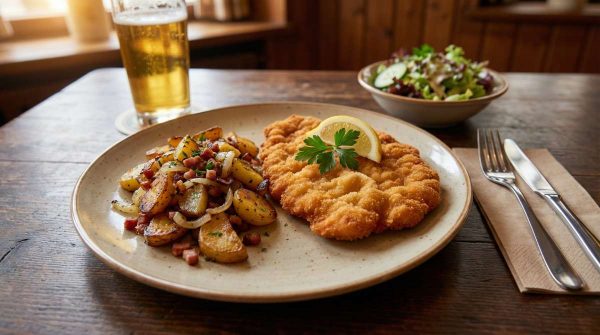
Classic Wiener Schnitzel with crispy Bratkartoffeln, lemon, parsley, a fresh side salad and a cold lager.
Rahmschnitzel
A comforting Central European favourite featuring a golden schnitzel topped with silky cream sauce, usually served with crisp potato Rösti to balance richness and texture.
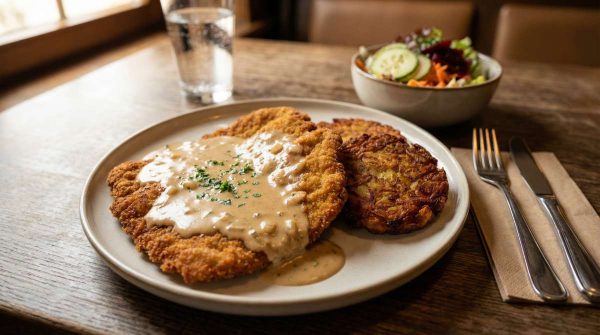
Classic German Rahmschnitzel with rich cream sauce, crisp potato rösti, and a traditional Swabian mixed salad, served in a warm pub setting.
Holsteiner Schnitzel
Northern German character on a plate: a breaded schnitzel crowned with a sunny-side-up egg, capers and anchovies, paired with fried potatoes and beetroot salad for bold flavour contrasts.
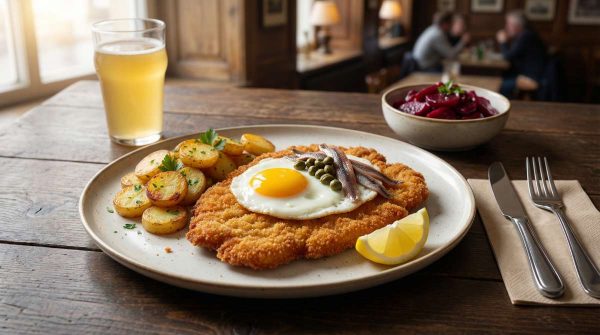
Holsteiner Schnitzel: crisp breaded schnitzel topped with a sunny-side-up egg, anchovies and capers, served with fried potatoes and a lemon wedge.
Frequently Asked Questions
Absolutely. The paprika-pepper sauce is extremely batch-friendly, holds well in a bain-marie and reheats without splitting. It’s ideal for high-volume service.
Yes. Use gluten-free flour and gluten-free breadcrumbs. Ensure your stock and sauce ingredients are also gluten-free.
es — popular alternatives include:
- Fries
- Rice
- Spätzle
- Potato salad
- Mashed potatoes
But for authenticity and balance, Gurkensalat is the best match.
No — the classic sauce is sweet and tangy, not hot.
It uses mild paprika and sweet bell peppers. If you want heat, you can add chilli flakes or hot paprika.
Very much so. It offers:
- Bold, colourful presentation
- High customer satisfaction
- Fast cook times
- Batch-friendly components
- Strong margin potential
It’s a hero dish for winter specials, German-themed nights and comfort-food menus.
Zigeunerschnitzel is a crisp pork schnitzel served with a vibrant paprika-pepper sauce made from sautéed peppers, onions, tomatoes and mild spices. Modern menus often call it Paprika Schnitzel or Balkan Schnitzel.
Traditionally, pork is used in Germany.
However, chicken or turkey versions are common in modern pubs, and the technique remains the same.
Zigeunerschnitzel → served with paprika-pepper-tomato sauce
Jägerschnitzel → served with mushroom gravy
Both are German classics but have completely different flavour profiles.
Zigeuner sauce should be spooned over the centre only, leaving the edges exposed.
If the schnitzel is drenched, the crumbs soften quickly.
Gurkensalat, a refreshing German cucumber salad, adds cool acidity that balances the warm, rich schnitzel and sweet-tangy sauce. It creates the perfect textural and flavour contrast.
About The Sausage Haüs
At The Sausage Haüs, we are committed to bringing authentic German flavour to UK kitchens in a way that supports modern service demands. While our core range — produced by Hardy Remagen and distributed in the UK by Baird Foods — focuses on premium German sausages, we also champion classic dishes like schnitzel, paprika sauces and traditional German sides.
This Zigeunerschnitzel Recipe reflects our culinary philosophy: vibrant flavours, simple ingredients elevated through technique, and dishes engineered for consistent performance. Whether you’re building a German menu, running pub specials or exploring European comfort food, our guidance and product range are designed to help you serve authentic flavour with confidence and speed.
Conclusion
A well-executed Zigeunerschnitzel—often framed simply as Paprika Schnitzel on modern menus—delivers exactly what guests want from German pub food: bold colour, satisfying crunch, an aromatic sauce, and a clean, refreshing contrast on the side. The schnitzel provides the structure and the instant “this is worth ordering” moment: golden, crisp, and substantial without being heavy. The pepper-tomato sauce brings warmth and tang, with sweet peppers and paprika giving the dish its signature character and a glossy, appetising finish. Then the Gurkensalat does the crucial job of balancing the plate—bright, chilled, and lightly acidic—so every bite feels lively rather than rich.
What makes this dish particularly strong is that it reads well in multiple directions at once. It can be rustic and generous in a classic pub presentation, but it can also look refined and modern with tighter plating, a more reduced sauce, and a sharper garnish. It feels familiar enough to be an easy “yes” for diners, yet distinctive enough to stand out from the usual burger-and-chips cycle. That combination—recognisable comfort with a clear point of difference—is exactly what turns a menu item into a repeat order.
From a kitchen perspective, Zigeunerschnitzel is commercially attractive because it’s built around simple, controllable processes:
- Fast cook times: schnitzels fry quickly and plate well under pressure.
- Prep stability: the sauce can be made ahead, held reliably, and finished to order for maximum gloss and consistency.
- Operational flexibility: you can run it as a feature dish on busy weekends, a seasonal special, or a core seller with minimal additional complexity.
- Strong perceived value: the visual impact and “German classic” positioning support premium pricing and strong margins.
For guests, it’s comfort with personality: crisp pork, a sweet-and-tangy paprika sauce, and that refreshing cucumber lift that makes the plate feel complete. For operators, it’s a dependable performer that generates strong feedback, photographs beautifully for specials boards and social content, and offers a clear story for staff to sell in one sentence.
Whether you present it as a nostalgic German favourite or a modern Paprika Schnitzel with vibrant pepper sauce, this recipe is the kind of dish that doesn’t just fill a menu slot—it earns attention, drives repeat orders, and elevates a pub offer with authentic German character.
Do you want to learn much more about Schnitzel? Read our big post here.