The Wiener Schnitzel stands as the benchmark for Schnitzel worldwide — a dish that defined crisp, thin-cut breaded veal, fried to golden perfection, and served with simple garnishes that let the quality shine. This recipe is built for chefs and kitchens that value precision, consistency and heritage. The Wiener Schnitzel delivers speed of execution, premium-margin potential and timeless appeal, whether on a refined European menu or a modern pub’s “continental night.”
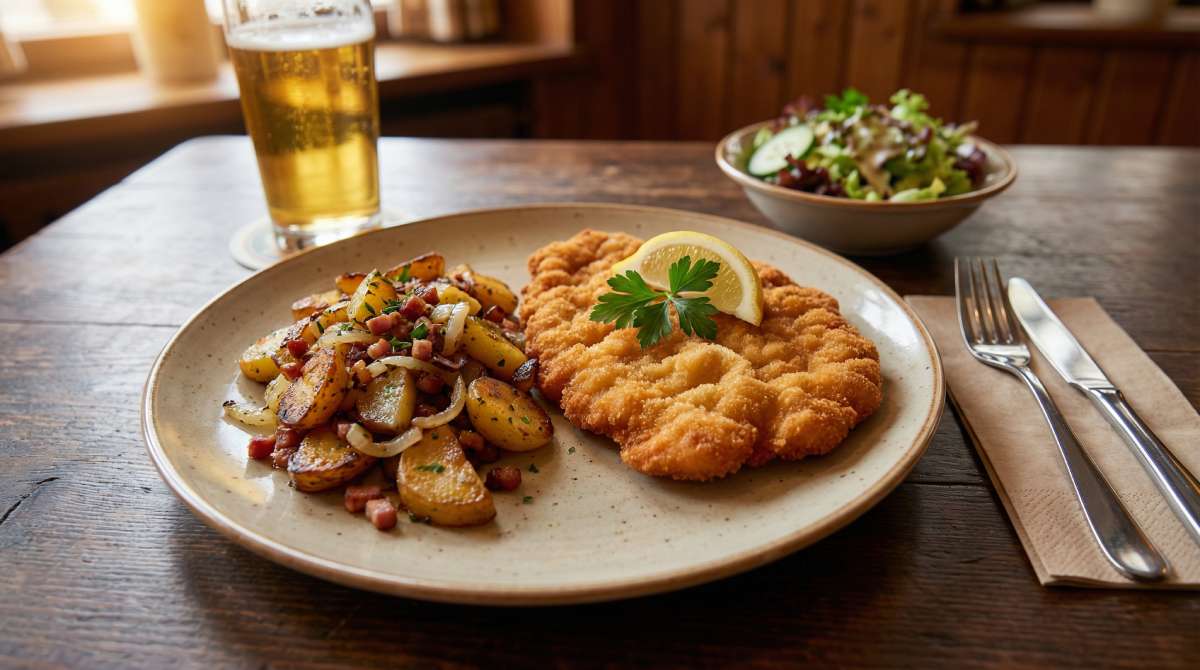
Classic Wiener Schnitzel with crispy Bratkartoffeln, lemon, parsley, a fresh side salad and a cold lager.
Introduction
Few dishes evoke continental European dining quite like a Wiener Schnitzel with Bratkartoffeln. Its golden, delicate, paper-thin breading and tender, juicy interior promise comfort, nostalgia and a touch of class — all at once. For chefs and restaurateurs alike, it’s a reliable staple: straightforward to prepare, quick to plate and widely loved by guests across demographics.
From a kitchen standpoint, the Wiener Schnitzel is ideal: the veal (or high-quality pork, if adapting for cost or availability) slices thin and cooks within minutes on a hot flat-top or frying pan. The breading fries crisp in neutral fat, releasing a nutty aroma that fills the line. When plated simply — perhaps with a lemon wedge, parsley and traditional sides — the result is elegant, authentic and profitable.
Dish Description
A pristine Wiener Schnitzel presents with a lacy, golden-brown crust, thin enough to reveal the pale, tender meat beneath. Served traditionally on a warm plate, often with a lemon wedge and perhaps a side of potato salad or parsley potatoes, it offers a clean, balanced meal — light on sauce but rich in texture, flavour and refinement.
This dish thrives because it delivers pure, unadulterated Schnitzel: no heavy sauces, no complex toppings — just crisp breading, tender meat and subtle seasoning. Its simplicity makes it versatile: a fine-dining main, a polished pub special, or a comfort-food favourite on lunch menus. It’s as suitable for a romantic evening as for a family dinner, and always delivers that unmistakable “continental” dining experience.
Service Notes
- Fast execution & high turnover: Because the meat is very thin and cooking time is minimal, Wiener Schnitzel works perfectly in busy kitchens and during peak service.
- Consistent portion control: Slices can be portioned uniformly, ensuring predictable food cost and reliable yield — important in both fine dining and pub environments.
- Upsell and pairing potential: Add-on sides (e.g., parsley potatoes, cucumber-dill salad, spaetzle) or premium drinks (European lagers, pilsners, light wines) create attractive ticket upgrades.
- Classic presentation, minimal waste: With no heavy sauces, the risk of soggy breading is minimal; leftovers (e.g. used neutral fat) can be managed efficiently in busy kitchens.
- Menu flexibility: Works year-round: elegant enough for winter menus, yet light and fresh enough for summer specials.
Wiener Schnitzel with Bratkartoffeln
Ingredients
Method
- Slice the pre-cooked potatoes into 5–7 mm rounds.
- Heat a wide frying pan or sauté pan with oil/clarified butter.
- Add the sliced potatoes in a single layer. Leave undisturbed for 2–3 minutes to develop colour.
- Add onions (and bacon lardons if using).
- Cook until crispy, golden and fragrant, turning occasionally but not too often — Bratkartoffeln should have both crisp edges and soft centres.
- Season with salt, pepper and parsley.
- Hold warm on a low heat or salamander.
- Pound the meat (if necessary):
- The escalope should be very thin — ideally 3–4 mm. Use a meat mallet or the base of a pan with cling film.
- Season both sides lightly with salt and white pepper.
- Plate 1: Flour
- Plate 2: Beaten egg
- Plate 3: Fine breadcrumbs (never press hard — keep texture airy)
- Lightly flour → dip in egg → coat in breadcrumbs.
- Do not compress the crumbs — the signature Viennese texture relies on a loose, delicate coating.
- Heat a wide pan with 2–3 cm of hot fat (not shallow frying — more like shallow-deep).
- The Schnitzel should float gently in the fat and move freely.
- Fry for 90 seconds to 2 minutes per side, agitating the pan gently:
- This creates the classic “soufflé” effect where the breading puffs and ripples.
- When golden and lacy, remove and drain on a rack (not paper).
- Place the Wiener Schnitzel on a pre-warmed plate.
- Add the Bratkartoffeln to the side.
- Garnish with lemon wedge and parsley.
- Serve immediately — crispness is everything.
Other Schnitzel Recipes
Cordon Bleu
A golden, crisp schnitzel layered with ham and melting cheese, delivering rich, creamy flavour and indulgent texture — a classic comfort favourite with broad appeal.
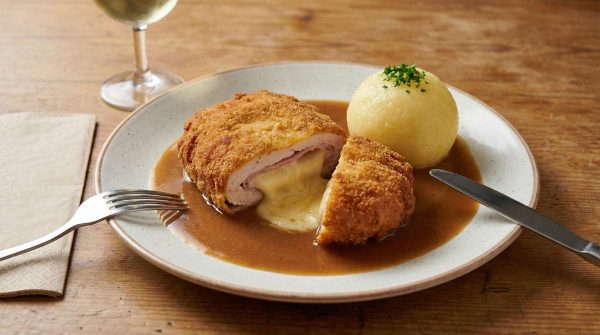
Golden, crispy Cordon Bleu with melted cheese and ham, served with rich brown gravy and a classic Kartoffelknödel.
Jägerschnitzel
A hearty German classic: crisp pork schnitzel smothered in rich, savoury mushroom gravy, often paired with buttery Spätzle for deep, earthy flavour.
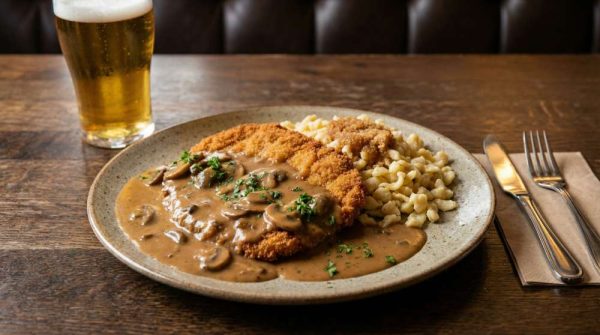
Classic Jägerschnitzel with rich mushroom sauce, golden breaded schnitzel and Swabian-style spätzle, served in a traditional pub setting.
Zigeunerschnitzel
A golden, crisp Zigeunerschnitzel topped with glossy pepper-tomato sauce and tender mushrooms, delivering sweet paprika warmth, gentle tang and vibrant colour — a German pub classic that feels both comforting and fresh.
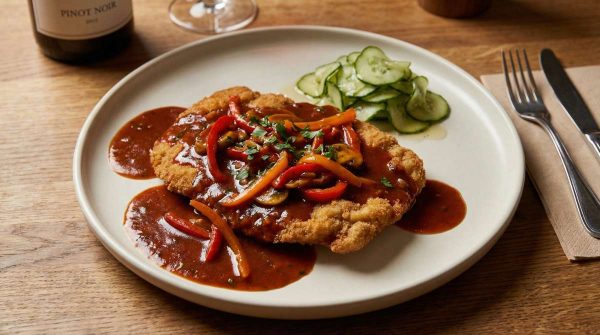
Crispy Zigeunerschnitzel (Paprika Schnitzel) with glossy pepper-tomato sauce, mushrooms and a fresh side of Gurkensalat.
Rahmschnitzel
A comforting Central European favourite featuring a golden schnitzel topped with silky cream sauce, usually served with crisp potato Rösti to balance richness and texture.
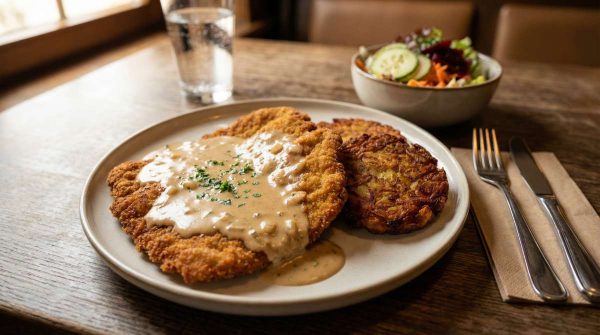
Classic German Rahmschnitzel with rich cream sauce, crisp potato rösti, and a traditional Swabian mixed salad, served in a warm pub setting.
Holsteiner Schnitzel
Northern German character on a plate: a breaded schnitzel crowned with a sunny-side-up egg, capers and anchovies, paired with fried potatoes and beetroot salad for bold flavour contrasts.
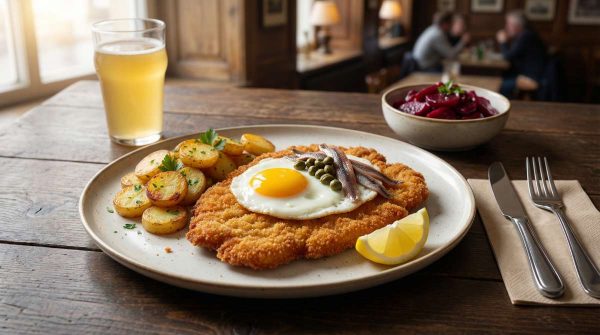
Holsteiner Schnitzel: crisp breaded schnitzel topped with a sunny-side-up egg, anchovies and capers, served with fried potatoes and a lemon wedge.
Frequently Asked Questions
You can bread the schnitzels ahead and refrigerate them for several hours, though it’s not ideal, but always fry to order. Pre-fried Schnitzels lose crispness quickly.
Absolutely. Pork is commonly used in pubs and restaurants due to cost and availability. The cooking method remains the same and still delivers excellent texture and crispness.
Yes, briefly. They can be kept warm under a heat lamp or low salamander. For best crispness, cook in batches throughout service rather than holding for long periods.
Yes. Bratkartoffeln are made from cooked and cooled potatoes. This prevents them from falling apart and ensures crisp edges during frying.
Yes. By Austrian law, “Wiener Schnitzel” must be made from veal.
If pork is used, it should be called Schnitzel Wiener Art (Viennese-style Schnitzel).
Definitely. It’s quick to cook, universally appealing, easy to portion-control, and delivers high perceived value. Combined with Bratkartoffeln, it becomes a standout dish that feels both premium and comforting.
Ensure the schnitzel is thin, use fine breadcrumbs, avoid pressing the crumbs into the meat, and fry in ample hot fat while gently shaking the pan. This creates the classic “souffléd” surface.
No, but it’s traditional and adds savoury depth. Many chefs include bacon, but the dish works beautifully without it for lighter menus or dietary needs.
Parsley potatoes, potato salad, cucumber-dill salad, buttered spaetzle and simple mixed salads are classic pairings. Keep sides light to balance the fried breading.
Clarified butter adds authentic aroma, but neutral oils such as sunflower or rapeseed withstand higher heat and are more practical for pub kitchens during high-volume service.
About The Sausage Haüs
At The Sausage Haüs, while our core strengths are German sausages — Bratwurst, Frankfurters, Krakauer and more — we also recognise the importance of continental classics like the Wiener Schnitzel. Though this recipe traditionally uses veal (or high-quality pork for adaptation), our ethos remains the same: authentic European quality with kitchen-friendly reliability.
This commitment is rooted in our partnership with Hardy Remagen, the renowned German butcher with more than 300 years of craftsmanship. Their dedication to premium meats and precise butchery sets the standard across our entire range. Through Baird Foods, our exclusive UK distributor, we ensure that chefs and pub kitchens receive consistent, dependable supply with excellent shelf life and performance.
Whether you focus on traditional sausage-based dishes or branch out into continental favourites like Wiener Schnitzel, The Sausage Haüs — backed by Remagen’s quality and Baird Foods’ reliability — stands behind kitchens seeking consistency, superior taste and operational efficiency.
Conclusion
The Wiener Schnitzel remains an evergreen classic for a reason: its combination of texture, simplicity and elegance makes it an unmistakable crowd-pleaser. For chefs, it offers ease of execution, consistent yield and minimal complexity; for diners, it offers a taste of continental Europe with every crispy, fragrant bite.
Whether featured as a key item on a seasonal menu, a refined special or a timeless weeknight favourite, Wiener Schnitzel remains a dish that commands respect, delivers satisfaction and enhances any menu — exactly the kind of offering that strengthens The Sausage Haüs brand identity.
If you want to learn much more about Schnitzel, read here.