
A great toad in the hole is basically two things done properly: sausages that brown hard, and batter that hits screaming-hot fat so it puffs instead of sulks. Add a glossy onion gravy and you’ve got a UK classic that sells itself – if it lands on the plate looking proud. This section gets you the foundations: heat, timing, and the few “don’t you dare” mistakes.
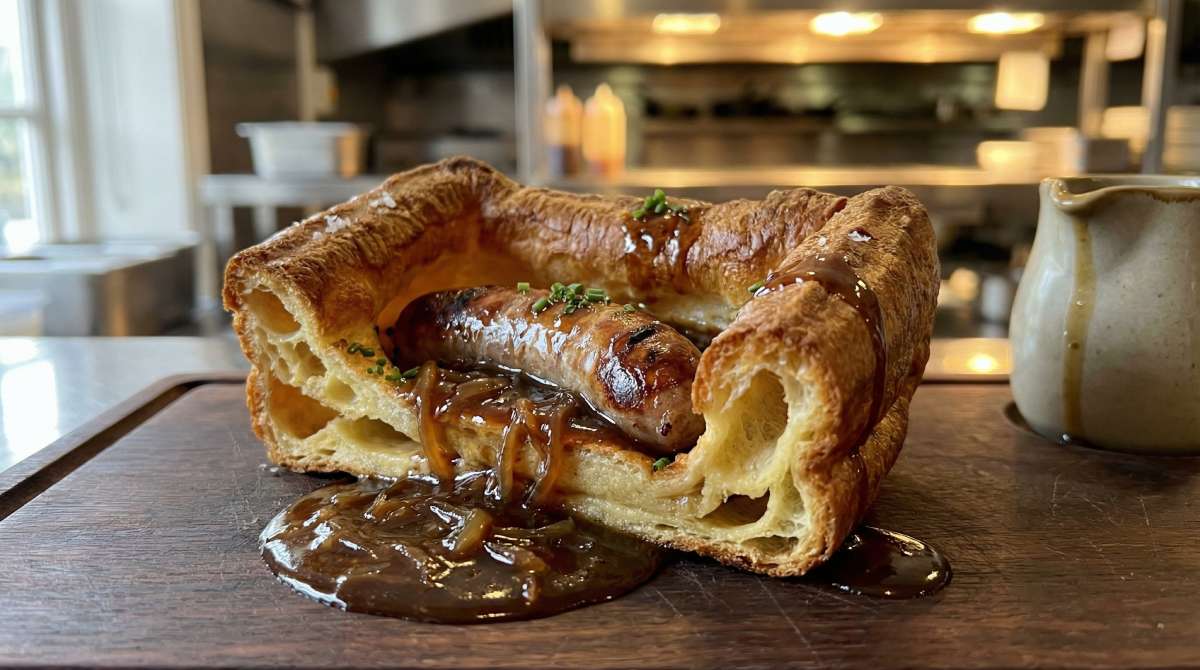
Crisp, well-risen toad in the hole with properly browned sausage and glossy onion gravy.
Introduction
Toad in the hole is one of those dishes everyone thinks they know – right up until the batter stays flat, the sausages leak, and the whole tray looks like it’s having a bad day. Done well, it’s pure comfort: crisp, risen Yorkshire pudding batter hugging properly browned sausages, with a rich gravy that tastes like you meant it.
For UK catering and street food, toad in the hole is also a smart operator’s dish. It uses familiar ingredients, it’s fast to portion, and it turns “sausages and gravy” into something customers happily pay proper money for. The catch is consistency. A tray-bake can go from hero to zero if your oven isn’t hot enough, your batter is wrong, or you don’t let the oil/fat get ripping before the batter goes in.
We’re aiming for the version that works in real kitchens: a toad in the hole with a confident rise, crisp edges, juicy sausages (yes, bratwurst works brilliantly), and a delicious onion gravy that’s deep and glossy, not thin and apologetic. No gimmicks – just repeatable steps you can run on a busy service.
Key Takeaways
- Heat wins: A great toad in the hole needs a properly hot oven and hot fat before batter hits the tray.
- Sausage choice matters: Use sausages that brown well and hold shape – “best sausages for toad in the hole” usually means higher meat content and decent casing.
- Batter is simple, not casual: Your toad in the hole Yorkshire pudding batter should be smooth, rested, and pourable.
- Don’t disturb the rise: Once the toad in the hole goes in, keep the oven door shut until it’s clearly puffed and set.
- Crispy comes from fat + timing: If you want how to make toad in the hole crispy, focus on preheating the tray and finishing long enough to dry the sides.
- Gravy is your profit lever: A proper toad in the hole gravy recipe (onion-forward, stock-based, reduced) makes the plate taste premium.
What Makes a “Perfect” Toad in the Hole (and Why Most Fail)
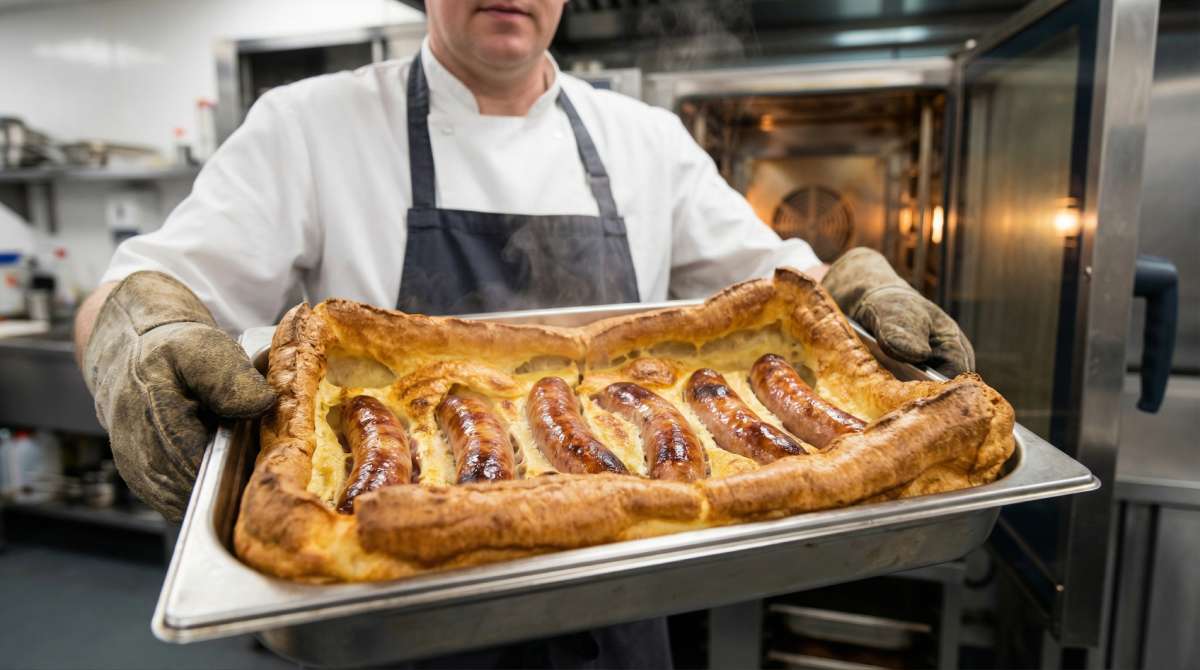
Fresh from the hot air oven: commercial tray-bake toad in the hole with browned bacon frankfurters.
A perfect toad in the hole is not mysterious. It’s a small set of rules done consistently: proper oven heat, properly hot fat, and batter that behaves like Yorkshire pudding batter should. Most “bad” toad in the hole is just one of those rules being ignored, usually because someone rushed, guessed the temperature, or treated the batter like it’s pancake mix.
Think of toad in the hole as controlled shock therapy for batter. The tray must be hot enough that the fat is shimmering and almost smoking (not literally billowing smoke, but you get the point). When the toad in the hole Yorkshire pudding batter hits that heat, it grabs, rises, and sets into crisp edges. If the tray is warm instead of hot, the batter soaks and steams. That’s when you get the sad, dense centre and the greasy bottom that makes people quietly push food around the plate.
The other common failure is sausage timing. If your sausages haven’t browned properly, they leak moisture and fat at the wrong moment. That moisture turns your toad in the hole into a wet sauna. You still get “something”, but not the tall, crisp tray bake people are dreaming about.
Here’s the fast way to diagnose what went wrong, using symptom -> cause -> fix:
- Symptom: Flat, pale toad in the hole with no lift
Cause: Oven not hot enough, tray not preheated, batter too thick or not rested
Fix: Preheat longer than you think; heat the tray with fat until shimmering; rest batter and aim for pourable consistency - Symptom: Soggy bottom, oily centre
Cause: Fat wasn’t hot; sausages released liquid; tray too deep or overcrowded
Fix: Brown sausages first; use a wide tin for more surface area; don’t crowd the pan - Symptom: Nice rise then collapse
Cause: Oven door opened early; batter undercooked in the centre; too much liquid
Fix: Keep the door shut until it’s clearly set; bake longer at steady heat; don’t over-thin the batter - Symptom: Tough, dry toad in the hole
Cause: Overbaked; sausages too lean; gravy too thin so it doesn’t “rescue” the bite
Fix: Pull when the sides are crisp but the centre still has a little give; choose the best sausages for toad in the hole; make a proper toad in the hole gravy recipe with reduction
If you want how to make toad in the hole crispy, the mental model is simple: crispness comes from heat + hot fat + time to dry. Fluff comes from batter structure + not messing with it mid-bake. Everything else is just details and ego.
Ingredients That Actually Matter (and What You Can Swap)
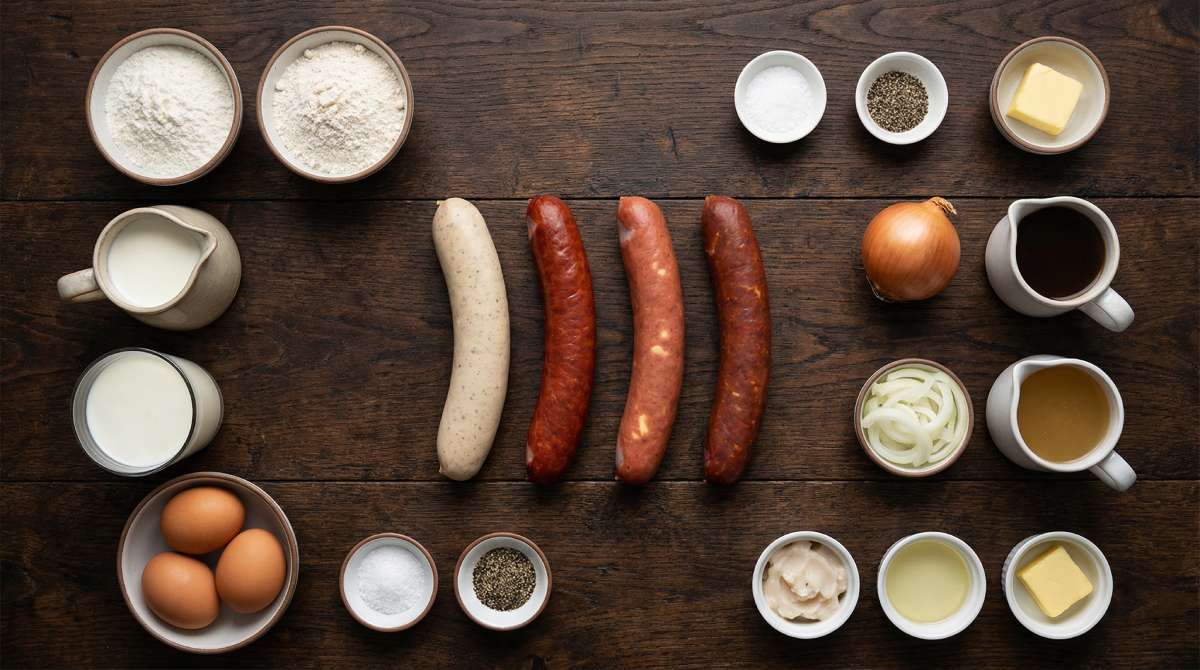
Everything that matters for a great toad in the hole: sausages, batter ingredients, fats, onions and stock for gravy.
The ingredient list for toad in the hole looks almost too basic, which is why people assume it’s forgiving. It’s forgiving on flavour, but not on physics. The ingredients that truly matter are the ones that control rise, crispness, and how well the sausages and gravy behave together.
Start with the sausages, because they define the dish. “Best sausages for toad in the hole” isn’t about being fancy, it’s about performance. You want a sausage that browns, holds shape, and stays juicy without dumping a puddle into your batter. Bratwurst will give you a more robust, meaty bite; frankfurters can bring smoke, chilli warmth, or a rich cheese note. Whatever you choose, browning them first is the easiest way to improve the final toad in the hole.
Eggs, flour, and milk are the batter engine. Eggs bring structure, flour provides the framework, and milk controls tenderness and browning. If your batter is too eggy, it can set heavy. Too much milk and it can struggle to hold height. You’re aiming for a smooth, pourable toad in the hole Yorkshire pudding batter that rests long enough to hydrate, then hits hot fat like it’s been waiting for this moment all day.
Fat is the crispness switch. Beef dripping is classic and gives depth, but vegetable oil works fine and is often easier for consistent results in UK kitchens. Butter is delicious but can burn more easily at the temperatures that make toad in the hole properly crisp. In practical terms: pick a fat that can take high heat without drama, and make sure it’s genuinely hot before you pour.
For the gravy: stock and onions are the difference between “nice” and “I’d order that again.” Onions give sweetness and body when browned properly. Stock gives backbone. You can build a great toad in the hole gravy recipe quickly if you brown onions hard, deglaze, and reduce a little. If you skip reduction, the gravy tastes thin, and thin gravy makes the whole plate feel cheaper than it is.
Here’s what matters most, and what you can swap without breaking the dish:
- Sausages: Bratwurst, bacon frankfurter, cheese frankfurter, chilli beef frankfurter all work – brown first for best results
- Flour: Plain flour is standard; strong bread flour can give a slightly chewier rise (useful, but don’t overthink it)
- Milk: Semi-skimmed is fine; whole milk gives a slightly richer finish; a small water swap can increase lift but may reduce flavour
- Fat: Beef dripping for classic flavour; veg oil for consistency; avoid low smoke-point fats at very high heat
- Stock for gravy: Beef stock for depth; chicken stock for lighter gravy; add onion and reduction either way
The big picture is this: toad in the hole is simple food, not delicate food. Treat the heat and fat seriously, pick sausages that behave, and your batter and gravy will do the rest.
The Batter: Yorkshire Pudding Rules for Reliable Rise
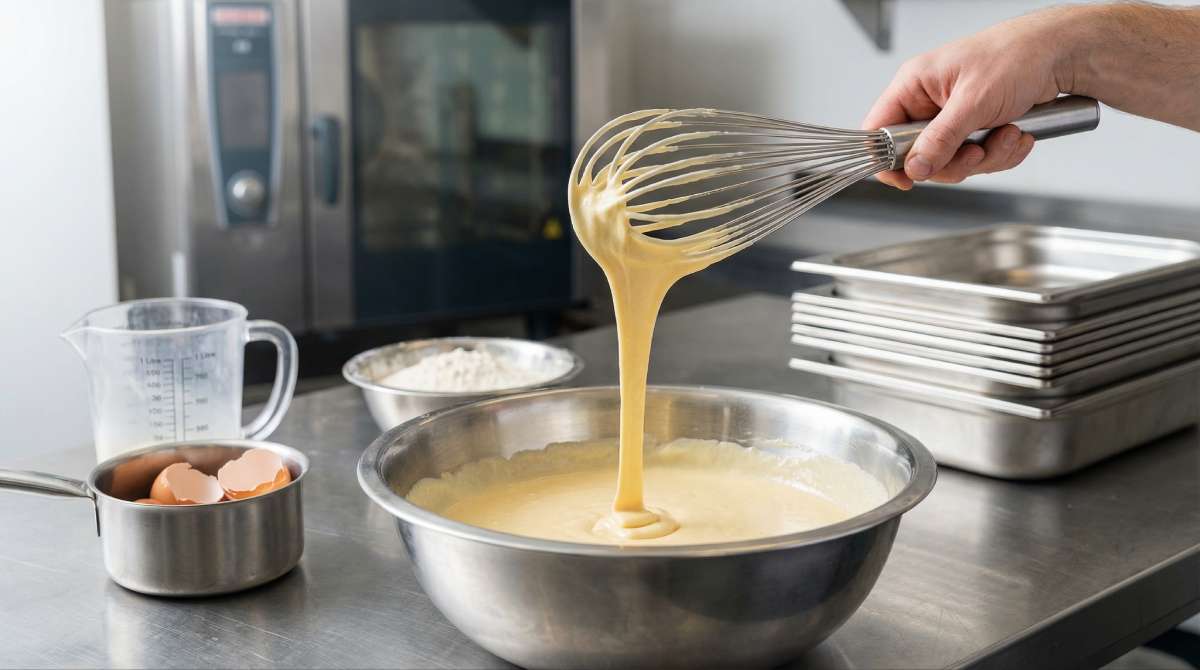
The key cue for a reliable rise: smooth batter that pours like single cream and levels out fast.
If your toad in the hole doesn’t rise, it’s almost never “bad luck”. It’s batter that’s the wrong consistency, batter that wasn’t rested, or batter that didn’t hit hot fat. The good news is the fix is boring and repeatable, which is exactly what you want if you’re feeding customers rather than chasing kitchen folklore.
For a reliable toad in the hole Yorkshire pudding batter, think in ratios, not vibes. You want enough egg for structure, enough flour for a stable frame, and enough milk to make it pourable. The exact numbers can vary, but the target outcome stays the same: smooth, lump-free batter that pours like single cream, not like pancake mix. If it pours in clumps or ribbons, it will rise unevenly and can set heavy in the middle.
Resting is not optional. A rested batter hydrates properly, relaxes, and behaves predictably when it hits heat. In a busy kitchen, resting is also convenient: make batter early, cover it, and it’s ready when your sausages are browned and your tray is hot. If you’re trying to learn how to make toad in the hole crispy, this is part of it: a good rise gives you airy structure, and airy structure crisps better.
The simplest lump-free method is also the least dramatic. Mix flour and salt first, whisk eggs in until you have a thick paste, then add milk gradually while whisking. This stops flour from forming dry pockets that turn into lumps. If you dump everything in at once, you can still rescue it, but you’ll waste time and patience.
Consistency cues are your best friend. When you lift the whisk, the batter should flow off in a steady stream and settle quickly into a flat surface. It should not sit in mounds, and it should not look watery like milk. When poured into the hot tin, it should sizzle at the edges almost immediately. That sizzle is the moment your toad in the hole starts becoming a toad in the hole.
Quick checklist for batter that behaves:
- Texture: Smooth and glossy, no flour specks, no lumps
- Pour test: Flows like single cream and levels out fast
- Resting time: At least 30 minutes; longer is fine if chilled and stirred before use
- Salt: A small amount helps flavour and structure (don’t forget it)
- Timing: Batter ready before the tray comes out, not the other way round
One more practical tip: if your batter has been in the fridge, let it come closer to room temperature (or at least give it a good whisk). Ice-cold batter can still work, but it reduces your margin for error. With toad in the hole, the margin is mostly about heat and timing, so don’t make it harder than it needs to be.
The Tray and the Heat: How to Make It Crispy on Purpose
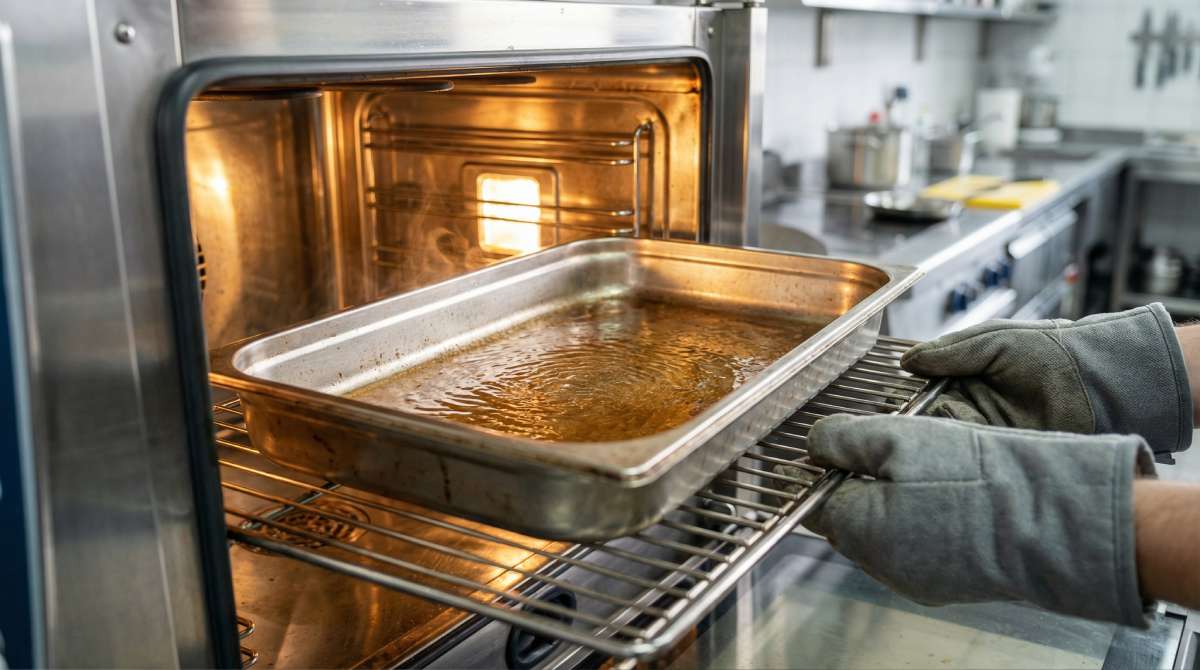
Crispness starts here: a wide shallow tin and properly hot fat before the batter goes in.
A crisp toad in the hole is mostly a tray and heat problem, not a “secret ingredient” problem. You can have the best sausages for toad in the hole and a perfect batter, and still end up with a soft, pale tray bake if the tin isn’t right or the fat wasn’t properly hot. This is where operators win, because process beats talent every time.
Start with tin choice. A shallow, wide roasting tin gives you more exposed surface area, which means more crisp edges and better browning. A deep dish traps steam and makes the centre heavier. For consistent results, use a sturdy metal tin that holds heat well. Thin tins lose temperature fast when you pour batter, which is exactly when you need maximum heat.
Fat choice matters because it’s the “launch pad” for the batter. Beef dripping gives classic flavour and fantastic crispness, but a neutral high-heat oil is often the easiest way to get consistent results service after service. Butter tastes great but burns more easily at the temperatures you want for a confident rise. Whatever you use, the rule is the same: the fat must be properly hot before batter goes in.
Preheating strategy is the key move. Put the tin in the oven with the fat and let it heat until the fat is shimmering and looks aggressive. Then work fast. Pull the tin out, add browned sausages (if they’re not already in), pour the batter immediately, and get it back in the oven. A slow pour while chatting about football is a reliable way to produce a sad toad in the hole.
Shelf position is simpler than people make it. Middle shelf usually gives the most even rise and colour. Too low and you risk a burnt base with a pale top. Too high and you can brown the top before the centre sets. In a fan oven, the circulation helps, but you still want stable heat and minimal door opening.
Door-opening penalties are real, and they’re brutal. Every time you open the oven, you dump heat and disrupt the steam/expansion that creates lift. Early opening is the classic reason toad in the hole rises, looks great, then slumps like it got bad news. Keep the door shut until the structure is clearly set and the colour is well on its way.
Practical “crispy on purpose” rules:
- Tin: Metal, sturdy, and preferably wide/shallow for a crispier tray bake
- Fat: Use a high-heat fat; preheat until shimmering before batter goes in
- Speed: Tin out, batter in, tin back in – no delays
- Shelf: Middle shelf for even cooking in most UK ovens
- Oven door: Keep it shut until you can see the rise is set (early peeking costs you height)
If you’re serving toad in the hole with bratwurst, you’ll usually get great browning and a “premium” look, which helps. But crispness still comes back to heat management. Do the boring parts right – hot tin, hot fat, no door opening – and you’ll get the kind of toad in the hole that doesn’t need excuses or extra gravy to be loved (though we’ll still give it delicious gravy, because we’re not animals).
Sausage Choice for Toad in the Hole (Bratwurst vs Frankfurters)
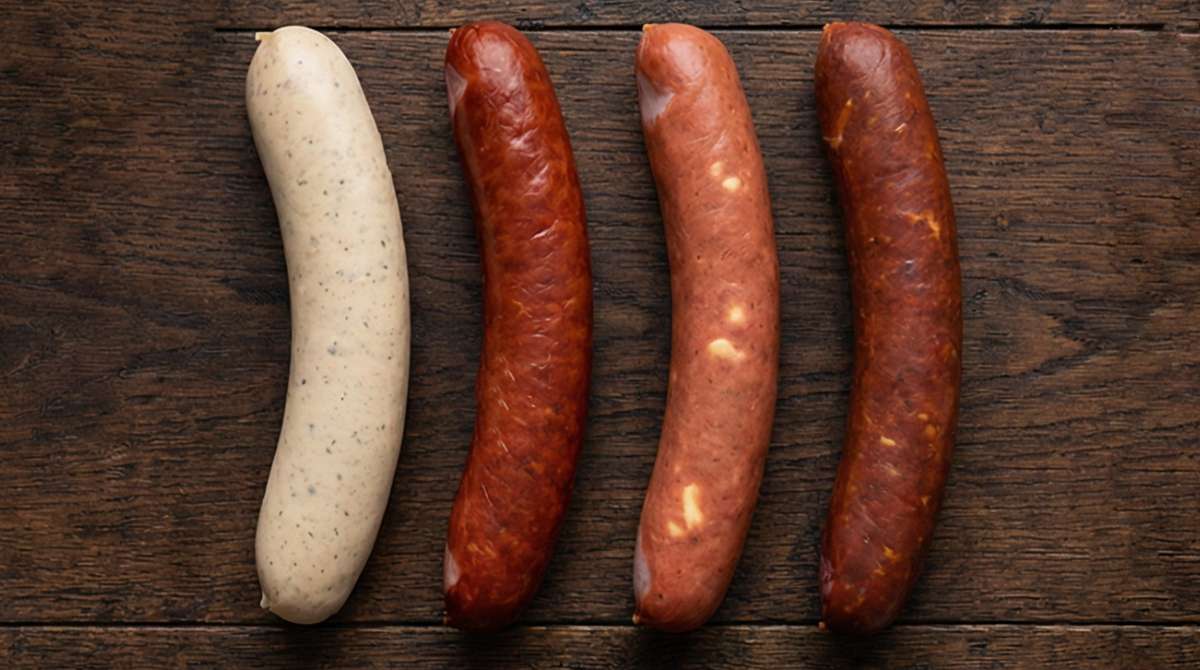
The four sausage variants used in this toad in the hole guide: Bratwurst, Bacon Frankfurter, Cheese Frankfurter and Chilli Beef Frankfurter.
A proper toad in the hole lives or dies on two things: batter rise and sausage performance. The batter gets all the drama, but the sausage quietly decides whether the tray bake feels premium or just “canteen nostalgia”. The best sausages for toad in the hole are the ones that brown well, hold their shape, and stay juicy without dumping a puddle into your batter at the wrong moment.
This is where Bratwurst and Frankfurters behave differently. Bratwurst tends to give you a more traditional “proper sausage” bite and a strong browned flavour that pairs naturally with a deep toad in the hole gravy recipe. Frankfurters (especially the Sausage Haus styles) bring distinct flavour signatures – smoky bacon, rich cheese, or chilli heat – and they can turn toad in the hole into something that feels new without changing your method.
One practical rule before we compare: whichever sausage you pick, brown it first. It improves flavour, reduces moisture release during the rise, and helps you get that confident, crispy look people expect when they order toad in the hole in a pub or from a street food counter.
Bratwurst: the classic, premium “proper sausage” option
If you want toad in the hole to feel like a proud UK classic with a German backbone, Bratwurst is your workhorse. It browns well, it holds its shape, and it gives you a meaty bite that stands up to gravy rather than dissolving into it. It’s also the easiest sell to customers who just want the “best version” of a familiar dish.
Toad in the hole with bratwurst also plates beautifully. The colour contrast between crisp batter and browned sausage is exactly what people picture, and it reads as quality even before the first bite.
Bacon Frankfurter: smoky, indulgent, big aroma
Bacon Frankfurter takes toad in the hole into “pub favourite, but better” territory. The smoky bacon note makes the whole tray bake feel deeper and richer, and it plays brilliantly with onion-heavy gravy. If you’re selling to hungry festival crowds or doing comfort-food nights, this is an easy crowd-pleaser.
The key is not to let it become heavy. Keep your batter crisp, and make sure the gravy has enough reduction to feel glossy, not thin.
Cheese Frankfurter: rich, family-friendly, and naturally “loaded”
Cheese Frankfurter turns toad in the hole into something that feels indulgent without extra toppings. The cheese note gives a softer, richer finish, which is fantastic for customers who want comfort first and “foodie” second. It also gives you an obvious menu hook: “cheese frankfurter toad in the hole” basically sells itself.
Because it’s richer, pair it with a gravy that’s a touch sharper and more onion-forward. A little mustard in the gravy (kept subtle) can work nicely here, but don’t overcomplicate it.
Chilli Beef Frankfurter: bold, spicy, and great for street food service
Chilli Beef Frankfurter is your “make it different” option. The heat lifts toad in the hole so it doesn’t eat like a brick, and it creates a bolder flavour profile that suits festivals and late-night service. This is also the one that gets people talking: it’s familiar enough to understand, but different enough to justify a premium price.
With chilli in the sausage, keep the gravy dark and savoury rather than sweet. More browning on the onions and a bit more black pepper usually does the job.
Quick comparison: what each sausage does to the dish
- Bratwurst: most classic “proper sausage” bite; best for premium pub-style toad in the hole
- Bacon Frankfurter: smoky, indulgent, big aroma; great for comfort-led menus and hungry crowds
- Cheese Frankfurter: rich and family-friendly; instantly feels “loaded” without extra work
- Chilli Beef Frankfurter: bold and spicy; ideal for festivals and street food differentiation
Choose based on customer + service style (simple guide)
In practice, sausage choice is less about “best” and more about who you’re feeding and how you’re serving. A tray-bake style toad in the hole for a pub table wants a different sausage than a grab-and-go portion at a festival.
Use this quick chooser:
- Pub / plated service (traditional expectations): Bratwurst
- Festival / high-footfall comfort food: Bacon Frankfurter or Chilli Beef Frankfurter
- Family events / buffet service: Cheese Frankfurter or Bratwurst
- “Something different” special: Chilli Beef Frankfurter
Whatever you choose, the method stays the same: brown the sausages, get the fat ripping hot, pour your toad in the hole Yorkshire pudding batter fast, and keep the oven door shut. Do that, and you can rotate sausages as a menu strategy without risking consistency.
Step-by-Step Method: The Core Toad in the Hole Workflow
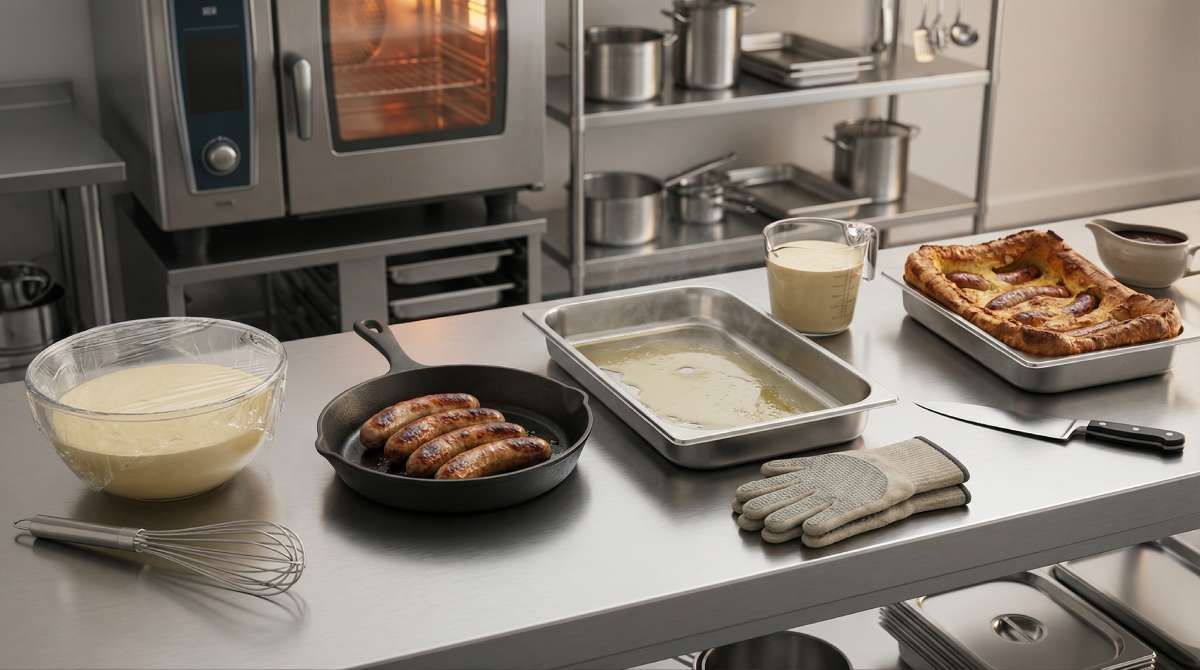
A reliable toad in the hole is a workflow: rest the batter, brown the sausages, heat the tray, pour fast, bake undisturbed, then rest before portioning.
A reliable toad in the hole is a workflow, not a mood. If you can run a Sunday service, you can run this. The trick is sequencing: sausages browned first, tray and fat properly hot, batter ready and rested, then a bake you don’t interrupt. Treat it like a tray bake with rules and you’ll get consistent rise and crispness.
Start by getting your toad in the hole Yorkshire pudding batter made and resting. This buys you time and reduces stress later. While it rests, preheat the oven properly. Most failures happen because people “preheat” for five minutes, then wonder why the toad in the hole looks like a duvet.
Next, brown the sausages. This step is not optional if you want the best sausages for toad in the hole to actually behave. Browning builds flavour and reduces the water that can sabotage the batter rise. Bratwurst gives you a classic finish; bacon or chilli beef frankfurters add their own personality; cheese frankfurters make it richer. Whichever you choose, aim for proper colour, not just “warmed through”.
Then heat your tray with fat in the oven until the fat is shimmering and clearly hot. This is where crispness begins. When the tray comes out, work fast: sausages in (if not already), batter poured immediately, back into the oven with minimal heat loss. Once it’s in, stop fiddling. Opening the door early is basically telling your toad in the hole you don’t believe in it.
When it’s baked, give it a short rest before cutting. Resting helps the structure settle so you don’t squash the centre and lose steam in a sad rush. Portioning is cleaner, and the crisp edges stay crisp rather than tearing.
A clean, repeatable workflow you can run in a busy kitchen:
- Mix + rest batter: Make batter first; rest at least 30 minutes
- Preheat oven hard: Proper preheat, not “it feels warm”
- Brown sausages: Good colour = better flavour and less moisture
- Heat tray + fat: Tin in oven until fat is shimmering hot
- Pour + bake: Batter in fast; bake without opening the door
- Rest + portion: Short rest; cut clean; serve with gravy
If you want a consistently crispy toad in the hole, this process matters more than any minor ingredient tweak. It’s the same principle as any high-output service: the system wins.
Delicious Onion Gravy That Doesn’t Taste Like Granules
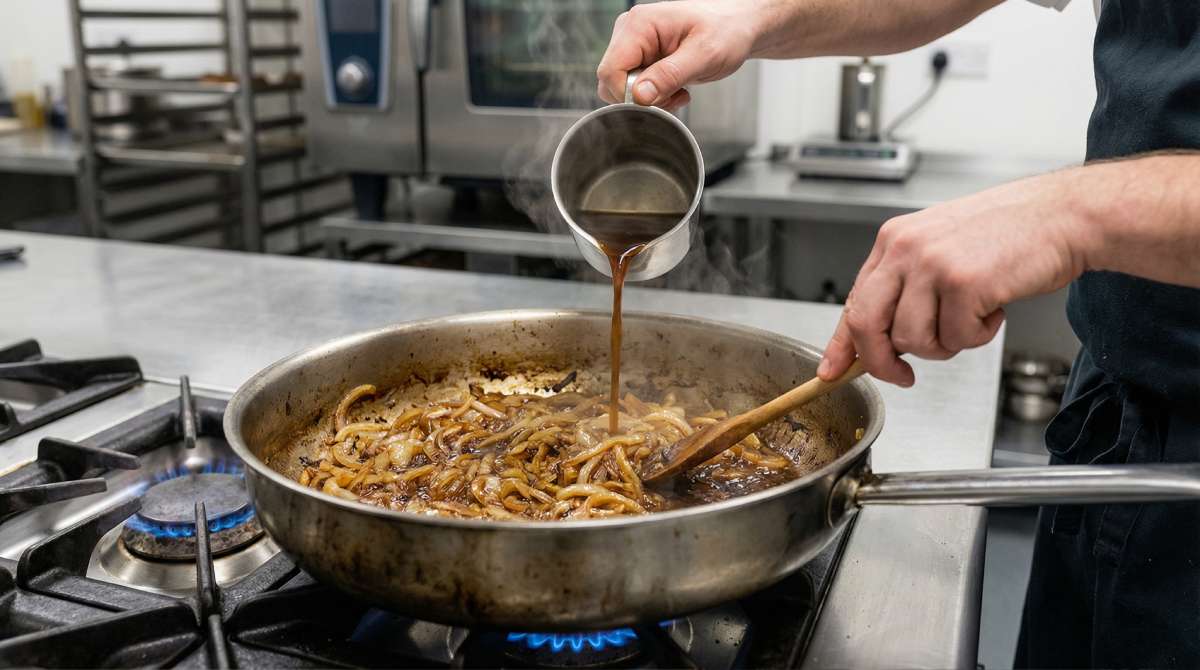
Deglazing browned onions and scraping the fond is the fast route to a deep, glossy onion gravy.
A great toad in the hole deserves a gravy that tastes like you actually cooked it. The easiest way to get “deep” without turning this into a three-hour project is simple: brown onions properly, deglaze the pan, use decent stock, and reduce until it tastes glossy and intentional. Granules can be a backup, but if you lead with them, the plate reads cheaper than it is.
Start with onions. Slice them, get them into a hot pan with a bit of fat, and cook until they’re well browned. Not pale and sweaty. Real browning adds sweetness and complexity that makes your toad in the hole gravy recipe taste like it belongs with a crisp tray bake. Once the onions have colour, add a little flour (or alternative thickener later) and cook it out briefly so it doesn’t taste raw.
Deglazing is where the flavour turns up. A splash of something like stock first works fine. If you use a little ale or cider, keep it restrained and cook it down so it doesn’t become “beer sauce”. Then add stock and simmer. This is the key: you’re not just heating it, you’re reducing it. Reduction gives body and concentration without relying on starch.
Thickening is the last step, not the first. If you reduce enough, you need less thickener. If you rush thickening early, you get gluey gravy that still tastes thin. For operators, a gravy that holds well matters. You want it to stay smooth in a bain-marie or hot hold without splitting or forming a skin.
Fast, deep-flavour gravy method (operator-friendly):
- Brown onions properly: Dark golden = flavour base
- Deglaze: Scrape up the good bits; simmer off harshness
- Stock + reduction: Simmer until it tastes “finished”, not watery
- Thicken lightly: Flour roux, cornflour slurry, or just reduction
- Hold smart: Keep hot but not boiling; whisk occasionally
Holding without splitting is mostly temperature control. Keep the gravy at a steady hot-hold temperature and avoid aggressive boiling once thickened. If it thickens too much during holding, loosen with a splash of hot stock, not cold water. For a toad in the hole service, you want gravy that pours cleanly, coats the spoon, and doesn’t slide off the batter like it’s avoiding eye contact.
Portioning, Holding, and Service for Caterers and Street Food
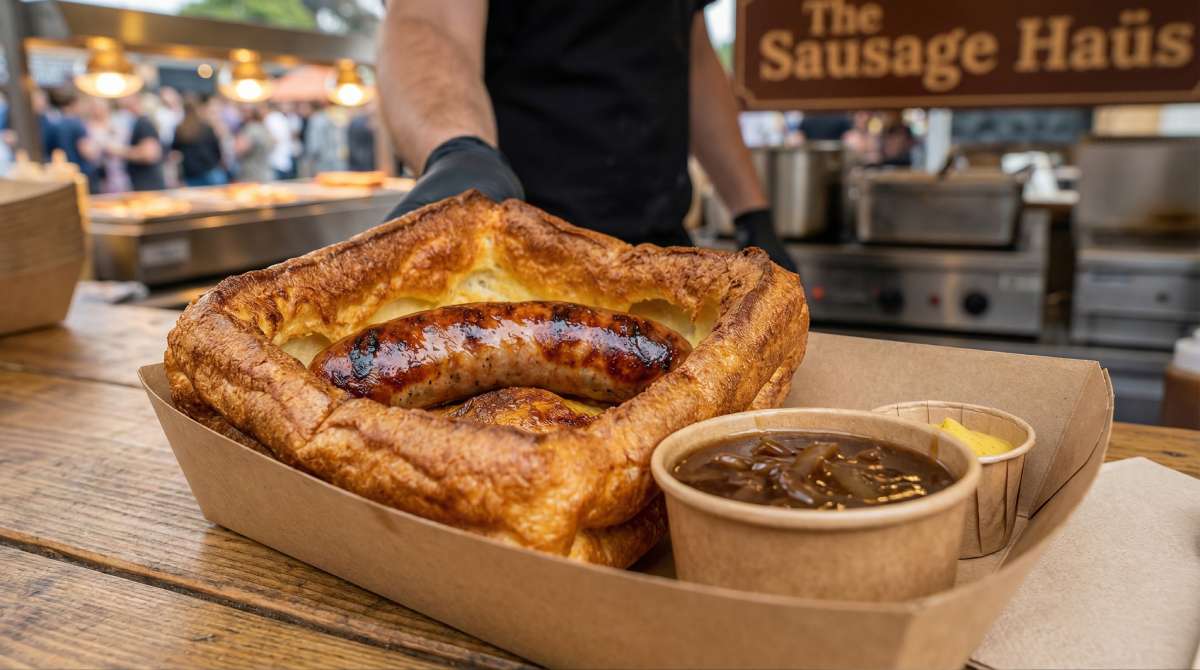
Street food service tip: keep gravy separate so the batter stays crisp, then pour to order.
Toad in the hole is brilliant for catering because it scales, portions cleanly, and feels like a complete meal with gravy. The risk is crispness. The moment you cut it, steam starts escaping, and steam is the natural enemy of “crispy”. So the service plan is simple: bake for structure, rest briefly for clean cuts, portion with intention, and keep gravy separate until the last second.
For plated service, you can serve a neat square of toad in the hole with a sausage centred, then ladle gravy around (not directly over the crisp top, unless the customer wants it that way). For pass service, keep portions ready to go and finish with gravy to order. For buffet lines, you’re fighting time and steam, so your holding strategy matters.
If you’re running a “toad in the hole tray bake” offer for events, pre-portioning can work, but don’t drown everything in gravy in the holding tray. That turns crisp batter into soft sponge. Keep gravy in its own container and let the customer choose how much, or add it at the point of service.
Best practice for crispness and clean service:
- Rest before cutting: 5–10 minutes helps structure and cleaner portions
- Use the right tool: Sharp knife or metal spatula for tidy squares
- Keep gravy separate: Ladle at service, not during holding
- Vent when holding: Avoid sealing hot portions airtight (steam softens crust)
- Portion consistently: Same size squares = predictable cost and speed
- For street food, the easiest win is presentation. A portion of toad in the hole with a visible sausage, a ladle of onion gravy, and maybe a small mustard option feels premium without extra labour. If you’re using toad in the hole with bratwurst, lean into the classic angle. If you’re using chilli beef or bacon frankfurters, make it a named variant so customers understand why it’s different.
Ultimately, toad in the hole is a system dish. Nail the workflow, keep the gravy proper, and treat crispness like something you protect, not something you hope for.
Variations That Sell (Without Breaking the System)
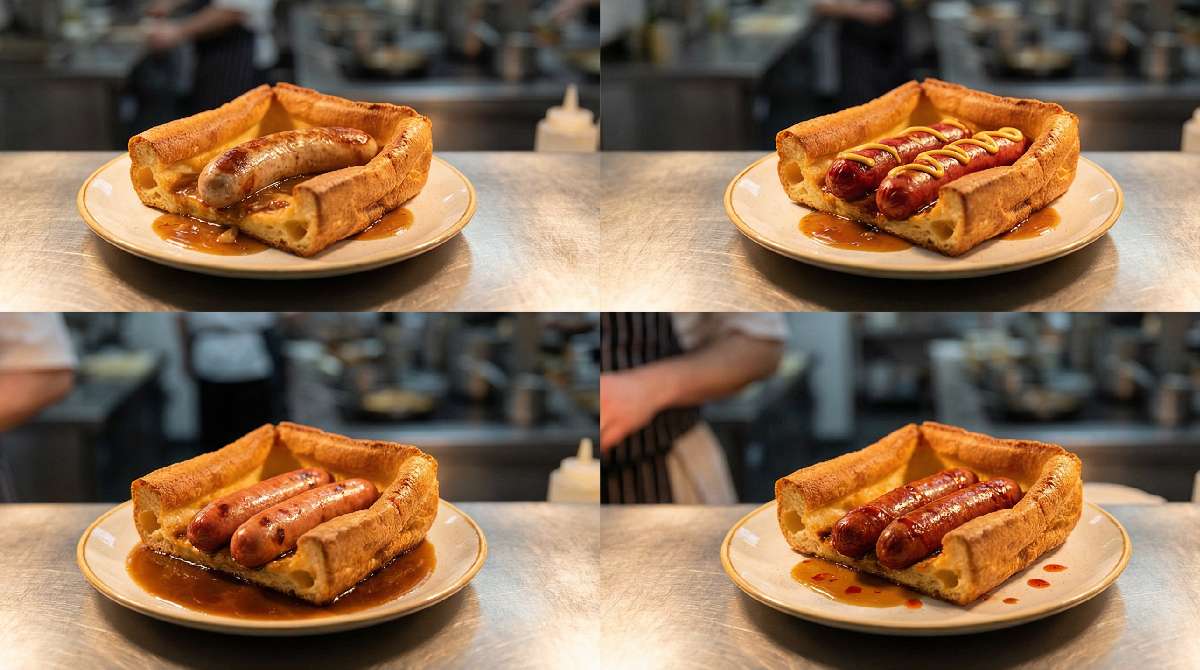
One base bake, four sellable variations: classic Bratwurst, mustard + Bacon Frankfurter, ale gravy + Cheese Frankfurter, and a spicy Chilli Beef Frankfurter version.
The reason toad in the hole is a strong operator dish is also the reason you should be careful with variations: it’s a simple tray bake with a tight workflow. If you overload it with clever ideas, you lose speed and consistency. The best variations are the ones that change the flavour profile and menu appeal while keeping the core method identical.
A smart approach is to keep one “base” toad in the hole (your default batter, your default tin, your default timings), then vary the finishing and the sausage choice. That way you can run the same cook, the same portioning, and the same service rhythm, while giving customers the feeling of choice. It also lets you test what sells without rebuilding your kitchen every weekend.
The lowest-effort, highest-return variation is a mustard drizzle. A thin mustard line over the sausage (or offered on the side) instantly makes toad in the hole feel more “crafted” without changing your bake. Keep it restrained; too much mustard steamrolls the gravy and turns the dish into a condiment delivery system.
An ale gravy option is another easy upsell if it fits your brand. It works especially well with toad in the hole with bratwurst or bacon frankfurters because the malty notes echo the browning and the onion sweetness. The key is to cook the ale down properly so you keep depth, not bitterness.
Veg add-ins can sell well, but only if they don’t compromise the rise. The batter hates excess moisture. If you want onion, leeks, or mushrooms in the bake, pre-cook them hard and keep the quantity sensible. Otherwise you’ll sabotage crispness and end up asking customers to “focus on the gravy”.
Loaded versions are great for street food, but load after baking, not before. Think of toad in the hole as the base, then add one or two toppings that hold well and don’t turn everything soft. Cheese sauce can work, but it should be a controlled drizzle, not a flood. If you want “loaded”, you still need the crisp batter to stay proud.
For a spicy version, the simplest route is sausage-led: chilli beef frankfurter, or a modest chilli oil drizzle at service. That way you keep the base workflow unchanged and you can clearly explain the difference on the menu. Customers like spicy, but they like consistency more.
Operationally sensible variations you can run without breaking the system:
- Mustard finish: thin drizzle or side pot; works with any sausage
- Ale gravy option: reduce properly; best with bratwurst or bacon frankfurter
- Veg add-ins: pre-cook and keep light; avoid watery raw veg in the batter
- Loaded version: add toppings after bake; keep to 1–2 extras max
- Spicy version: chilli beef frankfurter or restrained spicy drizzle at service
If you want the simplest “choice architecture” for menus: keep the batter and bake identical, then offer two sausage choices (classic and bold) plus one gravy upgrade. That’s enough variety to sell, without turning toad in the hole into a logistics problem.
Troubleshooting: Flat Batter, Soggy Bottoms, Split Gravy
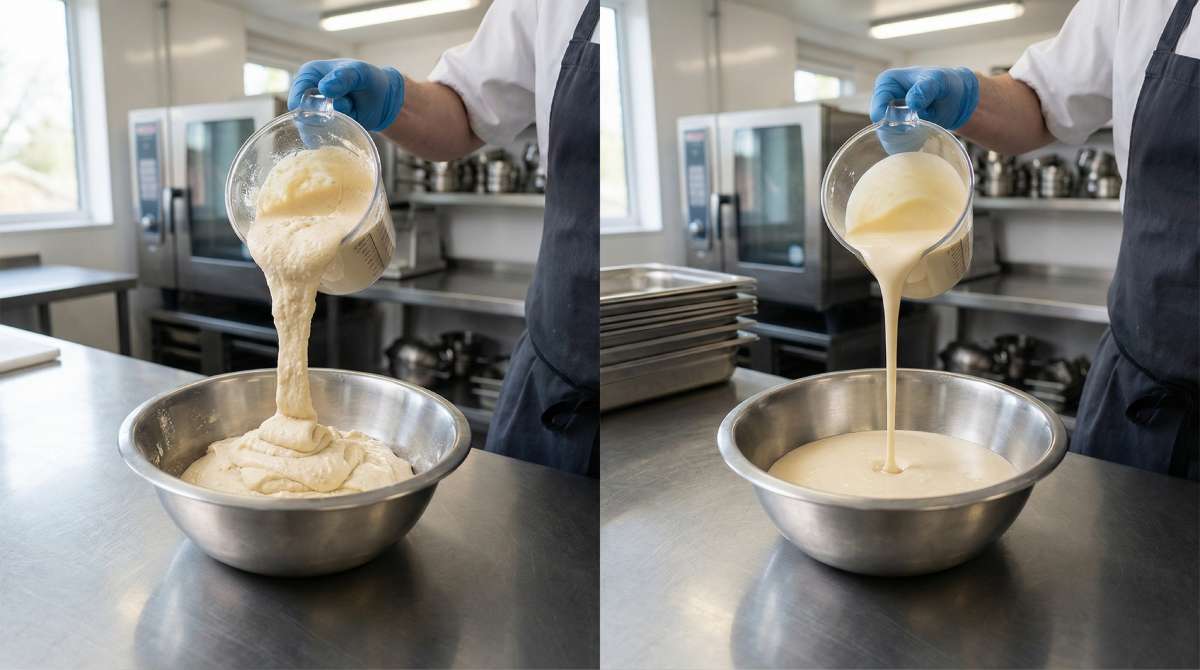
Pour test in one glance: too thick batter piles up; correct batter flows like single cream and levels out fast.
Most toad in the hole problems look dramatic but have boring causes. That’s good news. A flat rise, soggy bottom, or split gravy usually comes down to oven temperature realities, batter thickness, pan fat heat, or stock reduction and holding.
First: oven temperature realities. Many ovens lie, especially in older catering setups or venues with battered electrics. If you’re consistently getting weak rise, assume the oven isn’t as hot as the dial claims. A good toad in the hole needs confident heat and stable airflow. Fan ovens help, but only if they’re actually reaching temperature and not cycling wildly.
Second: batter thickness. If your toad in the hole Yorkshire pudding batter is too thick, it can’t expand fast enough. If it’s too thin, it can rise then collapse because there isn’t enough structure. Use the pour test: it should flow like single cream and level quickly. Also: rest the batter. Batter that hasn’t rested behaves unpredictably, which is not what you want on a busy service.
Third: pan fat heat. This is the biggest cause of soggy bottoms. If the fat isn’t shimmering hot, the batter soaks before it sets. Combine that with sausages that weren’t browned (so they release water into the tin) and you’ve basically designed a wet blanket. If you’re chasing how to make toad in the hole crispy, this is where you win or lose.
Now gravy. If your toad in the hole gravy recipe tastes thin, it’s usually under-reduced. If it splits, it’s usually been boiled too hard after thickening, held too hot, or shocked with cold liquid. Gravy likes gentle heat once it’s thickened. It also likes being whisked occasionally so it doesn’t skin or catch.
Quick fixes and preventative checks (symptom -> cause -> fix):
- Flat batter
Cause: oven not actually hot; batter not rested; batter too thick
Fix: preheat longer; verify heat if possible; rest batter; thin slightly to a pourable consistency - Soggy bottom
Cause: fat not hot; sausages released moisture; tin too deep/crowded
Fix: heat tin and fat until shimmering; brown sausages first; use a wider, shallower tin - Rise then collapse
Cause: oven door opened early; centre not set; heat drop mid-bake
Fix: keep door shut until clearly set; bake a bit longer; avoid pulling too early for colour alone - Gravy tastes like “stock water”
Cause: not enough browning and reduction; onions not browned
Fix: brown onions properly; simmer and reduce; adjust seasoning at the end, not the start - Split gravy
Cause: boiling after thickening; holding too hot; cold liquid added
Fix: hold at a steady hot temperature without boiling; whisk; loosen with hot stock if needed
If you want consistency at scale, write these checks into your process. A good toad in the hole isn’t magic – it’s a repeatable tray bake with a few non-negotiables and a gravy that’s treated like part of the product, not an afterthought.

Perfect Toad in the Hole with Rich Onion Gravy (Bratwurst Version)
Ingredients
Method
- In a bowl, mix the flour and salt.
- Add eggs and whisk into a thick paste.
- Gradually whisk in the milk and water until smooth and pourable like single cream.
- Rest the batter for at least 30 minutes (room temp is fine; whisk again briefly before using).
- Heat a pan over medium-high heat.
- Brown the Bratwursts well on all sides (5–8 minutes).
- Set aside. This improves flavour and helps prevent a soggy base.
- Preheat the oven to 220°C (200°C fan).
- Put a sturdy metal roasting tin in the oven with the oil/dripping.
- Heat until the fat is shimmering hot (5–8 minutes once the oven is fully hot).
- Carefully remove the hot tin. Add the browned Bratwursts.
- Pour the batter into the tin immediately, working quickly.
- Return to the oven and bake for 25–30 minutes without opening the door.
- Bake a further 5–10 minutes until deep golden and crisp.
- Rest for 5 minutes before cutting for cleaner portions.
- Fry onions in oil/dripping over medium heat until deep golden (10–15 minutes).
- Stir in flour and cook for 1 minute.
- Add stock gradually, stirring, then simmer to reduce until glossy (8–12 minutes).
- Season with pepper, salt, and Worcestershire (optional).
- Hold hot without boiling; whisk occasionally. Loosen with a splash of hot stock if it thickens too much.
- Cut into portions. Ladle gravy around the base (not over the crisp top unless requested). Optional: a small mustard pot on the side.
Frequently Asked Questions
Yes – toad in the hole with bratwurst works brilliantly. Bratwurst browns well and gives a premium “proper sausage” bite that pairs naturally with onion gravy.
For consistent results, yes. Browning builds flavour and reduces moisture release during the bake, which helps your batter rise and keeps the base from going soggy.
Brown onions properly, deglaze the pan, add decent stock, and reduce until glossy. Thicken lightly at the end if needed, then hold hot without boiling and whisk occasionally.
Use a wide, shallow metal tin, preheat the tin with fat until shimmering, pour batter fast, and don’t open the oven door early. Crispness is heat + hot fat + enough bake time to dry the edges.
Rest before cutting, portion neatly, and keep gravy separate until service. Avoid sealing hot portions airtight (steam kills crispness). Ladle gravy to order, and offer mustard as an optional finish.
At least 30 minutes is a solid minimum. Longer is fine (even a few hours) if chilled; whisk again before using. Resting helps the batter hydrate and behave predictably.
Choose sausages that brown well, hold shape, and stay juicy without releasing lots of water. Bratwurst gives a classic, meaty bite; bacon, cheese, and chilli beef frankfurters add clear flavour twists without changing the workflow.
Smooth, lump-free, and pourable like single cream. If it pours in thick ribbons and piles up, it’s too thick. If it looks watery like milk, it may rise then collapse.
Usually the oven wasn’t truly hot, the tray/fat wasn’t hot enough, or the batter was the wrong consistency or not rested. Preheat properly, heat the fat until shimmering, and use a batter that pours like single cream.
Most commonly the fat wasn’t hot, the tin was too deep/crowded, or the sausages released water because they weren’t browned. Use a wide shallow tin, heat fat until shimmering, and brown sausages first.
Conclusion
A really good toad in the hole is not about luck, secret tricks, or pretending your oven dial is telling the truth. It’s about running a simple workflow well: rested toad in the hole Yorkshire pudding batter, properly browned sausages, a hot tin with genuinely hot fat, and enough bake time to set the centre and crisp the edges. Do that, and you get the version people actually want – tall, crisp, and properly satisfying.
The sausage choice is where you can make it yours without breaking the system. Bratwurst keeps it classic and premium. Bacon frankfurter brings smoky indulgence. Cheese frankfurter delivers a richer, family-friendly twist. Chilli beef frankfurter gives you a bold, festival-ready option. Pair any of them with a proper onion-forward toad in the hole gravy recipe – browned onions, deglaze, stock, reduction – and the whole plate tastes intentional, not improvised.
If you’re serving customers, the wins are consistency and speed. Treat toad in the hole as a tray bake you can repeat, keep gravy separate until service, and protect crispness with sensible holding. If you want to upgrade your sausage offer or build a faster, more reliable menu system around German-style sausages, The Sausage Haus is built for exactly that.
About The Sausage Haus
The Sausage Haus supplies authentic German sausages for UK operators who need reliability, speed, and consistently great results in real service conditions. We work with caterers, showmen, festival traders, street food operators, pubs, and foodservice buyers who want products that brown properly, hold well, and taste like something customers come back for.
Our sausages are produced by Remagen, a German producer with over 300 years of tradition in sausage making, and distributed in the UK by Baird Foods, with over 40 years of experience serving the UK food industry. That combination gives you a dependable supply chain built for foodservice, backed by heritage and real-world operational know-how.
The range is designed for performance as much as flavour – from classic Bratwurst to bold, high-impact Frankfurters like Bacon, Cheese, and Chilli Beef. That makes it easy to build menu variety without adding prep complexity.
Whether you’re running a busy pass, a high-footfall festival pitch, or a catering line that needs predictable portioning, the goal is the same: faster output, fewer problems, and a better customer experience. Beyond products, we share practical systems for high-speed service – the kind that keeps queues moving and quality consistent. If you’re building a German sausage operation in the UK, The Sausage Haus helps you do it properly, and profitably.