This 2026 spotlight covers the chilli beef frankfurter as a practical trade product, not a marketing story. Where does it fit on a UK menu, what are the cleanest ways to serve it fast, and what choices keep quality consistent under pressure? If you run festivals, pubs, street food, or catering, this is a straightforward guide to using the chilli beef frankfurter without slowing the line.
Last updated: March 2026
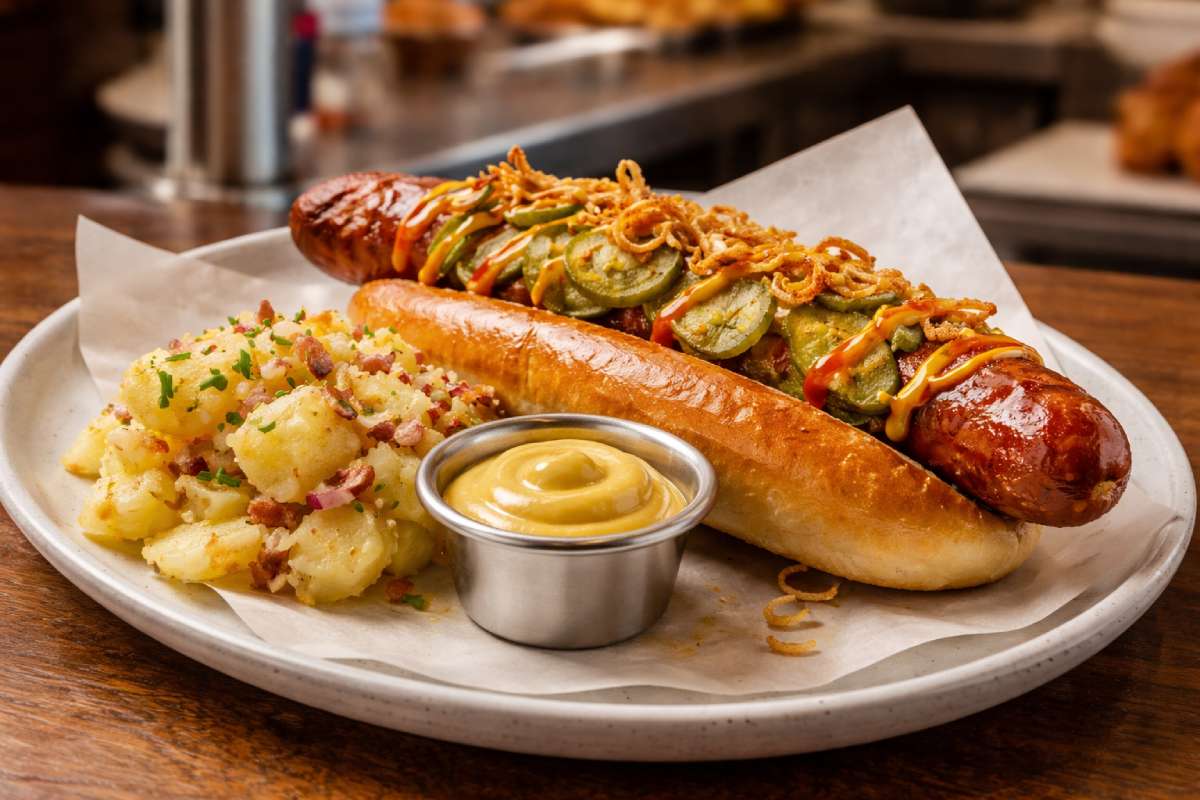
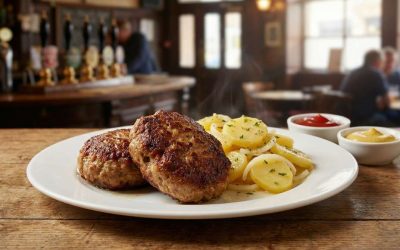
Pub-pass plating idea: chilli beef frankfurter served with Swabian potato salad and a ramekin of smooth mustard.
Introduction
A chilli beef frankfurter sounds simple. In practice, it can either be a tidy “spicy option” that lifts your average ticket, or it can become the thing that clogs service because it’s messy, over-topped, and hard to standardise. UK operators don’t need more menu items. They need items that earn their place by being fast, consistent, and easy to explain to customers.
That’s why we’re treating this as a 2026 spotlight: what the chilli beef frankfurter is good for, and where it’s a poor fit. Beef gives a firmer bite and a slightly deeper flavour profile than pork, which works well in a hotdog format. The chilli note does the rest: it creates a clear reason to choose this sausage over your “classic” option without needing ten toppings and a paragraph of menu copy.
For street food and festivals, the chilli beef frankfurter is useful when you want one “hero” spicy build that feels exciting but still runs clean. For pubs, it’s a straightforward upgrade path: add it as a spicy alternative in the same bun, with the same core toppings, and keep the pass moving. For catering, it can be a simple tray option that gives variety without extra kit, as long as you keep portions disciplined and hold it correctly.
This post is written for operators and buyers – anyone looking for a beef frankfurter wholesale UK option that supports a faster service system, not a slower one.
Key Takeaways
- The chilli beef frankfurter works best as one controlled “spicy choice”, not a whole separate menu branch.
- Keep the build simple: one sauce, one crunch, one pickled element – avoid meltdown toppings that slow service.
- For pubs, treat it as a swap-in sausage for your standard hotdog build; same workflow, clearer choice.
- For festivals, it’s ideal as a hero item when you want a spicy option that still portions cleanly.
- For catering, batch it as a tray option with restrained toppings; check site rules and food safety requirements for hot/cold holding.
- If you’re buying, prioritise consistency and supply chain reliability (this is where a German frankfurter supplier UK setup matters).
- Menu wording should be simple and obvious: “spicy beef frankfurter” sells faster than long flavour descriptions.
What the chilli beef frankfurter is (and isn’t)
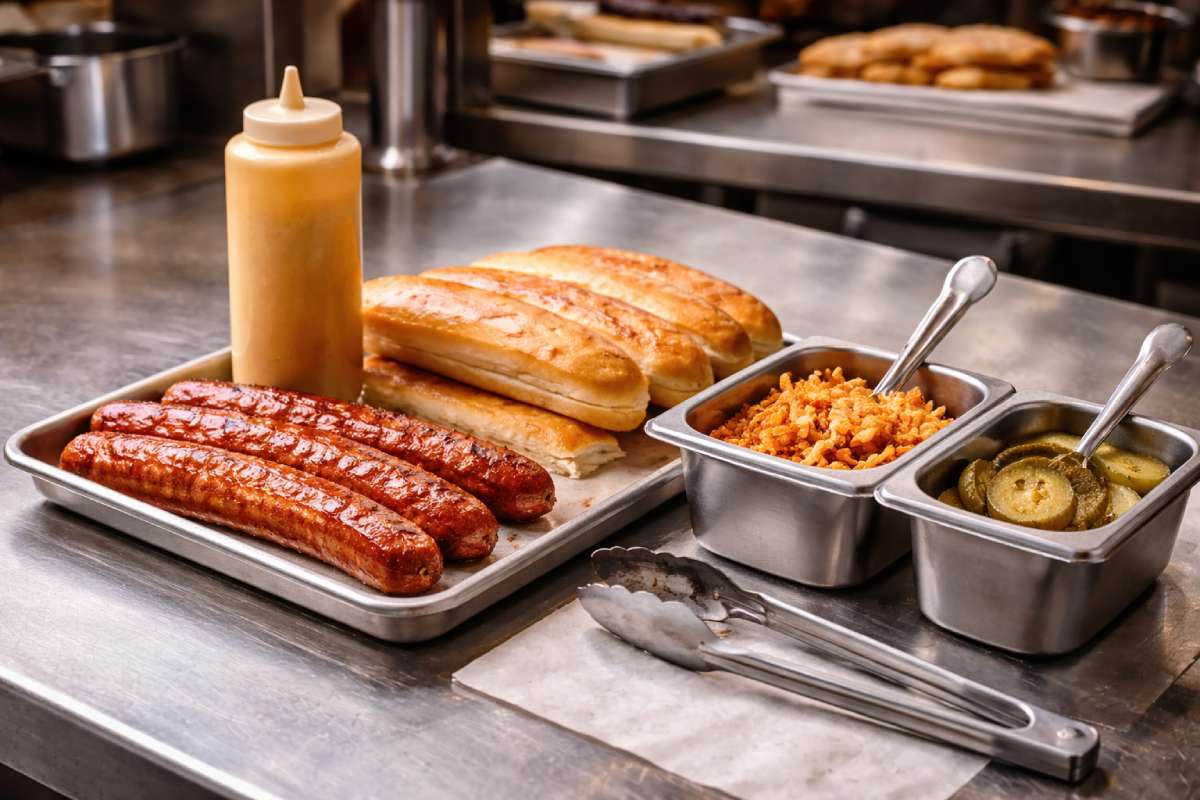
A clean “no extra kit” setup for chilli beef frankfurter service: one sauce, one crunch, one pickled element – ready to build fast.
A chilli beef frankfurter is a beef-based frankfurter with a clear chilli note built into the sausage, not a “hotdog covered in chilli”. That distinction matters for service. When the heat is in the sausage, you can keep the build clean and still give customers a real reason to choose it over your standard option.
In practical terms, the chilli beef frankfurter is a fast menu lever. It lets you offer “spicy” without adding extra cooking steps, extra pans, or a topping station that turns into a mess. For UK customers, it’s also easy to understand. “Spicy beef frankfurter” reads instantly on a board, which helps queue speed and reduces the amount of explaining you have to do.
What it isn’t is a challenge sausage designed to scare people. If you pitch it like a dare, you’ll sell a few early and then hit a wall. Treated properly, the chilli beef frankfurter is a mainstream spicy option: warm heat, strong flavour, and high repeatability. That’s exactly what operators need.
It’s also not a licence to overbuild. The moment you treat the chilli beef frankfurter as the base for six sauces and three crunchy bits, you lose the point of the product. Keep the toppings restrained and let the sausage do the work. That’s how a chilli beef hotdog sausage becomes a consistent seller rather than a slow, messy special.
Quick reality check (operator-friendly)
- If customers need a long explanation, it’s not a win.
- If the build needs extra kit, it’s not a win.
- If it’s messy to eat, it’s not a win.
Where it fits in UK trade (pubs, festivals, catering)
In UK trade, the chilli beef frankfurter works best where speed and clarity matter. It gives you a distinct menu choice without a new workflow. You’re essentially swapping the sausage, not reinventing your line. That’s why it suits pubs, festivals, and catering in slightly different ways.
Pubs
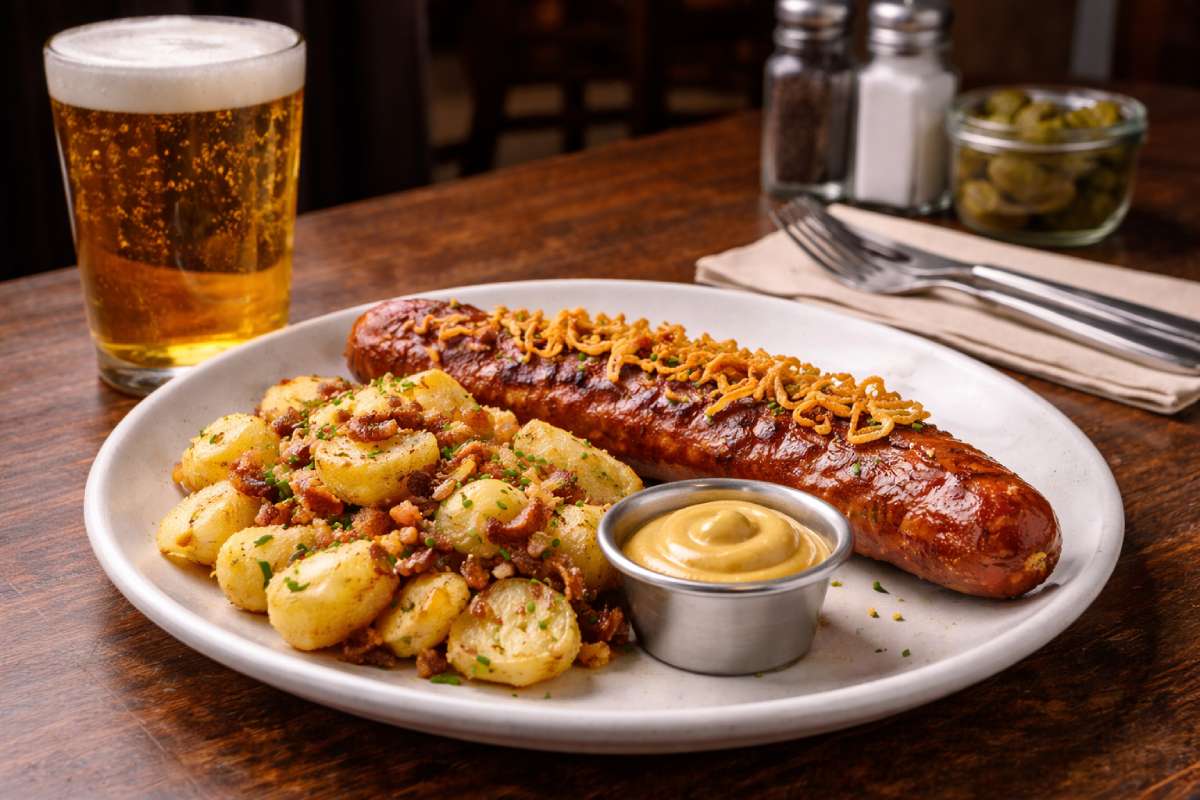
A simple pub plate: chilli beef frankfurter (no bun), lots of Bratkartoffeln, and a pint of lager – fast, familiar, and properly German-led.
For pubs, the chilli beef frankfurter is a tidy “upgrade path” from a standard hotdog. You can run it through the same pass, with the same bun, and a controlled topping set. This is where the product earns its keep: you add variety without slowing service or asking the kitchen to learn a new build.
If you’re pitching it to a pub buyer, keep it simple: one spicy option, same workflow, good repeat orders. That’s the sweet spot for spicy frankfurter for pubs menus.
Festivals and street food
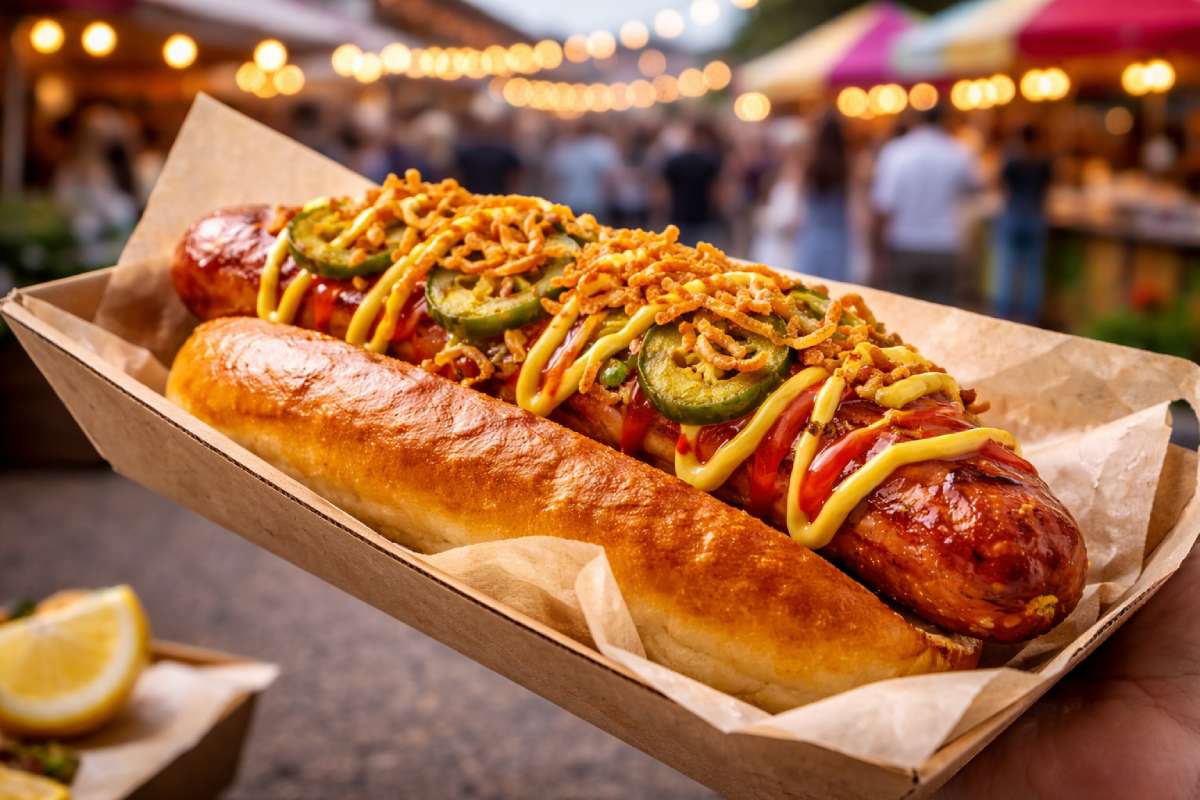
Festival-ready chilli beef frankfurter in a brioche bun with a controlled “loaded” topping set – built to look premium without turning into a messy slow-down.
For festivals, showmen and street food operators need items that survive the queue. The chilli beef frankfurter gives you a “hero spicy” choice that still runs clean. It also helps when customers want something different but you don’t want a second grill setup or a separate topping line.
The key is discipline. One hero sauce and one contrast element is usually enough. That keeps the chilli beef frankfurter fast to serve and easy to eat while walking. It also makes it a strong option as a frankfurter for festivals because it doesn’t rely on fragile presentation.
Catering
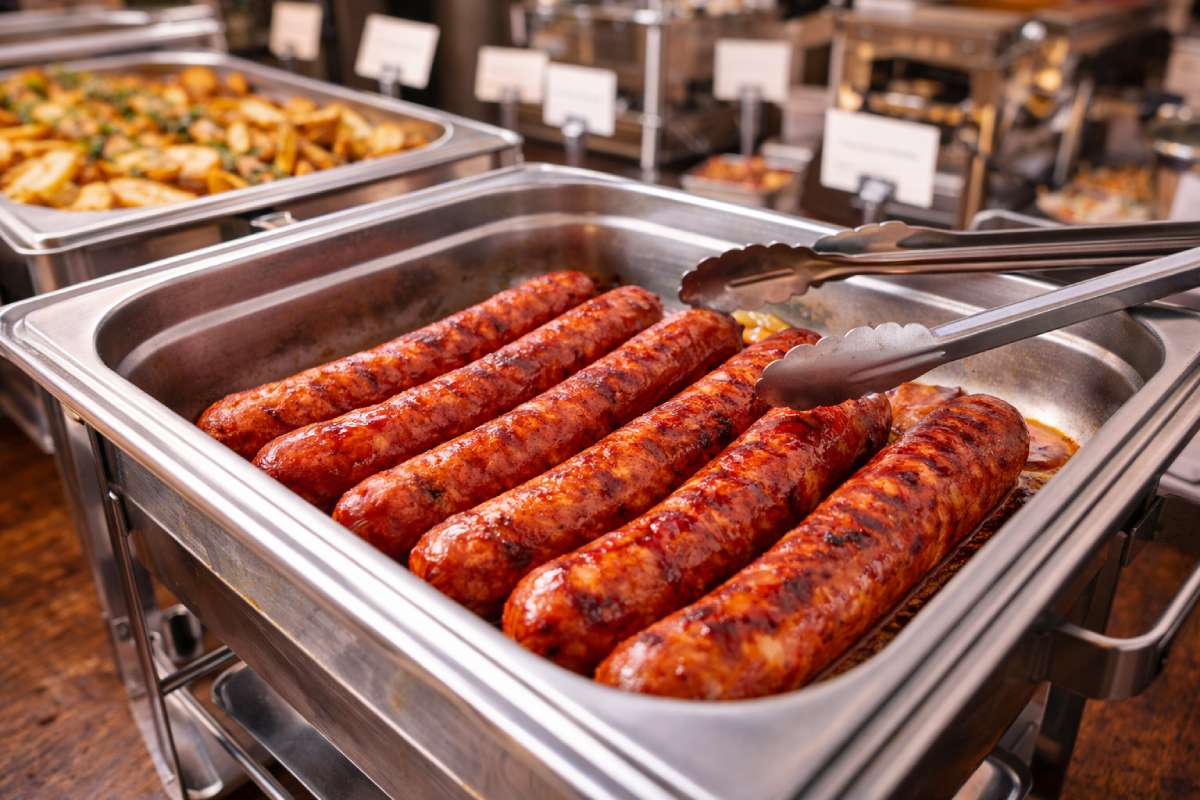
Catering-friendly format: chilli beef frankfurters held hot on a buffet line for quick, consistent service.
For catering, the chilli beef frankfurter works well as a simple tray option that adds variety alongside a classic sausage. It’s particularly useful when you need to offer a “bit of heat” without introducing a separate dish. This is where portioning and holding routines matter most. Keep your process aligned with your usual HACCP approach and verify any site-specific requirements (venue rules, local authority expectations, event conditions).
It can also support buyers looking for beef frankfurter wholesale UK supply, because it’s a single product that can cover multiple menu roles across different event types.
Best-fit summary
- Pubs: swap-in spicy option with the same workflow; ideal for a clean pass.
- Festivals/street food: one hero spicy choice that doesn’t slow the queue.
- Catering: reliable tray option for variety; verify site rules and holding requirements.
The 7 Fast Menu Wins
This is where the chilli beef frankfurter earns its place. Not because it’s “exciting”, but because it solves real service problems in pubs, festivals, and catering. Each win below is written as an operator outcome: what it does for speed, cleanliness, and repeatability. If a chilli beef frankfurter build doesn’t deliver at least a few of these, it’s usually better left off the board.
Win 1: One spicy hero option without extra kit
The easiest way to add heat to a menu is to build it into the sausage. A chilli beef frankfurter gives you a clear “spicy choice” without needing chilli con carne, extra pans, or a separate garnish station. That keeps labour down and keeps your pass unclogged.
For festivals, this is the difference between “one line” and “two lines”. For pubs, it’s the difference between “same workflow” and “new headache”.
Win 2: Faster ordering because the menu reads instantly
When customers understand the item in two seconds, you speed up the queue. “Chilli beef frankfurter” is self-explanatory in a way that many German product names aren’t. You don’t need a paragraph of provenance to make it sell.
This is why a chilli beef frankfurter often performs better than a complex special: less talking, more serving. If you want to go even clearer, “spicy beef frankfurter” works as menu wording, while you keep the proper name in the product description.
Win 3: Higher perceived value with controlled toppings
The chilli beef frankfurter already has a flavour hook, so you can keep toppings restrained and still charge appropriately for a “premium” option. UK customers will pay for the idea of “spicy beef”, but they don’t need a mountain of extras to believe it.
The key is control. One hero sauce, one crunch, one pickled element. Anything beyond that tends to slow service and create waste.
Win 4: Cleaner service – less mess, fewer failures
Mess kills speed. It also kills repeat orders because customers remember when something falls apart in their hands. A chilli beef frankfurter lets you keep sauce quantity sensible and avoid meltdown toppings that turn buns to mush.
If you position it as a chilli beef hotdog sausage option with a clean build, it stays a handheld product. That’s the whole point for queues, walk-and-eat sites, and busy bar trade.
Win 5: Batch-friendly for festivals and events
For festivals, you want products that are predictable in a tray and forgiving when it’s busy. A chilli beef frankfurter works well because your “spicy option” doesn’t require you to batch a separate topping that can split, burn, or run out at the wrong moment.
It also helps you avoid the common trap: selling a spicy item that depends on a fancy topping that only one staff member knows how to portion.
Win 6: Easy pub integration – swap the sausage, keep the system
The best pub menu changes are the ones that don’t need retraining. A chilli beef frankfurter drops into the same bun, the same holding approach, and the same pass workflow. That makes it ideal for pubs that want one “something different” item without changing the kitchen’s rhythm.
This is why the product aligns well with spicy frankfurter for pubs intent: it gives the customer a new choice, but it gives the kitchen the same job.
Win 7: Procurement simplicity – one SKU, multiple uses
Buyers care about spec consistency, availability, and the ability to use one product in more than one place. A chilli beef frankfurter can cover hotdogs, platter service, buffet trays, and bar snack formats without being “only for one menu”. That’s a real advantage when you’re purchasing as beef frankfurter wholesale UK and trying to keep your range tight.
If you’re putting it on for multiple accounts, it also makes forecasting easier: one spicy SKU that can travel.
Operator summary (keep it disciplined)
- Use the chilli beef frankfurter as one spicy hero, not five spicy variants.
- Keep builds simple so the sausage stays the reason to buy.
- If it slows the line, strip it back until it doesn’t.
Holding + workflow (supporting system)
A chilli beef frankfurter only pays off if it runs through a simple, repeatable workflow. The goal is boring consistency: the same bite at the start of service and the same bite at the end. You do not need complicated kit. You need a holding method that suits your site and a routine your team can follow when it’s busy.
In pubs, the chilli beef frankfurter usually works best when it drops into the same process as your standard sausage. That means you’re not creating a “special treatment” item that staff forgets under pressure. In festivals and street food, the workflow needs to survive long queues, short staffing, and constant interruptions. Keep it “one movement” from hold to bun to handoff.
If you’re unsure what holding approach is allowed or appropriate on a site, verify it rather than guessing. That includes site rules, gas safety, electrical load, local authority requirements, and event licensing conditions where relevant. The point is not to be clever. The point is to be compliant and consistent.
Workflow rules that keep the line moving
- Decide one holding method and stick to it for the chilli beef frankfurter.
- Portion the bun, sauce, and garnish so staff can build without thinking.
- Taste-check at the start of service and mid-service to catch drift early.
Toppings discipline + packaging (supporting system)
The chilli beef frankfurter is already the flavour story. Your toppings are there to support it, not bury it. Operators get into trouble when they treat “spicy” as permission to throw the whole sauce shelf at the bun. That slows builds, increases waste, and makes handheld eating messy, which is fatal for festivals and street food.
A simple build also sells faster. Customers see the chilli beef frankfurter, understand it, and order it. They don’t want a complicated decision tree. This is why controlled toppings are a genuine performance lever for a chilli beef hotdog sausage offer.
Packaging is the other half of the discipline. If it can’t be eaten cleanly while walking, you’ll get complaints and slow the queue as people hover, searching for napkins. Your packaging should match your site. Keep it practical and consistent across the menu where possible.
The “clean build” rule (max 3 elements)
- 1 hero sauce (measured, not poured)
- 1 crunch (crispy onions or similar)
- 1 contrast (pickles/gherkin, or mild slaw if it holds)
Packaging options that usually work
- Paper tray + napkin for fast handoff (good for frankfurter for festivals)
- Clamshell for longer carry and fewer spills
- Hotdog bag for speed, but only if the build is restrained
Side dishes that fit the chilli beef frankfurter (and don’t slow you down)
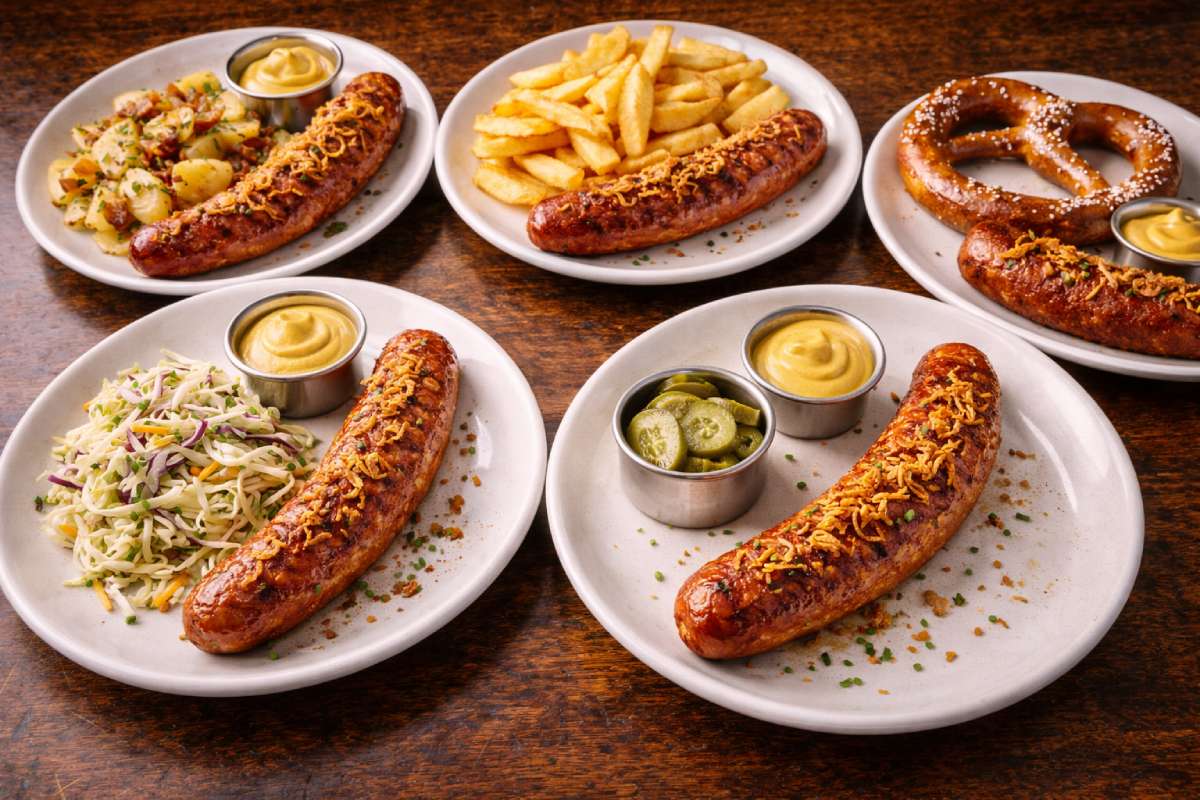
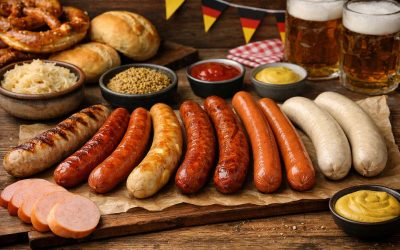
Five serving options around one hero sausage: chilli beef frankfurters with Bratkartoffeln, chips, pretzel, mild cabbage slaw and a gherkin pot – built for quick pub service.
A chilli beef frankfurter is already doing a lot of heavy lifting on flavour. The best sides are the ones that add texture, soak up sauce, and feel “proper” on a German-led menu – without creating extra steps or a second production line. In other words: sides that you can portion fast, hold reliably, and explain in one sentence.
For pubs, think bar food logic. Customers want something they can share or something that turns the frankfurter into a fuller plate without turning the kitchen into a circus. For festivals and street food, the side has to travel, stay crisp enough, and not collapse into mush in a cardboard tray.
The top-fit sides
Bratkartoffeln (German fried potatoes) are the obvious winner if you can run them. They’re familiar enough for UK customers (crispy fried potatoes) but still feel authentically German. They also pair brilliantly with the chilli beef frankfurter because the potatoes soften the heat, and the crisp edges add contrast. Keep it simple: potatoes, onions, optional bacon, and a restrained seasoning profile so it doesn’t compete with the sausage.
If you already run fries, you can introduce Bratkartoffeln as a “German upgrade” rather than a whole new product category. Portion them in the same way you portion chips, and keep the garnish minimal so they stay fast.
Other sides work well when they follow the same rule: one job, done cleanly.
Fast side options that suit the chilli beef frankfurter
- Bratkartoffeln: hearty, German, heat-friendly; great on trays or plates.
- Chips: reliable, fastest add-on, especially for spicy frankfurter for pubs.
- Pretzel (Bretzel): zero-fuss, high perceived value, ideal for bar snack pairing.
- Cabbage slaw (mild, not wet): adds crunch and freshness; keep it restrained.
- Pickles/gherkin pot: tiny labour, big flavour, reinforces the German cue.
How to choose the right side for your setup
If you’re festival-first, chips or a pretzel usually win on speed and carry. Bratkartoffeln can still work, but only if you can keep the process tight and the holding consistent. In pubs, Bratkartoffeln are a strong differentiator because they feel more “dish-like” and justify a slightly higher ticket, while still pairing naturally with a chilli beef frankfurter.
A final practical point: avoid sides that require lots of last-second assembly. The chilli beef frankfurter works because it’s simple. Your side should keep that promise, not break it.
Procurement checks (for buyers)
If you’re buying a chilli beef frankfurter for trade, the product needs to be consistent more than it needs to be “interesting”. Consistency is what makes portioning reliable, pricing stable, and complaints rare. This is especially important if you’re sourcing as beef frankfurter wholesale UK for multiple sites or multiple event types.
Buyers should also think in workflows, not just specs. Ask: will this sausage hold cleanly, slice cleanly (if needed), and stay pleasant through a realistic service window? Can staff handle it without extra training? Does it fit your existing buns, portion tools, and menu architecture?
And keep procurement grounded. Don’t rely on assumptions about guarantees or certifications unless you’ve seen the documentation from the supplier. If something matters to your account – allergens, ingredient declarations, storage and handling, lead times – confirm it in writing.
Buyer checklist (keep it tight)
- Spec consistency: size, texture, and heat level of the chilli beef frankfurter
- Supply reliability: lead times, availability, minimum order patterns
- Menu fit: works in your standard hotdog build and packaging
- Compliance basics: allergen and ingredient info provided for your use
Common failures + fixes
Most failures with the chilli beef frankfurter aren’t about the sausage. They’re about decisions around it: overbuilding, poor portion discipline, or a workflow that creates small delays that become big delays when the queue hits.
Failure: “It’s spicy, but customers don’t reorder”
Often the heat is either too timid to notice or pitched in a way that feels like a gimmick. The fix is positioning and balance. Sell it as flavour-first. Keep the topping set consistent and let the chilli beef frankfurter be the reason to buy, not the dare.
Failure: The bun splits or goes soggy
This is nearly always too much sauce, too much wet topping, or too long sitting built-up. The fix is portion control and build timing. If you need a sauce, use a measured amount and keep wet toppings minimal. A chilli beef frankfurter should be handheld, not a plate problem.
Failure: Service slows because staff “customise” every order
Customisation kills speed. The fix is a fixed build with one optional swap at most. For example, “add jalapeños” or “no onions”, but not a menu where every customer builds their own chilli beef frankfurter.
Failure: Heat drift in service
Spicy items amplify inconsistency. If one sausage is lukewarm and another is properly hot, customers notice more. The fix is a simple rhythm: keep the chilli beef frankfurter in a stable hold, and do quick mid-service checks so you catch issues before customers do.
Quick fixes you can apply immediately
- Strip toppings back to a clean 3-element build.
- Standardise portions (especially sauce) and keep the chilli beef frankfurter the hero.
- Reduce customisation options so every serve is fast and consistent.
- Verify holding and site requirements rather than improvising on the day.
Frequently Asked Questions
Yes. Serving the chilli beef frankfurter on a plate (no bun) with Bratkartoffeln or chips and a ramekin of mustard is a clean, fast pub format that feels like a proper dish.
It should be a mainstream spicy option – warm heat, strong flavour, not a challenge product. If you market it like a dare, you’ll get one-off sales and fewer repeat orders.
Common failures are soggy buns, messy eating, slow service from custom builds, and inconsistent hot holding. Fixes are: strip toppings back, standardise sauce portions, reduce custom options, and verify holding routines and site requirements rather than improvising.
A chilli beef frankfurter is a beef frankfurter with a clear chilli note built into the sausage itself. It’s not a “hotdog covered in chilli”, which means you can keep the build clean and still deliver a spicy option.
Prioritise consistency and reliability: product spec (size/texture/heat), lead times and availability, clear allergen/ingredient info, and whether it fits your standard buns, packaging, and service workflow.
Anything that melts, runs, or collapses the bun: heavy wet slaws, too much sauce, overloaded “loaded dog” builds, or multiple sauces that turn service into a customisation station.
Stick to the “clean build” rule: one hero sauce, one crunch, one pickled element. The sausage is the flavour story – toppings are support.
Use plain language: “Chilli beef frankfurter” or “Spicy beef frankfurter”. Customers should understand it instantly, which speeds ordering and reduces explaining at the counter.
It fits well in pubs (swap-in spicy option), festivals/street food (one hero spicy build that runs fast), and catering (tray/buffet option for variety). The key is keeping the workflow simple and repeatable.
Bratkartoffeln are the most German-led plate option. Chips are the fastest add-on. Pretzels work well as a bar snack pairing. Mild cabbage slaw adds crunch if it’s not wet. Pickles/gherkins are a cheap, high-impact side.
Conclusion
A chilli beef frankfurter can be a genuinely useful trade product if you treat it as a system choice, not a novelty. The main advantage is simple: it gives you a clear spicy option without adding extra kit or a complicated build. That means faster ordering, cleaner service, and fewer points of failure when the queue is on. For pubs, it drops into the same workflow as your standard hotdog and gives customers an easy reason to upgrade. For festivals and street food, it works as a single “hero” spicy item that stays handheld and predictable. For catering, it adds variety without multiplying your prep list – as long as you keep holding and portion discipline tight and verify any site-specific requirements.
The key is restraint. Let the chilli beef frankfurter be the flavour story, keep toppings controlled, and choose sides that support speed (chips, pretzels, or Bratkartoffeln if you can run them cleanly). If you do that, you end up with a menu item that’s easy to explain, easy to portion, and easy to repeat – which is exactly what UK operators need.
If you want to add a spicy option that doesn’t slow your line, this is one of the simplest ways to do it. And if you’d like help choosing the right format for your setup – pub pass, festival line, or catering tray – The Sausage Haus can advise on the cleanest build and product choice.
About The Sausage Haus
The Sausage Haus supports UK caterers, showmen, festival traders, street food operators, and foodservice buyers who want authentic German sausages and a faster, more reliable service system. We focus on products that portion cleanly, hold consistently, and work in real-world trade conditions – busy passes, long queues, and varied staffing.
Our sausages are produced in Germany by Remagen, with specs designed to deliver consistent results for professional operators. In the UK, distribution is handled by Baird Foods, making ordering and supply more dependable for trade customers.
We also publish practical, operator-first guidance: menu builds that run fast, holding and workflow choices that reduce problems, and simple rules that keep service clean and profitable. If you’re aiming to tighten your sausage offer and sell more with less chaos, The Sausage Haus is built for that.