A pub hotdog menu can be either a messy side hustle or a tidy little profit engine. The difference is not “better ingredients” or fancy wording. It’s builds that look premium while staying fast, repeatable, and low-drama in service. This guide gives you five proven formats you can run in a real UK pub kitchen, with sensible prep, clean assembly, and predictable costs.
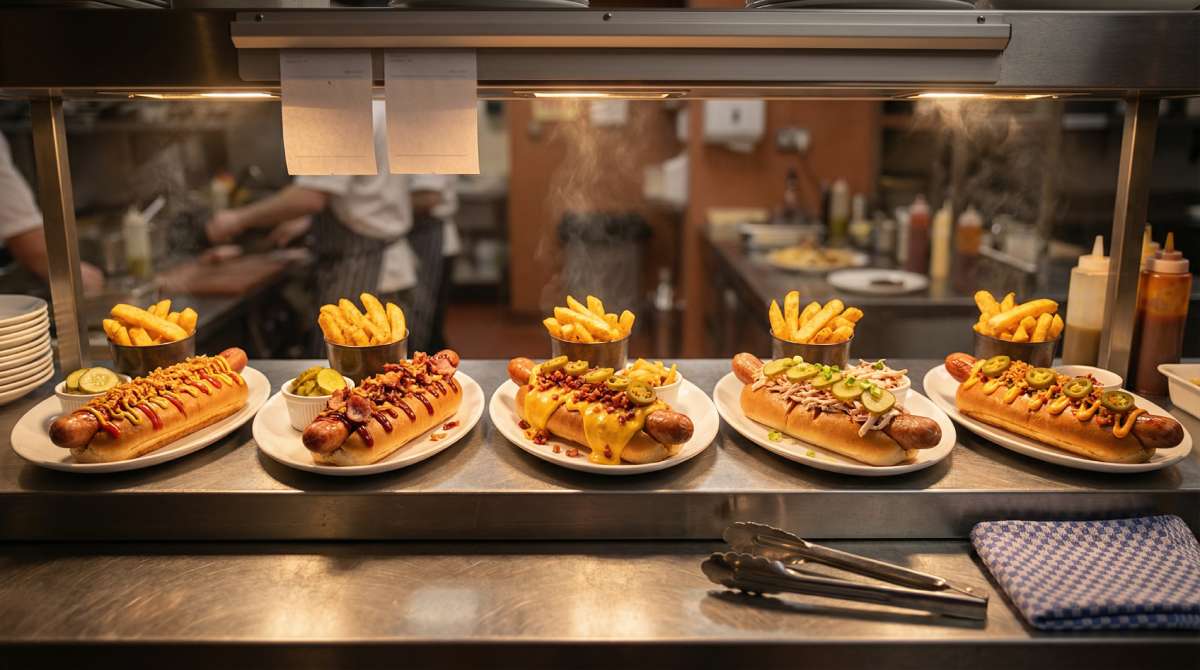
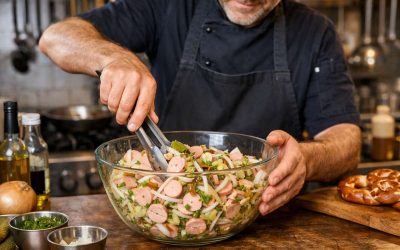
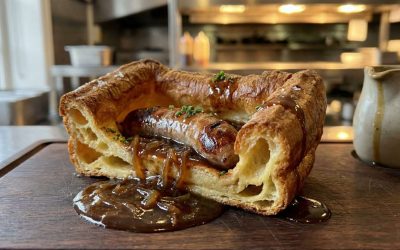
Five fast, repeatable pub hotdog menu builds lined up on the pass – plated with chips and ready to send.
Introduction
Most pubs don’t need another “concept”. They need a pub hotdog menu that sells on a Friday night, doesn’t slow the pass, and doesn’t create a trail of onions and regret from bar to table.
Hotdogs work because they are familiar, easy to explain, and easy to upsell. But only if you design them for service. The fastest pub hotdogs have two traits: they are built from a short list of prep components, and they assemble in a fixed order every time. That is how a pub hotdog menu stays consistent when the kitchen is short-staffed, the printer won’t stop, and someone is shouting that table 12 wants “no sauce, extra sauce”.
This is also why “premium” should mean presentation and balance, not a dozen toppings. The best pub hotdog ideas are clean: one hero flavour, one texture contrast, one controlled sauce. You get the premium look, but you still run it like fast pub food.
In the sections below, you’ll get five builds designed for UK pubs and foodservice: quick to prep, quick to plate, and easy to brief to staff. You can run them as a small bar snack range or as a proper hotdog menu for pubs with sides and upgrades, without turning your kitchen into a condiment crime scene.
Key Takeaways
- A pub hotdog menu wins on repeatability: same build order, same portioning, same plating every time.
- Keep each dog to one hero topping + one crunch + one sauce; more is usually slower, not better.
- Design for speed: pre-prep components that hold well and don’t melt into chaos during service.
- Price for margin and labour: a profitable pub food menu accounts for prep minutes, not just ingredient cost.
- Make it operator-proof: clear options, limited swaps, and a “no custom builds” line you can actually enforce.
- Use fast pub food ideas that stay tidy: sauces in bottles, toppings in deli pots, and controlled portion tools.
- Brief the team: a simple build spec card beats a long recipe when you’re busy.
Who this pub hotdog menu is for (and who it isn’t)
This pub hotdog menu is built for UK operators who want a product that sells quickly, looks like you tried, and still behaves when the venue gets noisy. If your kitchen team is one or two people, or your “kitchen” is basically a prep corner plus a pass, this is your lane. A tight pub hotdog menu is also ideal when you want a profitable add-on that doesn’t steal attention from your main offer.
It works especially well for wet-led pubs that want a credible food option without turning into a full food pub overnight. Hotdogs are easy to explain, easy to upsell, and quick to hand across a bar. For late-night trade, a pub hotdog menu is one of the few items that can feel substantial without the burger-level wait and mess. It also fits events, quiz nights, live music, and sports screenings because you can keep output consistent even when orders come in waves.
Food-led pubs can use this too, but the positioning changes. Your pub hotdog menu becomes a “fast premium” section: something people order because it’s fun, not because it’s cheap. In that context, your best pub hotdog ideas are the ones that feel chef-led but still assemble in seconds.
Hotdogs beat burgers when speed and consistency matter more than customisation. Burgers beat hotdogs when your brand is built around bespoke cook levels, premium beef stories, and plated presentation. If you can’t commit to either lane, your pub hotdog menu usually wins as the simpler, cleaner option.
- Best fit: wet-led pubs, small kitchens, late-night bar trade, events
- Poor fit: venues where every dish is bespoke, plated, and slow by design
- Hotdogs beat burgers when: speed, repeatability, tidy service matter most
- Burgers beat hotdogs when: cook-level control and plated theatre are the point
The core rules: how to build a pub hotdog menu that runs fast
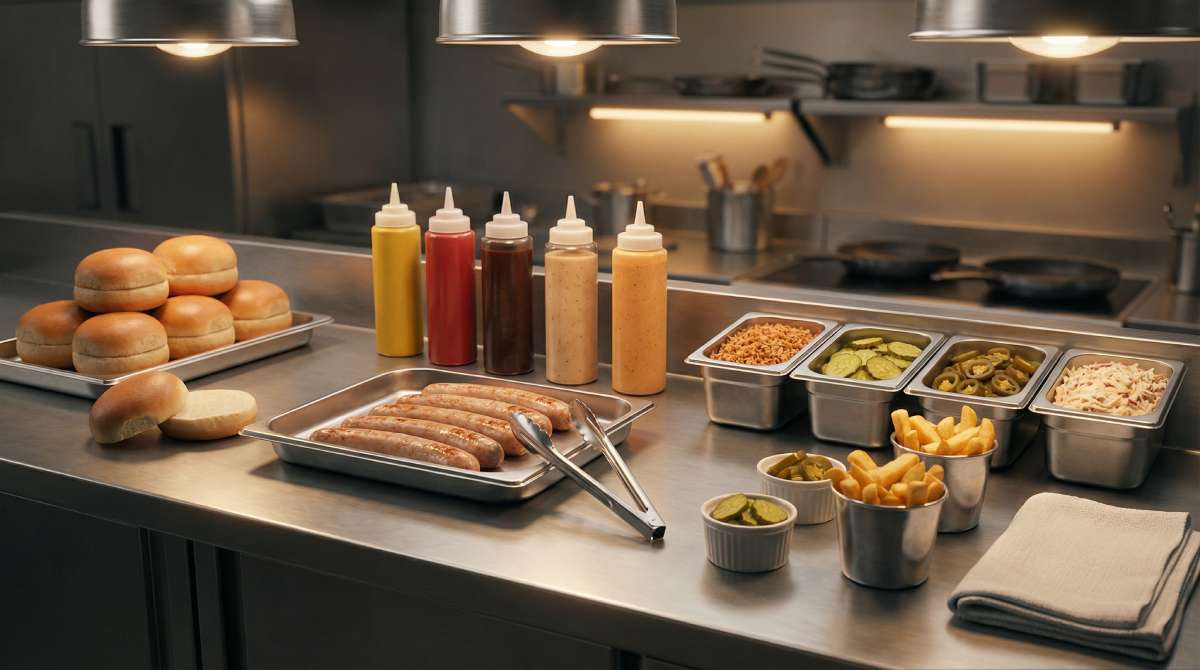
A controlled prep-counter system – shared components, portion control, and repeatable builds for a fast pub hotdog menu.
A fast pub hotdog menu is basically a controlled system. The pub hotdog menu does not succeed because you found a new sauce. It succeeds because you reduce decisions and make each build repeatable under pressure. Your hotdog menu for pubs should feel premium, but it must be boring to run. Boring is profitable.
Start with component discipline. Every item on the pub hotdog menu should share most components. That is what keeps prep tight, waste low, and service fast pub food rather than a mini restaurant project. If each dog needs its own unique garnish and its own special bun, your staff will hate it and your ticket times will show it.
Your bun strategy matters more than most people admit. A pub hotdog menu fails when buns tear, go soggy, or vary wildly in size. Pick one bun that holds structure, toasts predictably, and can handle sauce without collapsing. Then keep the toasting method consistent so your hotdog menu for pubs doesn’t become “sometimes good, sometimes sad”.
Now the two rules that keep everything under control:
One hero flavour rule: each dog gets one clear headline. Think “curry + crunchy onions”, “cheese + smoke”, “mustard + kraut”. The moment you try to stack three headline flavours, your pub hotdog menu slows down and starts tasting like a buffet plate.
No meltdown toppings rule: if it turns watery, splits, or goes limp in a pot, it does not belong on a fast pub hotdog menu. This is where many “profitable pub food menu” plans die. Operators add fresh salad mixes, wet slaws, or delicate garnishes that look great for five minutes and then become a remake machine.
Keep sides simple. The best fast pub food ideas are the ones that don’t require extra plating decisions. Chips, a simple slaw portion, or a pickled side can work, but they must be pre-portioned and consistent. A pub hotdog menu should be easy to teach, easy to audit, and easy to repeat.
- Keep shared components across the pub hotdog menu: one bun, one core sauce set, one crunch option
- One hero flavour per dog; extra toppings should support, not compete
- Avoid “meltdown” toppings: watery slaw, fragile salad, anything that breaks under heat
- Sides should be portioned, predictable, and not a second project
Setup checklist: what you need before you sell a single hotdog
Before you launch a pub hotdog menu, set the station up so your staff can win. Most hotdog menu for pubs failures aren’t taste problems; they are setup problems. The build is slow, the toppings spill, the buns are inconsistent, and suddenly your “simple” product is annoying.
Start with holding. You need a holding method that fits your venue and doesn’t create constant babysitting. In pubs, the practical choices are usually hot-hold cabinet, bain marie style hot holding (with sensible control), or a steamer-type approach depending on what you already run. Whatever you choose, keep it consistent and verify your own safe operating temperatures and procedures based on your equipment and local authority expectations.
Next is portion control. A pub hotdog menu runs fast when your staff are not eyeballing anything. Sauces should be in squeeze bottles with a repeatable pattern. Crunch toppings should be portioned with a small scoop or pre-portioned pots. If you want a profitable pub food menu, you cannot rely on “a handful” as a unit of measure.
Packaging matters even for eat-in. If you serve at the bar, use packaging that keeps the dog stable and reduces mess. If you offer takeaway, choose packaging that holds heat without turning the bun to mush. The goal is a tidy customer experience, because a messy pub hotdog menu creates complaints even when the sausage is great.
Finally, make sure the basics are compliant for your context. If you are adding equipment, check gas safety and electrical load. For events and temporary setups, confirm local site rules, event licensing, and any requirements around power distribution and food safety procedures. If you are unsure, verify with the venue, organiser, and your local authority rather than guessing.
- Holding method: choose one approach and standardise it (based on your equipment)
- Buns: one reliable bun, one toasting method, consistent portion size
- Portioning tools: sauce bottles, small scoop for crunchy toppings, portion pots for wet toppings
- Service packaging: stable tray/boat for bar service; sensible takeaway pack if offered
- Verify before launch: gas safety, electrical load, site rules, local authority expectations, event licensing (if relevant)
Menu architecture: the simplest structure that still feels premium
A pub hot dog menu wins when it is easy to order, easy to remember, and brutally fast to execute. Most pubs overcomplicate the middle: too many variants, too many topping choices, and naming that forces questions at the bar. The clean approach is to design a pub hot dog menu that feels premium because it is consistent, not because it is long.
A 3-dog pub hot dog menu is usually the best “default” for a small kitchen: one classic, one “loaded”, one spicy or smoky. It gives enough range for different tastes while keeping your mise en place tight. A 5-dog pub hot dog menu can work, but only if the extra two dogs are basically “topping swaps” using the same core components. If dog #4 needs its own unique sauce, garnish, and prep method, you have already lost speed.
Add-ons should be structured, not open-ended. Think in “one-click decisions” at the point of sale: extra onions, extra sauce, add cheese, add jalapeños. You are not trying to run a custom-build counter. The pub hot dog menu should read like a short set of confident options, with add-ons that are obvious and fast to ring through.
Meal deal logic is where margin and simplicity meet. A hot dog + fries (or crisps) + drink bundle reduces ordering time, increases average spend, and gives staff a default recommendation. The key is to make the hot dog meal deal feel like the normal choice, not the upsell. In practice: the board should show the bundle first, and the standalone price second.
Naming conventions matter more than people think. Clever puns are fun on Instagram, but they slow service because staff must explain them and guests forget what they mean. For fast pub service, name each option by the topping identity, not the joke. If a guest can point and say it out loud in two seconds, your pub hot dog menu is doing its job.
Keep it tight:
- 3-dog menu: Classic; Loaded; Spicy/Smoky (best for most pubs)
- 5-dog menu: Add “BBQ” and “Cheese” only if they reuse the same sauces/toppings
- Add-ons: max 4–6 “one-click” add-ons; no custom-build matrix
- Meal deal: make “Hot dog + side + drink” the default on the board and on the till
Prep system: how to prep once and serve all night
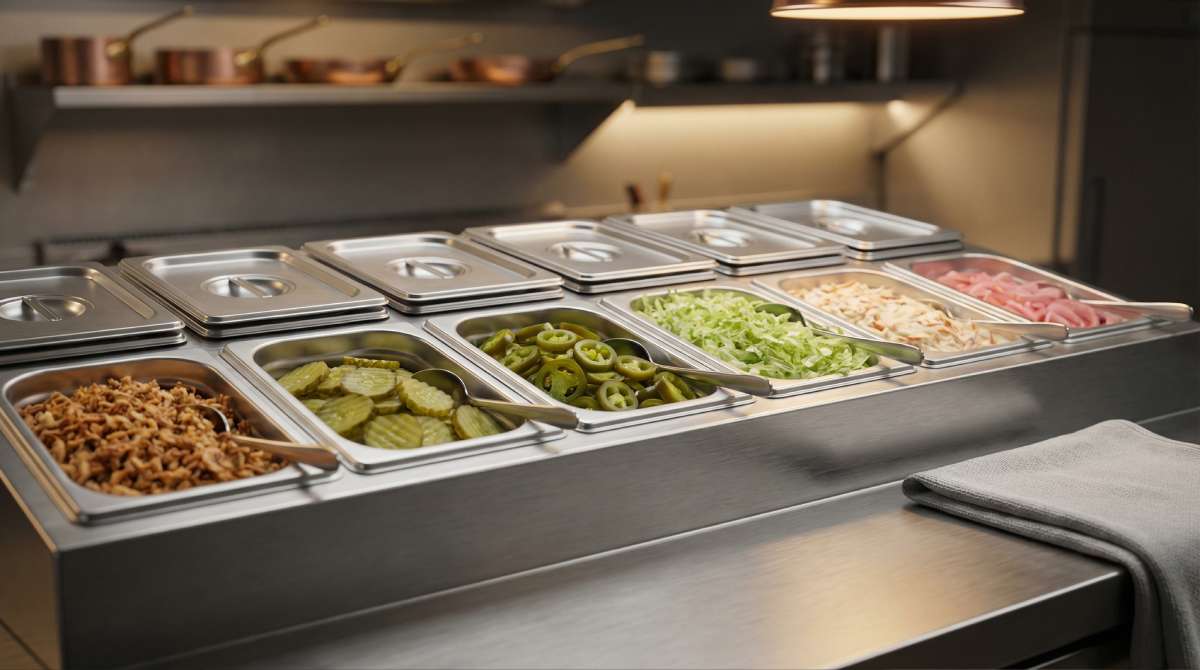
Toppings that hold their texture – set up once, portion fast, and keep a pub hot dog menu running all night.
The fastest kitchens don’t prep more, they prep smarter. The goal is a pub hot dog menu where your toppings hold their quality, your sauces behave under heat, and your buns are predictable. If those three are stable, the whole service becomes repeatable.
Start with toppings that hold. Anything that weeps water, collapses, or turns grey under a heat lamp will create remakes and mess. Choose toppings that keep texture: crispy onions, pickles, jalapeños, shredded lettuce (if kept cold and dry), and robust slaws. If you want onions, go pickled or fried; if you want a “wet” topping like sautéed onions, treat it as a controlled portion in a small pan with a strict refresh rhythm.
Sauces are where most “premium” menus fail. A good pub hot dog menu uses sauces that stay glossy, don’t split, and don’t flood the bun. Make your default sauces squeeze-bottle friendly: mustard, ketchup, burger sauce, BBQ, a hot sauce, and one “premium” sauce (cheese sauce or curry-style sauce) that can be held safely and portioned cleanly. Your sauce lineup should support the menu, not create a second kitchen inside the kitchen.
Bun strategy is the quiet backbone of speed. Decide your bun style (standard or brioche), then decide your toast method (flat-top, salamander, or toaster) and stick to it. The bun should be warm and lightly toasted, but never brittle. If the bun is inconsistent, guests blame the whole hot dog. A simple brioche bun strategy is: light toast, quick steam from the wrapped dog heat, then build immediately.
Batch sizes and refresh rhythm are about avoiding over-engineering. You do not need a spreadsheet; you need two rules: prep enough for the next rush window, and refresh before quality dips. For most pubs, that means topping tubs sized for 30–60 minutes of peak flow, sauces topped up little and often, and hot elements refreshed in small batches. If you batch too big, food quality drops and you waste. If you batch too small, you choke during the rush.
Prep once, serve all night:
- Toppings: favour pickled/fried/robust toppings; avoid watery “fresh salsas” unless tightly controlled
- Sauces: squeeze-bottle friendly; one hot-held “feature sauce” maximum
- Buns: one bun type; one toast method; build immediately after warming
- Refresh rhythm: small batches every rush window (30–60 mins), not giant pre-batches
Service choreography: a 60–90 second build flow
If you want a pub hot dog menu to feel premium at speed, you need choreography. Not “everyone does everything”, but a clear build flow that repeats the same way every time. The target is a 60–90 second build per order, even in a small pub kitchen, with minimal cross-traffic and minimal wiping.
Station roles should match your kitchen size. In a tiny pass, you can run a two-person system: one person handles heat (sausages, bun toast, fries), the other does cold build and finishing (toppings, sauces, plating, garnish). If you have three people, the third becomes expeditor: packaging, checks, and sending to the pass. The important point is that the pub hot dog menu should not require staff to bounce between cold and hot zones repeatedly. Every step you remove is time saved and mistakes avoided.
The build order is what reduces mess and remakes. The most common mistake is over-saucing early and then trying to place toppings onto a slippery surface. Build should always create “grip” before heavy toppings. A clean, repeatable order is: warm bun, base sauce line, main topping (if it is a structured topping like slaw), then sausage, then finishing sauce, then crunchy garnish. That sequence keeps toppings where they belong and stops the bun from turning into a soggy tray.
Also, standardise your portioning. A pub hot dog menu becomes fast pub service when every topping has a scoop, every sauce has a count (one line, two lines), and every garnish has a pinch. You do not want staff making “judgement calls” mid-rush. Premium is consistency.
60–90 second build flow (repeatable):
- Roles: Heat (dogs/buns/fries) + Build (toppings/sauces/finish)
- Order: bun warm/toast → base sauce → structured topping → dog → finishing sauce → crunch garnish
- Portion control: scoops for toppings, “squeeze counts” for sauces, pinches for garnish
- Mess reduction: keep wet toppings controlled; finish crunchy last; wipe once per order, not five times
The 5 builds (the heart of the post)
A premium pub hot dog menu becomes easy to run when the builds are engineered, not improvised. Each option below is designed so your pub hot dog menu feels varied to guests while staying mechanically simple for the kitchen. The theme is shared components, predictable portions, and a fast build flow that holds up in real pub service.
Build 1: The Classic Pub Dog
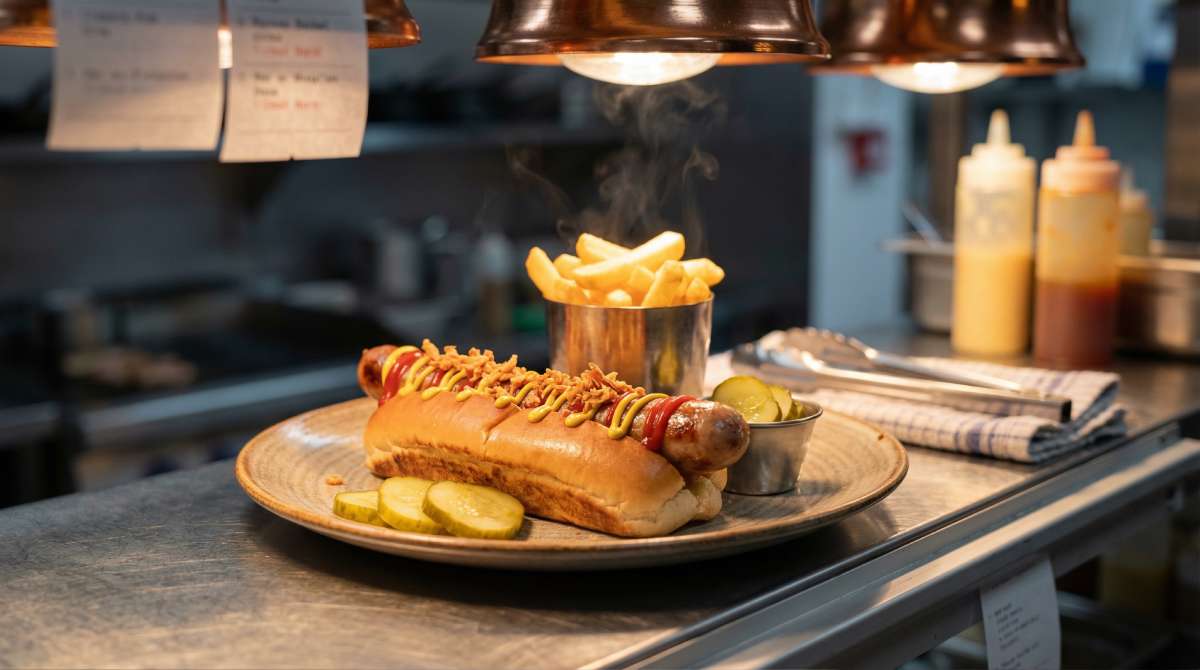
The Classic Pub Dog – clean sauce lines, crunchy onions last, and built fast on the pass.
What it is: The baseline of the pub hot dog menu – a proper sausage in a warm bun with clean, familiar flavours. It is the one that sells all night and never needs explaining.
Exact components:
Bun (lightly toasted); sausage; mustard; ketchup; crispy onions (or finely diced raw onion if you insist); optional pickle slices.
Build order (fast): Warm bun and give it a quick toast. Add mustard and ketchup as thin lines so the bun doesn’t flood. Place the sausage. Finish with crispy onions and (if used) two or three pickle slices.
Holding notes: Keep the bun warm, not dried out. Crispy onions must stay dry and away from steam. Sauces behave best when applied in thin lines, not pools.
Upsell option: Make the default “meal deal” suggestion – add chips and a pint/soft drink. If your pub hot dog menu has an “add cheese” option, it also works here without changing the station setup.
Common failure + fix: The classic dog goes soggy when sauce is heavy or the bun is over-steamed. Fix it by reducing sauce volume and always toasting the bun lightly before build.
- Speed tip: pre-set squeeze counts (e.g., 1 mustard line + 1 ketchup line)
- Quality tip: crispy onions go on last, always
Build 2: The BBQ Bacon Crunch Dog
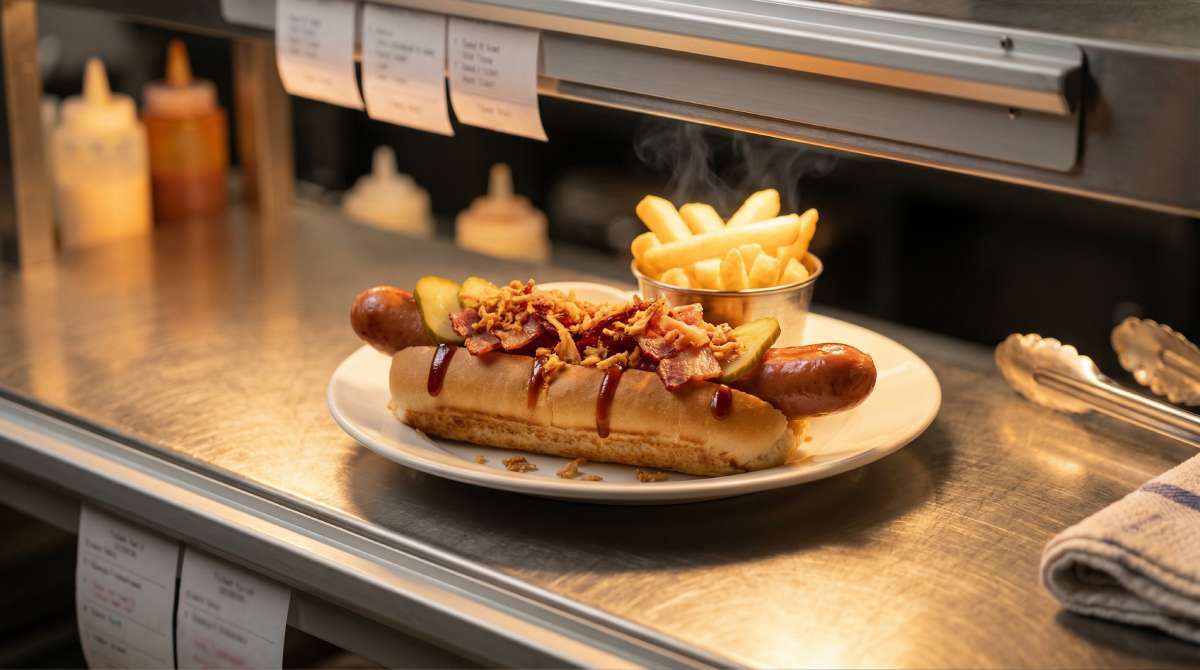
BBQ Bacon Crunch – thin BBQ, drained bacon, crunch last for a fast pub hot dog menu build.
What it is: The “pub comfort” hero – sweet-smoky BBQ with bacon and crunch. In a pub hot dog menu, this is your premium-feeling option that still builds fast.
Exact components:
Bun (toasted); sausage; BBQ sauce; bacon bits or bacon strips (pre-cooked); crispy onions; optional sliced pickles.
Build order (fast): Toast bun. Add a thin BBQ line to the bun. Add sausage. Add bacon. Add a second light BBQ drizzle. Finish with crispy onions and pickles.
Holding notes: Bacon must be pre-cooked and held dry, then warmed quickly to order. BBQ sauce should be squeeze-bottle friendly and not overly watery. Keep crunchy garnish away from heat and steam.
Upsell option: Offer “double bacon” or “add cheese sauce” as a paid add-on. This keeps the pub hot dog menu premium without adding another build.
Common failure + fix: BBQ dogs get messy when bacon is greasy and sauce is too thick. Fix by draining bacon well and using a thinner BBQ line with a small finishing drizzle instead of one heavy pour.
- Batch logic: cook bacon in batches and refresh every rush window
- Mess control: bacon goes before final drizzle, crunch goes last
Build 3: The Deli Slaw Dog
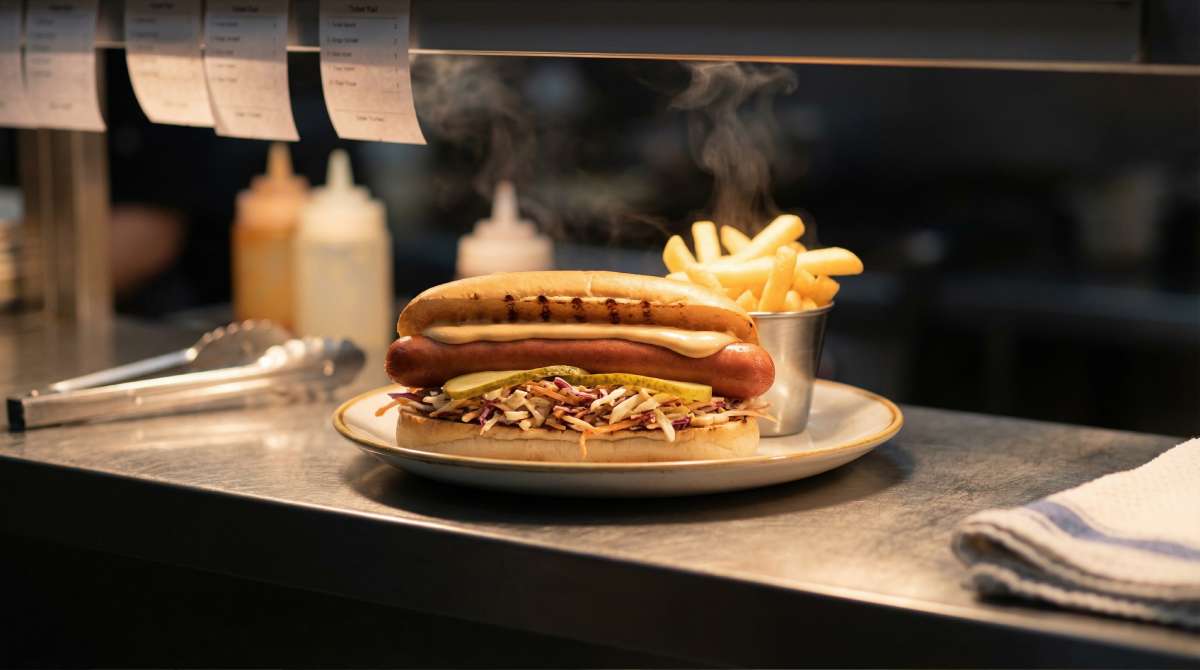
Deli Slaw Dog – slaw first for grip, sausage second, with clean sauce lines for a fast pub hot dog menu build.
What it is: A fresher, sharper option that balances the pub hot dog menu. It feels modern, photographs well, and is easy to execute if your slaw is built to hold.
Exact components:
Bun (light toast); sausage; burger sauce or mayo-mustard sauce; deli slaw (robust, not watery); pickles; optional spring onion.
Build order (fast): Toast bun lightly. Add a base sauce line. Add a portion of slaw to the bun first (it creates grip). Place sausage. Add pickles. Finish with a small sauce line and a pinch of spring onion.
Holding notes: Slaw must be dry enough to sit for service without pooling liquid. Keep it cold, covered, and drained. If it starts to weep, refresh or swap to a more robust slaw mix. This is where a pub hot dog menu can silently fail if you don’t control moisture.
Upsell option: “Add extra slaw” or “add jalapeños” for a small premium. Also sells well as a meal deal because it feels like a “proper plate” with chips.
Common failure + fix: Slaw dog becomes soggy when slaw is watery and portion is too big. Fix by draining slaw, reducing portion slightly, and using a thicker base sauce line rather than extra sauce on top.
- Holding hack: store slaw in a perforated insert or drain briefly before service
- Build hack: slaw first, sausage second, always
Build 4: The Spicy Street Dog
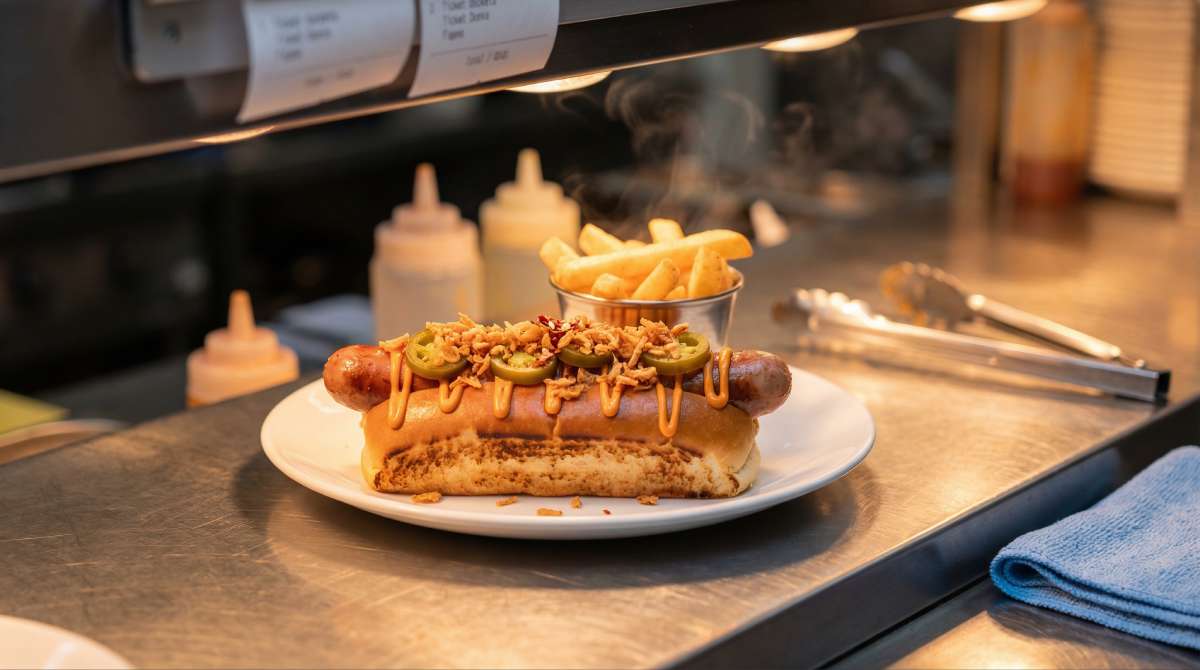
Spicy Street Dog – one sauce, one portion, drained jalapeños and crunch last for a fast pub hot dog menu build.
What it is: The heat option your pub hot dog menu needs – predictable spice, not chaos. It should be hot enough to be memorable but stable enough for repeat orders.
Exact components:
Bun (toasted); sausage; hot sauce or spicy mayo; jalapeños; crispy onions; optional chilli flakes; optional cheese sauce (if already on station).
Build order (fast): Toast bun. Add spicy mayo or hot sauce line to the bun. Add sausage. Add jalapeños. Add a second light spicy drizzle. Finish with crispy onions and (optional) a tiny pinch of chilli flakes.
Holding notes: Jalapeños hold well if drained and kept cold. Spicy mayo holds well but must be portion controlled. Avoid fresh chopped chillies unless you have staff discipline and a tight prep system.
Upsell option: “Extra heat” add-on (extra jalapeños or extra hot sauce) and/or “add cheese sauce”. It’s an easy upsell that doesn’t complicate the pub hot dog menu.
Common failure + fix: Spicy dogs get remade when heat is inconsistent. Fix by standardising the sauce (one product) and the portion (one squeeze count), and train staff not to freestyle.
- Consistency rule: one spicy sauce base, one heat level as standard
- Service rule: jalapeños drained, crunch last
Build 5: The Cheese Sauce Melt Dog
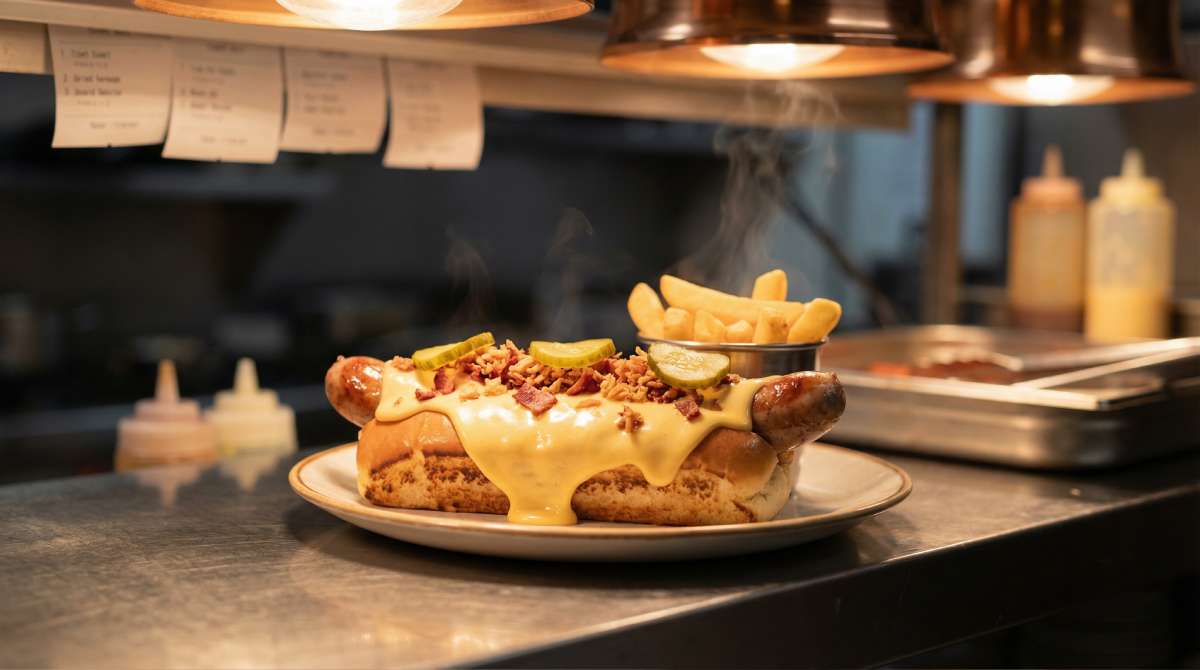
Cheese Sauce Melt – controlled cheese on the sausage, crunch last, contrast garnish to finish for a fast pub hot dog menu build.
What it is: The “loaded” flagship of the pub hot dog menu – rich, indulgent, and the one people talk about. It must still build cleanly, or it will slow the whole line.
Exact components:
Bun (toasted); sausage; warm cheese sauce (held safely); crispy onions; optional bacon bits; optional pickles or jalapeños for contrast.
Build order (fast): Toast bun. Place sausage. Ladle or squeeze a controlled amount of cheese sauce across the sausage (not into the bun base). Add bacon bits if used. Finish with crispy onions. Add pickles or jalapeños as the final contrast element.
Holding notes: Cheese sauce is the only “hot-held” premium element I’d put into a small pub hot dog menu. Hold it at safe temperature, keep it smooth, and refresh in sensible batches so it doesn’t thicken and split. Apply it to the sausage, not the bun, to reduce sogginess.
Upsell option: “Double cheese” is the simplest high-margin upsell on the whole pub hot dog menu. If you want one more, “add bacon” stacks neatly.
Common failure + fix: Cheese sauce breaks or goes gluey, and the bun collapses. Fix by holding smaller batches, whisking at each refresh, and reducing volume so it coats the sausage instead of flooding the bun.
- Portion control: one ladle or one squeeze bottle dose, every time
- Quality control: refresh cheese sauce in small batches; whisk before service and mid-rush
Sides and upsells that don’t slow the pass
A pub hot dog menu prints money when the upsells are frictionless. The pass should not become a second build station with its own garnish chaos. The rule is simple: sides must be either “drop and forget” (chips) or “scoop and send” (slaw, pickles). If a side needs tweezers, drizzle art, or a fresh herb finish, it is no longer supporting your pub hot dog menu, it is competing with it.
Chips are the natural anchor because the workflow is already familiar in a pub kitchen. If you want the hot dog to feel premium, keep the chips consistent and hot rather than “fancy”. A small pot of slaw or a few pickles adds freshness, cuts richness, and gives you a visual upgrade without slowing service. Loaded fries can work, but only as a controlled, limited variant: one sauce, one topping, one portion size, and built the same way every time. If loaded fries become “choose your own adventure”, the pub hot dog menu will bottleneck immediately.
Beer pairings are best handled as a light touch: a simple suggestion on the board or a staff script (“BBQ dog goes well with lager; spicy dog with IPA”). Don’t over-engineer pairing notes or you will create questions at the bar during rush. The aim is to make the pub hot dog menu easier to sell, not harder to explain.
What to avoid is the trap of high-labour “loaded everything”. The moment a guest can request three sauces, two cheeses, and a pile of fragile garnishes, your speed collapses and your variance explodes. Premium comes from repeatability, not from excess.
- Fast sides that work: chips, pot of slaw, pickles, small side salad (prepped, not composed)
- Controlled upsells: add cheese sauce, add bacon, extra jalapeños, meal deal
- Avoid: multi-step loaded fries, made-to-order toppings, anything that needs plating time
Pricing and margin basics for a profitable pub food menu
A pub hot dog menu should be costed like a system, not five separate recipes. Your profit is created in three places: portion control, waste control, and add-on structure. If any of those drift, even “busy” service can be unprofitable.
Start with portion costing that is realistic. Cost the sausage, bun, and the average topping/sauce usage per dog, not the “best-case” version. Then cost your sides as standard portions. Your pub hot dog menu becomes predictable when each dog has a defined scoop size for slaw, a defined squeeze count for sauce, and a defined garnish portion. This is not micro-management; it is what stops your best staff from accidentally training your new staff into giving away margin.
Waste control is mainly about buns, sauces, and “wet toppings”. Buns go stale quickly if you over-order or store poorly; sauces get tossed when bottles are half-managed; slaw turns watery and ends up binned. The fix is to run smaller, more frequent prep cycles and a refresh rhythm that matches your peak windows. A well-run pub hot dog menu wastes less because it only preps what it can actually sell in the next rush window.
Meal deals do two things: they raise the average spend and they reduce decision time. If you can turn 40% of orders into “dog + chips + drink”, your throughput improves and the till conversation shortens. Add-ons are where the easy margin lives, but only when they are simple. Cheese sauce, bacon, and jalapeños are classic because they are fast to portion and high perceived value.
Premium pricing is justified when the guest can feel it without needing a speech: a better sausage, a better bun, a signature sauce that is consistent, and a plate that looks intentional. Premium pricing is fantasy when it is based on complexity that the guest cannot see or when quality is inconsistent. A pub hot dog menu cannot charge premium if the bun is cold, the dog is split, or the build changes every time.
- Costing basics: define standard portions (scoops, squeeze counts, pinches) and cost to that standard
- Margin levers: meal deals and simple add-ons (cheese, bacon, heat)
- Premium is real when: sausage/bun quality is obvious, builds are consistent, plating is tidy
- Premium is fantasy when: complexity increases but consistency drops
Common problems and fixes
Most failures in a pub hot dog menu are not “cooking skill” issues. They are workflow issues: moisture management, temperature control, portion control, and packaging discipline. The good news is the fixes are fast and operator-friendly.
Soggy buns usually come from two sources: too much sauce or too much steam. If staff are applying sauce as a pool instead of a thin line, the bun becomes a sponge. If buns are being held too long in a warm, humid environment, they turn soft and collapse. The fix is to toast lightly, reduce sauce volume, apply sauce in lines, and build immediately after warming. If you need a hold method, keep buns warm and dry, not warm and wet.
Split sausages happen when heat is too aggressive, the dog is held too long, or it is being pierced and handled roughly. For a pub hot dog menu, split dogs create remakes and destroy the “premium” perception instantly. The fix is gentler heat, shorter hold times, and training staff to use tongs properly. If you are grilling, control flare-ups and avoid high direct heat for extended periods.
Sauce floods are usually a training problem. Staff want it to look generous, but generous quickly becomes messy, especially for carry-out. Set a squeeze count standard and stick to it. If a sauce is too thin and runs, switch sauce or thicken it slightly; don’t pretend it is a “style choice”. A pub hot dog menu that looks clean sells more and refunds less.
Cold centres are a holding and throughput issue. If sausages are warmed inconsistently or you are relying on a method that doesn’t heat evenly, you’ll get the occasional cold bite and complaints. The fix is to standardise your holding method and refresh rhythm, and to avoid huge batches that sit too long. Use a thermometer during setup until the team trusts the method.
Messy carry-out is about packaging and build order. Crunch toppings go soggy in sealed boxes, and heavy sauces migrate. For takeaway, reduce sauce slightly, keep crunchy garnish in a small separate pot when practical, and ensure the hot dog is seated so it can’t roll. A pub hot dog menu that travels well earns repeat orders; one that arrives as soup does not.
Quick operator fixes:
- Soggy buns: toast lightly; sauce lines not pools; build immediately after warming
- Split sausages: reduce direct heat; shorten hold; handle gently with tongs
- Sauce floods: standardise squeeze counts; avoid runny sauces for takeaway
- Cold centres: standardise holding method; refresh in smaller batches; verify with temp checks
- Messy carry-out: reduce sauce; crunch last or separate; stable packaging that prevents rolling
Which sausage is best for what on a pub hot dog menu
On a pub hot dog menu, sausage choice is not just flavour – it dictates holding behaviour, topping compatibility, and how “premium” the whole plate feels. With your 150g, 25cm lineup, you can cover classic, smoky, cheesy and spicy demand without adding prep complexity, as long as each sausage has a clear job in the menu.
Bratwurst (150g, 25cm) is your “proper pub sausage” anchor. It reads as craft and substance, and it works best when you want a simpler build that lets the meat taste lead. On a pub hot dog menu, Bratwurst shines with classic mustard, pickles, light onions, and anything tangy rather than overly sweet. It is also a strong choice for plated service with chips because it feels closer to a main dish than a snack. If you want one sausage to represent “German-style quality” without needing explanation, this is it.
Bacon Frankfurter (150g, 25cm) is your crowd-pleasing bridge between hot dog and pub comfort food. The bacon note naturally pairs with BBQ, fried onions, pickles and creamy sauces, and it gives you a built-in “smoky” profile without extra ingredients. On a pub hot dog menu, this is the easiest sausage to turn into a premium-feeling loaded option with minimal topping changes – it does a lot of work for you. It also performs well in takeaway because it still tastes bold even when the bun cools slightly.
Cheese Frankfurter (150g, 25cm) is the indulgence lever. It is best used when you want the menu to have a signature “melt” option without needing multiple cheese components. The key is to pair it with contrast: pickles, jalapeños, crispy onions, and sharper sauces rather than adding more heavy dairy. On a pub hot dog menu, a cheese frankfurter can be the hero of your “loaded” build, but it also demands clean temperature control – over-aggressive heat increases splitting risk, and splitting kills the premium look.
Chilli Beef Frankfurter (150g, 25cm) is your controlled heat option for a modern pub hot dog menu. It gives you spice without building a complicated “spicy station”. Pair it with spicy mayo or hot sauce, jalapeños, pickles and a crunchy garnish. It works especially well with lighter sides (slaw, pickles) because it keeps the plate from feeling too heavy. This is also the sausage that benefits most from consistent portioning of heat elements; you want “repeatably hot”, not “randomly lethal”.
Pork Hotdog (150g, 25cm) is your pure hot dog baseline: neutral, dependable, and fast. In a pub hot dog menu, this sausage is the best canvas for house sauces and topping identity. Use it for the Classic Pub Dog, for any “deli slaw” style build, and for meal deals where you want maximum speed and minimum variance. It is also the best choice for high-throughput nights because it tends to be predictable in cooking and holding, and it lets your toppings carry the differentiation.
Quick mapping for a pub hot dog menu:
- Classic / fastest throughput: Pork Hotdog or Bratwurst
- BBQ + bacon crunch build: Bacon Frankfurter
- Cheese-loaded flagship: Cheese Frankfurter (with pickles/jalapeños for contrast)
- Spicy street build: Chilli Beef Frankfurter
- “Premium, meat-forward” plate: Bratwurst
Frequently Asked Questions
Yes, but keep it controlled: one portion size, one sauce, one topping set, and the same build every time. If “loaded fries” turns into custom requests, it will slow the pub hot dog menu down fast.
Split roles (heat vs build), standardise portions (scoop sizes and squeeze counts), and use a fixed build order: bun warm/toast, base sauce, structured topping, sausage, finishing sauce, crunch garnish. The goal is repeatability, not improvisation.
Cost to a standard portion, build in a realistic waste allowance, and use meal deals and add-ons to lift average spend. Premium pricing is justified when quality is obvious and consistent (sausage, bun, tidy build), not when complexity increases.
If you have a small kitchen team or limited prep space, start with 3. A 3-dog pub hot dog menu stays fast and consistent. Move to 5 only when the extra two builds reuse the same sauces and toppings, not new ingredients that create hidden complexity.
Meal deals (dog + chips + drink), add cheese sauce, add bacon, and “extra heat” (jalapeños/hot sauce) are fast and high perceived value. Keep upsells to a short list so staff can suggest them automatically.
Lightly toast the bun, apply sauces in thin lines (not pools), and build immediately after warming. Keep crunchy toppings dry and add them last. For takeaway, reduce sauce slightly and consider keeping crunchy garnish separate.
Overcomplicating the menu and letting builds drift. A pub hot dog menu works when it’s engineered: shared components, fixed build order, clear portions, and toppings that behave under pressure. Consistency is what makes it feel premium.
Hold cheese sauce at a safe temperature, refresh in small batches, and whisk at each refresh so it stays smooth. Apply it to the sausage rather than flooding the bun. Portion control matters – one ladle or one squeeze-bottle dose.
Pickles, jalapeños (drained), crispy onions, robust slaws, and sauces in squeeze bottles are your best friends. Avoid watery salsas, delicate herbs, and toppings that collapse or weep liquid during a rush.
Splitting usually comes from overly aggressive heat, holding too long, or rough handling. Use gentler heat, refresh more often in smaller batches, and handle with tongs carefully. Avoid piercing the sausage.
Conclusion
A strong pub hot dog menu is not about having the longest list. It is about having a small set of builds that are quick to execute, consistent under pressure, and genuinely good enough that guests reorder without needing persuasion. If you keep the menu architecture tight, prep once with toppings and sauces that behave, and run a repeatable 60–90 second build flow, you get the outcomes that matter in a pub: faster service, fewer remakes, cleaner passes, and predictable margins.
The real win is operational. When each option is built from shared components with defined portions, your team can deliver the same standard on a quiet Tuesday and a busy Friday night. It also becomes easier to train new staff, easier to cost, and easier to maintain quality without overthinking every shift. Add-ons and meal deals then become simple levers for profit rather than a source of complexity.
If you want to implement this quickly, start by choosing your five builds (or three if you are smaller), lock the portion standards, and run one week of service with strict consistency. From there you can refine based on what sells and what holds best in your kitchen. If you would like, we can map the system to your exact setup and volume so your pub hot dog menu runs fast from day one.
About The Sausage Haus
The Sausage Haus supplies UK operators who want authentic German sausages and a faster, more reliable service system for pubs, food stalls, caterers and events. Our range is designed for real-world service: consistent sizing, strong flavour, and products that perform well in high-throughput environments where speed and repeatability matter.
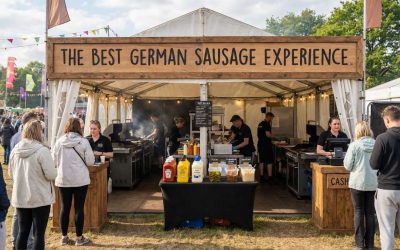
All sausages are produced by Remagen, bringing German craft and established manufacturing standards to a format that works in UK kitchens. In the UK, distribution is handled by Baird Foods, ensuring dependable supply, straightforward ordering, and practical support for busy operators. Whether you are building a pub hot dog menu, upgrading your current sausage offer, or standardising a festival-style speed setup for peak sessions, The Sausage Haus is built to help you serve faster with less waste and more consistency.