The Munich Weisswurst is a high-recognition Bavarian breakfast sausage that can add value to UK trade menus when the spec is right and the service method is disciplined. This guide explains what to look for, how to serve it reliably, and how to price it with confidence in 2026.
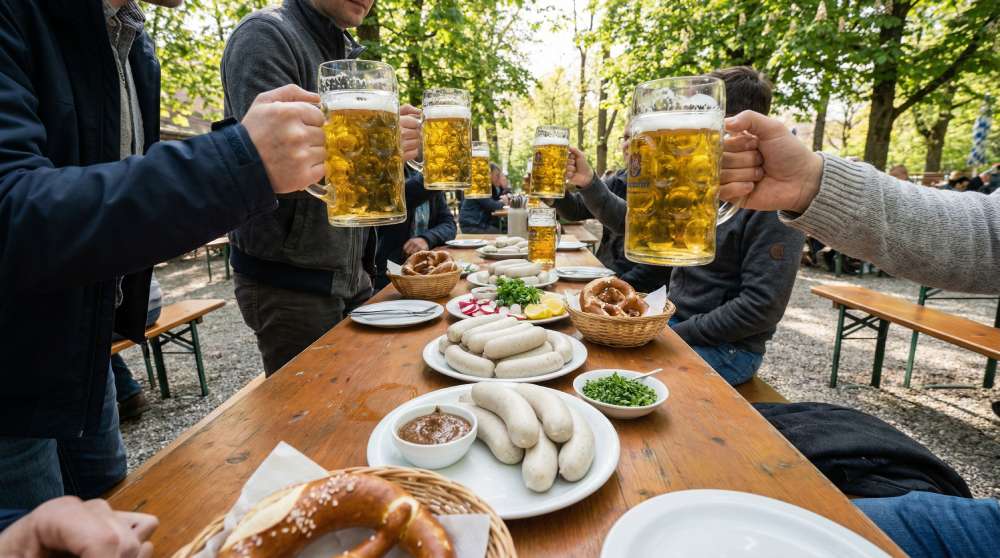
Bavarian Biergarten moment: Munich Weisswurst with sweet mustard, pretzels and clinking Maß beers.
Introduction
In UK foodservice, “German sausage” usually means one of two things: a fast-moving core line (hotdogs, Bratwurst, Frankfurters), or a seasonal/feature line that earns its place through story, plate appeal, and incremental spend. Munich Weisswurst sits firmly in the second category—yet when handled properly, it can be operationally simple.
Why it matters now: brunch is not slowing down, pub kitchens are under constant labour pressure, and buyers are increasingly sceptical of “specials” that look good on paper but collapse during peak service. A Bavarian breakfast dish can work in the UK—if the product spec supports consistent results, and if the team understands the one key rule: Weisswurst is gently heated, not boiled.
For wholesalers, cash & carry buyers, caterers, and retail buyers alike, Munich Weisswurst is attractive because it is instantly “a thing”. Customers recognise it (or are curious about it), it photographs well, and it has natural add-ons: sweet mustard, pretzels, wheat beer, sides, and sharing boards. That gives you a clearer route to margin than many novelty SKUs.
Key Takeaways
- Munich Weisswurst sells on recognition and ritual: it is a premium breakfast/brunch anchor that supports higher spend through add-ons (mustard flights, pretzels, beer pairings).
- Spec matters more than branding: buyers should insist on a clear spec sheet (weight, pack format, ingredients, allergens, casing type, storage, and cooking guidance).
- Operationally, it can be easy: gentle reheat/steam, tight portioning, and disciplined hot holding deliver consistent service.
- The main failure mode is avoidable: boiling and aggressive holding can split casing, wash out flavour, and degrade texture.
- Use a buyer lens: evaluate yield, portion cost, margin, labour minutes, and waste risk—not just “cost per kg”.
- Food safety is straightforward when you follow UK guidance on thorough heating and hot holding.
- Best practice for trade: position it as a speciality feature (weekend brunch, Oktoberfest, event catering) rather than a daily core—unless you have reliable demand.
What is Munich Weisswurst?
The traditional profile and why “white sausage” matters
Munich Weisswurst is a mild Bavarian breakfast sausage with a very specific identity: a pale appearance, delicate seasoning, and a smooth, finely emulsified texture. In traditional service it is gently heated and served hot—most often with sweet mustard and pretzels—so the experience feels closer to a ritual than a quick snack. For UK trade, that distinction matters because Munich Weisswurst is not a “grill and serve” item in the same way as a Bratwurst or Frankfurter. It rewards calm handling and disciplined portioning, and it sells best when it is positioned as a speciality breakfast or brunch feature rather than a generic sausage plate.
What the “white sausage” style signals in practical terms is simple: you are selling succulence, texture and authenticity, not smoke and char. A well-made Munich Weisswurst can feel premium with minimal kitchen complexity, provided the product spec is consistent and the team understands the service method.
Texture, casing, and what “good” looks like on the plate
A good Munich Weisswurst should present neatly and eat cleanly. The flavour should be mild and balanced, and the sausage should remain juicy when served hot. Because the profile is subtle, small faults show up quickly—especially under the pressure of a busy brunch service.
On the plate, buyers and chefs should look for a few tangible indicators:
- Cohesive, smooth bite (fine emulsification, not grainy or crumbly)
- Juicy interior without weeping fat or drying out quickly
- Casing integrity after gentle heating (no splitting or “blown” ends)
- Stable appearance through a short realistic service window
Where Weisswurst underperforms, it is often less about “recipe” and more about rough heating, overholding, or inconsistent spec. In other words, Munich Weisswurst becomes commercially strong when your workflow protects the product’s key selling points.
Why Munich Weisswurst matters in UK trade in 2026
Brunch economics and add-on margin
Brunch remains one of the most commercially forgiving dayparts in the UK: customers accept premium plates, and they respond well to small upgrades that lift spend. Munich Weisswurst fits this environment because it arrives with built-in credibility—Bavarian heritage, recognisable serving cues, and strong photography value for menus and social content. It also has natural, high-margin companions (mustard, pretzels, pickles, sides), which makes it easier to engineer a profitable plate rather than relying on sausage margin alone.
A good trade approach is to think in “plate systems”, not single SKUs:
- Base build (simple, repeatable): 2 sausages + mustard + pretzel/bread + crisp side
- Upsell ladder (explicit, priced): extra sausage, mustard duo/trio, pretzel basket, beer pairing
- Feature positioning (reduces waste): weekend brunch, seasonal specials, event menus
The commercial advantage is that a customer ordering Munich Weisswurst is often in the mood to buy the accompaniments as well—so your portion cost control and menu design directly translate into margin.
Retail and deli logic: “bundleable” products
For retailers, farm shops, and deli counters, Munich Weisswurst works because it is naturally bundleable and occasion-led. In the UK, interest tends to peak around themed weekends (Oktoberfest, summer Biergarten promotions), but it also works year-round as a “proper German breakfast at home” item. From a buyer education angle, the product is easy to merchandise because the complementary items are obvious, and you can build basket value without discounting the main product.
Bundling tends to work best when it is simple and familiar:
- Weisswurst + sweet mustard
- Weisswurst + pretzels / pretzel rolls
- Weisswurst + pickles / radish / cucumber salad
- Optional add-on: wheat beer (where relevant)
Catering and events: speed and theatre
In catering, Weisswurst is attractive because it creates a recognisable Bavarian moment without requiring a complex cookline. With a controlled gentle-heating workflow, you can serve consistent portions quickly and present the dish as a speciality rather than a generic sausage plate. The operational watch-outs are straightforward—temperature control and holding discipline—but once those are defined, Munich Weisswurst can be a reliable feature for breakfast meetings, themed events, and festival catering.
Spec and quality indicators buyers should check
Pack format and portion cost
Buyers should start with numbers that map cleanly to service. For example, an 80g format makes portioning intuitive: many sites will serve two sausages per plate (160g), which simplifies yield modelling and reduces portion drift. But portion cost is not only sausage cost. To cost Munich Weisswurst properly, you need the full plate build and a realistic view of labour minutes.
A sensible buyer model includes:
- Sausage portion (e.g., 2 × 80g)
- Mustard portion (standardised scoop/ramekin)
- Bread/pretzel component (fixed spec, no “whatever is left”)
- Side component (kept tight and consistent)
- Labour minutes (reheat + plate + pass)
- Waste allowance (especially if demand is variable)
This is where “spec-led buying” matters: the clearer the spec, the easier it is to price and the less likely you are to lose margin quietly.
Ingredients and allergens: what to verify
Weisswurst recipes can vary slightly, so the buyer’s job is to remove ambiguity. You want a complete supplier spec sheet with ingredients, allergens, and handling guidance so you can label menus correctly and answer questions confidently. If you are using the product primarily for marketing and buyer education content, accurate allergen data matters just as much—because the content may be used by kitchens and retailers making real decisions.
At minimum, verify:
- Full ingredients declaration
- Allergen statement (and any “may contain” guidance if provided)
- Handling instructions (defrosting and heating method)
- Any on-page claims you intend to make (only if supported by the supplier)
Casing and texture: avoiding service failures
Casing is a quiet driver of reliability. Because Munich Weisswurst is heated gently rather than aggressively grilled, the casing needs to tolerate warm-water heating or steaming without splitting. If the casing is fragile or the sausage is prone to separation, service will become inconsistent, waste will rise, and the dish will lose its premium feel.
A practical buying test is to run a “real-life trial”:
- Heat using your intended method, at a realistic batch size
- Hold briefly as you would during service
- Assess casing integrity, texture, and presentation after the hold
If the product does not hold up in your environment, it will not perform commercially—even if it tastes fine in a perfect one-off test.
Storage, defrosting and handling discipline
Frozen supply can be ideal for speciality lines because it reduces waste pressure and gives you flexibility for seasonal peaks. The risk is poor defrosting and uncontrolled reheating. Operationally, the sites that run Weisswurst best tend to treat it as a planned workflow: forecast demand, defrost overnight in the fridge, heat in small batches, and rotate stock cleanly.
Good discipline is simple:
- Defrost in the fridge (planned)
- Keep raw and ready-to-eat items separated during prep
- Heat in controlled batches to demand
- Avoid repeated reheating cycles, which can degrade quality and increase waste
How to serve it reliably in a UK kitchen
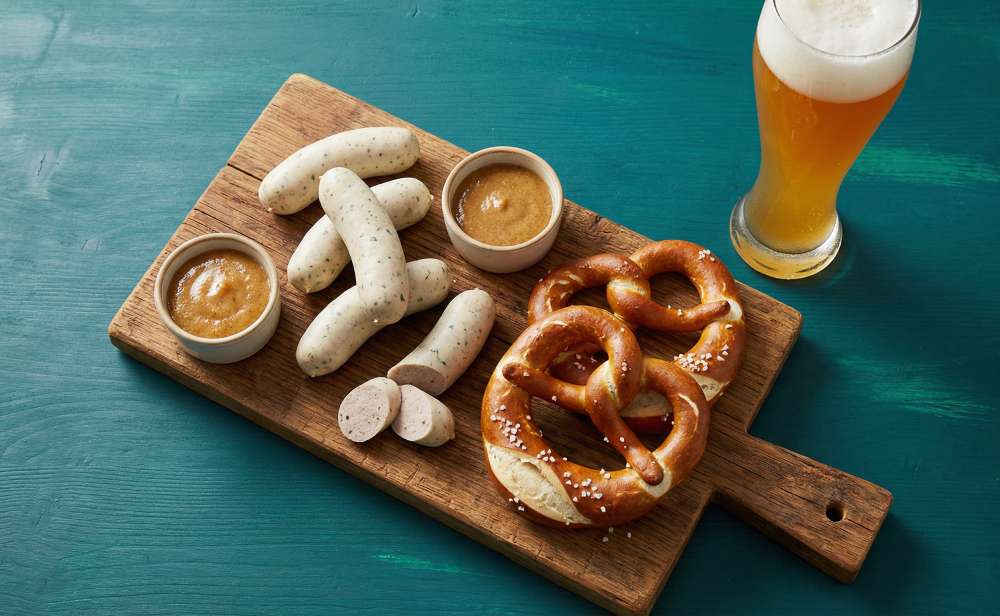
Classic Bavarian serving: Munich Weisswurst with sweet mustard, Brezeln and a wheat beer.
Gentle heating methods (what works at volume)
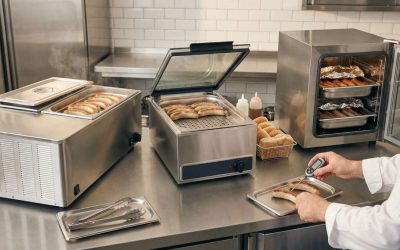
The most reliable way to serve Munich Weisswurst at volume is to choose a method that is calm, repeatable, and easy to train. In most trade kitchens, controlled hot-water heating (hot but not boiling) or steaming is the practical answer. The objective is consistent internal heat without stressing the casing or washing out flavour.
When choosing a method, think operationally:
- Can it be executed the same way by different team members?
- Can it handle peak volume without shortcuts?
- Does it produce consistent texture and presentation?
If the process depends on “someone who knows how to do it”, it will break under Saturday pressure. Munich Weisswurst succeeds when the method is standardised.
Temperature control and hot holding
If you hot-hold, you need a rule-based approach. UK expectations for hot holding are clear: food should be held at 63°C or above, with limited allowances when it is displayed below that temperature for short periods, managed in a controlled way. In practice, that means using equipment that can hold temperature reliably, probing when needed, and rotating batches so product does not sit too long.
For Weisswurst, quality and safety interact. Overholding can dry the sausage and dull the eating experience; underholding increases compliance risk. The trade-friendly middle ground is typically small-batch heating to demand, with short, controlled holding periods and clear batch rotation.
Workflow: mise en place that protects margin
A dependable Weisswurst workflow is built around planned defrosting and disciplined portioning. Defrost only what you expect to sell, heat in batches aligned to demand, and plate to a standard that is easy to repeat. Once you define the plate build, you reduce waste and protect margin by preventing portion creep—especially with mustard, bread/pretzel, and sides.
A workable service pattern is:
- Forecast weekend volume and defrost accordingly
- Batch heat at service start and top up in small batches
- Plate to a fixed build (e.g., 2 sausages per plate)
- Keep add-ons explicit and priced
- Rotate batches; do not “mix old and new” without control
Menu and usage ideas that sell (pubs, caterers, retail)
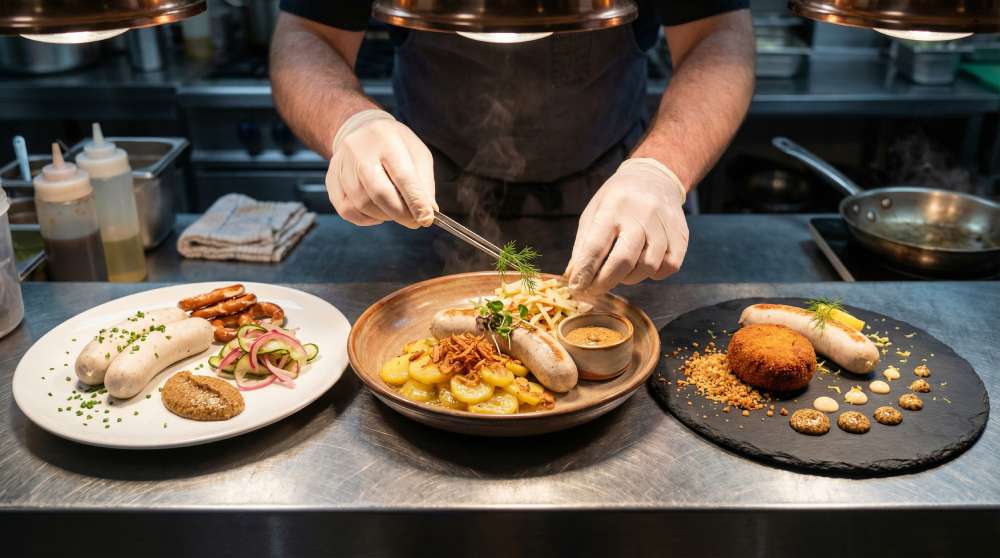
Service-ready Munich Weisswurst: three plated formats finished by a chef on the kitchen pass.
Classic Bavarian breakfast build
The classic build is commercially strong because it is instantly understandable. Two Munich Weisswurst, sweet mustard, pretzel (or pretzel roll), and a crisp side such as radish or cucumber keeps the plate clean and recognisable. If you want the dish to feel premium, precision matters more than complexity: neat mustard portions, consistent plating, and a side that adds freshness without dominating the sausage.
Modern brunch plates
Modern brunch applications are where Munich Weisswurst can become a repeat seller, especially when presented as a board or structured brunch plate with clear add-ons. A Weisswurst brunch board is often the simplest commercial win: it looks generous, it photographs well, and it supports profitable upgrades.
Options that typically work:
- Brunch board with mustard duo/trio, pretzel bites, pickles, herb salad
- Weisswurst with warm potato salad base and restrained mustard dressing
- “Lighter” plate with one sausage, egg, and salad to give a lower entry price
The key is to keep the offer coherent and easy to explain. Customers should understand what they are ordering within five seconds.
Biergarten sharing boards
Sharing boards convert story into spend. A “Biergarten board for two” can be designed around a fixed number of sausages, a fixed bread component, and a tight set of accompaniments. The profit comes from a visible add-on ladder—extra sausages, extra pretzels, upgraded mustard set, and beverage pairing—rather than informal “extras”.
Retail and deli: themed packs and counter prompts
For retail marketing and content-led merchandising, make the ritual easy. A “Bavarian breakfast kit” concept is simple to communicate and naturally supports cross-sell items. A short prompt such as “gently heat—don’t boil” helps prevent the most common home-prep error and protects the product experience, which in turn protects repeat purchase.
Common mistakes (and how to prevent them)
Boiling, overholding, and casing split
The most common operational failure is boiling hard or overheating. That can stress the casing, degrade texture, and make the sausage look less premium on the plate. Overholding then finishes the damage by drying it out. Prevention is straightforward: standardise gentle heating, batch to demand, and keep holding periods controlled.
Portion creep and silent margin loss
Munich Weisswurst tends to be served with items that are easy to over-serve. Mustard portions drift, pretzel/bread spec changes, and “extra sausage” becomes informal. The fix is to define a plating spec and stick to it. Keep add-ons explicit and priced so your margin is earned intentionally, not given away accidentally.
“German-themed” without a coherent offer
Weisswurst usually sells better as part of a coherent cluster—Bavarian breakfast, weekend brunch board, Oktoberfest feature—rather than a single isolated menu item. Coherence reduces ordering hesitation, simplifies staff explanation, and makes marketing content easier to produce and reuse.
Buyer checklist for Munich Weisswurst
Spec checks
Buyers should be able to request a spec sheet and immediately see the operational and commercial essentials. That includes unit weights, pack format, ingredients and allergens, casing type, storage conditions, and heating guidance. If any of those are unclear, execution risk increases.
A quick spec checklist:
- Unit weight and count per pack (supports portion costing)
- Ingredients and allergen declaration
- Casing type and heating method guidance
- Storage and defrosting instructions
- Shelf life and any handling constraints
Kitchen checks
Before listing, run a realistic trial using your intended heating method and your actual workflow. The question is not “does it taste good?” but “does it perform reliably in service?”
Kitchen checks that matter:
- Casing integrity after heating and brief holding
- Texture and juiciness after a realistic service window
- Team repeatability (not reliant on one person)
- Holding approach is workable and controlled in your equipment
Commercial checks
Finally, cost the whole offer and build a small selling system around it. Munich Weisswurst performs best when the plate build is fixed and the add-ons are structured.
Commercial checks to lock in:
- Portion-cost model including sides and labour minutes
- Standard plate build (e.g., 2 sausages)
- Add-on ladder with prices (extra sausage, mustard flight, pretzel basket)
- Placement strategy (brunch, seasonal feature, catering, retail bundle)
This is what turns Munich Weisswurst from a “nice idea” into a dependable, profitable feature in 2026.
Frequently Asked Questions
Yes, but quality depends on discipline. Use equipment that reliably holds at safe temperature, keep holding periods short, rotate batches, and avoid repeated reheating. In practice, Munich Weisswurst performs best when you heat in small batches to demand rather than holding large quantities for long periods.
A product page gives you a stable landing page that can rank for trade-intent searches (e.g., “Munich Weisswurst UK”, “Weisswurst wholesale UK”) and provides a destination for internal links from recipes, seasonal posts, and buyer guides. It also helps trade customers quickly find key details—pack format, usage ideas, and handling guidance—reducing friction and increasing enquiry quality.
Start with a fixed build and cost it end-to-end: sausage portion (e.g., 2 × 80g), mustard portion, bread/pretzel component, side, and labour minutes. Then add a small allowance for waste if demand is variable. Price from your target GP and protect it with portion control. The common mistake is costing only the sausage and letting sides and mustard drift.
All three can work. The most reliable methods in trade kitchens are a controlled hot-water bath (hot but not boiling) or steam/combi-steam, because they heat evenly and reduce casing stress. Choose the method your team can execute consistently during peak service, then standardise batch size and timing.
Allergens depend on recipe and site controls, so always verify the supplier documentation. Some Weisswurst specs may include allergens such as milk/lactose and/or spice components linked to mustard or celery. The practical rule is simple: use the supplier’s declared allergen list as your reference for menu labelling and staff guidance.
Munich Weisswurst is a mild Bavarian “white sausage” traditionally served for breakfast or late morning. It is typically gently heated rather than grilled or heavily browned. Bratwurst is usually designed for grilling or pan-frying and tends to be more robust in flavour and texture, while Frankfurters/hotdogs are commonly smoked or cooked and are often served hot-held with a firmer bite. The key difference is the delicate texture and service method of Munich Weisswurst.
Ask for a proper spec sheet and check: unit weight/pack format, ingredients and allergens, casing type, storage and defrosting instructions, and recommended heating method. Then run a realistic kitchen trial: heat as you intend to serve, hold briefly as in service, and assess casing integrity, texture, and presentation. The right spec is the one that performs under your conditions.
For most pub and café-style brunch offers, 2 sausages is the most recognisable and satisfying portion and supports a premium price point. A 1-sausage plate can work as an entry-price option or as part of a larger breakfast mix, but it needs a well-costed build so it doesn’t become poor value or a margin leak.
The strongest “customer-understands-it” combination is pretzels + sweet mustard, because it reads as authentic and is easy to explain. Potato salad works well for a more filling brunch plate; pickles, radish, and cucumber add freshness and cut through richness. A light slaw can work, but keep it restrained so it doesn’t overpower the mild sausage.
Boiling can stress the casing, increase splitting, and push out moisture and fat, which can make the sausage taste flatter and feel drier. It can also make service inconsistent because one batch looks perfect while the next looks “blown” or tired. Gentle heating protects both presentation and eating quality.
Conclusion
The Munich Weisswurst can be a commercially sensible speciality for UK trade in 2026 because it is instantly recognisable, easy to explain to customers, and straightforward to build into a profitable “occasion” offer—especially at brunch, on weekend features, and for themed events. It also merchandises well: the product naturally sits alongside high-margin companions such as sweet mustard, pretzels, pickles, and (where appropriate) beer pairings. For buyers, that means you are not relying on sausage margin alone; you are building a plate or bundle that can deliver a healthier overall contribution per sale.
The formula that makes it work is not complicated, but it does require discipline. Start with a clear spec and a supplier who can provide consistent weights, ingredients/allergen information, casing detail, and handling guidance. In the kitchen, treat Weisswurst as its own category: gently heat rather than boil, avoid rough agitation, and keep hot holding tight and controlled. From a commercial standpoint, lock the portion standard (most commonly two sausages per plate), cost the full build including sides and labour minutes, and then price it with a sensible add-on ladder so the upsell is explicit rather than accidental.
Finally, position it intelligently. Munich Weisswurst performs best when it is part of a coherent offer—“Bavarian breakfast”, “Biergarten board”, “Oktoberfest weekend special”—rather than a lonely menu outlier. That clarity improves buyer confidence, reduces staff explanation time, and makes marketing content far easier to produce and reuse across web, socials, and trade outreach.
If you want, The Sausage Haüs can share a trade-ready serving build for Munich Weisswurst (portion standards, suggested sides, and a simple service workflow), so your kitchen team can execute consistently from day one and your buyers can cost it accurately before committing to volume.
About Sausage Haüs
The Sausage Haüs supplies authentic German sausages for UK wholesale and foodservice, designed for consistent handling and strong customer appeal. Our range is produced in Germany with heritage expertise by Remagen and distributed in the UK by Baird Foods, helping pubs, caterers, retailers, and wholesalers serve genuine German specialities with confidence.