This guide and recipe shows how to build a loaded hotdog platter that works in two scenarios: a consistent pub serve and an easy, high-impact board for home. It covers the build spec (cheese sauce, pickles, crunchy toppings), practical holding notes, and the small details that protect texture and margin.
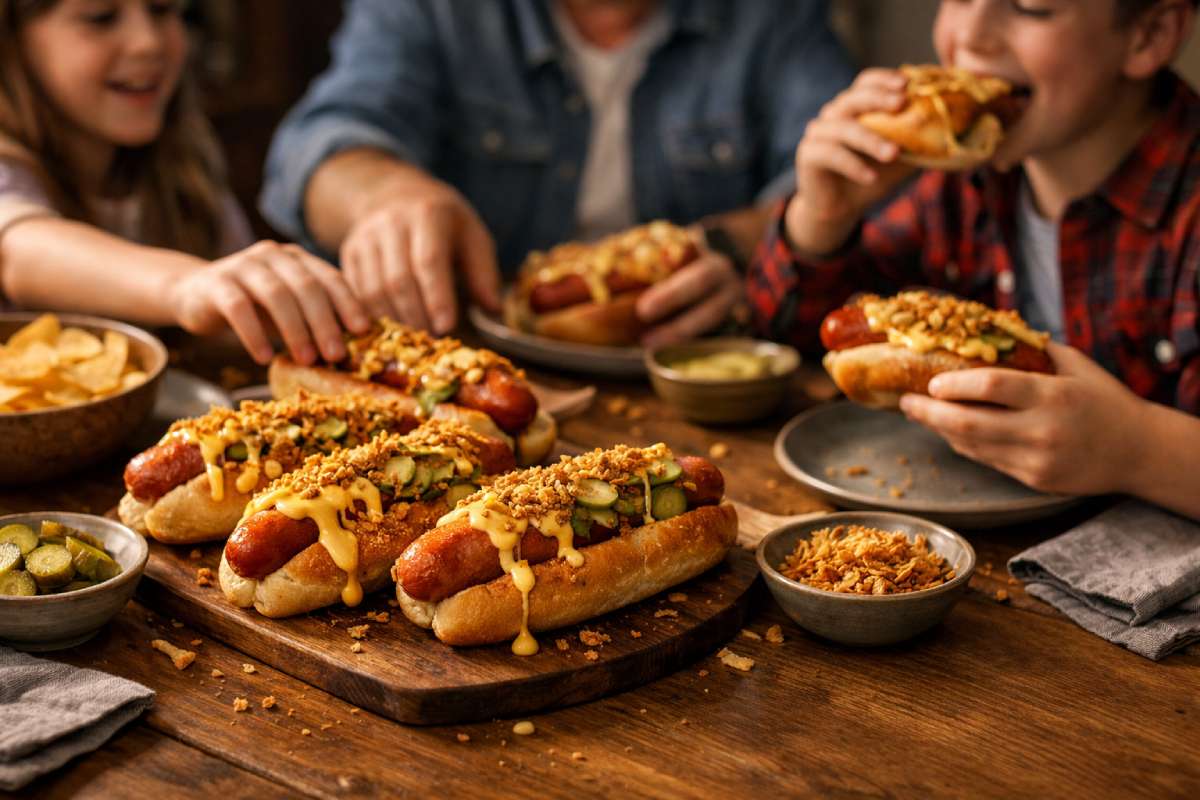
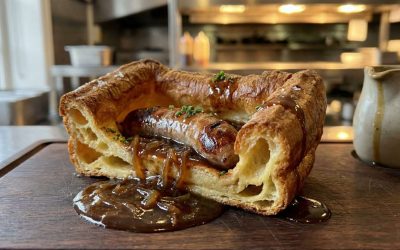
Loaded hotdog platter, pub-style at home: smoked hotdogs with cheese sauce, pickles and crispy onions—served for sharing.
Introduction
A well-executed loaded hotdog platter is not complicated, but it is unforgiving. If the bun is soft, the cheese sauce is too thin, or the toppings go soggy, the whole serve feels messy in the wrong way. Done properly, it delivers exactly what UK customers want from a pub-style loaded hotdog platter: big flavour, clear value, and a plate that looks generous without being wasteful.
This recipe is built around The Sausage Haüs smoked hot dog format and presented as a hotdog platter for sharing—multiple loaded dogs on a board with bowls of pickles, crispy onions and extra sauce for fast service or family-style eating. The key is treating it like a “system”: a simple spec for sauce consistency, a repeatable topping order, and basic food-safety discipline (hot holding, clean utensils, allergen awareness).
You will see two setups in the full post: one designed for pubs (speed, portion control, predictable hold time), and one designed for loaded hotdogs at home (minimal kit, maximum impact). The Sausage Haüs range is produced by Remagen (Germany) and distributed in the UK by Baird Foods and is available at Farmfoods and Costco.
Key Takeaways
- A loaded hotdog platter succeeds or fails on texture: toasted buns, thick cheese sauce, and toppings applied in the right order to stay crisp.
- For pubs, write a simple build spec (bun, sausage, sauce weight, pickle portion, crispy onion portion) to protect consistency, portion cost, and margin.
- Keep the “wet” and “crunch” components separate until the last moment: pickles and crispy onion hotdog toppings should not sit under sauce during holding.
- A good cheese sauce hotdog needs sauce that coats rather than floods—too thin turns buns soggy and makes the platter look untidy.
- Use pickles as the balance tool: acidity cuts richness and keeps a loaded hotdog platter feeling punchy rather than heavy.
- In service, manage hold time with common sense food safety controls: hot food hot, clean utensils for shared bowls, and clear allergen awareness for dairy/eggs in sauces.
- For home, the same system applies—just scale down: one board, simple bowls, and a “build as you eat” approach keeps the platter fun and crisp.
What this loaded hotdog platter is (and what it is not)
The core concept
A loaded hotdog platter is a share-style serve that puts the hotdog experience at the centre of the table, rather than plating one dog at a time. The build is intentionally familiar: smoked hot dogs in toasted buns, finished with cheese sauce, crispy onions and pickles. The point is not novelty or gimmicks. It is a repeatable, high-impact platter that looks generous, eats well, and stays structurally sound once it hits the table.
Where most loaded hotdogs fail is texture management. If the bun is soft, the sauce is too thin, or the toppings sit too long, you get sogginess and a messy plate in the wrong way. This loaded hotdog platter is designed to avoid that by treating the build like a simple system:
- Structure: toast the bun so it can carry sauce and toppings.
- Richness (controlled): cheese sauce should coat, not flood.
- Crunch (protected): crispy onions go on last, or stay in a bowl until serving.
- Balance: pickles provide acidity so the platter tastes punchy, not heavy.
Two scenarios, one build logic
You will see the same loaded hotdog platter presented in two setups, because the “best” version depends on context. The ingredients stay the same; what changes is how you stage components and when you assemble.
In a pub setting, the goal is speed and repeatability. You want a clean, consistent serve that can be executed quickly, with predictable holding and minimal last-second decisions. In a home setting, the goal is ease and enjoyment. You want minimal kit, family-style sharing, and a build approach that keeps crunch crisp while letting everyone customise.
In practical terms, the two scenarios differ like this:
- Pub scenario: faster assembly, tighter portioning, plating designed for pass/service, controlled holding.
- Home scenario: bowls on the table, “build-as-you-eat” optionality, less pressure on uniformity, more focus on fun.
Product fit — choosing the right hot dog format
Why smoked, straight, skinless sausages work best here
For a platter format, smoked, straight, skinless sausages are simply easier to serve well. They sit neatly in buns, they look consistent across the board, and they slice cleanly if you want to halve portions for sharing. Just as importantly, the smoke profile stands up to rich cheese sauce, so the sausage still reads as the hero rather than disappearing under toppings.
This is why the smoked hot dog style works particularly well as a loaded hotdog platter: a board is inherently topping-forward, so the base product needs enough flavour and presence to carry bold additions without losing definition.
When to use each Sausage Haüs option
This post stays focused on the loaded hotdog platter build, but readers will not always have the same pack to hand. The good news is the platter logic still works across the Sausage Haüs range—you simply adjust sauce weight, pickle level, and how you present the sausage (whole in a bun vs sliced for sharing).
As a rule: the more rich, smoky, or spicy the sausage is, the more you should lean on pickles/acid and keep the cheese sauce controlled. The milder the sausage, the more freedom you have with heavier toppings.
Here is a quick decision guide:
- Jumbo Pork Hotdogs (ideal): the cleanest choice for a signature loaded hotdog platter. They sit straight in the bun, hold up under cheese sauce, and still taste like the hero once toppings go on.
- Cheese Frankfurter: very workable, but richer by design. Keep the cheese sauce slightly lighter and rely more on pickles (and maybe a little mustard) for balance so the platter does not eat “too heavy”.
- Bacon Frankfurter: a strong option when you want extra smoky depth without increasing heat. Because it already brings savoury intensity, use a tidier cheese layer and a generous pickle portion to keep it punchy.
- Chilli Beef Frankfurter: best when you want the platter to feel bold and modern. Keep the toppings clean: pickles and crispy onions work well, but avoid overloading with multiple rich sauces—one main sauce plus acid is usually enough.
- Bockwurst: mild, smooth, and very forgiving—ideal for family-style platters and for guests who prefer less spice. Because it is gentler, you can be slightly more generous with cheese sauce, but still finish with crunch and pickles so it does not taste flat.
- Bratwurst: better as a “sausage platter” variant rather than a strict hotdog build. Brown it, slice it, and serve alongside buns (or rolls), mustard, pickles and crispy onions. This keeps the eating experience coherent and avoids forcing a bratwurst into a hotdog shape.
If you want the platter to read instantly as pub-style loaded hotdogs, Jumbo Pork Hotdogs remain the most straightforward route. If you want to vary the flavour profile, swap in Bacon Frankfurter, Chilli Beef Frankfurter, Cheese Frankfurter, or Bockwurst—but protect the same fundamentals: controlled sauce, crunch added late, and enough pickles to keep the whole loaded hotdog platter balanced.
Build spec (components, portions, and the order that protects texture)
Components checklist (platter-level)
A reliable loaded hotdog platter does not need a long shopping list. It needs a short list where every component has a clear job. When platters fail, it is usually because one element is missing (no acidity), added too early (crunch goes soft), or applied without control (sauce floods the bun). If you keep the component roles in mind, the platter stays “pub-style” in the good way—generous, punchy, and structured.
At platter level, the core components are:
- Buns: structure and warmth. Toasting is what stops the base going soggy once sauce hits.
- Sausages: the hero. Use a smoked, straight format if you want the cleanest, most consistent build.
- Cheese sauce: the richness cue. It should coat and cling, not run like a thin gravy.
- Crispy onions: crunch and aroma. They are also the “freshness” signal on a rich board.
- Pickles/gherkin slices: acidity and balance. They prevent the platter eating heavy and keep flavours sharp.
Then you have optional support items. These are not essential, but they help you tailor the platter to pubs or home serving without changing the core build:
- Mustard: adds sharpness and cuts richness (particularly helpful with cheese-heavy builds).
- Extra pickles / Sauerkraut / extra crispy onions: best served in bowls so people can customise and crunch stays crisp.
- Side chips: adds “pub plate” value, but only works if you can keep them crisp and properly seasoned.
Portion logic (pub vs home)
You do not need the full recipe card here, but you do need portion intent. A loaded hotdog platter feels generous when portions are deliberate, not random. In pub service, portioning protects portion cost and consistency. At home, portioning is more about making sure the board feeds everyone without running short.
A simple way to think about it:
- Pub platter: define portions per hot dog (bun, sausage, cheese sauce, pickles, crispy onions) and define what “one platter” includes (number of hot dogs plus any sides). This keeps output consistent and makes service predictable.
- Home platter: give a “per person” expectation and keep bowls on the table for refills. The easiest home win is separating toppings so everyone builds to taste.
If you want the platter to photograph well (and eat well), keep “extra” components in small bowls rather than piling everything onto the buns. It looks better, it keeps textures cleaner, and it makes the platter feel more premium without adding complexity.
Assembly order (the non-negotiable sequence)
With a loaded hotdog platter, the sequence matters more than the ingredient list. You can have excellent ingredients and still end up with soggy buns if you assemble in the wrong order. The build should protect crispness and keep crunch as the final note.
Use this sequence as the standard:
- Toast the bun (structure first).
- Place the hot sausage (heat and shape in place).
- Add cheese sauce—controlled (coat, do not flood).
- Add pickles (or serve them in a bowl if you need any holding time).
- Finish with crispy onions last (always last, or they soften).
A practical rule that helps both pubs and home cooks: anything “wet” goes on before anything “crunchy”, and anything “crunchy” goes on at the last possible moment. If you follow that, your loaded hotdog platter stays appetising, the buns hold their structure, and the final bite still has lift.
Two scenario setups (pub vs home)
Pub scenario — service-ready platter setup
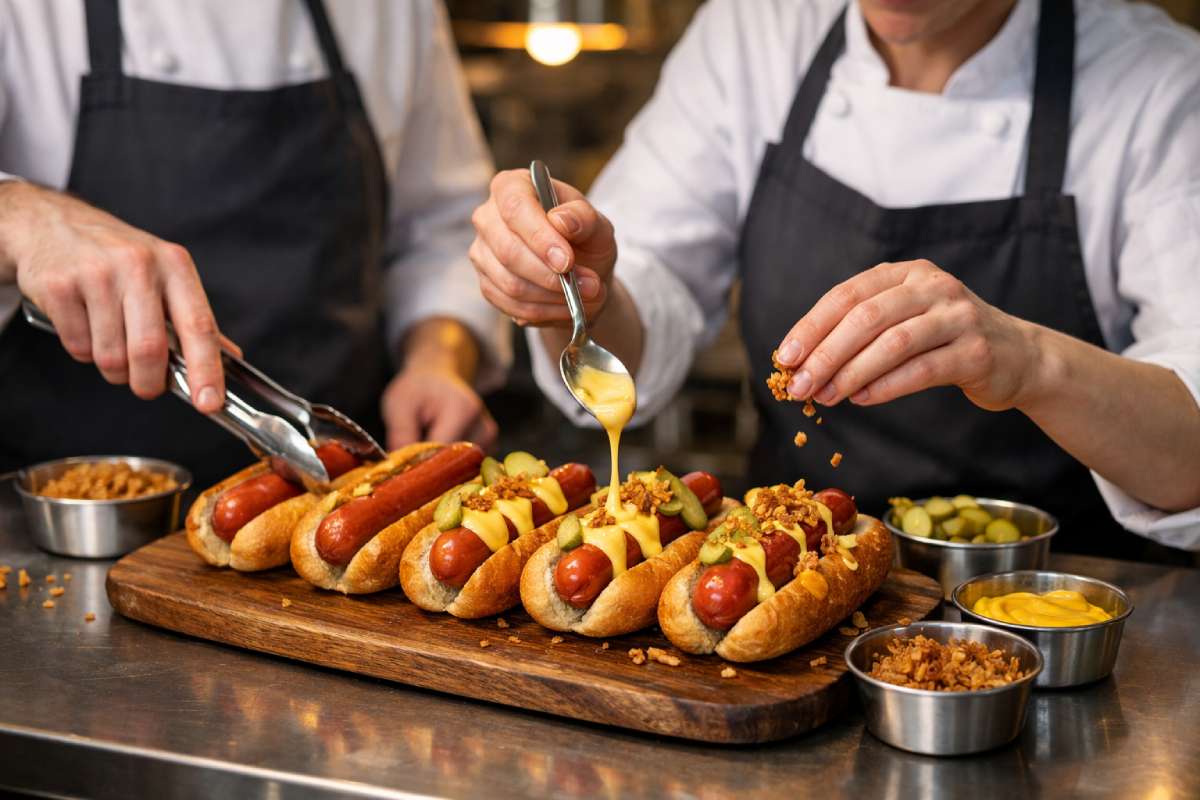
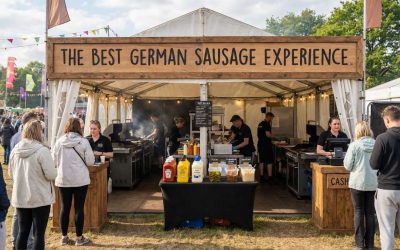
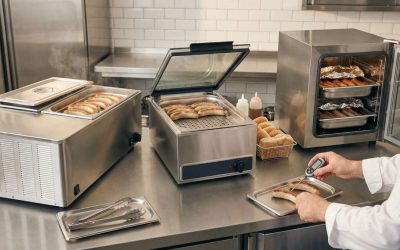
Loaded hotdog platter, service-ready: chefs finish hotdogs with cheese sauce, pickles and crispy onions on the pass.
A pub loaded hotdog platter needs to be faster than it looks. The goal is clean plating, repeatability, and a build that survives the walk from pass to table without collapsing. That means you are not “making hotdogs”; you are running a simple service system: warm buns with structure, hot sausages held correctly, cheese sauce held gently, and toppings staged so crunch and acidity are added at the right moment.
In practice, a reliable pub setup looks like this:
- Buns: pre-toast in batches, then hold warm briefly without steaming. If buns soften, the platter loses structure quickly.
- Sausages and cheese sauce: hold hot components hot, but avoid aggressive heat. Overheating can dry sausages and can cause cheese sauce to split or thicken excessively.
- Toppings: keep “wet” and “dry” separate until the pass. Pickles (wet) and crispy onions (dry) should not sit together or under sauce during holding.
- Plating layout: use a board or large plate, line up the hotdogs consistently, and consider small bowls for extra pickles and crispy onions. Bowls reduce mess on the bun and allow customers to customise.
A good rule for pubs is to build for speed without building too early. Assemble close to service, keep toppings staged, and use the same assembly order every time so the loaded hotdog platter looks consistent across covers.
Home scenario — family table platter setup
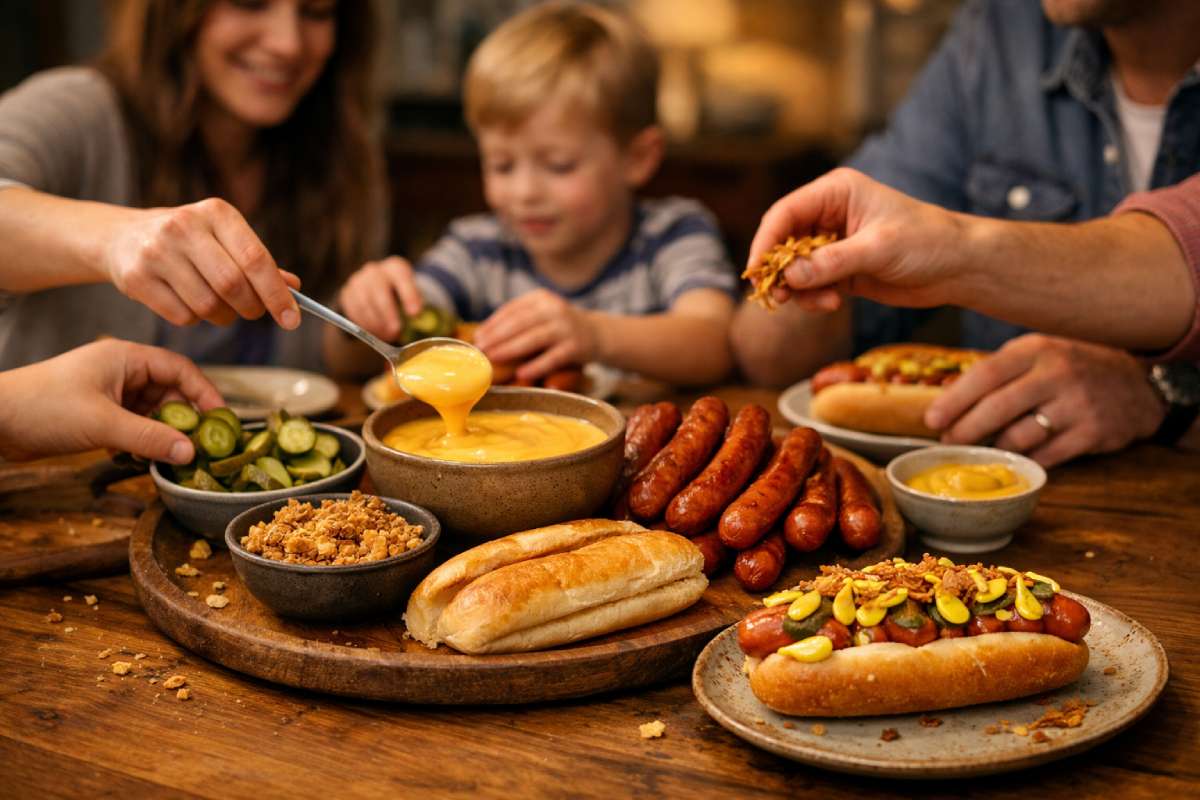
Loaded hotdog platter, family-style: everyone builds their own hotdog with cheese sauce, pickles and crispy onions.
At home, the loaded hotdog platter is about maximum enjoyment with minimal stress. You do not need to chase perfect uniformity; you want everything hot, crisp, and fun to eat. The easiest way to achieve that is to cook and toast close to serving, then let the table do the work.
A calm home setup is:
- Cook sausages and toast buns as late as you can so everything hits the table warm and structured.
- Put cheese sauce in a warm jug or bowl so it stays pourable without constant reheating.
- Keep pickles and crispy onions in separate bowls to protect crunch and avoid sogginess.
- Let everyone assemble their own. It keeps textures crisp and turns a simple dinner into something interactive.
This “build-as-you-eat” approach is often the most reliable way to keep a home loaded hotdog platter looking appetising rather than collapsing into a saucy pile.
Common mistakes and fixes (specific to loaded hotdogs)
Soggy buns and “flat” flavour
When a loaded hotdog platter disappoints, the bun is usually the first failure point. Buns go soggy when they are not toasted, when sauce is too thin, or when you assemble too early and let steam and moisture soak into the bread. The other common problem is “flat” flavour—lots of richness, but nothing sharp to lift it.
To prevent both issues:
- Toast the buns for structure; warm bread is not the same as toasted bread.
- Keep cheese sauce thick enough to coat; a thin sauce behaves like liquid and floods the bun.
- Control sauce quantity—enough for flavour, not so much it turns into soup.
- Add pickles for lift (or serve them in a bowl if you need any holding time). Acidity is what makes the platter taste finished.
Cheese sauce problems (too thin, split, or claggy)
Cheese sauce is the visual cue that makes the platter feel “pub-style”, but it can also be the most fragile element. Too thin and it floods the bun; too hot or held too long and it can split; overheated or reduced too far and it becomes claggy and heavy.
The causes are usually operational rather than ingredient-related:
- Heat that is too high for too long
- Sauce held too long without attention to consistency
- A sauce that starts at the wrong thickness for a hotdog build
Practical fixes are simple and restrained:
- Use gentle heat and keep the sauce warm rather than boiling hot.
- Whisk regularly to maintain a smooth texture.
- Adjust consistency carefully: add small amounts of liquid if it becomes too thick, and avoid “big splashes” that suddenly thin it out.
- If holding, aim for “warm and pourable” rather than “piping hot”.
Crunch that turns soft
Crispy onions are supposed to provide the final textural lift. They turn soft when they sit in steam, when they contact sauce too early, or when they are stored uncovered in a humid service area.
The fix is mostly sequencing and staging:
- Add crispy onions last, always.
- If you are holding or serving family-style, keep crispy onions in a separate bowl.
- Keep them dry and covered until service, then finish the hotdogs at the last moment.
If you protect crunch, your loaded hotdog platter stays satisfying to the last bite.
Food safety and allergen notes (restrained, practical)
Hot holding and cross-contamination basics
This post is not a compliance manual, but a few high-level habits help reduce avoidable risk in both pub and home scenarios. Keep hot foods hot, avoid mixing cold pickles into hot pans, and use clean utensils for shared bowls and toppings. In a pub setting, treat toppings bowls like any other shared garnish: separate utensils, tidy service, and sensible replacement rather than “topping up” indefinitely. Always follow the cooking and storage instructions on pack.
Allergen awareness (especially for cheese sauce)
Cheese sauce typically contains dairy, and depending on how it is made it may also include mustard and/or egg ingredients. For pubs, ensure allergen information reflects your exact sauce spec and any toppings used. For home cooking, check ingredient labels and your recipe card ingredients before serving, particularly when cooking for guests with known allergies.
Buy them at Costco
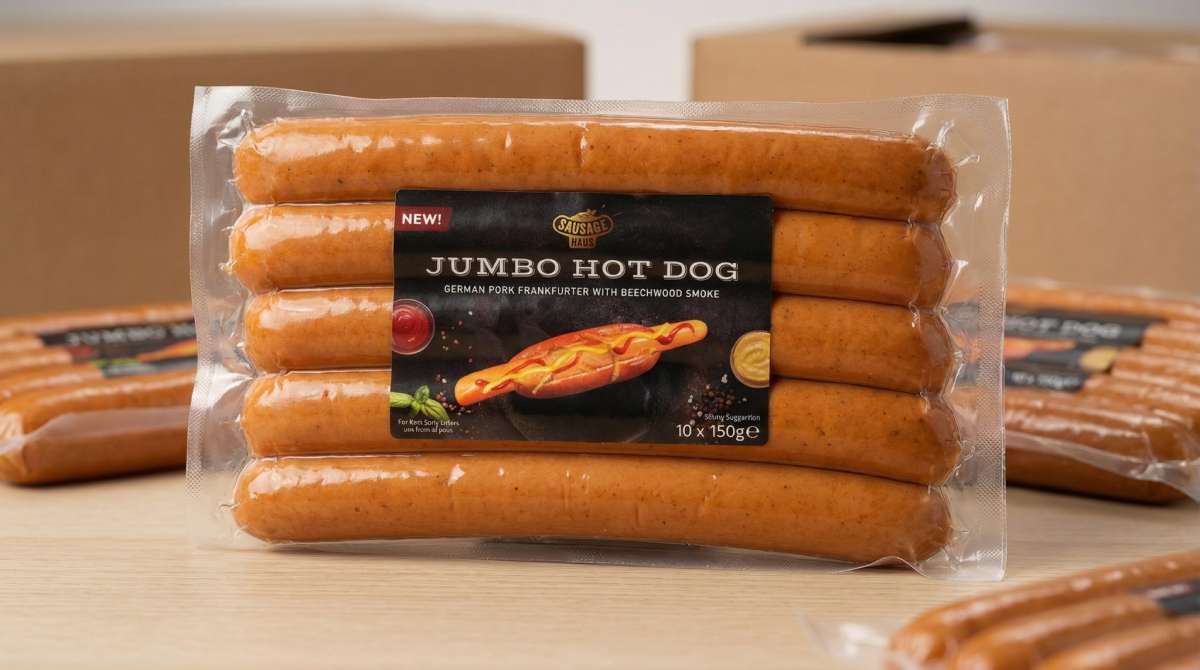
Sausage Haüs Jumbo Hot Dog – 10 x 150g pack (Costco format).
If you want to try a real-world example of this “spec-first” approach, start with Costco. Our Jumbo Pork Hotdogs are now stocked via Costco UK, which is about as close as retail gets to a stress test: the product has to deliver a consistent eating experience at scale, hit a commercial price point, and work for a broad customer base.
For foodservice buyers, this matters because it shows the same principle we use for bespoke German sausages: clarity on flavour, format, and value – then repeatable supply. If you want inspiration for how to serve them (and how customers actually like to eat them), read our In Under 60 seconds post.
Practical note: Costco availability and pricing can vary by warehouse and over time, so if you’re buying for an event or menu feature, it’s worth checking your local stock position in advance.
Loaded Hotdog Platter with Cheese Sauce, Crispy Onions & Pickles
Ingredients
Method
- Set a board or large serving plate on the counter. Put sliced pickles and crispy onions into separate bowls (this protects crunch). If serving mustard, put it in a small dish now.
- Cook the Jumbo Pork Hotdogs using your preferred method until hot through, then finish briefly for colour (pan-sear, grill, or oven finish all work). Keep them warm while you toast the buns and make the sauce.
- Slice buns and toast lightly. If you want the most “pub-style” result, butter the cut sides and toast in a pan until golden. The goal is warmth and light crisping so the buns hold up to sauce.
- In a small saucepan, melt butter over medium heat. Stir in flour and cook for 60–90 seconds (you want a pale, biscuit-like smell, not browning).
- Gradually whisk in the milk until smooth. Simmer gently for 2–3 minutes, whisking, until thickened.
- Turn the heat low and stir in grated cheese until melted. Add mustard (optional), then season with salt and pepper.
- Consistency check: it should coat a spoon and pour in a thick ribbon. If too thick, add a splash of milk; if too thin, simmer gently for another minute.
- Place each hotdog into a toasted bun. Spoon over cheese sauce (controlled—coat, don’t flood). Add pickles, then finish with crispy onions last.
- Arrange the four loaded hotdogs neatly on the board. Add bowls of extra pickles and crispy onions so people can top up. If you’re serving chips, pile them alongside in a separate section or a bowl to keep them crisp.
Frequently Asked Questions
Yes. You can pre-slice pickles, portion crispy onions into bowls, and prep buns. For best results, cook sausages and toast buns close to serving, and keep cheese sauce warm gently rather than boiling.
Toast buns for structure, keep cheese sauce thick enough to coat rather than flood, and avoid assembling too early. If you need any holding time, keep pickles and crispy onions in bowls until serving.
Consistency usually comes from a simple build spec (portion and topping order), staged mise en place, and assembling close to the pass. Keeping wet and dry toppings separate until plating helps protect texture and presentation.
It should be thick enough to cling and coat in a ribbon rather than run like thin gravy. If it is too thin, it floods the bun; if too thick, it can feel heavy and claggy.
Cheese sauce typically contains milk and may include mustard and/or egg depending on the recipe. In a pub setting, confirm your exact ingredients and toppings and handle shared bowls with clean utensils to reduce cross-contact.
The main issues are soggy buns (no toast, thin sauce, early assembly), sauce problems (overheated or held too long), and soft crunch (crispy onions added too early or stored poorly). The fixes are mostly about staging and sequence.
A loaded hotdog platter is a share-style board of hotdogs in buns with toppings served either already built or set out so people can assemble their own. The format is designed for impact and convenience—especially for pub tables or family dinners.
Toast bun → add hot sausage → spoon cheese sauce (controlled) → add pickles → finish with crispy onions last. This order protects crunch and keeps the bun from collapsing.
For the classic platter style, Jumbo Pork Hotdogs are the most straightforward option because they sit neatly in buns and stand up well to cheese sauce and toppings. Other Sausage Haüs sausages can work with small adjustments to balance and richness.
Pickles provide acidity, which cuts through rich sausage and cheese sauce and stops the platter tasting flat. They are one of the simplest ways to make pub-style hotdogs feel balanced.
Conclusion
A loaded hotdog platter works because it is simple, repeatable, and built around texture. Whether you are serving a pub table or feeding a family at home, the same principles apply: toast buns for structure, keep cheese sauce thick enough to coat (not flood), use pickles to add lift, and add crispy onions at the last possible moment so the crunch survives. When those details are in place, the platter looks generous, eats cleanly, and stays satisfying from the first bite to the last.
The rest is just staging. In pubs, that means a clear build spec, controlled holding, and toppings kept separate until the pass. At home, it means cooking and toasting close to serving, then letting everyone assemble from bowls so the board stays crisp and fun. The recipe card that follows will provide exact quantities and timings, but the outcome depends more on order and balance than on any single ingredient.
If you want to adapt the platter to different Sausage Haüs options—Bratwurst, Bacon Frankfurter, Cheese Frankfurter, Chilli Beef Frankfurter, Jumbo Pork Hotdogs or Bockwurst—the same logic still holds. Adjust richness with pickles and mustard, keep sauce controlled, and protect crunch. That is how a loaded hotdog platter stays “pub-style” without becoming messy or heavy.
About Sausage Haüs
Sausage Haüs is a modern German-sausage range designed for UK kitchens, from pubs and caterers to straightforward home cooking. The range is produced by Remagen (Germany) and distributed in the UK by Baird Foods, bringing familiar German-style favourites into practical, service-friendly formats.