If you have the 150g Jumbo Pork Hotdog from Costco and you run a small food business, speed and consistency matter more than fancy kit. This guide shows a simple, repeatable way to heat, hot-hold and serve these hotdogs in under 60 seconds at the counter, with a minimal station setup and three proven “builds” that work for food stalls, fish and chip shops, cafés and pubs. It also covers the key UK hot-holding basics (63°C and the two-hour allowance) so you can move quickly without guessing on safety.
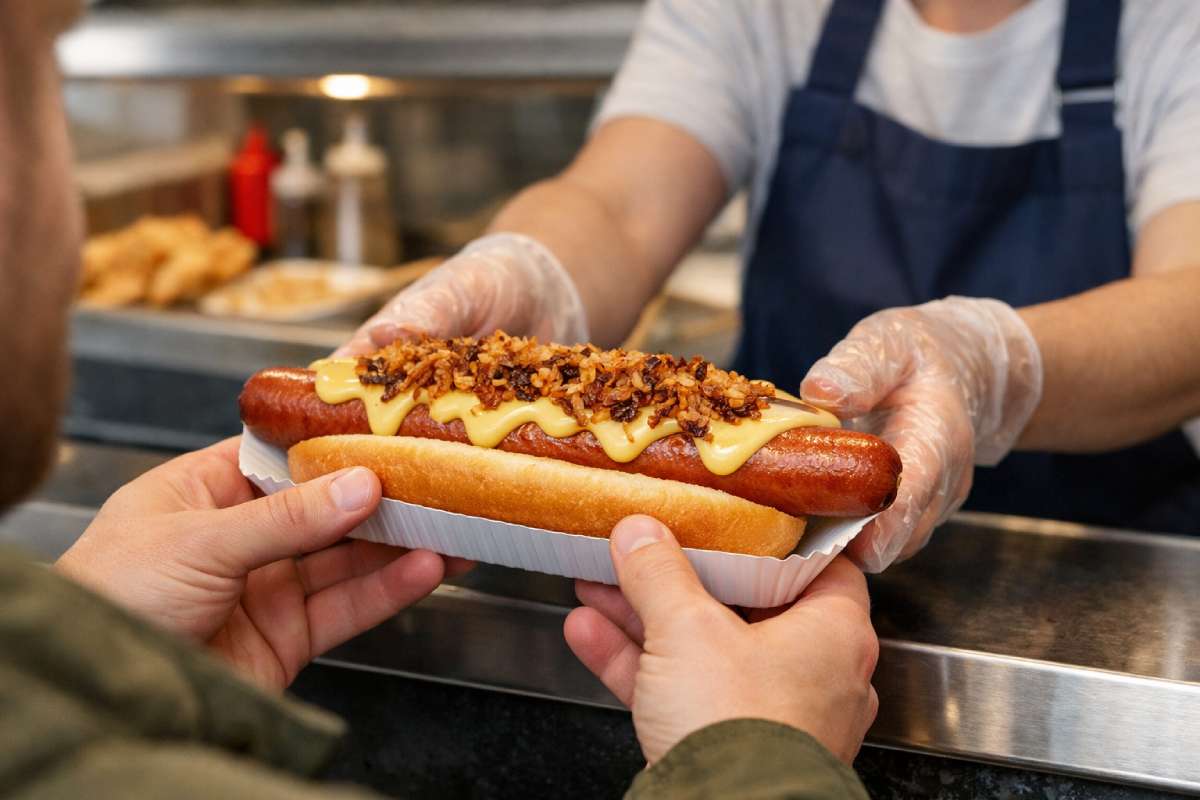
A fast-service “premium loaded” build: 150g Jumbo Pork Hotdog from Costco with cheese sauce and caramelised onions, served ready-to-go in a chippy.
Introduction
Costco is great for operators because you can restock fast, keep portions consistent, and avoid complicated procurement. The problem is that many takeaways and stalls treat hotdogs as an afterthought, which usually means slow service, split sausages, soggy buns, and unclear pricing.
The 150g Jumbo Pork Hotdog from Costco is big, premium, and filling. If you serve it the same way you serve everything else (ad hoc, one-by-one), it will slow your queue. If you treat it like a small “system” with a heat-through method, a holding method, and one default build, it becomes an easy add-on line that fits busy service.
This post is written for smaller operators who want a dependable hotdog offer that can be executed by anyone on shift, even at peak.
Key takeaways
- The 150g Jumbo Pork Hotdog from Costco is best served with a simple two-step workflow: heat-through first, then hot-hold for service speed.
- For UK compliance, hot food should be held at 63°C+; if that’s not possible, you can keep it below 63°C for up to two hours (once), then reheat until steaming hot, chill rapidly, or discard.
- Roller grills are primarily hot-holding and finishing equipment, not a primary “cook from cold” solution if you want consistent speed and texture.
- “Under 60 seconds” at the counter is achieved by limiting decisions: one default build, one premium upsell build, and toppings that are fast to apply (no messy assembly).
- A small station layout (buns + sauces + two toppings + tongs + probe thermometer) removes bottlenecks and makes staff training straightforward.
- Build a pricing ladder: classic (fast), chippy-friendly (familiar), premium loaded (visible upsell), so customers self-select without slowing the queue.
Who this guide is for (and why Costco is a smart source)
This guide is for operators who have a queue, limited space, and zero time for “cheffy” processes. If you are serving customers fast, the Jumbo Pork Hotdog from Costco can be a strong menu item – but only if you run it as a simple, repeatable station.
It is written specifically for:
- Food stalls and street food traders who need a Costco hotdog for food stalls that can be served consistently at pace
- Fish and chip shops that want a reliable add-on item – a hotdog menu for fish and chip shop that does not disrupt the fryer line
- Cafés and sandwich bars that want a hot handheld option that staff can execute with minimal training
- Pubs and clubs that need quick service for events and busy evenings
- Takeaways that want a “fast build” product that travels well and holds quality
Why the Jumbo Pork Hotdog from Costco makes sense for small operators is not branding – it is logistics and control:
- Predictable portioning – easier pricing, easier margin control, fewer inconsistencies between shifts
- Quick replenishment – when demand spikes, Costco-style purchasing can help you restock without complex ordering
- Simple station workflow – you can run a dedicated hotdog corner without slowing your main menu
- Repeatable customer experience – the same hotdog, the same build, the same result
If you want one sentence to guide decisions: treat the Jumbo Pork Hotdog from Costco like a small “system” and it becomes an easy seller, not a distraction.
Know what you’re serving – Sausage Haüs Jumbo Pork Hot Dog (Costco pack)
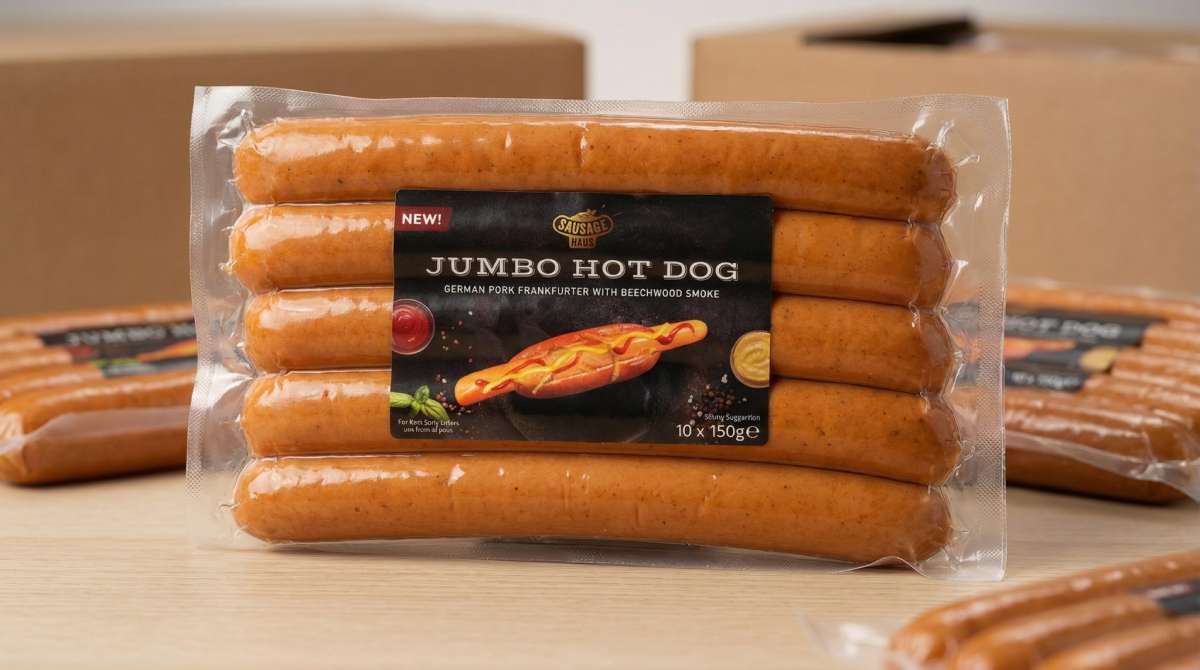
Sausage Haüs Jumbo Hot Dog – 10 x 150g pack (Costco format).
This post is focused on the Sausage Haüs Jumbo Pork Hot Dog – the 150g Costco pack. That matters because a 150g sausage behaves differently in service than smaller formats – it needs the right bun, the right heat-through method, and a holding setup that protects juiciness.
You may see the Sausage Haüs Jumbo Pork Hot Dog discussed in different weights elsewhere (for example, 100g and 150g). For this guide, keep it operationally clean:
- Assume the Costco product is the 150g format and standardise everything around that
- Build one menu spec around the 150g portion so staff are not improvising
- Choose a bun that matches the 150g size so it does not split, collapse, or look undersized
- Choose a holding method that keeps texture good during peak service
Practical note (important): check your pack label for exact handling instructions every time you open a new case. Storage temperatures, heating guidance, and any batch-specific notes always override generic advice.
If you want to strengthen SEO relevance without sounding forced, use your product naming consistently in body text: “Sausage Haüs hotdog from Costco”, “150g Jumbo Pork Hotdog from Costco”, and “Costco hotdog for food stalls”.
The “under 60 seconds” service system (the core promise)
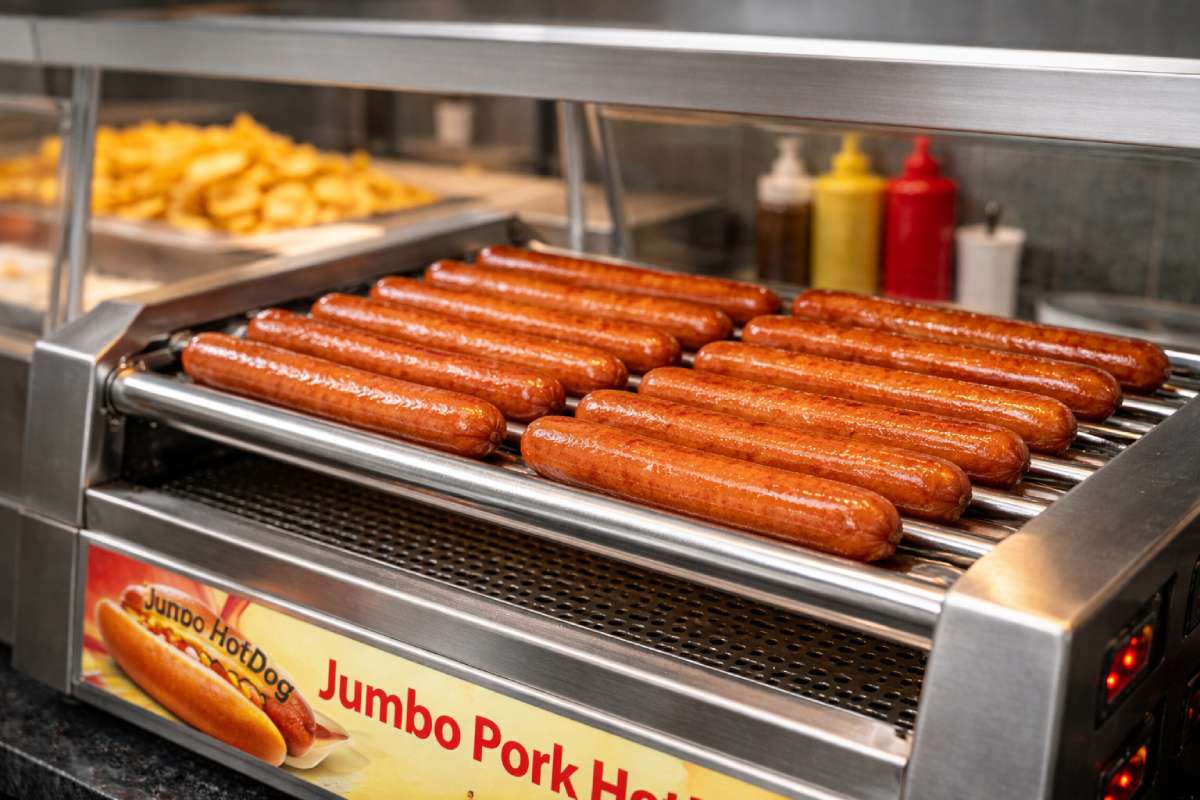
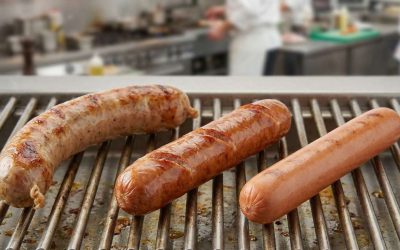
Roller grill hot holding in a fish and chip shop – 150g Jumbo Pork Hotdog from Costco ready for fast service.
“Under 60 seconds” is not about rushing customers. It is about removing friction so the Jumbo Pork Hotdog from Costco becomes a dependable fast-service item. The only way to do that is to separate prep from service.
Think in three layers: heat-through, hold, build. The customer only experiences the build.
1) Heat-through (prep step, done in batches)
Your first job is to make sure the Sausage Haüs hotdog from Costco is fully heated before it becomes “service stock”. Do not start from cold when the queue is already forming.
- Heat in small batches based on real demand (fast rotation beats long holding)
- Move heated hotdogs straight into your holding unit
- Avoid “half-ready” stock entering service
2) Hot-hold (protect speed and safety)
Hot-holding is what turns the Jumbo Pork Hotdog from Costco into a fast menu item. In UK practice, hot holding is typically managed around 63°C – which is why operators often search terms like hot holding 63°C hotdogs.
- Keep service stock hot and stable, so every order starts from “ready”
- Use a probe thermometer as part of routine checks
- If you use a roller grill, treat it as holding and finishing – many operators search this as roller grill hotdogs UK because it is a common setup for stalls and takeaways
3) Build (the only part that must be instant)
The “build” is where you win or lose the 60-second promise. If staff have to choose between six toppings and three sauces, speed disappears. Create a default build that is automatic, then one upsell build that is still fast.
To keep the Costco hotdog for food stalls genuinely fast:
- One default build that becomes your standard
- One premium build that is a clear upsell but still quick
- Fast toppings only (no messy, slow steps)
- Sauces in bottles (speed and portion control)
- Station layout within arm’s reach (buns, sauces, toppings, tongs, thermometer)
This approach is exactly what a hotdog menu for fish and chip shop needs: minimal decisions, predictable output, and no disruption to the main line. The result is a hotdog that sells consistently, looks professional, and can be served in under a minute even during peak.
Station layout (small counter, minimal kit)
To serve a Jumbo Pork Hotdog from Costco in under 60 seconds, your station has to remove movement and remove decisions. The simplest setup is a tight “U” layout where buns, hot holding, sauces, and toppings are all within one step. That is how a Costco hotdog for food stalls stays fast even when the queue builds.
Minimum kit that works for stalls, chippies, cafés, pubs, and takeaways:
- Buns (pre-sliced, stored within arm’s reach)
- Warm tray or bun warming solution (keeps buns soft without steaming them into sogginess)
- Hot holding unit (your “ready stock” zone for the 150g hotdogs)
- Sauces in squeezy bottles (portion control + speed)
- Toppings limited to 2–3 fast options (crispy onions, pickles, sauerkraut)
- Tongs (ideally one pair dedicated to hot holding)
- Probe thermometer + sanitiser wipes/spray (quick checks, defensible routine)
Practical setup tips (the small details that protect speed):
- Put hot holding closest to the bun area, not behind you
- Keep one default sauce in the “front position” so staff do not hesitate
- Pre-portion toppings or use shaker containers, so the Sausage Haüs hotdog from Costco gets the same finish every time
- Keep your station “clean by design” – fewer open tubs, fewer spoons, fewer slow steps
Heat method options (choose one)
The heat-through method is where you protect quality and consistency. The Jumbo Pork Hotdog from Costco is a 150g portion – if you try to wing it from cold during peak, you will lose time and you will lose texture. Choose one method, document it, train it.
Option A: Water bath / steamer for quick heat-through
This is the most reliable way to get consistent heat-through without drying out.
- Heat in small batches so stock rotates quickly
- Move heated hotdogs straight into hot holding so service stays fast
- Keep the method consistent across shifts so the hotdog menu for fish and chip shop does not change depending on who is working
Option B: Roller grill (treat it as holding and finishing, not cooking)
A roller grill is excellent for visibility and impulse sales, and many operators search for exactly this use case as roller grill hotdogs UK. The operational point is simple – do not treat it as the device that turns cold product into service-ready stock.
- Use the roller grill to present, keep hot, and finish appearance
- Start with properly heated product, then hold and present on the rollers
- This aligns with your own roller guidance and keeps your Jumbo Pork Hotdog from Costco line consistent
UK hot holding – the only rules you must not improvise
This is the part you do not “interpret”. Hot holding is regulated for a reason, and it is also where operators get caught out because the day is busy and people start guessing. If you want a fast service hotdog station that is also defensible, use the simple operator version below.
The simple operator version (63°C and the two-hour allowance)
- Target hot holding temperature: 63°C or above.
- If you cannot hold at 63°C+, you may keep food below 63°C for up to two hours, but only once.
- At the two-hour point, any remaining food must be handled safely – reheat until steaming hot and return to hot holding, or cool rapidly to 8°C or below, or discard depending on your procedures and what the guidance permits for your situation.
That is why people search “hot holding 63°C hotdogs” – it is the practical rule that keeps service compliant and consistent.
Probe thermometer practice (quick, defensible SOP)
A probe thermometer routine does not need to be complicated. It just needs to be consistent.
- At open: check one item from hot holding and record it (centre/thickest part)
- During service: spot-check at a sensible interval (for example each hour, and any time you suspect the unit is struggling)
- If below 63°C: start your two-hour timer or take immediate corrective action according to your process
- Keep the probe clean and disinfected between checks, and avoid cross-contamination
Executed properly, this gives you speed, consistency, and a paper trail that protects the business – while keeping the Jumbo Pork Hotdog from Costco genuinely easy to run in stalls, chippies, pubs, cafés, and takeaways.
Three builds that sell fast (with a pricing ladder)
With the Jumbo Pork Hotdog from Costco, speed comes from standardisation. You want one default build that anyone can execute, plus a clear upsell that feels worth paying for. This creates a simple pricing ladder that works for a Costco hotdog for food stalls, and it also fits neatly into a hotdog menu for fish and chip shop service.
A practical ladder that usually works:
- Base / Classic – lowest price, fastest build, highest throughput
- Mid-tier / Familiar – “chippy-friendly”, minimal extra cost, strong conversion
- Premium / Loaded – visible toppings, higher perceived value, best margin per sale
If you want extra topping inspiration without complicating your station, link to your toppings guide and treat it as “seasonal specials”, not core menu.
Build 1 – “Classic German” (fastest default)
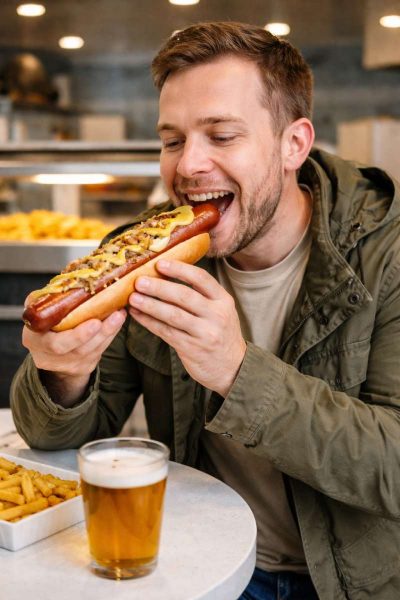
The “Classic German” fast-service build: 150g Jumbo Pork Hotdog from Costco with sauerkraut and mustard, eaten in a chippy.
This is the clean, fast default for the Jumbo Pork Hotdog from Costco. It looks authentic, it is quick to assemble, and it trains easily.
Core build:
- Mustard (one consistent mustard, bottle only)
- Sauerkraut (small, controlled portion; drained so it doesn’t flood the bun)
- Optional onions (use only if onions are already part of your station and fast to portion)
Operational notes:
- Keep it “German” by being restrained – speed and structure first.
- If you offer onions, choose a style that is quick and consistent to portion (crispy onions are often the fastest). Link to your onions guide for the “which onion for which setup” logic.
- If customers ask for variety, upsell Build 3 rather than letting staff improvise toppings.
Build 2 – “Chippy-friendly” (fits existing menu)
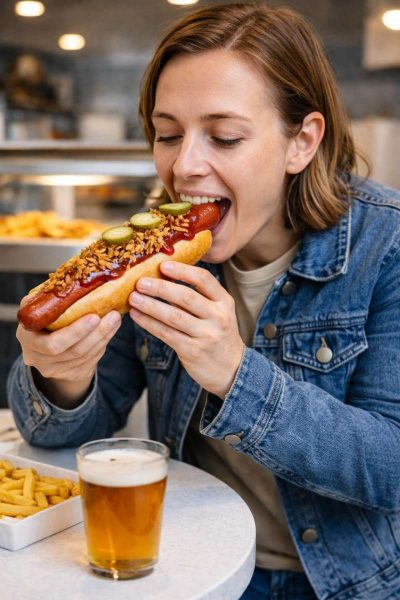
The “Chippy-friendly” build: 150g Jumbo Pork Hotdog from Costco with ketchup, crispy onions and gherkin slices, served for fast takeaway-style eating.
This version is designed to feel natural in a fish and chip shop – familiar flavours, very fast assembly, and easy bundling. If you are building a hotdog menu for fish and chip shop service, this is usually your volume seller.
Core build:
- Curry ketchup or mild sauce (fast, predictable, customer-friendly)
- Crispy onions (portionable, instant crunch, low mess)
- Optional gherkin slice (one slice only – keeps it fast and adds acidity)
How to bundle:
- Offer a simple bundle – “hotdog + chips” – with a small saving.
- Keep the bundle mechanics simple so the Jumbo Pork Hotdog from Costco does not create till complexity during peak.
Build 3 – “Premium Loaded” (clear upsell)
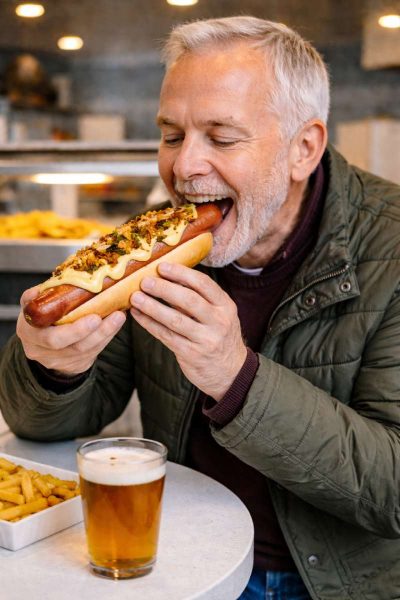
A premium, fast-service option: 150g Jumbo Pork Hotdog from Costco with cheese sauce, bacon bits and jalapeños, eaten in a chippy.
This is the upsell build that justifies a higher price because it looks and eats like a “proper dish” – but it still assembles fast. It is the ideal premium option for a Costco hotdog for food stalls because it sells itself visually.
Core build:
- Cheese sauce (controlled portion, spoon or bottle, not a ladle)
- Crispy onions (always last, so they stay crisp)
- Optional bacon bits and/or pickles (small portion; avoid anything that slows assembly)
Credibility link: point readers to your Loaded Pub Hotdog Recipe with Cheese Sauce & Crispy Onions as a proven pub-style format and service rationale.
(You can also link your loaded platter post if you want a “share-style” angle.)
Prep and holding SOP (copy/paste for staff)
This SOP is designed so any team member can run the Jumbo Pork Hotdog from Costco consistently. Keep it printed at the station. The goal is fast service, safe hot holding, and repeatable builds.
Opening checklist (5 minutes)
- Wash hands; sanitise the station and utensils
- Set up buns, sauces, and toppings in the agreed positions (no changes without manager approval)
- Switch on the hot holding unit and allow it to stabilise
- Prepare your first small batch for heat-through (do not over-produce)
- Check you have: tongs, clean probe thermometer, sanitiser wipes/spray, hold-time labels
Batch sizes (keep it simple)
- Start with a small service batch that you expect to sell quickly
- Replenish in small, frequent batches rather than loading the unit once
- The purpose is to protect texture and avoid long holding that can lead to dryness and wrinkling
Hold-time labelling (non-negotiable)
- Label the hot holding unit or tray with:
- Time placed into hot holding
- “Use by” time based on your two-hour allowance if you are not holding at 63°C+
- If you are holding correctly at 63°C+, keep a simple rotation rule anyway (first in, first out)
End-of-service decision rule (simple operator version)
Hot food should be held at 63°C or above. If that is not possible, it can be kept below 63°C for up to two hours, but only once. After two hours, food should be reheated until steaming hot and returned to hot holding, cooled quickly to 8°C or below, or discarded depending on what you are doing next.
Staff script:
- Probe-check one hotdog (centre/thickest part).
- If 63°C+ – continue service.
- If below 63°C – start a two-hour timer immediately and use within that window, or take corrective action.
- At the two-hour mark – do not guess. Follow the rule above.
Probe practice (quick and defensible):
- Use a clean and disinfected probe thermometer
- Insert into the centre/thickest part
- Spot-check during service and record if you keep logs
Common problems (and fixes)
The Jumbo Pork Hotdog from Costco is a 150g portion. Most issues come from either over-holding, inconsistent heat-through, or a messy build process that slows service. Fix the system, not the sausage.
Splitting, dryness, wrinkling
Common causes: overheating, long dry holding, or trying to “cook from cold” during peak.
Fixes:
- Heat-through in batches, then hot-hold consistently
- Do not leave hotdogs sitting for long periods without rotation
- If you use a roller grill, treat it as holding/finishing, not a raw cooking device – align with your roller grill hotdogs UK guidance and your own roller guide approach
- Reduce batch size if turnover is slower than expected
Soggy buns
Common causes: buns stored in humid conditions, too much wet topping, or sauce applied too early.
Fixes:
- Warm buns gently – avoid steaming
- Drain sauerkraut and keep wet toppings controlled
- Assemble in the right order: bun → hotdog → sauce → crisp toppings last
- Keep the default builds tight so the hotdog menu for fish and chip shop stays fast and clean
Sauce overload slowing service
Common causes: too many sauce choices, inconsistent portioning, messy application.
Fixes:
- Limit core sauces to 2–3 maximum
- Use bottles for speed and portion control
- Make one default sauce position so staff do not pause to decide
- For the premium build, pre-define the cheese sauce portion (spoon size or squeeze count)
Topping station bottlenecks
Common causes: too many topping tubs, lids, spoons, and “choices”.
Fixes:
- Keep it to 2–3 fast toppings during peak
- Use shaker containers for crispy onions
- Pre-portion pickles or use “one slice only” for speed
- Link extra options to your toppings guide as off-peak specials, not day-to-day workflow
Frequently Asked Questions
Offer a clear ladder: standard (one sauce, one topping) and premium (cheese sauce, crispy onions, pickles). The upsell works when the difference is visible and described simply.
Avoid long, uncovered holding at high heat. Hold at the correct temperature, keep batch sizes small, and rotate stock. Use a moist heat-through method (water bath/steamer) before hot holding when possible.
The product line is available in different weights, including 100g and 150g formats. For a Costco-focused post, state clearly which size you are serving and keep portions consistent for pricing and margin control.
Crispy onions, pickles/gherkins, and a two-sauce finish (mustard plus ketchup/curry ketchup). They are fast, visible, and customers understand them instantly.
What is the best “default build” for a fish and chip shop using the Jumbo Pork Hotdog from Costco?
Keep it familiar and fast: bun + hotdog + one sauce (ketchup or curry ketchup) + crispy onions. It reads like a proper hot snack, does not slow service, and pairs naturally with chips.
What is the fastest way to serve a Jumbo Pork Hotdog from Costco in a busy takeaway?
Hot food that is being held for service should be kept at 63°C or above. If it cannot be held at 63°C+, it can be kept below 63°C for up to two hours (once), then it must be handled safely (reheated properly, cooled rapidly, or discarded depending on your procedures).
Conclusion
If you want to add a reliable hot snack line without slowing your core menu, the Jumbo Pork Hotdog from Costco (150g) is a strong option when you treat it as a system. The difference between a hotdog that sells and a hotdog that becomes a problem is not the product; it is workflow.
Keep the service model simple: heat-through in small batches, hot-hold correctly, and run one default build plus one clear upsell. That is how you protect speed, keep quality consistent across shifts, and make staff training straightforward. It also helps you control margins because portioning and assembly stay predictable.
If you want to go further, build a small price ladder around the same 150g sausage and rotate one “special” topping set off-peak. For more ideas, link your toppings and onions guides from the builds section, and keep the core station unchanged during busy service. The goal is simple: a Jumbo Pork Hotdog from Costco that is easy to execute, easy to sell, and dependable under pressure.
About The Sausage Haüs
The Sausage Haüs is about proper German sausage culture, built for UK kitchens and real-world service. We focus on premium products that perform consistently, whether you are cooking at home or running a busy counter. Our range is made by Remagen in Germany and distributed in the UK by Baird Foods, so operators can access consistent quality with practical availability.
On The Sausage Haüs website you will find operator-friendly guides, serving ideas, and workflows that make service faster and more consistent – including hot holding, roller grill setups, toppings that sell, and menu formats that help you keep quality high during peak. If you are using the Jumbo Pork Hotdog from Costco, start with the “under 60 seconds” system in this post, then explore our related guides for toppings, onions, and loaded builds to expand your menu without adding complexity.