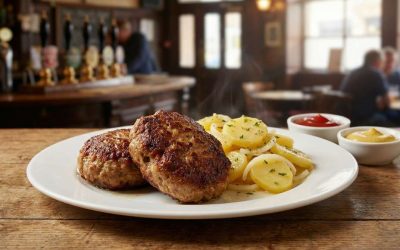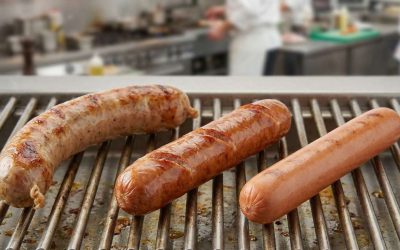
This guide explains why German hotdogs can be a strong, operationally reliable choice for UK festivals and Christmas markets, and how to select the right spec, menu format and service flow to protect quality, compliance and margin.
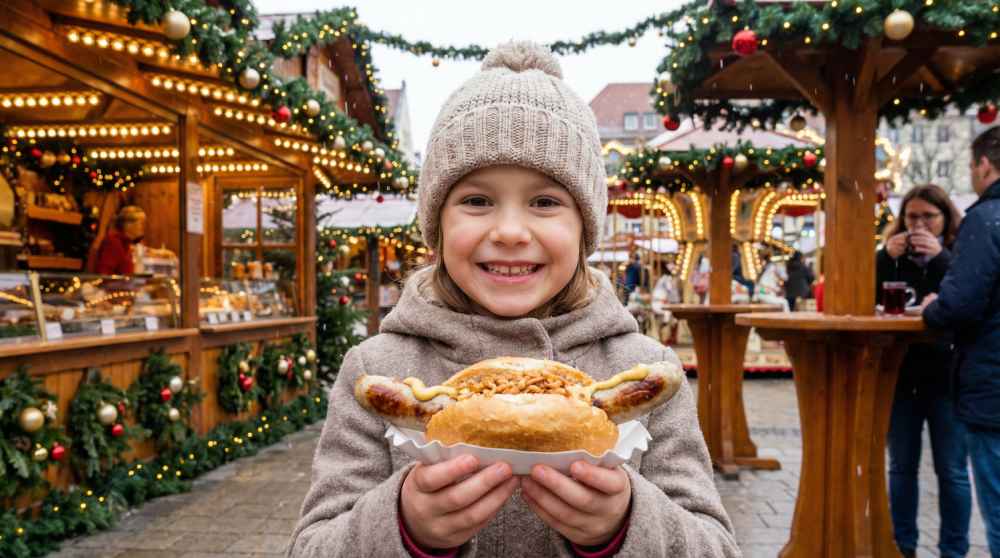
Christmas market classic: German hotdogs served warm with festive stall atmosphere.
Introduction
Festival and seasonal trading rewards one thing above all: predictable throughput. Whether you are operating a one-person trailer at a village event, a gazebo pitch at a weekend festival, or a larger unit at a city-centre Christmas market, your commercial outcome is rarely decided by “food creativity”. It is decided by how reliably you can convert footfall into served portions—hour after hour—without quality slipping and without your costs quietly leaking away.
In practice, your performance typically comes down to six operational variables:
- Queue conversion: how many people stay in line and place an order
- Speed of service: the time from order to handover
- Repeatable quality: customers receiving the same product every time, even at peak
- Waste control: what you throw away (overcooked batches, dried-out product, unused toppings)
- Portion discipline: keeping each serve consistent so pricing and margin stay true
- Compliance routine: hygiene, allergens, temperature control and documentation that are practical, not theatrical
That is exactly where German hotdogs can outperform more complex street-food formats. They offer high familiarity—customers understand the product instantly—while still carrying a premium cue if the sausage spec and build look “proper”. That combination matters commercially: it reduces decision friction at the till (faster ordering) and supports higher pricing without needing lengthy explanation.
Just as importantly, German hotdogs are operationally flexible. You can design them to work with a grill/plancha theatre approach, a controlled hot-hold approach, or a hybrid model. You can sell them as a single hero item with two add-ons, or as a three-build menu designed for different customer price points. You can also align them naturally to winter trading (aroma, warmth, comforting toppings) without adding complexity.
This article is written for UK foodservice buyers and stall operators who want buyer-level clarity. It covers what to look for in spec and yield, how to manage portion cost and gross margin, and how to avoid the common operational mistakes—menu overload, weak hot-holding routines, uncontrolled topping spend—that can quietly damage trade.
Key Takeaways
- German hotdogs can be an excellent “high-throughput” item for festivals and Christmas markets when the menu is tight and the workflow is disciplined.
- The key buying decision is not only unit price—it is portion cost, yield, and how well the sausage holds quality under service pressure.
- A strong spec is typically defined by consistency (size/weight), texture and holding performance, plus clear documentation (e.g., a spec sheet and allergen info).
- A small menu with 2–3 builds usually improves queue speed and customer satisfaction more than offering 10+ options.
- Hot holding needs to be planned: the right equipment and process helps you stay within safe hot holding temperature expectations and maintain eating quality.
- The best operators design toppings to lift basket value without slowing the line—fast assembly beats “Instagram complexity”.
- Compliance is manageable, but you need to treat registration, hygiene routines, allergens and the cold chain as non-negotiables.
What “German Hotdogs” Means in a Festival/Market Context
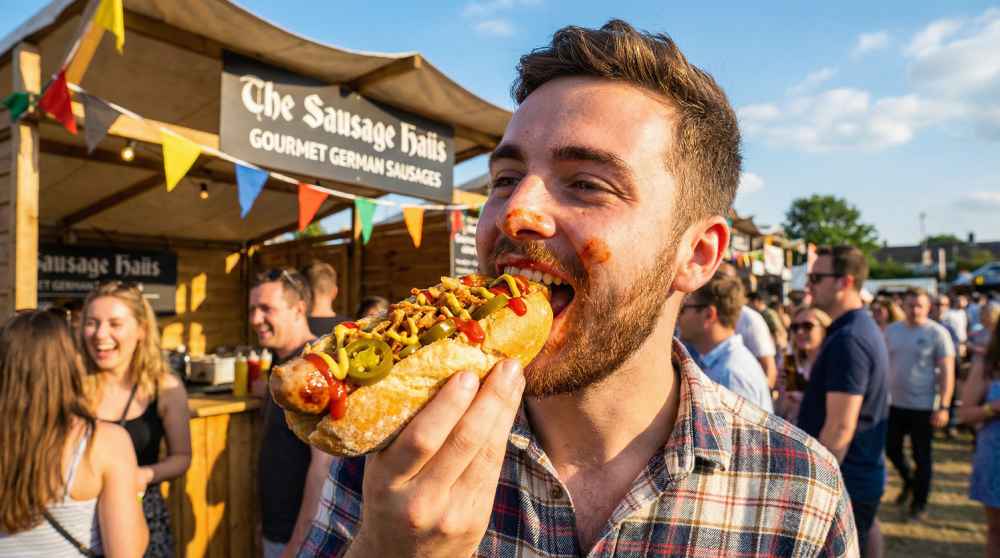
Festival-ready hotdogs: big flavour, bold toppings, and a crowd-pleasing bite.
Festival and seasonal trading rewards one thing above all: predictable throughput. Whether you are operating a one-person trailer at a village event, a gazebo pitch at a weekend festival, or a larger unit at a city-centre Christmas market, your commercial outcome is rarely decided by “food creativity”. It is decided by whether you can convert footfall into served portions—hour after hour—while keeping quality consistent and preventing your costs from drifting upward in small, almost invisible ways.
Most event traders recognise this instinctively. The stall that looks “most interesting” does not necessarily win; the stall that looks fast, confident and consistent usually wins. In a live trading environment, customers make decisions quickly. If your offer is unclear, slow, or operationally messy, people simply keep walking. And if your line is slow, you not only lose sales—you also lose the best sales: the peak-time sales that make the weekend profitable.
In practice, performance usually comes down to a handful of operational variables that determine how much you can sell per hour, how much you keep, and whether you can trade without disruption:
- Queue conversion: how many people stay in line, reach the till, and actually place an order rather than leaving when the wait feels uncertain.
- Speed of service: the time from order to handover, including how quickly payment happens and how efficiently you assemble the product.
- Repeatable quality: customers receiving the same product every time, even at peak—same bun fit, same sausage finish, same topping balance, same temperature.
- Waste control: what you throw away (overcooked batches, dried-out product, split skins, buns that stale, toppings that get contaminated or warm up too long).
- Portion discipline: keeping each serve consistent so pricing and margin stay true—particularly with sauces, cheese, onions and “free-hand” toppings that quietly inflate portion cost.
- Compliance routine: hygiene, allergens, temperature control and documentation that are practical, not theatrical—because a stall can lose a whole day of trade if basic controls are not in place.
These variables are interconnected. Improve speed but let quality slip, and you may sell more today but lose repeat custom tomorrow. Improve quality but slow the line, and you leave peak-time revenue behind. Control waste but overcomplicate processes, and the system breaks under pressure. The best event traders build a service system that balances all six: a tight menu, disciplined portioning, and equipment that supports the workflow rather than fighting it.
That is exactly where German hotdogs can outperform more complex street-food formats. They offer high familiarity—customers understand the product instantly—while still carrying a premium cue if the sausage spec and build look “proper”. That combination matters commercially for three reasons:
- It reduces decision friction at the till. People do not need a long explanation, so ordering is faster and the queue moves.
- It supports stronger pricing without complicated storytelling. A premium-looking sausage in a good bun with a smart topping set can command a higher price than a basic hotdog, without needing a menu lecture.
- It is easier to standardise. When the product format is consistent, your team can repeat the same motions and deliver the same result—critical when you are trading flat out.
Just as importantly, German hotdogs are operationally flexible. You can design them to work with a grill/plancha “theatre” approach (strong aroma, visual appeal), a controlled hot-hold approach (maximum speed at peak), or a hybrid model that gives you both. You can sell them as a single hero item with one or two add-ons for the simplest possible line, or as a three-build menu that targets different customer price points (classic, premium, festive). You can also align them naturally to winter trading—warmth, comfort, seasonal toppings—without turning the menu into a production line of complicated prep tasks.
In other words, German hotdogs can be engineered to match the reality of event trading: short service windows, unpredictable rushes, limited space, and staff working in cold or wet conditions. When the product spec is right and the workflow is designed properly, they give you a rare combination: speed, perceived value, and operational control.
This article is written for UK foodservice buyers and stall operators who want buyer-level clarity. It covers what to look for in spec and yield, how to manage portion cost and gross margin, and how to avoid the common operational mistakes—menu overload, weak hot-holding routines, uncontrolled topping spend, and poor line design—that can quietly damage trade even when footfall is strong.
Why German Hotdogs Work for UK Festivals and Christmas Markets
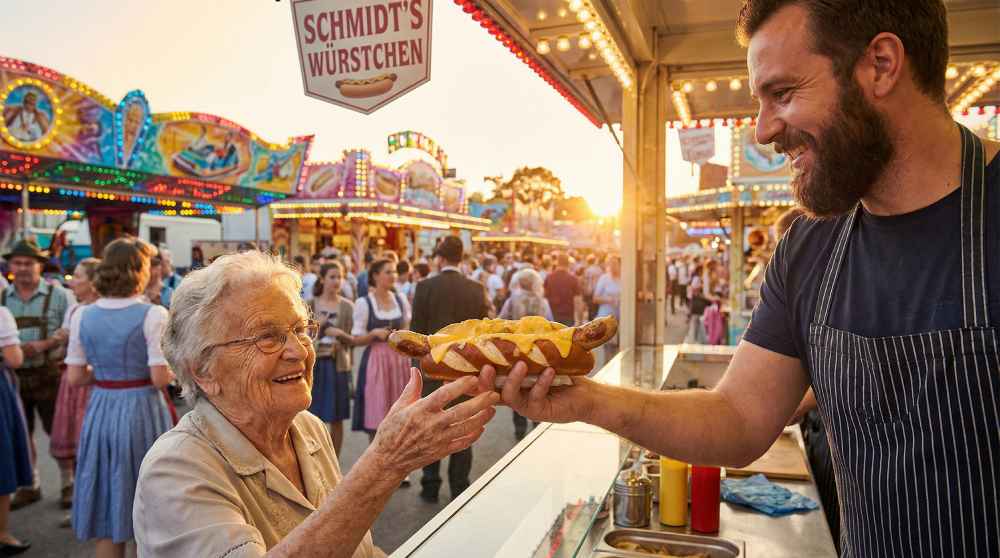
Fast-service festival trading: German hotdogs served fresh from the stall in a high-footfall event setting.
This is the core business case: German hotdogs can be engineered for throughput, and throughput drives revenue. In event trading, “being busy” is not the objective—serving fast, consistently, and profitably while busy is the objective. The difference between an average weekend and a great weekend is often the number of portions you can sell per hour at peak, and how much margin remains once you account for waste, topping spend, staffing and the realities of trading outdoors.
German hotdogs fit this environment unusually well because they combine three qualities that are difficult to get in the same product:
- High familiarity (customers understand the offer instantly)
- Premium cues (allows better pricing and higher perceived value)
- Operational simplicity (supports repeatable service at speed)
When you design the menu and workflow properly, German hotdogs become a “line-friendly” product: easy to order, easy to assemble, easy to standardise, and easy to upsell without turning service into chaos.
Throughput and queue conversion (the economics of speed)
At peak times, every stall is capacity-limited. You have a fixed amount of grill space, a fixed number of hands, a fixed payment speed, and a fixed service counter. A queue is only valuable if you can convert it into served customers fast enough to prevent walkaways. People abandon queues for two reasons: the wait is too long, or the wait feels uncertain because service looks disorganised.
A well-designed German hotdogs setup supports fast conversion because it reduces friction at every stage:
- Short assembly time: the product format is simple—bun + sausage + controlled topping set—so build time stays consistent even under pressure.
- Minimal cooking complexity: you are not juggling multiple proteins and cooking methods; you are executing one core item repeatedly.
- Limited decision-making at point of sale: customers understand what they are buying. If the menu is tight, they choose quickly and move on.
- Reliable portioning and repeatable builds: the same sausage, the same bun fit, the same sauces, the same topping portion. That consistency protects both speed and margin.
Done properly, your “time-per-portion” becomes predictable. That predictability is commercially powerful, because it allows you to plan:
- Staffing: you can assign clear roles (cook, assemble, take payments) and avoid duplication or confusion.
- Batching: you can cook and replenish in controlled waves rather than panic-cooking when you run out.
- Stock planning: you can estimate portions per hour and align stock levels to realistic demand rather than guesswork.
It also reduces “hidden losses” that appear when you are rushed: overcooked product, split sausages, sloppy topping portions, buns wasted, and inconsistent builds that cause complaints or refunds. In other words, throughput is not only about speed—it is also about maintaining control when speed is required.
Aroma and theatre (grill appeal in cold-weather trading)
For German hotdogs at Christmas markets, aroma is a real commercial lever. Hot food smells better in cold air, and smell is often what pulls customers in before they have even seen your full menu. This is where a grill or plancha presentation can do a lot of marketing work for you.
“Sizzle theatre” matters because Christmas markets are competitive: multiple stalls are selling warm food, and customers are browsing with a hot drink in hand. A stall that looks and smells active tends to win the impulse decision. German hotdogs work well here because:
- They deliver an immediate “hot food” cue with minimal explanation.
- They can brown attractively (depending on spec), which improves perceived value.
- They suit winter-appropriate toppings like warm red cabbage or sauerkraut without adding complex cooking steps.
Crucially, you do not need a complicated menu to get the benefit. Often, a simple grill/plancha setup plus consistent product quality is enough. The objective is not culinary theatre for its own sake; it is footfall conversion—turning browsers into buyers.
A practical point: theatre should not reduce speed. If the grill presentation slows your line, it becomes counterproductive. The most effective approach is usually a clear, disciplined workflow where cooking and holding support service speed, and the grill remains a “front-of-house signal” rather than a bottleneck.
Upsell potential (toppings, sides, premium builds)
A stall that sells only “hotdog or not” leaves money on the table. The right approach is controlled upselling that increases average transaction value without slowing service. With German hotdogs, upselling can be built into the menu structure rather than relying on the operator remembering to suggest extras.
A high-performing approach typically looks like this:
- A “classic” build at a competitive headline price (fastest, highest volume)
- A “premium” build with a clear value story (one obvious upgrade that justifies a meaningful price step)
- A “festive” build aligned with the season (a winter-themed option that feels natural at Christmas markets)
This is where hot dog stall menu ideas matter. You are not trying to create a restaurant menu; you are creating a small number of high-performing assemblies that lift revenue per customer while protecting throughput.
The best upsells share three characteristics:
- They are obvious at a glance (customers understand the difference instantly)
- They are easy to execute (one extra step, not five)
- They are portion-controlled (so portion cost and gross margin remain stable)
Examples of “high value, low slowdown” upgrades include a pre-portioned warm topping (e.g., sauerkraut/red cabbage), a single premium sauce, or a crisp garnish that adds visual value (e.g., crispy onions) without requiring prep during peak.
If you do this well, German hotdogs become more than a fast seller. They become a margin engine: a product that can be priced confidently, upsold consistently, and delivered quickly enough to maximise peak trading.
Spec and Quality Indicators That Protect Profit
If you want high-margin street food UK performance, you must buy to a spec and manage portion economics. At events, many operators focus on headline case price and miss the bigger commercial drivers: portion cost, yield, holding performance and consistency under pressure. Those factors determine whether you can price confidently, serve quickly, and keep waste low—especially when your stall is flat out for hours.
A useful way to frame it is this: you are not buying “sausages”; you are buying sellable portions per case and the ability to deliver those portions repeatedly at peak. The best-performing stalls are usually the ones that select a product spec that supports speed and predictability, then build a process around it.
Below are the main indicators to look for when selecting German hotdogs for festivals and Christmas markets.
Portion size and consistency (100g vs 150g decisions)
Portion size is a strategic choice. Smaller portions can improve gross margin per unit and reduce risk if footfall is uncertain. Larger portions can increase perceived value, improve pricing power and reduce “value objections” when customers compare you to neighbouring stalls. The correct answer depends on:
- Your audience (family event vs premium market)
- Competitive set (what other stalls sell and at what price)
- Your menu strategy (single item vs classic/premium/festive builds)
- Your labour and service model (how quickly you need to move the line)
However, what matters most is consistency. In event trading, inconsistency destroys both speed and margin. A consistent German hotdogs spec makes your pricing, cooking and portion cost repeatable. In trade terms, you want:
- Stable weight per sausage: so each serve costs what you think it costs, and customers experience the same value every time.
- Stable length/diameter: so bun fit and presentation are consistent, and you are not wasting buns or reworking builds.
- Predictable shrink: so your finished portion remains visually appealing and you do not lose money through unexpected yield loss.
Consistency also reduces operational stress. When every sausage behaves the same, staff can execute faster and with fewer errors. When the product varies, staff start compensating (overcooking “to be safe”, adding extra toppings to “make it look bigger”, double-saucing), and margin leaks begin.
A practical buying tip: if you can, test the product against your chosen bun size. Bun mismatch is one of the most common sources of wasted time and poor presentation—two things you cannot afford at peak.
Yield and shrink (what to look for in practice)
Yield is what you actually sell after cooking and holding—not what you paid for in the box. Event profitability is often won or lost on yield. Shrink, split, drying or burst casings all destroy yield and customer experience. They also create knock-on problems: slower service (because you are reworking product), higher waste, and staff making inconsistent “fixes” mid-service.
When reviewing German hotdogs for festivals, assess the product under realistic conditions, not ideal kitchen conditions:
- Cook as you would on-site: grill/plancha, or your chosen method, at service pace.
- Hot-hold as you would on-site: hold a batch for realistic intervals and observe quality drift.
- Check juiciness and texture after holding: does it still eat well, or does it dry out quickly?
- Watch for split skins or drying ends: both reduce sellability and can lead to waste.
- Confirm whether quality is still “sellable” after peak rush periods: the product should remain acceptable if the line suddenly slows.
Even small yield losses materially impact portion cost at scale. A small increase in waste per hour becomes meaningful over a full trading day. And because event traders rely heavily on peak hours to carry the weekend, yield losses during peak are particularly expensive.
In practical terms, a “good yield” product is one that stays visually appealing and pleasant to eat across the range of conditions you will face: cold weather, wind, fluctuating grill temperatures, variable staffing skill, and the inevitable rush periods where perfect technique is harder to maintain.
Skinless vs natural casing (service impact and customer perception)
Casing choice influences both operations and customer perception—and this decision is often underestimated.
- Skinless: often very consistent, easy to portion, tends to be “clean” eating, and can simplify service. It is frequently the easiest choice for a pure throughput model where speed is the top priority.
- Natural casing: can look and feel more premium, browns attractively, and provides a “crafted” bite that many customers associate with quality. However, it may require more attention to avoid splits, particularly with aggressive heat or extended holding.
There is no universal winner. For a fast line, many operators prefer the most predictable option. For premium positioning, natural casing can support a stronger “authentic” cue—if it holds up under your service method.
The correct approach is to align casing choice to your operational model:
- If your priority is speed and minimal handling errors, skinless may reduce risk.
- If your priority is premium cues and grill theatre, natural casing may support stronger perceived value—provided the product and process are stable.
Holding performance (staying juicy without split/skin toughening)
Holding performance is often where commodity products fail. If German hotdogs dry out, toughen, split, or lose their bite under hot hold, you lose repeat sales and invite waste. It also affects how confidently staff can batch. If holding performance is weak, you are forced into micro-batches, which can slow service and increase stress.
To manage this, focus on three areas:
- Sausage spec that holds moisture
Look for a product that remains juicy and palatable after a realistic holding period. This is not only about taste—juiciness supports perceived value and reduces complaints. - Correct equipment selection (hot hold that maintains quality)
Not all hot holding is equal. Some methods effectively keep product ready without further cooking; others continue cooking and drying the sausage, which can lead to toughness, shrink and split skins. Your equipment should support your service model, not degrade product while you wait for the next rush. - Process discipline (batch sizing, rotation, time control)
Holding performance is also operational. Even a good product can be ruined by poor rotation, overlong holds, or uncontrolled temperatures. Define batch sizes based on realistic sales pace and rotate product visibly.
A practical rule of thumb: design a system where the product you hand over at the end of a rush is still something you would be comfortable serving at the start of the rush. If it is not, either the product spec or the process needs adjustment.
Documentation and buyer confidence (spec sheet, allergens, handling)
Finally, a buyer should expect access to a clear spec sheet and allergen details to support both procurement and compliance—especially if you are supplying multiple staff members who need to follow the same process. In event trading, documentation is not bureaucracy; it is risk control. It helps ensure:
- The product you receive matches the product you tested
- Staff know how to handle and store it correctly
- Allergen information remains consistent across sausage, sauces and toppings
- You can demonstrate reasonable controls if asked by a local authority officer
The stall operator who treats spec and quality indicators seriously is usually the operator who trades smoothly, wastes less, and keeps margins predictable—exactly what high-volume festival and Christmas market trading demands.
Common Mistakes (and How to Avoid Them)
Most underperforming stalls make the same errors—regardless of whether they sell hotdogs, burgers, loaded fries or “trendy” street food. The difference is that some formats punish mistakes more quickly than others. Festivals and Christmas markets are unforgiving because you are working with limited space, variable weather, time pressure, and peak surges that test every part of your setup.
The good news is that the fixes are operational, not creative. You do not need a reinvented menu or a complicated concept. You need a service system that stays stable at peak: simple choices, controlled portions, predictable cooking/holding, and logistics that prevent avoidable disruption.
Below are the most common mistakes—and how to design them out.
Too many options (menu complexity kills throughput)
If customers need to “think” at the till, your line slows and you lose revenue. At events, the majority of customers do not want a multi-step decision process. They want a quick, confident purchase. If they see a long menu board with many variations, they hesitate, ask questions, or step aside—and all of that reduces throughput.
A German hotdogs menu that performs at peak is usually structured like this:
- 2–3 standard builds (e.g., classic / premium / festive)
- 1–2 clear add-ons (e.g., “add cheese sauce”, “add bacon”)
- No more than 6 total choices visible at the point of sale
This is not about limiting creativity; it is about protecting queue speed. The fastest stalls typically use “bundled” choices rather than build-your-own menus. Bundles reduce ordering time, reduce staff errors, and make portion cost more predictable.
Practical ways to simplify without losing sales:
- Put your “premium” options into one priced build rather than multiple separate toppings.
- Remove low-volume items that complicate prep and slow service.
- Use clear, short naming (“Classic”, “Loaded”, “Festive”) and a one-line description.
- Keep the menu board readable at a distance; if customers can decide before they reach the till, your line moves faster.
The key principle: choice should feel easy. If your customer is thinking, your stall is slowing.
Weak portion cost control (leakage in sauces/toppings)
Margin is rarely destroyed by the sausage; it is destroyed by uncontrolled toppings and inconsistent portioning. Sauces, cheese, onions, bacon, pickles, crispy onions—these are the items that quietly expand portion cost when staff are rushed, generous, or inconsistent.
You typically see margin leakage in three ways:
- Over-portioning under pressure (“just add a bit more”)
- Inconsistent builds (customers compare portions and complain when theirs looks smaller)
- Waste and contamination (toppings exposed too long, mishandled utensils, or messy service causing throwaways)
Practical controls that work in real trading:
- Standard ladle sizes or pumps for sauces (every portion is the same)
- Pre-portioned toppings where possible (especially for premium builds)
- Tight recipes for premium builds (define exactly what “premium” means operationally)
- Weekly review of portion cost and waste (what was used vs what was sold; identify drift)
You can track portion cost on paper if you must. You do not need software; you need discipline and a simple routine. For example: a weekly “cost check” where you confirm how many portions you sold, what you used, and whether premium toppings are being over-served.
A very practical mindset shift: treat toppings like ingredients in a recipe, not “free extras”. If you sell a premium build, the premium components must be portioned like any other product cost.
Poor hot-holding setup (quality drop + compliance risk)
This is where German hotdogs can either shine or fail. A good product can look and eat poorly if the holding method is wrong. If your hot holding method overcooks, dries out, or encourages split skins, you lose yield, damage perceived value, and invite negative feedback. You also create compliance risk if temperature control is not disciplined.
This problem often shows up as:
- Sausages drying or toughening during quieter periods
- Split skins or burst ends after holding
- Inconsistent serving temperature (too cool or too hot)
- Staff unsure how long product has been held and whether it should be replaced
A robust operational approach is straightforward:
- Batch to demand: smaller, more frequent batches beat big holds. Big holds create more drying, more shrink and more waste.
- Rotate stock clearly (first-in, first-out): the oldest product should be served first, every time, without debate.
- Use a probe thermometer and a documented routine: not bureaucracy—just a simple check that keeps your process credible and repeatable.
- Maintain safe hot holding temperature expectations based on your local authority guidance and your food safety plan.
The key is to design hot holding as a support for throughput—not as an improvised cooking method. When hot holding is managed properly, you serve faster and with better consistency. When it is unmanaged, quality drifts, waste rises, and staff start making last-minute decisions that slow the line.
This is not about overcomplication; it is about repeatable practice that protects both quality and compliance.
Underestimating power, water, and cleaning logistics
Festivals and Christmas markets are “systems” as much as they are food. Many stalls fail commercially not because the product is wrong, but because the operation becomes fragile. Small logistical problems then create downtime, slow service, and increased risk.
You should plan for:
- Power draw for hot holding + grill/plancha + lighting + any warming units
- Handwash setup that staff can actually use during rush periods
- Cleaning water and waste handling (including a realistic plan for greasy waste and bin capacity)
- Storage for chilled stock to protect the cold chain (including transport and on-site storage)
- Weather-proof service layout (wind, rain, cold hands, slippery floors, damp packaging)
Operationally, the key is resilience. If a sauce bottle breaks, you should be able to replace it. If the weather turns, your assembly station should still function. If a rush hits, your line should speed up rather than collapse.
A stall that runs clean and calm typically sells more—not only because the service is faster, but because the operation looks trustworthy. At Christmas markets especially, customers notice hygiene, organisation and confidence. Those signals translate directly into sales.
The overarching principle
The consistent pattern behind these mistakes is that they increase variability: too many choices, inconsistent portions, unstable holding, fragile logistics. High-performing stalls reduce variability. They choose a simple menu, standardise portions, control holding, and plan logistics so the service stays smooth even when conditions are difficult.
If you build that operational foundation, German hotdogs become a very strong event product: fast, premium-feeling, and repeatable at scale.
The Festivals and Christmas Markets Bestsellers

Street food service in action: German hotdogs finished with sauces and onions for fast, high-footfall trading.
When you are building a festival or Christmas market menu, the winning product set is usually the one that delivers three things at the same time: fast service, consistent yield, and a clear value story customers understand instantly. In practice, that means choosing sausages that hold quality under pressure, fit a simple bun-and-toppings format, and allow you to upsell without slowing the line.
Below are four bestsellers that consistently perform in high-footfall, seasonal trading—each with a clear role on the menu.
Bratwurst
Best for: Grill theatre, aroma-led selling, “proper German sausage” positioning
Bratwurst is the classic crowd-puller at events because it sells itself: the aroma, the visible browning, and the familiar “German market” association work especially well in colder months. Operationally, it suits stalls that want the grill as a front-of-house signal to drive footfall conversion. The key to profitable bratwurst trading is to keep the build simple—one or two standard topping routes—so you get theatre without sacrificing throughput.
Why it wins at events
- Strong aroma and browning create immediate buying intent (especially at Christmas markets).
- Premium perception supports confident pricing without complicated explanation.
- Works well with “classic” German toppings (mustard, sauerkraut/red cabbage) that are fast to apply.
Menu positioning
- Use as the hero premium sausage for customers who want the “authentic German” option.
- Ideal in a “Classic Bratwurst” build plus one upsell build (e.g., “Loaded Bratwurst”).
Bacon Frankfurter
Best for: Premium cue with minimal complexity, strong flavour, reliable hot-hold performance
Bacon Frankfurter is a high-impact option for operators who want a clear upgrade from a standard hotdog without introducing complicated prep. The flavour profile is instantly understood, and the product often performs well in fast, repeatable service models—making it highly suitable for high-throughput festival catering and Christmas market lines.
Why it wins at events
- “Bacon” is an easy premium signal; customers understand the upgrade immediately.
- Strong flavour allows a simple build to feel premium (reduces topping complexity and portion cost leakage).
- Excellent fit for a two-tier menu: classic hotdog vs premium bacon frankfurter.
Menu positioning
- Use as your premium hotdog-style option in a bun with one signature sauce and one garnish.
- Pairs well with fast, profitable toppings like crispy onions, pickles, or a house relish.
Cheese Frankfurter
Best for: Winter comfort selling, premium pricing, high perceived value per portion
Cheese Frankfurter performs particularly well in cold-weather trading because it delivers a “comfort food” experience that feels more indulgent than a standard hotdog format. This is often a strong seller at Christmas markets where customers are already primed for rich, warm food. The key operational point is to design the build so it stays fast: one clear topping route and controlled portioning.
Why it wins at events
- Clear indulgence cue supports a higher price point and strong gross margin potential.
- Winter-friendly positioning (“warming”, “comfort”) suits Christmas market behaviour.
- Allows you to create a premium build with minimal extra ingredients.
Menu positioning
- Ideal as a premium festive bestseller: “Cheese Frankfurter + mustard + warm cabbage” or “Cheese Frankfurter + house sauce + crispy onions”.
- Consider it as the centrepiece of a “Festive Loaded” build that is easy to execute.
Chilli Beef Frankfurter
Best for: Modern street-food appeal, bolder flavour, differentiated menu option without extra prep
Chilli Beef Frankfurter gives you a clear point of difference for customers who want something with heat and a stronger savoury profile. It is especially useful at festivals where the audience expects bolder flavours and where a “spicy option” can increase menu conversion. As with the other bestsellers, the commercial advantage comes from keeping the build controlled: one spicy hero item, one or two compatible toppings, no custom requests.
Why it wins at events
- Distinct flavour creates differentiation versus neighbouring stalls selling standard hotdogs.
- “Chilli” supports a higher perceived value without adding complex toppings.
- Works well as a simple premium build that stays fast at peak.
Menu positioning
- Use as your spicy premium option: “Chilli Beef Frankfurter” with a cooling or tangy topping route (e.g., pickles, onions, mustard).
- Strong candidate for a “Premium Trio” menu: Classic / Cheese / Chilli.
Practical menu strategy (how to use these bestsellers)
If you want maximum throughput with strong margin control, a proven structure is:
- One grill hero: Bratwurst (theatre + aroma)
- Two premium hotdog-style options: Bacon Frankfurter and Cheese Frankfurter (clear upsells)
- One differentiator: Chilli Beef Frankfurter (spicy option that lifts conversion)
This gives you a menu that feels broad to customers but stays operationally tight behind the counter—exactly what high-footfall festival and Christmas market trading demands.
Frequently Asked Questions
Use controlled upsells. Offer a classic build plus a premium build (one obvious upgrade) and a festive build for Christmas markets. Keep toppings portion-controlled (pumps/ladles), avoid complicated assembly, and choose add-ons that are quick to apply.
Buy to spec, not just price. Look for consistent size/weight, good bun fit, predictable shrink, and strong holding performance. Ask for a spec sheet and allergen information so your team can execute consistently and you can manage compliance.
Usually 2–3 standard builds plus 1–2 clear add-ons. If you exceed roughly six total choices at the point of sale, ordering time and assembly errors tend to increase, which slows the line and reduces peak-hour revenue.
It depends on your service model. Skinless options are often more predictable and “clean” for fast service. Natural casing can look and feel more premium and brown attractively, but may require tighter temperature and holding control to avoid splits.
Typically: Bratwurst (grill theatre and aroma), Bacon Frankfurter (easy premium cue), Cheese Frankfurter (winter comfort premium), and Chilli Beef Frankfurter (differentiated spicy option). The strongest setups use these in a tight 2–3 build menu.
Too many menu options, weak portion control on sauces/toppings, poor hot-holding routines that dry out product, and underestimating logistics (power, water, chilled storage, cleaning). These issues reduce throughput and quietly erode margin.
Treat registration, allergens, hygiene routines, temperature control and cold chain as non-negotiables. Have a practical routine for checks and record-keeping, and make sure all staff understand handling and allergen information for sausages, buns, sauces and toppings.
In UK street food terms, a “German hotdog” often refers to a premium hotdog-style sausage (frequently closer to a frankfurter) served in a bun with simple toppings. Bratwurst tends to be more grill-led with stronger aroma and browning, while frankfurters often deliver a smooth, premium bite suited to high-throughput service.
Portion cost. The cheapest case price can become expensive if yield is poor, product dries out, or toppings are uncontrolled. Portion cost plus yield and waste control is what determines real gross margin.
Because they combine familiarity with premium cues. Customers understand the offer instantly, yet a higher-quality sausage and a “proper” build supports confident pricing. Operationally, they suit fast service and repeatable portioning, which protects throughput and margin.
Conclusion
If you are aiming to build a reliable seasonal street-food offer, German hotdogs can be one of the most commercially dependable options for UK festivals and Christmas markets. They are familiar enough to sell quickly, premium enough to price confidently, and operationally suited to high throughput—provided you treat them as a repeatable service system, not just a product on a menu.
In practical terms, success comes from getting three things right and keeping them right when trading conditions become stressful:
- Buy to the right spec
Choose German hotdogs that are consistent in size and performance, supported by a clear spec sheet and allergen information, and proven to hold quality under realistic service conditions. The objective is not simply “good taste”; it is predictable results at peak—stable presentation, stable portioning, stable yield. - Engineer margin through portion cost and yield
Event profitability is rarely won on headline case price. It is won on how many sellable portions you get per case, how much you waste during peaks and lulls, and whether toppings and sauces are portion-controlled. When portion cost is disciplined and yield is protected, gross margin becomes predictable—and predictability is what allows confident pricing. - Design workflow for throughput and compliance
A tight menu, sensible batching, a clear service layout, and a calm hot-holding routine will do more for sales than adding more menu items. At the same time, compliance basics—cold chain, hot holding and allergens—must be treated as routine rather than an afterthought, because failure here can shut down trading regardless of how strong demand is.
The operators who do best tend to avoid the same trap: trying to solve operational problems with creativity. They do the opposite. They simplify the offer, standardise the build, and keep execution disciplined. When you approach German hotdogs as a system—spec, menu, service flow—you reduce risk, improve consistency, and increase gross margin without adding unnecessary complexity.
A practical next step is straightforward: review your event calendar, define a three-build menu (classic, premium, festive), and run a quick “service test” using your intended kit and workflow. Confirm that the sausage spec, buns, toppings and holding method perform well under realistic trading conditions. Then lock in your supply plan early—especially for peak Christmas trading—so you are not forced into last-minute substitutions that can undermine quality, yield and service speed.
About Sausage Haüs
The Sausage Haüs supplies high-quality German sausages to UK pubs, caterers, wholesalers, retailers and foodservice operators, with a focus on products that perform reliably in real service conditions. Our range includes premium German hotdogs produced by Remagen (Germany) and distributed in the UK by Baird Foods, built for consistent specification, dependable handling and strong customer appeal.
For festivals, Christmas markets and other high-footfall events, product performance is not only about flavour—it is about repeatability: predictable portioning, stable yield, and the ability to maintain eating quality when service speeds up. That is the standard we design for. Our German hotdogs are suited to high-throughput trading models, whether you run a grill/plancha “theatre” setup, a controlled hot-hold approach, or a hybrid workflow that balances aroma, speed and consistency.
If you are planning seasonal trading, we can support buyers and operators with practical guidance on choosing the right format and spec for your service model, so you can protect margin, simplify operations and deliver a consistent product from the first service of the day to the last.