The UK sausage category is busy. Every retailer already has British pork sausages, budget hotdogs, BBQ packs, family multipacks and seasonal grilling lines. That makes the category familiar, but it also makes it predictable. For retail buyers, the challenge is not simply to add another sausage. The challenge is to add a product that gives shoppers a clear reason to stop, notice, trade up and buy again.

Fresh for Premium Appeal

Frozen for Low Waste
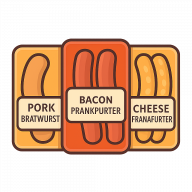
Start With Three SKUs
Overview
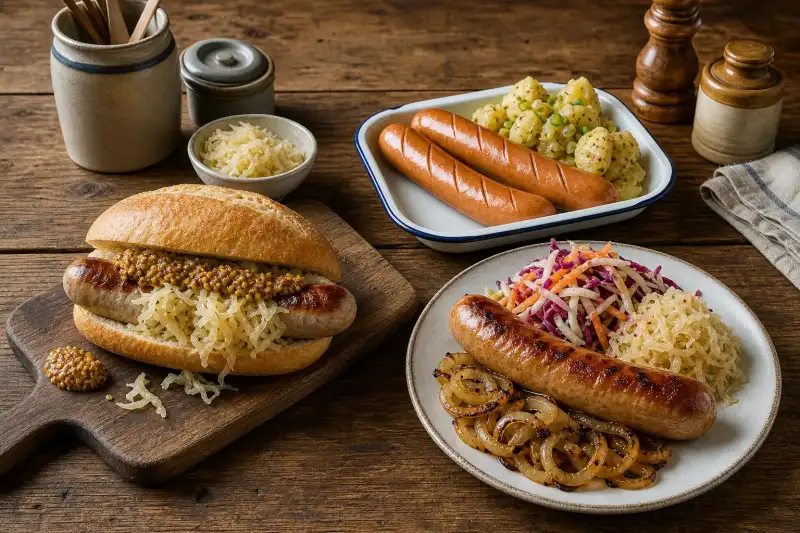
German sausages give UK retailers something many ordinary sausage lines struggle to offer: a clear food story. Bratwurst, frankfurters, smoked hotdogs, cheese frankfurters and bacon-style frankfurters connect naturally with BBQs, street food, Oktoberfest, Christmas markets, family meals, premium hotdogs and quick comfort food.
The opportunity is not simply fresh or frozen. A strong retail range can use both formats intelligently. Fresh German sausages create premium chilled shelf appeal and give shoppers the quality signal many still look for. Frozen German sausages support convenience, stock control, lower waste and year-round availability.
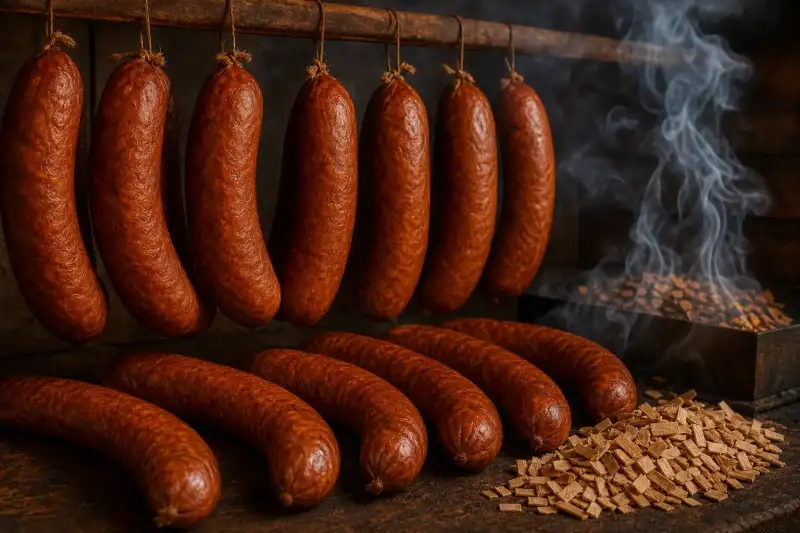
When the fresh range also offers an extended chilled shelf life of around three months, subject to correct storage and product specification, it becomes especially attractive for retail buyers. It delivers much of the appeal of a fresh product, but with far less pressure than many short-life chilled meat lines.
Together, fresh and frozen German sausages can create a compact, distinctive and commercially useful range for UK retail.
Key Takeaways
- German sausages offer a stronger product story than many standard sausage and hotdog lines.
- Fresh and frozen ranges solve different retail problems and should not be treated as direct alternatives.
- Fresh German sausages create premium chilled shelf appeal and help shoppers associate the range with quality.
- A fresh shelf life of around three months makes the chilled range much more practical for retail buyers.
- Frozen German sausages support convenience, stock control and lower waste, especially for seasonal and family shopping.
- A compact range of Bratwurst, Frankfurters and premium hotdogs can give retailers clear differentiation without overcomplicating the fixture.
Why German Sausages Give Retailers a Clear Point of Difference
Most UK shoppers already understand sausages. That is useful because German sausages do not require the buyer to teach the customer an entirely new category. They sit within familiar eating occasions: BBQs, hotdogs, quick dinners, loaded fries, family meals, party food and weekend treats.
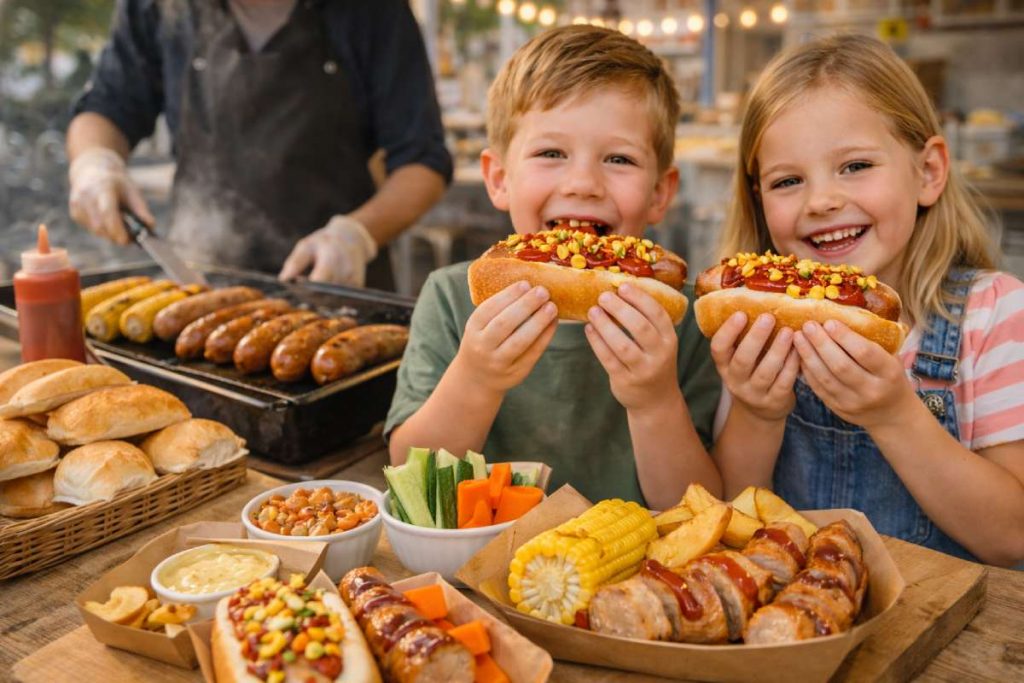
At the same time, they feel different enough to stand apart.
A standard British sausage often competes mainly on price, meat percentage, pack size and brand familiarity. German sausages can compete on a wider set of signals: bite, smoke, seasoning, street-food appeal, continental quality, premium hotdog use and authenticity.
That matters in retail because differentiation has to be obvious. A product might be excellent, but if the shopper cannot immediately understand why it belongs in the basket, it struggles. German sausages have the advantage of being both familiar and distinctive.
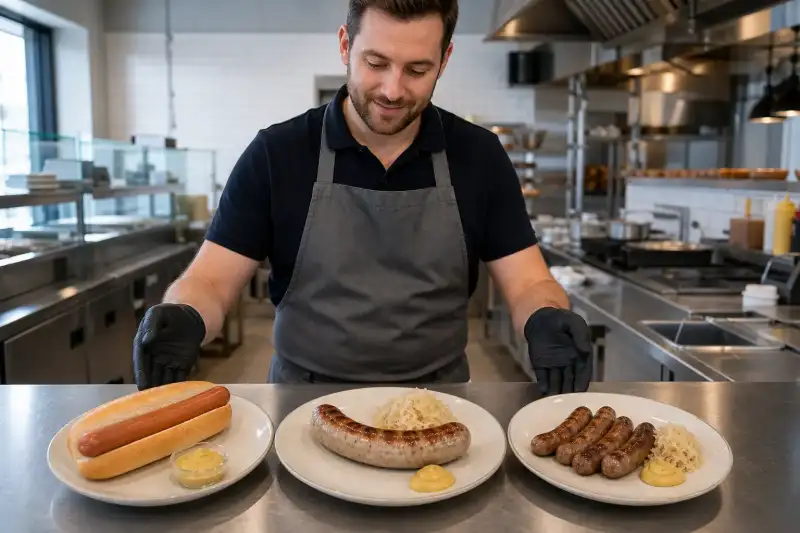
A bratwurst is not intimidating. A frankfurter is easy to understand. A cheese frankfurter sounds indulgent. A bacon frankfurter sounds smoky and familiar. A chilli beef frankfurter gives adult heat and flavour. A jumbo smoked pork hotdog suggests a bigger, more satisfying eating occasion.
This makes the category highly usable for different retailers:
- Frozen food retailers can offer premium convenience.
- Chilled retailers can add a continental sausage line with strong visual shelf appeal.
- Farm shops and delis can use German sausages as a speciality range without making the offer obscure.
- Wholesale clubs can position larger packs around BBQs, events and family meals.
- Independent retailers can create seasonal theatre around Oktoberfest, Christmas markets and summer grilling.
The key is to avoid treating German sausages as a novelty. They should be positioned as a practical, repeatable meal solution with a stronger story than ordinary sausage products.
Fresh or Frozen? The Better Question Is: What Job Should the Product Do?
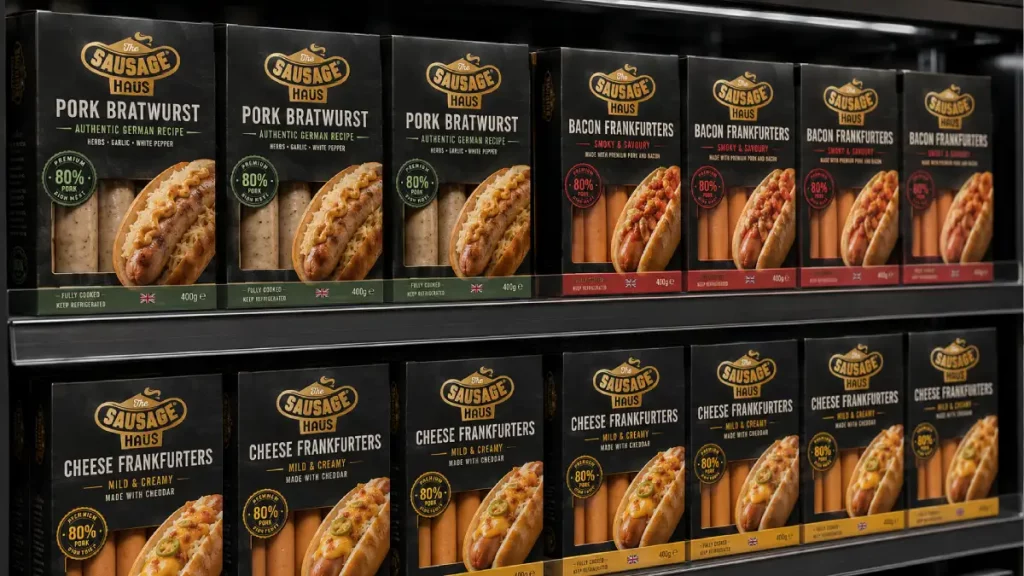
Retail decisions are often framed as a choice between chilled and frozen. But for German sausages, that is too simple.
Fresh and frozen products work differently in the shopper’s mind.
Fresh products often carry a stronger quality signal. Shoppers see them in the chilled cabinet and think of dinner tonight, weekend cooking, BBQs, premium hotdogs or a more immediate meal occasion. The pack feels present and ready. It belongs next to other fresh foods and can benefit from impulse decisions.
Frozen products solve a different problem. They are about convenience, storage, planning and lower waste. The shopper can buy now and use later. The retailer can manage availability across longer periods. The buyer can support seasonal demand without the same markdown pressure.
Both roles are valuable.
The mistake would be to force one format to do everything. A fresh German sausage range should not be judged only by frozen-food logic. A frozen German sausage range should not be judged only by chilled-cabinet theatre. Each format has its own commercial strength.
A smarter retail strategy uses fresh products to build premium presence and frozen products to build convenience and repeat purchase.
Fresh German Sausages: Premium Shelf Appeal with Practical Shelf Life
Fresh still has enormous power in retail. For many shoppers, fresh means better. It feels closer to the kitchen, closer to the butcher’s counter and closer to the meal they are about to cook. Even when frozen products are excellent, chilled products often win the first impression.
This is why a fresh German sausage range can be so valuable.
A fresh bratwurst or frankfurter in the chilled cabinet has a different feel from a frozen pack. It suggests quality, immediacy and a more premium eating experience. It can work as a dinner choice, BBQ choice, weekend treat or family meal. It can sit comfortably in the customer’s mind beside fresh meat, deli products, premium burgers, chilled sausages and prepared meal components.
The challenge with many chilled meat products is shelf life. Short-life products can create pressure for buyers and stores: fast rotation, markdowns, waste risk and limited time for shopper discovery. A product might be attractive, but if the sales window is too tight, the commercial risk increases.
That is why an extended chilled shelf life of around three months is such an important advantage for the fresh German sausage range.
It gives the product a rare combination: the quality signal of fresh, with a shelf-life profile that is much more practical for retail. It gives stores more time to sell through. It gives shoppers more time to discover the product. It reduces the pressure to markdown too quickly. It makes seasonal and promotional planning easier. It also gives buyers more confidence when testing a specialist range.
This is particularly useful for products that are still building awareness. A standard British sausage might sell because everyone already knows what to do with it. A German cheese frankfurter, bacon frankfurter or premium bratwurst might need slightly more discovery time. A longer chilled shelf life gives that discovery process room to happen.
Fresh German sausages are especially strong for:
- Premium chilled BBQ displays
- Weekend family meals
- Retailers wanting a continental chilled section
- Farm shops and delis
- Higher-quality hotdog offers
- Meal-solution promotions
- Seasonal fresh displays around summer, Oktoberfest and Christmas markets
The fresh range should not be seen as risky novelty. If supported properly, it can become a premium chilled product with a clear role and a strong reason to buy.
Frozen German Sausages: Convenience, Stock Control and Low Waste
Frozen German sausages have a different commercial strength. They reduce friction.
For retailers, frozen ranges can be easier to manage over time. Stock can be built ahead of seasonal peaks. Products can remain available outside the main BBQ season. Waste risk is reduced. Shoppers can buy a pack without needing to use it immediately.
That matters because German sausages are not only for one meal occasion. A frozen pack can sit in the home freezer until the customer wants a quick hotdog night, a BBQ, a football snack, a family dinner, a loaded fries meal or a simple sausage-and-potato supper.
This “ready when needed” logic is powerful.
Frozen also works well for shoppers who are value-conscious but still want something better than a basic hotdog. A premium frozen German sausage can feel like a small upgrade that does not require restaurant spending. It gives the shopper a way to create street-food-style food at home.
For buyers, frozen German sausages can support:
- Family convenience
- BBQ season stocking
- Lower waste risk
- Promotional multipacks
- Larger basket occasions
- Freezer-door discovery
- Seasonal event planning
- Discount retail and frozen specialist formats
Frozen should not be positioned as the lower-quality sibling of fresh. It should be positioned as the convenience engine of the range.
The message is simple: fresh gives premium immediacy; frozen gives practical availability.
How Fresh and Frozen Work Together
A retailer does not need a huge German sausage range to make the category work. In fact, too many similar SKUs can make the shelf confusing. The aim should be a compact range where every product has a clear job.
Fresh and frozen can then support each other.
| Retail question | Fresh range answer | Frozen range answer |
|---|---|---|
| How do we show quality? | Premium chilled presence and immediate meal appeal | Strong pack design, authentic story and reliable freezer convenience |
| How do we reduce waste pressure? | Extended chilled shelf life helps reduce short-life risk | Frozen format gives very low waste risk |
| How do we attract new shoppers? | Fresh feels premium, visible and easy to choose for tonight | Frozen feels practical, useful and easy to keep at home |
| How do we support BBQ season? | Strong chilled BBQ display and impulse purchase | Stock-up packs and seasonal freezer availability |
| How do we drive repeat purchase? | Weekend meals, chilled hotdog nights and fresh BBQ occasions | Freezer standby, family meals and quick comfort food |
| How do we make the range feel different? | Continental chilled quality and premium sausage appeal | Street-food-at-home convenience and longer-term storage |
This is the buyer logic: the fresh range builds the brand impression, while the frozen range builds the usage habit.
A shopper may first notice a fresh pack because it looks premium. Later, they may buy frozen because they want the same type of product available at home whenever needed. Or the journey may run the other way. A shopper may first try the frozen product, enjoy it, and then trade up to the fresh version for a weekend BBQ or family meal.
The two formats do not compete. They reinforce each other.
Which German Sausages Should a Retailer List First?
The strongest retail range should cover different shopper missions without becoming complicated. The first products should be easy to understand, clearly different from each other and commercially versatile.
Here is a practical starter range.
| Product | Retail role | Why it earns shelf space |
|---|---|---|
| Pork Bratwurst | Classic German sausage | The most recognisable German BBQ and meal product. Works in rolls, with potatoes, with sauerkraut, on BBQs and in family dinners. |
| Bacon Frankfurter | Smoky hotdog-style product | Easy for UK shoppers to understand. Bacon adds familiarity, smoke and indulgence. Strong for hotdogs, loaded fries and quick meals. |
| Cheese Frankfurter | Indulgent family favourite | Cheese-filled products have strong visual and emotional appeal. Good for families, weekend treats and premium hotdog builds. |
| Chilli Beef Frankfurter | Adult flavour and spice | Adds heat and differentiation. Useful for shoppers who want something stronger than a standard hotdog. |
| Jumbo Smoked Pork Hotdog | Big eating occasion | Strong for BBQs, sports nights, foodservice-style home meals and shoppers looking for a more substantial hotdog. |
| Vienna Beef Frankfurter | Premium frankfurter choice | A more refined product for shoppers who want a classic continental-style sausage with a better eating experience. |
A buyer does not need all of these immediately. A very strong first step could be three products:
- Pork Bratwurst for classic German authenticity
- Bacon Frankfurter for smoky, familiar hotdog appeal
- Cheese Frankfurter for indulgence and family-friendly trade-up
This three-product range gives the retailer a simple story: classic, smoky and cheesy. It is easy for the shopper to understand and easy for the store to merchandise.
From there, a chilli beef line or jumbo smoked hotdog can add adult flavour or larger-format appeal.
The 4 × 100g Pack Logic
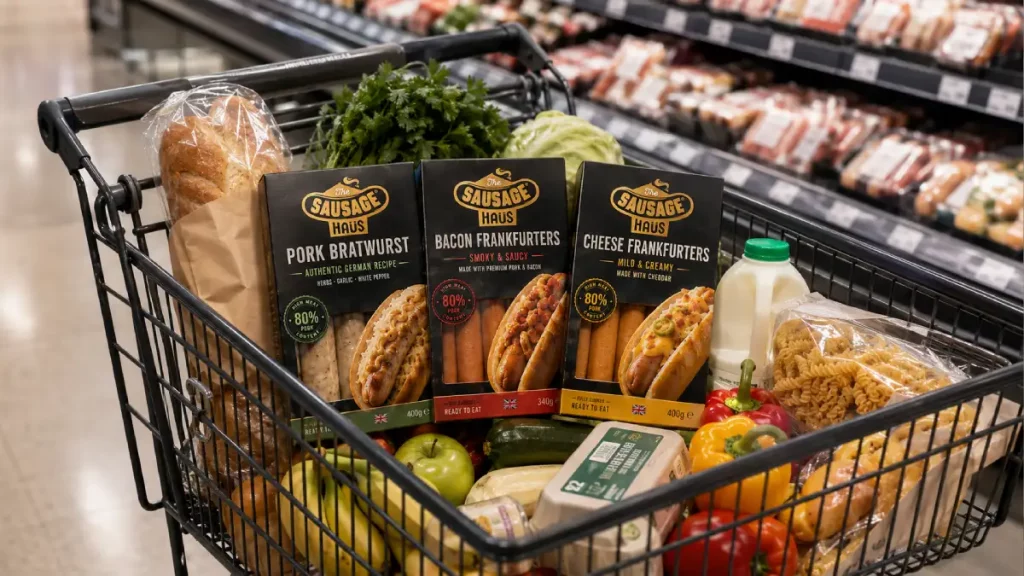
Pack size matters. Retail buyers do not only buy product quality. They buy sellable formats.
A 4 × 100g pack is especially useful because it sits naturally in the way households eat. Four sausages feel like a meal unit. It works for two adults, a small family, or a larger family buying more than one pack. It is substantial without being intimidating.
For fresh products, the format can feel premium and tidy. For frozen products, it fits the freezer and supports portion planning.
The 100g sausage size also gives the product a proper eating experience. It is not a tiny snack sausage. It can carry a bun, a plate, a BBQ serve or a family meal. It feels more generous than many standard hotdog formats, but still practical for home cooking.
This is important because shoppers do not only judge by price. They judge by meal value. A sausage that looks substantial and cooks well can justify a stronger retail price if the eating experience matches the promise.
For German sausages, the pack should make the shopper think:
- This will make a proper hotdog.
- This will work for dinner.
- This looks better than standard sausages.
- This is easy to cook.
- This feels like a small treat, not just a basic meat purchase.
That is the difference between a product that sits on the shelf and a product that sells the meal idea.
Shopper Missions: What Is the Customer Really Buying?
A retail buyer should not think only in product names. The better question is: what is the shopper trying to do?
German sausages can serve several shopper missions.
1. The Premium BBQ Mission
The shopper wants something better than basic burgers and bangers. Bratwurst, bacon frankfurters and jumbo hotdogs fit this perfectly. They feel familiar enough for a BBQ, but different enough to make the meal more memorable.
Fresh products can be especially strong here because chilled BBQ displays create impulse. Frozen products can support planned BBQs and stock-up behaviour.
2. The Family Hotdog Night Mission
The shopper wants an easy meal that children and adults will both eat. Cheese frankfurters, bacon frankfurters and smoked hotdogs all work well here.
This is not only about sausages. It is about the full meal: buns, sauces, fries, salad, pickles, onions and toppings. Retailers can use this to encourage bigger baskets.
3. The Quick Dinner Mission
Not every German sausage meal needs to be a hotdog. Bratwurst with potatoes, frankfurter pasta, sausage traybakes, sausage-and-bean pans, loaded fries and sausage with mash all fit the quick dinner category.
This recipe guide shows how to make crisp Bratkartoffeln for a classic bratwurst-and-potatoes serving idea.
This is where retailers can move German sausages from occasional BBQ novelty into regular meal planning.
4. The Weekend Treat Mission
Cheese frankfurters, chilli beef frankfurters and smoked hotdogs are ideal for shoppers who want something more indulgent at home. These products feel like takeaway-style food without the takeaway bill.
5. The Freezer Standby Mission
Frozen German sausages are ideal for customers who want a useful backup meal. They can stay in the freezer until needed, then become hotdogs, BBQ food, loaded fries, sausage pasta or a quick supper.
6. The Seasonal Food Mission
Oktoberfest, Christmas markets, Bonfire Night, summer BBQs and sports weekends all give German sausages strong promotional hooks. These events make the products feel timely without limiting them to one season.
The best retail messaging connects product to mission. “Bacon Frankfurter” is a product. “Premium German hotdog night” is a reason to buy.
Merchandising German Sausages as Meal Solutions
German sausages become more powerful when retailers stop treating them as isolated meat packs and start treating them as meal solutions.
This recipe guide shows a simple German sauerkraut side that pairs naturally with sausages and helps turn the range into easy meal solutions.
A bratwurst pack next to nothing is just a pack. A bratwurst pack supported by buns, mustard, sauerkraut, crispy onions, potato salad or fries becomes a complete food occasion.
Retailers can merchandise German sausages around simple themes:
- German BBQ Night
- Premium Hotdogs at Home
- Oktoberfest at Home
- Christmas Market Food at Home
- Family Hotdog Board
- Loaded Fries Night
- Weekend Bratwurst Supper
- Street Food from Your Freezer
This matters because shoppers often need a prompt. They may like the look of a product but hesitate if they are unsure how to serve it. Strong serving suggestions reduce that hesitation.
Fresh products can use chilled cabinet callouts such as:
- “Fresh German sausages for BBQs and hotdogs”
- “Premium chilled frankfurters”
- “German-style hotdog night”
- “Ready for the grill, pan or oven”
Frozen products can use freezer messaging such as:
- “Keep ready for hotdog night”
- “German street food from your freezer”
- “Perfect for BBQs, loaded fries and family meals”
- “Premium frozen sausages with real meal appeal”
Good merchandising does not need to be complicated. It needs to connect the product to a meal the shopper can imagine.
Why German Sausages Work Beyond BBQ Season
BBQ is an obvious entry point, but it should not be the whole retail strategy.
German sausages are too versatile to be trapped in summer. They work in autumn traybakes, winter comfort food, Christmas market promotions, Oktoberfest displays, family hotdog nights and quick weeknight dinners.
This is important for buyers because seasonal peaks are useful, but year-round repeat purchase is better.
Bratwurst can be served with mash, mustard gravy, fried onions or potato salad. Frankfurters can go into soups, pasta dishes, loaded fries, hotdogs and buffet food. Cheese frankfurters can work as a family treat. Chilli beef frankfurters can support sports nights and adult snacking occasions. Smoked hotdogs can carry premium toppings and stronger sauces.
The product is seasonal when the retailer wants theatre, but practical enough for ordinary meals.
That gives German sausages a valuable position: they can be promoted seasonally without depending entirely on seasonal sales.
What Retail Buyers Should Avoid
A German sausage range should feel clear, not confusing. Buyers should avoid three common mistakes.
1. Too Many Similar Products
A range with ten products that all look too similar will confuse shoppers. Each SKU needs a clear role. Classic, smoky, cheesy, spicy and jumbo are easy distinctions. Minor variations that shoppers cannot quickly understand are less useful.
2. Weak Cooking and Serving Guidance
German sausages are easy to cook, but shoppers still need confidence. Clear cooking instructions and serving ideas are essential. Grill, pan, oven and air fryer guidance can all help, depending on the product.
Serving suggestions should be simple and practical: hotdog rolls, mustard, sauerkraut, potato salad, fries, onions, cheese sauce, curry sauce or pickles.
3. Treating the Product as a One-Off Novelty
If the product is presented only as “Oktoberfest food,” it may sell during one promotional window and then disappear. The stronger strategy is to use Oktoberfest as one hook within a broader year-round plan.
This recipe guide shows how a bratwurst and sauerkraut pan dish can turn Oktoberfest flavours into a year-round menu idea.
German sausages should be positioned as BBQ food, hotdog food, dinner food, freezer food and family food.
The Buyer Case for a Fresh and Frozen German Sausage Range
For retail buyers, the commercial case is straightforward.
A fresh German sausage range gives the chilled cabinet something distinctive and premium. It creates immediate appeal, supports BBQ and dinner occasions, and benefits from the shopper’s natural association between fresh and quality. With an extended chilled shelf life of around three months, it can also reduce some of the pressure normally associated with short-life chilled meat products.
A frozen German sausage range gives the retailer convenience, lower waste risk and stock flexibility. It supports shoppers who want to keep quality products at home and use them when needed. It is especially strong for family meals, seasonal peaks and value-conscious premium trade-up.
Together, the two formats allow a retailer to cover more missions:
- Fresh for tonight
- Frozen for later
- Fresh for premium impact
- Frozen for convenience
- Fresh for chilled cabinet theatre
- Frozen for low-waste range building
- Fresh for BBQ impulse
- Frozen for stock-up planning
This is the real opportunity. Not fresh instead of frozen. Not frozen instead of fresh. Both formats have a role.
Why The Sausage Haus Range Fits the Opportunity
The Sausage Haus range is well suited to this kind of retail strategy because the products are easy to understand and commercially distinct.
Pork Bratwurst gives the range its classic German centre. Bacon Frankfurter adds smoky familiarity. Cheese Frankfurter brings indulgence and family appeal. Chilli Beef Frankfurter gives adult flavour. Vienna Beef Frankfurter
This gives buyers the flexibility to build a compact starter range or a wider seasonal programme.
A simple launch could focus on three strong products. A larger range could cover fresh and frozen formats, chilled premium displays, freezer convenience, BBQ promotions and seasonal German food events.
The important point is that every product should have a job. A retail range should not simply list sausages. It should solve shopper missions.
Frequently Asked Questions
No. Fresh German sausages can work in premium retail, but they are not limited to delicatessens or high-end food halls. The key question is whether the product has a clear role in the fixture and whether shoppers understand the meal occasion.
fresh range can work well in farm shops, butchers, independent retailers, chilled supermarket sections, wholesale cash-and-carry environments and food retailers with a strong BBQ or family meal offer. The product needs good pack presentation, clear cooking guidance and serving suggestions that make it feel easy to buy, not intimidating.
Usually, yes, if the range is kept clear. Bratwurst, frankfurters, hotdogs, cheese sausages and smoky bacon-style products are all easy enough for UK shoppers to understand.
Where retailers can lose shoppers is with too much unfamiliar terminology or too many similar products. A clear front-of-pack message such as “German-style Bratwurst”, “smoked Frankfurter” or “cheese Frankfurter” helps more than a complicated regional explanation. The story can sit on the website, shelf talker or product page, but the pack itself should make the buying decision simple.
Most retailers should start with a compact range rather than a large one. Three to five well-chosen products are usually more effective than a crowded fixture with too many similar options.
sensible first range could include one classic Bratwurst, one smoky Frankfurter or hotdog, and one indulgent cheese Frankfurter. That gives the buyer three clear shopper reasons: classic German BBQ, premium hotdog night and family-friendly indulgence. Once sales patterns are clear, a spicy, jumbo or more specialist product can be added.
It can make sense, but only if each version has a clear job. Fresh should be used for chilled shelf appeal, impulse purchase and premium meal planning. Frozen should be used for convenience, stock-up shopping and lower waste risk.
If both versions sit in the range, the retailer should avoid making them look like direct duplicates. The messaging can differ. Fresh might be positioned around “tonight’s BBQ” or “premium chilled hotdogs”, while frozen might focus on “keep ready for hotdog night” or “German street food from your freezer”.
The biggest risk is not the product itself. It is unclear positioning.
If shoppers see a pack but do not immediately know when they would eat it, they may walk past. German sausages need a simple use case: BBQ, hotdog night, family dinner, Oktoberfest at home, Christmas market food, loaded fries or weekend treat.
Retailers should support the launch with serving ideas, simple cooking instructions and ideally a few meal-solution links: buns, mustard, pickles, sauerkraut, fries, potato salad or sauces.
No. BBQ is the easiest entry point, but it should not be the whole plan. German sausages also work well in colder months because they suit comfort food, hot meals and seasonal events.
Bratwurst with mash, smoked Frankfurters with loaded fries, cheese Frankfurters in hotdog rolls, sausage traybakes, potato suppers and Christmas market-style serves all give the range year-round relevance. A buyer can use BBQ season to introduce the range, then keep it moving through family meals, sports nights, Oktoberfest and winter comfort food.
The product should not be forced into the cheapest sausage space. German sausages work better when they are presented as a trade-up: still accessible, but clearly more distinctive than standard bangers or basic hotdogs.
The price point needs to reflect product quality, pack size, shopper mission and the retailer’s setting. A cheese Frankfurter or smoked hotdog can often justify a stronger price if the pack communicates indulgence, convenience and a proper eating occasion. The goal is not just “price per sausage”, but “value per meal”.
buyer should check more than flavour. The practical details matter just as much.
Important points include pack format, shelf life, chilled or frozen logistics, cooking performance, casing behaviour, product consistency, case size, supply reliability, labelling information, allergen details, barcode and case coding requirements, and whether the product fits the retailer’s fixture. For fresh products, the actual usable shelf life on delivery is especially important.
Yes, and in some cases they may work particularly well. Independent retailers often benefit from products with a stronger story because they can explain them more personally than a large supermarket fixture.
farm shop, deli or independent food retailer could use German sausages as part of a BBQ weekend, continental food section, premium hotdog offer or seasonal display. The range does not need to be large. A few well-chosen products with serving suggestions can be enough to test demand without overcommitting shelf space.
The simplest launch is to connect the sausages to one clear eating occasion. Do not start with a broad message like “German sausages”. Start with something shoppers can act on.
Examples include “Premium Hotdog Night”, “German BBQ Weekend”, “Oktoberfest at Home” or “Christmas Market Food at Home”. Add simple cooking guidance and pair the products with buns, mustard, crispy onions, sauerkraut, pickles, fries or potato salad. That turns the range from a specialist product into an easy meal idea.
Conclusion: A Smarter Way to Think About German Sausages in UK Retail
German sausages offer UK retailers something valuable: familiarity with a point of difference.
They are easy for shoppers to understand, but more distinctive than ordinary sausage lines. They can work in chilled and frozen formats. They support BBQs, hotdog nights, family meals, quick dinners, seasonal promotions and premium street-food-style eating at home.
The strongest opportunity is not to choose between fresh and frozen. It is to use both intelligently.
Fresh German sausages create premium shelf appeal and immediate meal relevance. With an extended chilled shelf life of around three months, they can give retailers a rare balance of fresh quality perception and practical commercial handling.
Frozen German sausages create convenience, lower waste risk and long-term freezer value. They help shoppers keep better hotdogs, bratwurst and family meal options ready at home.
For buyers looking to add interest to the sausage category, this combination is powerful. A compact range of fresh and frozen German sausages can bring new energy to a familiar aisle, support year-round eating occasions and give shoppers a clear reason to trade up.
The UK does not need another ordinary sausage range. It needs sausage products with a stronger story, better eating occasions and clearer retail logic.
That is exactly where fresh and frozen German sausages can earn their space.
The Sausage Haüs
The Sausage Haus brings authentic German-style sausages to the UK market through a partnership between Hardy Remagen and Baird Foods.
Hardy Remagen is a long-established German producer with deep experience in traditional sausage making, continental meat products and modern food manufacturing. The range reflects the kind of products German shoppers already understand and enjoy: Bratwurst, Frankfurters, smoked hotdogs, cheese-filled sausages, Bockwurst, Weisswurst and other classic German-style lines.
In the UK, the range is represented and distributed by Baird Foods, giving retailers, wholesalers, caterers and foodservice operators access to German sausage products with a practical UK supply route. This combination is important: German manufacturing knowledge on one side, UK market understanding and distribution on the other.
For retail buyers, The Sausage Haus range offers a clear way to add something different to both chilled and frozen sausage fixtures. The products are built around real eating occasions: BBQs, premium hotdog nights, family meals, German street food, Oktoberfest promotions, Christmas market food and quick comfort meals at home.
The result is a range that gives shoppers something more distinctive than ordinary sausages and standard hotdogs, while giving buyers a compact, commercially useful product story with strong fresh and frozen potential.