Some foods need a lengthy explanation on a menu. German bratwurst at Christmas has a considerable head start. Put a generously sized sausage in a good roll, add mustard and onions, and the idea is clear before anyone reaches the counter.
For Christmas market traders, that familiarity is useful. For pubs, cafés and garden centres, it creates an opportunity to bring a little of the market experience to their own premises.
The practical question is how to turn that appeal into an offer that works for your customers, staff and trading space. A 150g bratwurst gives you a substantial centrepiece. The roll, toppings, preparation and price need to do their jobs around it.
Why bratwurst feels right on a Christmas menu
Bratwurst makes sense where customers want something hot, savoury and straightforward while they browse, meet friends or take a break from Christmas shopping. It can be a handheld lunch, a pub special or the main attraction at a small outdoor food counter.
The association with Christmas markets is well established. Birmingham’s Frankfurt Christmas Market1 lists bratwurst alongside pretzels, roasted almonds and glühwein among its food and drink attractions. For an operator, that gives the dish a recognisable seasonal setting without requiring an elaborate recipe.
The commercial value lies in the short journey from recognition to ordering. A customer who understands the offer can decide whether it suits their appetite and budget. Your menu board still needs to explain the portion, accompaniments and price clearly.
There is also room to keep the food recognisably German without making it unfamiliar. Bratwurst, onions and mustard is an accessible starting point. Sauerkraut can be an option, allowing customers to choose how traditional they want their lunch to be.
The festive setting helps, but it cannot rescue a disappointing serve. A dry roll, tired onions or a lukewarm centre will undermine the experience. Treat the Christmas association as the invitation, then give customers a reason to enjoy what they ordered.
Choose the 150g bratwurst for a proper centrepiece
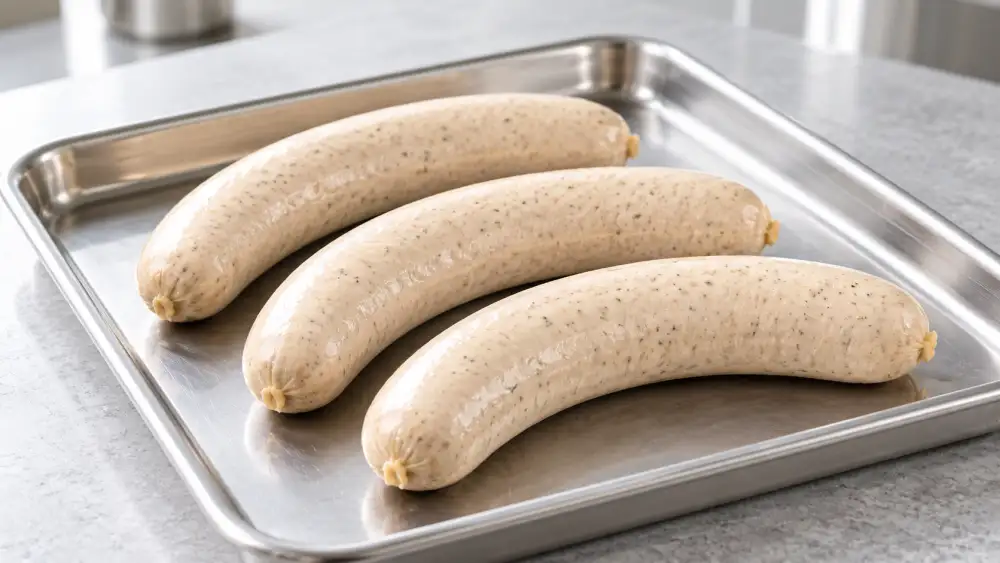
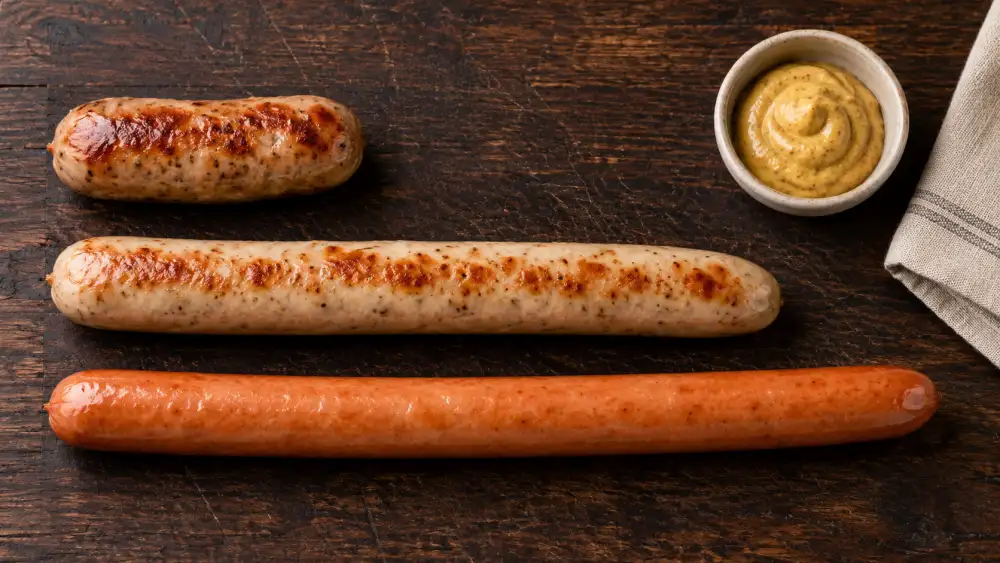
For a Christmas market-style main, the 150g bratwurst is worth putting at the centre of the offer. It provides a substantial sausage portion and gives the finished dish something clear to build around, whether that is a roll, a tray or a pub plate.
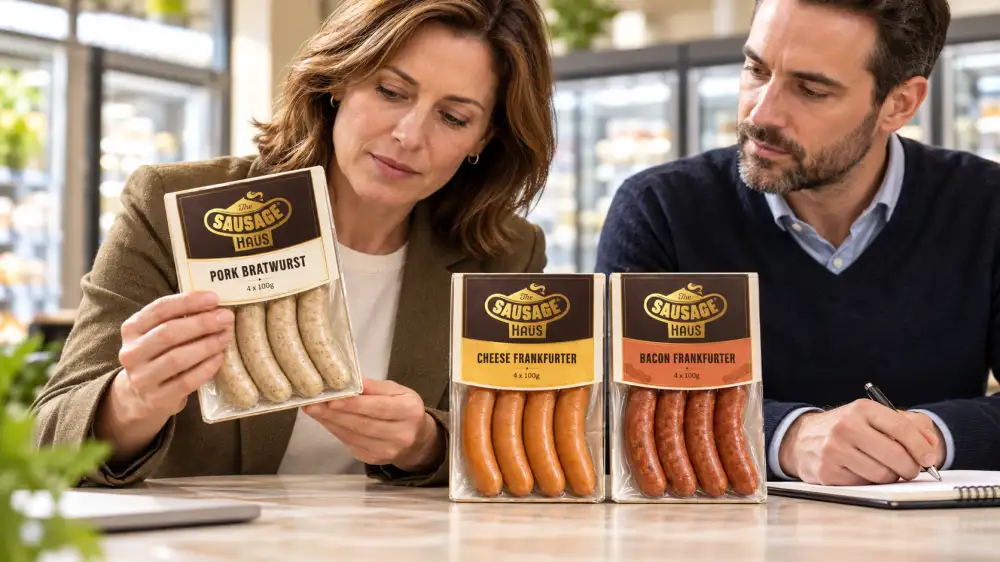
The Sausage Haus Pork Bratwurst range includes 100g and 150g options, supplied pre-cooked, frozen and vacuum-packed. Check the current specification, availability and preparation instructions for the format you intend to buy.
A larger sausage needs a suitable roll. Test the combination before ordering either in volume: the bread should support the sausage, leave room for toppings and remain manageable in one hand. Too much bread can make even a generous portion feel poorly balanced.
Check the packaging at the same time. A tray that is too short or a sleeve that offers little support can turn the first bite into an exercise in catching onions. Festive entertainment should preferably happen elsewhere.
There is a trade-off in using the larger format. It raises the sausage cost per serving and may take more space on your cooking equipment. Test preparation time and loaded equipment performance rather than assuming the method used for a smaller sausage will transfer unchanged.
Use 150g where the sausage is the main event. Retain a smaller portion only where the customer occasion and price point justify a separate option.
Match the Christmas offer to your venue
A garden centre, a pub and a travelling Christmas market stall can all sell bratwurst, but they need different reasons for customers to buy it. Start with the visit your customers are already making.
For a garden centre, an outdoor bratwurst counter could serve Christmas tree shoppers, weekend visitors or people attending an evening event. There are real examples of the format: Meadow Croft’s German market2 includes a bratwurst hut within its garden centre Christmas offer.
That does not mean every site needs a hut. A café counter special may be the more sensible starting point where the existing kitchen and collection area can handle demand. Test whether the offer creates additional sales or simply moves customers away from another profitable lunch.
For pubs, the opportunity might be a winter garden menu, a Christmas shopping lunch or food alongside a scheduled festive event. Choose a service format that fits the occasion. A standing customer needs a manageable roll; someone seated indoors may prefer potatoes, cabbage and a proper plate.
Farm shops can connect a hot-food special with a separate, clearly presented take-home retail offer. Street food traders should assess the pitch itself: trading hours, competing menus, visitor movement and the practicalities of replenishing stock.
The right question is where the bratwurst offer fits into the customer’s visit. Once that is clear, the service point and menu become easier to design.
Serving ideas that give bratwurst a festive role
You do not need a different sausage for every dish. A small set of serving formats can give the same bratwurst distinct roles, provided the accompaniments fit your kitchen and customer.
The classic Christmas market roll
Serve a 150g bratwurst in a sturdy roll with cooked onions and a choice of mustard or ketchup. Offer sauerkraut as an optional addition. This is the natural starting point for a hut or stall because customers can understand it quickly and carry it away.
Give the onions some attention. They should be pleasantly cooked and easy to portion, with excess liquid controlled so that the bread holds together. Agree the standard amount before service starts.
Bratwurst with braised red cabbage
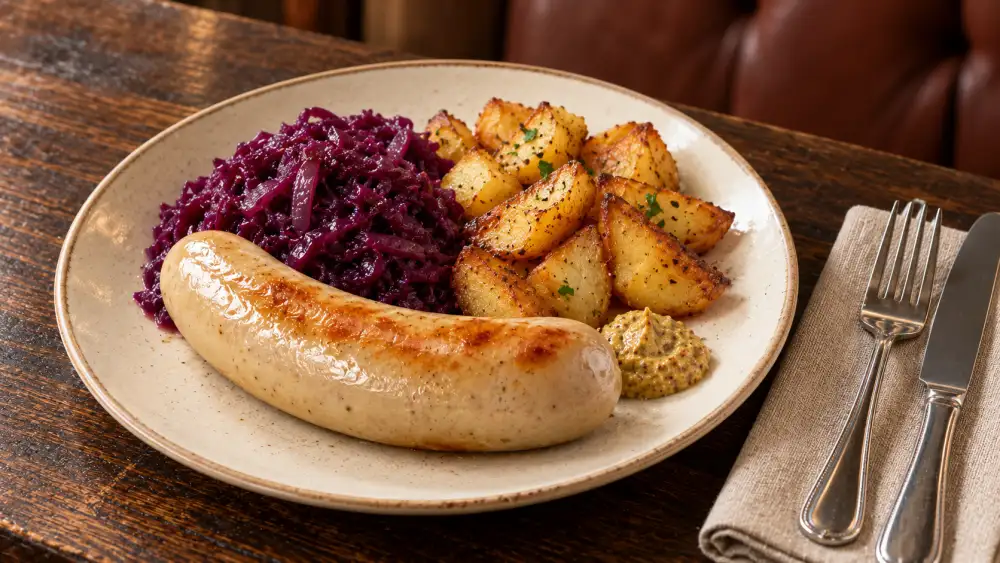
For a pub or café plate, pair the sausage with braised red cabbage and a measured portion of crushed or sautéed potatoes. Apple can bring sweetness to the cabbage, while mustard adds a sharper counterpoint.
This gives the bratwurst a winter lunch setting without adding turkey, stuffing and cranberry sauce by default. Use accompaniments already handled well by the kitchen where possible.
A festive bratwurst and potato tray
A tray with bratwurst, potatoes and onions can suit customers who want a fuller meal at a market or outdoor event. Keep the components easy to eat with a fork and avoid filling the tray with sauce.
Only add this version if potato preparation fits your equipment. Introducing a fryer solely to support one side dish can change the space, staffing and power requirements considerably.
A fresher cabbage and apple bowl
For customers who prefer a meal without a roll or chips, serve bratwurst with shredded cabbage, apple and a mustard dressing. A modest warm potato portion can make it more substantial if required.
Describe the ingredients rather than making an unverified low-calorie claim. This is a serving alternative, with crunch and a different balance of accompaniments. Keep the finished portion satisfying and make sure chilled toppings can be stored and served appropriately.
These are options to select from, rather than a recommendation to launch four dishes at once. One dependable core serve and one variation may be enough.
Your own bratwurst hut: plan the service before the decorations
A wooden hut can give a festive offer a clear identity. Before committing to one, work out where the food, people and supplies will go. The serving hatch is only one part of the operation.
Establish the local requirements early. Food business registration guidance3 covers temporary premises as well as permanent businesses. New businesses in England, Wales and Northern Ireland must register at least 28 days before trading; existing operators should check how an additional hut affects their arrangements, and Scottish operators should consult their local authority.
Draw a simple layout showing cold storage, preparation, heating, assembly, payment, collection, handwashing and waste. Allow staff to replenish bread and toppings without crossing the customer queue or carrying supplies over finished food.
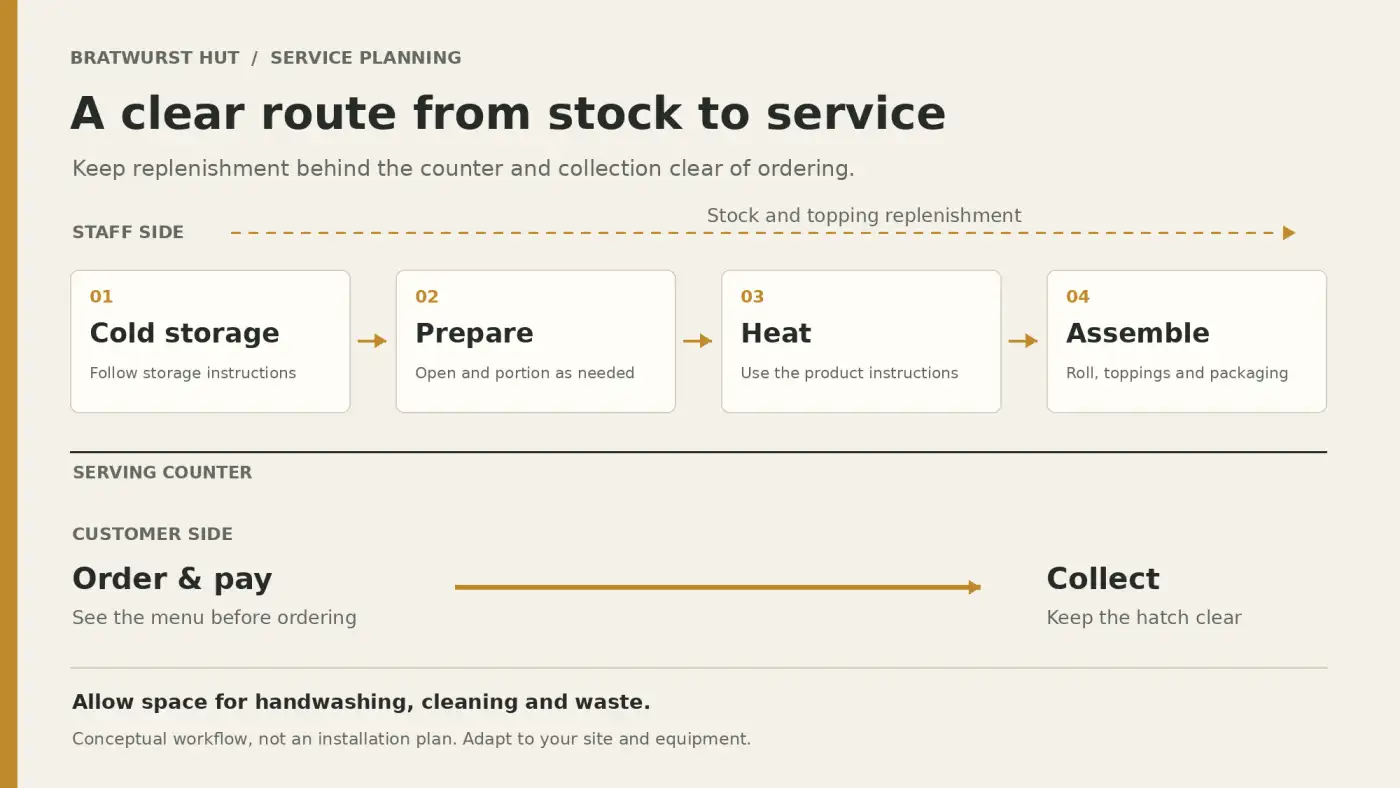
Next, check what the site can support. Confirm the electrical supply against the combined load of the equipment you intend to run. Establish water and wastewater arrangements, weather protection, delivery access and any relevant planning, licensing or event conditions before buying the structure.
If gas is involved, use HSE’s guidance on gas safety in catering and hospitality4 when planning suitable equipment, installation and maintenance. A hut’s appearance tells you nothing about whether its ventilation or gas arrangements are suitable.
Finally, rehearse a sequence of orders with the actual layout. Include payment, an allergen question and a topping refill. This reveals whether staff have the space and equipment to work effectively. Add the fairy lights once the service works.
Keep the bratwurst good through the rush and the quiet spells
The difficult part of seasonal catering is often the change in demand. A quiet afternoon can turn into an evening queue, then slow abruptly. Preparation needs to respond without producing a large batch that spends too long waiting for customers.
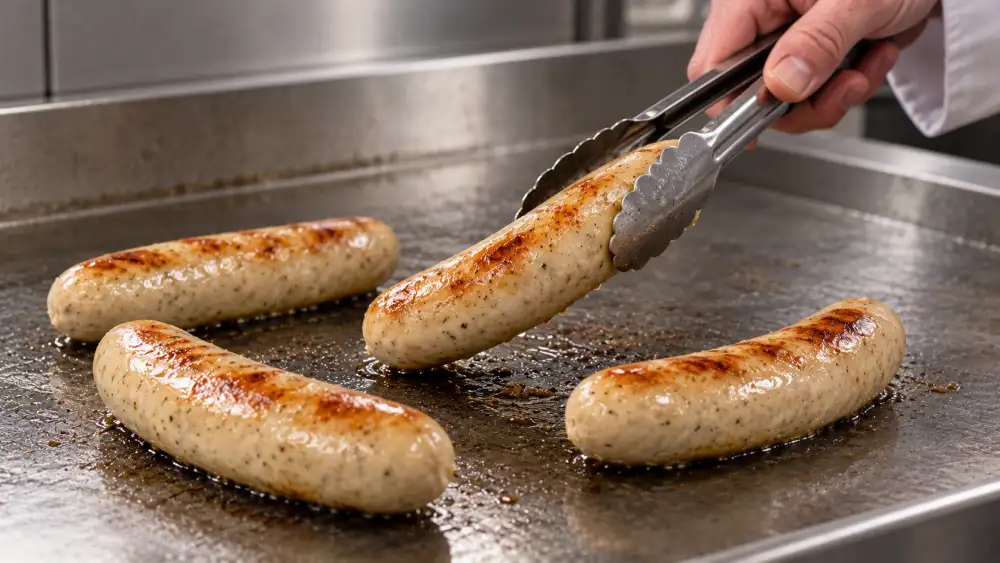
Follow the selected product’s storage, defrosting and reheating instructions. Official guidance on cooking and hot holding5 says reheated food should be steaming hot throughout and food being hot-held should be kept at or above 63°C. Build temperature checks into your food safety procedures rather than judging the centre by the colour of the casing.
Plan smaller replenishment batches around observed sales. Keep unopened stock under its specified storage conditions and identify when packs were opened or products defrosted. Do not use a generic shelf-life assumption for every sausage or topping.
Quality needs its own check. Taste the bratwurst after the holding period you actually expect to use, in the equipment you will use on site. Assess the casing, moisture and eating quality alongside the temperature records. A food safety limit is not a promise that the product will remain appealing indefinitely.
Operators trading in Scotland should also follow Food Standards Scotland’s CookSafe temperature guidance6, which specifies reheating to a core temperature of at least 82°C unless an appropriate alternative applies.
Give staff a clear process for replenishment, holding and any corrective action. Reduce waste by improving batch planning, while keeping the required safety controls in place.
Make the menu easy to order and easy to deliver
A short menu helps customers see what they are buying and helps staff produce the intended dish consistently. Start with a clearly named classic bratwurst serve, then add a variation only when it has a distinct role.
Write the description around the actual meal: “150g German bratwurst in a roll with cooked onions” tells the customer something useful. Show the price and make it clear which toppings are included. A photograph should represent the portion you intend to serve.
Behind the counter, turn that description into a repeatable build. Specify the roll, onion portion, sauce amount and packaging. Seasonal staff should be able to assemble the dish from a simple reference, rather than copy whoever happened to work the previous shift.
Keep current ingredient and allergen information for the complete serve, including bread, sauces and garnishes. The Food Standards Agency’s allergen guidance for food businesses7 explains the requirements and recommends written information supported by a conversation for non-prepacked food. Check the applicable guidance for your location and sales format.
Avoid assuming that a different roll makes the whole dish suitable for a particular dietary need. Ingredients, utensils, storage and preparation all need consideration before staff make a claim.
If you add a frankfurter, give it a clear purpose, such as an alternative flavour. Confirm its specification separately. Extra choices should earn their place through customer demand, rather than simply making the menu board longer.
Price the whole operation, not just the sausage
The sausage price is only the beginning of the calculation. The useful figure is what each sale contributes after its associated costs, and whether the expected sales can support the wider operation.
Cost the complete serve: sausage, bread, toppings, sauces, packaging and napkins. Then account for payment fees, expected waste and any event commission. Use a consistent VAT basis where applicable and check the treatment of your actual sales with your accountant.
For illustration only, suppose net sales revenue is £7 per serving and variable costs total £2.50. That leaves £4.50 towards staffing, pitch fees, equipment hire, energy and other operating costs. It is a contribution figure, not net profit, and those numbers are not a suggested selling price or a supplier quotation.
If the remaining costs for a trading session were £450, that example would require 100 servings to cover them. A more expensive pitch, additional staff or lower contribution would change the result. Run the calculation for a quiet session as well as a busy one.
Record portions sold by time period, topping use, waste and labour during the first services. That gives you evidence for adjusting opening hours, stock preparation and staffing.
A 150g bratwurst may help create a substantial, appealing offer. Its commercial value still depends on the complete serving cost, the price customers accept and the demand your location can generate.
Frequently Asked Questions
No. Bratwurst can be supplied raw or pre-cooked, so the name alone does not tell you how to prepare it. The Sausage Haus wholesale Pork Bratwurst discussed here is supplied pre-cooked and frozen.
If you change supplier or format, check the specification and preparation instructions again. Staff should never assume that a similar-looking sausage follows the same process.
Check with the organiser before committing to stock or equipment. Some events restrict competing menus or give traders exclusivity over particular products.
sk specifically about bratwurst and German sausages, rather than relying on a general acceptance of your catering application. Establishing the agreed menu in writing can help avoid a costly disagreement when you arrive.
Hiring can suit an initial trial or a short trading period. Buying becomes more attractive when you have a credible plan to reuse the structure and somewhere suitable to store it.
Compare the complete seasonal cost, including delivery, installation, collection, maintenance and storage. Check what equipment and facilities are included: an attractive empty hut may still need considerable spending before it becomes a workable food outlet.
Build a cautious forecast from the visitors who will actually pass your serving point during food trading hours. Total event attendance is a weak starting point if many visitors never reach your pitch.
Use several possible purchase rates rather than one confident prediction. Then check competing food offers, nearby seating, likely meal times and whether visitors have already eaten. Arrange replenishment around what your supplier can realistically deliver, so your opening order does not have to cover every possible outcome.
It can be, but judge the extra contribution against the extra workload. Chips introduce their own preparation, equipment, packaging and service demands.
Measure how many customers buy them, what each portion contributes and whether the fryer delays completed orders. A profitable-looking add-on can become less attractive if it slows the bratwurst queue or requires another member of staff. Test the combined order during a realistic rush before making it your default meal deal.
No. Bratwurst can stand on its own as a Christmas shopping lunch or family-friendly food offer.
Coffee, hot chocolate or a spiced apple drink can provide a suitable pairing where they fit your existing operation. Use drinks you can serve reliably, and cost any bundle properly. There is little benefit in adding a complicated drinks station if it distracts staff from the food.
Consider the groups you want to serve. One person’s dietary requirements can influence where a whole family or group chooses to eat.
clearly described meat-free option may help you serve those groups, provided you can prepare it appropriately. Check ingredients, cooking instructions and your ability to manage separate preparation where needed. Do not assume that a plant-based product is suitable for every allergy or dietary requirement.
Make the difference easy to understand before customers order. State the German bratwurst format, the 150g sausage portion and what comes with it, then show a realistic photograph of the finished serve.
Compare complete meals when reviewing your price. A lower headline price elsewhere may exclude toppings or sides. Keep your own pricing transparent and focus on delivering a satisfying meal consistently; a price premium needs something the customer can recognise.
For January, a smaller trial through your existing counter or pub menu may be more sensible than continuing the full outdoor operation. Adjust the accompaniments and presentation to the occasion, then use sales and contribution figures to decide whether it deserves a permanent place.
Conclusion
German bratwurst has a clear place in a Christmas food offer. It brings a recognisable market association and works in several useful formats, from a straightforward roll to a seated winter lunch. Operators can build on that familiarity while keeping the menu focused.
For a substantial main serve, the 150g version is a strong starting point. Match it with bread and packaging that fit, choose accompaniments your team can handle consistently, and test the finished dish under realistic service conditions. A generous sausage deserves a well-planned serve around it.
The same approach applies to the setting. A garden centre hut, pub event or café special should fit the customer visit and the site’s practical limits. Confirm the facilities and requirements, rehearse the service, and cost a quieter trading period before committing to a larger setup.
Start with an offer you can deliver well, then use actual sales and waste figures to decide what to develop. For current bratwurst formats, product information and wholesale enquiries, explore The Sausage Haus wholesale range and discuss the portion size and supply arrangements that suit your Christmas plans.
The Sausage Haüs
The Sausage Haus brings authentic German-style sausages to the UK market through a partnership between Hardy Remagen and Baird Foods.
Hardy Remagen is a long-established German producer with deep experience in traditional sausage making, continental meat products and modern food manufacturing. The range reflects the kind of products German shoppers already understand and enjoy: Bratwurst, Frankfurters, smoked hotdogs, cheese-filled sausages, Bockwurst, Weisswurst and other classic German-style lines.
In the UK, the range is represented and distributed by Baird Foods, giving retailers, wholesalers, caterers and foodservice operators access to German sausage products with a practical UK supply route. This combination is important: German manufacturing knowledge on one side, UK market understanding and distribution on the other.
For retail buyers, The Sausage Haus range offers a clear way to add something different to both chilled and frozen sausage fixtures. The products are built around real eating occasions: BBQs, premium hotdog nights, family meals, German street food, Oktoberfest promotions, Christmas market food and quick comfort meals at home.
The result is a range that gives shoppers something more distinctive than ordinary sausages and standard hotdogs, while giving buyers a compact, commercially useful product story with strong fresh and frozen potential.
References
Birmingham’s Frankfurt Christmas Market.
UK Government. Food business registration. GOV.UK. Updated June 25, 2026.
UK Government. Gas safety in catering and hospitality - HSE. GOV.UK. Updated March 9, 2021.
UK Government. Food hygiene for businesses. GOV.UK. Updated June 25, 2026.
Food Standards Scotland’s CookSafe temperature guidance.
UK Government. food businesses. GOV.UK. Updated July 17, 2026.