Beer and sausage pairings do not need tasting-note theatre to work on a pub menu. For most operators, the useful question is simpler: which house beers make bratwurst, frankfurters and hot dogs easier to sell, easier for staff to explain, and more appealing to customers choosing food with a pint?

Keep Pairings Simple

Match by Flavour
Use House Pairings
Overview
This guide shows how pubs, caterers, event operators and food buyers can use simple beer pairings to make bratwurst, frankfurters and loaded hot dogs easier to choose and easier for staff to recommend.
The focus is on practical house pairings, not complex tasting notes. It explains which styles of beer tend to suit classic, mild, spicy, smoky, currywurst-style and richer sausage serves.
It also highlights why toppings, sauces and the finished plate matter when choosing a pairing for menus, chalkboards, table talkers or event boards.
Key Takeaways
- Use familiar beers already on the bar where possible, rather than building pairings around hard-to-source or niche lines.
- Pair classic bratwurst with pilsner or clean lager to keep the serve fresh and accessible.
- Match mild frankfurters with wheat beer when you want a softer, rounded, continental-style pairing.
- Use pale ale for chilli, bacon or loaded frankfurters where bitterness can refresh the palate and support spice or richness.
- Consider amber ale or best bitter for smoked pork sausages, especially in traditional pub settings where ale drinkers need a clear option.
- Reserve porter or dark ale for richer loaded hot dogs or seasonal specials with hearty toppings such as bacon, fried onions, cheese or barbecue-style sauce.
Why Pub Beer Pairings Should Be Simple, Not Clever
Beer and sausage pairings work best when they help customers make a faster decision.
That is why house pairings should be simple, visible and easy for staff to explain. A customer choosing a bratwurst or loaded hot dog should be able to understand the match in a few seconds. “Crisp lager with classic bratwurst” is much more useful on a menu than a paragraph of tasting notes that nobody has time to read.
For operators, simplicity also protects service speed. If the pairing needs too much explanation, it becomes harder to train, harder to upsell and easier for staff to ignore during busy periods. A small set of reliable matches is more commercially useful than a long beer list where every sausage has a complicated recommendation.
The point is not to impress beer specialists. The point is to make the sausage offer feel more complete. A clear pairing can turn a standard food order into a more considered pub meal, especially when the sausage has enough character to carry the dish. Done well, beer and sausage pairings make the menu easier to buy from, not harder to understand.
What Makes a Good House Pairing for Sausages?
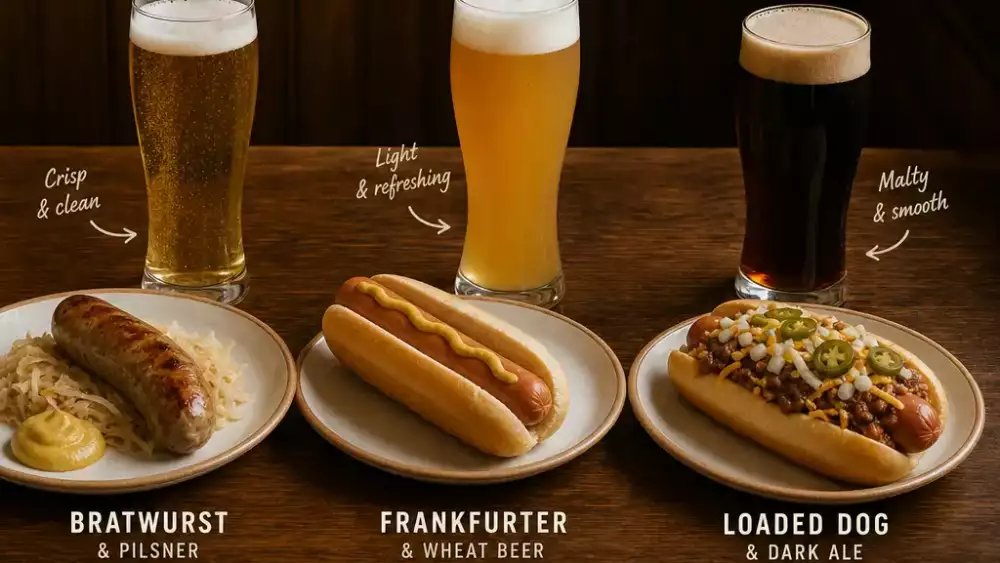
A good house pairing has to work on the plate, on the menu and during service. It is not enough for the beer and sausage to taste pleasant together in a quiet tasting session. The match also needs to be practical for staff, understandable for customers and realistic for the beers the pub already sells.
The best starting point is balance. A milder sausage usually suits a cleaner, lighter beer because the beer does not flatten the flavour. A smoky or spicy sausage can take something with more bitterness, malt or body. Rich toppings, cheese, bacon, onions, mustard, curry sauce or sauerkraut can shift the pairing as much as the sausage itself, so the full dish matters.
For a pub menu, a strong house pairing usually has four qualities:
- It is easy to explain: staff can describe the reason in one short sentence.
- It uses beers already on the bar: ideally draught, bottled or canned lines that are consistently available.
- It improves the dish: the beer should refresh, soften, cut through richness or support spice.
- It makes commercial sense: the pairing should encourage an extra drink or a more confident meal choice without complicating the offer.
The most useful pairings often come from contrast. Crisp beer with rich sausage, wheat beer with gentle spice, pale ale with chilli heat, or darker beer with smoky pork can all work because the customer can feel the logic straight away.
| Beer and Sausage Pairings at a Glance | |||
|---|---|---|---|
| Sausage dish | Best house beer pairing | Why it works | Best menu use |
| Classic bratwurst | Pilsner or clean lager | Crisp, refreshing beer cuts through pork richness without overpowering the sausage | Core pub menu, beer garden, match-day food |
| Mild frankfurter | Wheat beer | Softer, rounded beer suits a smoother sausage and keeps the serve easy-going | Lighter hot dog, family-friendly menu, lunch trade |
| Chilli or bacon frankfurter | Pale ale | Bitterness and hop character help balance spice, smoke and salt | Loaded hot dogs, craft-led pubs, evening specials |
| Smoked pork hot dog | Amber ale or best bitter | Malt and gentle bitterness support smoky pork without making the dish too heavy | Traditional pubs, ale drinkers, hearty pub plates |
| Currywurst-style sausage | Lager, helles or Kölsch-style beer | Clean, cold beer refreshes the palate and lets the curry sauce do the work | Specials board, event food, beer garden menus |
| Rich loaded hot dog | Porter or dark ale | Roasted and malty notes work with bacon, fried onions, cheese and richer toppings | Winter specials, evening menus, premium loaded serves |
Six Beer and Sausage Pairings That Work on a Pub Menu
1. Classic bratwurst with pilsner or clean lager
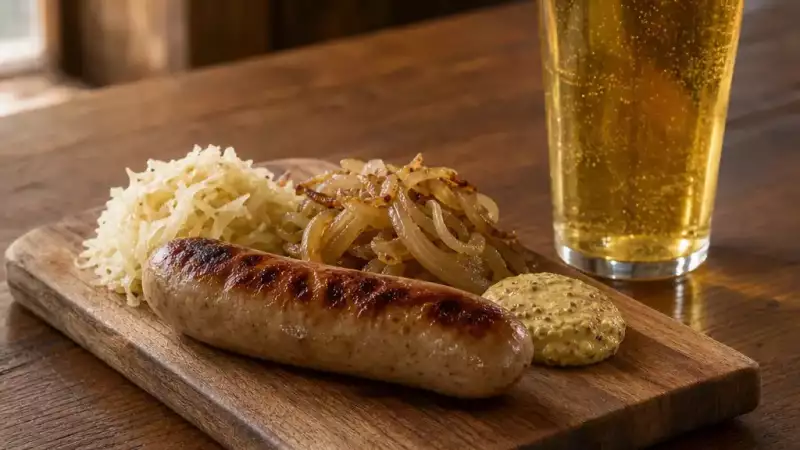
A classic bratwurst wants a beer that keeps the whole plate fresh. Pilsner or a clean, crisp lager works well because it cuts through pork richness without fighting the seasoning. This is the easiest house pairing for many pubs because lager is already familiar, widely ordered and simple for staff to recommend.
This tourism page highlights the history and regional identity behind Nuremberg bratwurst, which is useful context when pairing a classic bratwurst with beer.
Menu language can stay direct: “Classic bratwurst with crisp lager.” That is enough. It tells the customer what to expect and avoids making the pairing sound more complicated than it is.
This match works especially well with mustard, onions, sauerkraut, fries or a soft roll. It suits beer gardens, lunch menus, match-day food and high-volume service because the flavour combination is broad and accessible.
2. Mild frankfurter with wheat beer
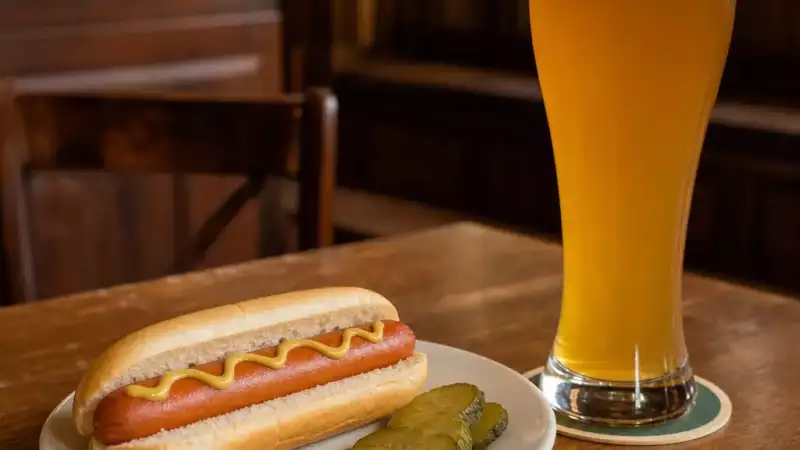
A milder frankfurter pairs naturally with wheat beer, especially where the dish is softer, lighter or slightly creamy. Wheat beer often has a rounded, gentle character that sits well with a smoother sausage and does not make the food feel heavy.
This cultural overview of German beer traditions helps explain where wheat beer fits when you are pairing smoother sausages on a pub menu.
This is a useful pairing for pubs that want a slightly more continental feel without becoming niche. It can work with a classic German-style hot dog, a cheese frankfurter, lighter mustard, pickles or a simple salad garnish.
The selling line could be: “Mild frankfurter with wheat beer for a softer, rounded match.” It sounds considered, but still understandable.
3. Chilli or bacon frankfurter with pale ale
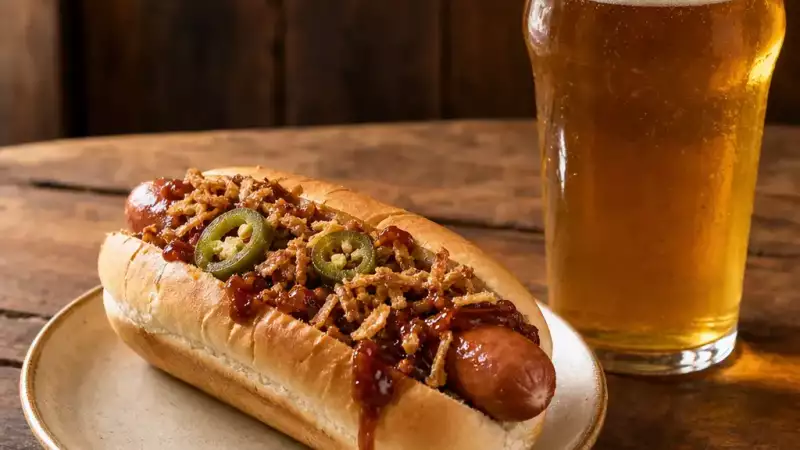
A chilli or bacon frankfurter needs a beer with enough character to stand up to smoke, salt and heat. Pale ale can work well here because the bitterness helps refresh the palate while the hop character gives the dish a sharper edge.
This is a good pairing for pubs with a craft-leaning audience, but it should still be kept simple. Avoid language that sounds like a tasting club. The customer only needs to know that the beer cuts through the richness and works with the spice.
This pairing suits loaded hot dogs, chilli toppings, crispy onions, bacon, jalapeños or smoky sauces. It gives operators a strong “pub food with a pint” option that feels more distinctive than a basic hot dog.
4. Smoked pork hot dog with amber ale or best bitter
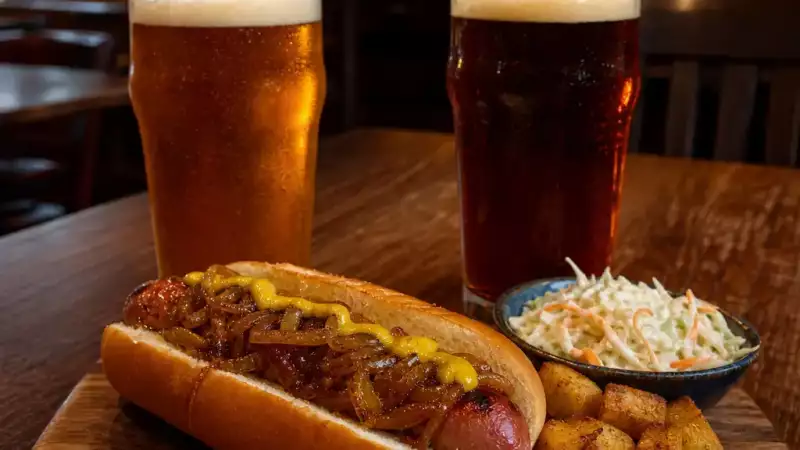
Smoked pork works well with beers that have more malt, body and warmth. Amber ale or a good best bitter can support the smoky flavour without turning the dish too heavy. This is a strong match for traditional pubs because it connects a German-style sausage offer with familiar British beer habits.
This tourism page highlights Düsseldorf’s Altbier brewing tradition, which is useful context when pairing sausages with maltier amber and bitter-style beers.
The key is not to make the beer too sweet or too strong. The aim is a rounded pairing that makes the sausage feel hearty and satisfying, especially in cooler months or on evening menus.
This can work well with caramelised onions, mustard, fried potatoes, coleslaw or a more substantial plate. It also gives staff an easy recommendation for customers who prefer ale to lager.
5. Currywurst-style sausage with lager, helles or Kölsch-style beer
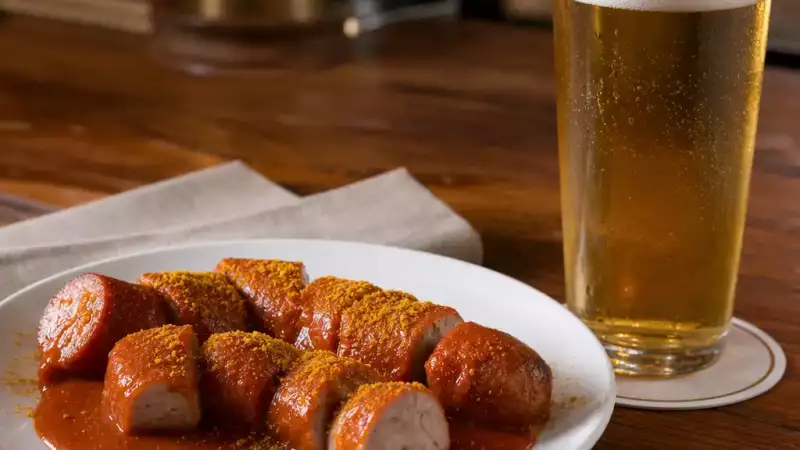
Currywurst-style dishes need refreshment. The sauce brings warmth, sweetness, spice and acidity, so the beer should keep the dish lively rather than adding more weight. Lager, helles or a Kölsch-style beer can all make sense because they are clean enough to let the sauce and sausage do the work.
This pairing is especially useful for pubs, street food traders and event operators because currywurst is easy to understand and easy to sell when described clearly. The beer match should be just as clear.
A simple line such as “Currywurst with cold lager” may sell better than a more elaborate explanation. It sounds like something people actually want to order.
6. Rich sausage or loaded hot dog with porter or dark ale
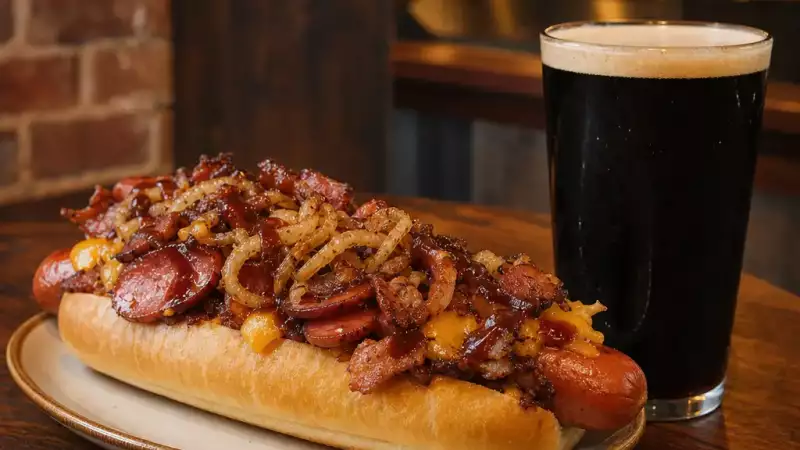
A richer sausage dish can work with porter or a dark ale when the toppings are hearty enough to justify it. Think smoked sausage, bacon, fried onions, barbecue-style sauce, cheese or a winter special. The darker beer can support roasted, savoury and slightly sweet notes in the dish.
This is not the pairing to put on every menu item. It works best as a special, seasonal feature or evening option, particularly where the pub already sells darker beers well.
The commercial value is in positioning. A loaded hot dog with a dark beer can feel like a proper meal rather than a quick snack. Used carefully, it gives the sausage menu more range without requiring a large number of extra dishes.
How to Match Bratwurst, Frankfurters and Hot Dogs Without Overcomplicating the Menu
The safest way to build beer and sausage pairings is to group dishes by flavour style rather than trying to create a separate pairing for every product. Most pub customers do not need that level of detail, and most staff will not use it consistently during busy service.
A practical menu can work with three or four pairing groups. Classic and mild sausages can sit with lager or wheat beer. Smoky or spicy sausages can sit with pale ale, amber ale or bitter. Rich loaded specials can sit with darker beer. Currywurst-style dishes can keep a clean lager match because the sauce is already doing plenty of work.
This approach keeps the menu tidy. It also means staff can learn the logic rather than memorise a long list. The training becomes simple: lighter sausage, lighter beer; spicy or smoky sausage, beer with more bite; rich loaded sausage, beer with more body.
Operators should also consider how the pairing appears on the menu. A small “House Pairing” note under selected dishes is often enough. It can be used on printed menus, chalkboards, table talkers or event boards without making the whole offer feel fussy.
Before committing, test the pairings with the actual serve: sausage, roll, sauce, garnish and beer. The topping can change everything. A pairing that works with a plain bratwurst may not work once cheese, chilli, onions or curry sauce are added. Keep the system simple, but test it in the form the customer will actually receive.
Turning Pairings Into Clear Menu Language Customers Understand
The best beer pairing is wasted if the menu wording makes it sound complicated. Pub customers do not need a technical explanation. They need a clear nudge that helps them choose quickly and feel good about the order.
The simplest format is a short “House Pairing” line under selected dishes. For example: “House Pairing: crisp lager” or “Best with pale ale.” That gives the customer a useful cue without making the menu feel like a beer textbook.
Where space allows, add one plain reason. Keep it about the eating experience, not brewing terminology. A customer understands “cuts through the richness” more quickly than a detailed note about bitterness, malt structure or yeast character.
Useful menu phrases include:
- Best with crisp lager - keeps the bratwurst fresh and easy to eat
- House pairing: pale ale - works well with chilli heat and smoky toppings
- Try with best bitter - a good match for smoked pork and onions
- Great with wheat beer - softer match for a milder frankfurter
- Cold lager recommended - especially useful with currywurst-style sauce
The language should feel natural to the venue. A traditional pub may prefer “recommended with our house bitter”. A beer garden may use “best with cold lager”. A craft-led bar may use “house pale ale pairing”.
The aim is to give customers a confident shortcut. Clear wording makes the sausage dish easier to visualise, easier to order and easier for staff to recommend.
Why Pairings Can Improve Perceived Value Without Adding Kitchen Complexity
Beer pairings can make a sausage dish feel more complete without changing the kitchen process. That matters because many operators want stronger perceived value, but do not want extra prep, extra garnishes or slower service.
A clear pairing changes how the customer reads the dish. A bratwurst with mustard and onions is already a good pub food option. Add a simple house lager pairing and it starts to feel more considered. The food has a place on the menu, a reason to exist and a natural drink alongside it.
This does not mean the sausage has to become expensive or overworked. In fact, pairings often work best when the food stays clean. A good bratwurst, frankfurter or smoked hot dog can carry the serve if the menu explains it well and the beer match makes sense.
The commercial benefit is subtle but useful. Pairings can help:
- make a sausage dish feel like a proper meal choice
- support drink attachment without aggressive upselling
- give staff an easy recommendation
- differentiate the offer from generic hot dogs
- make specials and beer garden menus feel more polished
There is also an operational advantage. The kitchen does not need to build a new dish for every beer. The bar and menu can do some of the work. For pubs, event traders and beer garden operators, that is often the sweet spot: better presentation of the offer without extra kitchen pressure.
Common Beer Pairing Mistakes That Make Sausage Menus Harder to Sell
The biggest mistake is trying to look too clever. A pairing that needs a long explanation may impress a small number of beer enthusiasts, but it often loses normal customers. If the wording slows people down, it is working against the menu.
Another common mistake is pairing by beer style alone and ignoring the finished dish. A plain bratwurst, a cheese frankfurter and a chilli-loaded hot dog are not the same experience, even if all three sit under “sausages”. Sauce, toppings, saltiness, spice and portion size can change the match completely.
Operators should also avoid making the beer recommendation too specific if the beer is not always available. A printed pairing with a seasonal or rotating line can quickly become awkward for staff. If the beer changes often, use a broader description such as “house pale ale” or “clean lager” rather than a precise product name.
Other mistakes include:
- recommending beers that overpower milder sausages
- using strong dark beers where a refreshing lager would sell better
- adding pairings to every dish until the menu feels cluttered
- writing tasting notes that customers do not understand
- ignoring what the pub already sells well
A good pairing should remove friction. If it creates more explanation, more training, more substitutions or more confusion, it needs simplifying.
How to Test House Pairings Before Committing Them to the Menu
House pairings should be tested with the actual serve, not just the sausage on its own. A bratwurst may work beautifully with a pilsner in isolation, but the result can change once mustard, onions, curry sauce, cheese, bacon or chilli are added.
Start with a small internal tasting. Use the beers already available on the bar and the sausage dishes as they will actually be served. Include the roll, toppings, sauces and sides. The question is not “which beer is most interesting?” The better question is “which pairing would a normal customer understand and enjoy?”
A practical test should look at four things:
- Taste: does the beer refresh, balance or support the dish?
- Clarity: can staff explain the pairing in one sentence?
- Availability: is the beer reliably on the bar?
- Commercial fit: does the match suit the venue, price point and customer base?
It is also worth testing pairings as specials before adding them permanently. A weekend beer garden menu, sausage night, match-day board or Oktoberfest-style promotion can show which combinations customers actually order.
Staff feedback matters too. If bar staff find the pairing easy to explain, it is more likely to be used. If they keep avoiding it or changing the wording, the idea may be too complicated.
Once a pairing works, keep the wording tight and consistent. A good house pairing should feel like a helpful recommendation, not a new operational system.
Frequently Asked Questions
No. It is usually better to pair only the dishes where the match gives the customer a clearer reason to order. If every item has a suggested beer, the menu can start to look cluttered and the recommendations feel less useful.
For most pubs, two to four house pairings are enough. Pair the strongest sellers, the most distinctive sausage dishes, or the dishes where staff can give a confident one-line recommendation. A classic bratwurst, a spicy frankfurter, a currywurst-style dish and a richer loaded hot dog are usually enough to create a useful spread.
small beer range can actually make pairing easier. You do not need a large craft list to make beer and sausage pairings work. A regular lager, a pale ale, a bitter or amber ale, and perhaps one darker beer or seasonal line can cover most practical sausage dishes.
The key is not variety for its own sake. It is making the beers you already sell work harder on the food menu. A clear “house lager with classic bratwurst” recommendation can be more useful than a complicated list of specialist beers that are not always available.
Draught is often easiest for pubs because it fits normal ordering habits and does not create a separate stock conversation. If the beer is already a reliable draught line, staff can recommend it naturally with the food.
Bottled or canned beer can still work well where the match is specific, seasonal or premium. This may suit German-style specials, beer garden promotions, tasting boards or event menus. The important point is consistency. If the pairing is printed on the menu, the beer should be available often enough to avoid staff having to apologise or improvise.
Keep the wording casual and useful. Staff do not need to “sell” the pairing heavily. A simple line such as “That one works really well with the pilsner because it cuts through the richness” is enough.
The recommendation should feel like helpful guidance, not an upsell script. This works especially well when the customer is already choosing between two dishes or asking what is popular. Train staff around plain reasons: crisp, refreshing, smoky, spicy, rich, lighter, fuller-bodied. That gives them language customers actually understand.
They can work for street food and event traders, but the format needs to be simpler. At an event, customers are often ordering quickly, standing in a queue and reading from a board. Long explanations will not work.
trader might use one short line on the board, such as “Best with lager” or “Great with pale ale” if the event has a bar partner. For festivals, beer gardens and outdoor events, the pairing can also help with joint promotions, but operators should check site rules, bar arrangements, licensing restrictions and any agreements with the event organiser before planning around it.
Yes, but only if the pairing makes the sausage dish feel like a proper pub food choice rather than a side option. A bratwurst with a clear house beer pairing can feel more complete and intentional than a plain hot dog listed without context.
This is where menu language matters. “Classic bratwurst, mustard, onions and house lager pairing” gives the customer a stronger picture than simply “hot dog and chips”. The pairing should support the dish’s identity, not try to rescue a weak serve. The sausage, roll, toppings and portion still need to feel good value.
Sometimes, but strength is not the only issue. A higher-ABV beer is not automatically a better match for a rich sausage. Body, bitterness, malt character and refreshment matter more than alcohol level alone.
For lunch menus, beer gardens and high-volume service, lower or mid-strength beers may be more commercially practical. A clean lager, pale ale or best bitter can often do the job without making the pairing feel heavy. Stronger beers are better used carefully for evening specials, winter menus or richer loaded dishes where the customer expects a more substantial serve.
The cleanest approach is usually a small “House Pairing” note under selected dishes. It should be short enough to scan and clear enough for staff to repeat.
For example: “House Pairing: crisp lager” or “House Pairing: pale ale.” If there is room, add a brief reason: “cuts through the richness” or “works well with chilli heat.” Avoid long tasting notes on the main food menu. If a pub wants more detail, that can sit on a table talker, chalkboard or specials card instead.
Conclusion
Good beer and sausage pairings are not about proving how much the menu knows about beer. They are about making the buying decision easier. A clear house pairing gives customers a simple reason to choose bratwurst, a frankfurter or a loaded hot dog instead of defaulting to the burger, chips or chicken option.
For pubs, the best pairings are usually the ones staff can explain in one sentence. A crisp lager with a classic bratwurst, a wheat beer with a milder sausage, a pale ale with something smoky or spicy, or a darker beer with a richer pork sausage can all work well if the match feels natural and easy to sell. The aim is not to create a beer-geek exercise. It is to make the sausage offer feel more considered, more complete and more worth ordering.
The commercial value comes from simplicity. A small number of house pairings can support menu boards, table talkers, specials, event menus and staff recommendations without slowing service or confusing customers. It also helps position German sausages as proper pub food rather than a quick filler item.
For operators building a stronger sausage offer, The Sausage Haus can support practical menu ideas built around premium German-style bratwurst, frankfurters and hot dogs for UK foodservice.
The Sausage Haüs
The Sausage Haus brings authentic German-style sausages to the UK market through a partnership between Hardy Remagen and Baird Foods.
Hardy Remagen is a long-established German producer with deep experience in traditional sausage making, continental meat products and modern food manufacturing. The range reflects the kind of products German shoppers already understand and enjoy: Bratwurst, Frankfurters, smoked hotdogs, cheese-filled sausages, Bockwurst, Weisswurst and other classic German-style lines.
In the UK, the range is represented and distributed by Baird Foods, giving retailers, wholesalers, caterers and foodservice operators access to German sausage products with a practical UK supply route. This combination is important: German manufacturing knowledge on one side, UK market understanding and distribution on the other.
For retail buyers, The Sausage Haus range offers a clear way to add something different to both chilled and frozen sausage fixtures. The products are built around real eating occasions: BBQs, premium hotdog nights, family meals, German street food, Oktoberfest promotions, Christmas market food and quick comfort meals at home.
The result is a range that gives shoppers something more distinctive than ordinary sausages and standard hotdogs, while giving buyers a compact, commercially useful product story with strong fresh and frozen potential.