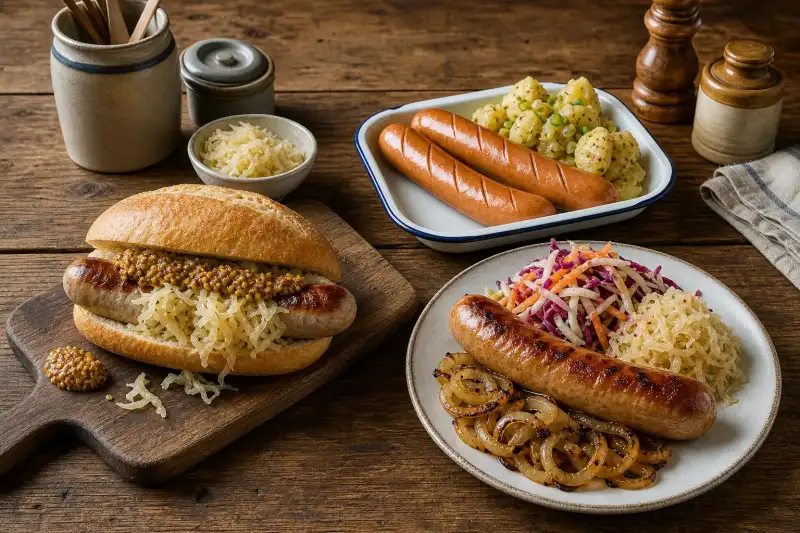
Few German street foods are as instantly recognisable as Currywurst. A sausage, sliced into bite-sized pieces, covered with glossy curry ketchup, dusted with curry powder and usually served with chips in a small cardboard tray. It looks simple. It is simple. But that is exactly why it works.
Last updated: May 2026

Know the classic format

Choose the right sausage

Keep service fast
Übersicht
Currywurst is not fine dining dressed down. It is proper street food: hot, fast, saucy, filling and easy to understand in one glance. In Germany, it belongs to railway stations, high streets, football grounds, Christmas markets, city centres, trade fairs, late-night snack bars and motorway stops. It is the kind of food people eat standing up, sitting on a bench, walking through a market or waiting for a train.
For UK operators, Currywurst is more than a nostalgic German dish. It is a very practical menu idea. It can be served quickly, portioned consistently, priced clearly and adapted for pubs, cafés, food festivals, garden centres, farm shops, mobile catering units and casual dining menus.
The important point is this: Currywurst should not feel like a complicated “German-themed” recipe. At its best, it is a strong sausage, a good sauce, hot chips, a dusting of curry powder and a serving format that makes people want to pick up a fork immediately.
Key Takeaways
- Currywurst is one of Germany’s most famous street foods, usually made with sliced sausage, curry ketchup and curry powder.
- The dish is strongly associated with Berlin, although different German regions now serve their own versions.
- For UK foodservice, Currywurst works because it is fast, filling, easy to explain and visually appetising.
- The sausage matters. A weak sausage disappears under the sauce, while a good German-style Bratwurst, Frankfurter, Krakauer or smoked hotdog gives the dish proper structure.
- Currywurst and chips can be a strong menu item for pubs, food festivals, cafés, garden centres, farm shops, showmen and event caterers.
- The best versions keep the serving simple: sliced sausage, hot curry ketchup, curry powder, chips, mayo or ketchup, and a cardboard tray or casual plate.
What Is Currywurst?
Currywurst is a German fast-food dish made from sausage served with curry ketchup and curry powder. The sausage is usually cooked, sliced and covered with sauce before serving. In many Imbiss stands, the sausage is cut into chunky pieces using a special sausage cutter, then served in a small cardboard tray with a little fork.
This cultural overview explains how currywurst is typically served at German Imbiss stands, which is useful context if you want to understand the dish’s classic street-food format.
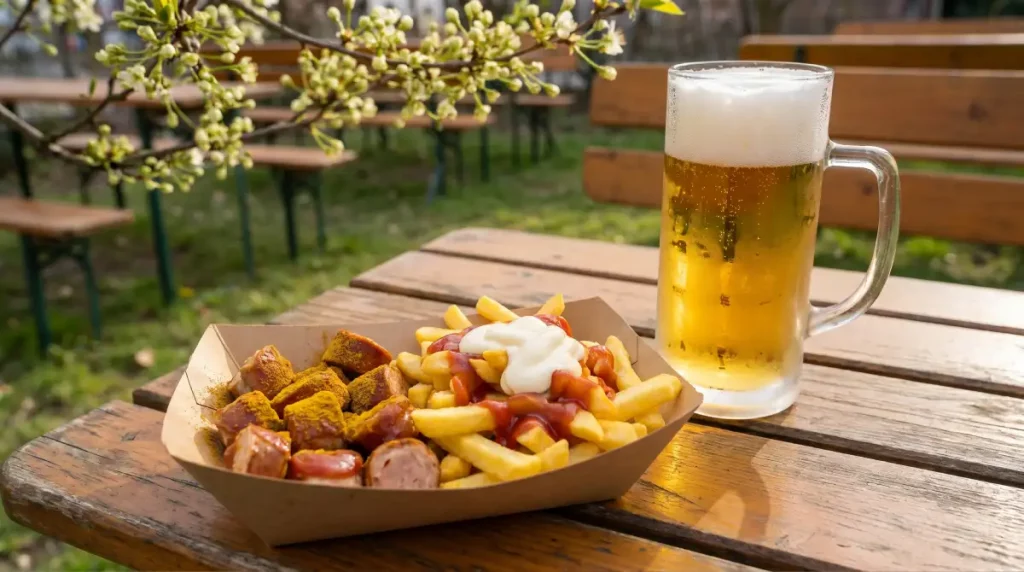
The sauce is normally tomato-based, sweet, tangy and mildly spiced. It is not the same as British chip-shop curry sauce. It is not a heavy curry gravy. It is closer to a spiced ketchup or curry ketchup: glossy, red, slightly fruity, lightly warm and designed to cling to the sausage.
The classic side is Pommes, meaning chips or fries. In Germany, these are often served with mayonnaise, ketchup or both. A bread roll is also common, especially when the Currywurst is eaten as a smaller snack rather than a full meal.
That is the basic idea. But the appeal of Currywurst comes from the balance:
- A hot sausage with bite.
- A sauce that is bold but not overpowering.
- Enough curry powder to give the dish its identity.
- A side that makes it feel filling.
- A tray format that feels casual, fast and authentic.
- It is a dish built around speed, flavour and familiarity.
The Story Behind Germany’s Street Food Icon
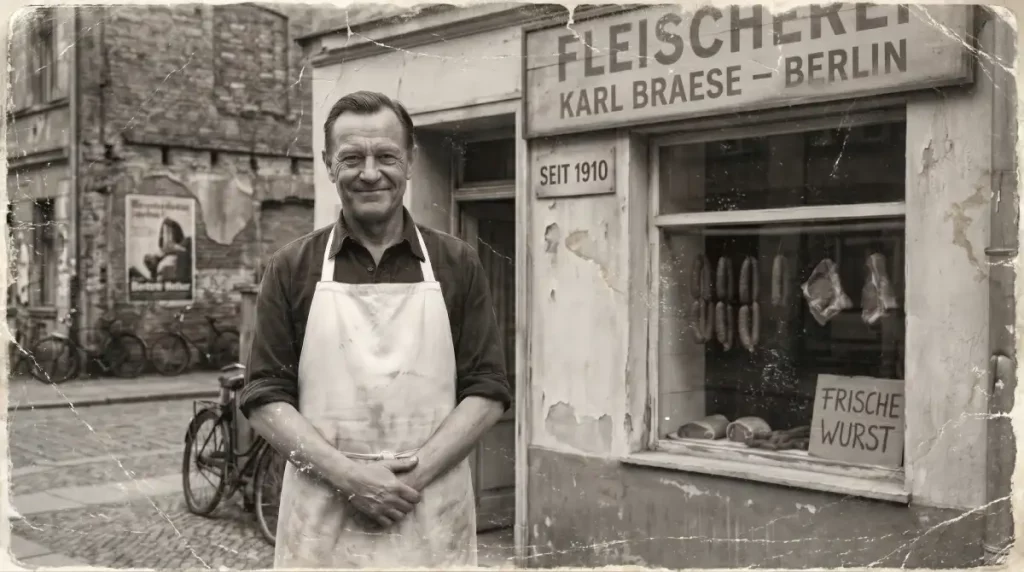
The best-known Currywurst origin story takes us to post-war Berlin. The dish is most often linked to Herta Heuwer, who is said to have created a spiced tomato sauce using ingredients such as ketchup, curry powder and Worcestershire sauce in 1949. She served it over sausage from her snack stand in Berlin, and the idea caught on.
This is the version most commonly repeated, and it remains the story most people associate with the invention of Currywurst. But, as with many famous food legends, there are other claims, family stories and local memories.
In the author’s family, the story was always told differently. The author’s father insisted that his own father, the author’s grandfather, had created the dish a year before Herta Heuwer. He was a Berlin butcher and, before the Second World War, had travelled to India, where he experienced the food, spices and curry flavours that were still unusual in Germany at the time. According to the family story, this gave him the idea of combining German sausage with a spiced tomato-based sauce long before Currywurst became famous.
The timing, however, was against him. Shortly after, the war began and he was forced to join the army. The idea had to wait. Only after returning from war captivity did he finally have the chance to develop and serve the dish. Whether this family version can ever be proved in the way official food histories like to demand is another matter. But it shows something important: Currywurst did not appear from nowhere. It came from Berlin’s post-war food culture, from butchers, snack sellers, returning soldiers, scarce ingredients, imported flavours and people trying to make something hot, affordable and exciting out of what was available.
That is why Berlin remains the city most closely associated with Currywurst, even if the exact origin story is still open to debate. The dish became part of everyday urban life: affordable, fast, hot and modern. For a rebuilding city, Currywurst was practical food with a bit of excitement. It took a familiar German sausage and gave it a new flavour identity.
This is also part of the reason Currywurst still matters. It is not a heritage dish in the old farmhouse sense. It is a modern German street-food invention, shaped by post-war Berlin and by the collision of familiar sausage culture with new spices and sauces. It belongs to kiosks, snack bars, railway stations, high streets and busy public places. It has always been commercial, quick and accessible.
That makes it especially relevant for UK operators today. Currywurst was never meant to be slow, delicate or fussy. It was designed, almost by nature, for service: a good sausage, a bold sauce, a dusting of curry powder and a tray that can be handed over quickly.
Why Currywurst Became So Popular

Currywurst became popular because it solves several foodservice problems at once.
First, it is easy to understand. A customer does not need a long explanation. Sausage, sauce and chips are familiar. The curry powder gives it a clear point of difference without making it intimidating.
Second, it looks good when served properly. The sliced sausage, red sauce, yellow curry powder and golden chips create strong visual contrast. It photographs well, sells well from a counter and looks generous in a tray.
Third, it is flexible. It can be a snack, a lunch, a festival portion, a pub special, a takeaway item or part of a German-themed menu. It can be sold as “Currywurst & Chips” without needing an elaborate description.
Fourth, it has a strong story. British customers are increasingly familiar with German sausages through Christmas markets, Oktoberfest events, beer halls and street-food traders. Currywurst carries that same recognition, but with a saucier, more indulgent format.
Finally, it is fast. For an operator, this is crucial. A good Currywurst setup can be much quicker than a complicated burger, loaded hotdog or hand-built wrap. The sausage can be cooked or held correctly, the sauce can be kept hot, the chips can be portioned quickly, and the finished dish can be handed over in seconds.
Currywurst Is Not British Sausage Curry
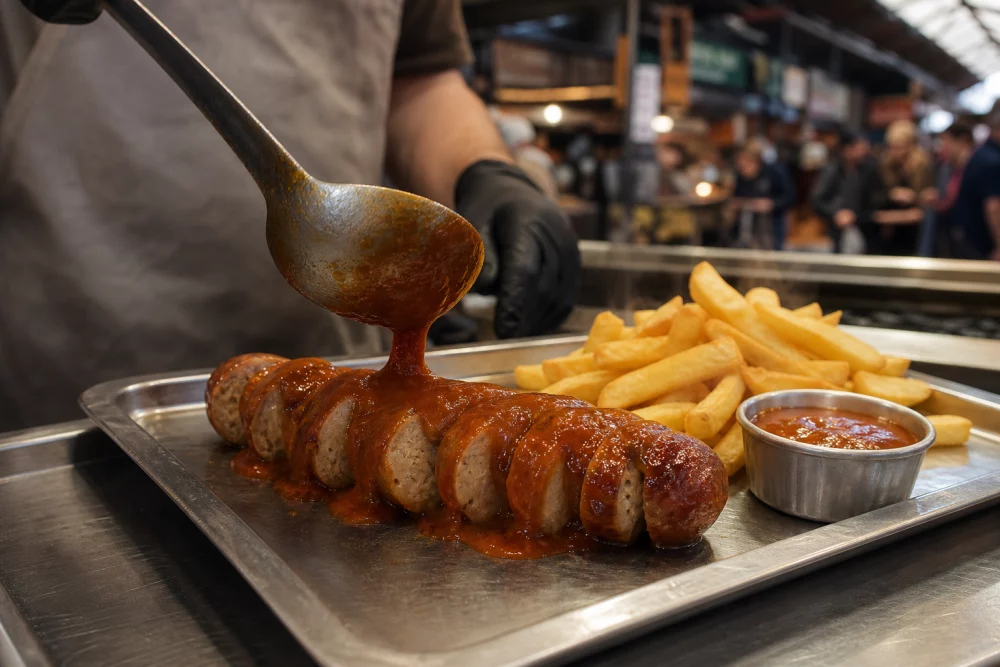
One common mistake is to think of Currywurst as a German version of sausage curry. It is not.
British sausage curry often means sausages in a curry-style sauce or gravy. The sauce is usually the main feature and can be quite heavy. Currywurst is different. The sausage remains the centre of the dish. The sauce is a topping, not a stew. It should coat the sausage, not drown it completely.
The curry flavour is also different. Traditional Currywurst sauce is usually mild, sweet, tangy and aromatic. It does not need to taste like Indian curry, chip-shop curry or a spicy takeaway sauce. In fact, if the sauce becomes too complex, it can lose the clean street-food character that makes Currywurst so effective.
A good Currywurst sauce should support the sausage. It should add shine, sweetness, acidity and warmth. The curry powder on top provides the final aroma and the visual cue.
For UK menus, this distinction matters. Currywurst should be presented as German street food, not as a curry dish with sausages. That makes the offer clearer and more authentic.
The Sausage Is the Foundation

The biggest mistake with Currywurst is using the wrong sausage.
Because the sauce is bold, some operators assume the sausage does not matter. The opposite is true. A poor sausage becomes even more obvious once it is sliced. If the texture is soft, the casing is weak, the flavour is bland or the size looks mean, the whole dish feels cheap.
A proper Currywurst needs a sausage that can hold its own. It should have enough bite, enough flavour and enough visual presence after slicing. The pieces should look substantial in the tray, not like small processed chunks hiding under ketchup.
Different sausage styles can work:
- A Bratwurst gives a classic German feel and a mild, savoury base.
- A smoked pork hotdog or Frankfurter adds a deeper, smokier flavour.
- A Krakauer or Bacon Frankfurter brings more seasoning, colour and character.
- A curry-flavoured sausage can make the whole dish even more focused if the balance is right.
For UK operators, this opens several menu possibilities. A standard Currywurst can use a classic German-style sausage. A premium version can use a larger Bratwurst or smoked sausage. A special can use a chilli, bacon or curry-led sausage for more impact.
What matters is that the sausage still tastes good on its own. The sauce should make it better, not rescue it.
How Currywurst Is Served in a German Imbiss
The most authentic Currywurst format is not complicated.
This tourism page highlights a Munich currywurst stand format that is useful for comparing authentic street-food presentation and service style.
At a German Imbiss, the sausage is cooked, sliced, placed in a small tray, covered with curry ketchup and dusted with curry powder. Chips are either served alongside or in a separate tray. The customer receives a small fork and eats it immediately.
There is no need for excessive garnish. No micro herbs. No unnecessary salad. No forced “premium” decoration. Currywurst should look hot, saucy and ready to eat.
That does not mean it should look careless. Good Currywurst presentation is about generous simplicity:
- The sausage should be sliced evenly.
- The sauce should look glossy and warm.
- The curry powder should be visible.
- The chips should look crisp and golden.
- The tray should feel full but not messy.
- The mayo and ketchup should sit clearly on the chips, not smear across everything.
This style is important because it communicates authenticity. A customer who has eaten Currywurst in Germany expects that straightforward tray format. A customer who has not eaten it before still understands it instantly.
Currywurst and Chips: A Strong UK Menu Fit
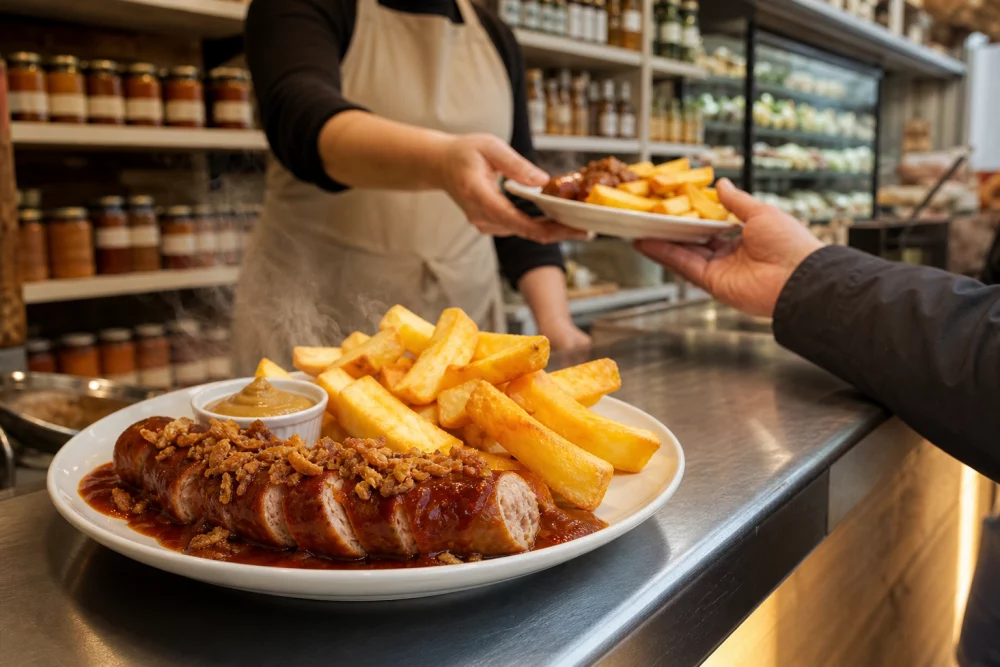
is probably the easiest format for UK customers to accept. Chips are familiar, filling and commercially useful. They turn the dish from a snack into a proper meal portion.
This AHDB consumer insight looks at how processed red meats fit into in-home meals, which is useful context when considering currywurst with chips as a more familiar, filling option for UK customers.
This makes Currywurst especially useful for foodservice settings where customers want something quick but satisfying. It can work well in:
- Food festivals and outdoor events.
- Pub gardens and beer festivals.
- German-themed nights.
- Christmas markets.
- Farm shop cafés.
- Garden centre cafés.
- Sports venues.
- Showmen and fairground catering.
- Street-food stalls.
- Casual takeaway menus.
The dish also has good upsell potential. Operators can offer a standard Currywurst & Chips, then add premium variations such as extra sausage, extra sauce, cheese topping, spicy sauce, bacon pieces or a larger “loaded” tray.
However, the core version should remain clean. If the standard Currywurst is strong, specials become easier to sell. If the base dish is already confused, adding more toppings only makes it worse.
Why Currywurst Works for Fast Service
From an operator’s point of view, Currywurst has one very attractive feature: it can be extremely fast to serve.
A good service system might look like this:
- Sausages are cooked or hot-held correctly.
- Curry sauce is kept hot in a bain-marie or sauce warmer.
- Chips are portioned from the fryer station.
- The sausage is sliced quickly.
- Sauce and curry powder are added.
- The tray is handed over.
This is much faster than building a complex burger or assembling a heavily customised hotdog. It also reduces decision fatigue for customers. A simple menu board with “Currywurst & Chips” can move a queue quickly.
For festivals and high-volume events, that matters. Speed protects revenue. Every slow menu item creates a bottleneck. Currywurst, when set up properly, can be one of those rare dishes that feels special to the customer but remains simple for the operator.
It also travels reasonably well over a short distance. A customer can carry a tray away from the counter without the food collapsing. There is no tall bun, no overloaded stack and no complicated wrapping.
Menu Positioning: Snack, Meal or Hero Dish?
Currywurst can sit in different places on a menu depending on the business.
This industry body advice from AHDB explains different places on a menu for dishes like currywurst, which is useful when you are shaping menu structure around diner choice.
As a snack, it can be served without chips or with a small bread roll. This is closer to the quick German Imbiss format. It works where people want something hot but not too large.
As a meal, it is served with chips and sauces. This is the strongest UK format because it feels complete and filling.
As a hero dish, it can be made larger and more premium. This might mean a bigger German sausage, thicker chips, a house curry ketchup, branded tray presentation and a clear German beer pairing.
The key is not to make the name too complicated. “Currywurst & Chips” is clear. “Berlin Currywurst Tray” is also clear. “German Currywurst with Pommes, Curry Ketchup and Mayo” works if the audience likes more detail.
Avoid making it sound too posh. Currywurst is not meant to be elegant. It should sound confident, generous and direct.
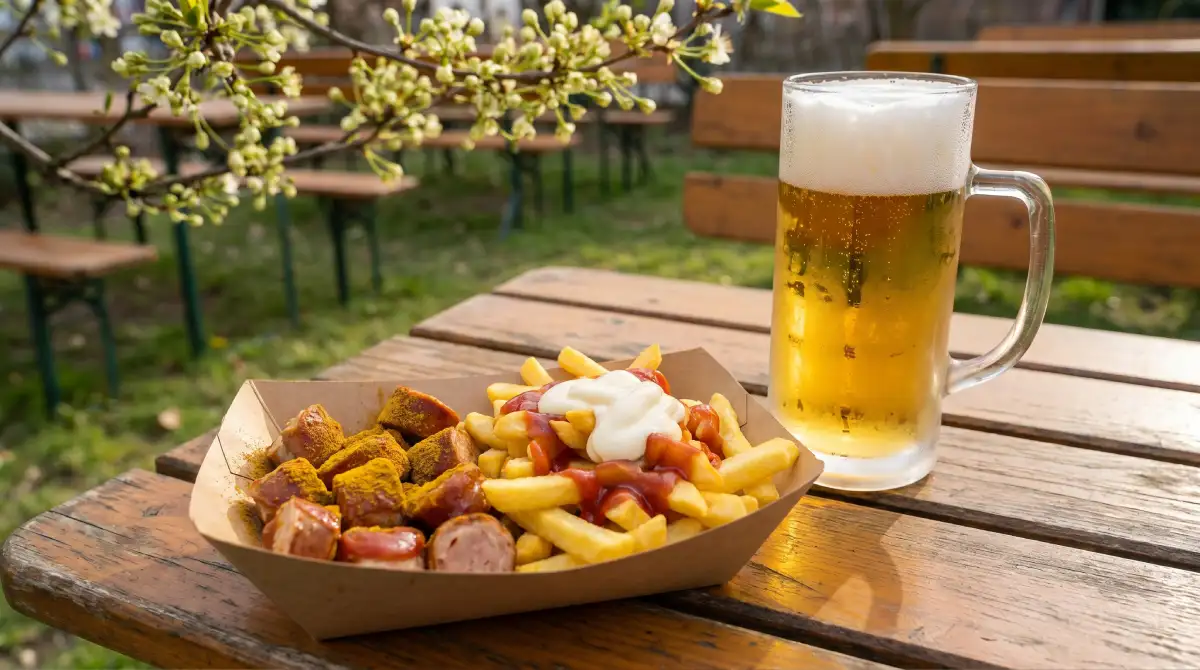
Berlin Currywurst
Ingredients
Method
- Fry the sausages in a little oil or grill until golden brown and cooked through.
- In a saucepan, sauté the chopped onion until translucent.
- Add tomato paste, stir briefly, then mix in ketchup, curry powder, paprika, honey, vinegar, and Worcestershire sauce.
- Let it simmer for 10–15 minutes until thick and glossy. Adjust seasoning as needed.
- Slice the sausages into bite-sized pieces and pour the sauce generously over the top.
- Dust lightly with extra curry powder before serving.
- Serve with Bratkartoffeln, chips, or a fresh roll for the full German street food experience.
Common Mistakes to Avoid
The first mistake is using a weak sausage. Currywurst is still a sausage dish. If the sausage is poor, the dish fails.
The second mistake is drowning everything in sauce. A generous amount of sauce is good, but the sausage should still be visible. The customer should see sliced sausage pieces, not just a red puddle.
The third mistake is using the wrong curry flavour. Currywurst should be aromatic and mildly spiced, not aggressively hot or heavily curried. Heat can be offered as an option, but the standard version should be broadly appealing.
The fourth mistake is poor chip quality. If the chips are pale, limp or under-seasoned, the whole tray looks disappointing. Currywurst and chips should look like a proper comfort-food portion.
The fifth mistake is overcomplication. Too many toppings can turn Currywurst into a confused loaded-fries dish. There is nothing wrong with specials, but the classic format should stay recognisable.
The final mistake is bad serving format. Currywurst belongs in a tray, bowl or casual plate. It should be easy to eat with a fork. Serving it in a way that makes it awkward defeats the whole purpose.
Product Ideas for Currywurst Menus
A strong Currywurst menu does not need dozens of options. In most cases, three clear versions are enough.
The classic version should use a good Bratwurst or Frankfurter with curry ketchup, curry powder and chips. A smoky version could use a smoked pork hotdog or Krakauer for deeper flavour. A spicy version could use a chilli sausage or hotter curry sauce for customers who want more punch.
For food festivals, a simple three-item board might be stronger than a long menu:
- Classic Currywurst & Chips.
- Smoked Currywurst & Chips.
- Spicy Currywurst & Chips.
This gives customers choice without slowing service. It also allows operators to test demand before adding more ambitious specials.
For pubs and cafés, Currywurst can also work as a weekly special. It gives the menu something different without requiring a complete kitchen rethink. The operator needs good sausage, chips, sauce management and simple plating.
Why Currywurst Belongs on UK Foodservice Menus
The UK market already understands sausages, chips, ketchup and curry flavours. Currywurst brings these familiar elements together in a way that feels different enough to be interesting but not so unusual that customers hesitate.
That is a powerful position. Many menu items fail because they require too much explanation. Currywurst does not. The name may be German, but the dish is immediately understandable once seen.
It also has useful marketing value. Photos of Currywurst are naturally strong: sliced sausage, red sauce, yellow curry powder, golden chips and white mayo. It can look excellent on menus, posters, social media and counter displays.
For operators trying to add a German sausage offer, Currywurst can be a very practical entry point. It does not require customers to understand the difference between every German sausage type. The dish itself does the selling.
For The Sausage Haus, Currywurst is a natural fit because it puts the sausage at the centre of the plate. The sauce attracts attention, but the sausage decides whether the customer comes back.
Frequently Asked Questions
Usually not. Currywurst sounds German, but the actual dish is easy to understand once people see it: sliced sausage, curry ketchup, curry powder and chips. That makes it much less risky than more obscure regional dishes.
For UK operators, the key is menu wording and presentation. “German Currywurst & Chips” or “Berlin-style Currywurst Tray” explains the idea quickly. A good photo or counter display does even more work than a long menu description.
Currywurst suits any setting where customers want hot, filling food without a long wait. It is especially strong for pubs, beer gardens, food festivals, farm shop cafés, garden centres, event catering, Christmas markets and casual takeaway counters.
It is less suited to very formal menus where everything needs knife-and-fork plating. Currywurst works best when the operator embraces what it is: fast, saucy, generous German street food.
Both can work, but the strongest UK version is usually Currywurst with chips. British customers already understand sausage and chips as a proper meal, so the curry sauce and German identity make the dish feel more interesting without making it difficult to sell.
smaller standalone Currywurst portion can still work at beer festivals, markets or late-night snack counters. For lunch menus, pub specials or garden centre cafés, chips usually make the dish feel better value.
Very important. Once the sausage is sliced, a small or thin sausage can look disappointing very quickly. Currywurst needs pieces that look substantial in the tray and still have enough bite after being covered with sauce.
For a commercial menu, the sausage should feel generous enough to justify the price. A proper German-style Bratwurst, Frankfurter, smoked hotdog or Krakauer gives the tray more presence than a standard small sausage.
Yes, but only if the setup is simple. The sauce should be hot and ready, the chips station should be organised, and the sausage slicing needs to be fast and consistent. In a busy unit, the process should feel like assembly, not cooking from scratch every time.
The best service model is usually: cook or hold the sausage correctly, portion the chips, slice the sausage, add hot curry ketchup, dust with curry powder and hand over. If every order needs too many custom decisions, the speed advantage disappears.
They can, but they do not have to. A reliable prepared curry ketchup or sauce can be more practical for busy catering, especially where consistency and speed matter. The important thing is that the sauce tastes balanced and works with the sausage.
house sauce can be useful for pubs, cafés or operators who want a signature item. For festivals and high-volume service, consistency, food safety, holding quality and portion control are often more important than claiming everything is homemade.
The standard version should normally be mild to medium. Currywurst is meant to be widely appealing, not a chilli challenge. The curry flavour should add warmth, aroma and colour without putting off families or lunchtime customers.
hotter version can work well as a second menu option. For example, an operator could offer “Classic Currywurst” and “Spicy Currywurst” without complicating the menu too much.
fluted cardboard tray is probably the most authentic and practical format. It keeps the dish casual, holds the sauce well and makes the food easy to eat with a small fork. It also looks recognisably German Imbiss-style.
For sit-down venues, a shallow bowl or enamel-style tray can work well. The main rule is simple: the customer should be able to eat it easily without chasing sausage pieces around a flat plate.
Yes, but the premium feel should come from the quality of the sausage, the chips, the sauce and the presentation. Currywurst should not be made “premium” by adding random garnish or turning it into something unrecognisable.
stronger sausage, crisp chips, proper curry ketchup, good mayo and a generous tray can justify a better price far more convincingly than overcomplicated toppings.
They should check the practical trading conditions first: power, fryer capacity, hot holding, service space, queue flow, waste handling, allergen information and any site rules on cooking or gas equipment. The dish itself is simple, but the setup still has to work under pressure.
It is also worth testing portion size and service time before a live event. A Currywurst tray that looks good in the kitchen may need small adjustments once it is served at volume.
Conclusion
Currywurst has survived because it does exactly what great street food should do. It is simple, fast, generous and memorable. It does not need a complicated explanation or a long list of ingredients. A good sausage, hot curry ketchup, curry powder and chips are enough.
This recipe guide shows how to make a classic currywurst sauce, including a hot curry ketchup style that works well for home cooking or menu testing.
For UK operators, that simplicity is the opportunity. Currywurst can bring a clear German street-food identity to a menu without slowing down service or confusing customers. It can work as a snack, a full meal, a festival tray, a pub special or a casual café dish.
But the sausage has to be right. Currywurst may be famous for its sauce, but the sausage is still the foundation. Use a weak sausage and the dish becomes ordinary. Use a proper German-style sausage and the whole tray suddenly makes sense.
That is why Currywurst remains one of Germany’s great street-food ideas, and why it still has so much potential for UK foodservice today.
The Sausage Haüs
The Sausage Haus brings authentic German-style sausages to the UK foodservice, retail, catering and events market. The range is produced by Remagen, a specialist sausage manufacturer with deep experience in German-style products, and distributed in the UK by Baird Foods, making it accessible to operators who need reliable supply, consistent quality and products that work in real service conditions.
From Bratwurst and Frankfurters to smoked hotdogs, Currywurst ideas and speciality sausage concepts, The Sausage Haus range is built for businesses that want more than a basic sausage. These are products designed for strong flavour, attractive presentation, dependable cooking performance and practical use across busy kitchens, counters, festivals and catering setups.
For pubs, cafés, farm shops, garden centres, food festivals, showmen, wholesalers, caterers and retail food operators, The Sausage Haus helps bring proper German sausage culture to modern UK menus. With Remagen as the producer and Baird Foods as the UK distributor, the concept combines German sausage expertise with the commercial supply structure needed by British operators.