Cooking bratwurst well in foodservice is not only about heat. It is about colour, casing texture, speed of service, batch control and how the sausage performs when customers are waiting. This guide looks at practical professional methods, including BBQ grill, griddle, combi oven, bratt pan and salamander finishing.

Choose the Right Method

Cook With Controlled Heat

Batch, Finish, Serve
Overview
This guide helps professional kitchens and event operators choose the right way to cook bratwurst for consistent service, good colour and reliable eating quality.
It compares BBQ grills, griddles, combi ovens, bratt pans and salamanders, focusing on where each method fits in pubs, cafés, garden centres, street food units and high-volume catering.
The emphasis is on controlled heat, batch rhythm, finishing and holding, so bratwurst looks appetising, keeps its casing intact and suits the pace of your menu.
Key Takeaways
- Use a BBQ grill when outdoor theatre, aroma and visible cooking add value, but only with strong heat control and suitable site permissions.
- Choose a griddle for everyday speed, even browning, straightforward turning and repeatable batch control.
- Use a combi oven to cook larger batches evenly before finishing on a grill, griddle or under a salamander closer to service.
- Treat the salamander as a finishing tool for colour, reheating components or melting toppings, not as the main method for raw bratwurst.
- Avoid split casings and dry sausages by using controlled heat, turning regularly, avoiding piercing and cooking in manageable batches.
- Match the cooking setup to your queue speed, menu format, staff skill, space, holding process and available gas or electrical capacity.
Choosing the Right Cooking Method for Your Service Style
The best way to cook in foodservice depends less on the sausage alone and more on the service style around it. A pub kitchen, a street food trailer, a garden centre café and a high-volume event stand may all sell bratwurst, but they do not need the same cooking process.
This industry body overview of communal catering helps put bratwurst service in context for settings like schools, canteens, and a high-volume event stand.
For visible theatre and outdoor appeal, a BBQ grill is hard to beat. It suits beer gardens, markets, festivals and event catering where customers can see and smell the cooking. The trade-off is that open-flame cooking needs confident heat control, especially when service gets busy.
A griddle is often the most practical everyday option. It gives reliable colour, good surface contact and easy batch control. For pubs, cafés and street food units, it can be easier to manage than a BBQ grill, particularly where staff need a repeatable method during lunch or evening service.
A combi oven is useful when consistency matters across larger batches. It can cook bratwurst evenly before a final finish on a grill, griddle or salamander. This suits operators who need prep control before service rather than cooking everything from cold under pressure.
A bratt pan becomes relevant for larger-volume catering, especially if bratwurst are served with onions, cabbage, sauces or beer-style gravy. A salamander is best used as a finishing tool, not the main cooking method.
The right choice should support your menu format, queue speed, staff skill, available equipment and safe food handling process. In a professional setting, the strongest method is usually the one that gives consistent results when the kitchen is busy, not just when it is quiet.
Why Bratwurst Needs Controlled Heat, Not Just High Heat
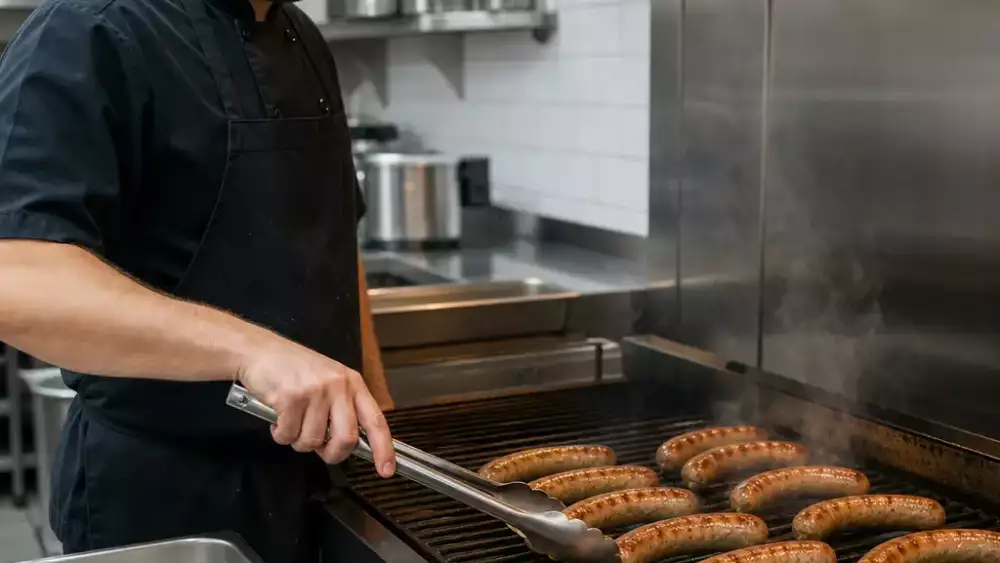
Bratwurst benefits from confident cooking, but it does not respond well to being blasted with uncontrolled heat. The casing, fat content and internal texture all need time to heat through properly. If the outside gets too hot too quickly, the sausage can split, lose juices and look rough before the inside is ready.
This matters commercially because bratwurst is often sold as a more distinctive product than a basic sausage or hot dog. Customers expect it to look substantial, eat cleanly and have a proper bite. A burst casing, dry centre or patchy colour can make even a good sausage feel badly handled.
Controlled heat gives you three advantages. First, it allows the bratwurst to cook through more evenly. Second, it protects the casing so the sausage keeps its shape and appearance. Third, it gives the kitchen more control over colour, timing and holding.
On a BBQ grill, this usually means avoiding fierce direct heat for the whole cook. On a griddle, it means using steady surface temperature rather than trying to rush browning. In a combi oven, it means using the equipment for even internal cooking before applying final colour elsewhere.
The aim is not to make cooking complicated. It is to avoid the common mistake of treating bratwurst like something that only needs aggressive heat and a quick turn. In foodservice, controlled heat produces a better-looking product and a more reliable service rhythm.
BBQ Grill, Griddle, Combi Oven, Bratt Pan and Salamander: Where Each Method Fits
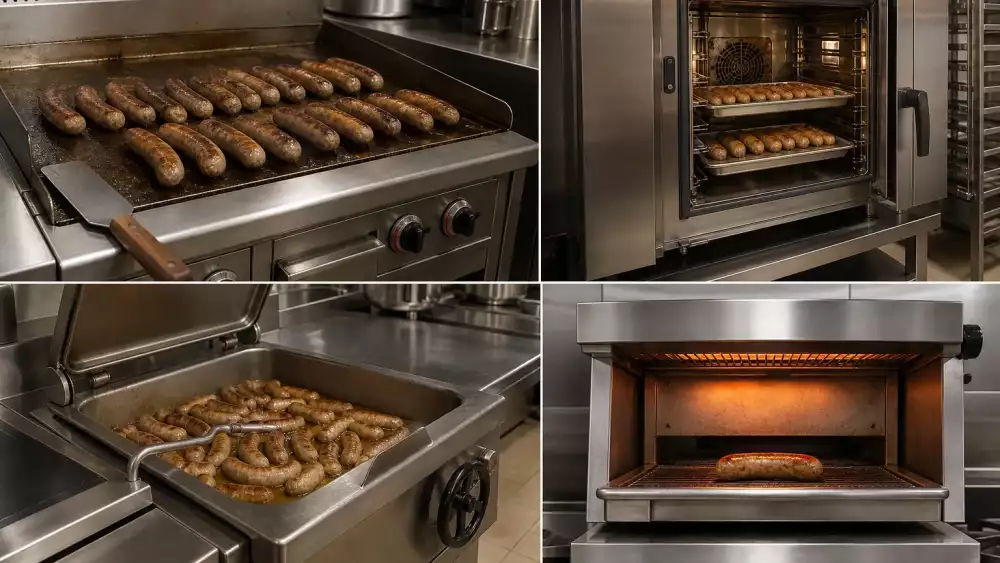
Each professional cooking method has a different role. The strongest setup may use one method from start to finish, or combine two methods for better speed and consistency.
BBQ grill works well when presentation and atmosphere matter. It gives visible cooking, flame-grilled appeal and a strong outdoor food feel. It suits festivals, beer gardens, markets and summer events. The main challenge is heat management. Operators should check site rules, fuel permissions, gas safety, fire safety and local event requirements before relying on a BBQ setup.
Griddle is the dependable workhorse. It gives even browning, strong contact heat and straightforward batch control. It suits pubs, cafés, catering trailers and street food stands where speed and repeatability matter. It is also easier to train staff on than more variable open-flame cooking.
Combi oven is useful for batch consistency. It can cook bratwurst evenly before service, then the sausages can be finished quickly on a griddle, BBQ grill or under a salamander. This is especially helpful where the kitchen needs predictable prep and faster final assembly.
Bratt pan suits larger-volume cooking and more sauced or braised-style dishes. It is useful for bratwurst with onions, cabbage, stock-based sauces or beer-style gravies. It is less about grill marks and more about volume, flavour base and service practicality.
Salamander is best for finishing. It can add colour, reheat components, melt cheese on topped bratwurst or crisp a dish before sending. It should not usually be treated as the main cooking method for raw bratwurst.
For many operators, the best system is simple: cook evenly, finish attractively, then serve quickly. The equipment should support that sequence rather than create extra handling.
How to Avoid Split Casings, Dry Sausages and Uneven Colour
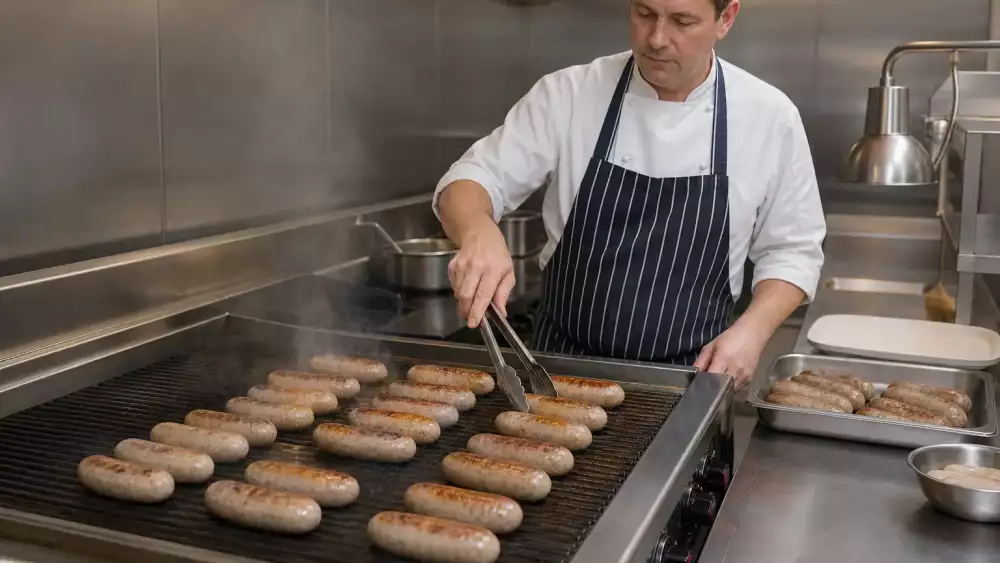
Most bratwurst cooking problems come from rushing the process or using heat that is too fierce in the wrong place. Split casings, dry centres and uneven colour are not just cosmetic issues. They affect eating quality, plate appeal and customer confidence.
Split casings often happen when the outside is exposed to aggressive heat before the sausage has warmed through evenly. This is common on very hot grills or griddles, especially if the bratwurst is placed directly over the fiercest part of the heat. A better approach is to start with controlled heat, turn regularly and build colour gradually.
Dry sausages are usually the result of overcooking, excessive holding or repeated reheating. In a busy service, this can happen when staff cook too many bratwurst too early and then try to keep them going for too long. A clear batch rhythm is better than loading the equipment once and hoping the product survives the rush.
Uneven colour is often caused by poor surface contact, irregular turning or crowded equipment. On a griddle, leave enough space for proper contact and turning. On a BBQ grill, avoid letting some sausages sit over fierce heat while others barely cook. In a combi-led system, use the oven for even cooking, then finish in smaller, controlled batches.
Useful habits include:
- bring bratwurst to the correct working temperature according to your food safety process
- avoid piercing the casing during cooking
- turn regularly rather than leaving one side to scorch
- cook in manageable batches
- keep holding times controlled and documented
- check the finished product before service, not after complaints
The goal is a bratwurst that looks evenly browned, holds together cleanly and eats juicy without being greasy. That level of consistency is what makes a professional sausage offer feel properly managed.
Batch Cooking, Finishing and Holding Without Losing Quality
Batch cooking bratwurst can make service much easier, but only if the process protects quality as well as speed. The danger is cooking too many sausages too early, then leaving them to sit until the casing wrinkles, the surface dries out and the product loses its appeal.
This official food safety guidance explains hot holding, cooling, and reheating checks worth following when batch cooking bratwurst for service.
A better approach is to separate the process into clear stages: cook evenly, finish attractively, then hold only where the setup and food safety process allow it. For many kitchens, a combi oven can be useful for the first stage because it gives steady, repeatable cooking across a batch. The final colour can then be added on a griddle, BBQ grill or under a salamander closer to service.
This works especially well for pubs, garden centres and event caterers where orders arrive in waves rather than one at a time. Instead of starting every bratwurst from cold during a rush, the kitchen can work from controlled batches and finish smaller numbers as demand builds.
Holding should be treated as a quality window, not a dumping ground. Bratwurst held too long can become tired, even if the dish is technically serviceable. Operators should define how long products can be held, how they are monitored, and when they are replaced.
The commercial benefit is consistency. Staff work faster, customers wait less, and the sausage still reaches the plate looking like something worth paying for.
Service Flow: Matching Cooking Method to Queue Speed and Menu Format
The right bratwurst cooking method should match how the food is actually sold. A slow pub lunch service, a busy football event and a garden centre café queue all create different pressures. The method that looks best in a quiet test may not be the method that survives a Saturday rush.
For high-speed service, the griddle is often the safest choice. It gives predictable contact heat, clear batch control and easy turning. Staff can see what is ready, move sausages through the cooking area and keep the line organised. This suits hot dogs, loaded bratwurst buns, lunch specials and compact street food menus.
A BBQ grill gives more theatre, but it needs more active management. It works well where the cooking itself adds value to the customer experience, such as beer gardens, markets and outdoor events. The challenge is that flames, wind, uneven heat and sudden queues can all affect timing.
A combi oven supports service flow by moving some of the cooking away from the front line. This can be helpful when one member of staff is assembling buns, toppings and sides while another finishes the sausage.
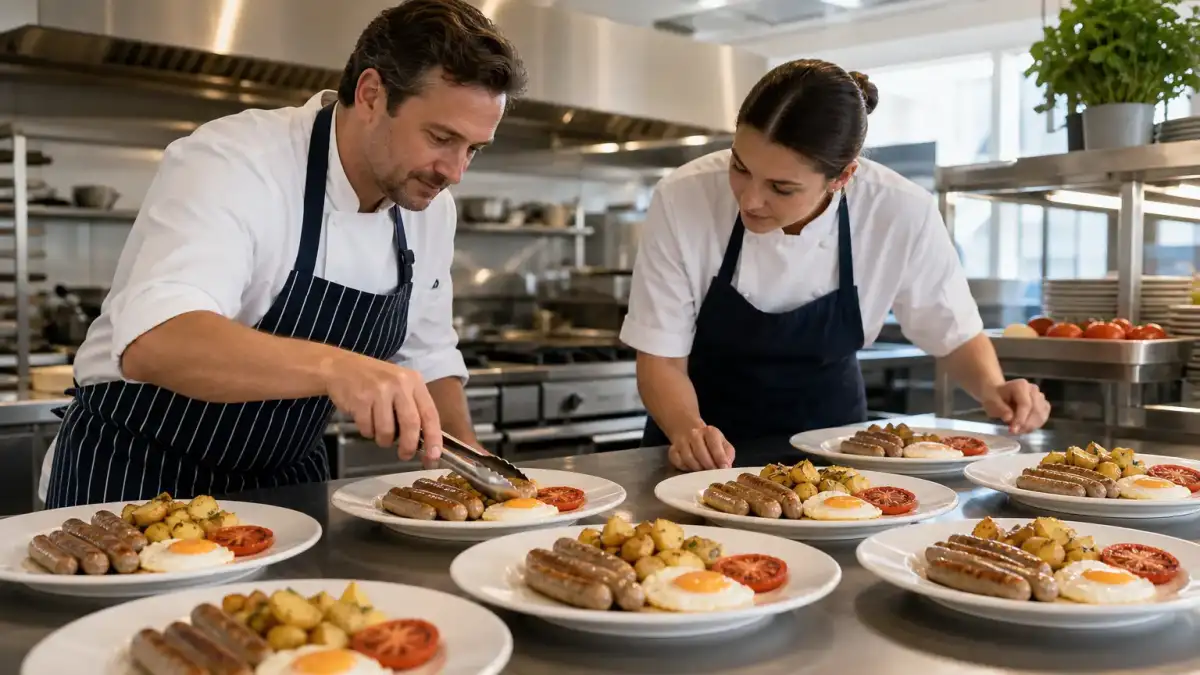
Menu format matters too. A simple bratwurst in a roll needs speed and consistency. A plated dish with potatoes, onions, sauerkraut or sauce may suit a bratt pan or oven-led system. The best process is the one that keeps the queue moving without making the final plate look rushed.
How Cooking Method Affects Perceived Value on the Plate
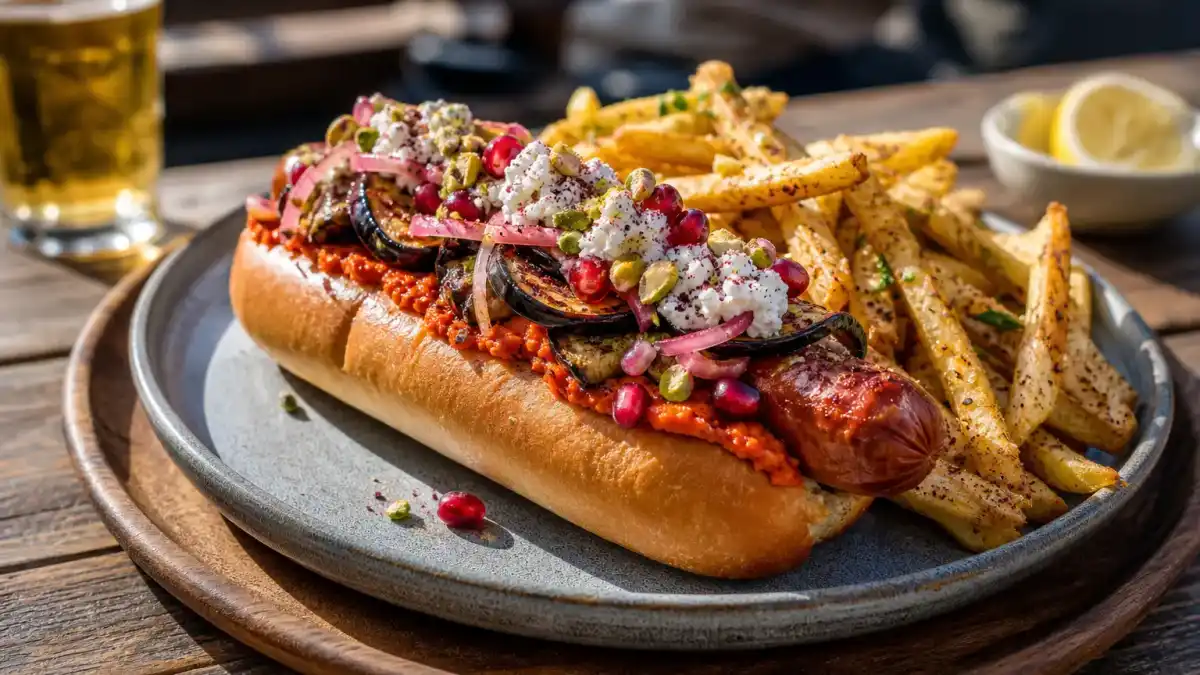
Customers rarely judge bratwurst by cooking method alone. They judge what arrives in front of them: colour, size, aroma, casing texture, toppings, bun quality and how complete the dish feels. Cooking method directly affects all of that.
This food magazine coverage is useful for comparing the toppings, bun choices, and finishing details that make a bratwurst plate feel complete.
A BBQ-grilled bratwurst can feel more premium because it has visible colour, aroma and a sense of freshness. This can help at events and beer gardens where customers are choosing between burgers, loaded fries, pizza, chicken and other quick-serve options. The sausage needs to look confident enough to compete.
A griddled bratwurst can also deliver strong perceived value when the browning is even and the serve is clean. It may not have the same theatre as a BBQ grill, but it can look consistent, professional and well managed. For many pubs and cafés, that reliability is more valuable than occasional dramatic grill marks.
Combi oven cooking on its own may be less visually appealing, but it can support a better final product when followed by a proper finish. A pale sausage in a bun looks like a shortcut. A properly finished bratwurst with good colour and structure feels like a deliberate menu item.
A bratt pan changes the value message again. Bratwurst served with onions, cabbage, sauce or potatoes can feel more like a complete meal. The cooking method then supports not only the sausage, but the whole dish.
In commercial terms, better cooking can make a simple menu item feel more substantial without adding unnecessary complexity.
Practical Setup Tips for Pubs, Events, Garden Centres and Street Food Traders
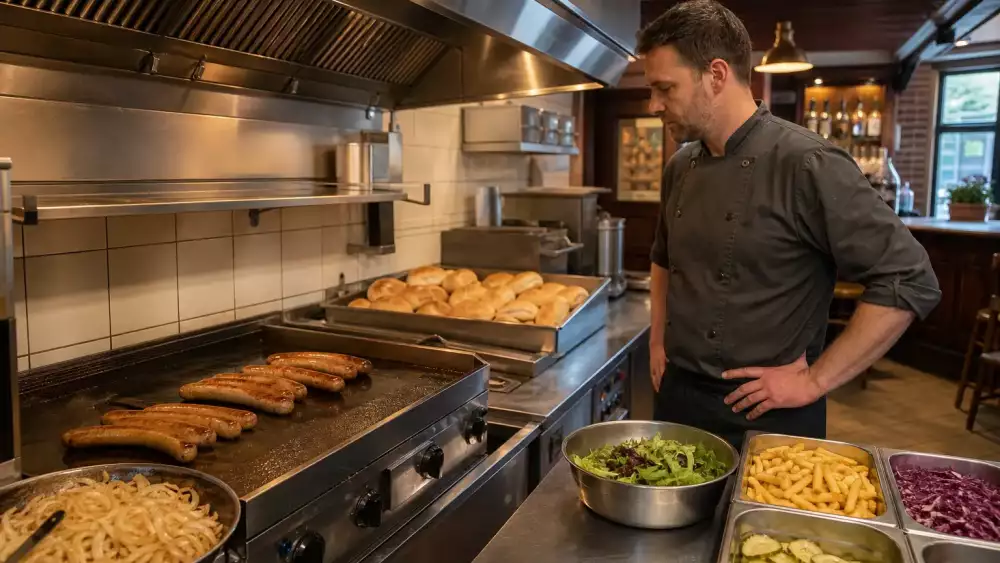
A good bratwurst setup should be easy to run when staff are busy. Before choosing the equipment, operators should think about space, extraction, gas or electrical load, service direction, holding arrangements, cleaning, staff training and the rules of the site.
This technical reference outlines safety and suitability checks for second-hand catering cookers, including gas or electrical load, that are worth reviewing before choosing bratwurst equipment.
For pubs and cafés, a griddle or combi-plus-griddle setup is often practical. It keeps cooking close to the main kitchen flow and makes portion control easier. It also allows bratwurst to sit naturally alongside fries, onions, salads, buns, sauces and specials without creating a separate outdoor-style operation.
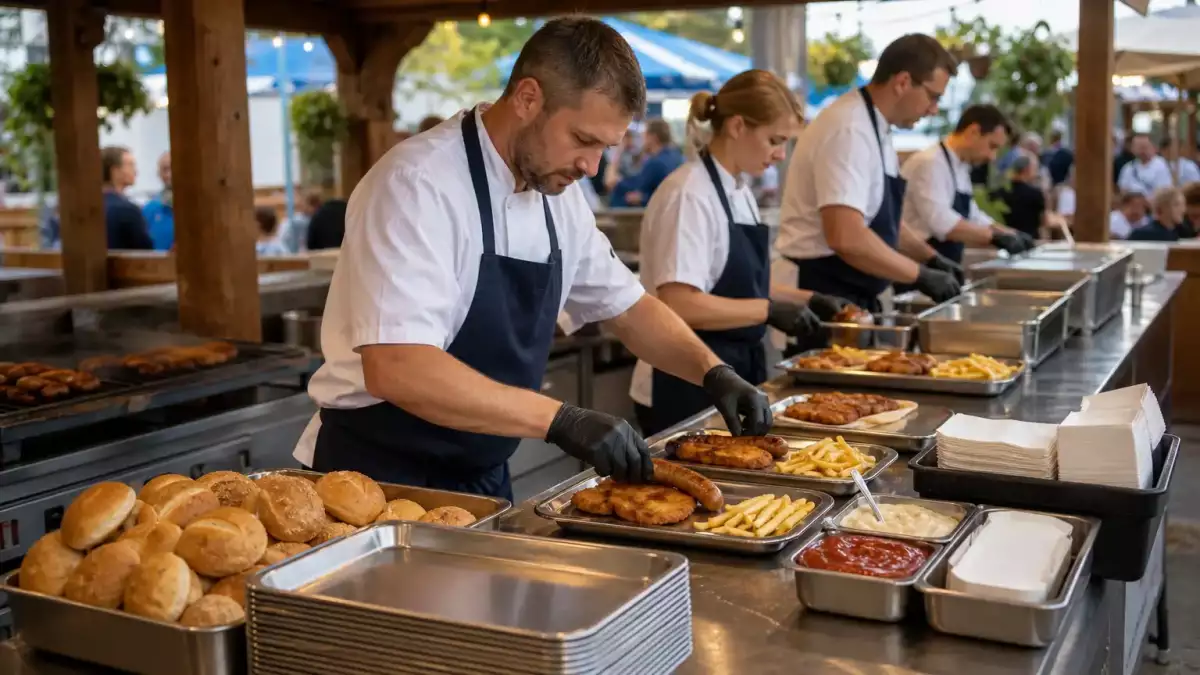
For events and street food, visibility matters more. A BBQ grill can attract attention, but it needs a safe, approved setup and enough staff discipline to manage heat, queues and replenishment. Traders should check site requirements, fuel permissions, fire safety rules and hand-wash arrangements before building a menu around open-flame cooking.
Garden centres often need a middle ground. Trade can come in waves, especially around lunch, weekends and seasonal events. A combi oven can support batch preparation, while a griddle or salamander gives the final finish before service.
Bratt pans are useful where the offer is more meal-led: bratwurst with onions, potatoes, cabbage or sauces. They are less about speed in a bun and more about controlled volume.
The best setup is not necessarily the most impressive one. It is the one staff can repeat cleanly, safely and profitably throughout service.
Frequently Asked Questions
Yes, but it is usually not the best result for a customer-facing bratwurst dish. A combi oven can cook bratwurst evenly and make batch control easier, but the sausage may look pale or too “canteen-style” if it is served straight from the oven.
For most pubs, cafés, garden centres and event caterers, the better approach is to use the combi oven for controlled cooking, then finish on a griddle, BBQ grill or under a salamander. That gives the operator consistency behind the scenes and better colour on the plate.
No. A BBQ grill can be excellent for outdoor events, beer gardens and markets because it creates aroma, theatre and a more traditional grilled appearance. But it is not automatically the best option for every operator.
In a small pub kitchen, café or indoor foodservice setup, a griddle may be more practical, cleaner and easier to control. BBQ cooking also depends on site rules, fuel permissions, fire safety, extraction, weather and staff confidence. It looks simple, but poor heat control can quickly damage the product.
That depends on your setup, product type, food safety process and service speed. Cooking from raw can work when volumes are low and staff have enough time to manage the product properly. During a rush, however, it can slow service and increase the risk of uneven results.
Many operators prefer a staged process: controlled cooking first, then a quick finish before serving. This can make service faster and more consistent, as long as holding times, temperatures and handling are managed properly according to the operator’s food safety procedures.
The key is to avoid overcooking and excessive holding. Bratwurst should be cooked in manageable batches, turned regularly and finished close enough to service that it still looks fresh and eats well.
For busier sites, it helps to separate the operation into zones: one area for cooking or batch preparation, one for finishing, and one for assembly. This keeps the queue moving without leaving sausages sitting too long on intense heat. A tired bratwurst usually costs more in lost customer appeal than the few minutes saved by cooking too far ahead.
bratt pan can be useful wherever the dish is more meal-led rather than simply a sausage in a roll. It works well for bratwurst with onions, cabbage, potatoes, sauces or beer-style gravy because it gives space, volume and controlled cooking.
It may be unnecessary for a compact street food menu built around buns and quick service. But for garden centres, pubs, canteens, catering operations and event kitchens serving fuller plates, a bratt pan can help turn bratwurst into a more complete and higher-value dish.
salamander is most useful as a finishing tool. It can add final colour, crisp the surface, melt cheese, warm toppings or finish a plated bratwurst dish just before it leaves the kitchen.
It is less suitable as the main cooking method, especially for raw bratwurst, because it heats strongly from above and can brown the outside before the centre is properly managed. Used at the right point, though, it can improve presentation and make topped or plated dishes look more deliberate.
The biggest mistake is treating bratwurst like a generic sausage that only needs aggressive heat. Too much heat too quickly can split the casing, dry the centre and create uneven colour.
The better commercial approach is controlled heat, planned batches and a clear finishing stage. That does not make the process complicated. It simply means the sausage is cooked in a way that protects texture, appearance and service consistency.
For high-volume event trading, the best method is usually the one that gives both speed and control. A griddle is often the most reliable for repeatable service, while a BBQ grill can add stronger visual appeal if the site allows it and the team can manage the heat properly.
Some traders may use a staged system, with bratwurst cooked or warmed in controlled batches and then finished quickly for service. The important point is to test the actual queue pattern, staffing level, menu size and equipment capacity before a busy event, not during it.
Indirectly, yes. Cooking method affects how the bratwurst looks, smells, eats and fits into the overall dish. A properly grilled or griddled bratwurst with good colour and clean presentation can feel more valuable than a pale or tired sausage, even if the ingredient is the same.
This matters when bratwurst competes with burgers, loaded fries, chicken, pizza or other quick-serve options. Better cooking does not replace sensible pricing, portioning and menu design, but it helps the product justify its place on the menu.
Combining two methods is often the most practical professional approach. For example, a combi oven can handle even batch cooking, while a griddle or BBQ grill adds final colour and casing texture. A salamander can then finish topped or plated dishes.
One-method cooking can work well for simple menus and lower volumes. But once service becomes busier, a two-stage process often gives better control. The aim is not to add complexity for its own sake, but to make the result easier to repeat when the pressure is on.
Conclusion
Cooking bratwurst for foodservice is really about choosing the right method for the job in front of you. A BBQ grill can give strong visual appeal and a proper outdoor eating feel, but it needs close control when queues build. A griddle is often the most practical workhorse for consistent browning and fast service. A combi oven can help with batch cooking and prep, especially where the final colour is added later. A bratt pan is useful for larger-volume cooking with onions, sauces or braised-style dishes, while a salamander works best as a finishing tool rather than the main cooking method.
The best setup depends on your menu, staff skill, space, power or gas availability, and how quickly you need to serve. What matters is not just whether the bratwurst is cooked, but whether it looks appetising, eats well, holds its structure and supports a smooth service.
For UK operators, that makes cooking method a commercial decision as much as a kitchen decision. The right process can reduce waste, improve consistency, make staff training easier and help a bratwurst dish feel more distinctive than a standard sausage option. For menus built around German sausage, it is worth testing the method properly before committing it to service.
The Sausage Haüs
The Sausage Haus brings authentic German-style sausages to the UK market through a partnership between Hardy Remagen and Baird Foods.
Hardy Remagen is a long-established German producer with deep experience in traditional sausage making, continental meat products and modern food manufacturing. The range reflects the kind of products German shoppers already understand and enjoy: Bratwurst, Frankfurters, smoked hotdogs, cheese-filled sausages, Bockwurst, Weisswurst and other classic German-style lines.
In the UK, the range is represented and distributed by Baird Foods, giving retailers, wholesalers, caterers and foodservice operators access to German sausage products with a practical UK supply route. This combination is important: German manufacturing knowledge on one side, UK market understanding and distribution on the other.
For retail buyers, The Sausage Haus range offers a clear way to add something different to both chilled and frozen sausage fixtures. The products are built around real eating occasions: BBQs, premium hotdog nights, family meals, German street food, Oktoberfest promotions, Christmas market food and quick comfort meals at home.
The result is a range that gives shoppers something more distinctive than ordinary sausages and standard hotdogs, while giving buyers a compact, commercially useful product story with strong fresh and frozen potential.